UAE Telecom Powerhouse Embraces Dirham Stablecoin In New Payment Trial

bitcoinistОпубліковано о 2025-12-12Востаннє оновлено о 2025-12-12

Анотація

e& UAE, a major UAE telecom provider, has partnered with Al Maryah Community Bank to trial AE Coin, a central bank-licensed dirham-backed stablecoin, as a new payment method. The trial will allow customers to use the digital token to pay for a range of services, including mobile and home-service bills, prepaid and postpaid recharges, and purchases on e&'s digital platforms. The stablecoin will be integrated into the telco's existing payment systems, including mobile apps and self-service kiosks, offering an alternative to cards and bank transfers. Company executives highlighted benefits such as instant settlement, transparency, and frictionless access. This initiative aligns with the UAE's broader strategy to promote regulated blockchain payments and reduce cash dependency. The pilot will begin in selected e& channels, with no specified timeline for a wider rollout.

e& UAE, United Arab Emirates’ telecom giant, has signed a memorandum of understanding with Al Maryah Community Bank to trial AE Coin, a Central Bank-licensed stablecoin, as a payment option across the telco’s services.

According to company statements, the plan would let customers use an AED-backed token to pay for mobile and home-service bills, prepaid and postpaid recharges, and purchases on e& digital platforms.

Integration Across Consumer Touchpoints

Reports have disclosed that e& Group aims to plug AE Coin into its existing payment systems. The move would add the stablecoin as an alternative to cards and bank transfers on e&’s mobile apps and at smart self-service kiosks.
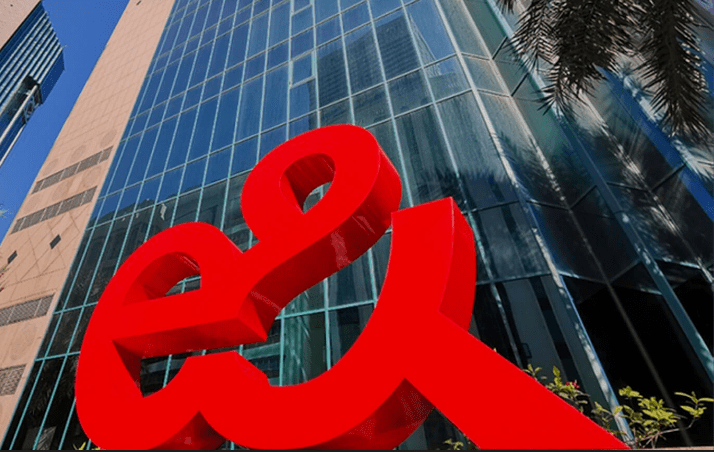
Image: Novatiq

e& UAE’s CEO, Hatem Dowidar, said the partnership with Al Maryah Community Bank will allow “instant settlement, complete transparency, and frictionless access” — language that signals the operator expects quicker finality and clearer audit trails for transactions.

For many users, that could mean fewer delays and simpler proof of payment when calling or browsing for services.

What The Partners Say

Based on reports, Al Maryah Community Bank’s chief executive, Mohammed Wassim Khayata, said the collaboration widens real-world uses for licensed virtual assets and opens the door to faster, more secure options for everyday payments.

Ramez Rafeek, General Manager of AED Stablecoin LLC, described AE Coin as created to support regulated and transparent digital payments.

Those comments frame the trial as an attempt to move a regulated token from niche experiments into mass consumer use. The pilot will start within selected e& channels; no national rollout timetable has been disclosed.

Total crypto market cap currently at $3.04 trillion. Chart: TradingView

Potential Impact On Users And The Market

Analysts and payments experts say a telecom of e&’s size could quickly expose millions of customers to stablecoin payments if the test succeeds.

According to the companies involved, integrating AE Coin would cover prepaid top-ups and postpaid billing, which are high-frequency transactions that could provide an immediate test bed for volume and reliability.

Observers note that real adoption will hinge on how easy customers find the process, how wallets are managed, and whether merchants accept the token beyond e&’s own services.

Alignment With National Goals

Reports indicate the trial fits into the UAE’s push for regulated blockchain payments and a less cash-dependent economy.

Regulators have been encouraging licensed solutions, and using a Central Bank-approved stablecoin inside a major consumer network sends a clear signal that authorities are open to controlled innovation.

If adopted more widely, the token could serve as another regulated payment choice alongside existing systems.

Featured image from Unsplash, chart from TradingView

Пов'язані матеріали

STRC Breaks Below $95: Why Does It Continue to Depeg? Is There Default Risk?

"STRC Falls Below $95: Why the Persistent Depegging and Is There Default Risk?" The article discusses the recent decline in the price of STRC, a perpetual preferred stock issued by Strategy (MSTR) designed to trade around a $100 par value. As of publication, STRC traded at $94.65, raising market concerns. STRC is described as a high-yield cash flow product, offering an 11.50% annual dividend paid monthly. Its "preferred" status grants it priority over common stock for dividends and in liquidation. Key reasons cited for the price depegging include: 1. **Bitcoin's Price Drop:** MSTR's assets are heavily tied to Bitcoin (BTC), which fell over 21% from its recent high, pressuring all Strategy-related products. 2. **Competitive Pressure:** Rival Strive Asset Management's similar product, SATA, offers daily dividends and has maintained its $100 par value with a ~13% yield. In response, Strategy has proposed changing STRC's dividend frequency from monthly to bi-weekly, pending shareholder vote. 3. **Technical Selling:** A break below $100 may have triggered algorithmic selling and stop-losses, exacerbating the decline. Regarding default risk, the analysis suggests it is currently low. Strategy founder Michael Saylor confirmed the June 2026 dividend rate remains at 11.50% with no cuts or suspensions. The company's massive reserve of 843,706 BTC provides a significant backstop for its obligations. Industry opinions are mixed. Some analysts view the BTC holdings as reliable support for dividends, while critics like Peter Schiff warn of potential dividend cuts leading to price crashes and lawsuits. Others highlight inflation risk and the company's ability to reduce dividends without a formal default. In summary, STRC's drop is attributed to BTC volatility, competition, and technical factors. While immediate default risk appears contained, the product faces challenges from market conditions and competitive dynamics.

marsbit26 хв тому

STRC Breaks Below $95: Why Does It Continue to Depeg? Is There Default Risk?

marsbit26 хв тому

AI Trading Cools, South Korean Stocks Plunge 1.8%, Spot Gold Rises 1%, Bitcoin Dives

A sell-off in AI-related stocks, triggered by Broadcom's disappointing earnings forecast, sent shockwaves through global markets. South Korea's KOSPI led Asia's decline, plunging 1.8% as the risks from concentrated chip stock gains and surging leveraged investments came to the fore. The tech-heavy Nasdaq 100 futures fell 0.5% following Broadcom's 14% after-hours plunge, which signaled a slower-than-expected transition to AI clients. This pullback extended Wall Street's weakness, halting the S&P 500's nine-day rally amid hawkish Fed signals and renewed Middle East tensions. South Korean authorities convened an emergency meeting, pledging "immediate measures" against market volatility and warning of record-high stock margin debt. The adjustment rippled across assets: Bitcoin fell to around $64,000, its lowest since February, while safe-haven gold rose 1% on bargain hunting. Oil prices dipped on Middle East ceasefire news. Market analysts noted the sell-off was driven by profit-taking after massive gains, particularly in chip stocks like Samsung and SK Hynix, which now dominate the KOSPI. Wall Street banks are divided on Korea's outlook, with Goldman Sachs raising its target while Citigroup and others warn of overvaluation and a potential bubble. Bridgewater's Ray Dalio noted that great technological shifts often create bubbles. Meanwhile, Fed officials' hints at potential future rate hikes added to the cautious mood ahead of key U.S. jobs data.

华尔街日报52 хв тому

AI Trading Cools, South Korean Stocks Plunge 1.8%, Spot Gold Rises 1%, Bitcoin Dives

华尔街日报52 хв тому

Seeking Alpha's Hot Article: Why Might the U.S. Stock Market Crash in June?

In a recent Seeking Alpha article, financial professor and analyst Damir Tokic argues that the US stock market may be poised for a significant crash in June 2026. The core thesis centers on a "mega-bubble" in equities, particularly within the technology sector, which has driven the S&P 500 to near-record valuations, with a Shiller P/E ratio exceeding 40—a level comparable to the 2000 dot-com bubble. Tokic identifies two primary catalysts for a potential collapse. First, he points to unsustainable market exuberance fueled by what he terms the "Trump Stimulus"—massive AI capital expenditure by tech giants, which he believes is politically driven and cannot last. Second, and more urgently, he highlights the escalating Iran war as a critical threat. The ongoing closure of the Strait of Hormuz has created a severe global energy supply crunch. Strategic petroleum reserves are projected to hit critically low operational levels by June, potentially causing oil prices to spike above $200 per barrel and triggering a severe, supply-driven inflationary shock. This scenario, Tokic warns, would force the Federal Reserve's hand. Despite currently maintaining a dovish bias, the Fed would likely be compelled to officially pivot to a hawkish stance at its June FOMC meeting to combat soaring inflation and bond yields. He contends that such a shift—or even a failure to act, which would destroy Fed credibility—could be the trigger that punctures the market bubble. The resulting downturn, he concludes, could rival the bear markets of 2000 and 2008, advising investors to prepare for a major correction.

marsbit1 год тому

Seeking Alpha's Hot Article: Why Might the U.S. Stock Market Crash in June?

marsbit1 год тому

Торгівля

Спот
Ф'ючерси
活动图片