UAE Telecom Powerhouse Embraces Dirham Stablecoin In New Payment Trial

bitcoinistОпубліковано о 2025-12-12Востаннє оновлено о 2025-12-12

Анотація

e& UAE, a major UAE telecom provider, has partnered with Al Maryah Community Bank to trial AE Coin, a central bank-licensed dirham-backed stablecoin, as a new payment method. The trial will allow customers to use the digital token to pay for a range of services, including mobile and home-service bills, prepaid and postpaid recharges, and purchases on e&'s digital platforms. The stablecoin will be integrated into the telco's existing payment systems, including mobile apps and self-service kiosks, offering an alternative to cards and bank transfers. Company executives highlighted benefits such as instant settlement, transparency, and frictionless access. This initiative aligns with the UAE's broader strategy to promote regulated blockchain payments and reduce cash dependency. The pilot will begin in selected e& channels, with no specified timeline for a wider rollout.

e& UAE, United Arab Emirates’ telecom giant, has signed a memorandum of understanding with Al Maryah Community Bank to trial AE Coin, a Central Bank-licensed stablecoin, as a payment option across the telco’s services.

According to company statements, the plan would let customers use an AED-backed token to pay for mobile and home-service bills, prepaid and postpaid recharges, and purchases on e& digital platforms.

Integration Across Consumer Touchpoints

Reports have disclosed that e& Group aims to plug AE Coin into its existing payment systems. The move would add the stablecoin as an alternative to cards and bank transfers on e&’s mobile apps and at smart self-service kiosks.
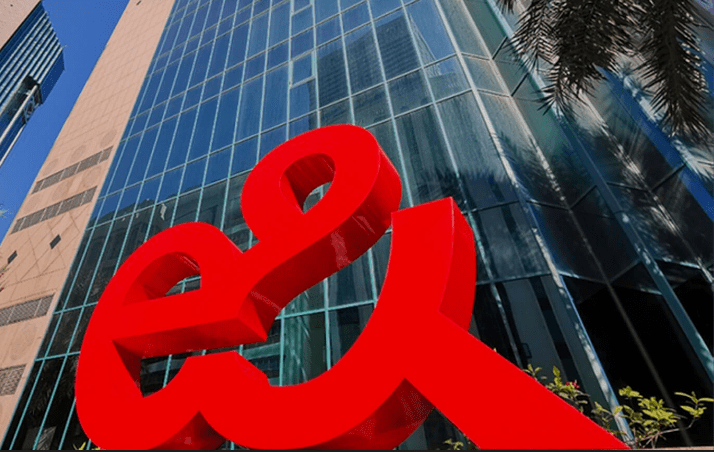
Image: Novatiq

e& UAE’s CEO, Hatem Dowidar, said the partnership with Al Maryah Community Bank will allow “instant settlement, complete transparency, and frictionless access” — language that signals the operator expects quicker finality and clearer audit trails for transactions.

For many users, that could mean fewer delays and simpler proof of payment when calling or browsing for services.

What The Partners Say

Based on reports, Al Maryah Community Bank’s chief executive, Mohammed Wassim Khayata, said the collaboration widens real-world uses for licensed virtual assets and opens the door to faster, more secure options for everyday payments.

Ramez Rafeek, General Manager of AED Stablecoin LLC, described AE Coin as created to support regulated and transparent digital payments.

Those comments frame the trial as an attempt to move a regulated token from niche experiments into mass consumer use. The pilot will start within selected e& channels; no national rollout timetable has been disclosed.

Total crypto market cap currently at $3.04 trillion. Chart: TradingView

Potential Impact On Users And The Market

Analysts and payments experts say a telecom of e&’s size could quickly expose millions of customers to stablecoin payments if the test succeeds.

According to the companies involved, integrating AE Coin would cover prepaid top-ups and postpaid billing, which are high-frequency transactions that could provide an immediate test bed for volume and reliability.

Observers note that real adoption will hinge on how easy customers find the process, how wallets are managed, and whether merchants accept the token beyond e&’s own services.

Alignment With National Goals

Reports indicate the trial fits into the UAE’s push for regulated blockchain payments and a less cash-dependent economy.

Regulators have been encouraging licensed solutions, and using a Central Bank-approved stablecoin inside a major consumer network sends a clear signal that authorities are open to controlled innovation.

If adopted more widely, the token could serve as another regulated payment choice alongside existing systems.

Featured image from Unsplash, chart from TradingView

Пов'язані матеріали

Understanding Hash in One Article: The "Browser Miner" on Ethereum

Hash is an Ethereum-based ERC-20 token described as a "browser-minable post-quantum token." Its key features include enabling browser-based GPU mining without specialized hardware, a fixed supply cap of 21 million tokens, immutable and permissionless smart contracts with no team allocation or pre-mining, and an emphasis on post-quantum security using Keccak256 hashing. The mining mechanism is a simplified on-chain proof-of-work where miners solve unique challenges tied to their wallet address. Key design elements prevent answer theft, with epochs resetting every 100 blocks (~20 minutes) and a per-block minting limit. Emission follows a Bitcoin-like halving schedule every 100,000 mints, starting at 100 tokens per mint. Projections suggest all tokens could be mined within approximately 294 days if a target rate of one mint per minute is sustained. Hash emphasizes "post-quantum" security by leveraging hash-based primitives like Keccak256, which are considered more resistant to quantum attacks compared to elliptic-curve cryptography. While not a fully post-quantum asset, it aligns with Ethereum's broader post-quantum research narrative. The project completed its Genesis sale at $0.03 and began trading on Uniswap, with its price reaching around $0.19. The initial circulating supply is small, with 5% sold in Genesis and 5% allocated to liquidity. The majority (47.6% of total supply) is allocated to early-stage mining, leading to a front-loaded emission schedule. This structure, combined with low initial liquidity, makes Hash a high-volatility, high-risk project dependent on sustained miner participation and market demand to absorb new supply.

marsbit12 хв тому

Understanding Hash in One Article: The "Browser Miner" on Ethereum

marsbit12 хв тому

OpenAI's Largest Internal Wealth Creation: 600 People Cash Out a Total of $6.6 Billion, 75 Take Home the Maximum $30 Million Each

A Wall Street Journal report reveals OpenAI's unprecedented pre-IPO wealth creation. In a single employee stock sale last October, over 600 current and former employees sold shares, collectively cashing out approximately $6.6 billion. Due to high investor demand, the company tripled the individual sale cap to $30 million, with about 75 employees selling the maximum amount. This event represents the largest such transaction in tech industry history for a private company. OpenAI's valuation was $500 billion for this tender offer. Employees with over two years of tenure were eligible, allowing many post-ChatGPT hires their first liquidity event. The company's stock has reportedly grown over 100-fold in seven years. Following a restructuring, employees collectively hold about 26% of OpenAI. The scale of executive wealth is also staggering. In court testimony related to Elon Musk's lawsuit, President and co-founder Greg Brockman confirmed his OpenAI stake is worth around $30 billion. Analysis indicates about 165 current and former employees hold a combined ~$164.9 billion in equity, averaging nearly $1 billion per person in paper wealth. OpenAI's per-employee stock-based compensation is estimated to be 34 times the average of major tech firms before their IPOs. OpenAI continues its rapid ascent, closing a $122 billion funding round at an $852 billion valuation in March. With monthly revenue hitting $2 billion, over 900 million weekly ChatGPT users, and plans for a potential trillion-dollar IPO in late 2026, this wealth-creation engine shows no signs of stopping.

链捕手34 хв тому

OpenAI's Largest Internal Wealth Creation: 600 People Cash Out a Total of $6.6 Billion, 75 Take Home the Maximum $30 Million Each

链捕手34 хв тому

Торгівля

Спот
Ф'ючерси
活动图片




