Turn Off AI Before the Interview: What Kind of People is Anthropic Looking For?

marsbitОпубліковано о 2026-06-08Востаннє оновлено о 2026-06-08

Анотація

"Shut Off AI Before the Interview: What Kind of People Anthropic Is Screening For" Anthropic, now the world's most valuable AI startup, has an exceptionally competitive hiring process. A key and distinctive element is its mandatory "culture interview," conducted without AI assistance. This interview focuses not on technical skills, but on assessing a candidate's core values, worldview, and perspective on long-term AI risks. Questions delve deeply into personal ethics, "unusual beliefs," and the candidate's willingness to thoughtfully critique Anthropic's own mission. The goal is to evaluate whether someone's convictions are genuinely their own and if they can articulate and defend them under pressure. A poor score here can veto otherwise successful technical interviews. This approach starkly contrasts with companies like Google, which now encourages using AI in interviews to assess "AI fluency." Anthropic's philosophy suggests that in an era where AI makes execution cheap and the generation of opinions nearly free, true scarcity lies in original, deeply held thought. The company seeks individuals who possess substance "after turning off the AI"—those who haven't outsourced their core thinking. This focus on aligning fundamental values contributes to Anthropic's high employee retention rate in a fast-moving industry.

Don't outsource your brain.

The other day, Anthropic just announced the completion of its H round of financing at $650 billion, with a valuation of $9.65 trillion, surpassing OpenAI ($8.52 trillion) to become the world's most valuable AI startup.

The bar for entering this company is visibly rising. Last year, Peter Bailis, CTO of Workday, gave up his CTO title to become an ordinary engineer at Anthropic.

In February this year, an HR professional in London joined Anthropic. She posted an announcement on LinkedIn about her new job, and subsequently received over 1,000 connection requests and more than 200 private messages. She had to post again publicly, asking candidates to stop calling her mobile number.

In May, Anthropic announced another bombshell: OpenAI co-founder Andrej Karpathy joined Anthropic's pretraining team.

Everyone wants to get into Anthropic.

But the way in, is to turn the AI off first.

01 "Interviewing Like a Psychotherapy Session"

Anthropic's interviews have 5 rounds, and AI is prohibited in every single one.

The most critical round is called the "Culture Interview". It has nothing to do with technical skills, only assessing the candidate's values, worldview, and views on AI risk.

Kevin Landucci, a career trainer in California who has worked with many candidates, says people generally find the interview "invasive, completely unlike a job interview, different from any previous one."

A person who did recruitment for Anthropic last year would particularly remind candidates to take this round seriously, because company leadership views AI safety as a long-term strategic issue, not just a business consideration.

The scoring method is even more unique. The culture interview can be conducted by anyone from any department. A candidate for an engineering role might be scored by someone from the marketing department. And they have veto power; even if all technical interviews are passed, a low score in this round will get the candidate rejected.

The questions get increasingly personal. Anthropic President Daniela Amodei described her classic question in a podcast:

What unusual beliefs do you hold? In what uncomfortable situation have you stood by one? She doesn't care *what* the candidate believes. She cares whether the person can maintain their stance when challenged and explain why.

Professional ethical dilemmas are a frequent topic in the culture interview. Landucci says interviewers will peel back the layers:

What were you thinking then, what did you do, how do you evaluate it looking back now? His advice is to show genuine discomfort, letting the interviewer see you really struggled with it. He recommends candidates discuss ethical dilemmas that are "significant enough to cause hesitation but not enough to shake the company's foundation," such as controversial decisions involving user data.

Most companies say they value candor and oppose flattery, but Anthropic has truly built this into its hiring system. Landucci reveals that the culture interview tests whether candidates dare to question the company itself, and the way it pursues its mission. Reasoned, evidence-based questioning scores very well.

A researcher who interviewed last year experienced a different flavor. He said the interviewer's questions came one after another, and he was interrupted whenever his answers stopped providing new information. This researcher talked about concrete, immediate risks, like the danger of people developing emotional dependence on chatbots.

The interviewer clearly felt these concerns were too superficial. He did not pass.

This detail is worth pondering. Emotional dependence is a real problem, and there has been plenty of public discussion about it. But in Anthropic's context, this might be seen as "superficial." It's a side effect of AI, not a fundamental AI risk.

Anthropic's founding team broke away from OpenAI, with the core motivation being their belief that AI could have overly profound impacts. A candidate who only focuses on product-level risks and doesn't demonstrate the ability to think about larger-scale issues will fall short in this evaluation system.

CEO Dario Amodei claims to spend 30% to 40% of his time managing company culture. For a company with over 3,000 employees, having added about 1,000 in the past six months, this is almost the most expensive investment a founder can make. He wants to ensure that everyone who comes in shares values aligned with Anthropic's.

Thus, in the fast-moving AI industry, Anthropic's two-year employee retention rate reaches 80%, the highest among peers. The probability of an engineer moving from OpenAI to Anthropic is 8 times the reverse, and from DeepMind it's 11 times. (Source: VC firm SignalFire)

02 When Execution Becomes Free, What Becomes Expensive Instead?

Even in Silicon Valley, Anthropic's approach is an outlier.

This year, Google announced an opposite reform to its interviews: candidates can use Gemini in technical interviews, and interviewers will directly assess their "AI fluency". Brian Ong, Google's VP of Hiring, said this is to make interviews more closely reflect real work scenarios.

Google CEO Sundar Pichai revealed in April this year that 75% of the company's new code is already AI-generated and reviewed by engineers.

Google's logic is: since daily work is human-AI collaboration, interviews should be too.

Faced with the same question of the AI era, two top AI companies give completely different answers. Anthropic believes the interview is precisely the time when AI needs to be taken away.

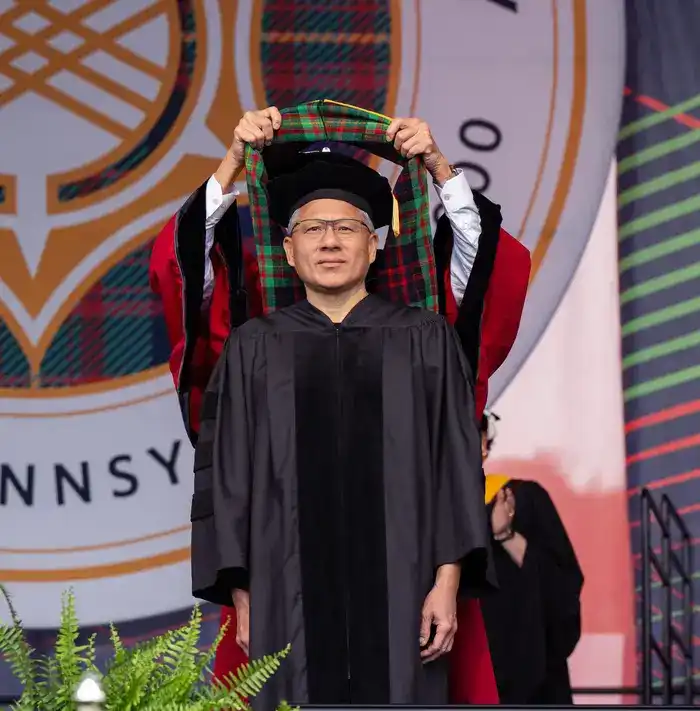
Jensen Huang's 2026 Carnegie Mellon University commencement speech contained a widely circulated line: "It's unlikely that AI will replace you, but a person who uses AI better than you might replace you". This phrase has been repeatedly quoted because it precisely taps into people's fear of AI while offering a way out: go learn AI.

The problem with this statement is that it anchors a person's value to their relationship with a tool, implying the logic that you must change as the tool changes, otherwise you'll be eliminated.
But a more worthwhile question is the reverse:

When execution becomes cheaper and cheaper, what becomes expensive instead?

03 What Anthropic is Selecting For

Anthropic's interviews offer one answer.

Daniela Amodei asking candidates "what unusual beliefs do you hold," interviewers encouraging you to question Anthropic itself—they are essentially assessing the same thing.

Today, the "production" of viewpoints is almost free. AI can generate arguments for any position; it can write well-reasoned articles supporting a direction, and can immediately write equally well-reasoned articles opposing it.

But precisely because of this, the gap between "holding" a position and "owning" a position is widening. Holding is a choice, while owning is who you fundamentally are.

Anthropic prohibiting AI use in interviews, and the culture interview's relentless probing for your genuine thoughts like a psychotherapy session, are both meant to confirm: the judgments and beliefs in your mind grew there on their own.

In other words, you haven't outsourced your thinking.

"A person who uses AI better than you might replace you" is correct at the execution level. But if taken as the whole answer, it leads people down an increasingly narrow path: constantly chasing what AI can do, then doing the part AI can't yet do, until that part is also learned by AI.

Anthropic's hiring logic points in another direction. It believes what is truly scarce in the AI era is not people who can harness AI, but people who still have something left after turning the AI off.


Трендові криптовалюти

Пов'язані питання

QWhat is the key difference between Google's and Anthropic's approaches to using AI in job interviews?

AGoogle has reformed its interview process to allow candidates to use Gemini in technical interviews, assessing their 'AI fluency' to mirror real work scenarios. In contrast, Anthropic explicitly prohibits the use of AI in all five rounds of its interviews, believing the interview is precisely when AI must be removed to evaluate the candidate's intrinsic qualities.

QAccording to the article, what is the core purpose of Anthropic's 'culture interview'?

AThe core purpose of Anthropic's 'culture interview' is to assess a candidate's values, worldview, and perspective on AI risks. It is not related to technical skills and focuses on whether the candidate's fundamental beliefs align with Anthropic's. A low score in this round can lead to rejection, even if all technical interviews are passed.

QWhat does the example of a researcher who discussed 'emotional dependency on chatbots' illustrate about Anthropic's evaluation criteria?

AThis example illustrates that Anthropic looks for candidates who think about fundamental, large-scale risks of AI, not just product-level or secondary effects. The researcher's focus on 'emotional dependency' was likely deemed too superficial, showing that Anthropic's evaluation system favors those capable of contemplating AI's more profound and existential impacts.

QWhat does the article suggest becomes more valuable when execution becomes cheap due to AI?

AThe article suggests that when AI makes execution cheap, what becomes more valuable is genuine, independent thought and deeply held convictions. It highlights the growing gap between merely 'holding' a position (a choice) and 'owning' it (an intrinsic part of one's identity). Anthropic seeks individuals who have not outsourced their thinking.

QHow does the article contrast Jensen Huang's famous quote with Anthropic's hiring philosophy?

AThe article contrasts them by stating that Jensen Huang's quote ('AI won't take your job, someone using AI will') anchors human value to the relationship with a tool, implying one must constantly adapt to what AI can do. Anthropic's philosophy points in the opposite direction: it believes true scarcity in the AI era is not people who can use AI, but people who still have substance left when AI is turned off—those with intrinsic, non-outsourced judgment and belief.

Пов'язані матеріали

New Fire Research Institute: Inflation May Become a Stubborn Problem, Can Cryptocurrencies Achieve Independent Performance in the Short Term?

New Fire Research Institute argues that despite the recent U.S. June CPI decline to 3.5% year-on-year—primarily driven by energy—core goods inflation remains persistent, with core PCE likely showing slight growth. Federal Reserve Chairman Wash has emphasized the Fed's independence and a "zero tolerance" stance on inflation, suggesting a continued hawkish posture that will pressure risk assets, especially if energy prices rise again. Concurrently, the semiconductor memory sector faces structural pressures, as seen in significant sell-offs for Micron and SK Hynix. High leverage in markets like South Korea is triggering deleveraging, amplifying volatility. Investors are also questioning the sustainability of AI-related capital expenditures. In contrast, the crypto market showed relative stability last week, with BTC and ETH gaining slightly. Positive developments include a shift to net inflows for U.S. Bitcoin spot ETFs, a narrowing Coinbase discount, and strong activity on the Robinhood Chain ecosystem. The potential advancement of the U.S. CLARITY Act provides a policy catalyst. Overall, the probability of an independent crypto bull run in the short term is low, given overarching macro pressures. However, fundamentals are improving with ETF inflows and robust on-chain activity, providing solid support. Technically, BTC and ETH show strong support at key moving averages. New Fire Research maintains that Bitcoin around $60,000 represents a high-value allocation zone, with limited downside risk near current levels. The true bull market catalyst awaits a confirmed market bottom combined with a macro policy shift and legislative progress.

marsbit26 хв тому

New Fire Research Institute: Inflation May Become a Stubborn Problem, Can Cryptocurrencies Achieve Independent Performance in the Short Term?

marsbit26 хв тому

Base Under Pressure

**Title: The Pressure Mounts for Base** Base, the Ethereum Layer 2 scaling solution backed by Coinbase, is facing significant pressure and public scrutiny from its leadership following the launch of Robinhood Chain. Base co-founder Jesse Pollak recently acknowledged strategic missteps, admitting that the chain's past focus on social and creator tokens (e.g., through Farcaster, Zora) failed to deliver sustainable adoption. He has refocused on core infrastructure, handing leadership of the Base App back to Coinbase's Cobie. While Base remains a top L2 contender alongside OP Mainnet and Arbitrum, and boasts the highest TVL (nearly $12B), its weaknesses are being highlighted by the new competitor. Key criticisms include its slow progress on decentralization. Base has faced issues with its single sequencer causing block production halts, and L2BEAT is reportedly considering downgrading its decentralization rating from Stage 1 to Stage 0. This contrasts sharply with the rapid initial success of Robinhood Chain, whose DEX quickly entered the top five by volume. The leadership styles of the parent companies are also being compared: Robinhood's CEO actively engages with new projects, while a recent incident where Coinbase's Brian Armstrong briefly changed his profile picture—sparking and then crashing a related meme token—drew community ire and mockery. Pollak stated Base is working with Coinbase on tokenized stocks backed 1:1 by real equity, differentiating it from Robinhood's derivatives model. However, the article argues that Base's most urgent task is to address its long-standing technical and trust issues. With more traditional finance players likely to emulate Robinhood's path, Base must use this competitive pressure to solidify its position as long-term financial infrastructure.

Foresight News43 хв тому

Base Under Pressure

Foresight News43 хв тому

White House Concession Removes Ethical Hurdle, Clarity Act Races Against Final Window Before Recess?

On July 21st, industry sources reported that the Trump administration has agreed to include an ethics provision in the "Clarity Act" (Digital Asset Market Clarity Act of 2025). This concession addresses the long-standing conflict-of-interest concerns regarding government officials and the crypto industry, potentially removing the final major obstacle to the bill's progress. Additionally, Patrick Witt, the executive director of the White House's Digital Asset Advisory Committee, confirmed he will remain in his role to help finalize the bill, alleviating previous concerns about his potential departure. The Clarity Act aims to establish a unified federal regulatory framework for the U.S. digital asset market. Its core objective is to resolve regulatory ambiguity by defining different types of digital assets (digital commodities, investment contract assets, and permitted payment stablecoins) and clarifying the respective oversight roles of the SEC and CFTC. This would end the long-running jurisdictional dispute between the two agencies and provide clearer compliance paths for the industry. With the ethics issue moving toward resolution, the most urgent challenge now is time. The U.S. Congress is set to begin its August recess in mid-August, leaving only a few working weeks to finalize the text and advance the bill through the Senate. Industry advocates, like the Blockchain Association's Kristin Smith, stress that this is a critical moment. If negotiations conclude successfully in the coming weeks, the Clarity Act could pass a key hurdle before the recess; otherwise, it may face significant delays. If enacted, the Clarity Act could mark a historic turning point in crypto regulation. By providing a clearer and more predictable legal framework, it aims to reduce uncertainty for businesses, developers, and traditional financial institutions looking to enter the digital asset space, potentially setting a global benchmark for market structure regulation.

Odaily星球日报48 хв тому

White House Concession Removes Ethical Hurdle, Clarity Act Races Against Final Window Before Recess?

Odaily星球日报48 хв тому

Торгівля

Спот

Популярні статті

Як купити PEOPLE

Ласкаво просимо до HTX.com! Ми зробили покупку ConstitutionDAO (PEOPLE) простою та зручною. Дотримуйтесь нашої покрокової інструкції, щоб розпочати свою криптовалютну подорож.Крок 1: Створіть обліковий запис на HTXВикористовуйте свою електронну пошту або номер телефону, щоб зареєструвати обліковий запис на HTX безплатно. Пройдіть безпроблемну реєстрацію й отримайте доступ до всіх функцій.ЗареєструватисьКрок 2: Перейдіть до розділу Купити крипту і виберіть спосіб оплатиКредитна/дебетова картка: використовуйте вашу картку Visa або Mastercard, щоб миттєво купити ConstitutionDAO (PEOPLE).Баланс: використовуйте кошти з балансу вашого рахунку HTX для безперешкодної торгівлі.Треті особи: ми додали популярні способи оплати, такі як Google Pay та Apple Pay, щоб підвищити зручність.P2P: Торгуйте безпосередньо з іншими користувачами на HTX.Позабіржова торгівля (OTC): ми пропонуємо індивідуальні послуги та конкурентні обмінні курси для трейдерів.Крок 3: Зберігайте свої ConstitutionDAO (PEOPLE)Після придбання ConstitutionDAO (PEOPLE) збережіть його у своєму обліковому записі на HTX. Крім того, ви можете відправити його в інше місце за допомогою блокчейн-переказу або використовувати його для торгівлі іншими криптовалютами.Крок 4: Торгівля ConstitutionDAO (PEOPLE)Легко торгуйте ConstitutionDAO (PEOPLE) на спотовому ринку HTX. Просто увійдіть до свого облікового запису, виберіть торгову пару, укладайте угоди та спостерігайте за ними в режимі реального часу. Ми пропонуємо зручний досвід як для початківців, так і для досвідчених трейдерів.

540 переглядів усьогоОпубліковано 2024.12.12Оновлено 2026.06.02

Як купити PEOPLE

Обговорення

Ласкаво просимо до спільноти HTX. Тут ви можете бути в курсі останніх подій розвитку платформи та отримати доступ до професійної ринкової інформації. Нижче представлені думки користувачів щодо ціни PEOPLE (PEOPLE).

活动图片