Trump's Crypto Craze: Who's Celebrating and Who's Paying the Price?

比推Опубліковано о 2025-12-18Востаннє оновлено о 2025-12-18

Анотація

Former President Donald Trump's embrace of cryptocurrency has triggered a wave of speculative investments and regulatory shifts, creating both opportunities and significant risks. Dubbed the "Crypto Treasury Company Summer," this trend saw over 250 public companies, many with little experience, pivot to hoarding cryptocurrencies like Bitcoin and meme coins, often using heavy leverage. However, including firms linked to Trump’s associates and family—such as Anthony Scaramucci and Trump’s son Eric—suffered severe losses, with some stock prices plunging over 80% during a market crash in October. The crash exposed vulnerabilities: high leverage, volatile prices, and technical failures at major exchanges like Coinbase left investors stranded during a $19 billion liquidation event. Meanwhile, new products like tokenized stocks—promoted by startups like Plume and Kraken—aim to merge crypto with traditional finance but face regulatory uncertainty. Critics, including former Treasury officials, warn that the blurring of speculation and investment could threaten financial stability, while the SEC expresses concern but also openness to innovation under Trump’s pro-crypto policies.

Authors: David Yaffe-Bellany and Eric Lipton, The New York Times

Compiled by: Chopper, Foresight News

Original Title: The New York Times: The Untold Story Behind Trump's Embrace of Cryptocurrency


This summer, a group of corporate executives pitched a business plan to Wall Street financier and former Trump advisor Anthony Scaramucci. They wanted Scaramucci to join a publicly traded company with a unique strategy: boosting the company's appeal to investors by hoarding massive amounts of cryptocurrency assets.

"They didn't really have to say much," Scaramucci recalled. Soon after, he joined three little-known companies adopting this strategy as an advisor. "The whole negotiation process went very smoothly."

However, the frenzy didn't last long. This fall, the cryptocurrency market crashed, and the stock prices of the three companies Scaramucci was involved with plummeted, with the worst performer dropping over 80%.

The rise and fall of these companies is a microcosm of the cryptocurrency craze ignited by Trump. The self-proclaimed "first cryptocurrency president" not only ended the regulatory crackdown on cryptocurrency companies but also publicly endorsed cryptocurrency investments at the White House, signed bills supporting cryptocurrency development, and even issued a meme coin named TRUMP, thrusting this once-niche field into the spotlight of the global economy.

Now, the ripple effects of Trump's strong support for cryptocurrency are gradually becoming apparent.

This year, a large number of new cryptocurrency ventures pushing the boundaries of the industry have emerged, drawing more people into this highly volatile market. Currently, over 250 publicly traded companies have begun hoarding cryptocurrencies—digital assets whose price volatility is no different from traditional investments like stocks and bonds.
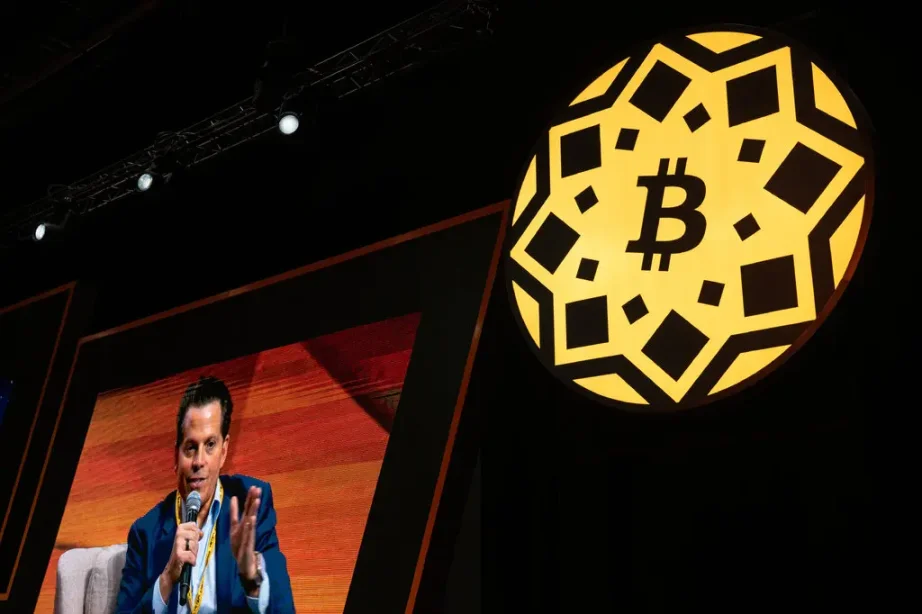
2024: Former Trump advisor Anthony Scaramucci attends the UAE Bitcoin Conference

A wave of companies has顺势 launched innovative products, lowering the barrier to including cryptocurrencies in brokerage accounts and retirement plans. Meanwhile, industry executives are lobbying regulators, planning to issue crypto tokens pegged to publicly traded company stocks, creating a stock trading market based on encryption technology.

This radical innovation wave has already exposed numerous problems. Over the past two months, the prices of mainstream cryptocurrencies have plummeted, causing companies heavily invested in crypto assets to face a crash crisis. Other emerging projects have also raised warnings from economists and regulators, as market risks continue to accumulate.

The core concern triggering各方担忧 is the continuous膨胀 of borrowing规模. By this fall, publicly traded companies had borrowed heavily to purchase cryptocurrencies; investors' futures contract holdings for cryptocurrencies exceeded $200 billion, with most of these trades relying on leveraged funds, which can bring huge profits but also hide the risk of liquidation.

More alarmingly, a series of new initiatives in the cryptocurrency industry have deeply tied the crypto market to the stock market and other financial sectors. Once a crisis erupts in the cryptocurrency market, the risk could spread to the entire financial system, causing a chain reaction.

"Now, the line between speculation, gambling, and investment has become blurred," said Timothy Massad, who served as Assistant Secretary of the Treasury for Financial Stability after the 2008 financial crisis. "This current state deeply worries me."

White House Press Secretary Karoline Leavitt responded that Trump's policies are "making the United States a global cryptocurrency hub by driving innovation and creating economic opportunities for all Americans."

Cryptocurrency industry executives argue that these emerging projects demonstrate the potential of encryption technology to reshape the outdated financial system. In their view, market volatility is precisely an opportunity for profit.

"High risk often comes with high reward," said Duncan Moir, president of 21Shares, which issues cryptocurrency investment products. "Our mission is to bring these investment opportunities to more people."

The rise of this innovation wave is inseparable from the comprehensive relaxation of the regulatory environment, making this the most friendly regulatory window for cryptocurrency companies. For many years prior, the U.S. Securities and Exchange Commission (SEC) had been in court battles with the cryptocurrency industry; but in January of this year, the agency established a dedicated cryptocurrency task force and has held meetings with dozens of companies seeking new regulations or product上市许可.

An SEC spokesperson stated that the agency is committed to "ensuring investors have sufficient information to make rational investment decisions."

U.S. Securities and Exchange Commission headquarters building in Washington, D.C.

Notably, many of these emerging companies are connected to the Trump family's expanding cryptocurrency business empire, a connection that has blurred the lines between business and government.

This summer, executives from Trump's cryptocurrency startup World Liberty Financial announced they would join the board of the publicly traded company ALT5 Sigma. This company, originally in the recycling business, now plans to raise $1.5 billion to enter the cryptocurrency market.

Capital Frenzy: An Out-of-Control Crypto Gamble

Cryptocurrency enthusiasts have named the high-risk investment frenzy催生 by the Trump administration the "Summer of Crypto Treasury Companies."

A Digital Asset Treasury (DAT) company is a publicly traded company whose core goal is to hoard cryptocurrency. Data from cryptocurrency consulting firm Architect Partners shows that among these emerging companies, nearly half focus on囤积 Bitcoin, the most well-known cryptocurrency, while dozens of others have announced plans to purchase non-mainstream coins like Dogecoin.
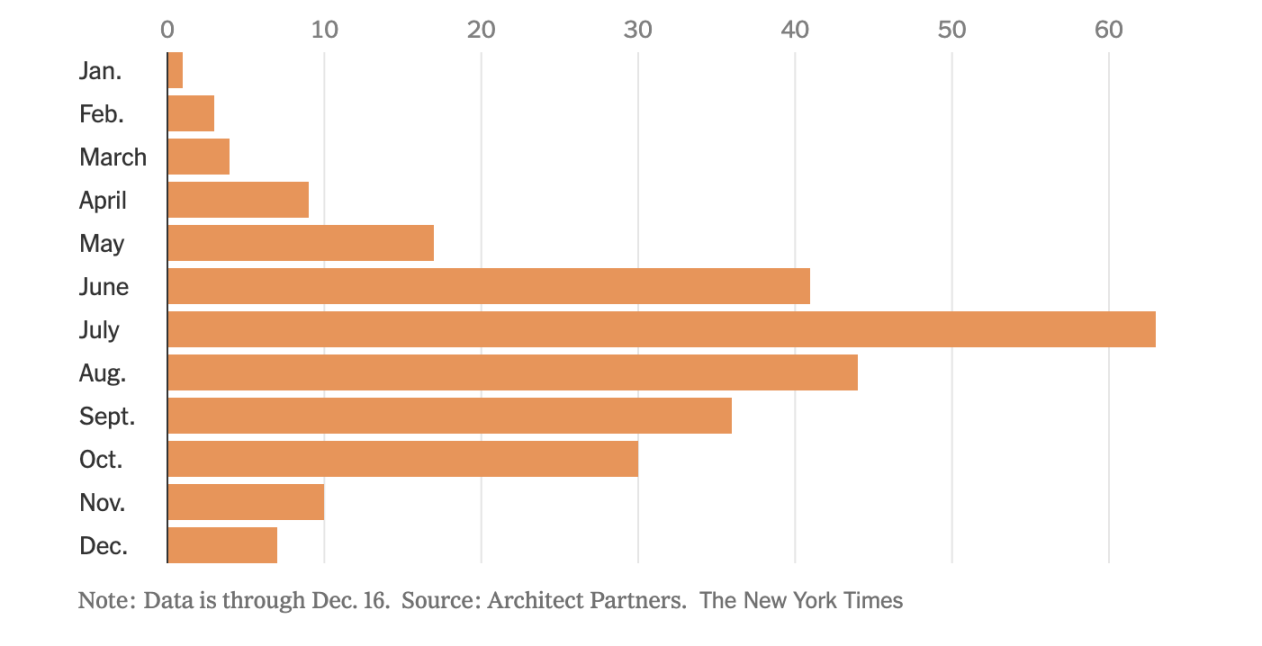
Number of Crypto Treasury Companies established each month in 2025. Source: Architect Partners, statistics as of December 16th.

The operating model of these companies is often straightforward: a group of executives identifies a small company trading on the public market (e.g., a toy manufacturer), persuades it to转型 into a cryptocurrency hoarding business; then partners with the company to raise hundreds of millions of dollars from high-net-worth investors, ultimately using the funds to purchase cryptocurrency.

The core purpose is to allow more people to participate in cryptocurrency investment by issuing traditional stocks that track the price of cryptocurrency. This strategy theoretically has considerable profit potential. Many investment funds and asset management institutions have been hesitant to invest directly in cryptocurrencies due to the complex and costly storage process and vulnerability to hacker attacks.

Investing in a crypto treasury company is equivalent to outsourcing the storage and other logistical work of cryptocurrencies. But these companies also隐藏巨大风险: Many are hastily established, and their management lacks experience in operating public companies. Data from Architect Partners shows these companies have collectively announced plans to borrow over $20 billion to purchase cryptocurrencies.

"Leverage is the primary culprit behind financial crises," warned Corey Frayer, a former SEC cryptocurrency advisor. "And the current market is generating a massive amount of leverage."

Some crypto treasury companies have already encountered operational difficulties or management crises, causing investors to suffer huge losses.

The publicly traded company Forward Industries转型 into a crypto treasury company and heavily invested in SOL. In September, the company raised over $1.6 billion from private investors, and its stock price一度飙升至 nearly $40 per share.

Allan Teh from Miami, who manages assets for a family office, invested $2.5 million in Forward Industries this year. "At that time, everyone thought this strategy was foolproof, and crypto asset prices would keep rising," Allan Teh recalled.

However, as the cryptocurrency market crashed, Forward Industries' stock price fell to $7 per share this month. The company announced plans to spend $1 billion to repurchase shares over the next two years, but this move failed to stop the stock's decline.

"The music stopped, the game is over. Now I'm starting to panic. Can I get out unscathed?" Allan Teh has lost about $1.5 million. "How much will this investment ultimately lose?" Forward Industries declined to comment.

The proliferation of crypto treasury companies has alerted the SEC. "Clearly, we are very worried about this," said the agency's Chairman, Paul Atkins, in an interview last month at a cryptocurrency conference in Miami. "We are closely monitoring the developments."

And behind this new cryptocurrency track lies the powerful support of the Trump family.

World Liberty Financial's founders include Trump's son Eric Trump and Zach Witkoff

In August, World Liberty Financial announced that its founders (including the president's son, Eric Trump) would join the board of ALT5 Sigma. This publicly traded company plans to囤积 the加密代币 WLFI issued by World Liberty Financial (Eric Trump's current title is Strategic Advisor and Board Observer).

This collaboration seemed poised to quickly profit the Trump family. According to the revenue-sharing agreement published on World Liberty Financial's website, commercial entities owned by the Trump family receive a cut whenever WLFI tokens are traded.

Subsequently, ALT5 Sigma's business took a turn for the worse. In August, the company disclosed that an executive of a subsidiary had been convicted of money laundering in Rwanda, and the board was investigating other "undisclosed matters." Soon after, ALT5 Sigma announced the suspension of its CEO and terminated contracts with two other executives.

Since August, the company's stock price has plummeted 85%. An ALT5 Sigma spokesperson said the company "remains confident about its future development."

Flash Crash: A Trillion in Market Value Vanishs Overnight

The recent turmoil in the cryptocurrency market can be traced back to one night in October.

Driven by Trump's policies, the cryptocurrency market had been rising for most of this year. But on October 10th, the prices of Bitcoin, Ethereum, and dozens of other cryptocurrencies collectively暴跌,上演了一场 flash crash.

The immediate trigger for this crash was Trump's announcement of new tariffs on China, a move that caused剧烈震荡 in the global economy. The reason the cryptocurrency market was hit so hard lies in the huge amount of leveraged funds that drove the market up.

On cryptocurrency trading platforms, traders can use their held crypto assets as collateral to borrow fiat currency or use leveraged funds to increase their cryptocurrency investment positions. Data from cryptocurrency data firm Galaxy Research shows that in the third quarter of this year, global cryptocurrency lending规模 grew by $20 billion in a single quarter, reaching a historical peak of $74 billion.

Previously, the riskiest cryptocurrency leverage trading mostly occurred in overseas markets. But in July of this year, the largest U.S. cryptocurrency exchange, Coinbase, announced the launch of a new investment tool allowing traders to bet on Bitcoin and Ethereum futures prices with 10x leverage. Prior to this, U.S. federal regulators had revoked guidance restricting such leveraged trading, giving Coinbase's new product the green light.
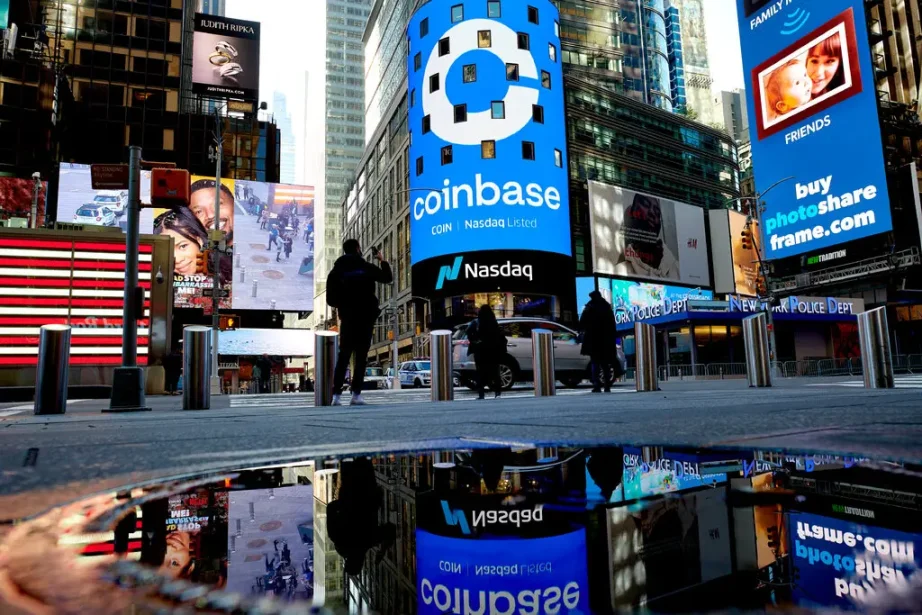
In July of this year, Coinbase exchange launched a 10x leverage cryptocurrency trading tool

The flash crash in October, while not causing an industry catastrophe like the bankruptcy of several large cryptocurrency companies in 2022, served as a wake-up call for the market, signaling the potential systemic crisis lurking in the cryptocurrency领域.

The nature of leveraged trading is that when the market falls, losses are magnified. Trading platforms will force liquidate, selling clients' collateral assets, a process that often further exacerbates price declines.

Data from cryptocurrency data firm CoinGlass shows that on October 10th alone, at least $19 billion worth of cryptocurrency leveraged trades were forcibly liquidated globally, affecting 1.6 million traders. This wave of liquidations was concentrated on platforms like Binance, OKX, and Bybit.

The crash caused a surge in trading volume, and several major exchanges experienced technical failures, preventing traders from transferring funds promptly. Coinbase stated it was "aware that some users experienced delays or degraded system performance while trading."

Derek Bartron, a software developer from Tennessee and also a cryptocurrency investor, said his Coinbase account was frozen during the flash crash. "I wanted to close my position and exit, but there was no way to operate," Derek Bartron said. "Coinbase effectively locked users' funds. We could only watch helplessly as asset values plummeted."

Derek Bartron said that in the days following the flash crash, his cryptocurrency assets lost about $50,000, partly because he couldn't close positions in time to stop losses.

A Coinbase spokesperson responded that the company provides automated risk management tools, "These tools functioned normally during this market volatility, and our exchange remained stable and operational throughout the event."

A Binance spokesperson admitted the exchange "experienced technical issues due to a surge in trading volume" and said measures had been taken to compensate affected users.

Crazy Experiment: The Regulatory Dilemma of the Tokenization Wave

One night this summer, cryptocurrency entrepreneurs Chris Yin and Teddy Pornprinya, dressed in formal wear, appeared at the Kennedy Center in Washington, D.C., attending a grand black-tie dinner.

The dinner was star-studded. Chris Yin, in a tuxedo bought the night before, met U.S. Vice President JD Vance, who had previously been involved in Silicon Valley venture capital; he and Teddy Pornprinya also exchanged words with former hedge fund manager and current U.S. Treasury Secretary Scott Bessent; they even took a photo with Trump, with the president giving a thumbs up to the camera.

Chris Yin and Teddy Pornprinya were there to pave the way for their startup, Plume. This company is advancing an industry-disrupting innovation plan, attempting to expand the underlying technology of cryptocurrency to a broader financial领域.

For months, Plume has been seeking permission from U.S. regulators to build an online trading platform to issue crypto tokens to clients pegged to real-world assets, covering everything from publicly traded company stocks to farms and oil wells.

Plume founders Chris Yin and Teddy Pornprinya pose for a photo at the Empire State Building

Currently, Plume has launched such tokenized products in overseas markets, where clients can buy and sell these asset tokens like cryptocurrencies. But this business, known as asset tokenization, exists in a legal gray area in the United States. Securities laws enacted decades ago impose strict regulatory rules on the issuance of equity in various assets, requiring issuers to disclose detailed information to protect investor rights.

This year, asset tokenization has become the hottest concept in the cryptocurrency industry. Industry executives claim that tokenized stocks can make stock trading more efficient and faster, creating a 24/7 global trading market. The major U.S. cryptocurrency exchange Kraken has already launched crypto-based stock trading services for clients in overseas markets.

Cryptocurrency industry executives say that cryptocurrency transactions are recorded on a public ledger, making them more transparent than the traditional financial system. "All transactions are traceable and auditable," said Kraken CEO Arjun Sethi. "It carries almost no risk."

Representatives from Kraken and Coinbase have met with the SEC to discuss regulatory rules for tokenized assets; meanwhile, Plume is also seeking a legal path to expand its business in the United States.

But this race for tokenized products has raised concerns among current and former regulatory officials, as well as executives of traditional financial giants.

In September of this year, Federal Reserve economists warned that asset tokenization could lead to the transmission of risks from the cryptocurrency market to the entire financial system, "weakening policymakers' ability to maintain the stability of the payment system during times of market stress."

SEC Chairman Paul Atkins, however, has a positive attitude towards tokenized stocks, calling them a "major technological breakthrough." "Under the securities laws, the Commission has broad discretion to provide regulatory support for the cryptocurrency industry. I am determined to push this work forward," Atkins said at a roundtable meeting on asset tokenization in May.

To promote the compliance of their company's business, Chris Yin and Teddy Pornprinya took a series of measures. In May, the two met with the SEC's cryptocurrency task force; they also provided chart support for the White House's cryptocurrency industry report; and established Plume's U.S. headquarters on the 77th floor of the Empire State Building.

At that black-tie dinner in Washington this summer, Trump's team showed great interest in the two founders. "They knew about Plume," Teddy Pornprinya recalled. "Everyone was somewhat aware of our business."

A few weeks later, Plume announced a key partnership, establishing a business relationship with the Trump family's World Liberty Financial.


Twitter:https://twitter.com/BitpushNewsCN

Bitpush TG Discussion Group:https://t.me/BitPushCommunity

Bitpush TG Subscription: https://t.me/bitpush

Original article link:https://www.bitpush.news/articles/7596713

Трендові криптовалюти

Пов'язані питання

QWhat is the main concern raised by the New York Times article regarding the cryptocurrency boom under Trump's influence?

AThe article raises concerns about the high risks associated with the cryptocurrency boom, including excessive leverage, market volatility, potential systemic risks to the broader financial system, and the blurring lines between speculation, gambling, and investment.

QHow did Anthony Scaramucci get involved in the cryptocurrency 'treasury company' trend, and what was the outcome?

AAnthony Scaramucci was quickly persuaded to join three little-known companies adopting a strategy of hoarding large amounts of cryptocurrency to attract investors. However, the trend did not last long, and the value of these companies plummeted, with the worst-performing one dropping over 80% after a market crash in the fall.

QWhat role did leverage play in the cryptocurrency market flash crash in October, as described in the article?

ALeverage significantly amplified the October flash crash. Traders used borrowed money to magnify their crypto bets. When prices fell, exchanges forced the sale of collateral assets, triggering a cascade of liquidations worth $19 billion that exacerbated the price decline and caused technical issues on major platforms.

QWhat is 'asset tokenization' as promoted by companies like Plume and Kraken, and why is it a regulatory concern?

AAsset tokenization involves creating cryptocurrency tokens that represent real-world assets like company stocks or real estate. It's a regulatory concern because it operates in a legal gray area in the U.S., potentially bypassing decades-old securities laws designed to protect investors through disclosure, and could transmit risks from the crypto market to the wider financial system.

QHow is the Trump family's business, World Liberty Financial, connected to the cryptocurrency companies discussed in the article?

AWorld Liberty Financial, founded by Eric Trump and Zach Witkoff, is connected to the cryptocurrency trend through its partnership with the public company ALT5 Sigma. ALT5 Sigma planned to hoard World Liberty's WLFI token, a move from which the Trump family's business entities stood to earn fees. Furthermore, World Liberty also established a business partnership with the tokenization startup Plume.

Пов'язані матеріали

7 Months After the Collapse of Huiwang, Southeast Asia's Escrow Platforms Undergo a Major Reshuffle

Following the collapse of Huione Pay—dubbed the "Alipay of Southeast Asia"—seven months ago, the region's underground financial guarantee platform sector is undergoing a significant reshuffle. This power vacuum has been swiftly filled by emerging platforms such as XinBi, Tiger/Navigator, JinBei (renamed JinBo), Dali/Tiancheng, and FullyLight. These platforms, operating largely via Telegram and offering services like escrow for illicit transactions, have absorbed the vast user base and markets left behind by Huione. While positioning themselves as "trust intermediaries," their primary clientele consists of networks involved in online scams, money laundering, illegal gambling, and even human trafficking. For instance, the Tiger/Navigator platform explicitly provides "escrow" services for kidnapping-for-ransom operations ("强押车交易"). Data underscores the immense scale: Huione alone processed over $103 billion in cryptocurrency payments and facilitated over $31 billion through its escrow market before its downfall, linking it to Cambodia's notorious Prince Group. Since its collapse, competitors have seen explosive growth. For example, the XinBi platform has accumulated over $1.6 billion in total USDT revenue, while platforms like NewPay, OkPay (under Dali), and FullyLight Wallet collectively processed over $4.8 billion in USDT in a single year. This ecosystem thrives in regions like Cambodia and Myanmar, where regulatory gaps allow these platforms to act as critical financial infrastructure for sprawling cybercrime industries, from scam compounds to online casinos. The article concludes that the moniker "Southeast Asian Alipay" is a misnomer, obscuring the platforms' fundamental role in enabling serious criminal enterprises rather than representing legitimate financial innovation.

Odaily星球日报38 хв тому

7 Months After the Collapse of Huiwang, Southeast Asia's Escrow Platforms Undergo a Major Reshuffle

Odaily星球日报38 хв тому

The Changing Landscape: What Are Crypto VCs Experiencing?

Title: The Shifting Landscape of Crypto Venture Capital The era of dedicated crypto venture capital funds is undergoing a significant transformation. Once essential for navigating the sector's complexity and high risk, these specialized funds are now facing an identity crisis as the market matures. This shift mirrors historical patterns in other specialized investment classes like cleantech and SPACs, where initial information advantages dissipate as technologies become mainstream and integrated into existing industry frameworks. The article argues that crypto is reaching a critical inflection point, transitioning from a "building phase" to an "integration phase." Major players like Stripe, BlackRock, and Visa now engage with crypto not for its novel mechanics but as a foundational financial infrastructure. Their needs—regulatory compliance, banking partnerships, distribution channels—align with traditional fintech, a domain easily understood by large, generalist funds like Sequoia and Founders Fund. This evolution creates a "barbell effect" within the VC landscape. On one end are massive, diversified platforms that can incorporate crypto as one vertical among many. On the other are small, nimble funds focused on niche, experimental projects. The middle ground—medium-sized dedicated crypto funds—is being squeezed out. Their typical fund size makes it impossible to generate sufficient returns solely from early-stage crypto bets, yet they cannot compete with giants for later-stage deals. Consequently, leading crypto-native firms like Paradigm and Framework Ventures are expanding into AI, robotics, and other sectors, driven partly by LP pressure for better returns amid a broader VC DPI crisis. Others, like Dragonfly and a16z, have narrowed their crypto focus predominantly to financial infrastructure like stablecoins, reframing the sector's core narrative. For crypto entrepreneurs, this consolidation presents challenges. While generalist funds offer larger checks and broader resources, crypto projects now compete fiercely with AI for attention and capital within these firms. Furthermore, the long-term, non-commercial foundational work that built the ecosystem—funded by dedicated crypto VCs—is less likely to attract generalist capital focused on direct returns. The conclusion is that "crypto investor" as a standalone category is becoming obsolete, akin to "internet investor." Crypto is becoming a baseline infrastructure layer. The future will see a barbell structure: large-scale growth financing handled by generalist funds, while pioneering, speculative projects are funded by small, specialized vehicles. The dedicated crypto funds of the 2017-2021 boom, which incubated core infrastructure, are giving way to this new, bifurcated reality.

Foresight News56 хв тому

The Changing Landscape: What Are Crypto VCs Experiencing?

Foresight News56 хв тому

As Consensus Accelerates, What Are Young Investors Betting On?

Title: As Consensus Forms Faster, What Are Young Investors Betting On? In the rapid evolution of tech investment, a new generation of young investors is navigating a landscape where AI, robotics, commercial aerospace, and quantum computing are advancing simultaneously. Traditional investment logic based on financial models is giving way to a need for deep technical understanding and the ability to act before industry consensus forms. An analysis of trends from the "WAIC FUTURE TECH" list of young investment leaders reveals key shifts in focus. The first major trend is the movement of AI from the digital screen into the physical world. Investment is shifting from large language models and chatbots towards embodied AI, robotics, AI hardware, and edge computing. While demonstrations generate excitement, the real challenge lies in achieving scalable, reliable, and cost-effective delivery in complex real-world environments like factories and logistics. Success depends not just on algorithms but on the integration of sensors, actuators, and control systems. Second, the competitive focus for large models is moving beyond raw capability toward building an "intelligence flywheel." The goal is to create self-reinforcing systems where user interaction generates data, improving the model, which in turn enhances the user experience and attracts more engagement. Companies that successfully embed AI into workflows to create these closed-loop systems can build lasting value that isn't easily erased by the next model upgrade. Third, facing a potential bottleneck in high-quality human-generated data, investors are looking at new underlying technologies. Reinforcement learning and self-play, as demonstrated by AlphaGo Zero, offer paths for AI to generate its own experience. Scientific foundation models, which aim to build general AI capabilities for fields like life sciences and materials discovery, represent a non-consensus direction that could unlock new frontiers of knowledge and data. Finally, in deep-tech areas like quantum computing, commercial aerospace, and space-based infrastructure, patient capital is essential. These fields have long, uncertain development and validation cycles involving complex engineering, supply chains, and regulations. Investment here requires a long-term view, focusing on foundational team capabilities and the eventual emergence of market demand, even if commercial returns are distant. Collectively, these trends illustrate how young investors are adapting to a new era. They are learning to make earlier, technically-informed judgments, balance hype with real-world viability, and provide the patient capital needed to build the deep-tech foundations of the future.

marsbit1 год тому

As Consensus Accelerates, What Are Young Investors Betting On?

marsbit1 год тому

Торгівля

Спот

Популярні статті

Що таке $S$

Розуміння SPERO: Комплексний огляд Вступ до SPERO Оскільки ландшафт інновацій продовжує еволюціонувати, виникнення технологій web3 та криптовалютних проектів відіграє ключову роль у формуванні цифрового майбутнього. Один з проектів, який привернув увагу в цій динамічній сфері, — це SPERO, позначений як SPERO,$$s$. Ця стаття має на меті зібрати та представити детальну інформацію про SPERO, щоб допомогти ентузіастам та інвесторам зрозуміти його основи, цілі та інновації в рамках web3 та крипто-сектору. Що таке SPERO,$$s$? SPERO,$$s$ — це унікальний проект у криптопросторі, який прагне використати принципи децентралізації та технології блокчейн для створення екосистеми, що сприяє залученню, корисності та фінансовій інклюзії. Проект розроблений для полегшення взаємодії між користувачами новими способами, надаючи їм інноваційні фінансові рішення та послуги. У своїй основі SPERO,$$s$ прагне надати можливості індивідам, забезпечуючи інструменти та платформи, які покращують користувацький досвід у криптовалютному просторі. Це включає в себе можливість більш гнучких методів транзакцій, сприяння ініціативам, що підтримуються спільнотою, та створення шляхів для фінансових можливостей через децентралізовані додатки (dApps). Основна концепція SPERO,$$s$ обертається навколо інклюзивності, прагнучи зменшити розриви в традиційній фінансовій системі, використовуючи переваги технології блокчейн. Хто є творцем SPERO,$$s$? Особистість творця SPERO,$$s$ залишається дещо невідомою, оскільки є обмежені публічно доступні ресурси, що надають детальну інформацію про його засновників. Ця відсутність прозорості може бути наслідком зобов'язання проекту до децентралізації — етики, яку багато проектів web3 поділяють, ставлячи колективні внески вище за індивідуальне визнання. Зосереджуючи обговорення навколо спільноти та її колективних цілей, SPERO,$$s$ втілює суть наділення без виділення конкретних осіб. Таким чином, розуміння етики та місії SPERO є більш важливим, ніж ідентифікація єдиного творця. Хто є інвесторами SPERO,$$s$? SPERO,$$s$ підтримується різноманітними інвесторами, починаючи від венчурних капіталістів до ангельських інвесторів, які прагнуть сприяти інноваціям у крипто-секторі. Зосередження цих інвесторів зазвичай узгоджується з місією SPERO — пріоритет надається проектам, які обіцяють технологічний прогрес у суспільстві, фінансову інклюзію та децентралізоване управління. Ці інвесторські фонди зазвичай зацікавлені в проектах, які не лише пропонують інноваційні продукти, але й позитивно впливають на спільноту блокчейн та її екосистеми. Підтримка з боку цих інвесторів підкріплює SPERO,$$s$ як значного конкурента в швидко змінюваній сфері крипто-проектів. Як працює SPERO,$$s$? SPERO,$$s$ використовує багатогранну структуру, яка відрізняє його від традиційних криптовалютних проектів. Ось деякі ключові особливості, які підкреслюють його унікальність та інноваційність: Децентралізоване управління: SPERO,$$s$ інтегрує моделі децентралізованого управління, надаючи користувачам можливість активно брати участь у процесах прийняття рішень щодо майбутнього проекту. Цей підхід сприяє відчуттю власності та відповідальності серед членів спільноти. Корисність токена: SPERO,$$s$ використовує свій власний криптовалютний токен, розроблений для виконання різних функцій в екосистемі. Ці токени дозволяють здійснювати транзакції, отримувати винагороди та полегшувати послуги, що пропонуються на платформі, підвищуючи загальну залученість та корисність. Шарова архітектура: Технічна архітектура SPERO,$$s$ підтримує модульність та масштабованість, що дозволяє безперешкодно інтегрувати додаткові функції та додатки в міру розвитку проекту. Ця адаптивність є надзвичайно важливою для збереження актуальності в постійно змінюваному крипто-ландшафті. Залучення спільноти: Проект підкреслює ініціативи, що підтримуються спільнотою, використовуючи механізми, які стимулюють співпрацю та зворотний зв'язок. Підтримуючи сильну спільноту, SPERO,$$s$ може краще задовольняти потреби користувачів та адаптуватися до ринкових тенденцій. Фокус на інклюзію: Пропонуючи низькі комісії за транзакції та зручні інтерфейси, SPERO,$$s$ прагне залучити різноманітну базу користувачів, включаючи осіб, які раніше не брали участі в крипто-просторі. Це зобов'язання до інклюзії узгоджується з його загальною місією наділення через доступність. Хронологія SPERO,$$s$ Розуміння історії проекту надає важливі уявлення про його розвиток та етапи. Нижче наведено пропоновану хронологію, що відображає значні події в еволюції SPERO,$$s$: Етап концептуалізації та ідеації: Початкові ідеї, що стали основою SPERO,$$s$, були сформовані, тісно пов'язані з принципами децентралізації та фокусом на спільноті в індустрії блокчейн. Запуск білого паперу проекту: Після концептуального етапу був випущений комплексний білий папір, що детально описує бачення, цілі та технологічну інфраструктуру SPERO,$$s$, щоб залучити інтерес та зворотний зв'язок від спільноти. Створення спільноти та ранні залучення: Активні зусилля були спрямовані на створення спільноти ранніх прихильників та потенційних інвесторів, що полегшило обговорення цілей проекту та отримання підтримки. Подія генерації токенів: SPERO,$$s$ провів подію генерації токенів (TGE) для розподілу своїх рідних токенів серед ранніх прихильників та встановлення початкової ліквідності в екосистемі. Запуск початкового dApp: Перший децентралізований додаток (dApp), пов'язаний з SPERO,$$s$, став доступним, дозволяючи користувачам взаємодіяти з основними функціями платформи. Постійний розвиток та партнерства: Безперервні оновлення та вдосконалення пропозицій проекту, включаючи стратегічні партнерства з іншими учасниками блокчейн-простору, сформували SPERO,$$s$ у конкурентоспроможного та еволюціонуючого гравця на крипто-ринку. Висновок SPERO,$$s$ є свідченням потенціалу web3 та криптовалют для революціонізації фінансових систем та наділення індивідів. Завдяки зобов'язанню до децентралізованого управління, залучення спільноти та інноваційно спроектованих функцій, він прокладає шлях до більш інклюзивного фінансового ландшафту. Як і з будь-якими інвестиціями в швидко змінюваному крипто-просторі, потенційним інвесторам та користувачам рекомендується ретельно досліджувати та обдумано взаємодіяти з поточними подіями в SPERO,$$s$. Проект демонструє інноваційний дух крипто-індустрії, запрошуючи до подальшого дослідження його численних можливостей. Хоча подорож SPERO,$$s$ ще триває, його основні принципи можуть справді вплинути на майбутнє того, як ми взаємодіємо з технологією, фінансами та один з одним у взаємопов'язаних цифрових екосистемах.

137 переглядів усьогоОпубліковано 2024.12.17Оновлено 2024.12.17

Що таке $S$

Що таке AGENT S

Агент S: Майбутнє автономної взаємодії в Web3 Вступ У постійно змінюваному ландшафті Web3 та криптовалюти інновації постійно переосмислюють, як люди взаємодіють з цифровими платформами. Один з таких новаторських проектів, Агент S, обіцяє революціонізувати взаємодію людини з комп'ютером через свою відкриту агентну структуру. Прокладаючи шлях для автономних взаємодій, Агент S прагне спростити складні завдання, пропонуючи трансформаційні застосування в штучному інтелекті (ШІ). Це детальне дослідження заглиблюється в складності проекту, його унікальні особливості та наслідки для сфери криптовалюти. Що таке Агент S? Агент S є революційною відкритою агентною структурою, спеціально розробленою для вирішення трьох основних викликів в автоматизації комп'ютерних завдань: Набуття специфічних знань у галузі: Структура інтелектуально навчається з різних зовнішніх джерел знань та внутрішнього досвіду. Цей подвійний підхід дозволяє їй створити багатий репозиторій специфічних знань у галузі, покращуючи її продуктивність у виконанні завдань. Планування на довгих горизонтах завдань: Агент S використовує планування з підкріпленням досвіду, стратегічний підхід, який полегшує ефективний розподіл та виконання складних завдань. Ця функція значно підвищує її здатність ефективно та результативно управляти кількома підзавданнями. Обробка динамічних, неоднорідних інтерфейсів: Проект представляє Інтерфейс Агент-Комп'ютер (ACI), інноваційне рішення, яке покращує взаємодію між агентами та користувачами. Використовуючи багатомодальні великі мовні моделі (MLLMs), Агент S може безперешкодно орієнтуватися та маніпулювати різноманітними графічними інтерфейсами користувача. Завдяки цим новаторським функціям Агент S надає надійну структуру, яка вирішує складнощі, пов'язані з автоматизацією людської взаємодії з машинами, прокладаючи шлях для численних застосувань у ШІ та за його межами. Хто є творцем Агент S? Хоча концепція Агент S є фундаментально новаторською, конкретна інформація про його творця залишається невідомою. Творець наразі невідомий, що підкреслює або початкову стадію проекту, або стратегічний вибір зберегти засновників у таємниці. Незважаючи на анонімність, акцент залишається на можливостях та потенціалі структури. Хто є інвесторами Агент S? Оскільки Агент S є відносно новим у криптографічній екосистемі, детальна інформація про його інвесторів та фінансових спонсорів не задокументована. Відсутність публічно доступних відомостей про інвестиційні фонди або організації, що підтримують проект, викликає питання щодо його фінансової структури та дорожньої карти розвитку. Розуміння підтримки є критично важливим для оцінки стійкості проекту та потенційного впливу на ринок. Як працює Агент S? В основі Агент S лежить передова технологія, яка дозволяє йому ефективно функціонувати в різних умовах. Його операційна модель побудована навколо кількох ключових функцій: Взаємодія з комп'ютером, подібна до людської: Структура пропонує розширене планування ШІ, прагнучи зробити взаємодії з комп'ютерами більш інтуїтивними. Імітуючи людську поведінку при виконанні завдань, вона обіцяє підвищити досвід користувачів. Наративна пам'ять: Використовується для використання високорівневого досвіду, Агент S використовує наративну пам'ять для відстеження історій завдань, тим самим покращуючи свої процеси прийняття рішень. Епізодична пам'ять: Ця функція надає користувачам покрокові інструкції, дозволяючи структурі пропонувати контекстуальну підтримку в міру виконання завдань. Підтримка OpenACI: Завдяки можливості працювати локально, Агент S дозволяє користувачам зберігати контроль над своїми взаємодіями та робочими процесами, узгоджуючи з децентралізованою етикою Web3. Легка інтеграція з зовнішніми API: Його універсальність і сумісність з різними платформами ШІ забезпечують те, що Агент S може безперешкодно вписатися в існуючі технологічні екосистеми, роблячи його привабливим вибором для розробників та організацій. Ці функціональні можливості колективно сприяють унікальному положенню Агент S у крипто-просторі, оскільки він автоматизує складні, багатоступеневі завдання з мінімальним втручанням людини. У міру розвитку проекту його потенційні застосування в Web3 можуть переосмислити, як відбуваються цифрові взаємодії. Хронологія Агент S Розробка та етапи Агент S можуть бути узагальнені в хронології, яка підкреслює його значні події: 27 вересня 2024 року: Концепція Агент S була представлена в комплексній науковій статті під назвою “Відкрита агентна структура, яка використовує комп'ютери як людина”, що демонструє основи проекту. 10 жовтня 2024 року: Наукова стаття була опублікована на arXiv, пропонуючи детальне дослідження структури та її оцінки продуктивності на основі бенчмарку OSWorld. 12 жовтня 2024 року: Було випущено відеопрезентацію, що надає візуальне уявлення про можливості та особливості Агент S, ще більше залучаючи потенційних користувачів та інвесторів. Ці маркери в хронології не лише ілюструють прогрес Агент S, але й вказують на його прихильність до прозорості та залучення громади. Ключові моменти про Агент S У міру розвитку структури Агент S кілька ключових характеристик виділяються, підкреслюючи її новаторський характер та потенціал: Інноваційна структура: Розроблена для забезпечення інтуїтивного використання комп'ютерів, подібного до людської взаємодії, Агент S пропонує новий підхід до автоматизації завдань. Автономна взаємодія: Здатність автономно взаємодіяти з комп'ютерами через GUI означає стрибок до більш інтелектуальних та ефективних обчислювальних рішень. Автоматизація складних завдань: Завдяки своїй надійній методології він може автоматизувати складні, багатоступеневі завдання, роблячи процеси швидшими та менш схильними до помилок. Безперервне вдосконалення: Механізми навчання дозволяють Агенту S покращуватися на основі минулого досвіду, постійно підвищуючи свою продуктивність та ефективність. Універсальність: Його адаптивність до різних операційних середовищ, таких як OSWorld та WindowsAgentArena, забезпечує його здатність служити широкому спектру застосувань. Оскільки Агент S займає своє місце в ландшафті Web3 та криптовалюти, його потенціал покращити можливості взаємодії та автоматизувати процеси означає значний прогрес у технологіях ШІ. Завдяки своїй інноваційній структурі Агент S є прикладом майбутнього цифрових взаємодій, обіцяючи більш безперешкодний та ефективний досвід для користувачів у різних галузях. Висновок Агент S представляє собою сміливий крок вперед у поєднанні ШІ та Web3, з можливістю переосмислити, як ми взаємодіємо з технологією. Хоча проект все ще на ранніх стадіях, можливості для його застосування є величезними та переконливими. Завдяки своїй комплексній структурі, що вирішує критичні виклики, Агент S прагне вивести автономні взаємодії на передній план цифрового досвіду. У міру того, як ми заглиблюємося в сфери криптовалюти та децентралізації, проекти, подібні до Агент S, безсумнівно, відіграватимуть ключову роль у формуванні майбутнього технологій та співпраці людини з комп'ютером.

757 переглядів усьогоОпубліковано 2025.01.14Оновлено 2025.01.14

Що таке AGENT S

Як купити S

Ласкаво просимо до HTX.com! Ми зробили покупку Sonic (S) простою та зручною. Дотримуйтесь нашої покрокової інструкції, щоб розпочати свою криптовалютну подорож.Крок 1: Створіть обліковий запис на HTXВикористовуйте свою електронну пошту або номер телефону, щоб зареєструвати обліковий запис на HTX безплатно. Пройдіть безпроблемну реєстрацію й отримайте доступ до всіх функцій.ЗареєструватисьКрок 2: Перейдіть до розділу Купити крипту і виберіть спосіб оплатиКредитна/дебетова картка: використовуйте вашу картку Visa або Mastercard, щоб миттєво купити Sonic (S).Баланс: використовуйте кошти з балансу вашого рахунку HTX для безперешкодної торгівлі.Треті особи: ми додали популярні способи оплати, такі як Google Pay та Apple Pay, щоб підвищити зручність.P2P: Торгуйте безпосередньо з іншими користувачами на HTX.Позабіржова торгівля (OTC): ми пропонуємо індивідуальні послуги та конкурентні обмінні курси для трейдерів.Крок 3: Зберігайте свої Sonic (S)Після придбання Sonic (S) збережіть його у своєму обліковому записі на HTX. Крім того, ви можете відправити його в інше місце за допомогою блокчейн-переказу або використовувати його для торгівлі іншими криптовалютами.Крок 4: Торгівля Sonic (S)Легко торгуйте Sonic (S) на спотовому ринку HTX. Просто увійдіть до свого облікового запису, виберіть торгову пару, укладайте угоди та спостерігайте за ними в режимі реального часу. Ми пропонуємо зручний досвід як для початківців, так і для досвідчених трейдерів.

1.7k переглядів усьогоОпубліковано 2025.01.15Оновлено 2026.06.02

Як купити S

Обговорення

Ласкаво просимо до спільноти HTX. Тут ви можете бути в курсі останніх подій розвитку платформи та отримати доступ до професійної ринкової інформації. Нижче представлені думки користувачів щодо ціни S (S).

活动图片














