Trump's 38th Call 'Deal is Imminent', Global Markets Experience TACO-style Surge

Odaily星球日报Опубліковано о 2026-06-12Востаннє оновлено о 2026-06-12

Анотація

Former U.S. President Trump claimed for the 38th time that a "final agreement" is imminent, triggering a "TACO-style" surge in global stock markets. Major U.S. indices, as well as Japanese and South Korean markets, posted significant gains, with oil prices falling and gold rising. The market rally is attributed to renewed hopes for a ceasefire in the U.S.-Iran-Israel conflict, the latest U.S. CPI data showing inflation at a multi-year high but easing core pressures, and a significantly reduced expectation of a Federal Reserve rate hike this year. However, analysts warn of potential risks. The situation in the Middle East remains unresolved, with Iran denying any agreement. Several institutions have turned cautious, flagging overvaluation, speculative excess, and warning of a potential 6-7% correction in the S&P 500. Additionally, the massive SpaceX IPO, which has seen overwhelming retail demand, is testing market liquidity as investors may sell existing holdings to participate. Experts advise caution against market volatility driven by Trump's unpredictable statements.

Original|Odaily Planet Daily(@OdailyChina)

Author|Wenser(@wenser2010 )
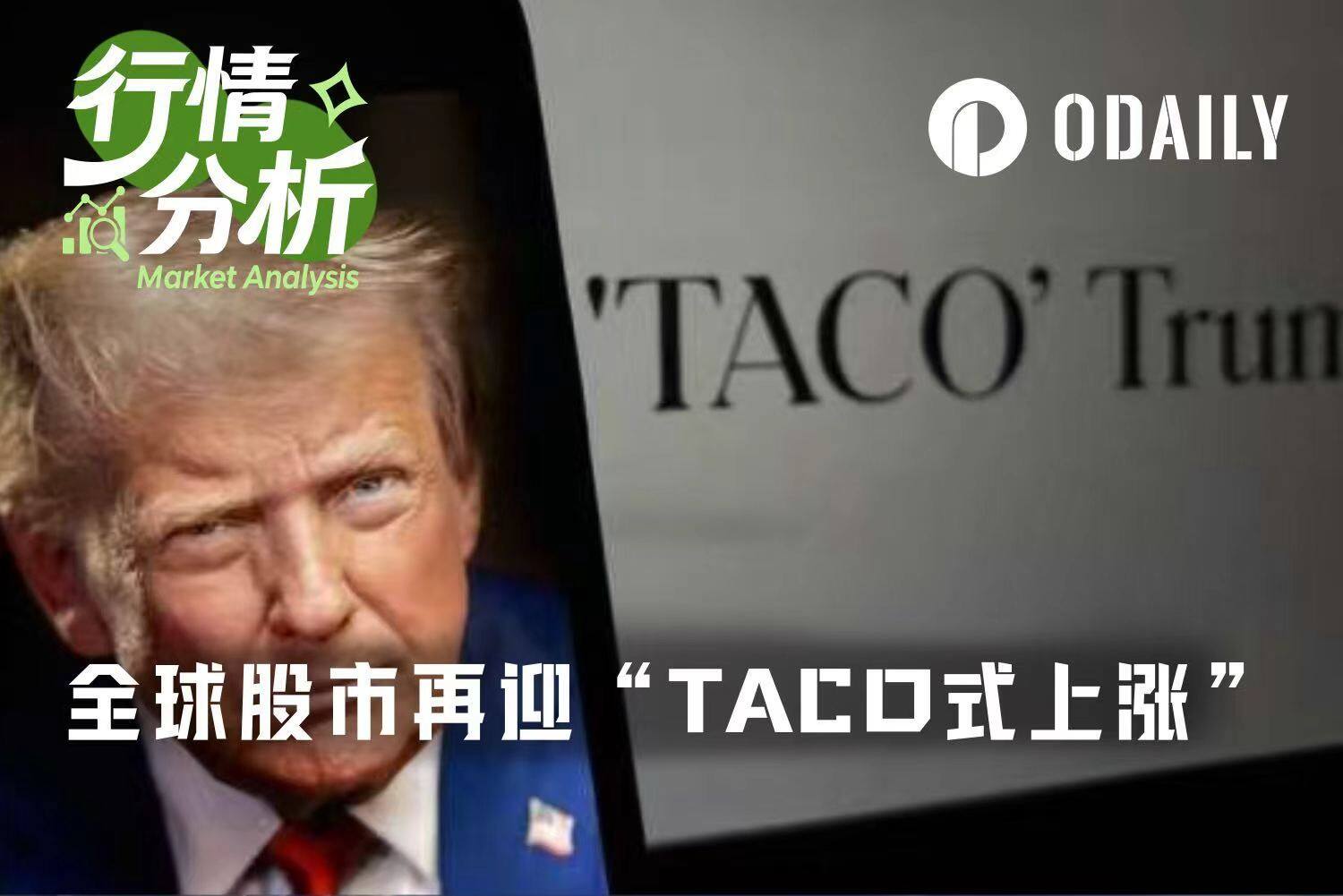
Following the US military's sudden strikes on Iran, and Trump's threat to "take tough action" against Iran which was subsequently canceled, Trump for the 38th time proclaimed that a "final deal is imminent". Financial markets worldwide, including the US stock market, jolted awake and once again experienced a "TACO-style surge".

This morning, all three major US stock indices closed higher, with the Dow Jones up 1.90%, the Nasdaq up 3.42%, and the S&P 500 up 1.73%. Crypto-related stocks rose across the board, with COIN up 4.99% intraday and HOOD up 7.40% intraday. Japanese and South Korean stock markets opened higher. The South Korean KOSPI index opened up 519.25 points, a 6.69% gain, at 8283.2 points, triggering a trading halt at one point, with gains later widening to 8%. The Nikkei 225 index opened up 880.53 points, a 1.37% gain, at 65097.80 points. Possibly influenced by this news, oil prices fell sharply by 4.3%, while gold prices rebounded by 3.1%.

As the US-Israel-Iran conflict enters its fourth month, global financial markets, particularly the US stock market, are pricing in positive developments such as the end of the war in advance, leading to a series of recent "news-driven rallies".

Macro Background: Trump's "Negotiation for Change", US CPI Hits 3-Year High, Fed Rate Hike Expectations Dim

Overall, the macro backdrop for today's stock market rally primarily includes the potential for peace talks in the war situation, the release of US CPI data, and the diminished expectations for a Fed rate hike.

Trump's Comments Again Show "TACO Power"

According to the latest news overnight and this morning, Trump first canceled the planned strikes and bombing operations against Iran scheduled for that evening. He subsequently posted, stating that related consultations had been submitted to and approved by Iran's highest leadership; the final terms (both in overall concept and specific details) had been approved by all relevant parties, including the US, Israel, Saudi Arabia, the UAE, Qatar, Turkey, Pakistan, Bahrain, Kuwait, Jordan, Egypt, and others. Although Iran and Israel later denied this, the market chose to embrace it.

Furthermore, Trump stated regarding the Iran issue that an "excellent agreement" had been reached, noting the relevant documents were in the final drafting stage and could be finalized in the coming days, ready for signing. He added that the agreement might be signed in Europe, possibly this weekend, with US Vice President Vance in attendance. He also said, "Once Iran signs the agreement, the Strait of Hormuz will be opened." Despite the Iran negotiations "taking too long", financial markets are currently choosing to "believe first".

US Core CPI Annual Rate Hits 3-Year High

This Wednesday, the US May CPI data was released, showing:

  • Seasonally Adjusted CPI MoM: 0.5%, expected 0.50%, previous 0.60%.
  • US May Seasonally Adjusted Core CPI MoM: 0.2%, expected 0.30%, previous 0.40%.
  • US May Unadjusted CPI YoY: 4.2%, expected 4.20%, previous 3.80%, the highest since April 2023.
  • US May Unadjusted Core CPI YoY: 2.9%, expected 2.90%, previous 2.80%, the highest since September 2025.

Some analysts believe that US inflation returning to the "4% range" suggests the peak of war-related inflation may be over. CPI rising sharply for the third consecutive month highlights the increasing pressure on household spending, as signs indicate more consumers are tapping into savings to cover expenses. After the data release, the probability of the Fed holding rates steady in June rose to 96.3%, greatly easing earlier Fed rate hike expectations. Trump responded to this data by boasting, "I love inflation."

Expectations for Fed Rate Hike This Year Significantly Eased

Following the CPI data release, the latest information shows the market no longer fully prices in a Fed rate hike this year.

Seema Shah, Chief Global Strategist at Principal Asset Management, stated, "US inflation remains uncomfortably high at 4%, but the weaker-than-expected core reading does relieve some pressure. With energy price increases being the main driver and housing costs easing, we haven't seen clear signs of broader second-round effects yet, which should allow the Fed to remain patient."

Afonso Borges, an analyst at Julius Baer, also pointed out that the modest rally led by short-term Treasuries after Wednesday's CPI report "makes sense," as the better-than-expected inflation data should reduce the risk of a Fed rate hike later this year.

Japanese and South Korean Markets: Retail Investors Borrow to Buy the Dip, Yen Continues to Depreciate

Shifting focus to Japanese and South Korean stock markets, they are currently in a phase of significant rebound after recent declines.

On June 10th, according to Yonhap News Agency, influenced by negative news from the US stock market and the sharp drop in semiconductor stocks, the Korea Composite Stock Price Index (KOSPI) experienced two days of severe adjustments. During this period, the overdraft account balances at major commercial banks increased by over 600 billion won (approximately 2.67 billion RMB). Analysis suggests this indicates retail investors, expecting a market rebound after the plunge, began using overdraft accounts for "borrowing to invest."

According to Nikkei News, the Bank of Japan (BoJ) is expected to raise its short-term policy rate from 0.75% to 1.0% at its monetary policy meeting on June 15th-16th, which would be the highest policy rate level since 1995. Possibly influenced by this news, USD/JPY rose 0.2% intraday, with the current exchange rate at 160.168.

Overall, funds in Japanese and South Korean stock markets continue to grow steadily, but a BoJ rate hike could gradually tighten liquidity in the Japanese capital market. Bank of America analyst Shusuke Yamada stated that if the BoJ takes a hawkish stance and raises rates at next week's meeting, it is expected to support the Yen. He noted that the market has already priced in the rate hike expectation.

Future Outlook: War Situation Uncertain, Institutions Warn of Deep Correction, Markets Face Liquidity Test

Although global stock markets surged today stimulated by Trump's unpredictable "positive news", examining various dynamic factors reveals market sentiment remains cautiously optimistic, with precautions for a deep correction.

No Turnaround in US-Iran Situation

Ali Akbar Dareini from the Tehran Strategic Studies Center stated that despite Trump announcing the cancellation of strikes against Iran, the situation hasn't changed. From Iran's perspective, before any negotiations begin or Iran is ready to discuss nuclear issues, the US first needs to take confidence-building measures, which hasn't happened. Reality shows the US hasn't taken any steps to ease tensions. Iran's position is not to compromise under coercion.

Institutional Bulls Turn Cautious, Warn of Deep Correction

Alex Altmann, Barclays' Head of Global Equity Strategy, who has often advocated "holding stocks" during market volatility and accurately timed rebounds, recently issued a rare cautious warning. In his latest market analysis, he stated that due to the combined pull of technical overbought conditions, overheated sentiment, and macro-environmental pressures, he has turned bearish on the short-term outlook for US stocks. He believes the US stock market is currently in the "middle of a structural correction," with the biggest hidden danger being the severe disconnect between retail sentiment and macroeconomic reality. He even bluntly stated, "The S&P 500 could face a total correction of 6%-7%."

Recent data from the American Association of Individual Investors (AAII) sentiment survey shows the bearish proportion among investors surged to 47.7% last week, nearing the year's high of 52% (March 18th) and well above the historical average of 31%.

Furthermore, several institutions have recently expressed bearish views: Previously, BofA Securities stated investors should be cautious about US stocks, as an increasing number of bearish signals suggest the market is nearing a top.

A team of strategists led by Savita Subramanian wrote in a report dated June 5th that about 70% of bear market signals have now been triggered, consistent with average levels during historical market peaks. The S&P 500 appears statistically overvalued on 17 out of 20 valuation metrics, with 8 indicators above levels seen during the tech bubble. Additionally, high P/E stocks significantly outperforming low valuation stocks is seen by the strategists as a sign of excessive speculation. Within the tech sector, the gap between the best and worst performing quintiles has widened to its highest level since February 2000.

Of course, this view has been openly opposed by the "new stock god" Serenity, who believes Bank of America's bearish rhetoric should be viewed cautiously, as a flood of negative news often appears when institutions need liquidity.

Regarding the South Korean stock market, on June 10th, the open interest in put options for the Kospi 200 index has recently surged sharply relative to call options, nearing levels that have historically preceded market declines. By the previous trading day's close, the ratio of protective put options used to hedge declines to speculative call options approached 2.5 times, hitting a five-year high. This indicator has only breached this threshold a few times before. Notably, South Korean retail investors sold over 1 trillion won worth of overseas stocks in the first week of June, potentially signaling a return of domestic investors to the local market.

SpaceX IPO Looms, US Market Faces Liquidity Test

The latest news indicates that retail subscription for the SpaceX US IPO has exceeded $100 billion. Combined with earlier information that "SpaceX plans to raise $75 billion, with 30% of shares offered to individual investors," the retail subscription is now over 4 times oversubscribed.

US investment manager Jim Chanos stated that investors are pricing in grand narratives rather than realistic profit prospects, with SpaceX's valuation multiples far exceeding those of Tesla (TSLA.O). Furthermore, institutions like Franklin Templeton, and sovereign wealth funds from Saudi Arabia and Kuwait have joined the IPO subscription frenzy. According to foreign media reports, several institutional investors have each placed orders for about $10 billion or more of shares. Two days ago, the SpaceX IPO had already attracted over $250 billion in investment demand, exceeding its planned fundraising of $75 billion, with oversubscription nearing 4 times. Based on market trend projections, by the official listing this Friday, the oversubscription ratio is expected to climb to 10 times.

"Wall Street's Oracle" and Bitmine Board Chairman Tom Lee commented on this, stating that at this stage, US stock investors are actively selling their existing holdings to raise cash to participate in this blockbuster IPO. This ongoing capital diversion effect might be the culprit behind the recent weakness in US stocks. Christophe Boucher, Chief Investment Officer at ABN Amro Investment Solutions (part of Dutch bank ABN Amro), also said, participating in the SpaceX IPO is similar to buying cryptocurrency about 15 years ago—either you could lose your entire principal or potentially achieve exponential returns.

Although the SpaceX IPO has raised concerns about market liquidity shortages, according to market news, S&P Dow Jones Indices believes SpaceX is eligible for rapid inclusion in certain indices. At that point, SpaceX could become a "phenomenal giant" in the US stock market.

In summary, global stock markets will continue to face influences such as capital liquidity, domestic market policies, and changes in the global situation like the US-Israel-Iran conflict. In the short term, be wary of Trump potentially staging another round of market manipulation with "intimidation-induced bearishness" and "TACO-style bullishness".

Пов'язані питання

QWhat were the main factors contributing to the global stock market surge mentioned in the article?

AThe main factors contributing to the global stock market surge were Donald Trump's announcement of an 'imminent final agreement' regarding the US-Iran conflict, which led to a 'TACO-style rally.' Additionally, the release of US CPI data showing a 4.2% year-over-year inflation rate and a 2.9% core inflation rate, both at multi-year highs, along with a significant reduction in market expectations for a Federal Reserve interest rate hike this year, provided a supportive macroeconomic backdrop.

QWhat specific actions did investors in South Korea take following the recent market downturn, as described in the article?

AFollowing the recent market downturn, South Korean retail investors borrowed money through overdraft accounts to engage in 'borrowing investment,' with the total balance in major commercial bank overdraft accounts increasing by over 600 billion won (approximately 2.67 billion RMB). This indicates they were anticipating a market rebound and looking to buy at lower prices.

QAccording to the article, why did several investment institutions express a cautious or bearish outlook on US stocks despite the recent rally?

ASeveral investment institutions expressed a cautious or bearish outlook on US stocks due to concerns about technical overbought conditions, overheated sentiment, and macroeconomic pressures. For example, Barclays warned of a potential 6-7% correction in the S&P 500. Bank of America Securities noted that about 70% of bear market signals had been triggered and that the S&P 500 appeared statistically overvalued on many metrics. Additionally, the high level of put option activity relative to call options in the South Korean Kospi 200 index was seen as a potential warning sign for a market decline.

QWhat potential impact does the SpaceX IPO have on the liquidity of the US stock market, as discussed in the article?

AThe SpaceX IPO poses a potential liquidity challenge for the US stock market. With retail subscription demand exceeding $100 billion and total investment demand surpassing $250 billion for a planned $75 billion offering, it is suggested that investors may be selling existing stock holdings to raise cash to participate in the IPO. Analysts like Tom Lee point to this 'cash consolidation effect' as a possible reason for recent weakness in US stocks.

QHow did the article describe the official Iranian response to Trump's claims about a potential agreement?

AThe article described the official Iranian response as one of denial and continued firmness. Following Trump's claims, Iranian and Israeli sources reportedly denied the developments. An Iranian analyst from the Tehran Strategic Research Center stated that no trust-building measures had been taken by the US to ease tensions and reiterated Iran's position that it 'will not compromise under coercion,' indicating no fundamental change in the situation from Iran's perspective.

Пов'язані матеріали

Do Robots Also Need Encrypted Wallets? Stablecoin Giant Tether Bets on German Company NEURA Robotics

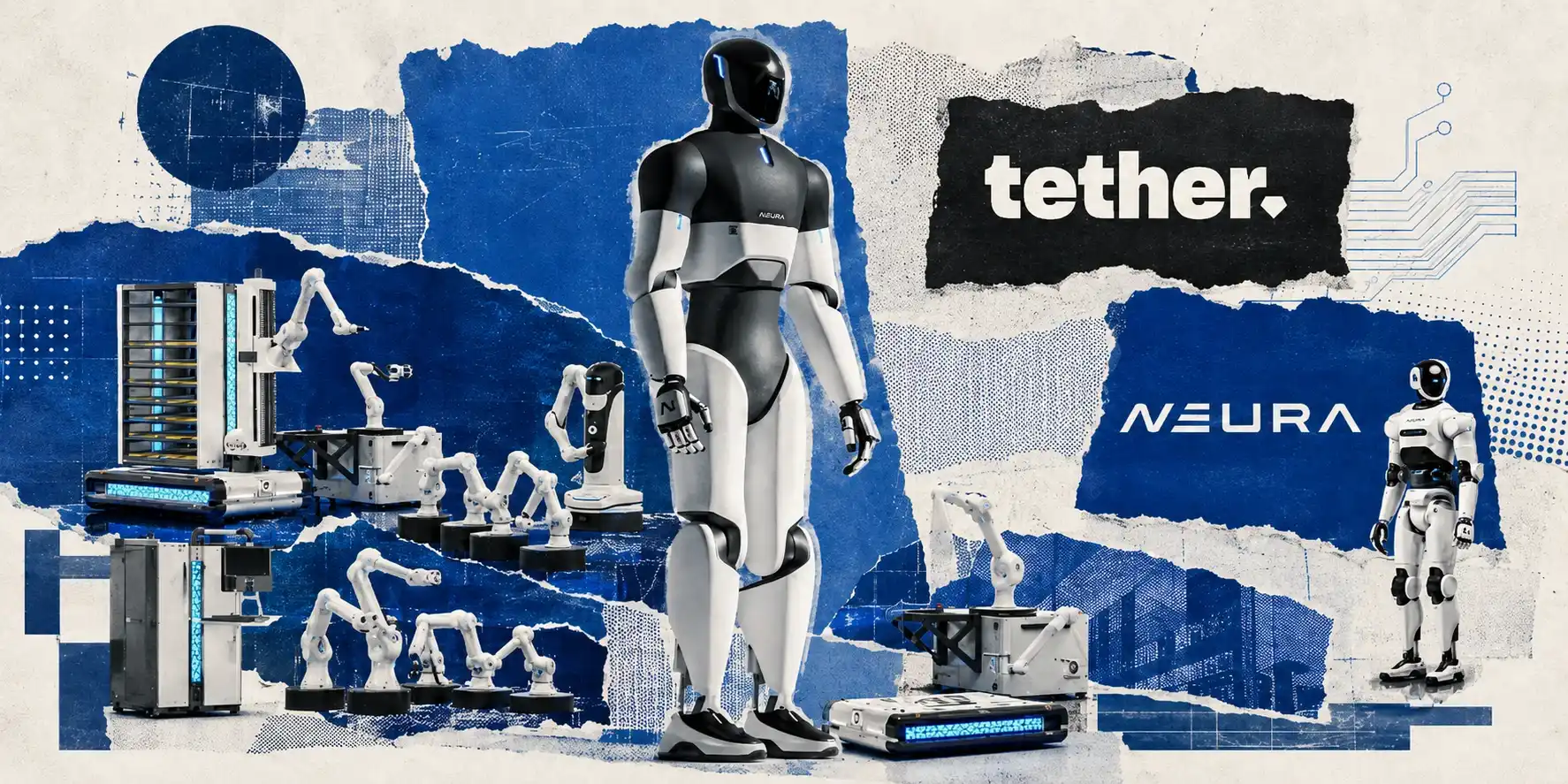
Do Robots Need Crypto Wallets? Stablecoin Giant Tether Bets on German Firm NEURA Robotics German robotics company NEURA Robotics has secured up to $1.4 billion in what is claimed to be the largest-ever funding round in the full-stack robotics industry, valuing the company at $7 billion. The Series C round attracted major investors like Tether, Qualcomm, Amazon, NVIDIA, Bosch, and the European Investment Bank. NEURA, founded in 2019, initially focused on AI-powered collaborative robots (cobots) for industrial automation, later expanding to autonomous mobile robots, service robots, and humanoid robots. Its core strategy is evolving from a hardware manufacturer to the operator of "Neuraverse," a platform designed to enable different robots to share learned experiences and data, creating network effects. A key, crypto-focused aspect of this investment is Tether's involvement. Tether plans to integrate its open-source Wallet Development Kit (WDK) into NEURA's robot platforms. This would embed self-custody wallet functionality, allowing robots to autonomously handle payments and settlements for tasks under pre-set rules—envisioning use cases in logistics or Robotics-as-a-Service (RaaS) models. This move could position stablecoins and crypto wallets as potential "machine payment infrastructure." Additionally, the partnership will see Tether's QVAC (QuantumVerse Automatic Computer) edge-AI framework tested and deployed within Neuraverse. This aims to enable low-latency, offline-capable AI decision-making directly on robots, reducing reliance on cloud computing for critical, time-sensitive operations. The investment underscores Tether's broader ambition to expand beyond being just a stablecoin issuer into AI, energy, and digital infrastructure, with NEURA's robotics network serving as a testbed for merging crypto-based financial layers with edge-based intelligence for the future of automation.

marsbit14 хв тому

Do Robots Also Need Encrypted Wallets? Stablecoin Giant Tether Bets on German Company NEURA Robotics

marsbit14 хв тому

AMD Launches Compact AI Host, Directly Challenging NVIDIA DGX Spark

In June 2026, AMD announced the Ryzen AI Halo, a compact AI developer desktop to rival NVIDIA's DGX Spark. Both feature 128GB unified memory for running 200B+ parameter models locally. Priced from $2,949 to $3,999, AMD undercuts NVIDIA's $3,999+ DGX Spark. The core divergence lies in architecture and philosophy. Ryzen AI Halo uses an x86-based Ryzen AI Max+ 395 APU (CPU+GPU+NPU), runs standard Windows/Linux, and emphasizes general-purpose PC flexibility. DGX Spark uses an ARM-based Grace Blackwell Superchip, runs a custom DGX OS, and includes a high-speed ConnectX-7 NIC for cluster prototyping, anchoring it to NVIDIA's full-stack CUDA ecosystem. AMD's ROCm software has improved, with simpler installation and support for major frameworks, but still lags behind CUDA's 17-year maturity in community support and cutting-edge library availability. AMD's broader strategy focuses on becoming a viable second-source supplier. Key moves include acquiring design capabilities via ZT Systems (while outsourcing manufacturing) and securing two major 6GW GPU supply deals with OpenAI and Meta in late 2025/early 2026. These contracts validate AMD's role in diversifying the AI supply chain, rather than outright beating NVIDIA. NVIDIA counters with a tightly integrated stack from desktop (DGX Spark) to data center, emphasizing seamless scalability and enterprise software subscriptions (AI Enterprise). In summary, Ryzen AI Halo represents AMD's pragmatic path: offering a cost-effective, open-ecosystem alternative for developers wary of vendor lock-in, while its large data center contracts aim to capture share from customers seeking a second GPU supplier. The choice boils down to a familiar, flexible PC environment with potential software gaps (AMD) versus a premium, optimized, but locked-in ecosystem (NVIDIA).

marsbit14 хв тому

AMD Launches Compact AI Host, Directly Challenging NVIDIA DGX Spark

marsbit14 хв тому

Sharplink CEO: One Million Ethereum Developers, Who Can Compete?

Etherean Ecosystem: One Million Developers and a Formidable Moat The Ethereum network has surpassed a significant milestone: over one million unique lifetime developers, with approximately 232,000 active in the past year. This vast and growing talent pool is Ethereum's core advantage, far more critical than transient metrics like speed or transaction fees. The central question is not which blockchain is fastest, but where the best builders choose to build long-term. Ethereum's answer lies in a decade-long accumulation of infrastructure, standards, tools, liquidity, and collaborative culture that is exceptionally difficult to replicate. It has become the default operating system for programmable finance. This massive developer base is actively working on complex, high-risk challenges that deepen Ethereum's strategic moat: * **Glamsterdam Upgrade (2026):** Focused on core protocol scalability (ePBS, parallel execution) while preserving core values like credible neutrality. * **Synchronous Composability:** Aims to make numerous Rollups interoperate like a single chain, directly addressing fragmentation concerns. * **Quantum Resistance:** Ethereum leads mainstream ecosystems in coordinated preparation for post-quantum cryptography, with a targeted migration plan around 2029. This developer advantage is self-reinforcing, fueled by: * **Deep Composability:** Applications interact like interoperable financial Lego bricks via shared standards (e.g., EVM, Solidity). * **Credible Neutrality:** Secured by over 900,000 validators, making it trusted by major institutions. * **Modularity:** Rollups (Base, Arbitrium, etc.) expand, rather than fracture, the ecosystem into a tightly connected modular internet economy. * **Culture:** Attracts top-tier researchers and standard-setters who guide the entire industry. In essence, while other chains generate activity, Ethereum is consolidating as the trusted, long-term coordination layer for internet-native finance. Its future is being built now by the architects of the next-generation financial infrastructure.

Odaily星球日报1 год тому

Sharplink CEO: One Million Ethereum Developers, Who Can Compete?

Odaily星球日报1 год тому

Ethereum Reaches the Milestone of One Million Developers, Sharplink CEO Delves Deep into Ethereum's Future Possibilities

Ethereum Surpasses One Million Developers Milestone: A Look at Its Unshakeable Dominance and Future Joseph Chalom, CEO of Sharplink, reflects on his recent Asia trip where he engaged deeply with Ethereum developers and ecosystem leaders. The most striking takeaway was not just the industry's vibrancy, but the rigorous, long-term vision of local builders. This context brings to life a pivotal statistic: Ethereum has now surpassed one million cumulative developers (1,012,824), with approximately 232,000 remaining active in the past year—a talent pool unmatched by any other crypto ecosystem. The critical question isn't which blockchain is fastest, but where top developers choose to build long-term. Ethereum's answer is unequivocal. Its decade-long lead stems from a unique convergence of technology, institutional culture, economic systems, and composability, cementing its role as the foundational operating system for programmable finance. This massive developer base is tackling the industry's hardest problems, continuously strengthening Ethereum's moat. Key initiatives include: * **The Glamsterdam Upgrade (planned 2026):** Introducing ePBS and Block-level Access Lists for parallel execution and higher throughput while preserving core values like credible neutrality and fair MEV distribution. * **Synchronous Composability:** Projects are working to enable atomic transactions across dozens of Rollups, making them function as one unified chain and eliminating ecosystem fragmentation. * **Post-Quantum Security:** Ethereum is far ahead in preparing for quantum computing threats, with a dedicated foundation working group and testnets targeting a full migration by ~2029—a crucial factor for institutional adoption. Beyond developers, Ethereum's core network effects are its unparalleled composability and unified standards (like EVM and Solidity), which create a powerful flywheel: more developers → better tools → greater liquidity → more institutional participation. Its other decisive advantages include credible neutrality (over 900k validators), a secure modular architecture with interconnected Rollups, and a deeply entrenched culture shaped by top-tier researchers. Ultimately, there's a vast difference between generating short-term activity and becoming the trusted, long-term coordination layer for global native finance. Major institutions prioritize security, trust, and liquidity—areas where Ethereum holds dominant mindshare. The industry's trajectory shows resources consolidating around unified standards, deep liquidity, and developer consensus. After meeting the builders in Seoul and Hong Kong, Chalom is more convinced than ever: Ethereum's unshakeable future is being built right now.

Foresight News1 год тому

Ethereum Reaches the Milestone of One Million Developers, Sharplink CEO Delves Deep into Ethereum's Future Possibilities

Foresight News1 год тому

Saylor's Latest Long Read: Bitcoin is Not Money, It's Digital Capital, and Money is Built Upon It

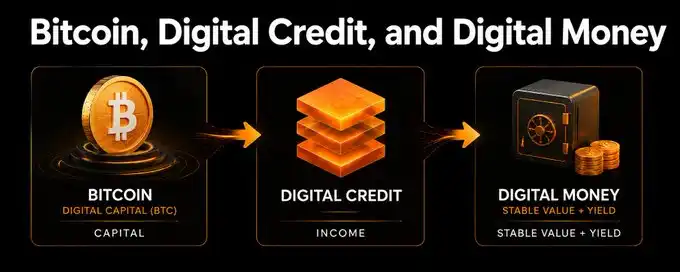
Michael Saylor presents his "Digital Asset Stack" theory, positioning Bitcoin as the foundational layer of digital capital. He argues Bitcoin itself should remain unchanged—no staking, inflation, or protocol alterations. Instead, a five-layer financial architecture should be built atop it: Digital Capital (BTC), Digital Credit (e.g., yield instruments like STRC), Digital Currency (stable, yield-bearing instruments pegged to fiat), Digital Yield (leveraged/structured products), and Digital Equity (e.g., MSTR stock, absorbing residual volatility). Saylor asserts this stack transforms Bitcoin's high-volatility, high-energy capital into tailored products: stable currencies for payments/savings, yield instruments for income seekers, and equity for growth investors. This approach meets diverse needs—corporate treasuries, banks, retirees, emerging market users—without compromising Bitcoin's core properties (scarcity, decentralization). The "killer use case" is rebuilding global money, credit, and capital markets on Bitcoin, bridging the fiat world with a superior digital asset foundation. The system leverages traditional finance principles (risk layering, structured products) while using Bitcoin as the ultimate collateral. This expands Bitcoin's utility, drives adoption, and offers a better monetary experience: digital, yield-bearing, stable-value tools for everyday use.

marsbit1 год тому

Saylor's Latest Long Read: Bitcoin is Not Money, It's Digital Capital, and Money is Built Upon It

marsbit1 год тому

Торгівля

Спот
Ф'ючерси
活动图片