Trump Family-Linked Crypto Company Faces More Scrutiny Over Auditor Controversy

bitcoinistОпубліковано о 2025-12-30Востаннє оновлено о 2025-12-30

Анотація

Trump-linked crypto treasury company Alt5 Sigma faces intensified scrutiny and potential Nasdaq delisting after appointing an auditor with an expired license and regulatory violations. The firm, which rebranded to hold Donald Trump’s WLFI token, failed to file quarterly reports and has seen high-level departures, including Eric Trump. Its newly hired auditor, Victor Mokuolu CPA, had its license expired in Texas and previously failed a peer review. Alt5 Sigma has since replaced the auditor amid ongoing compliance issues and risks violating audit committee requirements.

Recent reports claim that the internal turmoil of a crypto treasury company backed by the Trump family has deepened as the firm risks being delisted from Nasdaq and has appointed an audit company facing regulatory scrutiny.

Crypto Treasury Company’s Turmoil Intensifies

On Monday, Nasdaq-listed crypto treasury company Alt5 Sigma is facing renewed scrutiny after appointing a new audit company with an expired and inactive license earlier this month, the Financial Times initially reported.

The Las Vegas-based company rebranded from a biotech company to a Digital Asset Treasury Company (DAT) earlier this year, seeking to become the first publicly traded firm to accumulate WLFI, the token of US President Donald Trump’s crypto ventures, World Liberty Financial.

As the report noted, the company’s financial position has turned murky over the past few months due to its failure to file quarterly results on schedule. Now, its recent switch of auditors has deepened its current position as the newly appointed firm, Victor Mokuolu CPA PLLC, was allegedly fined by accounting regulators and failed an inspection under the standard peer review process.

According to the Financial Times, filings in the state of Texas show that the company’s licence expired in August. Meanwhile, the board’s records show that its license has not been renewed by December 26. Therefore, state regulations prohibit the firm from doing any audit work until the licence is renewed.

The audit company has reportedly been working for over two years to address its deficiencies, which previously resulted in a failing grade under the accounting profession’s peer review process in 2023.

This year’s failure to renew its license follows the Texas State Board of Public Accountancy and another US regulator’s actions against the firm for “repeatedly failing to file regulatory paperwork on time.”

In a statement to the news media outlet, Alt5 Sigma affirmed that the auditor is “undergoing a peer review per Texas State Board of Accountancy regulations and will be completed by the end of January 2026, at which point the auditor expects the firm’s licence to be active.”

The Trump-backed crypto treasury firm emphasized that “No reviews or audits of Alt5’s financial statements will be issued by our auditor until the firm’s licence is active.”

In an update, the Financial Times added that Alt5 Sigma fired the audit firm on Christmas Day following its inquiries about the issue. A regulatory filing made on Monday reportedly shows that the company has hired LJ Soldinger Associates as its new accounting firm.

Alt5 Sigma Risks Nasdaq Delisting

The controversial December 8 appointment comes amid a period of turmoil for the company, the report noted, as it already risks being delisted from Nasdaq, where it trades under the ticker “ALTS.”

The company failed to submit its quarterly results for the period ending in late September, blaming the delay on the “timeliness and responsiveness” of its previous auditor, who seemingly quit last month. This has opened the door to a potential delisting from the stock exchange.

In August, World Liberty Financial unveiled its partnership with Alt5 Sigma and became an investor in the technology firm, which sought to raise $1.5 billion for its crypto treasury strategy based on WLFI.

As a result, multiple World Liberty Financial co-founders joined Alt5 Sigma’s board. Notably, Zach Witkoff, son of President Trump’s Special Envoy Steve Witkoff, was appointed as chairman of the crypto treasury firm.

Similarly, Eric Trump joined the company’s board as a director, while Zak Folkman became a board observer. Nonetheless, Trump stepped down from his position in September, just weeks after being appointed, as revealed in a Securities and Exchange Commission (SEC) filing

Jonathan Hugh, Alt5’s Chief Financial Officer (CFO), left the company after just three months, while chief executive Peter Tassiopoulos resigned in October. Meanwhile, board member David Danziger parted ways with the firm in November.

This also puts the company “in violation of a requirement to have an audit committee of a certain size and with accounting experience,” the report concluded.
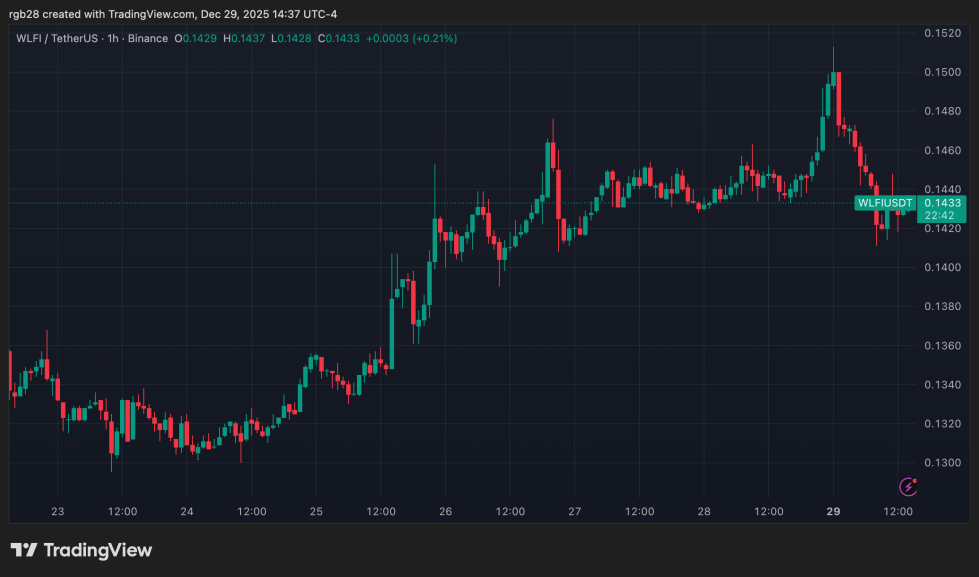
WLFI trades at $0.14 in the one-week chart. Source: WLFIUSDT on TradingView


Пов'язані питання

QWhat is the name of the crypto treasury company backed by the Trump family that is facing scrutiny?

AThe company is called Alt5 Sigma.

QWhy is Alt5 Sigma at risk of being delisted from Nasdaq?

AThe company failed to submit its quarterly results for the period ending in late September, which opens the door to a potential delisting.

QWhich audit firm did Alt5 Sigma initially appoint in December, and what was the main issue with it?

AThe company initially appointed Victor Mokuolu CPA PLLC, whose license had expired and was inactive, and the firm had been fined by regulators and failed a peer review.

QWhich member of the Trump family briefly served on Alt5 Sigma's board of directors?

AEric Trump joined the company's board as a director but stepped down from his position in September, just weeks after being appointed.

QWhat is the primary cryptocurrency token that Alt5 Sigma's treasury strategy is based on?

AThe strategy is based on WLFI, the token of former US President Donald Trump's crypto ventures, World Liberty Financial.

Пов'язані матеріали

Will the Fed Definitely Raise Interest Rates in September? How Will Crypto and U.S. Stocks Withstand the Pressure?

The market's expectation for a September Fed rate hike surged dramatically in early August, jumping from under 50% to over 80% within a week. This shift followed a contentious July FOMC meeting, where a 9-3 vote to hold rates revealed growing dissent from hawkish members advocating for an immediate hike to combat persistent inflation. The primary catalyst for this repricing is rising oil prices, driven by renewed geopolitical tensions around the Strait of Hormuz, which threaten global supply. Energy costs directly influence inflation metrics, making the upcoming July CPI report (due August 12th) a critical data point. If it shows inflation reaccelerating, the probability of a September hike will solidify. For Bitcoin and crypto assets, this is typically bearish news. Bitcoin continues to behave as a high-beta, liquidity-sensitive risk asset. A rate hike raises the opportunity cost of holding non-yielding assets and could drive capital toward money markets, pressuring crypto prices in the short term. However, historical patterns suggest that if a hike is perceived as the end of a tightening cycle rather than the start, any negative price impact may be brief. U.S. stocks, particularly crypto-linked equities like Coinbase and growth-oriented tech stocks, are also vulnerable. Higher rates increase discount rates in valuation models, putting pressure on high-multiple companies. This coincides with a pivotal tech earnings season where investor focus has shifted from massive AI capital expenditure to tangible revenue and cash flow generation. Companies with negative cash flow and weak growth narratives could face heightened volatility if borrowing costs rise in September. In summary, a September Fed hike has evolved into a mainstream market scenario. Key factors to watch are oil prices, the July CPI report, and Fed communications, which will determine the final decision and its impact on volatile crypto and equity markets.

marsbit4 хв тому

Will the Fed Definitely Raise Interest Rates in September? How Will Crypto and U.S. Stocks Withstand the Pressure?

marsbit4 хв тому

A 'Overlooked' Market Event: Joint US-Japan-South Korea Intervention, Rare US Treasury Involvement, and Bessent's Quiet 'Market Rescue'?

Summary: The United States, Japan, and South Korea executed their largest coordinated foreign exchange intervention in nearly 30 years. The action targeted depreciation pressure on the Japanese yen and South Korean won. This move is seen as a significant effort by the US to stabilize the financial markets of its key allies and prevent the spillover of risks. Key details: * Japan reportedly intervened on July 30 using approximately 8.45 trillion yen (about $52.8 billion). South Korean authorities also intervened that day, selling dollars to support the won. * Notably, the US Treasury Department intervened directly in yen markets for the first time in roughly 30 years. The New York Fed, reportedly acting on behalf of the Treasury, sold euros to buy yen via Goldman Sachs and Morgan Stanley on July 31. Analysts view the use of the euro-yen pair as a way to alleviate yen pressure without adding selling pressure to the US dollar. * Prior to the action, the New York Fed conducted "rate checks" on both USD/JPY and EUR/JPY, a newer signaling tool that falls between verbal and physical intervention. The intervention is interpreted as going beyond traditional currency stabilization. Analysts, such as Michael Hartnett of Bank of America, suggest it resembles a "Price Keeping Operation" for the AI era. The core US objectives are perceived to be: 1. Preventing rapid yen depreciation from triggering a sharp rise in Japanese government bond yields. 2. Containing financial stress from spreading across Asian markets like South Korea and Japan. 3. Reducing the risk of disorderly capital flows impacting the US bond market. This coordinated action underscores the importance of Japan and South Korea as critical partners in the US semiconductor and AI supply chain. Stabilizing their financial markets is seen as vital to mitigating risks to the broader tech industry and the US market itself. The intervention coincides with market pressures, including the KOSDAQ index hitting a low since October 2022. While seen as a move to control volatility, some analysts caution it may not fundamentally reverse existing market trends.

marsbit7 хв тому

A 'Overlooked' Market Event: Joint US-Japan-South Korea Intervention, Rare US Treasury Involvement, and Bessent's Quiet 'Market Rescue'?

marsbit7 хв тому

Will the Federal Reserve Definitely Raise Interest Rates in September? How Will Cryptocurrencies and US Stocks Bear the Pressure?

In early August 2024, market expectations for a September Federal Reserve rate hike surged dramatically, from below 50% to over 80%, driven by renewed inflation concerns. This shift followed a contentious July FOMC meeting where a 9-3 vote to hold rates revealed a growing hawkish faction advocating for an immediate hike, citing prolonged above-target inflation. The key catalyst is escalating conflict near the Strait of Hormuz, which has pushed oil prices up approximately 20% in July, threatening to reignite inflation. The next critical data point is the July CPI report on August 12th; a hot reading could solidify hike expectations. For crypto assets, particularly Bitcoin, this represents near-term pressure. Bitcoin continues to exhibit high-beta, risk-on characteristics, making it sensitive to tightening liquidity and higher opportunity costs. However, historical precedent suggests that if a hike is perceived as the cycle's end rather than its start, the negative impact may be brief, with markets quickly pivoting to anticipate future rate cuts. U.S. stocks, especially crypto-linked equities like Coinbase and high-valuation tech stocks, face amplified volatility. Higher rates increase discount rates in valuation models, pressuring growth stocks. This coincides with a pivotal tech earnings season where investor focus has shifted from massive AI capital expenditures to demonstrable revenue and cash flow generation. Companies with negative cash flows and weak growth narratives could see severe pressure if a September hike materializes, as financing costs would rise. Key indicators to watch include oil prices, upcoming inflation data, and Fed commentary at events like the Jackson Hole symposium.

Odaily星球日报7 хв тому

Will the Federal Reserve Definitely Raise Interest Rates in September? How Will Cryptocurrencies and US Stocks Bear the Pressure?

Odaily星球日报7 хв тому

Торгівля

Спот
活动图片




