Trial 1314 Days Late: Mastermind Behind $40 Billion Stablecoin Collapse Sentenced to 15 Years

marsbitОпубліковано о 2025-12-12Востаннє оновлено о 2025-12-12

Анотація

The trial of Do Kwon, the mastermind behind the $40 billion Terra (LUNA) and UST stablecoin collapse, concluded on December 11, 2025, with a 15-year prison sentence. After 1,314 days since the catastrophic crash, Kwon was convicted of orchestrating an "epic, generational-scale fraud" that wiped out life savings for over a million victims and triggered a crypto market crisis, including the fall of FTX. Despite his defense pleading for a five-year term, citing arrogance rather than greed as motive, the judge dismissed it as absurd and deemed the prosecution’s recommended 12 years too lenient. Kwon, who had initially pleaded not guilty, eventually admitted to two counts of conspiracy and wire fraud in August, agreeing to forfeit over $19 million in assets. Victim impact statements revealed devastating losses—homes, retirement funds, and education savings vanished. Many described being misled by Kwon’s false assurances and cult-like influence. In a rare apology, Kwon expressed remorse, acknowledging his "arrogance" and the pain he caused. He may serve half his sentence in the U.S. before potential transfer to South Korea, where he faces additional charges.

Author: Nancy, PANews

On December 11, 2025, 1314 days after the Terra collapse, Do Kwon finally faced justice and was sentenced to 15 years in prison.

Although this epic fraud case has come to a close, the evaporation of over $40 billion, affecting more than a million victims, stands as an expensive and painful lesson in the history of cryptocurrency development.

Luna Dream Shattered, Sentenced to 15 Years in Prison

On December 11, Do Kwon, wearing the yellow prison uniform of the Essex County Jail in New Jersey, sat at the defense table accompanied by four lawyers. The once-flamboyant crypto tycoon faced his final judgment.

During the hearing, Kwon's defense team attempted an emotional appeal, requesting the judge to limit the sentence to five years. They argued that Kwon's crimes stemmed more from arrogance and desperation than extreme personal greed, noting that he had already served time in Montenegro and might face prosecution in South Korea.

However, this argument was strongly refuted by U.S. prosecutors. They pointed out that the stablecoin concept promoted by Terraform Labs, along with its claimed real-world applications like Chai, was built on lies from the very beginning. At its peak, Kwon's token value soared, and he even named his daughter "Luna" to commemorate what he called his "greatest invention."

Prosecutors emphasized that the $40 billion collapse of the Terra ecosystem not only triggered a chain reaction of crises across the entire crypto market but also indirectly led to the bankruptcy of SBF's FTX exchange and sparked a crypto winter. (Related reading: LUNA and UST in the 'Big Short') Faced with such devastating consequences, Kwon and his supporters attempted to construct a "counter-narrative," portraying the collapse as a black swan event or market manipulation, showing no remorse. Furthermore, Kwon's misappropriation of funds, use of fake passports to flee to Singapore and Montenegro, and even his attempt to travel to the UAE demonstrated his extremely high risk of recidivism. Based on this, prosecutors recommended a 12-year sentence.

However, U.S. District Judge Engelmayer rejected the defense's utterly absurd request for a five-year sentence, while also stating that the prosecution's suggested 12 years was too lenient and failed to reflect the devastating impact on the victims.

"This was an epic, cross-generational scale fraud. In the history of federal prosecutions, few frauds have caused damage comparable to this," Judge Engelmayer sternly rebuked, noting that Kwon could have chosen to tell the truth but instead chose to deceive investors who entrusted their life savings to him, taking a wrong path. He specifically mentioned the infamous tweet: "Deploying more capital – steady lads."
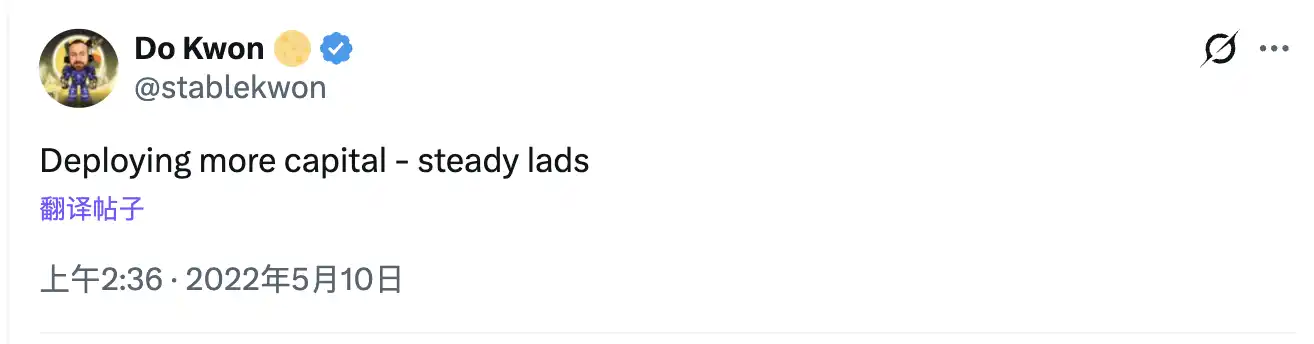
Ultimately, the judge sentenced Kwon to 15 years in prison.

In addition to the U.S., Kwon still faces fraud charges in South Korea. During the hearing, Kwon stated that he had not seen his family for three years and expressed a desire to serve his sentence in South Korea. U.S. prosecutors indicated that if Kwon complies with the agreement, they would support his application to be transferred to South Korea to serve the remainder of his sentence after completing half of it. In August of this year, Kwon pleaded guilty to two counts of conspiracy to commit fraud and wire fraud, and as part of the plea agreement, he also agreed to forfeit over $19 million in assets and some real estate.

Over a Million Victims, Mysterious Community Influence

From his arrest at Podgorica Airport in Montenegro in March 2023 to his incarceration in the U.S. in December 2024, this 20-month legal battle finally reached its conclusion in a federal courtroom in New York.

Kwon's arrest once sparked an extradition battle between the U.S. and South Korea. During this period, he reached a settlement with the U.S. SEC for a staggering $4.5 billion, including $3.6 billion in disgorgement of ill-gotten gains. After more than a year of detention and diplomatic maneuvering, Montenegrin authorities finally handed him over to U.S. law enforcement late last year. Facing nine U.S. charges, including securities fraud and wire fraud, Kwon initially pleaded not guilty.

It wasn't until August this year that Kwon admitted to two counts of financial fraud, stating, "I concealed the truth about trading companies intervening to restore the peg, made false statements, and my actions were wrong." Given his guilty plea, although the statutory maximum sentence was 25 years, U.S. prosecutors recommended a sentence of no more than 12 years.
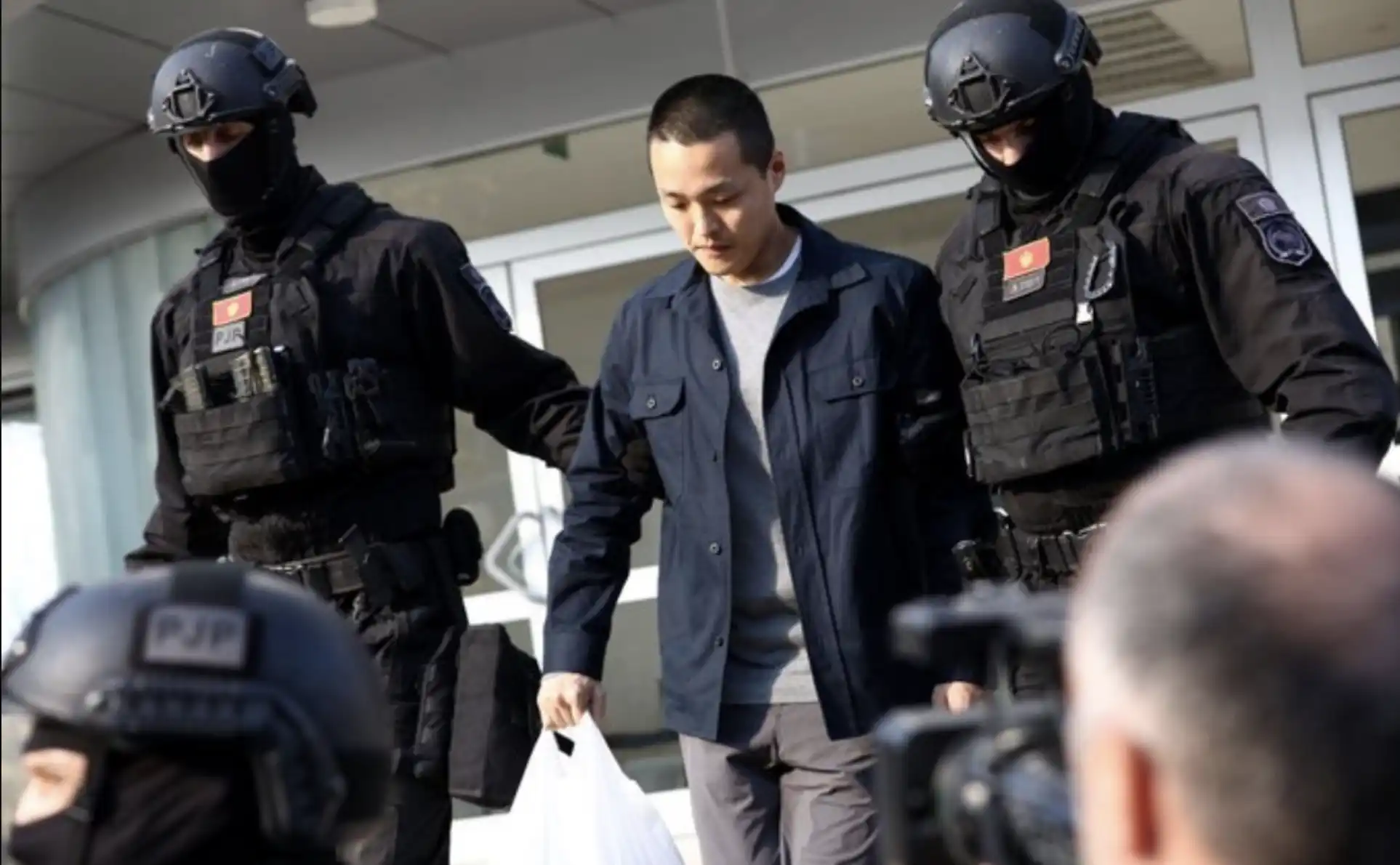
This trial was not only about Kwon's personal fate but also touched the nerves of millions of Terra victims worldwide.

However, a hiccup occurred just before the hearing. Judge Engelmayer expressed dissatisfaction with the inefficiency of the U.S. prosecutors, who did notifiy Terra victims until December 1st. The bankruptcy administrator delayed sending emails until December 8th, leaving victims almost no time to submit statements to the court. Judge Engelmayer believed that while the Terra bankruptcy case involved approximately 16,500 creditors, the number of actual victims could be as high as a million, stating, "You need to do better."

Judge Engelmayer stayed up late reading the 315 hastily submitted victim letters and stated bluntly that Kwon held an almost mystical control over Terra investors; many were like cult followers who had drunk the Kool-Aid and would never wake up.

During the hearing, the victims' accusations provided a more直观的 (intuitive - note: this Chinese word was left in the original text, meaning 'intuitive' or 'direct') sense of the devastating impact of the Terra collapse. Some lost their homes, others lost their retirement savings and their children's education funds, and some even became homeless.

One victim wrote, "All of Do Kwon's communication said everything was under control. Then the depeg happened, and I didn't dare close my eyes for four consecutive days... We were told to trust him, and then he disappeared." Another victim angrily accused, "My trust was weaponized. Do Kwon packaged himself as a visionary, and my hard-earned capital just evaporated." Another person lost $200,000 saved over 17 years overnight and pleaded in a letter, "Your Honor, please hold him accountable."

Kwon, who listened to parts of some letters via telephone, expressed a belated apology to the victims in court. "Their stories are heartbreaking and make me realize once again the enormous loss I caused. I want to tell these victims that I am sorry. For the past few years, almost every waking moment I have spent thinking about what I could have done differently then and what I can do now to make amends." In a letter submitted to the court last month, Kwon also wrote, "Looking back, I cannot understand my own arrogance... I bear the pain of everyone alone. I hope accepting any sentence can bring even a little comfort to those I have failed."

This忏悔 (repentance - note: this Chinese word was left in the original text, meaning 'repentance') contrasted sharply with his former arrogant image. Just hours before the Terra collapse in May 2022, Kwon was still mocking critics on Twitter, even leaving behind the arrogant remark, "I don't debate the poor."

Note: Do Kwon's arrogant response to Frances Coppola's质疑 (doubts - note: this Chinese word was left in the original text, meaning 'doubts' or 'questions') about the algorithmic stablecoin design

An ironic scene also unfolded at the trial. As Kwon, wearing a yellow prison uniform and handcuffs, was escorted into the elevator, there were still many supporters applauding him, with some even shouting, "Hang in there, Do! Hold your head high!"


Пов'язані питання

QWhat was the sentence given to Do Kwon for his role in the Terra collapse?

ADo Kwon was sentenced to 15 years in prison.

QHow much financial damage was caused by the collapse of the Terra ecosystem according to the article?

AThe collapse of the Terra ecosystem caused $40 billion in financial damage.

QWhat was the name of the company founded by Do Kwon that was central to this case?

AThe company was called Terraform Labs.

QWhat specific charges did Do Kwon plead guilty to in August?

AIn August, Do Kwon pleaded guilty to two counts of conspiracy to commit fraud and wire fraud.

QWhat did the judge say about Do Kwon's influence over the Terra investors?

AThe judge stated that Do Kwon had an almost mystical hold over Terra investors, with many described as being in a trance-like state, akin to cult followers who would never wake up.

Пов'язані матеріали

From South Korea to the United States: Blue-Collar Jobs Are Becoming Increasingly Popular, Thanks to AI

AI is reshaping the labor market's value proposition. The traditional four-year college degree is losing its appeal as a guaranteed career path, while skilled blue-collar trades like electricians, welders, and plumbers are experiencing historic demand and wage premiums. This shift is driven by dual pressures: AI's displacement of certain white-collar roles and a booming need for physical infrastructure and data center construction. Data confirms the trend. In the U.S., vocational school revenue surged, and a significant portion of recent layoffs are AI-related. Surveys show a majority of Gen Z adults plan to pursue blue-collar work, citing better job security against AI automation. Vocational education interest has exploded recently. Experts cite a psychological shift as younger generations seek tangible, AI-resistant careers and avoid high student debt. In many cases, salaries for skilled trades now match or exceed those requiring a bachelor's degree. In South Korea, semiconductor vocational high schools boast near-total employment, with graduates securing high-paying roles at companies like Samsung. The shortage is structural, exacerbated by a retiring baby boomer workforce and massive infrastructure projects. Companies like JPMorgan Chase, Meta, and Lowe's are investing heavily in training programs. However, overcoming historical stigma and a "perception gap" around trade careers remains a key challenge to closing the talent gap.

marsbit49 хв тому

From South Korea to the United States: Blue-Collar Jobs Are Becoming Increasingly Popular, Thanks to AI

marsbit49 хв тому

Qualcomm: AI Hype Subsides, When Will Smartphones Emerge from the Gloom?

Qualcomm reported its Q3 FY2026 results (ending June 2026), with revenue of $9.95B, down 4% YoY but above expectations. Gross margin declined to 53.1%, pressured by rising costs across manufacturing and memory. Key business segments showed mixed performance: Handset revenue fell 19.6% YoY to $5.09B, dragged by an 11% decline in non-Apple Android shipments and weaker high-end mix. Conversely, Automotive revenue surged 61% to $1.59B, and IoT grew 9% to $1.83B. Core operating profit dropped 41% YoY due to margin compression and higher expenses. Management's Q4 FY2026 guidance projects revenue of $9.7B-$10.5B, in line with consensus, but Non-GAAP EPS guidance of $2.05-$2.25 fell short of expectations. Amidst persistent weakness in its core handset market, Qualcomm is pursuing growth in AI, focusing on Edge AI (smartphones, PCs, automotive) and Data Center AI. Its data center strategy includes four pillars: AI accelerators (e.g., AI200), commercial CPUs (Dragonfly C1000), custom silicon, and connectivity solutions. While these initiatives initially boosted its stock, concerns over AI capital expenditure sustainability have since erased those gains. The company targets $5B in data center revenue for FY2027 and $15B for FY2029. The report concludes that with the traditional handset business still under pressure, the data center opportunity is currently viewed as a longer-term option, and a more conservative valuation based on core operations may be warranted until AI contributions materialize.

marsbit53 хв тому

Qualcomm: AI Hype Subsides, When Will Smartphones Emerge from the Gloom?

marsbit53 хв тому

From TPU to Self-Evolving Agents: How Jeff Dean Predicts the Next Step in AI

At the 2026 YC Startup School, Jeff Dean outlined his vision for AI's next phase, shifting focus from simply scaling models to building intelligent, autonomous systems. He believes AI's progress is no longer just about creating smarter models, but about integrating them into systems capable of long-term, iterative work, automated experimentation, and continuous learning. This evolution moves the competition from "who has the bigger model" to "who can best organize intelligence." Dean suggests AI capabilities are now comparable to a junior engineer, enabling the automation of complex workflows. However, the true challenge and opportunity lie in managing these AI "workers" at scale. He emphasizes the importance of **context engineering**—structuring tools, memory, and feedback loops—over raw model power. For startups, this means building deep expertise in niche domains where general models currently fail (near 0-1% success rates), leveraging proprietary data, specialized tools, and domain-specific evaluators. A recurring theme is re-examining fundamental constraints. Dean's past work, like moving Google's search index to memory or creating the TPU, stemmed from questioning outdated assumptions about hardware and cost. He sees similar inflection points today, particularly in **specialized inference hardware** to drastically reduce latency and energy consumption for real-time Agent operation. Notably, he points out that in modern AI systems, the dominant cost is often not computation but **data movement**. Reliable, long-running Agents require robust system design, borrowing concepts from distributed computing like checkpointing, state management, and parallel exploration to handle failures and maintain progress over days or weeks. As AI automates execution, the scarcest human skills will shift to **defining clear specifications**, **judging what problems are worth solving** (taste), and designing effective feedback loops. Ultimately, Dean's framework prioritizes understanding the problem deeply, identifying the true bottlenecks, and systematically building closed-loop systems where AI can not only perform tasks but also improve AI itself.

marsbit54 хв тому

From TPU to Self-Evolving Agents: How Jeff Dean Predicts the Next Step in AI

marsbit54 хв тому

Торгівля

Спот
活动图片




