Traditional Brokerage Firm Enters Crypto: Interactive Brokers' Three-Month Blitz in the Crypto Market

marsbitОпубліковано о 2026-04-02Востаннє оновлено о 2026-04-02

Анотація

Interactive Brokers, a Nasdaq-listed traditional brokerage with a market cap of $113.7 billion, rapidly expanded into the crypto market within just three months in 2026. Known for its low-cost, high-efficiency execution and global multi-asset trading platform, the firm integrated cryptocurrency services seamlessly into its existing offerings. Key initiatives included introducing 24/7 stablecoin deposit services via USDC, RLUSD, and PYUSD through Zero Hash, allowing near-instant dollar conversion with minimal fees. The platform also enabled direct transfers of BTC and ETH from external wallets and launched Bitcoin and Ethereum futures via Coinbase Nano. Additionally, IBKR expanded crypto trading to European retail investors through its Irish entity, supporting 11 major cryptocurrencies. This strategic move reflects Interactive Brokers’ effort to serve professional and institutional clients seeking unified asset management—combining crypto with stocks, options, and futures on a single platform. The company emphasizes low-cost, professional-grade crypto trading, leveraging stablecoins as efficient settlement and margin tools. With strong 2025 financials—including 32% YoY growth in client accounts and $6.2 billion in net revenue—the firm demonstrates how traditional brokerage expertise can drive crypto adoption.

In 2026, Interactive Brokers took just three months to bring the low-cost, professional execution of traditional brokerage services to the crypto market.

Interactive Brokers, listed on NASDAQ in 2007, currently has a market capitalization of $113.7 billion. The brokerage platform is renowned for its low commissions, optimal execution prices, and advanced trading technology. It provides a unified platform for individual investors, active traders, and institutional clients, offering diversified trading services across more than 170 markets and over 200 countries and regions, including stocks, options, futures, forex, bonds, and funds.

Such a traditional U.S. stock market giant chose to open a new battlefield in the cryptocurrency space in 2026.

Interactive Brokers first blitzed the funding channel—stablecoins.

In January, Interactive Brokers launched a 24/7 stablecoin account funding service. Eligible clients can send USDC from their personal crypto wallets to a secure address provided by Zero Hash (supporting Ethereum, Solana, and Base networks). The funds are automatically converted to U.S. dollars and credited to the brokerage account within minutes, available around the clock, including weekends and holidays. Support for Ripple's RLUSD and PayPal's PYUSD will be added in the following weeks.

Interactive Brokers does not charge a deposit fee; only Zero Hash charges a low, tiered conversion fee, with clients only responsible for blockchain network fees.

This directly addresses the limitations of traditional wire transfers, such as bank operating hours and cross-border delays, allowing global investors to instantly inject dollar-value capital into their accounts and immediately engage in multi-asset trading.

Next, Interactive Brokers set its sights on BTC/ETH trading and deposits.

In February of this year, Interactive Brokers launched Coinbase Nano Bitcoin and Ethereum futures, enabling 24/7 trading. On March 25, users could directly transfer BTC/ETH from external wallets into their linked crypto accounts without having to sell or liquidate first.

This feature eliminates technical barriers, allowing investors to trade crypto assets with lower commissions on the same platform, enabling unified risk management for stocks, options, futures, and crypto.

Additionally, the company expanded its crypto footprint into the European market.

Through its Irish entity, Interactive Brokers opened crypto asset trading to eligible individual investors in the European Economic Area. Users can trade 11 mainstream crypto assets, including BTC, ETH, SOL, XRP, and DOGE, alongside stocks, options, futures, forex, bonds, and funds on the existing platform, with support for 24/7 trading.

This blitz into the crypto market is the latest example of Interactive Brokers, as a traditional brokerage, "embracing crypto without losing its essence."

As early as September 2021, when Bitcoin had just broken through $60,000 and crypto was still considered a high-risk, fringe asset, Interactive Brokers partnered with New York State-regulated Paxos Trust Company to pioneer spot trading for Bitcoin, Ethereum, Litecoin, and BCH. Clients did not need to open a separate crypto account; they simply applied for permissions in their existing brokerage account to trade 24/7 and withdraw to external wallets. This "low-cost + unified platform" model was aimed at serving professional investors from the start, rather than chasing retail speculation.

In the following years, Interactive Brokers steadily expanded its product line. In 2025, it added Avalanche, Cardano, Chainlink, Dogecoin, Ripple, Solana, Sui, and other tokens through Paxos or Zero Hash, supporting over 11 mainstream assets.

This path of "first steady progress, then accelerated integration" reflects the unique logic of traditional brokerages exploring Crypto. Unlike pure crypto platforms that pursue traffic and leverage, Interactive Brokers views crypto as an organic component of a multi-asset platform: stablecoins are no longer just "digital dollars" but efficient settlement rails that can be directly converted into trading capital, margin, or idle funds. The CEO team has repeatedly emphasized that the goal is to "make crypto trading as professional and low-cost as stock trading."

Perhaps Interactive Brokers' underlying intent is not hard to understand. Crypto assets are transitioning from early speculative narratives to an important part of institutional portfolio allocation. Clients increasingly need a unified, professional, and low-cost platform to simultaneously manage traditional securities, futures, options, and digital assets, enabling more efficient risk hedging, liquidity management, and capital allocation. If these services are not provided, some high-net-worth and institutional clients may shift their crypto-related business to pure crypto trading platforms, leading to reduced platform stickiness and capital diversion.

Through innovations such as 24/7 stablecoin funding, direct transfers from external wallets, and derivatives, Interactive Brokers has not only significantly reduced the friction costs of cross-border capital flows and asset migration but also transformed stablecoins into efficient settlement and margin tools, markedly enhancing the mobility and utilization efficiency of client funds. This strategy aligns precisely with the company's core strengths—advanced automated trading systems, seamless access to over 100 global markets, and ultra-low-cost execution.

In 2026, as the crypto market shifts from narrative-driven to institutionally allocated, this strategy is demonstrating its competitiveness—clients can monitor the impact of stock fluctuations on crypto positions on the same screen or use stablecoins to quickly capture global opportunities without switching between multiple apps.

The story of Interactive Brokers is essentially a microcosm of a Wall Street veteran brokerage reshaping its positioning with technology and execution.
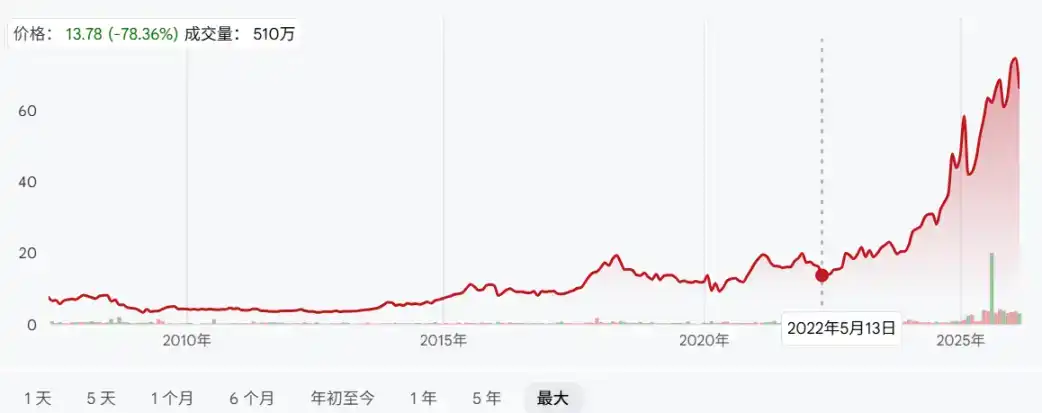
Since its founding by Thomas Peterffy in 1978, the company has focused on developing automated trading systems. According to the latest public Q4 2025 earnings report, Interactive Brokers' client account count reached 4.4 million, a 32% increase year-over-year. In 2025, net new client accounts exceeded 1 million for the year, setting an annual record. Full-year commission revenue was approximately $2.1 billion (+27%), and full-year net revenue was about $6.205 billion (+20%). Client average returns were strong (approximately 19.2% for individual clients and 28.91% for hedge fund clients).

These hardcore data points confirm the contribution of "low commissions + global access + one-stop platform" to long-term returns, and have also allowed Interactive Brokers to firmly establish itself at the intersection of TradFi and Crypto.

Пов'язані питання

QWhat major service did Interactive Brokers launch in January 2026 to revolutionize account funding?

AInteractive Brokers launched a 24/7 stablecoin account deposit service, allowing eligible clients to send USDC from personal crypto wallets to a secure address provided by Zero Hash (supporting Ethereum, Solana, and Base networks). The funds are automatically converted to USD and credited to the brokerage account within minutes, available around the clock, including weekends and holidays.

QHow did Interactive Brokers expand its crypto trading services in February and March 2026?

AIn February, Interactive Brokers introduced Coinbase Nano Bitcoin and Ethereum futures for 24/7 trading. In March, they enabled users to transfer BTC and ETH directly from external wallets into their linked crypto accounts on the platform without needing to sell or liquidate the assets first.

QWhat was Interactive Brokers' initial foray into crypto trading back in 2021, and which company did they partner with?

AIn September 2021, Interactive Brokers partnered with Paxos Trust Company, a New York State-regulated entity, to offer spot trading for Bitcoin, Ethereum, Litecoin, and Bitcoin Cash. Clients could trade and withdraw to external wallets 24/7 without opening a separate crypto account, directly through their existing brokerage account after applying for permissions.

QWhat is the core strategy behind Interactive Brokers' approach to integrating crypto into their platform, as emphasized by their CEO?

AThe core strategy is to make crypto trading as professional and low-cost as stock trading. Interactive Brokers treats crypto as an organic component of its multi-asset platform, using stablecoins as efficient settlement rails that can be directly converted into trading capital, margin, or idle capital, aligning with their strengths in automation, global market access, and low-cost execution.

QWhat were some key financial and client growth metrics for Interactive Brokers in 2025, as mentioned in the article?

AIn 2025, Interactive Brokers' client accounts grew to 4.4 million, a 32% year-over-year increase, with a record of over 1 million net new client accounts for the year. Full-year commission income was approximately $2.1 billion (a 27% increase), and net revenue was about $6.205 billion (a 20% increase). Client average returns were strong, with individual clients at around 19.2% and hedge fund clients at approximately 28.91%.

Пов'язані матеріали

US Stocks Suffer Worst Plunge Since 2025: Three Triggers Ignite Tech Stock Valuation Reset

The US stock market experienced its most severe sell-off since the 2025 tariff crisis on June 5th, 2025. The Nasdaq Composite plummeted 4.18%, the S&P 500 fell 2.64%, and the Dow Jones dropped 695 points. The panic stemmed from three converging factors. First, Broadcom's earnings report ignited fears of a slowdown in AI growth. While its AI chip revenue surged 143% YoY to $10.8B, its Q3 AI revenue guidance of $16B fell short of the $17.2B consensus. This triggered a massive sector-wide sell-off, with the Philadelphia Semiconductor Index crashing 10.26% and semiconductor stocks losing roughly $1.3 trillion in market value in a single day. Second, a shockingly strong May jobs report crushed hopes for Federal Reserve rate cuts. Non-farm payrolls added 172,000 jobs, doubling expectations. This robust data, combined with persistently high oil prices above $92/barrel due to the ongoing Iran war and blockade of the Strait of Hormuz, drastically increased market expectations for a potential Fed rate hike instead of a cut. Higher interest rates compress the valuations of growth-heavy tech stocks. Third, the prolonged Iran conflict continues to fuel inflationary pressures, complicating the Fed's policy decisions and undermining the "inflation is tamed" narrative. Together, these events challenged the twin pillars of the market rally: the "limitless AI growth" story and expectations for imminent monetary easing. The sell-off spread globally, impacting Asian and European markets and cryptocurrencies. The article posits this is likely a severe "valuation repricing" rather than the end of the AI story. The underlying demand for AI remains strong, but investor expectations for growth speed and the prices they are willing to pay are being recalibrated. Key upcoming factors include the June FOMC meeting, future AI company earnings, and developments in the Iran conflict.

marsbit2 год тому

US Stocks Suffer Worst Plunge Since 2025: Three Triggers Ignite Tech Stock Valuation Reset

marsbit2 год тому

From Madison Square Garden to Kalshi: Prediction Markets Break into the NBA Finals

From Madison Square Garden to Kalshi: Prediction Markets Break into the NBA Finals Prediction markets are playing a significant role in the 2026 NBA Finals, particularly around the New York Knicks' unexpected 2-0 series lead. Platforms like Kalshi and Polymarket have seen massive trading volumes, exceeding hundreds of millions of dollars on championship and related markets. Their influence extends beyond online trading. Kalshi's official partnership with Madison Square Garden has given it prominent physical branding at the arena. Furthermore, local businesses like The Jeffrey bar are using prediction market contracts to hedge the risk of game-result-based promotions, turning potential losses into manageable costs—a concept similar to the famous "Mattress Mack" strategy from traditional sports betting. These markets differentiate themselves by offering a wider, more entertainment-focused range of "event contracts" beyond typical game outcomes, such as predicting celebrity attendance. They also have broader accessibility across the U.S. compared to age- and location-restricted traditional sportsbooks. However, their rapid integration into sports raises regulatory and ethical questions. The NBA is cautiously engaging, discussing integrity frameworks with regulators like the CFTC. While the league permits minor investments like Giannis Antetokounmpo's stake in Kalshi, it advocates for strict rules to prevent insider trading. Many fans express concern on platforms like Reddit, fearing that the close ties between prediction markets, the league, and players could compromise the game's integrity. The NBA Finals has thus become a high-stakes testing ground, showcasing prediction markets' commercial potential while challenging traditional boundaries between financial trading, entertainment, and gambling.

marsbit4 год тому

From Madison Square Garden to Kalshi: Prediction Markets Break into the NBA Finals

marsbit4 год тому

Recursive Self-Improvement AI Gains Traction, Google Pours Cold Water, While DeepSeek and Others Approach the Fringes

The term "recursive self-improvement" (RSI), where AI improves itself autonomously, is gaining momentum in the AI industry. Startups like Recursive Superintelligence and projects such as Andrej Karpathy's Auto-Research aim to create systems where AI designs, implements, and validates its own research, moving toward superintelligence. While Google CEO Sundar Pichai cautions that such exponential acceleration is not yet a reality, progress is evident. For instance, Anthropic reported its Claude Code writes nearly 100% of the team's code, though it still lacks true self-direction. Analysts frame RSI development in stages: "adequacy" (systems functioning without humans), "parity" (matching human research quality), and "supremacy" (exceeding human-AI collaboration). Reaching parity could trigger rapid, unpredictable advancement due to AI's continuous operation. In China, companies like DeepSeek and Baidu incorporate self-optimization techniques without explicitly branding them as RSI, focusing on algorithmic efficiency and reinforcement learning. However, challenges remain, including "model collapse" from training on AI-generated data and the immense computational and open-collaboration requirements. Ultimately, RSI represents a trend of increasing automation in AI development, potentially reducing human oversight in the creation process itself.

marsbit4 год тому

Recursive Self-Improvement AI Gains Traction, Google Pours Cold Water, While DeepSeek and Others Approach the Fringes

marsbit4 год тому

Торгівля

Спот
Ф'ючерси
活动图片