Traditional Brokerage Firm Enters Crypto: Interactive Brokers' Three-Month Blitz in the Crypto Market

marsbitОпубліковано о 2026-04-02Востаннє оновлено о 2026-04-02

Анотація

Interactive Brokers, a Nasdaq-listed traditional brokerage with a market cap of $113.7 billion, rapidly expanded into the crypto market within just three months in 2026. Known for its low-cost, high-efficiency execution and global multi-asset trading platform, the firm integrated cryptocurrency services seamlessly into its existing offerings. Key initiatives included introducing 24/7 stablecoin deposit services via USDC, RLUSD, and PYUSD through Zero Hash, allowing near-instant dollar conversion with minimal fees. The platform also enabled direct transfers of BTC and ETH from external wallets and launched Bitcoin and Ethereum futures via Coinbase Nano. Additionally, IBKR expanded crypto trading to European retail investors through its Irish entity, supporting 11 major cryptocurrencies. This strategic move reflects Interactive Brokers’ effort to serve professional and institutional clients seeking unified asset management—combining crypto with stocks, options, and futures on a single platform. The company emphasizes low-cost, professional-grade crypto trading, leveraging stablecoins as efficient settlement and margin tools. With strong 2025 financials—including 32% YoY growth in client accounts and $6.2 billion in net revenue—the firm demonstrates how traditional brokerage expertise can drive crypto adoption.

In 2026, Interactive Brokers took just three months to bring the low-cost, professional execution of traditional brokerage services to the crypto market.

Interactive Brokers, listed on NASDAQ in 2007, currently has a market capitalization of $113.7 billion. The brokerage platform is renowned for its low commissions, optimal execution prices, and advanced trading technology. It provides a unified platform for individual investors, active traders, and institutional clients, offering diversified trading services across more than 170 markets and over 200 countries and regions, including stocks, options, futures, forex, bonds, and funds.

Such a traditional U.S. stock market giant chose to open a new battlefield in the cryptocurrency space in 2026.

Interactive Brokers first blitzed the funding channel—stablecoins.

In January, Interactive Brokers launched a 24/7 stablecoin account funding service. Eligible clients can send USDC from their personal crypto wallets to a secure address provided by Zero Hash (supporting Ethereum, Solana, and Base networks). The funds are automatically converted to U.S. dollars and credited to the brokerage account within minutes, available around the clock, including weekends and holidays. Support for Ripple's RLUSD and PayPal's PYUSD will be added in the following weeks.

Interactive Brokers does not charge a deposit fee; only Zero Hash charges a low, tiered conversion fee, with clients only responsible for blockchain network fees.

This directly addresses the limitations of traditional wire transfers, such as bank operating hours and cross-border delays, allowing global investors to instantly inject dollar-value capital into their accounts and immediately engage in multi-asset trading.

Next, Interactive Brokers set its sights on BTC/ETH trading and deposits.

In February of this year, Interactive Brokers launched Coinbase Nano Bitcoin and Ethereum futures, enabling 24/7 trading. On March 25, users could directly transfer BTC/ETH from external wallets into their linked crypto accounts without having to sell or liquidate first.

This feature eliminates technical barriers, allowing investors to trade crypto assets with lower commissions on the same platform, enabling unified risk management for stocks, options, futures, and crypto.

Additionally, the company expanded its crypto footprint into the European market.

Through its Irish entity, Interactive Brokers opened crypto asset trading to eligible individual investors in the European Economic Area. Users can trade 11 mainstream crypto assets, including BTC, ETH, SOL, XRP, and DOGE, alongside stocks, options, futures, forex, bonds, and funds on the existing platform, with support for 24/7 trading.

This blitz into the crypto market is the latest example of Interactive Brokers, as a traditional brokerage, "embracing crypto without losing its essence."

As early as September 2021, when Bitcoin had just broken through $60,000 and crypto was still considered a high-risk, fringe asset, Interactive Brokers partnered with New York State-regulated Paxos Trust Company to pioneer spot trading for Bitcoin, Ethereum, Litecoin, and BCH. Clients did not need to open a separate crypto account; they simply applied for permissions in their existing brokerage account to trade 24/7 and withdraw to external wallets. This "low-cost + unified platform" model was aimed at serving professional investors from the start, rather than chasing retail speculation.

In the following years, Interactive Brokers steadily expanded its product line. In 2025, it added Avalanche, Cardano, Chainlink, Dogecoin, Ripple, Solana, Sui, and other tokens through Paxos or Zero Hash, supporting over 11 mainstream assets.

This path of "first steady progress, then accelerated integration" reflects the unique logic of traditional brokerages exploring Crypto. Unlike pure crypto platforms that pursue traffic and leverage, Interactive Brokers views crypto as an organic component of a multi-asset platform: stablecoins are no longer just "digital dollars" but efficient settlement rails that can be directly converted into trading capital, margin, or idle funds. The CEO team has repeatedly emphasized that the goal is to "make crypto trading as professional and low-cost as stock trading."

Perhaps Interactive Brokers' underlying intent is not hard to understand. Crypto assets are transitioning from early speculative narratives to an important part of institutional portfolio allocation. Clients increasingly need a unified, professional, and low-cost platform to simultaneously manage traditional securities, futures, options, and digital assets, enabling more efficient risk hedging, liquidity management, and capital allocation. If these services are not provided, some high-net-worth and institutional clients may shift their crypto-related business to pure crypto trading platforms, leading to reduced platform stickiness and capital diversion.

Through innovations such as 24/7 stablecoin funding, direct transfers from external wallets, and derivatives, Interactive Brokers has not only significantly reduced the friction costs of cross-border capital flows and asset migration but also transformed stablecoins into efficient settlement and margin tools, markedly enhancing the mobility and utilization efficiency of client funds. This strategy aligns precisely with the company's core strengths—advanced automated trading systems, seamless access to over 100 global markets, and ultra-low-cost execution.

In 2026, as the crypto market shifts from narrative-driven to institutionally allocated, this strategy is demonstrating its competitiveness—clients can monitor the impact of stock fluctuations on crypto positions on the same screen or use stablecoins to quickly capture global opportunities without switching between multiple apps.

The story of Interactive Brokers is essentially a microcosm of a Wall Street veteran brokerage reshaping its positioning with technology and execution.
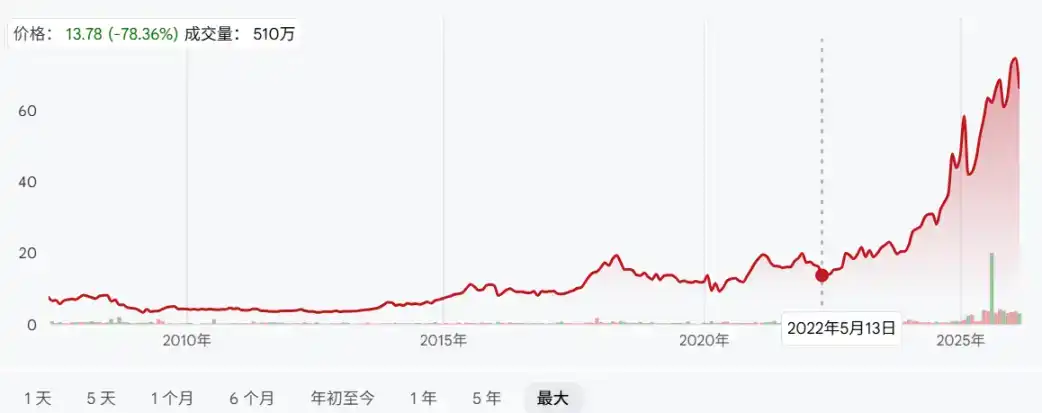
Since its founding by Thomas Peterffy in 1978, the company has focused on developing automated trading systems. According to the latest public Q4 2025 earnings report, Interactive Brokers' client account count reached 4.4 million, a 32% increase year-over-year. In 2025, net new client accounts exceeded 1 million for the year, setting an annual record. Full-year commission revenue was approximately $2.1 billion (+27%), and full-year net revenue was about $6.205 billion (+20%). Client average returns were strong (approximately 19.2% for individual clients and 28.91% for hedge fund clients).

These hardcore data points confirm the contribution of "low commissions + global access + one-stop platform" to long-term returns, and have also allowed Interactive Brokers to firmly establish itself at the intersection of TradFi and Crypto.


Пов'язані питання

QWhat major service did Interactive Brokers launch in January 2026 to revolutionize account funding?

AInteractive Brokers launched a 24/7 stablecoin account deposit service, allowing eligible clients to send USDC from personal crypto wallets to a secure address provided by Zero Hash (supporting Ethereum, Solana, and Base networks). The funds are automatically converted to USD and credited to the brokerage account within minutes, available around the clock, including weekends and holidays.

QHow did Interactive Brokers expand its crypto trading services in February and March 2026?

AIn February, Interactive Brokers introduced Coinbase Nano Bitcoin and Ethereum futures for 24/7 trading. In March, they enabled users to transfer BTC and ETH directly from external wallets into their linked crypto accounts on the platform without needing to sell or liquidate the assets first.

QWhat was Interactive Brokers' initial foray into crypto trading back in 2021, and which company did they partner with?

AIn September 2021, Interactive Brokers partnered with Paxos Trust Company, a New York State-regulated entity, to offer spot trading for Bitcoin, Ethereum, Litecoin, and Bitcoin Cash. Clients could trade and withdraw to external wallets 24/7 without opening a separate crypto account, directly through their existing brokerage account after applying for permissions.

QWhat is the core strategy behind Interactive Brokers' approach to integrating crypto into their platform, as emphasized by their CEO?

AThe core strategy is to make crypto trading as professional and low-cost as stock trading. Interactive Brokers treats crypto as an organic component of its multi-asset platform, using stablecoins as efficient settlement rails that can be directly converted into trading capital, margin, or idle capital, aligning with their strengths in automation, global market access, and low-cost execution.

QWhat were some key financial and client growth metrics for Interactive Brokers in 2025, as mentioned in the article?

AIn 2025, Interactive Brokers' client accounts grew to 4.4 million, a 32% year-over-year increase, with a record of over 1 million net new client accounts for the year. Full-year commission income was approximately $2.1 billion (a 27% increase), and net revenue was about $6.205 billion (a 20% increase). Client average returns were strong, with individual clients at around 19.2% and hedge fund clients at approximately 28.91%.

Пов'язані матеріали

Understanding Hash in One Article: The "Browser Miner" on Ethereum

Hash is an Ethereum-based ERC-20 token described as a "browser-minable post-quantum token." Its key features include enabling browser-based GPU mining without specialized hardware, a fixed supply cap of 21 million tokens, immutable and permissionless smart contracts with no team allocation or pre-mining, and an emphasis on post-quantum security using Keccak256 hashing. The mining mechanism is a simplified on-chain proof-of-work where miners solve unique challenges tied to their wallet address. Key design elements prevent answer theft, with epochs resetting every 100 blocks (~20 minutes) and a per-block minting limit. Emission follows a Bitcoin-like halving schedule every 100,000 mints, starting at 100 tokens per mint. Projections suggest all tokens could be mined within approximately 294 days if a target rate of one mint per minute is sustained. Hash emphasizes "post-quantum" security by leveraging hash-based primitives like Keccak256, which are considered more resistant to quantum attacks compared to elliptic-curve cryptography. While not a fully post-quantum asset, it aligns with Ethereum's broader post-quantum research narrative. The project completed its Genesis sale at $0.03 and began trading on Uniswap, with its price reaching around $0.19. The initial circulating supply is small, with 5% sold in Genesis and 5% allocated to liquidity. The majority (47.6% of total supply) is allocated to early-stage mining, leading to a front-loaded emission schedule. This structure, combined with low initial liquidity, makes Hash a high-volatility, high-risk project dependent on sustained miner participation and market demand to absorb new supply.

marsbit11 хв тому

Understanding Hash in One Article: The "Browser Miner" on Ethereum

marsbit11 хв тому

OpenAI's Largest Internal Wealth Creation: 600 People Cash Out a Total of $6.6 Billion, 75 Take Home the Maximum $30 Million Each

A Wall Street Journal report reveals OpenAI's unprecedented pre-IPO wealth creation. In a single employee stock sale last October, over 600 current and former employees sold shares, collectively cashing out approximately $6.6 billion. Due to high investor demand, the company tripled the individual sale cap to $30 million, with about 75 employees selling the maximum amount. This event represents the largest such transaction in tech industry history for a private company. OpenAI's valuation was $500 billion for this tender offer. Employees with over two years of tenure were eligible, allowing many post-ChatGPT hires their first liquidity event. The company's stock has reportedly grown over 100-fold in seven years. Following a restructuring, employees collectively hold about 26% of OpenAI. The scale of executive wealth is also staggering. In court testimony related to Elon Musk's lawsuit, President and co-founder Greg Brockman confirmed his OpenAI stake is worth around $30 billion. Analysis indicates about 165 current and former employees hold a combined ~$164.9 billion in equity, averaging nearly $1 billion per person in paper wealth. OpenAI's per-employee stock-based compensation is estimated to be 34 times the average of major tech firms before their IPOs. OpenAI continues its rapid ascent, closing a $122 billion funding round at an $852 billion valuation in March. With monthly revenue hitting $2 billion, over 900 million weekly ChatGPT users, and plans for a potential trillion-dollar IPO in late 2026, this wealth-creation engine shows no signs of stopping.

链捕手33 хв тому

OpenAI's Largest Internal Wealth Creation: 600 People Cash Out a Total of $6.6 Billion, 75 Take Home the Maximum $30 Million Each

链捕手33 хв тому

Торгівля

Спот
Ф'ючерси
活动图片




