Top 7 staking platforms of March 2026

ambcryptoОпубліковано о 2026-03-20Востаннє оновлено о 2026-03-20

Анотація

Staking allows users to earn rewards by holding cryptocurrencies using the Proof-of-Stake mechanism. It can be done through centralized (CeFi) or decentralized (DeFi) platforms. The top staking platforms include Rocket Pool (ETH staking with rETH tokens), Gate.io (CeFi and DeFi options), Bitfinex (soft staking with no fees), Nexo (flexible staking with high security), eToro (user-friendly with CopyTrader), Gemini (regulated with Basic and Pro options), and SushiSwap (DeFi staking with governance rights). Staking offers passive income and supports blockchain networks, but users should research platforms based on their needs.

Staking is the system of earning rewards and interest by the process of holding or investing cryptocurrencies. It uses the Proof of Stake (PoS) consensus mechanism, a process by which some blockchains validate transactions and add new blocks and secure the network. PoS depends on the validators selected based on how much crypto they have staked and how long they have held it.

There are 2 general types of staking: CeFi (Centralized Finance) platform staking, and DeFi (Decentralised Finance) platform staking. In CeFi staking, users deposit their crypto in centralized exchanges, and the platform stakes their crypto, and they can earn rewards passively. On the other hand, in DeFi staking, users can connect their wallet to a DeFi protocol and stake directly in a smart contract or a pool, they can earn staking tokens that represent the staked assets, and can be further traded or used. Here is a list of the top crypto staking platforms in the market:

1. Rocket Pool

Rocket Pool is an Ethereum staking protocol designed to give users a secure, scalable, and community-owned alternative to traditional staking. The platform allows users to participate in Ethereum staking with as little as 0.01 ETH. This is due to the liquid staking token, rETH, that is used to represent a user’s share of the staked ETH.

There is a 2-layer system deployed on the platform o, the first is that of Liquid Staking, where users can stake ETH and get rETH tokens in return. These tokens appreciate in value and let users maintain liquidity and take part in DeFi activities. The second is node staking, where users can run validator nodes with a minimum of 16 ETH that are backed by additional ETH from the network itself.

2. Gate.io
Gate.io provides users with a diverse range of staking products combining the benefits of CeFi and DeFi. They have HODL & Earn and PoS staking programs that let users earn rewards by simply holding the cryptocurrencies that are supported in their wallet.

They also have a DeFi staking protocol for users who are looking for higher yields. Users can stake assets and earn rewards in not only the base asset but also in governance tokens like DYDX, COMP, or AVAX.

3. Bitfinex
Bitfinex is an exchange that provides a secure platform for trading and financial services to users globally. They have a soft-staking program that lets users earn passive income by holding specific PoS tokens in their accounts. Unlike traditional staking, the platform does not require users to lock up their assets or participate in network validation directly. Instead, the users’ tokens are pooled and delegated to trusted validators, and the staking rewards are distributed back to the users.

The platform does not charge any staking fee, and there is no minimum amount required to start staking. There is a $0.50 reward threshold per week, and there is no lock-up period to trade or withdraw the staked tokens.

4. Nexo
Nexo is a crypto platform that combines flexible staking with competitive interest rates. Users can stake cryptocurrencies like Bitcoin, Ethereum, and Polkadot, earning rewards without locking up their assets. The platform’s Earn Interest program offers higher rates for fixed-term staking or holding NEXO tokens, while also supporting over 60 cryptocurrencies, allowing users to easily diversify their portfolio.

Security and convenience are also strong points for Nexo. The platform uses 256-bit encryption, two-factor authentication, and insurance on custodial assets. Users can manage staking through a simple web or mobile interface, and crypto-backed credit lines provide liquidity without needing to sell holdings.

5. eToro
eToro is a centralized crypto exchange known for its simplicity and wide range of supported cryptocurrencies. Users can stake select assets like Ethereum and Cardano, with rewards automatically credited and no lock-up periods.

The platform’s CopyTrader feature allows users to mirror strategies from experienced traders, offering guidance for beginners or those looking to optimize staking returns. With a secure, user-friendly interface and low minimum staking requirements, eToro makes it easy for users to earn passive income while participating in blockchain networks.

6. Gemini
Gemini is a regulated crypto platform that offers users the chance to earn passive income through its staking services, letting them participate in blockchain networks without the need for any technical expertise. There are 2 options for staking on the platform: the Basic Staking option lets users stake assets directly through the platform and is designed for those who want a simple method of staking without having to manage any validators.

The second option of staking is called Staking Pro, where users can directly stake in the Ethereum network and require a minimum of 32 ETH. They can also monitor their staking activities and rewards in real-time.

7. SushiSwap
SushiSwap is a DeFi platform that offers users the opportunity to make passive income through staking and taking part in the governance of the platform. SushiBar is the primary method of staking on the platform. Users can stake their SUSHI tokens and receive xSUSHI tokens. These tokens are appreciated over time and let users get a stream of passive income.

Users can not only earn rewards by staking but also get governance rights as xSUSHI token holders can join the decision-making process on the platform through voting.

Staking helps users get a chance to earn passive income and become an important part of the blockchain and crypto ecosystem. Users get a chance to earn higher returns than traditional savings or investments. While there are both CeFi and DeFi platforms offering staking options, it is advisable to choose the right platform according to your requirements.


Disclaimer. Readers are encouraged to do their own research. Ambcrypto is not liable for any outcomes related to the use of information, products, or services mentioned. This content may include affiliate or partner links.


Пов'язані питання

QWhat is the main difference between CeFi and DeFi staking platforms?

AIn CeFi staking, users deposit their crypto on centralized exchanges, which then stake the assets on their behalf, allowing users to earn rewards passively. In DeFi staking, users connect their wallet directly to a protocol, stake into a smart contract or pool, and receive staking tokens that represent their staked assets and can be traded or used further in DeFi.

QWhich platform allows users to participate in Ethereum staking with as little as 0.01 ETH and what token do they receive?

ARocket Pool allows users to participate in Ethereum staking with as little as 0.01 ETH. Users receive rETH (Rocket Pool ETH) tokens, which represent their share of the staked ETH and appreciate in value.

QWhat unique feature does Bitfinex's soft-staking program offer compared to traditional staking?

ABitfinex's soft-staking program does not require users to lock up their assets or participate in network validation directly. Instead, user tokens are pooled and delegated to trusted validators, and rewards are distributed back without any staking fees or a minimum amount required.

QWhat are the two staking options available on the Gemini platform and what is the key difference between them?

AGemini offers two staking options: Basic Staking, which is a simple method where the platform handles the staking process, and Staking Pro, which requires a minimum of 32 ETH and allows users to stake directly on the Ethereum network and monitor their activities in real-time.

QBesides earning rewards, what additional benefit do users get by staking SUSHI tokens on SushiSwap?

ABy staking SUSHI tokens on SushiSwap and receiving xSUSHI tokens, users not only earn a stream of passive income but also gain governance rights, allowing them to participate in the platform's decision-making process through voting.

Пов'язані матеріали

A 'Overlooked' Market Event: Joint US-Japan-South Korea Intervention, Rare US Treasury Involvement, and Bessent's Quiet 'Market Rescue'?

Summary: The United States, Japan, and South Korea executed their largest coordinated foreign exchange intervention in nearly 30 years. The action targeted depreciation pressure on the Japanese yen and South Korean won. This move is seen as a significant effort by the US to stabilize the financial markets of its key allies and prevent the spillover of risks. Key details: * Japan reportedly intervened on July 30 using approximately 8.45 trillion yen (about $52.8 billion). South Korean authorities also intervened that day, selling dollars to support the won. * Notably, the US Treasury Department intervened directly in yen markets for the first time in roughly 30 years. The New York Fed, reportedly acting on behalf of the Treasury, sold euros to buy yen via Goldman Sachs and Morgan Stanley on July 31. Analysts view the use of the euro-yen pair as a way to alleviate yen pressure without adding selling pressure to the US dollar. * Prior to the action, the New York Fed conducted "rate checks" on both USD/JPY and EUR/JPY, a newer signaling tool that falls between verbal and physical intervention. The intervention is interpreted as going beyond traditional currency stabilization. Analysts, such as Michael Hartnett of Bank of America, suggest it resembles a "Price Keeping Operation" for the AI era. The core US objectives are perceived to be: 1. Preventing rapid yen depreciation from triggering a sharp rise in Japanese government bond yields. 2. Containing financial stress from spreading across Asian markets like South Korea and Japan. 3. Reducing the risk of disorderly capital flows impacting the US bond market. This coordinated action underscores the importance of Japan and South Korea as critical partners in the US semiconductor and AI supply chain. Stabilizing their financial markets is seen as vital to mitigating risks to the broader tech industry and the US market itself. The intervention coincides with market pressures, including the KOSDAQ index hitting a low since October 2022. While seen as a move to control volatility, some analysts caution it may not fundamentally reverse existing market trends.

marsbit5 хв тому

A 'Overlooked' Market Event: Joint US-Japan-South Korea Intervention, Rare US Treasury Involvement, and Bessent's Quiet 'Market Rescue'?

marsbit5 хв тому

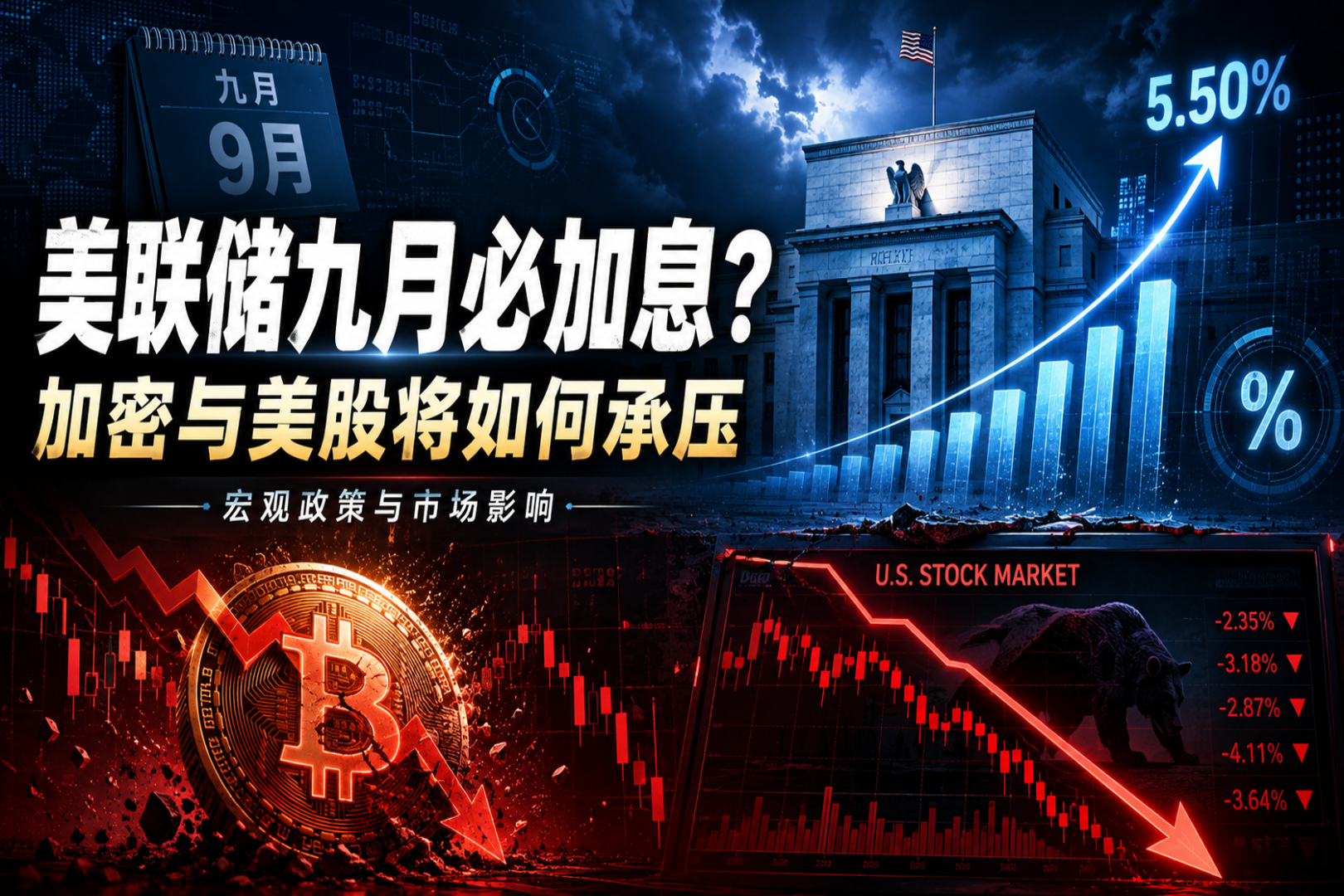
Will the Federal Reserve Definitely Raise Interest Rates in September? How Will Cryptocurrencies and US Stocks Bear the Pressure?

In early August 2024, market expectations for a September Federal Reserve rate hike surged dramatically, from below 50% to over 80%, driven by renewed inflation concerns. This shift followed a contentious July FOMC meeting where a 9-3 vote to hold rates revealed a growing hawkish faction advocating for an immediate hike, citing prolonged above-target inflation. The key catalyst is escalating conflict near the Strait of Hormuz, which has pushed oil prices up approximately 20% in July, threatening to reignite inflation. The next critical data point is the July CPI report on August 12th; a hot reading could solidify hike expectations. For crypto assets, particularly Bitcoin, this represents near-term pressure. Bitcoin continues to exhibit high-beta, risk-on characteristics, making it sensitive to tightening liquidity and higher opportunity costs. However, historical precedent suggests that if a hike is perceived as the cycle's end rather than its start, the negative impact may be brief, with markets quickly pivoting to anticipate future rate cuts. U.S. stocks, especially crypto-linked equities like Coinbase and high-valuation tech stocks, face amplified volatility. Higher rates increase discount rates in valuation models, pressuring growth stocks. This coincides with a pivotal tech earnings season where investor focus has shifted from massive AI capital expenditures to demonstrable revenue and cash flow generation. Companies with negative cash flows and weak growth narratives could see severe pressure if a September hike materializes, as financing costs would rise. Key indicators to watch include oil prices, upcoming inflation data, and Fed commentary at events like the Jackson Hole symposium.

Odaily星球日报5 хв тому

Will the Federal Reserve Definitely Raise Interest Rates in September? How Will Cryptocurrencies and US Stocks Bear the Pressure?

Odaily星球日报5 хв тому

From South Korea to the United States: Blue-Collar Jobs Are Becoming Increasingly Popular, Thanks to AI

AI is reshaping the labor market's value proposition. The traditional four-year college degree is losing its appeal as a guaranteed career path, while skilled blue-collar trades like electricians, welders, and plumbers are experiencing historic demand and wage premiums. This shift is driven by dual pressures: AI's displacement of certain white-collar roles and a booming need for physical infrastructure and data center construction. Data confirms the trend. In the U.S., vocational school revenue surged, and a significant portion of recent layoffs are AI-related. Surveys show a majority of Gen Z adults plan to pursue blue-collar work, citing better job security against AI automation. Vocational education interest has exploded recently. Experts cite a psychological shift as younger generations seek tangible, AI-resistant careers and avoid high student debt. In many cases, salaries for skilled trades now match or exceed those requiring a bachelor's degree. In South Korea, semiconductor vocational high schools boast near-total employment, with graduates securing high-paying roles at companies like Samsung. The shortage is structural, exacerbated by a retiring baby boomer workforce and massive infrastructure projects. Companies like JPMorgan Chase, Meta, and Lowe's are investing heavily in training programs. However, overcoming historical stigma and a "perception gap" around trade careers remains a key challenge to closing the talent gap.

marsbit1 год тому

From South Korea to the United States: Blue-Collar Jobs Are Becoming Increasingly Popular, Thanks to AI

marsbit1 год тому

Торгівля

Спот
活动图片