Tokenized RWAs grow 4x to $25B – Is $50B by 2030 next target?

ambcryptoОпубліковано о 2026-03-09Востаннє оновлено о 2026-03-09

Анотація

Tokenized Real World Assets (RWAs) experienced explosive growth, surging 4x to reach $24.9 billion in value over the past year, driven by institutional demand. U.S. Treasuries and commodities led this expansion, accounting for 58% of the growth. Major players like BlackRock and Ondo Finance saw their tokenized assets hit $2.2 billion and $2 billion, respectively. Concurrently, the number of RWA holders across major blockchains reached a record high, exceeding 663,000, with Ethereum and Solana leading in holder counts. If the current growth trajectory continues, the total value of tokenized RWAs is projected to exceed $50 billion by 2030, with represented assets potentially surpassing $1 trillion.

Real World Assets (RWAs) tokenization continued rapid acceleration in 2026, largely driven by institutional demand. In recent years, large entities have shown strong demand for private credit, on-chain treasury bills, and equities, significantly boosting asset values.

Tokenized RWAs hit $25 billion

Amid surging adoption of Blockchain among TradFi, asset managers, banks, and other entities, significant capital has been pumped into RWAs.

As a result, tokenized assets have skyrocketed, reaching record highs. According to Nexus data, the value of tokenized real-world assets (RWA) reached $24.9 billion, growing 4× over the past year.

This marked a 289% growth, adding over $18 billion Yoy, indicating massive demand in the past year.

The data showed that U.S. Treasuries and commodities dominated the space, accounting for 58% of the growth. These two have exceeded $16 billion in total value, according to RWA.xyz data.

At the same time, corporate bonds and institutional alternative funds also saw a massive jump, with BlackRock hitting $2.2 billion. Also, Ondo Finance saw its tokenized assets hit $2 billion.

Despite the continued rise in the three areas, the top concentration among them dropped 61%, indicating increased competition. However, treasuries defied the trend, with their market share declining from 59% to 43%, indicating increased diversification.

The number of RWA holders hits a record high.

In addition to the rising value of tokenized RWAs, the number of holders has also grown significantly across all major chains.

According to Token Terminal, RWA asset holder counts have climbed significantly across Ethereum, Solana, BNB Chain, and Celo. Ethereum RWA asset holder counts reached a new all-time high of 169k while Solana followed with 163k.

Celo and BNB chain also printed new highs, recording 77k and 42k, respectively. Other chains, such as Base and Arbitrum One, also recorded significant growth.

As such, total holders jumped 4%, exceeding 663k, while stablecoin holders surged 5% to 233.2 million, signaling increased adoption.

What’s next for RWA?

Tokenized RWAs have experienced exponential growth amid a scramble to accelerate blockchain adoption and continued acceptance in TradFi.

With this growth, the value of the represented assets exceeded $346 billion, despite a 6% decline over the past 30 days. At the same time, the total stablecoin value climbed to $301 billion.

At the current rates, and if market players continue to dive into RWA, the assets are likely to record significant growth in the mid to long term. Holding the current growth rate, the total value could exceed $50 billion by 2030, with assets represented exceeding $1 trillion.


Final Summary

  • Tokenized real-world assets [RWAs] surged to $25 billion, marking 4x growth over the past year.
  • The total number of RWA asset holders jumped 4% to 663k, reflecting increased adoption.

Пов'язані питання

QWhat was the total value of tokenized real-world assets (RWAs) reached in 2026, and what was the growth rate?

AThe total value of tokenized real-world assets (RWAs) reached $24.9 billion, marking a 289% growth (4x) over the past year.

QWhich two asset types dominated the RWA tokenization space and what percentage of the growth did they account for?

AU.S. Treasuries and commodities dominated the space, accounting for 58% of the growth.

QWhich two networks had the highest number of RWA asset holders, and what were their respective counts?

AEthereum had the highest number of RWA holders at 169,000, followed by Solana with 163,000 holders.

QWhat is the projected total value of tokenized RWAs by 2030 if the current growth rate continues?

AIf the current growth rate continues, the total value of tokenized RWAs is projected to exceed $50 billion by 2030.

QBesides the value of RWAs, what other metric also saw significant growth, increasing by 4% to 663k?

AThe total number of RWA asset holders also saw significant growth, jumping 4% to 663,000.

Пов'язані матеріали

Once-Popular Web3 Enters Wave of Layoffs

The once-hot Web3 industry is experiencing a severe wave of layoffs. While many companies attribute job cuts to AI-driven restructuring, the primary reason is often financial pressure. The Web3 sector, at the intersection of tech and finance, has been hit particularly hard. Employees at major cryptocurrency exchanges report sudden, impersonal layoffs—often with system access revoked overnight—and minimal or no severance. Common tactics include setting impossible performance targets or terminating employees for minor policy violations. The working atmosphere has become toxic, marked by intense monitoring, excessive meetings, and management obsessed with control and internal politics rather than product innovation. The industry's core business model is collapsing. Exchange revenue from trading fees and listing charges has plummeted due to a decline in quality projects and retail investor exodus. Events like the massive forced liquidation on October 10th further shattered confidence. Competition from on-chain derivatives platforms and prediction markets is intensifying the downturn. As layoffs continue, displaced workers struggle to find new opportunities. Many transition to the AI sector, but face significant bias from traditional finance and even some AI firms, which view crypto industry experience with suspicion. The current downturn appears more structural than cyclical, driven by unsustainable practices, internal strife, and a failure to innovate, raising questions about the industry's future trajectory.

marsbit47 хв тому

Once-Popular Web3 Enters Wave of Layoffs

marsbit47 хв тому

Sales Drop 26% But Prices Rise? Xiaomi's Dilemma

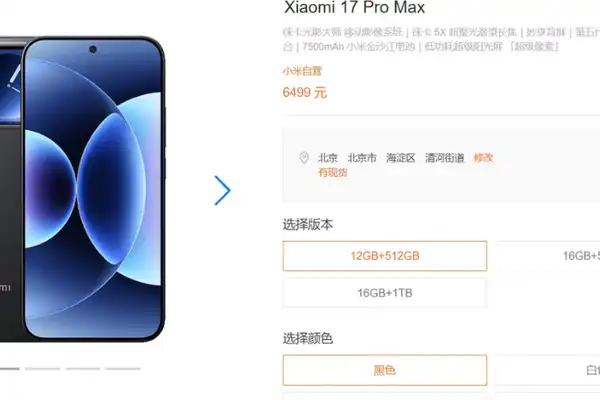
Xiaomi, facing a significant 26.3% year-on-year decline in global smartphone shipments in Q2 2026, has implemented its third price hike of the year. On August 2nd, prices were raised for nine models, including the flagship Mi 17 series (up 400-500 yuan) and Redmi K90/Turbo 5 series (up 300 yuan). This move completes a pattern where cost pressure, originating from surging memory chip prices, has climbed from entry-level to mid-range and now flagship products. The primary driver is a severe supply squeeze on consumer-grade DRAM and NAND flash memory, as major manufacturers like Samsung shift advanced capacity to more profitable HBM for AI applications. According to Xiaomi President Lu Weibing, memory prices for the same configuration have skyrocketed nearly fourfold since Q1 2025, adding roughly 1500 yuan to the cost of a mainstream 12GB+512GB phone. IDC estimates consumer memory costs have risen nearly 300% year-on-year. While the price increases hurt demand and contributed to the sales slump, Xiaomi's strategy of reducing entry-level models and upgrading its product mix also played a role. Domestically, its market share in China fell to 12% (5th place), while leaders Huawei and Apple saw shipments grow over 24%. To mitigate future risks, Xiaomi is accelerating its in-house "Surge" chip development and optimizing memory configurations across its lineup. Xiaomi is not alone; major brands like OPPO, vivo, and Apple have already raised prices in 2026, with industry insiders predicting another round of increases (200-800 yuan) in the second half. A full-scale industry-wide涨价 cycle is underway, forcing both manufacturers and consumers to recalibrate their strategies and purchasing decisions amid sustained cost pressures.

marsbit58 хв тому

Sales Drop 26% But Prices Rise? Xiaomi's Dilemma

marsbit58 хв тому

Торгівля

Спот
活动图片