Tokenization benefits ‘light at first,’ but will expand if democratized: NYDIG

cointelegraphОпубліковано о 2025-12-12Востаннє оновлено о 2025-12-12

Анотація

NYDIG's Global Head Greg Cipolaro states that while tokenizing real-world assets (RWAs) like stocks offers limited initial benefits to crypto networks, its advantages could grow significantly with greater democratization and integration. Initially, blockchains like Ethereum would gain from transaction fees and network effects. However, broader benefits—such as composability in DeFi for lending, borrowing, or trading—depend on improved technology, infrastructure, and favorable regulations. Tokenized assets vary widely in design and are hosted on both public and private networks, with significant value already on platforms like the Canton Network and Ethereum. Despite relying on traditional financial structures, blockchain offers near-instant settlement and operational efficiency. Cipolaro advises investors to monitor the space, as regulatory progress could expand the reach and utility of tokenized RWAs.

The tokenization of stocks won’t immediately be of immense benefit to the crypto market, but the benefits could increase if such assets are allowed to better integrate on blockchains, says NYDIG.

“The benefits to networks these assets reside on, such as Ethereum, are light at first, but increase as their access and interoperability and composability increase,” NYDIG global head of research Greg Cipolaro said in a note on Friday.

The initial benefits will be the transaction fees charged for using tokenized assets, and the blockchain hosting them will “enjoy increasing network effects” for storing them, Cipolaro added.

Tokenizing real-world assets, or RWAs, such as US stocks, has become a hot topic in the crypto industry, with major exchanges, including Coinbase and Kraken, wanting to launch tokenized stock platforms in the US after their success overseas.

Securities and Exchange Commission chair Paul Atkins said earlier this month that the US financial system could embrace tokenization in a “couple of years,” which Cipolaro said shows that “tokenization is likely going to be a big trend.”
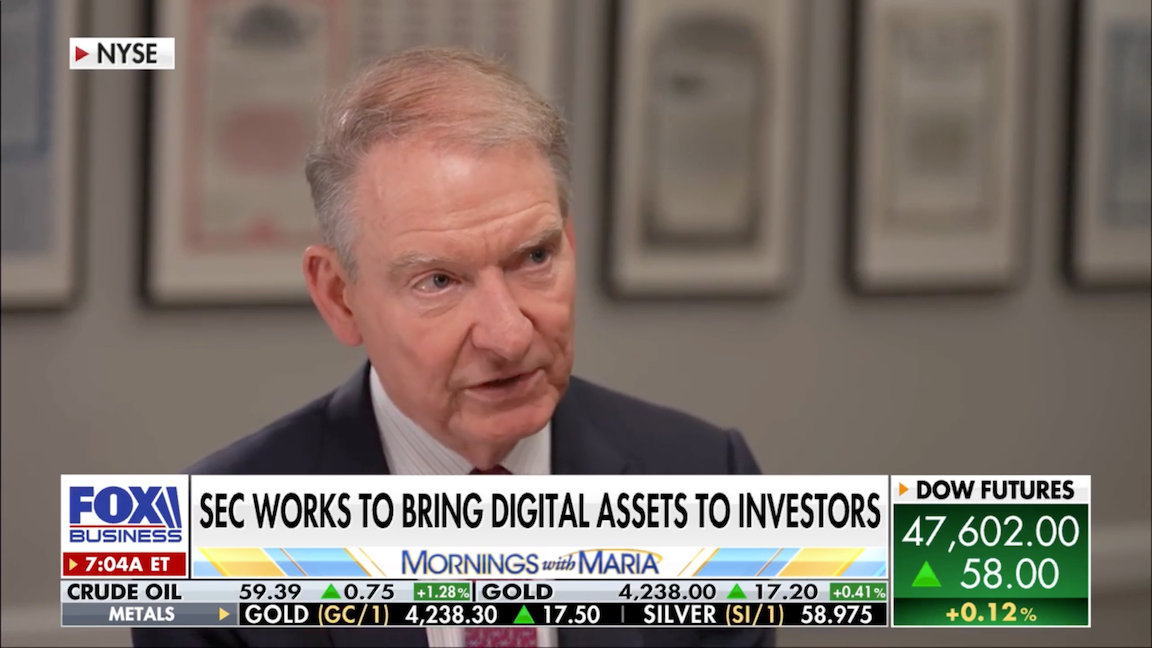
Paul Atkins speaking to Fox Business earlier in December on tokenized US stocks. Source: Fox Business

“In the future, one could see these RWAs being part of DeFi (composability), either as collateral for borrowing, an asset to be lent out, or for trading,” he added. “This will take time as technology develops, infrastructure is built out, and rules and regulations evolve.”

Tokenized assets can “differ greatly”

Cipolaro noted that making composable and interoperable tokenized assets isn’t straightforward, as “their form and function differ greatly” and are hosted on public and non-public networks.

The Canton Network, a non-public blockchain created by the company Digital Asset Holdings, is currently the largest blockchain for tokenized assets with $380 billion, or “91% of the total ‘represented value’ of all RWAs,” Cipolaro explained.

Ethereum, meanwhile, is “by far and away” the most popular public blockchain for tokenized assets, with $12.1 billion of RWAs deployed on it, he added.

Related: US financial markets ‘poised to move onchain’ amid DTCC tokenization greenlight

“But even on an open, permissionless network such as Ethereum, the design of the specific tokenized asset can vary greatly,” Cipolaro said. “These RWAs are often securities, broker-dealers, KYC/investor accreditation, whitelisted wallets, transfer agents, and other structures from traditional finance are required.”

He added that even though tokenized assets still need traditional financial structures, companies are using blockchain technology for the benefit of “near instant settlement, 24/7 operations, programmatic ownership, transparency, auditability, and collateral efficiency.”

“In the future, if things become more open and regulations become more favorable, as Chairman Atkins suggests, access to these assets should become more democratized, and thus these RWAs would enjoy expanded reach,” Cipolaro said.

“Investors should pay attention,” he added, “even if the economic impacts to traditional cryptocurrencies are minimal today.”

Magazine: Can Robinhood or Kraken’s tokenized stocks ever be truly decentralized?

Пов'язані матеріали

$500 to Buy OpenAI Stock: Silicon Valley's Most Respectable Liquidity Invitation

Silicon Valley's largest venture capital platform, AngelList, has launched a new fund called USVC, allowing U.S. retail investors to buy into high-profile AI companies like OpenAI, Anthropic, and xAI with a minimum investment of $500—no accredited investor status required. Promoted by AngelList co-founder Naval Ravikant, the fund is framed as an opportunity for ordinary people to access high-growth private tech investments traditionally reserved for VCs. However, critics argue it functions more like an exit vehicle for early insiders. USVC acquires shares not through primary rounds but largely via secondary transactions—purchasing stakes from early investors, VC funds, and employees looking to cash out at peak valuations. With companies like xAI heavily weighted in the portfolio, the fund effectively channels retail money into providing liquidity for insiders who entered at much lower valuations. The fund’s structure raises concerns: shares are illiquid, with no secondary market, and buybacks are limited and discretionary. The actual annual fee reaches 3.61%, far above the advertised 1% management fee. This model parallels the "low float, high fully diluted valuation" strategy seen in crypto, where early investors profit by selling to latecomers at inflated prices. The timing—alongside similar moves by platforms like Robinhood—suggests that Silicon Valley’s sudden interest in retail inclusion may be less about democratizing access and more about securing exits for insiders.

marsbit20 хв тому

$500 to Buy OpenAI Stock: Silicon Valley's Most Respectable Liquidity Invitation

marsbit20 хв тому

Торгівля

Спот
Ф'ючерси

Популярні статті

Як купити T

Ласкаво просимо до HTX.com! Ми зробили покупку Threshold Network Token (T) простою та зручною. Дотримуйтесь нашої покрокової інструкції, щоб розпочати свою криптовалютну подорож.Крок 1: Створіть обліковий запис на HTXВикористовуйте свою електронну пошту або номер телефону, щоб зареєструвати обліковий запис на HTX безплатно. Пройдіть безпроблемну реєстрацію й отримайте доступ до всіх функцій.ЗареєструватисьКрок 2: Перейдіть до розділу Купити крипту і виберіть спосіб оплатиКредитна/дебетова картка: використовуйте вашу картку Visa або Mastercard, щоб миттєво купити Threshold Network Token (T).Баланс: використовуйте кошти з балансу вашого рахунку HTX для безперешкодної торгівлі.Треті особи: ми додали популярні способи оплати, такі як Google Pay та Apple Pay, щоб підвищити зручність.P2P: Торгуйте безпосередньо з іншими користувачами на HTX.Позабіржова торгівля (OTC): ми пропонуємо індивідуальні послуги та конкурентні обмінні курси для трейдерів.Крок 3: Зберігайте свої Threshold Network Token (T)Після придбання Threshold Network Token (T) збережіть його у своєму обліковому записі на HTX. Крім того, ви можете відправити його в інше місце за допомогою блокчейн-переказу або використовувати його для торгівлі іншими криптовалютами.Крок 4: Торгівля Threshold Network Token (T)Легко торгуйте Threshold Network Token (T) на спотовому ринку HTX. Просто увійдіть до свого облікового запису, виберіть торгову пару, укладайте угоди та спостерігайте за ними в режимі реального часу. Ми пропонуємо зручний досвід як для початківців, так і для досвідчених трейдерів.

377 переглядів усьогоОпубліковано 2024.12.10Оновлено 2025.03.21

Як купити T

Обговорення

Ласкаво просимо до спільноти HTX. Тут ви можете бути в курсі останніх подій розвитку платформи та отримати доступ до професійної ринкової інформації. Нижче представлені думки користувачів щодо ціни T (T).

活动图片













