Token Doesn't Need a Chinese Name, But the Business Behind It Does

marsbitОпубліковано о 2026-03-23Востаннє оновлено о 2026-03-23

Анотація

Recent discussions in China have intensified around finding an appropriate Chinese translation for the technical term "Token," driven by its growing economic and industrial significance. Previously an obscure technical term within AI circles, Token has now entered mainstream discourse due to its role as a billing unit in cloud services, a revenue metric for AI companies, and a key indicator in national AI industry statistics. Proposed translations include "智元" (suggested by AI media, implying "intelligence unit"), "模元" (proposed by academics, leaning toward "model unit"), and "符元" (a more neutral, technical term meaning "symbol unit"). The debate is not merely linguistic but reflects broader commercial and narrative control over the AI industry. Different translations align with different stakeholders’ interests: "智元" benefits those emphasizing intelligent computation, while "模元" reinforces the role of model developers. The term already had an academic translation—“词元” (ciyuan)—since 2021, but it gained little attention until Tokens became a valuable economic unit. As Token consumption in China surges—reaching 180 trillion per day—the naming contest underscores deeper issues of market influence, branding, and “coinage” rights in the emerging AI-driven economy. Ultimately, those who produce Tokens may hold the power to define them, regardless of the chosen name.

Author: Kuli, Shenchao TechFlow

Recently, you may have noticed something: people have started discussing what Token should be called.

Professor Yang Bin from Tsinghua University published an article titled "It's Urgent to Determine the Chinese Translation for Token"; a related translation question on Zhihu garnered 250,000 views, with comment sections flooded with suggestions.

Over the past two to three years, the domestic AI circle directly used the term "Token" without any issue. Why the sudden need for a Chinese name?

The immediate reason might be that, after this year's Spring Festival, ordinary people learned for the first time that Tokens cost money.

OpenClaw transformed AI from chatting to working, with a single task burning through hundreds of thousands of Tokens, sending bills skyrocketing; various cloud providers have also announced price increases, with the billing unit being Token.

At the same time, Token started appearing in places it hadn't before.

At the GTC conference, NVIDIA CEO Jensen Huang mentioned that in Silicon Valley, people are now asking in job interviews, "How many Tokens does this job offer?" He suggested incorporating Tokens into engineers' compensation;

OpenAI founder Sam Altman took it even further, suggesting that Tokens would replace universal basic income, with everyone receiving computing power instead of money.

Data from the National Data Bureau shows that China's daily Token consumption surged from 100 billion in early 2024 to over 40 trillion by September 2025, reaching 180 trillion this February. At the beginning of the year, People's Daily published an article titled "A Casual Talk on Ciyuan (词元)" to explain the term to readers.
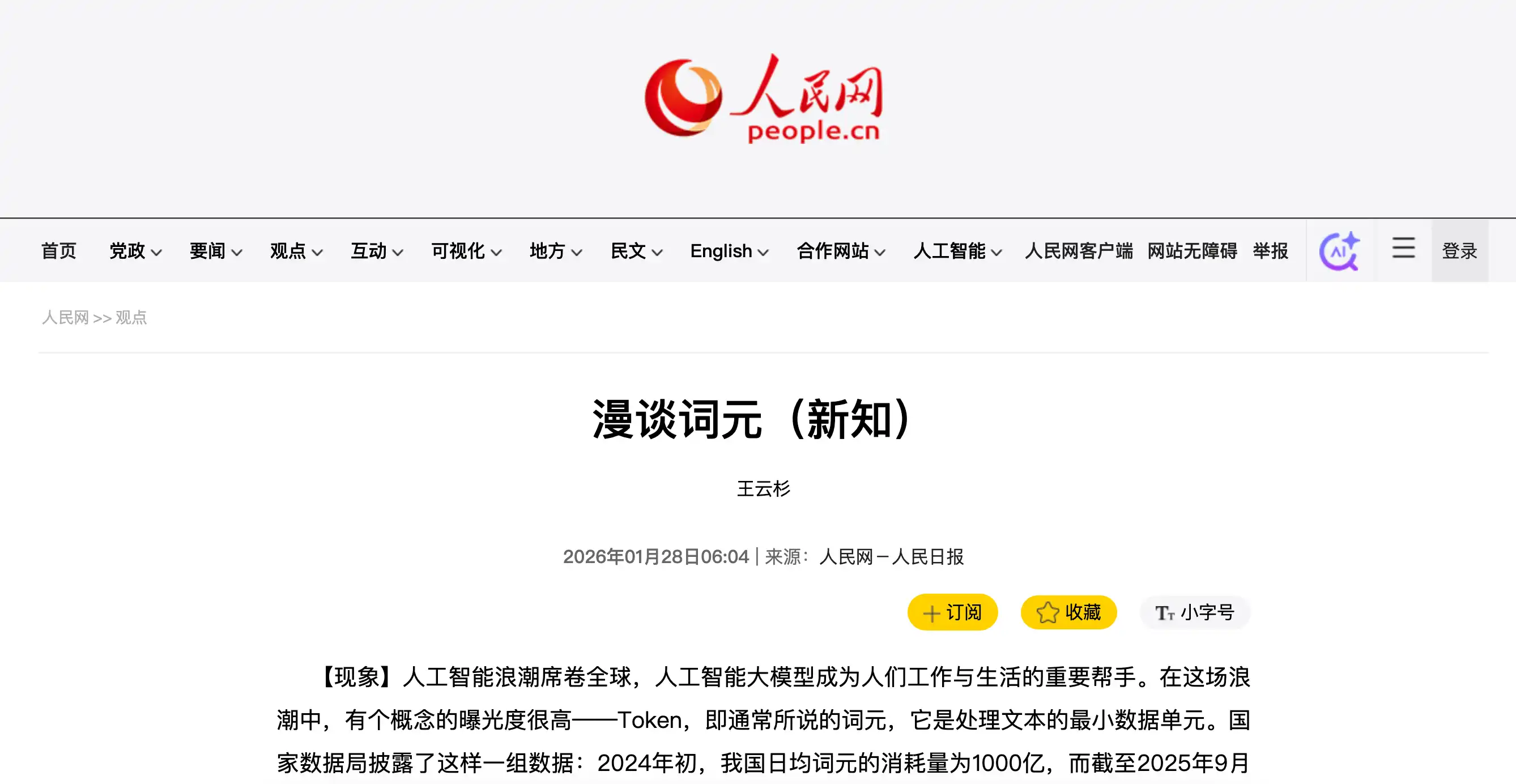
Once a technical term enters cloud service bills, recruitment compensation packages, and official statistical metrics, it can no longer remain in English.

The question is, what to call it?

If this were merely a translation issue, there would already be an answer. In 2021, the domestic academic community settled on a name for Token: 词元 (Ciyuan).

But no one cared back then because Token was still an internal term within technical circles.

Now, it's different.

The word "Token" itself is a versatile container; previously, people in the crypto sphere called it 代币 (Daibi, meaning token/coin), those in security called it 令牌 (Lingpai, meaning token/pass), and those in AI called it 词元 (Ciyuan, meaning lexical unit). The same English word, depending on which direction the Chinese translation leans, determines whose territory it belongs to.

Thus, a battle over naming Token began.

Business Needs Discourse Power

How a word is translated is usually a matter for linguists. But this time, almost no linguists are involved in the naming.

The currently most prominent name is "智元" (Zhiyuan).

It is being pushed most vigorously by an AI media outlet called "新智元" (Xin Zhiyuan). If the Chinese name for Token is set as "智元", this company's brand name would coincide with a fundamental industry term, effectively getting free advertising in every article discussing Token.

Their own promotional article ends quite frankly: "We suggest translating Token as the industry's new consensus: 智元 (Zhiyuan), leaving the '新' (Xin, meaning new) for us."

According to the same article, Baichuan Intelligent founder Wang Xiaochuan commented: "Calling it Zhiyuan is quite good."

As a maker of large models, it's certainly good for him if Token is called Zhiyuan. Each operation of the model would then produce not just a billing unit, but a "basic unit of intelligence."

Selling Token is selling traffic; selling Zhiyuan is selling intelligence—the valuation story is entirely different.

Professor Yang Bin from Tsinghua University proposed "模元" (Moyuan), with "模" (Mo) corresponding to model. Whoever owns the large model holds the production rights to "模元". Leaning the name towards models shifts pricing power to the model companies.

Some advocate for "符元" (Fuyuan), returning to the most fundamental definition in computer science—Token is simply a unit of symbolic processing, unrelated to intelligence or models.

It's the cleanest technically, but the proposer is an independent technical writer, without corporate backing or capital push, and thus has almost no voice in this discussion.

Whichever direction the name leans, the industry narrative moves that way, and money flows accordingly.

A distant example: the day Facebook renamed itself Meta, "metaverse" transformed from a sci-fi concept into a valuation story for a company. A recent example: China consumes 180 trillion Tokens daily, ranking first globally, but what to call it, how to define it, and who defines it remain undecided...

The world's largest consumer of Tokens hasn't even decided what to call what it consumes.

However, this term actually already had a Chinese name.

In 2021, Professor Qiu Xipeng from the School of Computer Science at Fudan University translated Token as "词元" (Ciyuan). The academic community accepted it and wrote it into textbooks. Nobody discussed it then because Token wasn't valuable back then.

Now Token is valuable.

It is the billing unit for cloud services, the revenue source for large model companies, and a core metric for national statistics on the AI industry's scale. So the media arrived, the big shots arrived, the professors arrived, each bringing their preferred name and the rationale behind it.

Translation was never the problem. The problem is when this term started becoming valuable.
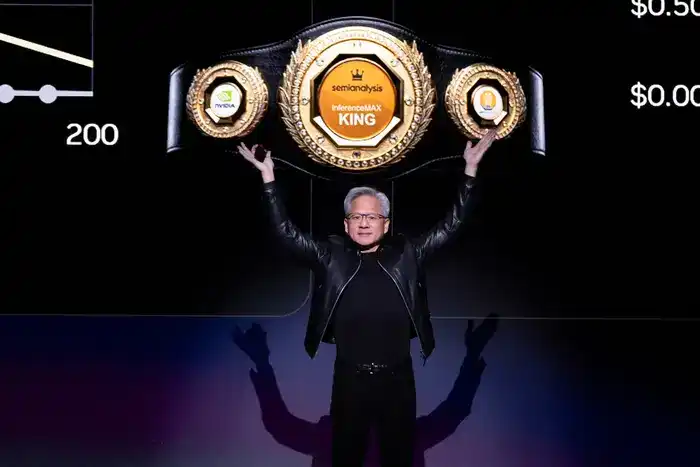
Jensen Huang did not participate in the Chinese naming discussion at GTC. He did something simpler: held up a championship belt printed with "Token King" and declared that data centers are Token factories.

Whoever produces Tokens, defines Tokens. What the name is, he doesn't care.

Token, Land Grabbing, and Coin Minting

Therefore, the part truly deserving serious thought in this matter is not which translation is better.

After the term "calorie" was established, the entire food industry's pricing, labeling, and regulatory systems were built around it. After the definition of "流量" (Liuliang, data traffic) was established in China's telecommunications industry, operators billed, competed, and designed packages based on it—the entire business model revolved around these two words for over a decade.

Token is now on the same path.

It is already the billing unit for cloud services, the revenue metric for large model companies, and a core indicator for measuring the AI industry's scale at the national level. The VC circle is even starting to talk about whether investment disbursements can be made directly in Tokens.

Once a word becomes a measure of money, naming it is no longer translation; it's minting currency.

Call it "智元" (Zhiyuan), and the minting right belongs to the AI narrative; whoever tells the story of intelligence benefits. Call it "模元" (Moyuan), and the minting right goes to the model companies; whoever has the large model prints money. Call it "符元" (Fuyuan), and the minting right returns to the technology itself, but technology itself doesn't speak for itself.

The academic community's 2021 term "词元" (Ciyuan) was ignored not because the translation was poor, but because this "coin" wasn't valuable back then.

Now it's valuable, and everyone wants to carve their name on it.

Пов'язані питання

QWhy has there been a recent push to give Token a Chinese name, according to the article?

ABecause Token has become a valuable economic unit, appearing in cloud service bills, recruitment packages, and official statistics, making an English term no longer suitable for widespread use in China.

QWhat are some of the proposed Chinese translations for Token mentioned in the article, and who supports them?

A"智元" (Zhi Yuan) is promoted by the AI media '新智元' and supported by Baichuan AI's founder Wang Xiaochuan; "模元" (Mo Yuan) was proposed by Professor Yang Bin of Tsinghua University; "符元" (Fu Yuan) was suggested by an independent technical writer.

QWhat does the article suggest is the real issue behind the naming debate, beyond just translation?

AThe real issue is about 'minting rights' or economic control. The chosen name will shape the industry narrative and determine where the economic benefits and pricing power flow, whether to AI storytellers, model companies, or the technical field.

QWhat was the earlier academic translation for Token from 2021, and why was it largely ignored at the time?

AThe academic translation from 2021 was "词元" (Ci Yuan), proposed by Professor Qiu Xipeng of Fudan University. It was ignored because Token was not yet a valuable economic unit at that time and was only an internal technical term.

QHow does the article use the examples of 'calories' and 'data traffic' to explain the significance of naming Token?

AThe article uses these examples to show that once a term becomes a unit of measurement for money (like calories for food pricing or data traffic for telecom billing), naming it is not just about translation but about establishing an entire economic and regulatory system around it, effectively 'minting a new currency'.

Пов'язані матеріали

The Trillion-Yuan Market Cap 'Yi Zhong Tian': Who is the True Value King?

The article analyzes the three leading Chinese optical module companies, collectively nicknamed "Yi Zhong Tian": Xinyisheng, Zhongji Innolight, and TFC Optical Communication. It evaluates their "cost-performance" not by current stock price, but through three lenses: PEG ratio (growth vs. valuation), earnings quality, and premium/discount for certainty. Xinyisheng shows the most attractive PEG ratio and high profitability, but its valuation reflects discounts for risks like high customer concentration and reliance on overseas markets. Zhongji Innolight, the most expensive, commands a premium for its market leadership, dominant share in key products like 800G/1.6T modules, and higher earnings certainty, though it faces geopolitical risks. TFC Optical, as an upstream component supplier ("water seller"), has the highest gross margin and bets on the long-term CPO/NPO architecture trend, but trades at a high valuation with more stable, less explosive growth. The core argument is that while these companies dominate module assembly, the true profit pool and technological moat lie upstream in laser and switch chips, currently controlled by U.S. firms like Lumentum and Coherent. The long-term "cost-performance" for these Chinese leaders hinges on whether the domestic industry, exemplified by companies like Yuanjie Technology, can successfully move up the value chain into high-power laser chips. Otherwise, their high growth may remain confined to the lower-margin assembly segment.

marsbit1 хв тому

The Trillion-Yuan Market Cap 'Yi Zhong Tian': Who is the True Value King?

marsbit1 хв тому

Has the Crypto Market Bottomed? Here's What Institutions Think

The crypto market is in a period of significant debate, with leading institutions offering differing views on whether a bottom has been reached. Three prominent firms have published detailed analyses: * **Galaxy Digital** argues Bitcoin has **not yet bottomed**. Their analysis of 13 historical indicators across six dimensions (valuation, profit-taking, miner pressure, etc.) shows only four are fully met. They project a potential bottom range between $30k and $54k. * **NYDIG** states a bottom is **possible but not likely**. While metrics are close to historic bear market extremes, they note the absence of a classic panic-selling event. They also suggest increased institutional adoption may have structurally altered the market cycle, potentially leading to a shallower downturn. * **Standard Chartered Bank** asserts the **bottom has already occurred** at around $59k. They cite two key factors: potential US-Iran diplomatic progress and the anticipated SpaceX IPO, which they believe absorbed capital and caused ETF selling pressure that is now subsiding. They forecast a year-end price target of $100k. Despite the surface-level disagreement, the reports share critical common ground more valuable for long-term investors: 1. All three believe the market bottom will form **within this year**. 2. All agree the current price is **closer to the bottom than to previous highs**. 3. All maintain a **bullish long-term outlook** for Bitcoin and a new cycle. The core takeaway is that while the exact bottom price ($40k, $50k, or $60k) is debated, the consensus is that a bottom is imminent. For long-term holders, the primary focus should not be pinpointing the absolute low, but on the future potential for prices to reach $100k, $200k, or higher. The fundamental thesis for Bitcoin—sovereign debt accumulation, inflation, declining trust in centralized institutions, global digitization, and improved accessibility—remains intact and is arguably strengthening. The overall landscape is viewed as more favorable than in previous crypto winters.

marsbit11 хв тому

Has the Crypto Market Bottomed? Here's What Institutions Think

marsbit11 хв тому

The 'Chip' Challenge and Breakthroughs in China's Optical Industry Chain

China's Photonics Industry: Bottlenecks and Breakthroughs In the global AI race, computing chips dominate the narrative, but the underlying bottleneck increasingly defining the scale of AI clusters is light—or more specifically, optical connectivity. Optical modules, which translate electrical signals to light and vice versa, are crucial for connecting thousands of GPUs in AI data centers, preventing data congestion and ensuring efficient model training. High-speed modules (800G, 1.6T) are now standard, with performance hinging on advanced DSP (Digital Signal Processor) chips. This is where a critical dependency lies. Two US giants—Marvell and Broadcom—collectively dominate over 90% of the high-end DSP chip market. Chinese optical module leaders like Zhongji Innolight and Eoptolink rely on these chips to manufacture modules for overseas AI customers, primarily in North America. While this creates a supply chain vulnerability, complete decoupling is difficult. Marvell derives over half its revenue from Greater China, and the US firms depend on Chinese partners for chip packaging and optical components. The risk from laser chips (e.g., from Lumentum), another key component, is considered more manageable due to multiple global suppliers and faster progress in domestic alternatives from companies like YOFC and Accelink. To mitigate risks, China's industry is pursuing a multi-pronged strategy: diversifying supply chains and locking in long-term orders; fostering a domestic market ecosystem to adopt homegrown DSPs from firms like Huawei HiSilicon and CETC; accelerating R&D in high-speed DSPs and advanced packaging; and investing in next-gen technologies like silicon photonics and Co-Packaged Optics (CPO) to reduce reliance on discrete DSPs. The ultimate solution lies not in short-term博弈 but in persistent advancement of domestic high-end chip R&D and manufacturing. While challenges remain in performance, certification, and ecosystem building, China's vast domestic market and manufacturing base provide a crucial buffer, buying time for the industry to achieve greater technological independence.

marsbit25 хв тому

The 'Chip' Challenge and Breakthroughs in China's Optical Industry Chain

marsbit25 хв тому

Behind SpaceX's $2 Trillion Market Cap: Why Does Musk Always Have the Next Move Planned?

On June 12th, SpaceX debuted on the Nasdaq, reaching a valuation that briefly touched $2 trillion. This marked the culmination of a 24-year journey from its founding in 2002, driven by Elon Musk's frustration at the high cost of buying rockets. The company's path was defined by early failures, with its first three Falcon 1 launches ending in explosions before a successful 2008 flight opened the era of commercial spaceflight. Key to its model was a fixed-price NASA contract, incentivizing cost reduction. SpaceX mastered rocket reusability, first achieving a Falcon 9 landing in 2015, which drastically cut launch costs. This enabled its profitable Starlink satellite internet constellation, envisioned years before reusability was proven, to create an internal market for frequent launches. Similarly, the next-generation Starship rocket was in development long before its first flight, with its business case evolving from Mars colonization to supporting the emerging concept of in-orbit data centers for AI—a story now central to its valuation. The company's recent IPO, a reversal of its long-standing "no IPO" stance, is funding this ambitious "space-based compute" vision. While major tech players like Google, Blue Origin, and others are investing heavily, significant technical and cost hurdles remain. Ultimately, SpaceX's history is one of creating its own demand: first with Starlink and now with space-based AI compute, betting that its next rocket will enable its next giant market.

marsbit27 хв тому

Behind SpaceX's $2 Trillion Market Cap: Why Does Musk Always Have the Next Move Planned?

marsbit27 хв тому

Торгівля

Спот
Ф'ючерси

Популярні статті

Як купити PEOPLE

Ласкаво просимо до HTX.com! Ми зробили покупку ConstitutionDAO (PEOPLE) простою та зручною. Дотримуйтесь нашої покрокової інструкції, щоб розпочати свою криптовалютну подорож.Крок 1: Створіть обліковий запис на HTXВикористовуйте свою електронну пошту або номер телефону, щоб зареєструвати обліковий запис на HTX безплатно. Пройдіть безпроблемну реєстрацію й отримайте доступ до всіх функцій.ЗареєструватисьКрок 2: Перейдіть до розділу Купити крипту і виберіть спосіб оплатиКредитна/дебетова картка: використовуйте вашу картку Visa або Mastercard, щоб миттєво купити ConstitutionDAO (PEOPLE).Баланс: використовуйте кошти з балансу вашого рахунку HTX для безперешкодної торгівлі.Треті особи: ми додали популярні способи оплати, такі як Google Pay та Apple Pay, щоб підвищити зручність.P2P: Торгуйте безпосередньо з іншими користувачами на HTX.Позабіржова торгівля (OTC): ми пропонуємо індивідуальні послуги та конкурентні обмінні курси для трейдерів.Крок 3: Зберігайте свої ConstitutionDAO (PEOPLE)Після придбання ConstitutionDAO (PEOPLE) збережіть його у своєму обліковому записі на HTX. Крім того, ви можете відправити його в інше місце за допомогою блокчейн-переказу або використовувати його для торгівлі іншими криптовалютами.Крок 4: Торгівля ConstitutionDAO (PEOPLE)Легко торгуйте ConstitutionDAO (PEOPLE) на спотовому ринку HTX. Просто увійдіть до свого облікового запису, виберіть торгову пару, укладайте угоди та спостерігайте за ними в режимі реального часу. Ми пропонуємо зручний досвід як для початківців, так і для досвідчених трейдерів.

490 переглядів усьогоОпубліковано 2024.12.12Оновлено 2026.06.02

Як купити PEOPLE

Обговорення

Ласкаво просимо до спільноти HTX. Тут ви можете бути в курсі останніх подій розвитку платформи та отримати доступ до професійної ринкової інформації. Нижче представлені думки користувачів щодо ціни PEOPLE (PEOPLE).

活动图片













