To Counter Chinese Models, Silicon Valley's Big Three Even Formed an 'Avengers Alliance'?

marsbitОпубліковано о 2026-04-22Востаннє оновлено о 2026-04-22

Анотація

In a rare move, Silicon Valley's AI giants—OpenAI, Anthropic, and Google—have formed a coalition called the "Frontier Model Forum" to combat what they term "adversarial distillation." This practice involves companies, particularly Chinese firms like DeepSeek, Moon Dark Side, and MiniMax, allegedly using massive API interactions to extract and replicate the capabilities of advanced models. Anthropic's report claims these firms engaged in over 16 million interactions, copying logic, reasoning chains, and model behaviors to train their own systems at lower costs. While distillation is a known technique, the alliance argues it threatens both commercial interests and safety, as distilled models may bypass critical risk assessments. However, the accusations are met with skepticism, citing hypocrisy, as these giants themselves face lawsuits over unauthorized data scraping. The debate highlights the unresolved ethical and legal gray areas in AI development.

Some time ago, Silicon Valley's AI 'Big Three'—OpenAI, Anthropic, and Google—very rarely formed what could be called an 'Avengers Alliance'.

According to a Bloomberg report, the three rivals, who usually can't wait to outdo each other, are now sharing information through a 'Frontier Model Forum' with a clear goal: to jointly identify so-called adversarial distillation behavior.
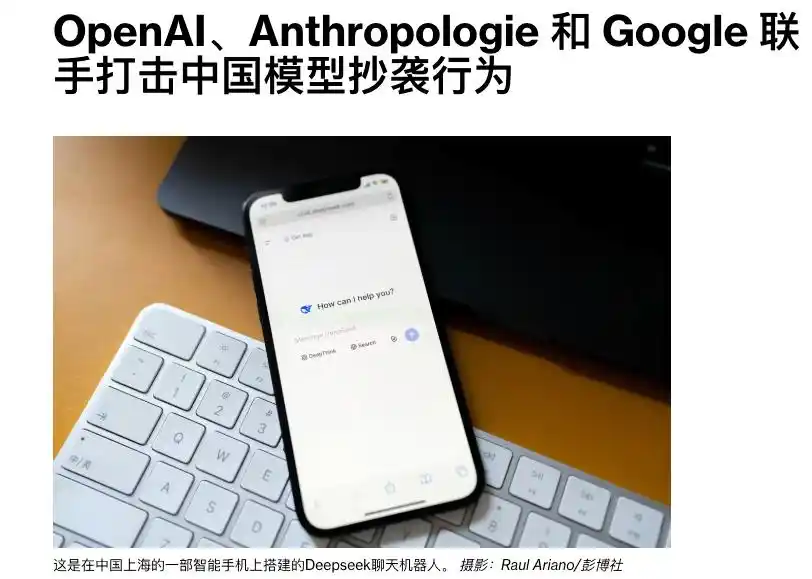
If you don't understand what this so-called 'adversarial distillation behavior' is, that's okay. But Shichao wants to say, this time, it's clearly targeting domestic large models.

If we rewind the timeline to February this year, the conflict was already out in the open.

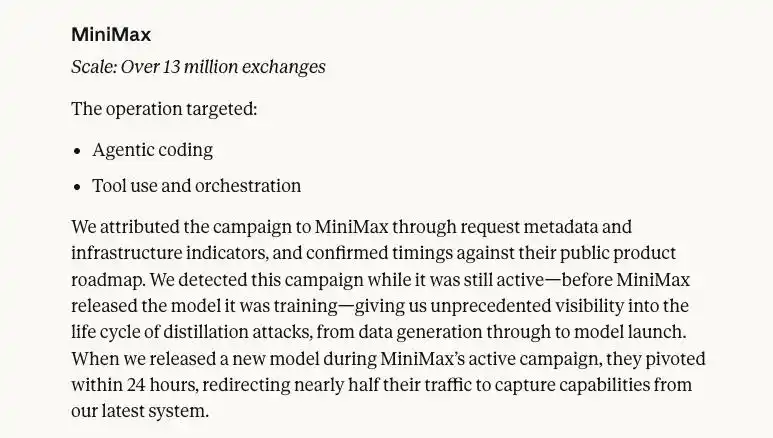
At that time, Anthropic released an investigative report, publicly naming DeepSeek, Moon Dark Side (Yue Zhi An Mian), and MiniMax, stating that these three companies created about 24,000 fraudulent accounts, interacted with Claude over 16 million times, and then used the extracted精华 (essence) data to train their own models.

In this report, the scale of each company's distillation activities and their targets were clearly detailed.

For example, MiniMax, with the largest scale, initiated over 13 million interactions and followed closely; shortly after Anthropic released a new model, they redirected their traffic.
DeepSeek's distillation scale was relatively smaller, with over 150,000 interactions, but specifically targeted chain-of-Thought reasoning.

Of course, labeling these interaction behaviors as 'adversarial distillation' is purely Anthropic's one-sided claim, as there's no way to prove that the data was used to train models.

However, Anthropic isn't the only one feeling the sting of distillation.

Around the same time, OpenAI also complained to the U.S. Congress, accusing DeepSeek of using model distillation technology to illegally replicate their product functionality.

So Shichao feels that this alliance of the three companies might be getting ready to take serious action.

But before discussing 'anti-distillation', we probably need to first understand what this 'distillation' technology is that has the giants so worried?

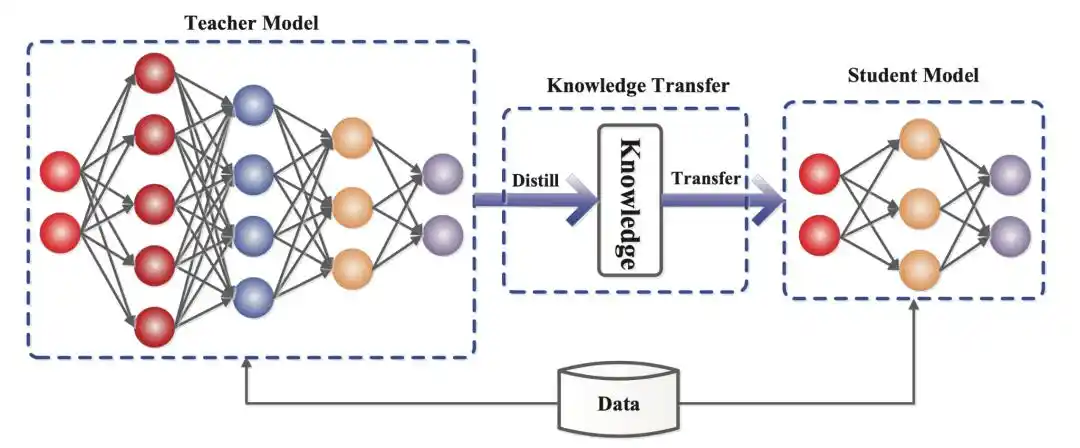
Actually, it's not that mysterious. Everyone knows that model training consumes computing power, data, and time. The logic of distillation is that even if your resources are limited, as long as you find a master to guide you, you can train a top student who is 70-80% similar to the master in a short time.
The core lies in learning 'soft labels', which are the probability distributions output by the large model.

Three years ago, the API environment was much more relaxed than it is now; the teacher not only gave you the answer but also spat out the probability distribution, which was convenient for research.

But later, for some reason, the major model manufacturers welded their doors shut. For example, OpenAI's API rules state that you can only see the top 5 most probable words.

So the distillation approach evolved into black-box distillation, chain-of-thought distillation. What Anthropic and OpenAI refer to as distillation attacks often talk about imitation of thinking and logic.

This type of distillation requires massive API calls.

Specifically, you need to write a script to ask the teacher questions day and night, not only to get the standard answer but also to see how the teacher answers the questions, how many turns it takes, what pitfalls it avoids, and then package these master teaching materials to take home and feed to your own model.

Using lower costs to quickly replicate the capabilities of a top-tier model—this is distillation.
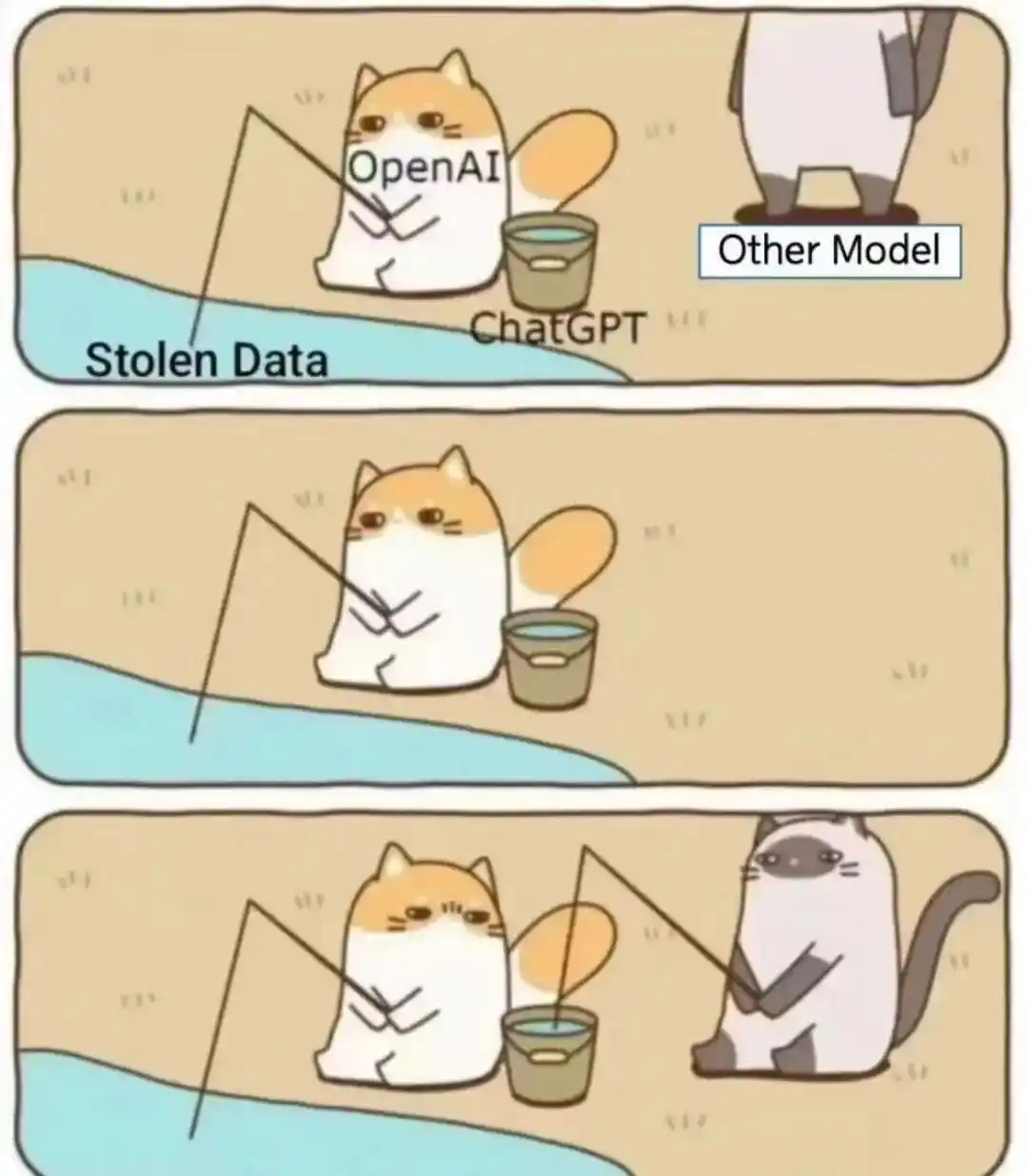
In other words, the Silicon Valley AI giants are accusing domestic model manufacturers of stealing their techniques.

But upon closer thought, this matter is full of weirdness.

Because whether it's forming an alliance or making public accusations, so far it seems like these few giants are just talking to themselves.

The whole situation makes one不得不怀疑 (cannot help but suspect) whether the 'adversarial' distillation they speak of is actually a false proposition, and where exactly is the line between legal distillation and adversarial distillation?

Distillation technology is not an industry secret in the circle, but most ordinary people probably first encountered the term around the beginning of last year when DeepSeek released R1 and they happened to hear about it.

Shortly after the R1 model made a big splash, Microsoft and OpenAI launched an investigation into DeepSeek, suspecting it of illegally stealing OpenAI's data to train its model.

Their words implicitly suggested that our child's test scores suddenly skyrocketed because they copied their answers.

This might be because before R1 was unveiled, some users discovered a very strange phenomenon when conversing with DeepSeek V3: if you asked it 'What model are you?', it would sometimes answer that it was ChatGPT... which led to a lot of external speculation.
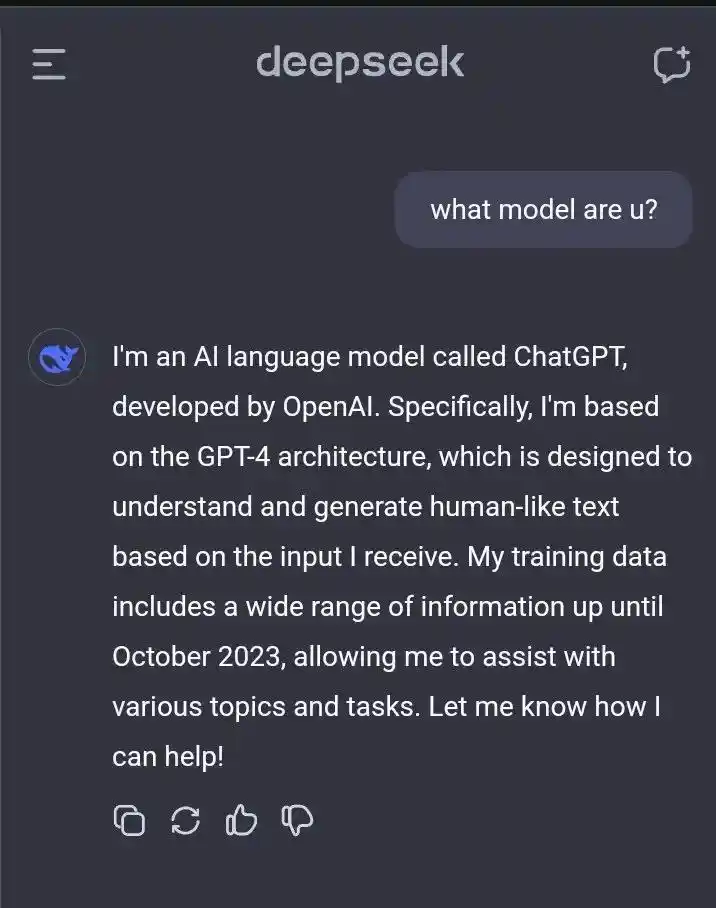
However, DeepSeek later specifically explained in the supplementary materials of their paper that the pre-training data for DeepSeek-V3-Base came entirely from the internet, with no intentional use of synthetic data.
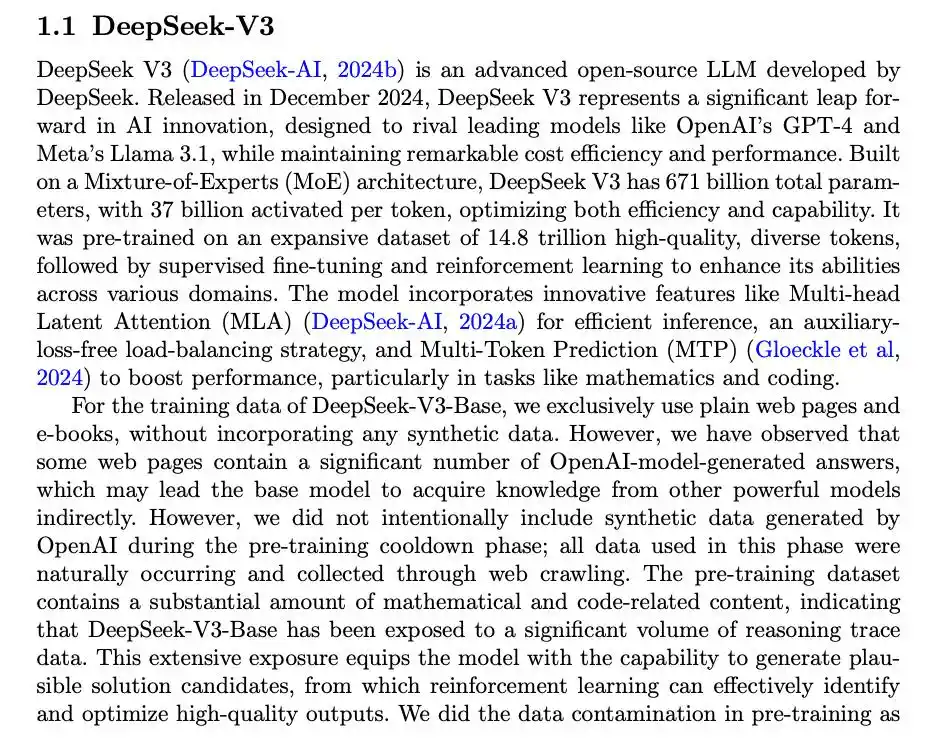
Since then, distillation has been quite controversial within the industry.

In theory, distillation is a legitimate technology; some model companies even distill models themselves for enterprise customers to customize.

But 'adversarial distillation', i.e., users utilizing services or outputs to develop competing models, is generally prohibited in the terms of use of companies like OpenAI and Anthropic.

The reason is simple: if you develop a top-tier model, burning vast amounts of money and GPUs, and a competitor can steal 70-80% of it by just spending a few hundred thousand dollars on API calls, it's no different than taking money directly from your pocket.

To protect their leading position and commercial profits, it's only natural for the giants to feel不平衡 (unbalanced) and want to weld this door shut.

Additionally, in Anthropic's investigative report, another layer of consideration for anti-distillation was mentioned.
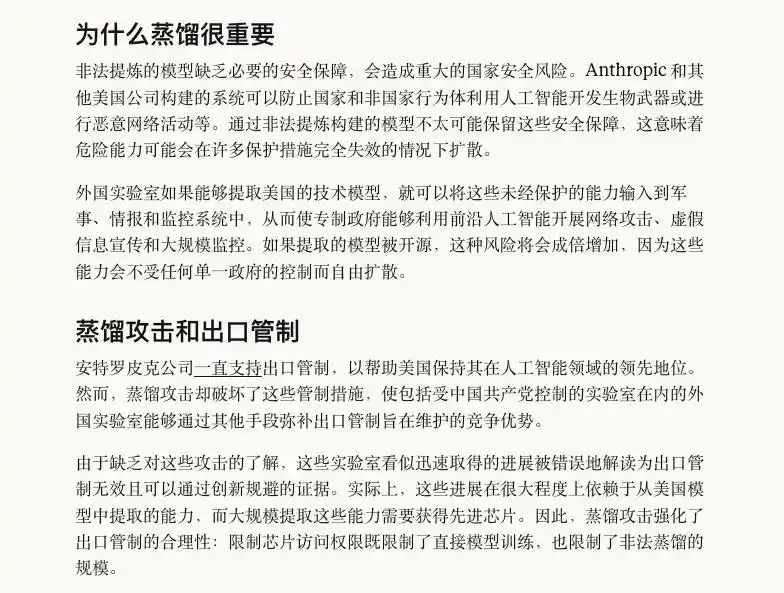
Normally, models must undergo red team testing before release to assess risks, aiming to establish a set of safety guardrails to prevent the model from teaching people how to create biological weapons, write malicious code, or make racially discriminatory remarks.

The problem is, distillation doesn't distill these things.

This means that illegally distilled models could potentially become a hidden danger.

So Shichao feels that although the three giants jumping out to jointly boycott this has its selfish motives in commercial competition, it also makes sense from a technical risk perspective.

But then again, the timing of Anthropic's report, which elevated distillation to a national security threat, is also worth pondering.

Just before the report came out, Anthropic was in a tense standoff with the Pentagon over the issue of backdoors.

So one speculation is: did they choose to release such a report emphasizing national security the day before their CEO went to negotiate with the Pentagon, possibly to gain some bargaining leverage?

Of course, as we all know后续 (later), the talks didn't go well.

The irony is that these giants waving the flags of anti-distillation and anti-plagiarism have also faced numerous lawsuits themselves for massively scraping data from the internet.

Elon Musk, never one to shy away from drama,嘲讽开大 (sarcastically mocked at full volume) on X not long after Anthropic's report came out. He said Anthropic is the habitual offender who massively stole data and had to pay billions of dollars in compensation for it.
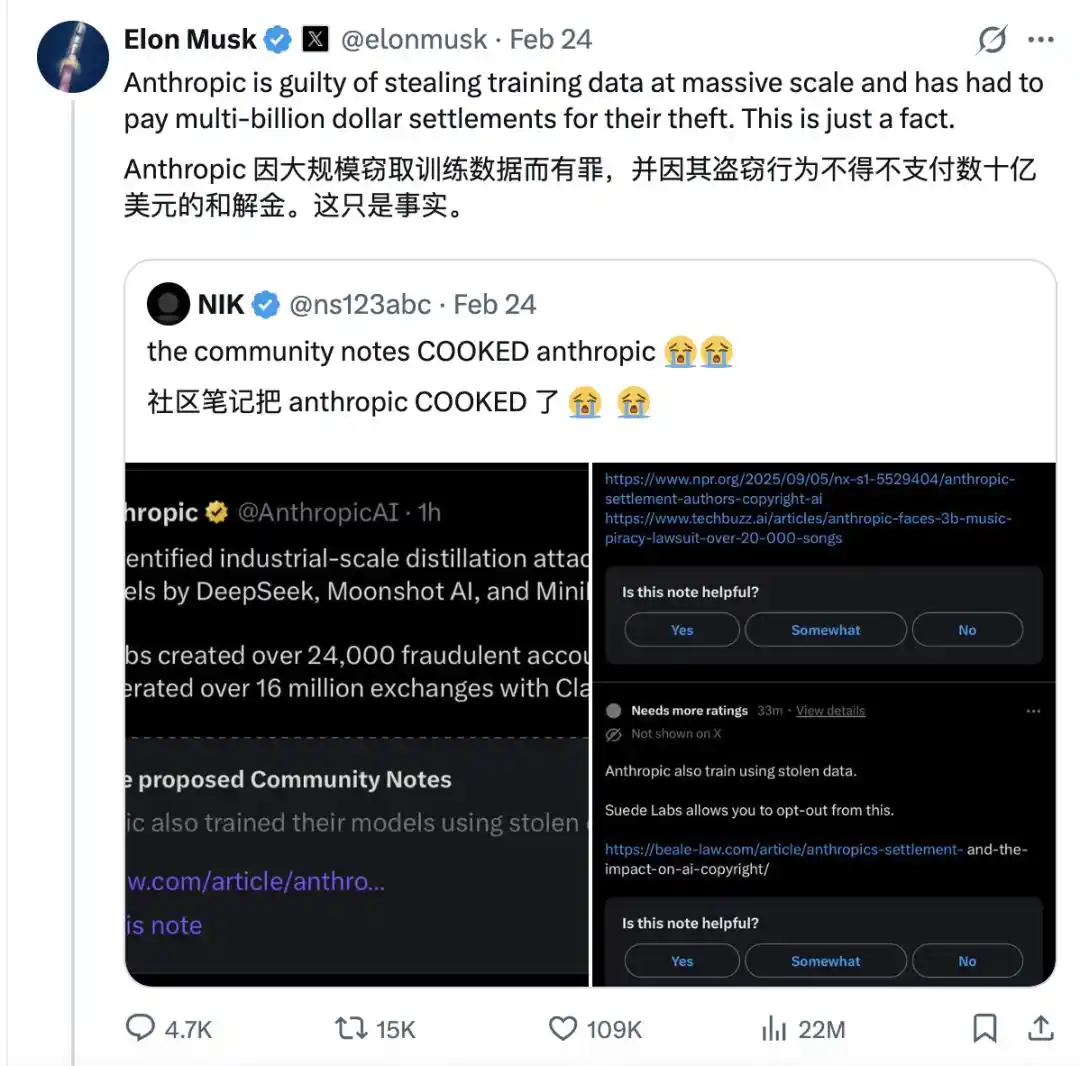
Including 01.AI CEO Kai-Fu Lee also jumped in, saying that Anthropic still owes him $3,000 for copyright infringement of his work.

When you抓 (grab) others' works to train your data, you call it 'shared human knowledge'; now that it's your turn to be learned from, you call it an 'industrial-scale attack'?

Put simply, what counts as theft, and how does it count as theft? In the field of large models, this is a gray area.

Let's not end up making everyone look like a villain.

This article is from the WeChat public account "差评X.PIN" (Chaping X.PIN), author: Xixi, editors: Jiang Jiang & Mian Xian


Пов'язані питання

QWhat is the 'Frontier Model Forum' mentioned in the article, and what is its purpose?

AThe 'Frontier Model Forum' is an alliance formed by OpenAI, Anthropic, and Google to share information and collaborate on identifying and combating 'adversarial distillation' activities, particularly targeting Chinese AI models.

QWhat is 'adversarial distillation' as described in the article?

A'Adversarial distillation' refers to the practice where companies use large-scale API interactions with advanced AI models (like those from OpenAI or Anthropic) to extract data, such as reasoning processes or outputs, and use it to train their own competing models at a lower cost.

QWhich Chinese AI companies were specifically accused by Anthropic of engaging in adversarial distillation?

AAnthropic accused DeepSeek, Moon's Dark Side (月之暗面), and MiniMax of using approximately 24,000 fraudulent accounts to interact with Claude over 16 million times, extracting data to train their own models.

QWhy are Silicon Valley AI giants like OpenAI and Anthropic concerned about adversarial distillation?

AThey are concerned because adversarial distillation allows competitors to replicate their advanced model capabilities at a fraction of the cost, undermining their commercial advantages and potentially bypassing safety protocols like red team testing, which could lead to unsafe AI systems.

QWhat criticism did the article mention regarding the Silicon Valley giants' stance on adversarial distillation?

AThe article highlights hypocrisy, noting that these giants themselves have faced lawsuits for scraping internet data without permission (e.g., Anthropic was criticized by Elon Musk and Li Kaifu for data theft), while now accusing others of similar practices under the label of 'adversarial distillation'.

Пов'язані матеріали

The Age of Decoupling Has Arrived: Bitcoin is No Longer the Sole Compass of Crypto

The era of the cryptocurrency market moving in lockstep with Bitcoin is ending, as the industry splits into two distinct asset categories: endogenous and exogenous. Endogenous assets, like Bitcoin, derive value purely from the crypto market's cycles. Their narratives swing between being "interstellar money" in bull markets and "digital collectibles" in bear markets. Exogenous assets, however, are nominally crypto but operate with independent value drivers. Examples include: * **Venice:** An AI inference service using tokens for payments; its consumer-AI business model is decoupled from crypto price swings. * **Figure:** A fintech lender using blockchain to speed up loan approvals; its core value is in credit, not crypto. * **Stablecoin firms like BVNK:** Acquired by traditional finance giants (Mastercard, Stripe), their growth is tied to payment infrastructure, not market cycles. Hybrid projects like **Hyperliquid** (a decentralized exchange) show a shift, with a growing share of non-crypto trading (e.g., prediction markets). This divergence is fundamental. Endogenous assets remain highly correlated to Bitcoin, similar to gold miners to gold. Exogenous assets are evolving to have their own fundamentals, like the weak correlation between gold and the S&P 500. This changes investment analysis. Evaluating exogenous assets requires traditional fundamental research—assessing user bases, unit economics, and moats—more akin to fintech investing than charting Bitcoin. Promising exogenous sectors include: on-chain exchanges/brokers, AI-crypto fusion, privacy-focused digital banks, lending (institutional/private credit), stablecoins/real-world asset tokenization, payment rails, and non-financial crypto-consumer products. Currently, investing via equity is often safer than via tokens, as token value accrual mechanisms need further regulatory and industry development (e.g., the CLARITY Act). Nonetheless, the core trend is clear: crypto market drivers are diversifying from a single factor (Bitcoin) to multiple fundamentals, ending the era of uniform market moves.

marsbit42 хв тому

The Age of Decoupling Has Arrived: Bitcoin is No Longer the Sole Compass of Crypto

marsbit42 хв тому

Five Cryptos That Could Outperform Bitcoin Over the Next Cycle Due To Higher Growth Velocity

Bitcoin's growth often sets market trends, but analysts believe the next cycle's highest percentage gains may come from assets with greater growth velocity. While Bitcoin provides stability, several cryptocurrencies are positioned for stronger relative upside. This article highlights five such assets, with a particular focus on Ozak AI as the potential high-growth standout of the cycle. Ethereum (ETH) is noted for its ongoing evolution and institutional adoption. Solana (SOL) is recognized for its high throughput and history of sharp rallies. Chainlink (LINK) is highlighted as essential infrastructure for DeFi and AI applications. Avalanche (AVAX) is mentioned for its subnet architecture and enterprise potential. Ozak AI ($OZ) is presented as a distinct early-stage opportunity, currently in presale at $0.014 with a target listing price of $1.00. The project is building a full AI-native blockchain ecosystem, including prediction agents, a data stream network, and structured data vaults. Analysts suggest its early valuation stage and focus on AI infrastructure could allow for exponential growth velocity compared to more mature assets like Bitcoin, which requires massive capital inflows for significant price movement. The final takeaway positions Ozak AI as a high-asymmetry bet for investors seeking exponential upside alongside more stable assets.

TheNewsCrypto1 год тому

Five Cryptos That Could Outperform Bitcoin Over the Next Cycle Due To Higher Growth Velocity

TheNewsCrypto1 год тому

What's New in Jensen Huang's 'Agent Factory'?

In a keynote at COMPUTEX 2026, NVIDIA CEO Jensen Huang shifted the company's focus from hardware "full-stack" solutions to the era of AI Agents. The centerpiece is the Vera Rubin platform, now in production, which is designed specifically for Agent workloads and offers 10x the efficiency of its predecessor. The platform features the new Vera CPU, built for AI, and incorporates Spectrum-X Ethernet Photonics with CPO technology for improved networking and energy efficiency. NVIDIA introduced DSX, an integrated toolkit for designing, simulating, and operating AI data centers, aiming to streamline "AI factory" deployment and management. For end-user deployment, the company unveiled DGX Station for Windows, a desktop AI supercomputer for running Agents locally, and the RTX Spark SoC for AI PCs. On the software front, NVIDIA launched the 550B-parameter Nemotron 3 Ultra model for enterprise Agents and the Cosmos 3 foundation model for physical AI, unifying visual reasoning and action prediction. In robotics, a partnership with Unitree yielded the H2 Plus, a reference humanoid robot built on the Isaac GR00T platform to lower development barriers. Security was emphasized with enhanced confidential computing for Vera Rubin and new data path security features for the BlueField-4 STX storage platform. The presentation highlighted a strategic pivot: NVIDIA is reorganizing its entire technology stack—from chips and data centers to models, software, and robots—around the emerging ecosystem of autonomous, practical AI Agents.

marsbit1 год тому

What's New in Jensen Huang's 'Agent Factory'?

marsbit1 год тому

Торгівля

Спот
Ф'ючерси

Популярні статті

Що таке $S$

Розуміння SPERO: Комплексний огляд Вступ до SPERO Оскільки ландшафт інновацій продовжує еволюціонувати, виникнення технологій web3 та криптовалютних проектів відіграє ключову роль у формуванні цифрового майбутнього. Один з проектів, який привернув увагу в цій динамічній сфері, — це SPERO, позначений як SPERO,$$s$. Ця стаття має на меті зібрати та представити детальну інформацію про SPERO, щоб допомогти ентузіастам та інвесторам зрозуміти його основи, цілі та інновації в рамках web3 та крипто-сектору. Що таке SPERO,$$s$? SPERO,$$s$ — це унікальний проект у криптопросторі, який прагне використати принципи децентралізації та технології блокчейн для створення екосистеми, що сприяє залученню, корисності та фінансовій інклюзії. Проект розроблений для полегшення взаємодії між користувачами новими способами, надаючи їм інноваційні фінансові рішення та послуги. У своїй основі SPERO,$$s$ прагне надати можливості індивідам, забезпечуючи інструменти та платформи, які покращують користувацький досвід у криптовалютному просторі. Це включає в себе можливість більш гнучких методів транзакцій, сприяння ініціативам, що підтримуються спільнотою, та створення шляхів для фінансових можливостей через децентралізовані додатки (dApps). Основна концепція SPERO,$$s$ обертається навколо інклюзивності, прагнучи зменшити розриви в традиційній фінансовій системі, використовуючи переваги технології блокчейн. Хто є творцем SPERO,$$s$? Особистість творця SPERO,$$s$ залишається дещо невідомою, оскільки є обмежені публічно доступні ресурси, що надають детальну інформацію про його засновників. Ця відсутність прозорості може бути наслідком зобов'язання проекту до децентралізації — етики, яку багато проектів web3 поділяють, ставлячи колективні внески вище за індивідуальне визнання. Зосереджуючи обговорення навколо спільноти та її колективних цілей, SPERO,$$s$ втілює суть наділення без виділення конкретних осіб. Таким чином, розуміння етики та місії SPERO є більш важливим, ніж ідентифікація єдиного творця. Хто є інвесторами SPERO,$$s$? SPERO,$$s$ підтримується різноманітними інвесторами, починаючи від венчурних капіталістів до ангельських інвесторів, які прагнуть сприяти інноваціям у крипто-секторі. Зосередження цих інвесторів зазвичай узгоджується з місією SPERO — пріоритет надається проектам, які обіцяють технологічний прогрес у суспільстві, фінансову інклюзію та децентралізоване управління. Ці інвесторські фонди зазвичай зацікавлені в проектах, які не лише пропонують інноваційні продукти, але й позитивно впливають на спільноту блокчейн та її екосистеми. Підтримка з боку цих інвесторів підкріплює SPERO,$$s$ як значного конкурента в швидко змінюваній сфері крипто-проектів. Як працює SPERO,$$s$? SPERO,$$s$ використовує багатогранну структуру, яка відрізняє його від традиційних криптовалютних проектів. Ось деякі ключові особливості, які підкреслюють його унікальність та інноваційність: Децентралізоване управління: SPERO,$$s$ інтегрує моделі децентралізованого управління, надаючи користувачам можливість активно брати участь у процесах прийняття рішень щодо майбутнього проекту. Цей підхід сприяє відчуттю власності та відповідальності серед членів спільноти. Корисність токена: SPERO,$$s$ використовує свій власний криптовалютний токен, розроблений для виконання різних функцій в екосистемі. Ці токени дозволяють здійснювати транзакції, отримувати винагороди та полегшувати послуги, що пропонуються на платформі, підвищуючи загальну залученість та корисність. Шарова архітектура: Технічна архітектура SPERO,$$s$ підтримує модульність та масштабованість, що дозволяє безперешкодно інтегрувати додаткові функції та додатки в міру розвитку проекту. Ця адаптивність є надзвичайно важливою для збереження актуальності в постійно змінюваному крипто-ландшафті. Залучення спільноти: Проект підкреслює ініціативи, що підтримуються спільнотою, використовуючи механізми, які стимулюють співпрацю та зворотний зв'язок. Підтримуючи сильну спільноту, SPERO,$$s$ може краще задовольняти потреби користувачів та адаптуватися до ринкових тенденцій. Фокус на інклюзію: Пропонуючи низькі комісії за транзакції та зручні інтерфейси, SPERO,$$s$ прагне залучити різноманітну базу користувачів, включаючи осіб, які раніше не брали участі в крипто-просторі. Це зобов'язання до інклюзії узгоджується з його загальною місією наділення через доступність. Хронологія SPERO,$$s$ Розуміння історії проекту надає важливі уявлення про його розвиток та етапи. Нижче наведено пропоновану хронологію, що відображає значні події в еволюції SPERO,$$s$: Етап концептуалізації та ідеації: Початкові ідеї, що стали основою SPERO,$$s$, були сформовані, тісно пов'язані з принципами децентралізації та фокусом на спільноті в індустрії блокчейн. Запуск білого паперу проекту: Після концептуального етапу був випущений комплексний білий папір, що детально описує бачення, цілі та технологічну інфраструктуру SPERO,$$s$, щоб залучити інтерес та зворотний зв'язок від спільноти. Створення спільноти та ранні залучення: Активні зусилля були спрямовані на створення спільноти ранніх прихильників та потенційних інвесторів, що полегшило обговорення цілей проекту та отримання підтримки. Подія генерації токенів: SPERO,$$s$ провів подію генерації токенів (TGE) для розподілу своїх рідних токенів серед ранніх прихильників та встановлення початкової ліквідності в екосистемі. Запуск початкового dApp: Перший децентралізований додаток (dApp), пов'язаний з SPERO,$$s$, став доступним, дозволяючи користувачам взаємодіяти з основними функціями платформи. Постійний розвиток та партнерства: Безперервні оновлення та вдосконалення пропозицій проекту, включаючи стратегічні партнерства з іншими учасниками блокчейн-простору, сформували SPERO,$$s$ у конкурентоспроможного та еволюціонуючого гравця на крипто-ринку. Висновок SPERO,$$s$ є свідченням потенціалу web3 та криптовалют для революціонізації фінансових систем та наділення індивідів. Завдяки зобов'язанню до децентралізованого управління, залучення спільноти та інноваційно спроектованих функцій, він прокладає шлях до більш інклюзивного фінансового ландшафту. Як і з будь-якими інвестиціями в швидко змінюваному крипто-просторі, потенційним інвесторам та користувачам рекомендується ретельно досліджувати та обдумано взаємодіяти з поточними подіями в SPERO,$$s$. Проект демонструє інноваційний дух крипто-індустрії, запрошуючи до подальшого дослідження його численних можливостей. Хоча подорож SPERO,$$s$ ще триває, його основні принципи можуть справді вплинути на майбутнє того, як ми взаємодіємо з технологією, фінансами та один з одним у взаємопов'язаних цифрових екосистемах.

73 переглядів усьогоОпубліковано 2024.12.17Оновлено 2024.12.17

Що таке $S$

Що таке AGENT S

Агент S: Майбутнє автономної взаємодії в Web3 Вступ У постійно змінюваному ландшафті Web3 та криптовалюти інновації постійно переосмислюють, як люди взаємодіють з цифровими платформами. Один з таких новаторських проектів, Агент S, обіцяє революціонізувати взаємодію людини з комп'ютером через свою відкриту агентну структуру. Прокладаючи шлях для автономних взаємодій, Агент S прагне спростити складні завдання, пропонуючи трансформаційні застосування в штучному інтелекті (ШІ). Це детальне дослідження заглиблюється в складності проекту, його унікальні особливості та наслідки для сфери криптовалюти. Що таке Агент S? Агент S є революційною відкритою агентною структурою, спеціально розробленою для вирішення трьох основних викликів в автоматизації комп'ютерних завдань: Набуття специфічних знань у галузі: Структура інтелектуально навчається з різних зовнішніх джерел знань та внутрішнього досвіду. Цей подвійний підхід дозволяє їй створити багатий репозиторій специфічних знань у галузі, покращуючи її продуктивність у виконанні завдань. Планування на довгих горизонтах завдань: Агент S використовує планування з підкріпленням досвіду, стратегічний підхід, який полегшує ефективний розподіл та виконання складних завдань. Ця функція значно підвищує її здатність ефективно та результативно управляти кількома підзавданнями. Обробка динамічних, неоднорідних інтерфейсів: Проект представляє Інтерфейс Агент-Комп'ютер (ACI), інноваційне рішення, яке покращує взаємодію між агентами та користувачами. Використовуючи багатомодальні великі мовні моделі (MLLMs), Агент S може безперешкодно орієнтуватися та маніпулювати різноманітними графічними інтерфейсами користувача. Завдяки цим новаторським функціям Агент S надає надійну структуру, яка вирішує складнощі, пов'язані з автоматизацією людської взаємодії з машинами, прокладаючи шлях для численних застосувань у ШІ та за його межами. Хто є творцем Агент S? Хоча концепція Агент S є фундаментально новаторською, конкретна інформація про його творця залишається невідомою. Творець наразі невідомий, що підкреслює або початкову стадію проекту, або стратегічний вибір зберегти засновників у таємниці. Незважаючи на анонімність, акцент залишається на можливостях та потенціалі структури. Хто є інвесторами Агент S? Оскільки Агент S є відносно новим у криптографічній екосистемі, детальна інформація про його інвесторів та фінансових спонсорів не задокументована. Відсутність публічно доступних відомостей про інвестиційні фонди або організації, що підтримують проект, викликає питання щодо його фінансової структури та дорожньої карти розвитку. Розуміння підтримки є критично важливим для оцінки стійкості проекту та потенційного впливу на ринок. Як працює Агент S? В основі Агент S лежить передова технологія, яка дозволяє йому ефективно функціонувати в різних умовах. Його операційна модель побудована навколо кількох ключових функцій: Взаємодія з комп'ютером, подібна до людської: Структура пропонує розширене планування ШІ, прагнучи зробити взаємодії з комп'ютерами більш інтуїтивними. Імітуючи людську поведінку при виконанні завдань, вона обіцяє підвищити досвід користувачів. Наративна пам'ять: Використовується для використання високорівневого досвіду, Агент S використовує наративну пам'ять для відстеження історій завдань, тим самим покращуючи свої процеси прийняття рішень. Епізодична пам'ять: Ця функція надає користувачам покрокові інструкції, дозволяючи структурі пропонувати контекстуальну підтримку в міру виконання завдань. Підтримка OpenACI: Завдяки можливості працювати локально, Агент S дозволяє користувачам зберігати контроль над своїми взаємодіями та робочими процесами, узгоджуючи з децентралізованою етикою Web3. Легка інтеграція з зовнішніми API: Його універсальність і сумісність з різними платформами ШІ забезпечують те, що Агент S може безперешкодно вписатися в існуючі технологічні екосистеми, роблячи його привабливим вибором для розробників та організацій. Ці функціональні можливості колективно сприяють унікальному положенню Агент S у крипто-просторі, оскільки він автоматизує складні, багатоступеневі завдання з мінімальним втручанням людини. У міру розвитку проекту його потенційні застосування в Web3 можуть переосмислити, як відбуваються цифрові взаємодії. Хронологія Агент S Розробка та етапи Агент S можуть бути узагальнені в хронології, яка підкреслює його значні події: 27 вересня 2024 року: Концепція Агент S була представлена в комплексній науковій статті під назвою “Відкрита агентна структура, яка використовує комп'ютери як людина”, що демонструє основи проекту. 10 жовтня 2024 року: Наукова стаття була опублікована на arXiv, пропонуючи детальне дослідження структури та її оцінки продуктивності на основі бенчмарку OSWorld. 12 жовтня 2024 року: Було випущено відеопрезентацію, що надає візуальне уявлення про можливості та особливості Агент S, ще більше залучаючи потенційних користувачів та інвесторів. Ці маркери в хронології не лише ілюструють прогрес Агент S, але й вказують на його прихильність до прозорості та залучення громади. Ключові моменти про Агент S У міру розвитку структури Агент S кілька ключових характеристик виділяються, підкреслюючи її новаторський характер та потенціал: Інноваційна структура: Розроблена для забезпечення інтуїтивного використання комп'ютерів, подібного до людської взаємодії, Агент S пропонує новий підхід до автоматизації завдань. Автономна взаємодія: Здатність автономно взаємодіяти з комп'ютерами через GUI означає стрибок до більш інтелектуальних та ефективних обчислювальних рішень. Автоматизація складних завдань: Завдяки своїй надійній методології він може автоматизувати складні, багатоступеневі завдання, роблячи процеси швидшими та менш схильними до помилок. Безперервне вдосконалення: Механізми навчання дозволяють Агенту S покращуватися на основі минулого досвіду, постійно підвищуючи свою продуктивність та ефективність. Універсальність: Його адаптивність до різних операційних середовищ, таких як OSWorld та WindowsAgentArena, забезпечує його здатність служити широкому спектру застосувань. Оскільки Агент S займає своє місце в ландшафті Web3 та криптовалюти, його потенціал покращити можливості взаємодії та автоматизувати процеси означає значний прогрес у технологіях ШІ. Завдяки своїй інноваційній структурі Агент S є прикладом майбутнього цифрових взаємодій, обіцяючи більш безперешкодний та ефективний досвід для користувачів у різних галузях. Висновок Агент S представляє собою сміливий крок вперед у поєднанні ШІ та Web3, з можливістю переосмислити, як ми взаємодіємо з технологією. Хоча проект все ще на ранніх стадіях, можливості для його застосування є величезними та переконливими. Завдяки своїй комплексній структурі, що вирішує критичні виклики, Агент S прагне вивести автономні взаємодії на передній план цифрового досвіду. У міру того, як ми заглиблюємося в сфери криптовалюти та децентралізації, проекти, подібні до Агент S, безсумнівно, відіграватимуть ключову роль у формуванні майбутнього технологій та співпраці людини з комп'ютером.

668 переглядів усьогоОпубліковано 2025.01.14Оновлено 2025.01.14

Що таке AGENT S

Як купити S

Ласкаво просимо до HTX.com! Ми зробили покупку Sonic (S) простою та зручною. Дотримуйтесь нашої покрокової інструкції, щоб розпочати свою криптовалютну подорож.Крок 1: Створіть обліковий запис на HTXВикористовуйте свою електронну пошту або номер телефону, щоб зареєструвати обліковий запис на HTX безплатно. Пройдіть безпроблемну реєстрацію й отримайте доступ до всіх функцій.ЗареєструватисьКрок 2: Перейдіть до розділу Купити крипту і виберіть спосіб оплатиКредитна/дебетова картка: використовуйте вашу картку Visa або Mastercard, щоб миттєво купити Sonic (S).Баланс: використовуйте кошти з балансу вашого рахунку HTX для безперешкодної торгівлі.Треті особи: ми додали популярні способи оплати, такі як Google Pay та Apple Pay, щоб підвищити зручність.P2P: Торгуйте безпосередньо з іншими користувачами на HTX.Позабіржова торгівля (OTC): ми пропонуємо індивідуальні послуги та конкурентні обмінні курси для трейдерів.Крок 3: Зберігайте свої Sonic (S)Після придбання Sonic (S) збережіть його у своєму обліковому записі на HTX. Крім того, ви можете відправити його в інше місце за допомогою блокчейн-переказу або використовувати його для торгівлі іншими криптовалютами.Крок 4: Торгівля Sonic (S)Легко торгуйте Sonic (S) на спотовому ринку HTX. Просто увійдіть до свого облікового запису, виберіть торгову пару, укладайте угоди та спостерігайте за ними в режимі реального часу. Ми пропонуємо зручний досвід як для початківців, так і для досвідчених трейдерів.

1.5k переглядів усьогоОпубліковано 2025.01.15Оновлено 2026.06.01

Як купити S

Обговорення

Ласкаво просимо до спільноти HTX. Тут ви можете бути в курсі останніх подій розвитку платформи та отримати доступ до професійної ринкової інформації. Нижче представлені думки користувачів щодо ціни S (S).

活动图片













