Thousands of people around the world are selling their identities to train AI, but at what cost?

marsbitОпубліковано о 2026-03-23Востаннє оновлено о 2026-03-23

Анотація

A global investigation reveals a growing gray market where thousands of people worldwide are selling their biometric data—voices, faces, call logs, and daily videos—to train AI models for small payments. Examples include individuals in South Africa, India, and the U.S. earning modest sums through apps like Kled AI, Silencio, and Neon Mobile. While this provides crucial income, especially in economically strained regions, it raises serious concerns about privacy, exploitation, and long-term risks. Contributors often grant broad, irreversible rights to their data, potentially exposing them to deepfakes, identity theft, and unauthorized commercial use. Experts warn that this practice is unstable, offers no career progression, and primarily benefits tech companies in wealthier nations, leaving workers vulnerable with little recourse. Cases like an actor discovering his AI likeness promoting medical products without consent highlight the ethical and personal consequences of this emerging data-for-cash economy.

Author: The Guardian

Compiled by: Deep Tide TechFlow

Deep Tide Introduction: This investigative report reveals a rapidly growing gray industry: thousands of people worldwide are earning money for AI training by selling their voices, faces, call records, and daily videos.

This is not a general discussion about privacy controversies, but an investigation with real people, real amounts of money, and real consequences—an actor who sold his face later saw "himself" promoting an unknown medical product on Instagram, with people in the comments evaluating his "looks."

When the data hunger of AI companies combines with global economic disparities, it is creating an unequal transaction.

Full text as follows:

One morning last year, Jacobus Louw, who lives in Cape Town, South Africa, went out for his usual walk, feeding seagulls along the way. But this time he recorded a few videos—filming his footsteps and view as he walked on the sidewalk. This video earned him $14, about 10 times the country's minimum wage and equivalent to half a week's food expenses for this 27-year-old.

This was a "city navigation" task Louw completed on Kled AI. Kled AI is an app that pays users to upload photos, videos, and other data for training AI models. In just a few weeks, Louw earned $50 by uploading photos and videos from his daily life.

Thousands of miles away, in Ranchi, India, 22-year-old student Sahil Tigga regularly earns money through Silencio—an app that crowdsources audio data for AI training, accessing his phone's microphone to capture ambient noises like inside restaurants or busy intersections. He also uploads recordings of his own voice. Sahil makes special trips to unique locations, such as hotel lobbies not yet recorded on Silencio's map. He earns over $100 per month from this, enough to cover all his food expenses.

In Chicago, 18-year-old welding apprentice Ramelio Hill sold his private phone conversations with friends and family to Neon Mobile—a conversational AI training platform that pays $0.50 per minute—earning a few hundred dollars. For Hill, the calculation was simple: he believes tech companies already have vast amounts of his private data, so he might as well get a share of the profits.

These "AI training gigs"—uploading surroundings, personal photos, videos, and audio—are at the forefront of a new global data gold rush. As Silicon Valley's hunger for high-quality human data exceeds what can be scraped from the open internet, a booming data market industry has emerged to bridge this gap. From Cape Town to Chicago, thousands of people are micro-licensing their biometric identities and private data to the next generation of AI.

But this new gig economy comes at a cost. Behind the few dollars earned, these trainers are fueling an industry that may ultimately render their skills obsolete, while exposing themselves to future risks of deepfakes, identity theft, and digital exploitation—risks they are only beginning to understand.

Keeping the AI Gears Turning

AI language models like ChatGPT and Gemini require massive amounts of material to continuously improve, but they are facing a data shortage. The most commonly used training data sources—C4, RefinedWeb, and Dolma—which comprise a quarter of the highest-quality datasets on the web, are now restricting generative AI companies from using their data to train models. Researchers estimate that AI companies could run out of available fresh, high-quality text as early as 2026. Although some labs have begun training models with synthetic data generated by AI itself, this recursive process leads to models outputting error-filled "garbage," eventually causing a collapse.
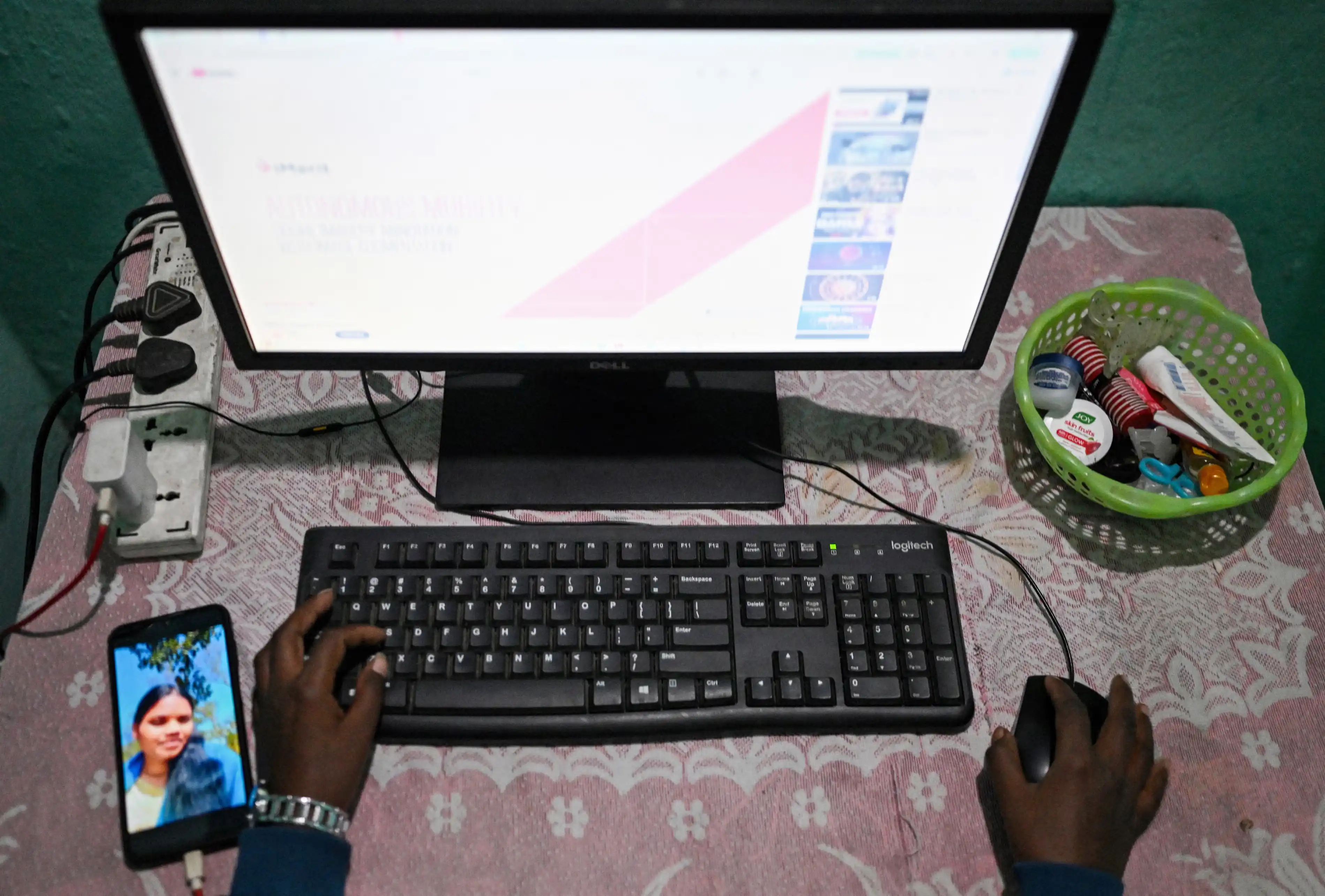
This is where apps like Kled AI and Silencio come in. In these data markets, millions of people are feeding and training AI by selling their identity data. Beyond Kled AI, Silencio, and Neon Mobile, AI trainers have many choices: Luel AI, backed by the famous incubator Y-Combinator, acquires multilingual conversation material at about $0.15 per minute; ElevenLabs allows you to digitally clone your voice and make it available for others to use at a base rate of $0.02 per minute.

Bouke Klein Teeselink, an economics professor at King's College London, says AI training gigs are an emerging work category that will grow significantly.

AI companies know that paying people for data licensing helps avoid copyright disputes that might arise from relying entirely on web-scraped content, Teeselink says. AI researcher Veniamin Veselovsky adds that these companies also need high-quality data to model new, improved behaviors for their systems. "For now, human data is the gold standard for sampling outside the model's distribution," Veselovsky added.

The humans driving these machines—especially those in developing countries—often need the money and have few alternatives. For many AI training gig workers, taking on this work is a pragmatic response to economic disparity. In countries with high unemployment rates and depreciating local currencies, earning dollars is often more stable and lucrative than local jobs. Some struggle to find entry-level work and are forced into AI training out of necessity. Even in wealthier countries, rising living costs make selling oneself a logical financial choice.

Cape Town-based AI trainer Louw is well aware of the privacy cost. Although the income is unstable and not enough to cover all his monthly expenses, he is willing to accept these conditions to earn money. He has suffered from neurological diseases for years, making it difficult to find work, but the money he earned from AI data markets (including Kled AI) allowed him to save $500 to enroll in a spa training course to become a massage therapist.

"As a South African, receiving dollars is more valuable than people think," Louw said.

Mark Graham, a professor of internet geography at Oxford University and author of "Feeding the Machine," acknowledges that for individuals in developing countries, the money may have practical significance in the short term, but he warns, "Structurally, this work is unstable, has no upward mobility, and is essentially a dead end."

Graham added that AI data markets rely on "a race to the bottom in wages" and a "temporary demand for human data." Once that demand shifts, "workers will have no security, no transferable skills, and no safety net."

Graham said the only winners are "the platforms in the Global North, which capture all the lasting value."

Full Authorization

Chicago-based AI trainer Hill has mixed feelings about selling his private phone calls to Neon Mobile. About 11 hours of call content earned him $200, but he said the app often goes offline and delays payments. "Neon always seemed suspicious to me, but I kept using it just to earn some extra pocket money to pay bills," Hill said.

Now he is reconsidering whether the money was really that easy. Last September, Neon Mobile went offline just weeks after launching, after TechCrunch discovered a security vulnerability that allowed anyone to access users' phone numbers, call recordings, and transcripts. Hill said Neon Mobile never notified him of this situation, and now he is worried his voice could be misused online.

Jennifer King, a data privacy researcher at Stanford University's Institute for Human-Centered Artificial Intelligence, is concerned that AI data markets are not clear about how and where user data will be used. She added that without understanding their rights or being able to negotiate them, "consumers face the risk of their data being reused in ways they dislike, do not understand, or did not anticipate, with almost no recourse."

When AI trainers share data on Neon Mobile and Kled AI, they grant a full authorization (global, exclusive, irrevocable, transferable, and royalty-free) allowing the platform to sell, use, publicly display, and store their likeness, and even create derivative works based on it.

Kled AI founder Avi Patel said his company's data agreement limits use to AI training and research purposes. "The entire business model relies on user trust. If contributors think their data might be misused, the platform cannot function." He said the company vets buyers before selling datasets, avoiding cooperation with "suspicious-intent" organizations, such as the pornography industry, and "government agencies" they believe might use the data in ways that violate that trust.

Neon Mobile did not respond to requests for comment.

Enrico Bonadio, a law professor at City, University of London, pointed out that these agreement terms allow the platform and its clients to "do almost anything with that material, permanently, without additional payment, and contributors have no practical way to withdraw consent or renegotiate."

More worrying risks include: trainers' data being used to create deepfakes and identity impersonation. Although data markets claim to strip identifying information (such as names and locations) from data before sale, biometric patterns are inherently difficult to anonymize meaningfully, Bonadio added.

Seller's Remorse

Even if AI trainers could negotiate more detailed protections for how their data is used, they might still regret it. In 2024, New York-based actor Adam Coy sold his likeness for $1,000 to Captions—an AI video editing software now renamed Mirage. His agreement stipulated that his identity would not be used for any political purposes, not for promoting alcohol, tobacco, or pornography, and the license would last for one year.

Captions did not respond to requests for comment.

Soon after, Adam's friends began forwarding videos they found online featuring his face and voice, which had garnered millions of views. In one Instagram video, Adam's AI replica claimed to be a "vaginal doctor" promoting unverified medical supplements for pregnant and postpartum women.

"It's embarrassing to explain this to others," Coy said.

"The comments were weird because they were evaluating my appearance, but it wasn't even me," Coy added. "My thinking when I made the decision (to sell my likeness) was that most models would scrape data and portraits from the internet anyway, so I might as well get paid."

Coy said he has not taken any AI data gigs since. He said he would only consider doing it again if a company offered significant compensation.


Трендові криптовалюти

Пов'язані питання

QWhat is the main concern raised in the article about people selling their personal data for AI training?

AThe article highlights that while individuals earn money by selling their biometric identities and private data (like voice, face, and conversations) to train AI models, they face risks such as deepfakes, identity theft, and digital exploitation, often without fully understanding the long-term consequences or having recourse if their data is misused.

QWhy are AI companies turning to data markets like Kled AI and Silencio for training data?

AAI companies are facing a shortage of high-quality training data from the open internet due to restrictions on datasets and potential copyright issues. Data markets provide a way to acquire fresh, human-generated data directly from individuals, which is considered the 'gold standard' for training AI models to improve their behavior and avoid using synthetic data that can lead to model degradation.

QHow do economic disparities play a role in the growth of AI training gigs?

AEconomic disparities drive the growth of AI training gigs because people in developing countries, or those facing high unemployment and currency devaluation, can earn valuable dollars from these platforms. For many, it is a pragmatic response to financial need, offering income that is more stable and lucrative than local jobs, even though the work is unstable and lacks long-term career prospects.

QWhat are some specific risks mentioned regarding the authorization agreements signed by AI trainers?

AThe authorization agreements often grant platforms global, exclusive, irrevocable, transferable, and royalty-free rights to use, sell, display, and create derivative works from the contributors' data. This means trainers have little control over how their data is used long-term, and risks include data being used for deepfakes, identity impersonation, or in ways they did not anticipate, with no practical way to withdraw consent or renegotiate.

QCan you provide an example from the article where an AI trainer regretted selling their data?

AActor Adam Coy from New York sold his likeness for $1000 to Captions (now Mirage) with specific restrictions, but later found his AI replica used in Instagram videos promoting unverified medical supplements, with millions of views. He felt embarrassed and noted that the comments were evaluating his appearance based on the AI clone, which was not actually him. He stated he would only consider such gigs again for significant payment due to the negative experience.

Пов'язані матеріали

Preferred Stock Is Not the Trigger for Corporate Bankruptcy, MicroStrategy's Dollar Reserves Can Cover Dividend and Interest Payments Until February 2027

Preferred Shares Are Not the Catalyst for Corporate Bankruptcy; MicroStrategy's Dollar Reserves Can Cover Dividend and Interest Payments Until February 2027. This article analyzes the nature of preferred shares used by MicroStrategy (MSTR). Legally equity but economically similar to debt, these shares, including its Bitcoin-linked STR convertible preferred notes (STRC), offer fixed or floating dividends. Crucially, MicroStrategy's preferred shares lack rigid redemption clauses, meaning they are not classified as traditional debt. This eliminates principal repayment pressure and means missed dividends do not constitute default or trigger bankruptcy, creating a "self-contradictory virtuous cycle." The article clarifies that if funds are short, MicroStrategy can defer or suspend preferred share dividends (except for non-cumulative types like STRD) without immediate risk. The real potential crisis point lies with its convertible bonds. If a prolonged bear market prevents conversion, MicroStrategy might need to sell Bitcoin to repay these bonds starting from the earliest maturity in September 2027, potentially creating a downward spiral. Preferred dividend suspensions would only exacerbate market panic in such a scenario. Recent financial activity shows MicroStrategy strengthened its position through four weeks of common stock (MSTR) issuances, raising over $851 million without issuing new preferred shares. It increased its dollar reserves to approximately $1.4 billion, which is sufficient to cover all preferred share dividends and interest until around March 2027. While Bitcoin purchases slowed recently, this prioritization of cash reserves enhances the company's near-term financial safety. The analysis concludes that if the Bitcoin bear market ends by early 2025 as anticipated, MicroStrategy can resume issuing MSTR stock in a rising market to replenish reserves and manage future dividend obligations, thereby reducing the long-term pressure from its preferred share structure.

marsbit1 год тому

Preferred Stock Is Not the Trigger for Corporate Bankruptcy, MicroStrategy's Dollar Reserves Can Cover Dividend and Interest Payments Until February 2027

marsbit1 год тому

Giants Wage the Context War, Reconstructing AI Moats

The article "Giants Launch the Context War, Reconstructing AI's Moat" discusses how leading AI companies—OpenAI, Anthropic, and Google—are shifting their competitive focus from model size to acquiring, managing, and utilizing user context (Context). Initially, Context referred to the length of text a model could process, leading to a "arms race" for longer context windows. However, the competition has evolved through three key phases: expanding text capacity (long context windows), enabling memory across sessions, and finally, integrating AI into real user environments like browsers and desktops to capture dynamic task states. Each company is pursuing a distinct strategy. OpenAI is building Context around the ChatGPT account, turning it into a central hub that accumulates user understanding across various integrated applications and tools. Anthropic, lacking a major user base, focuses on high-value verticals like coding, empowering its Claude model to actively gather Context through GUI interaction (Computer Use) and system connections (MCP protocol). Google, with vast existing user data from products like Search and Gmail, faces the challenge of restructuring this data into actionable, AI-understandable Context for its Gemini model within its ecosystem. The core argument is that the nature of competitive advantage in AI is changing. The internet era prized network effects—connecting more users. The AI era values "individual depth": the ability to build deep, task-specific understanding of a user. This creates a new moat through 1) the compounding value of accumulated Context, 2) deep integration with user tools and permissions, and 3) the establishment of trust for complex tasks. Therefore, the battle for Context is fundamentally about capturing "task entry points" and converting existing digital ecosystems into environments where AI can effectively understand and act, rather than merely scaling user numbers.

marsbit2 год тому

Giants Wage the Context War, Reconstructing AI Moats

marsbit2 год тому

Foundation Steps Back, Ethlabs Steps Forward: Ethereum Undergoes Its Largest Restructuring in History

On June 23rd, the Ethereum ecosystem witnessed two major shifts, signaling a significant governance realignment. First, former Ethereum Foundation researchers established Ethlabs, a new independent non-profit. Backed by major ETH holders like Bitmine and SharpLink, Ethlabs aims to address practical needs for institutional adoption, including faster settlement, native asset issuance, cross-chain transactions, and mainnet scaling. Secondly, the Ethereum Foundation announced a major restructuring, laying off 54 employees (20% of its staff) to become a leaner entity focused on protocol governance and maintenance rather than being the primary builder. This move represents a pivotal correction. Criticisms had mounted over the Foundation's perceived slowness, lack of clear strategy, and over-reliance on Vitalik Buterin's influence. Ethlabs emerges as a more execution-oriented, "industrialized" layer focused on market adoption—bridging the gap between research and real-world use. Notably, Vitalik Buterin is absent from its list of supporters, interpreted as an intentional step to avoid excessive personal endorsement and allow the organization to build independent credibility. The Ethereum Foundation's downsizing and redefinition mark a retreat from its former central coordinating role. It now aims to share the "privilege of stewarding Ethereum" with other emerging groups like Ethlabs, the Ethereum Applications Guild, and The Ethereum Economic Zone. Analysts frame this dual shift as the Foundation ensuring Ethereum remains "correct" (credibly neutral), while Ethlabs must prove it remains "effective" (competitive and attractive for capital and adoption). This addresses community "shareholder-like anxiety" about ETH's market performance. While risks exist—such as concerns over shifting from Foundation centrality to large-holder influence—the consensus is that the greater risk for Ethereum was inaction, caught between technical idealism and organizational inertia. These steps aim to create a more multi-stakeholder, execution-driven future for the network.

链捕手9 год тому

Foundation Steps Back, Ethlabs Steps Forward: Ethereum Undergoes Its Largest Restructuring in History

链捕手9 год тому

Торгівля

Спот
Ф'ючерси

Популярні статті

Як купити PEOPLE

Ласкаво просимо до HTX.com! Ми зробили покупку ConstitutionDAO (PEOPLE) простою та зручною. Дотримуйтесь нашої покрокової інструкції, щоб розпочати свою криптовалютну подорож.Крок 1: Створіть обліковий запис на HTXВикористовуйте свою електронну пошту або номер телефону, щоб зареєструвати обліковий запис на HTX безплатно. Пройдіть безпроблемну реєстрацію й отримайте доступ до всіх функцій.ЗареєструватисьКрок 2: Перейдіть до розділу Купити крипту і виберіть спосіб оплатиКредитна/дебетова картка: використовуйте вашу картку Visa або Mastercard, щоб миттєво купити ConstitutionDAO (PEOPLE).Баланс: використовуйте кошти з балансу вашого рахунку HTX для безперешкодної торгівлі.Треті особи: ми додали популярні способи оплати, такі як Google Pay та Apple Pay, щоб підвищити зручність.P2P: Торгуйте безпосередньо з іншими користувачами на HTX.Позабіржова торгівля (OTC): ми пропонуємо індивідуальні послуги та конкурентні обмінні курси для трейдерів.Крок 3: Зберігайте свої ConstitutionDAO (PEOPLE)Після придбання ConstitutionDAO (PEOPLE) збережіть його у своєму обліковому записі на HTX. Крім того, ви можете відправити його в інше місце за допомогою блокчейн-переказу або використовувати його для торгівлі іншими криптовалютами.Крок 4: Торгівля ConstitutionDAO (PEOPLE)Легко торгуйте ConstitutionDAO (PEOPLE) на спотовому ринку HTX. Просто увійдіть до свого облікового запису, виберіть торгову пару, укладайте угоди та спостерігайте за ними в режимі реального часу. Ми пропонуємо зручний досвід як для початківців, так і для досвідчених трейдерів.

496 переглядів усьогоОпубліковано 2024.12.12Оновлено 2026.06.02

Як купити PEOPLE

Обговорення

Ласкаво просимо до спільноти HTX. Тут ви можете бути в курсі останніх подій розвитку платформи та отримати доступ до професійної ринкової інформації. Нижче представлені думки користувачів щодо ціни PEOPLE (PEOPLE).

活动图片