This Week, Everyone Is Helping AI Open Bank Accounts

marsbitОпубліковано о 2026-03-19Востаннє оновлено о 2026-03-19

Анотація

This week, major players in finance and tech are racing to build payment infrastructure for AI agents. Stripe and Paradigm-backed blockchain Tempo launched its mainnet with a valuation of $5 billion, introducing the Machine Payments Protocol (MPP) to enable autonomous machine-to-machine transactions. Simultaneously, Visa unveiled a command-line tool for AI payments, Mastercard acquired stablecoin firm BVNK for $1.8 billion, Coinbase upgraded its crypto payment protocol x402, and Sam Altman’s World released an AI identity verification toolkit. The core problem: AI agents increasingly need to spend money autonomously—on APIs, compute, data, and services—but traditional payment systems (bank accounts, credit cards) require human authentication, creating a bottleneck. Both traditional finance giants and crypto-native companies are converging on solutions, leveraging existing card networks or blockchain-based systems to reduce friction for AI-driven transactions. Despite the flurry of high-value investments and infrastructure launches, current transaction volumes remain minimal (e.g., x402 processed just $65.4K in 24 hours). The market is nascent, resembling early internet infrastructure build-outs where demand eventually caught up with supply. The race is on to capture what could become a foundational layer for AI commerce—whether through traditional rails or crypto pipelines.

Author: David, Shenchao TechFlow

On March 18th, another blockchain mainnet went live.

It's called Tempo, backed by Stripe and Paradigm. Stripe is one of the world's largest online payment companies, processing $1.9 trillion in transactions last year; Paradigm is one of the largest venture capital firms in the crypto industry. The two jointly invested $500 million in Tempo last year, valuing the project at:

5 billion.

A $5 billion blockchain, not speculating on cryptocurrencies, not doing DeFi, not issuing memes. On the day of the mainnet launch, Tempo's most high-profile product was:

Enabling machines to pay machines.

This might sound abstract, but you can think of it as AI now having to pay for every step. Calling an API costs money, buying computing power costs money, pulling a batch of data from a database costs money...

But the existing payment systems are all designed for humans. Bank accounts require ID cards, credit cards require facial recognition, Alipay requires SMS verification codes.

AI can't pass any of these.

It can help you complete an entire workflow, but when it comes to the payment step, it has to stop and wait for a human to press "confirm."

So, launched alongside the mainnet is an open protocol called MPP (Machine Payments Protocol), co-developed by Stripe.

Simply put, it sets rules for transactions between machines, including how to request payments, how to authorize, how to settle, etc.

The envisioned scenario is that AI can autonomously spend money within preset limits without needing human approval for every transaction. On launch day, over 100 service providers had already integrated, including OpenAI, Anthropic, and Shopify.

But Tempo isn't the only one doing this this week.

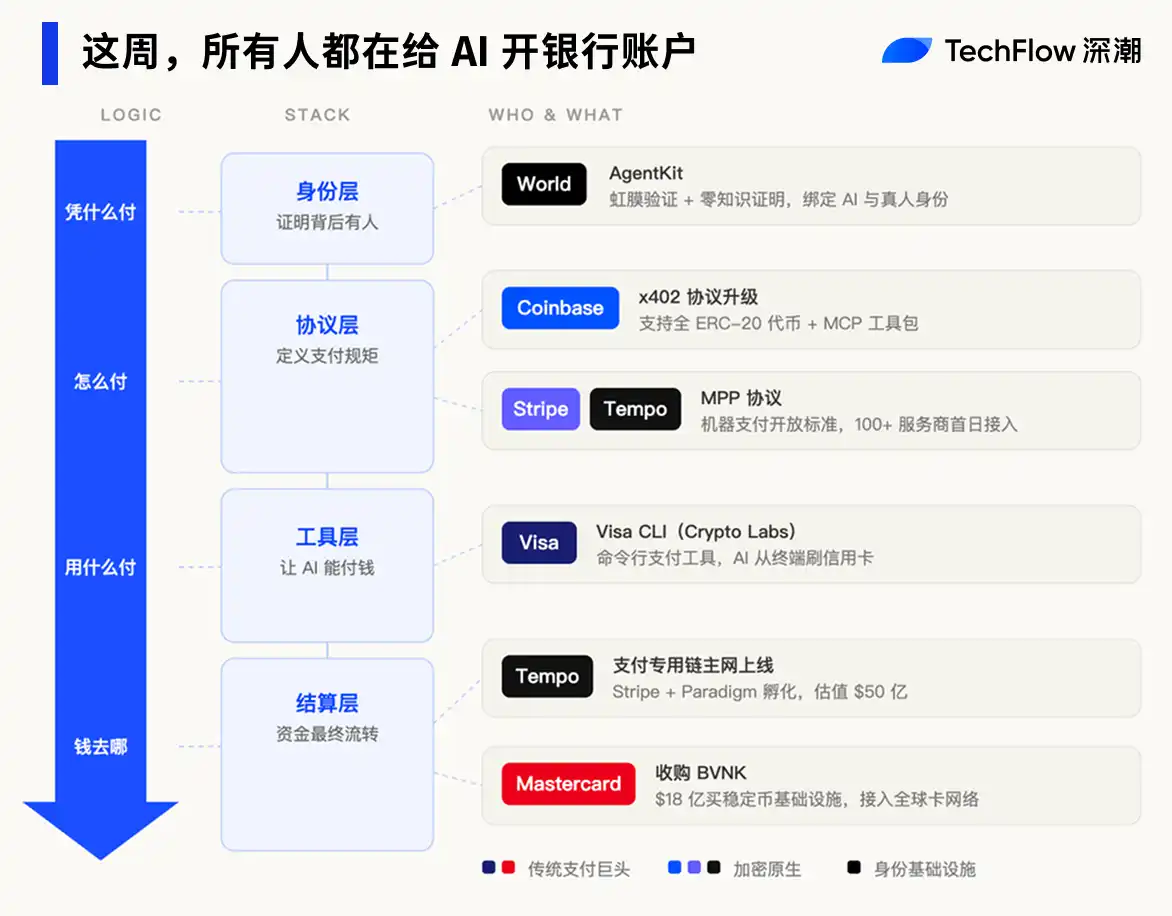
Within five days, Visa established a new department and launched an AI payment tool, Coinbase's payment protocol underwent a major upgrade, Mastercard acquired a stablecoin company for $1.8 billion, and Sam Altman's World released a toolkit specifically for AI identity verification.

Five giants rushed through the same door in one week, eager to open bank accounts for AI.

Two Paths, One Door

Tempo is helping AI with settlements. But settlement is just one part of the payment system. For an AI Agent to truly spend money autonomously, it also needs payment tools, funding channels, and identity verification.

Here, traditional payment companies and crypto companies are competing for the cake using their respective strengths.
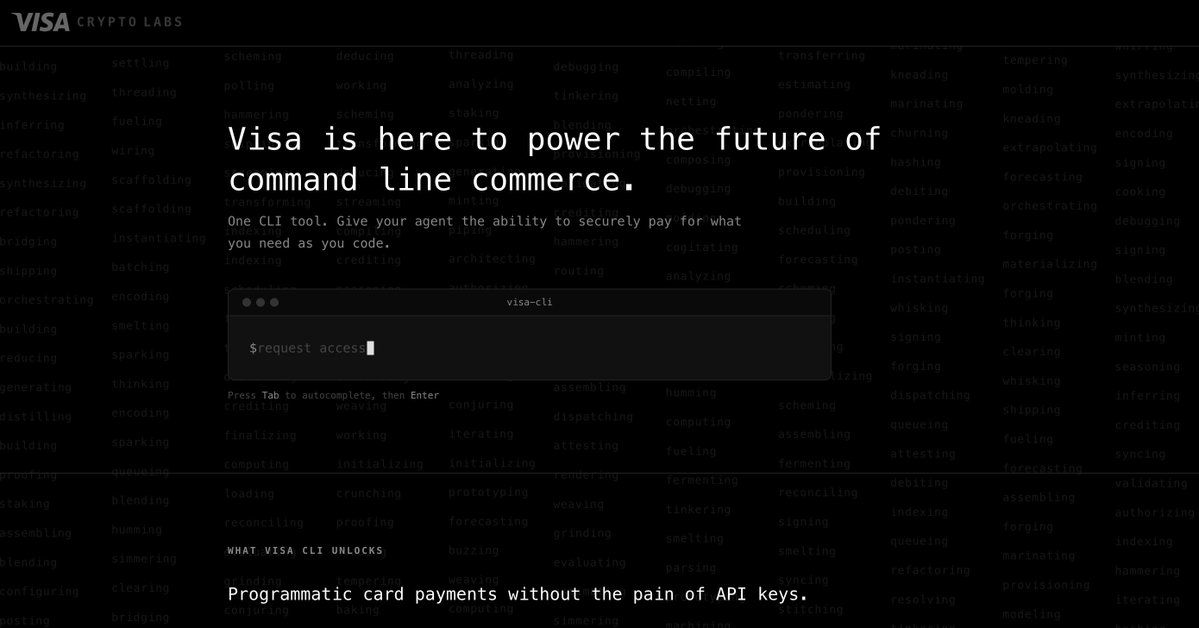
On March 18th, the same day Tempo's mainnet launched, payment giant Visa also moved. Its newly established Crypto Labs department released its first product: Visa CLI, a tool that allows AI Agents to initiate credit card payments directly from the terminal.

No API key needed, no pre-registration required. If an AI needs to buy some service while running a task, it can pay with one line of command. Visa calls this "command-line commerce."
Visa's global card network connects billions of cards and tens of millions of merchants. If AI payments can run on this existing network, it doesn't need to wait for any new infrastructure to mature.

Visa is extending the old path. Its competitor Mastercard chose another way: buying the path outright.

On March 17th, Mastercard announced the acquisition of London-based stablecoin infrastructure company BVNK for $1.8 billion. This is the largest stablecoin acquisition in the history of the crypto industry.

The purpose of this acquisition is straightforward: if AI payments are going to use stablecoins, then let those stablecoins flow through my pipes.

On the crypto-native side, the moves are equally密集 (dense).

Coinbase's x402 protocol completed a major upgrade, expanding its payment scope from a few stablecoins to all ERC-20 tokens, while also releasing the MCP toolkit, allowing developers to integrate AI tools into the payment network with one click.

The two sides seem to start from different points, but their actions point in the same direction: Traditional payment companies are embracing crypto, crypto companies are embracing AI. Ultimately, crypto infrastructure is becoming the underlying pipeline for AI payments.

One环节 (link) remains. AI can spend money, but how does the merchant know if there's a human responsible for the AI spending the money?

On March 17th, World, co-founded by Sam Altman, released AgentKit, integrated with Coinbase's x402. It does only one thing: allow the AI to prove, while paying, that there is a verified real person behind it. The merchant can confirm that someone is responsible for the transaction but cannot see who that person is.

Five days, five companies. Settlement, channels, tools, protocols, identity. Every环节 (link) has been卡位 (staked out).

AI Cake Divided, Only the Cashier Left

Over the past three years, most positions on the AI industry chain have been taken.

The model layer is the table for OpenAI, Anthropic, Google, and a number of Chinese companies. Computing power is locked down tightly by Nvidia. The application layer is a bloody red ocean from programming assistants to search engines...

Every layer is crowded, and the competitive barriers in each layer are getting higher.

But the payment layer is still relatively vacant.

It's not that no one thought of it, the timing just wasn't right. AI Agent payment has a prerequisite: AI must first have the ability to independently complete an entire task chain. If it can only chat, doesn't need to call APIs, doesn't need to buy computing power, doesn't need to hire other Agents to work, then payment is not a rigid demand.

Over the past year, this prerequisite has slowly been established.

OpenClaw allows AI to directly operate computers, the MCP protocol allows AI to access external services, and the Agent capabilities of various large models saw concentrated breakthroughs in the second half of 2025. AI changed from a "conversation tool" to a "tool that gets work done," and getting work done costs money...

The demand for spending money has arrived, but the infrastructure for spending money does not yet exist.

This is why Stripe, Visa, Mastercard, and Coinbase acted simultaneously. For traditional payment companies, this is the first time they have gained a home-field advantage in the entire AI wave. They can't make models, they can't make chips, but payment is what they've been doing for decades.

Visa's global card network connects billions of cards and tens of millions of merchants, Mastercard covers over 200 countries, Stripe processed $1.9 trillion in transactions last year. If every AI expenditure flows through these pipes, the more capable AI is, the more money they make.

For crypto companies, the logic is somewhat different.

Coinbase CEO Brian Armstrong once said something very direct: "AI can own a crypto wallet, but it can't open a bank account."

Every step of the traditional financial system confirms "who you are." Opening a bank account requires an ID card, applying for a credit card requires facial recognition, every transaction requires an SMS verification code. AI is software, not a person; it can't pass any of these checkpoints.

But crypto wallets don't need these. A private key is an account. For an AI Agent, on-chain payment is the path of least resistance.

Crypto or not, AI payment will be a new infrastructure-level market. The difference is only whose pipeline is more suitable for machines.

Road Built, Cars Not Here

The story seems all set here, five giants are in place.

But there's a number worth looking at.

Coinbase's x402 protocol is currently the earliest landed and widest-reaching AI payment protocol. According to x402scan data, the total transaction volume of the entire ecosystem in the past 24 hours is $65,400. 150,000 transactions, averaging less than 50 cents per transaction.

What infrastructure is paired with this number? Tempo is valued at $5 billion, Mastercard spent $1.8 billion to acquire BVNK, Visa specifically established a new department, Stripe personally wrote the protocol.
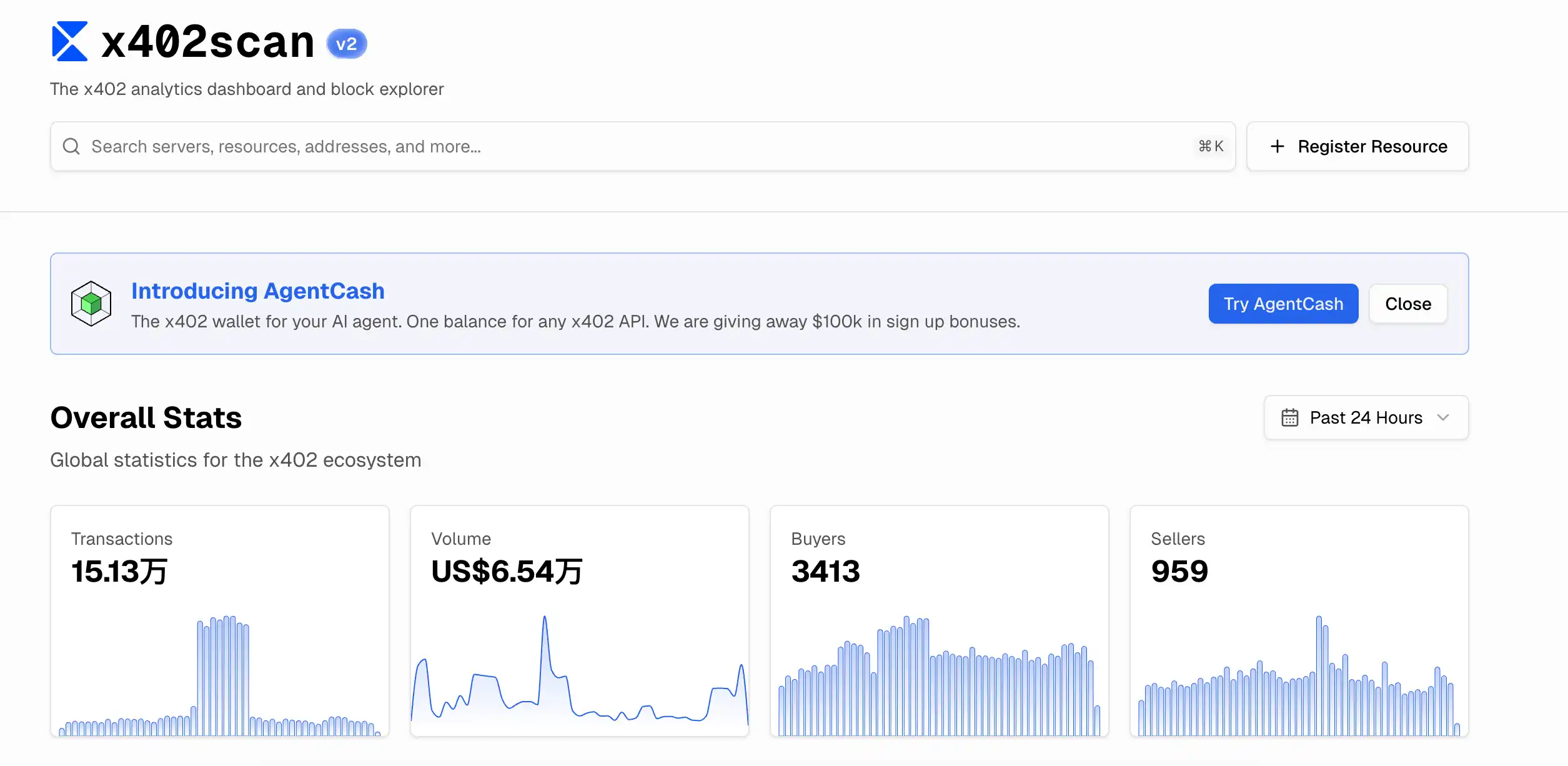
Billions in valuation infrastructure, serving a daily transaction volume akin to a roadside bubble tea shop.

All infrastructure businesses seem to have this常态 (normal state).

On the eve of the 2000 internet bubble, telecom companies laid millions of kilometers of fiber optic cables under the sea. After laying them, they found that global internet traffic only used 5% of it. Most of those companies went bankrupt, but the cables remained.

A decade later, video streaming and mobile internet filled those pipes. The road pavers didn't make money, but the road was real.

AI payment is at this stage now. The demand logic is sound: AI Agents are indeed becoming more capable, they indeed need to spend money autonomously, they indeed need a new financial infrastructure.

Everyone is on the starting line, but after the starting gun fires, they find that, for now, they are the only ones on the track.

As for whose road ultimately succeeds, and when the first truly autonomous AI transaction happens in your life, it might be faster than everyone expects, or it might be slower than everyone expects.

The only certainty is that this battle has already begun, and your wallet and mine might be the last to know.


Пов'язані питання

QWhat is Tempo and what is its primary purpose as described in the article?

ATempo is a new blockchain mainnet launched by Stripe and Paradigm, with a valuation of $5 billion. Its primary purpose is not to trade cryptocurrencies or engage in DeFi, but to enable 'machine-to-machine payments'—allowing AI systems to autonomously pay for services like API calls, computing power, or data without human intervention for each transaction.

QWhich major payment companies made significant moves in the AI payment space during the week mentioned in the article?

AVisa, Mastercard, and Stripe all made significant moves. Visa launched a new tool called Visa CLI for AI agents to initiate credit card payments, Mastercard acquired stablecoin infrastructure company BVNK for $1.8 billion, and Stripe co-developed the Machine Payments Protocol (MPP) for Tempo.

QWhat problem does the current payment system pose for AI agents according to the article?

AThe current payment system is designed for humans and requires identity verification steps like ID cards, facial recognition, or SMS codes—all of which AI agents cannot pass. This forces AI workflows to pause at the payment step, waiting for human approval, hindering full autonomy.

QWhat role does encryption infrastructure play in AI payments as per the article?

AEncryption infrastructure, such as blockchain and crypto wallets, provides a low-friction path for AI payments because it doesn't require human identity verification. AI agents can use private keys to hold and spend funds autonomously, making it easier for machines to transact compared to traditional banking systems.

QWhat is the current scale of AI payment transactions on Coinbase's x402 protocol, and what does this indicate about the market?

AAccording to x402scan data, the daily transaction volume on Coinbase's x402 protocol is $65,400, with 150,000 transactions averaging less than $0.50 each. This indicates that despite massive infrastructure investments and high expectations, the actual market for AI payments is still in its very early stages, similar to historical infrastructure booms where demand lags behind supply initially.

Пов'язані матеріали

Торгівля

Спот
Ф'ючерси

Популярні статті

Що таке $BANK

Bank AI: Революційний крок у майбутнє банківської справи Вступ В епоху, що характеризується швидкими технологічними змінами, Bank AI знаходиться на перетині штучного інтелекту (ШІ) та банківських послуг. Цей інноваційний проєкт прагне переосмислити фінансовий ландшафт, підвищуючи ефективність роботи, заходи безпеки та досвід клієнтів завдяки потужності ШІ. Розпочинаючи дослідження Bank AI, ми заглибимося в суть проєкту, його операційні динаміки, історичний контекст і значущі етапи. Що таке Bank AI? У своїй основі Bank AI представляє собою трансформаційну ініціативу, спрямовану на інтеграцію штучного інтелекту в різні банківські операції. Цей проєкт використовує можливості ШІ для автоматизації процесів, покращення протоколів управління ризиками та підвищення взаємодії з клієнтами через персоналізовані послуги. Основні цілі Bank AI включають: Автоматизація банківських функцій: Використовуючи технології ШІ, Bank AI прагне автоматизувати рутинні завдання, зменшуючи навантаження на людські ресурси та підвищуючи ефективність. Покращене управління ризиками: Проєкт використовує алгоритми ШІ для прогнозування та виявлення ризиків, тим самим зміцнюючи заходи безпеки проти шахрайства та інших загроз. Персоналізація банківських послуг: Bank AI зосереджується на пропозиції індивідуальних фінансових продуктів і послуг, аналізуючи дані і поведінку клієнтів. Покращення досвіду клієнтів: Впровадження рішень на основі ШІ, таких як чат-боти та віртуальні асистенти, має на меті забезпечити користувачам більш природну взаємодію, революціонізуючи спосіб, яким клієнти спілкуються з банками. З цими цілями Bank AI займає важливу роль в робленні банківської справи більш ефективною, безпечною та орієнтованою на користувача. Хто є творцем Bank AI? Деталі стосовно творця Bank AI залишаються невідомими. Таким чином, жодна конкретна особа або організація не були ідентифіковані в доступній інформації. Анонімність навколо створення проєкту піднімає питання, але це не зменшує його амбітного бачення та цілей. Хто є інвесторами Bank AI? Аналогічно творцеві проєкту, конкретна інформація стосовно інвесторів або організацій, що підтримують Bank AI, не була розкрито. Без цієї інформації важко окреслити фінансову підтримку та інституційну підтримку, які могли б сприяти розвитку проєкту. Тим не менше, важливість наявності міцної інвестиційної бази є вирішальною для забезпечення розвитку в такій інноваційній сфері. Як працює Bank AI? Bank AI функціонує на кількох інноваційних фронтах, фокусуючись на унікальних факторах, які відрізняють його від традиційних банківських структур. Нижче наведено ключові операційні характеристики: Автоматизація: Застосовуючи алгоритми машинного навчання, Bank AI автоматизує різні ручні процеси в банках. Це призводить до зниження операційних витрат і дозволяє працівникам перенаправити свої зусилля на більш стратегічні завдання. Покращене управління ризиками: Інтеграція ШІ в практики управління ризиками забезпечує банки інструментами для точного прогнозування потенційних загроз, таких як шахрайство, забезпечуючи при цьому безпеку інформації і активів клієнтів. Індивідуальні фінансові рекомендації: Завдяки безперервному навчанню з інтерaktionen з клієнтами, системи ШІ розвивають тонке розуміння потреб користувачів, що дозволяє їм пропонувати персоналізовані поради щодо фінансових рішень. Покращені взаємодії з клієнтами: Використовуючи чат-ботів і віртуальних асистентів на базі ШІ, Bank AI дозволяє створити більш залучений досвід для клієнтів, дозволяючи користувачам швидше отримувати відповіді на свої запитання, зменшуючи час очікування та підвищуючи рівень задоволеності. Разом ці операційні характеристики позиціонують Bank AI як піонера в банківському секторі, встановлюючи нові стандарти для надання послуг і операційної досконалості. Хронологія Bank AI Для розуміння траєкторії Bank AI необхідно ознайомитися з його історичним контекстом. Нижче наведено хронологію, що підкреслює важливі етапи та розробки: Ранні 2010-ті: Концептуалізація інтеграції ШІ в банківські послуги почала привертати увагу, коли банківські установи визнали потенційні переваги. 2018: Відбулося помітне збільшення впровадження технологій ШІ, коли банки почали використовувати інструменти ШІ, такі як чат-боти для базового обслуговування клієнтів та системи управління ризиками для покращення безпеки. 2023: Софістикація ШІ продовжувала розвиватися, з введенням генеративного ШІ для більш складних завдань, таких як обробка документів і аналіз інвестицій в реальному часі. Цей рік став важливим стрибком у можливостях, які забезпечує технологія ШІ для банків. 2024-актуальний статус: Станом на цей рік, Bank AI знаходиться на зростаючій траєкторії, з постійними дослідженнями та розробками, які готові подальше покращити можливості в банківських операціях. Продовження дослідження застосувань ШІ натякає на захоплюючі події, які ще попереду. Ключові моменти про Bank AI Інтеграція ШІ в банківську справу: Bank AI зосереджується на прийнятті штучного інтелекту для оптимізації банківських процесів та покращення досвіду користувачів. Автоматизація та фокус на управлінні ризиками: Проєкт сильного підкреслює ці сфери, прагнучи зshift тягар рутинних завдань, водночас підвищуючи безпеку через прогнозну аналітику. Персоналізовані банківські рішення: Завдяки використанню даних клієнтів, Bank AI забезпечує персоналізовані банківські послуги, що відповідають потребам окремих користувачів. Прихильність до розвитку: Bank AI залишається відданим постійним дослідженням і розробкам, що забезпечують його адаптацію та постійну актуальність у міру того, як технології продовжують розвиватися. Висновок Підсумовуючи, Bank AI є важливим кроком вперед у банківській індустрії, використовуючи штучний інтелект для переформатування операційних парадигм, підвищення безпеки та сприяння задоволеності клієнтів. Незважаючи на прогалини в інформації щодо творця та інвесторів, чіткі цілі і функціональні механізми Bank AI забезпечують міцну основу для його подальшої еволюції. Оскільки технологія ШІ продовжує розвиватися та інтегруватися в банківський сектор, Bank AI має всі шанси суттєво вплинути на майбутнє фінансових послуг, покращуючи спосіб, яким ми розуміємо та взаємодіємо з банківською справою.

146 переглядів усьогоОпубліковано 2024.04.06Оновлено 2024.12.03

Що таке $BANK

Як купити BANK

Ласкаво просимо до HTX.com! Ми зробили покупку Lorenzo Protocol (BANK) простою та зручною. Дотримуйтесь нашої покрокової інструкції, щоб розпочати свою криптовалютну подорож.Крок 1: Створіть обліковий запис на HTXВикористовуйте свою електронну пошту або номер телефону, щоб зареєструвати обліковий запис на HTX безплатно. Пройдіть безпроблемну реєстрацію й отримайте доступ до всіх функцій.ЗареєструватисьКрок 2: Перейдіть до розділу Купити крипту і виберіть спосіб оплатиКредитна/дебетова картка: використовуйте вашу картку Visa або Mastercard, щоб миттєво купити Lorenzo Protocol (BANK).Баланс: використовуйте кошти з балансу вашого рахунку HTX для безперешкодної торгівлі.Треті особи: ми додали популярні способи оплати, такі як Google Pay та Apple Pay, щоб підвищити зручність.P2P: Торгуйте безпосередньо з іншими користувачами на HTX.Позабіржова торгівля (OTC): ми пропонуємо індивідуальні послуги та конкурентні обмінні курси для трейдерів.Крок 3: Зберігайте свої Lorenzo Protocol (BANK)Після придбання Lorenzo Protocol (BANK) збережіть його у своєму обліковому записі на HTX. Крім того, ви можете відправити його в інше місце за допомогою блокчейн-переказу або використовувати його для торгівлі іншими криптовалютами.Крок 4: Торгівля Lorenzo Protocol (BANK)Легко торгуйте Lorenzo Protocol (BANK) на спотовому ринку HTX. Просто увійдіть до свого облікового запису, виберіть торгову пару, укладайте угоди та спостерігайте за ними в режимі реального часу. Ми пропонуємо зручний досвід як для початківців, так і для досвідчених трейдерів.

619 переглядів усьогоОпубліковано 2025.05.09Оновлено 2025.05.09

Як купити BANK

Обговорення

Ласкаво просимо до спільноти HTX. Тут ви можете бути в курсі останніх подій розвитку платформи та отримати доступ до професійної ринкової інформації. Нижче представлені думки користувачів щодо ціни BANK (BANK).

活动图片













