These Days, Even Hackers Are Losing Money

marsbitОпубліковано о 2026-03-25Востаннє оновлено о 2026-03-25

Анотація

An article titled "Even Hackers Are Losing Money These Days" details a cyber heist targeting Web3 social platform UXLink’s multi-signature wallet in September 2025. The attacker exploited a delegateCall vulnerability, bypassing security to steal over $11.3 million in assets, including stablecoins, ETH, WBTC, and UXLINK tokens. The hacker then dumped a large amount of UXLINK, causing its price to crash over 70%. Unlike typical hackers who launder funds through mixers like Tornado Cash, this attacker engaged in active on-chain trading, executing 625 transactions on CoW Swap over six months. However, poor trading decisions led to significant losses—at one point, the address was down nearly $4.8 million. The hacker repeatedly bought high and sold low, barely breaking even after six months of activity. Despite the traceability of the funds via platforms like Arkham, recovering the assets remains challenging for UXLink. The project has attempted to rebuild, but its token price has fallen 99% from its peak. The incident underscores that while technical skills enable theft, market volatility affects everyone equally—even hackers aren’t immune to losses.

Author: Chloe, ChainCatcher

In September 2025, the multi-signature wallet of Web3 social platform UXLink was brutally looted. Within just a few hours, the hacker made off with over ten million dollars in assets and maliciously dumped a massive amount of minted tokens, causing the token price to flash crash by over 70% instantly. However, the most absurd part of this disaster was not the attack itself, but the hacker's "amateur" performance afterwards.

Unlike the typical money-laundering playbook, this hacker did not rush to disappear. Instead, they funneled the stolen ETH and stablecoins into DEXs, making frequent trades on CoW Swap. According to on-chain data from Arkham, this address accumulated nearly 625 transactions within just six months, with paper losses once reaching as high as $4.8 million.

Reconstructing the technical path of this attack reveals the hacker's unconventional behavior patterns and the harsh reality behind them: in the face of this bear market cycle, even with the advanced skills to steal money on-chain, once you return to market trading, everyone is on a level playing field.

UXLink Multi-Sig Wallet Security Breach, Losses Exceed Ten Million Dollars

Blockchain security company Cyvers first detected abnormal activity in UXLink's multi-signature wallet on September 22, 2025, and issued an urgent alert. UXLink officials subsequently confirmed that their core multi-sig wallet had been compromised, with losses exceeding $11.3 million.
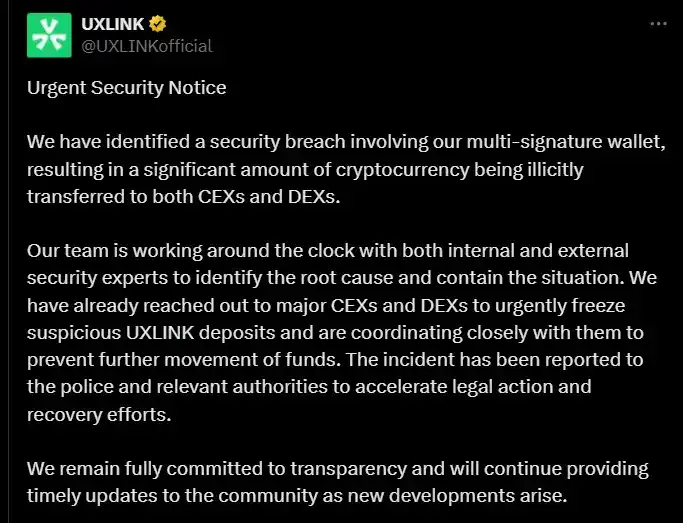
The technical path of this attack was quite clear. The hacker targeted a vulnerability in the multi-sig wallet's delegateCall function, successfully exploiting it to alter the contract logic. The attacker first removed the wallet's original legitimate admin permissions; then, by calling the addOwnerWithThreshold function, they forcibly inserted themselves as a new wallet owner. At this point, UXLink's relied-upon multi-sig security mechanism was completely bypassed, and control of the wallet was entirely transferred.

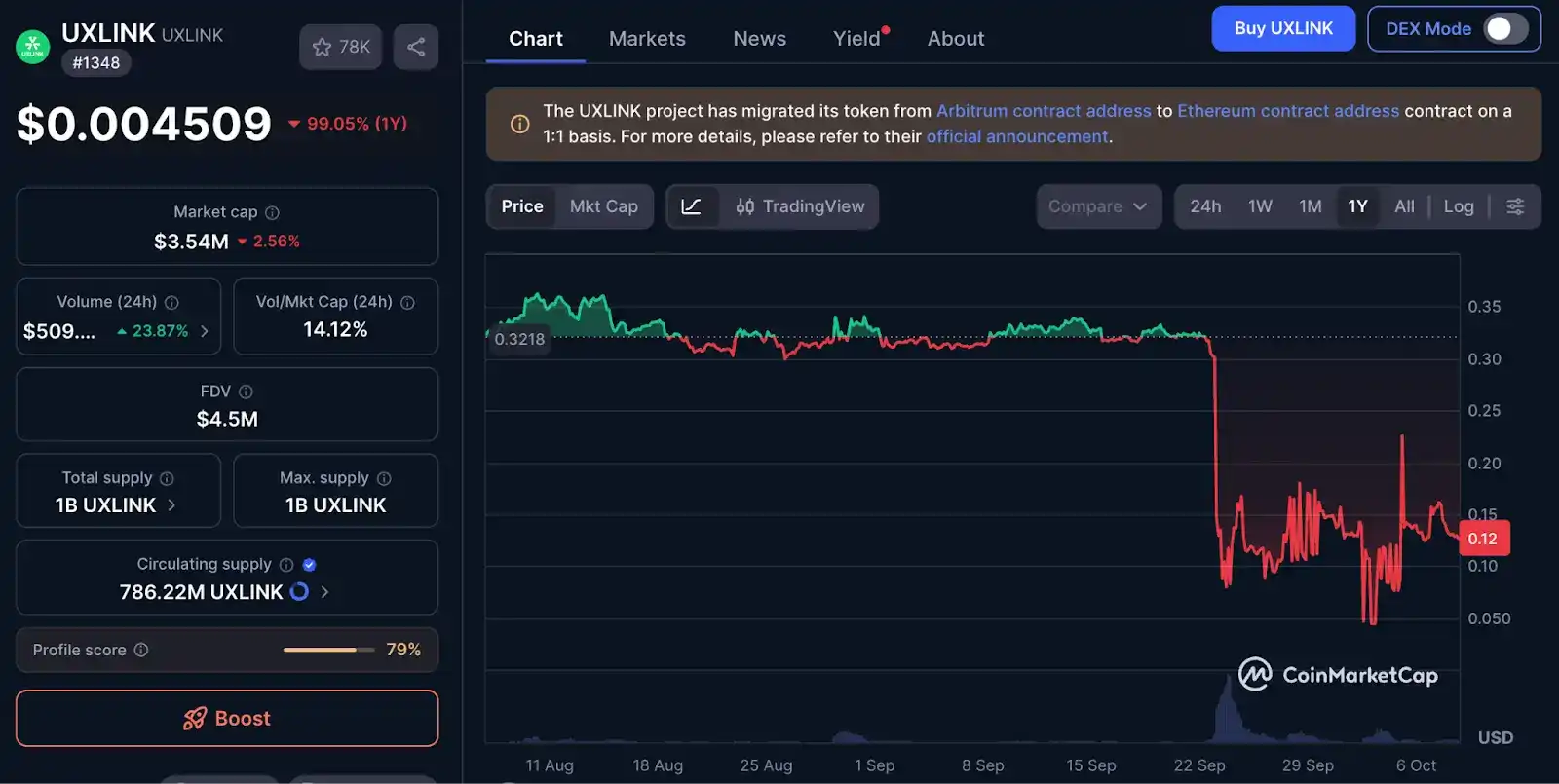
What followed was a frenzied looting of on-chain assets. The stolen assets included approximately $4 million USDT, $500,000 USDC, 3.7 WBTC, 25 ETH, and about $3 million worth of UXLINK native tokens. Simultaneously, the hacker minted a massive amount of UXLINK tokens on the Arbitrum chain and dumped them onto the market. The token price plummeted over 70% in a short time, crashing from around $0.30 to below $0.10, wiping out over $70 million in market capitalization.
An Unconventional Path: Abandoning Mixer Cash-Outs, Staying On-Chain to Trade and Battle

According to the standard script for crypto crime, the next act should have been: the hacker sends the assets into Tornado Cash for anonymization, launders the money in batches through countless hop addresses, and finally completes the entire money laundering and cashing-out process. But this attacker chose an unconventional path.

About 48 hours after the attack, the hacker exchanged 1,620 ETH for approximately 6.73 million DAI. This should have been the first expected signal of "cashing out," and several on-chain analysts promptly locked onto this on-chain behavior. However, over the next six months, this address's behavior pattern completely deviated from the calm and stealth of a professional hacker, instead embarking on a frenzy of on-chain trading.

According to on-chain data tracking by Arkham, this address accumulated a staggering 625 transaction records in just six months, with activity highly concentrated on the decentralized exchange CoW Swap. Its trading frequently switched between WETH and DAI, with an operational frequency far exceeding that of a typical long-term holder. Therefore, rather than a hacker who stole tens of millions, he更像 (more like) a trader, or perhaps a retail investor accustomed to "buying the dip, holding through volatility, and exiting only near the cost basis."

Poor Trading Skills: Paper Losses Once Exceeded $4 Million, Almost Back to Square One After Six Months

According to Arkham's P&L tracking data, from October 2025 to early February 2026, the attacker's address saw paper losses repeatedly exceed $3 million; entering February, the losses hit a record high of $4.8 million. His trading pattern was highly consistent: constantly averaging down at lows, holding on during volatility, and only choosing to exit when the price好不容易 (finally) climbed back near the cost basis.
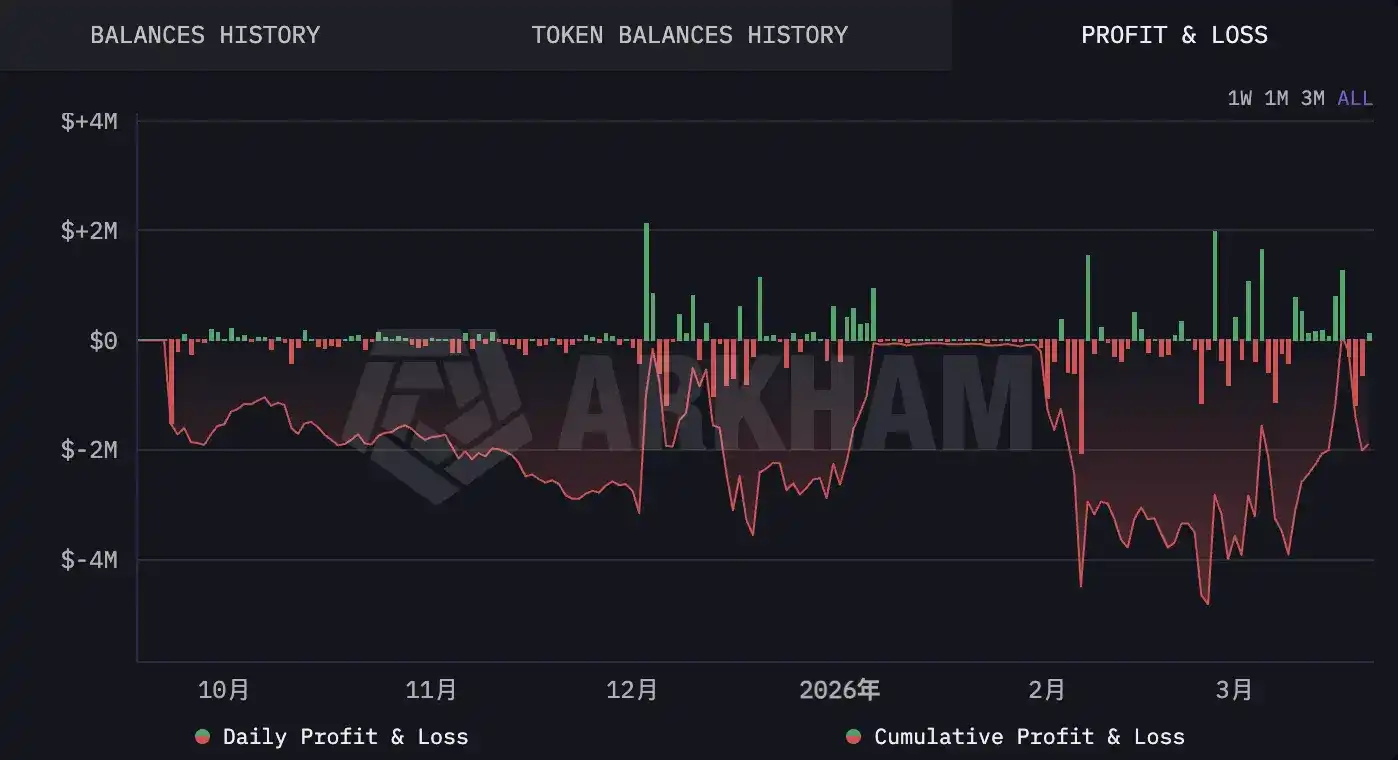
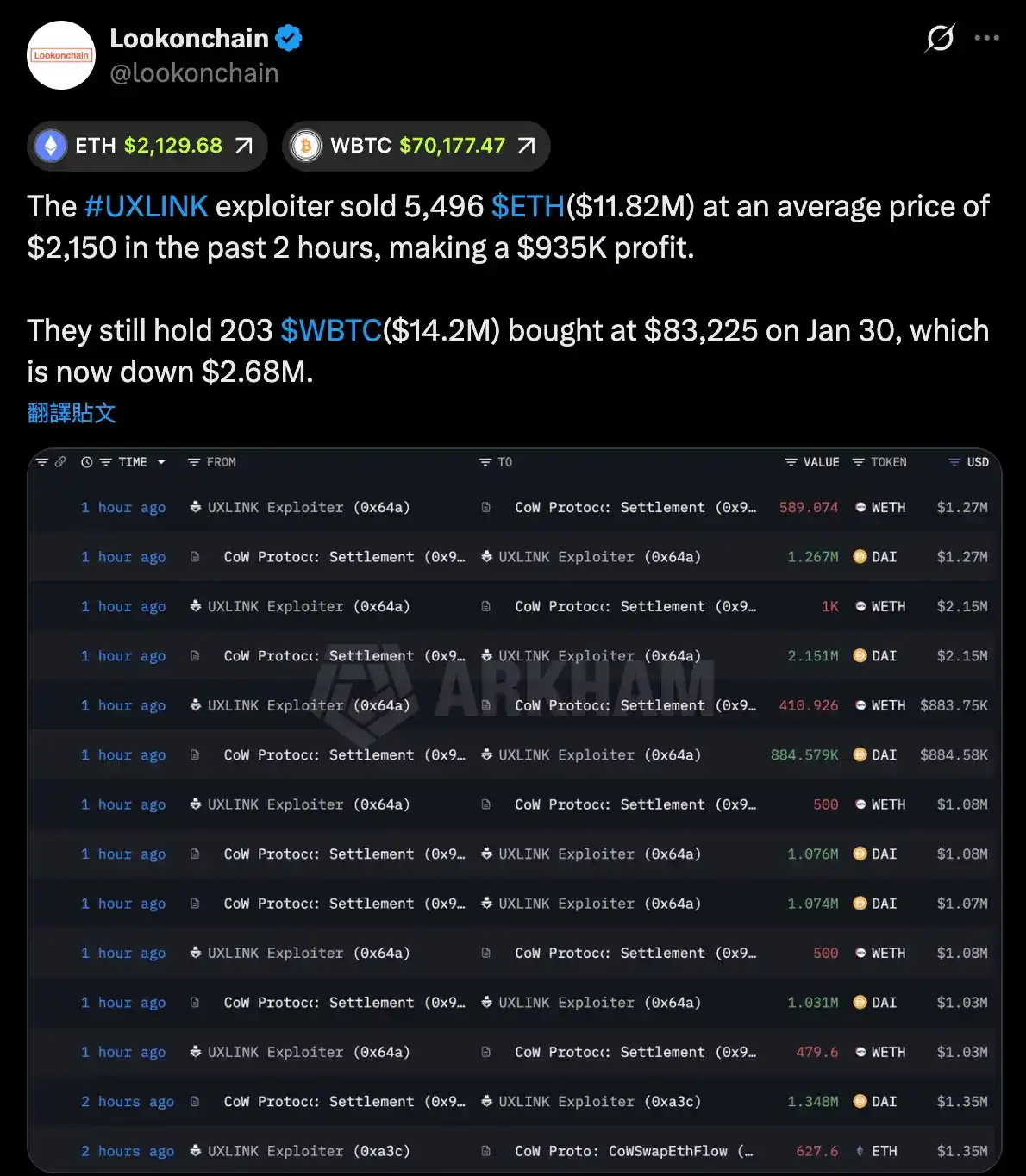
It wasn't until late March that this hacker finally caught a break. On CoW Swap, he exchanged 5,496 ETH for approximately 11.86 million DAI at an average price of $2,150. This operation brought him a paper profit of about $935,000, finally bringing his overall portfolio back to the break-even line. However, his WBTC position was simultaneously eroding these profits. The hacker bought 203 WBTC on January 30, 2026, at an average price of $83,225. As of recently, this position was sitting on a paper loss of about $2.68 million. This entry point恰好 (coincidentally) hit a temporary market rebound high—once again, he bought at a relative peak.
The Transparent Prison and the Long Road to Recovery

The UXLink incident provides a unique perspective in the history of crypto crime: an attacker operating under the spotlight, continuously leaving highly visible transaction trails, allowing global on-chain analysts to fully document their behavioral process.

This likely did not stem from the hacker's negligence, but rather from an outdated perception of "security." He might have believed that as long as the assets were分散 (dispersed) across multiple addresses and operations were conducted on DEXs to avoid the KYC hurdles of CEXs, he could maintain anonymity. However, the rapid evolution of on-chain analysis tools has made this judgment seem overly optimistic. Institutions like Arkham, Lookonchain, PeckShield, and SlowMist almost instantly锁定 (locked onto) every large anomalous movement. Every move the hacker made was laid bare under public scrutiny. This hacker, though sitting on millions, seemed to be in a transparent digital prison.

For the UXLink project team, this situation is both a slight comfort and a significant dilemma. The assets, although not vanished, remain on the traceable blockchain; but in the on-chain world lacking jurisdictional intervention, a vast chasm still lies between "visible" and "recoverable."

Although UXLink quickly completed a new contract audit, token swap, and user compensation plan post-incident to rebuild market confidence, the token price had already fallen from its December 2024 high of $3.75 to around $0.0044, a drop of 99%. For UXLink, patching code vulnerabilities might take only weeks, but rebuilding an ecosystem from near-zero ruins remains a long and arduous journey.

The Bear Market Shows No Mercy, Treating Everyone Equally

The story of the UXLink hacker has become a microcosm of "market reality," rather than just a security incident.

Although he possessed sophisticated skills, able to precisely capture the delegateCall vulnerability and bypass multi-sig defenses, completing a meticulous harvest within hours; however, after the funds were received, he faced the same困境 (dilemma) as any ordinary retail investor: the market doesn't care where the chips came from, ETH still fell during the holding period, and BTC got套牢 (trapped) after the position was built.

This outcome warrants no pity, yet is full of irony. The assets the attacker painstakingly stole were ultimately worn down by market fluctuations, with the paper value six months later almost unchanged from entry. He is not the first ETH holder to suffer losses in a bear market, nor will he be the last speculator反噬 (burned) by the market when trying to buy the dip in WBTC.


Трендові криптовалюти

Пов'язані питання

QWhat was the main security flaw exploited by the hacker in the UXLink multisig wallet attack?

AThe hacker exploited the delegateCall function vulnerability in the multisig wallet, which allowed them to remove legitimate administrators and add themselves as a new owner, bypassing the security mechanism.

QHow did the hacker's behavior differ from typical cryptocurrency theft patterns after the attack?

AInstead of using mixing services like Tornado Cash to anonymize and cash out the stolen funds, the hacker engaged in frequent on-chain trading, primarily on CoW Swap, accumulating over 625 transactions in six months.

QWhat was the financial outcome of the hacker's trading activities according to Arkham's data?

AThe hacker's trading resulted in significant paper loss,一度浮亏超 400 万美元,一度浮亏超 400 万美元,一度浮亏超 400 万美元,一度浮亏超 400 万美元,一度浮亏超 400 万美元,一度浮亏超 400 万美元,一度浮亏超 400 万美元,一度浮亏超 400 万美元,一度浮亏超 400 万美元,一度浮亏超 400 万美元,一度浮亏超 400 万美元,一度浮亏超 400 万美元,一度浮亏超 400 万美元,一度浮亏超 400 万美元,一度浮亏超 400 万美元,一度浮亏超 400 万美元,一度浮亏超 400 万美元,一度浮亏超 400 万美元,一度浮亏超 400 万美元,一度浮亏超 400 万美元,一度浮亏超 400 万美元,一度浮亏超 400 万美元,一度浮亏超 400 万美元,一度浮亏超 400 万美元,一度浮亏超 400 万美元,一度浮亏超 400 万美元,一度浮亏超 400 万美元,一度浮亏超 400 万美元,一度浮亏超 400 万美元,一度浮亏超 400 万美元,一度浮亏超 400 万美元,一度浮亏超 400 万美元,一度浮亏超 400 万美元,一度浮亏超 400 万美元,一度浮亏超 400 万美元,一度浮亏超 400 万美元,一度浮亏超 400 万美元,一度浮亏超 400 万美元,一度浮亏超 400 万美元,一度浮亏超 400 万美元,一度浮亏超 400 万美元,一度浮亏超 400 万美元,一度浮亏超 400 万美元,一度浮亏超 400 万美元,一度浮亏超 400 万美元,一度浮亏超 400 万美元,一度浮亏超 400 万美元,一度浮亏超 400 万美元,一度浮亏超 400 万美元,一度浮亏超 400 万美元,一度浮亏超 400 万美元,一度浮亏超 400 万美元,一度浮亏超 400 万美元,一度浮亏超 400 万美元,一度浮亏超 400 万美元,一度浮亏超 400 万美元,一度浮亏超 400 万美元,一度浮亏超 400 万美元,一度浮亏超 400 万美元,一度浮亏超 400 万美元,一度浮亏超 400 万美元,一度浮亏超 400 万美元,一度浮亏超 400 万美元,一度浮亏超 400 万美元,一度浮亏超 400 万美元,一度浮亏超 400 万美元,一度浮亏超 400 万美元,一度浮亏超 400 万美元,一度浮亏超 400 万美元,一度浮亏超 400 万美元,一度浮亏超 400 万美元,一度浮亏超 400 万美元,一度浮亏超 400 万美元,一度浮亏超 400 万美元,一度浮亏超 400 万美元,一度浮亏超 400 万美元,一度浮亏超 400 万美元,一度浮亏超 400 万美元,一度浮亏超 400 万美元,一度浮亏超 400 万美元,一度浮亏超 400 万美元,一度浮亏超 400 万美元,一度浮亏超 400 万美元,一度浮亏超 400 万美元,一度浮亏超 400 万美元,一度浮亏超 400 万美元,一度浮亏超 400 万美元,一度浮亏超 400 万美元,一度浮亏超 400 万美元,一度浮亏超 400 万美元,一度浮亏超 400 万美元,一度浮亏超 400 万美元,一度浮亏超 400 万美元,一度浮亏超 400 万美元,一度浮亏超 400 万美元,一度浮亏超 400 万美元,一度浮亏超 400 万美元,一度浮亏超 400 万美元,一度浮亏超 400 万美元,一度浮亏超 400 万美元,一度浮亏超 400 万美元,一度浮亏超 400 万美元,一度浮亏超 400 万美元,一度浮亏超 400 万美元,一度浮亏超 400 万美元,一度浮亏超 400 万美元,一度浮亏超 400 万美元,一度浮亏超 400 万美元,一度浮亏超 400 万美元,一度浮亏超 400 万美元,一度浮亏超 400 万美元,一度浮亏超 400 万美元,一度浮亏超 400 万美元,一度浮亏超 400 万美元,一度浮亏超 400 万美元,一度浮亏超 400 万美元,一度浮亏超 400 万美元,一度浮亏超 400 万美元,一度浮亏超 400 万美元,一度浮亏超 400 万美元,一度浮亏超 400 万美元,一度浮亏超 400 万美元,一度浮亏超 400 万美元,一度浮亏超 400 万美元,一度浮亏超 400 万美元,一度浮亏超 400 万美元,一度浮亏超 400 万美元,一度浮亏超 400 万美元,一度浮亏超 400 万美元,一度浮亏超 400 万美元,一度浮亏超 400 万美元,一度浮亏超 400 万美元,一度浮亏超 400 万美元,一度浮亏超 400 万美元,一度浮亏超 400 万美元,一度浮亏超 400 万美元,一度浮亏超 400 万美元,一度浮亏超 400 万美元,一度浮亏超 400 万美元,一度浮亏超 400 万美元,一度浮亏超 400 万美元,一度浮亏超 400 万美元,一度浮亏超 400 万美元,一度浮亏超 400 万美元,一度浮亏超 400 万美元,一度浮亏超 400 万美元,一度浮亏超 400 万美元,一度浮亏超 400 万美元,一度浮亏超 400 万美元,一度浮亏超 400 万美元,一度浮亏超 400 万美元,一度浮亏超 400 万美元,一度浮亏超 400 万美元,一度浮亏超 400 万美元,一度浮亏超 400 万美元,一度浮亏超 400 万美元,一度浮亏超 400 万美元,一度浮亏超 400 万美元,一度浮亏超 400 万美元,一度浮亏超 400 万美元,一度浮亏超 400 万美元,一度浮亏超 400 万美元,一度浮亏超 400 万美元,一度浮亏超 400 万美元,一度浮亏超 400 万美元,一度浮亏超 400 万美元,一度浮亏超 400 万美元,一度浮亏超 400 万美元,一度浮亏超 400 万美元,一度浮亏超 400 万美元,一度浮亏超 400 万美元,一度浮亏超 400 万美元,一度浮亏超 400 万美元,一度浮亏超 400 万美元,一度浮亏超 400 万美元,一度浮亏超 400 万美元,一度浮亏超 400 万美元,一度浮亏超 400 万美元,一度浮亏超 400 万美元,一度浮亏超 400 万美元,一度浮亏超 400 万美元,一度浮亏超 400 万美元,一度浮亏超 400 万美元,一度浮亏超 400 万美元,一度浮亏超 400 万美元,一度浮亏超 400 万美元,一度浮亏超 400 万美元,一度浮亏超 400 万美元,一度浮亏超 400 万美元,一度浮亏超 400 万美元,一度浮亏超 400 万美元,一度浮亏超 400 万美元,一度浮亏超 400 万美元,一度浮亏超 400 万美元,一度浮亏超 400 万美元,一度浮亏超 400 万美元,一度浮亏超 400 万美元,一度浮亏超 400 万美元,一度浮亏超 400 万美元,一度浮亏超 400 万美元,一度浮亏超 400 万美元,一度浮亏超 400 万美元,一度浮亏超 400 万美元,一度浮亏超 400 万美元,一度浮亏超 400 万美元,一度浮亏超 400 万美元,一度浮亏超 400 万美元,一度浮亏超 400 万美元,一度浮亏超 400 万美元,一度浮亏超 400 万美元,一度浮亏超 400 万美元,一度浮亏超 400 万美元,一度浮亏超 400 万美元,一度浮亏超 400 万美元,一度浮亏超 400 万美元,一度浮亏超 400 万美元,一度浮亏超 400 万美元,一度浮亏超 400 万美元,一度浮亏超 400 万美元,一度浮亏超 400 万美元,一度浮亏超 400 万美元,一度浮亏超 400 万美元,一度浮亏超 400 万美元,一度浮亏超 400 万美元,一度浮亏超 400 万美元,一度浮亏超 400 万美元,一度浮亏超 400 万美元,一度浮亏超 400 万美元,一度浮亏超 400 万美元,一度浮亏超 400 万美元,一度浮亏超 400 万美元,一度浮亏超 400 万美元,一度浮亏超 400 万美元,一度浮亏超 400 万美元,一度浮亏超 400 万美元,一度浮亏超 400 万美元,一度浮亏超 400 万美元,一度浮亏超 400 万美元,一度浮亏超 400 万美元,一度浮亏超 400 万美元,一度浮亏超 400 万美元,一度浮亏超 400 万美元,一度浮亏超 400 万美元,一度浮亏超 400 万美元,一度浮亏超 400 万美元,一度浮亏超 400 万美元,一度浮亏超 400 万美元,一度浮亏超 极值一度达到 480 万美元. Their portfolio eventually returned close to breakeven after a profitable ETH trade, but was still dragged down by a significant loss on WBTC purchased near a market high.

QWhy is the hacker's situation described as a 'transparent prison' in the article?

AThe hacker's situation is described as a 'transparent prison' because their every on-chain transaction was tracked and publicly analyzed by firms like Arkham, Lookonchain, PeckShield, and SlowMist. Despite having the funds, their movements were highly visible, making it difficult to cash out anonymously.

QWhat broader point does the article make about the bear market through this hacker's story?

AThe article illustrates that the bear market is a great equalizer. Regardless of how the funds were obtained (through theft or legitimate means), the market treats all participants the same. The hacker, despite their technical skill, suffered losses and poor trading outcomes just like any other investor during the downturn.

Пов'язані матеріали

Who Decides the Rules of Bitcoin? BIP-110 Ignites Governance Debate

Bitcoin's governance is once again at the center of a heated debate, this time ignited by BIP-110, the "Reduced Data Temporary Softfork." This proposal aims to curb non-monetary data (like inscriptions and Runes) by introducing seven new consensus-layer restrictions over a year, such as limiting new output scripts to 34 bytes and restoring the OP_RETURN cap to 83 bytes. The controversy stems from BIP-110's fundamental shift: it moves the battle against "spam" from node relay and miner policies to the consensus layer, rendering currently valid transactions invalid. Supporters, arguing that default policy governance has failed (highlighted by Bitcoin Core v30's relaxation of OP_RETURN limits), see this as necessary to protect node resources and Bitcoin's monetary focus. Opponents, led by figures like Michael Saylor and Adam Back, warn it dangerously centralizes governance. Saylor listed 110 reasons against it, criticizing its low 55% miner activation threshold and potential for chain splits. Back emphasized Bitcoin's "permissionless" ethos, arguing no single group should impose value judgments via consensus rules. Further complicating matters, technical critiques suggest BIP-110 may be technically circumventable, and a "BlockSlop" vulnerability in its upgrade path poses a consensus risk. The debate has drawn in diverse stakeholders: miners (with pools like Ocean signaling support and Foundry polling clients), node operators (like Bitcoin Knots), and new players like corporate treasury holder MicroStrategy (Saylor), whose market influence adds a novel dimension. Ultimately, BIP-110 acts as a governance stress test, exposing the unresolved question: who decides Bitcoin's rules? It pits the authority of miners, node operators, developers, and capital holders against each other, with each side claiming to defend Bitcoin's core principles of neutrality and security.

marsbit13 хв тому

Who Decides the Rules of Bitcoin? BIP-110 Ignites Governance Debate

marsbit13 хв тому

Who Decides Bitcoin's Rules? BIP-110 Ignites Governance Debate

Title: Who Decides Bitcoin's Rules? BIP-110 Ignites Governance Debate A new technical proposal, BIP-110 (Reduced Data Temporary Softfork), has sparked a fundamental governance debate within the Bitcoin community. It aims to impose new consensus rules for one year to limit non-financial data (like inscriptions and Runes) on-chain, moving beyond simple node and miner policy filters to invalidate currently valid transactions. Supporters argue that default policies have failed due to workarounds, necessitating consensus-layer changes to protect Bitcoin's core monetary function from data spam. Critics, including Michael Saylor and Adam Back, contend this dangerously centralizes judgment, undermines permissionlessness, and sets a risky governance precedent. They advocate for market-based solutions like fees or Layer 2s instead. The debate exposes deeper tensions: miners are divided on activation; node operators assert their sovereignty; Bitcoin Core developers influence defaults without direct accountability; and large corporate holders like MicroStrategy now wield narrative influence. Technically, BIP-110 may not fully block data and carries a disclosed consensus bug risk. Ultimately, BIP-110 acts as a stress test, forcing the community to confront the unresolved question: who legitimately decides what Bitcoin is and how it evolves, amidst competing claims from miners, nodes, developers, and capital holders.

链捕手24 хв тому

Who Decides Bitcoin's Rules? BIP-110 Ignites Governance Debate

链捕手24 хв тому

Zcash's New Node Zakura Goes Live: Privacy Payments Can Reach 50,000 TPS, Aiming to Rival Visa and Mastercard

Zcash, a privacy-focused cryptocurrency, has launched a new full node software called Zakura version 1.0.0. Developed by Zcash co-founder Sean Bowe and Dev Ojha, with private ZEC donations, its goal is to enable Zcash to process over 50,000 transactions per second (TPS)—matching the scale of Visa and Mastercard—while maintaining full transaction privacy and verifiability. This addresses a key bottleneck, as Zcash currently handles only about 1 private transaction per second. Zakura is a fork of the Zcash Foundation's Zebra node. It features chain pruning and snapshots, reducing disk usage and allowing new nodes to sync in under two minutes. It also offers compatibility with the legacy `zcashd` client interface. The scalability challenge stems from the large data size of privacy proofs. Bowe's Tachyon project aims to use recursive proofs to reduce consensus-layer data needs from ~500 MB/s to ~100 MB/s. For wallet scalability, Valar Group is researching Private Information Retrieval (PIR) tech to allow wallets to fetch their data privately. Zakura supports fast block propagation and the upcoming "Ironwood" network upgrade (NU6.3), scheduled for activation around July 28th. Ironwood was created to contain a critical inflation bug discovered in the Orchard shielded pool in May 2024. The fix uses "turnstiles" to trap any counterfeit ZEC created during the vulnerability period within the shielded pool, preventing it from entering circulation and restoring supply integrity.

marsbit39 хв тому

Zcash's New Node Zakura Goes Live: Privacy Payments Can Reach 50,000 TPS, Aiming to Rival Visa and Mastercard

marsbit39 хв тому

Replicating the "DeepSeek Moment"? Wall Street Unanimously Says: Kimi K3 Instead Strengthens Computing Power Demand

Title: Wall Street Sees Kimi K3 as a Catalyst for Compute Demand, Not a "DeepSeek Moment 2.0" Summary: Following the release of Moonshot AI's powerful open-source model Kimi K3, initial market reaction mirrored the "DeepSeek moment" that sparked a sell-off in compute stocks earlier in 2025, fearing reduced demand for AI infrastructure. However, major Wall Street banks including UBS, Nomura, BofA, and Citi argue the opposite: K3 will accelerate, not weaken, demand for compute, memory, storage, and networking. Their analysis centers on K3's specifications—2.8 trillion parameters, 1M token context, and MoE architecture—which represent a "scale" story rather than a pure "efficiency" one like DeepSeek R1. These features increase pressure on inference, memory (especially KV cache), and storage. Analysts invoke Jevons Paradox: as high-quality models become more affordable (K3 is cheaper than top closed models but not the cheapest), usage and token volumes expand, ultimately increasing total compute consumption. The reports highlight that competition will force leading US AI labs (OpenAI, Anthropic, Google) to invest more in training and iteration to maintain their edge. Furthermore, the rise of capable open-source models like K3 is expanding the global AI developer ecosystem, with Chinese models now accounting for over 45% of developer traffic. Key beneficiaries identified across the AI infrastructure chain include memory/storage players (e.g., Micron, Samsung), compute leaders (Nvidia, TSMC), networking suppliers (due to "super-node" cluster needs for deploying K3), and cloud platforms (e.g., Alibaba) that host diverse model ecosystems. The consensus is that stronger open-source models are an entry point for the next wave of infrastructure demand diffusion, provided workload growth outpaces efficiency gains.

链捕手42 хв тому

Replicating the "DeepSeek Moment"? Wall Street Unanimously Says: Kimi K3 Instead Strengthens Computing Power Demand

链捕手42 хв тому

Торгівля

Спот

Популярні статті

Що таке USDC(WORMHOLE)

USD Coin (Wormhole): Всеосяжний огляд Вступ У швидко мінливому світі криптовалют USD Coin (Wormhole), що називається $USDC(Wormhole), вирізняється як піонерське рішення у сфері DeFi (децентралізовані фінанси). Функціонує на кількох блокчейн-платформах, включаючи Solana, USD Coin (Wormhole) є більше ніж просто цифрове представлення американського долара. Він втілює інноваційний дух сучасних фінансів, що дозволяє безшовні трансакції між різними ланцюгами та підвищує взаємодію між різними блокчейн-екосистемами завдяки передовому протоколу Wormhole. Що таке USD Coin (Wormhole)? USD Coin (Wormhole) — це токенізована версія американського долара, розроблена для полегшення безперешкодних трансакцій між різними блокчейн-мережами. Його основна мета — зміцнити ліквідність і поліпшити функціональність екосистеми DeFi. Використовуючи протокол Wormhole, який встановлює надійну мережу міжланцюгового зв'язку, користувачі можуть без зусиль передавати токени USDC між різними платформами. Ця можливість міжланцюгових трансакцій є суттєвим досягненням у використанні криптовалюти, сприяючи більш взаємопов'язаній та ефективній екосистемі, де активи можуть вільно пересуватися між різними блокчейнами. Цінність USD Coin (Wormhole) полягає не тільки в його стабільності, оскільки він закріплений за американським доларом, але й у його здатності заповнювати прогалини між різними блокчейн-середовищами. Цей інноваційний підхід сприяє більшій участі серед користувачів і розробників, прокладаючи шлях для нових і захоплюючих застосувань у сфері децентралізованих фінансів. Хто є творцем USD Coin (Wormhole)? Походження USD Coin (Wormhole) тісно пов'язане з мережею Wormhole, яка була розроблена Jump Crypto. Хоча конкретні індивідуальні творці не документуються, Jump Crypto відзначається своєю участю в просуванні блокчейн-технологій та підтримці їх застосувань у фінансах. Створивши мережу Wormhole, Jump Crypto зіграв життєво важливу роль у просуванні міжланцюгових передач активів, підвищуючи ефективність і різноманітність використання криптовалюти. Хто є інвесторами USD Coin (Wormhole)? Успіх USD Coin (Wormhole) підтримується інвестиціями з кількох значних фондів та організацій у світі криптовалют. Ключовими інвесторами є: Coinbase Ventures: Значна венчурна компанія, яка підтримується однією з провідних криптовалютних бірж у галузі, Coinbase Ventures надає важливий капітал і стратегічну підтримку багатообіцяючим блокчейн-проєктам. Arrington XRP Capital: Спеціалізуючись на цифрових активах, Arrington XRP Capital визнає потенціал інноваційних проектів, таких як USD Coin (Wormhole), і відповідно інвестував для підтримки його розвитку. Jump Trading: Як материнська організація Jump Crypto, Jump Trading приносить не тільки інвестиції, але й багатий досвід у торгових технологіях і динаміці ринку для підтримки проєкту Wormhole. Як працює USD Coin (Wormhole)? Операційна структура USD Coin (Wormhole) ретельно розроблена для забезпечення ефективних міжланцюгових трансакцій, максимізуючи безпеку та ефективність. Ось спрощений огляд того, як він працює: Блокування активів: Коли користувач хоче передати USDC з одного блокчейну на інший, спочатку він блокує свої токени на вихідному блокчейні. Цей процес забезпечує безпеку активів, які будуть знищені або переміщені пізніше. Мінтинг токенів: Після блокування токенів, на цільовому блокчейні випускається еквівалентна кількість USDC. Це надає користувачеві доступ до своїх коштів на новій платформі, що відображає гнучкість, якою володіє протокол Wormhole. Міжланцюговий переказ: Протокол Wormhole ефективно сприяє всьому процесу переказу. Він забезпечує, що після того, як USDC випущений на цільовому ланцюзі, еквівалентні токени знищуються на вихідному ланцюзі. Результатом є безшовний переказ вартості між двома різними блокчейн-середовищами. Ця методологія міжланцюгових трансакцій забезпечує безпеку та прозорість, значно підвищуючи ліквідність у різних екосистемах DeFi. Хронологія USD Coin (Wormhole) Розуміння еволюції USD Coin (Wormhole) надає важливий контекст для його значення у світі криптовалют. Ось хронологія, що підкреслює важливі віхи в історії проєкту: 2021: Запущено проєкт Wormhole, який встановлює рамки для міжланцюгових передач активів і створює передумови для розвитку USD Coin (Wormhole). 2022: Мережею Wormhole відбулося суттєве випробування внаслідок порушення безпеки, що призвело до крадіжки на суму 325 мільйонів доларів. Однак цей інцидент пізніше був вирішений і відшкодований Jump Crypto, що підкреслює прихильність проєкту до безпеки та прозорості. 2023: USD Coin (Wormhole) інтегрується з протоколом міжланцюгового переказу Circle (CCTP), що підвищує його можливості для міжланцюгових переказів і ще більше зміцнює його позицію в екосистемі DeFi. 2024: Продовжується розвиток і розширення мережі Wormhole, спрямоване на збільшення корисності та досяжності USD Coin (Wormhole) та покращення його операційної структури. Ключові особливості Успіх USD Coin (Wormhole) можна віднести до кількох ключових особливостей, які відрізняють його від інших криптовалютних пропозицій: Міжланцюгова взаємодія У центрі USD Coin (Wormhole) знаходиться здатність забезпечувати безшовні перекази між кількома блокчейн-мережами. Ця взаємодія служить основою для децентралізованих фінансів, дозволяючи різним платформам взаємодіяти одна з одною, прискорюючи еволюцію фінансових послуг. Безпека Wormhole використовує добре спроектовану мережу Гвардіанів, що складається з валідаторів вузлів, які забезпечують безпечні міжланцюгові транзакції. Цей колективний нагляд зменшує ризик шахрайства і дає користувачам впевненість у тому, що їхні активи захищені під час міжланцюгових переказів. Підвищення ліквідності Дозволяючи USDC вільно використовуватися між різними блокчейнами, USD Coin (Wormhole) підвищує ліквідність у екосистемі DeFi. Це збільшене ліквідність може сприяти більш ефективному трейдингу, поліпшити цінові стратегії та поліпшити загальну динаміку ринку, що охоплює різні цифрові активи. Висновок USD Coin (Wormhole) є ключовою інновацією в блокчейн-просторі, зміцнюючи можливості децентралізованих фінансів (DeFi) та встановлюючи більш зв'язану фінансову екосистему. Завдяки своїй надійній структурі для міжланцюгових транзакцій, функціям безпеки та потужній підтримці з боку авторитетних інвесторів, USD Coin (Wormhole) має гарні перспективи для відігравання ключової ролі у майбутньому криптовалюти. Оскільки ландшафт цифрових фінансів продовжує розвиватися, USD Coin (Wormhole) не тільки схвалює майбутнє взаємозв'язку між блокчейн-мережами, але й підтверджує силу токенізації та блокчейн-технологій у трансформації нашого сприйняття та використання цінності у цифровому світі. Орієнтуючись на складнощі міжланцюгової функціональності, він демонструє досконалий підхід до забезпечення фінансової інклюзії та інновацій у світі криптовалют.

169 переглядів усьогоОпубліковано 2024.04.03Оновлено 2024.12.03

Що таке USDC(WORMHOLE)

Що таке W$C

World$tateCoin ($W$C): Всеосяжне дослідження нової криптовалютної ініціативи Вступ У постійно змінюваному ландшафті криптовалют World$tateCoin ($W$C) з’явився як проект, що прагне використати потенціал технологій web3 для створення унікальної цифрової екосистеми. Коли традиційні моделі онлайн-взаємодії зазнають значних змін, World$tateCoin намагається закріпитися в цьому зароджуючомуся третьому поколінні інтернету. У цій статті ми поглибимося у тонкощі World$tateCoin, надаючи огляд проекту, його цілей та потенційного впливу на простір web3. Що таке World$tateCoin ($W$C)? World$tateCoin ($W$C) розроблений як криптовалюта, що полегшує безперешкдні транзакції в середовищі web3. Націлений на створення децентралізованої платформи, де користувачі можуть взаємодіяти з різними веб3-додатками, $W$C має на меті спростити досвід користувача та підвищити доступність цифрових послуг. Хоча проект прагне стати невід’ємною частиною ландшафту web3, детальні відомості щодо його конкретних цілей та випадків використання залишаються обмеженими, викликаючи питання щодо його потенційної ролі та корисності в швидко розвиваючомуся цифровому контексті. Суть web3 полягає в децентралізації та розширенні повноважень користувачів над їх онлайн-взаємодіями. World$tateCoin має намір відповідати цим принципам, хоча конкретні застосування та функціональні можливості валюти все ще обговорюються в спільноті. Хто є творцем World$tateCoin ($W$C)? Досліджуючи походження World$tateCoin, інформація про його творця залишається невловимою. Станом на сьогодні немає публічно доступних даних, що ідентифікують осіб або організації, які стоять за проектом. Ця невизначеність може кинути тінь сумніву на кредибільність проекту, але прагнення до інновацій у рамках криптовалют може бути рушійною силою для його прийняття в майбутньому. Відсутність впізнаваного керівництва може стати причиною труднощів, пов'язаних з довірою та прозорістю — елементами, які є критично важливими для формування сильної спільноти в криптопросторі. Хто є інвесторами World$tateCoin ($W$C)? Поточні дослідження не розкривають жодних конкретних інвесторів або організацій, які підтримують World$tateCoin. Це не є чимось незвичайним для нових криптовалютних проектів — отримувати дискретні інвестиції або працювати у мінімалістичній фінансовій структурі протягом початкової фази. Невизначеність, що оточує інвестиційну підтримку та фінансування, може впливати на стійкість та перспективи зростання проекту. Оцінюючи нові проекти в криптовалютному домені, інвестори зазвичай шукають прозорість щодо фінансової підтримки та підтримки з боку зак established entities. Відсутність цієї інформації може вимагати обережного підходу для потенційних користувачів та зацікавлених сторін, які цікавляться майбутнім World$tateCoin. Як працює World$tateCoin ($W$C)? Операційна механіка World$tateCoin грунтується на принципах децентралізації, які є характерними для технологій web3. Завдяки можливості здійснення транзакцій безпосередньо між користувачами без втручання посередників $W$C має на меті підвищити довіру та ефективність. Проте всебічна документація, що детально описує унікальні особливості та операційні механізми, які відрізняють World$tateCoin від інших криптовалют, помітно брак. Відсутність інформації ускладнює розуміння того, як $W$C функціонує в ширшій екосистемі web3 і які унікальні пропозиції він приносить користувачам і розробникам. Однак базова мета дозволити децентралізовані транзакції обіцяє більш вільний фінансовий ландшафт, якщо проект зможе здійснити свої амбіції щодо впровадження потужних механізмів та зручних інтерфейсів. Хронологія World$tateCoin ($W$C) Скласти хронологію, що узагальнює історичний прогрес World$tateCoin, є складним завданням через відсутність значної документації про ключові події та етапи. Проте можна уявити приблизну послідовність гіпотетичних фаз, які можуть скласти шлях вперед для проекту: Початкова концепція (Дата невідома): Концептуалізація структури World$tateCoin у ширшому контексті технологій web3. Фаза розвитку (Дата невідома): Початок технічної розробки та кодування. Залучення громади (Дата невідома): Встановлення контактів з потенційними користувачами та зацікавленими сторонами для формування інтересу громадськості до проекту. Цільова дата запуску (Дата невідома): Оголошення очікуваної дати запуску, залежно від прогресу в етапах розробки та тестування. Через брак підтверджених дат та деталей стосовно цих фаз зацікавленим сторонам слід залишатися пильними і залученими до комунікацій проекту для отримання оновлень щодо його траєкторії. Ключові теми про World$tateCoin ($W$C) У міру розвитку проекту постають певні ключові теми, які втілюють потенціал та прагнення World$tateCoin: Децентралізація: Основна філософія, що лежить в основі проекту, спрямована на сприяння безпосереднім взаємодіям між користувачами. Інтеграція web3: Мета відображення принципів web3 та забезпечення безперешкодного доступу користувачів до різноманітних цифрових послуг. Цифрова валюта: Позиціонується як валюта для полегшення інтернет-транзакцій, World$tateCoin прагне ввести додаткову ліквідність на ринок web3. Виклик нестачі інформації: Помітна відсутність детальної інформації про основи проекту, творців та методи операцій, що вимагає підвищеної прозорості від розробників для створення довіри з боку спільноти. Висновок World$tateCoin ($W$C) розташований у захоплюючій, але невизначеній сфері інтеграції криптовалют і web3. Хоча він прагне культивувати децентралізоване середовище, обмежена доступність інформації про своїх творців, інвесторів і конкретні функції створює труднощі для потенційних учасників та користувачів. У динамічному світі криптовалют прозорість, залученість та добре структуроване спілкування є важливими для успіху таких проектів, як World$tateCoin. Оскільки ландшафт продовжує змінюватися, учасники з нетерпінням очікують, як проект зможе закріпити своє місце в наративі web3 і внести свій вклад у триваючу трансформацію цифрової екосистеми.

144 переглядів усьогоОпубліковано 2024.04.05Оновлено 2024.12.03

Що таке W$C

Як купити W

Ласкаво просимо до HTX.com! Ми зробили покупку Wormhole (W) простою та зручною. Дотримуйтесь нашої покрокової інструкції, щоб розпочати свою криптовалютну подорож.Крок 1: Створіть обліковий запис на HTXВикористовуйте свою електронну пошту або номер телефону, щоб зареєструвати обліковий запис на HTX безплатно. Пройдіть безпроблемну реєстрацію й отримайте доступ до всіх функцій.ЗареєструватисьКрок 2: Перейдіть до розділу Купити крипту і виберіть спосіб оплатиКредитна/дебетова картка: використовуйте вашу картку Visa або Mastercard, щоб миттєво купити Wormhole (W).Баланс: використовуйте кошти з балансу вашого рахунку HTX для безперешкодної торгівлі.Треті особи: ми додали популярні способи оплати, такі як Google Pay та Apple Pay, щоб підвищити зручність.P2P: Торгуйте безпосередньо з іншими користувачами на HTX.Позабіржова торгівля (OTC): ми пропонуємо індивідуальні послуги та конкурентні обмінні курси для трейдерів.Крок 3: Зберігайте свої Wormhole (W)Після придбання Wormhole (W) збережіть його у своєму обліковому записі на HTX. Крім того, ви можете відправити його в інше місце за допомогою блокчейн-переказу або використовувати його для торгівлі іншими криптовалютами.Крок 4: Торгівля Wormhole (W)Легко торгуйте Wormhole (W) на спотовому ринку HTX. Просто увійдіть до свого облікового запису, виберіть торгову пару, укладайте угоди та спостерігайте за ними в режимі реального часу. Ми пропонуємо зручний досвід як для початківців, так і для досвідчених трейдерів.

224 переглядів усьогоОпубліковано 2024.12.10Оновлено 2026.06.02

Як купити W

Обговорення

Ласкаво просимо до спільноти HTX. Тут ви можете бути в курсі останніх подій розвитку платформи та отримати доступ до професійної ринкової інформації. Нижче представлені думки користувачів щодо ціни W (W).

活动图片