There is no new boss YET

比推Опубліковано о 2026-03-05Востаннє оновлено о 2026-03-05

Анотація

An Iranian deputy military commander from a southern district stated that the Strait of Hormuz has not been blockaded, but only vessels from the U.S. and Israel are prohibited from passing through. This caused a sharp, temporary drop in market prices for oil, gas, and container shipping routes (except European shipping, which remained down). The statement contrasts with Spain's recent refusal to allow the U.S. to use its bases for operations against Iran, where a spokesperson grimly warned of rising energy prices. Around the same time, a U.S. oil tanker sank in the Strait of Hormuz after reportedly “hitting a reef”—a claim viewed by some as corroboration of Iran’s military reports suggesting it was struck by a missile. The information landscape is filled with conflicting narratives, and all claims may be considered both true and false depending on perspective, as psychological and media operations are integral to modern warfare. There is no single authoritative voice in this conflict; even figures like Trump have contributed to the confusion with performative statements. Amid the chaos, all sides are maneuvering for strategic advantage, while humanitarian concerns are overshadowed by geopolitical games. The situation reflects a self-destructive struggle on a global scale.

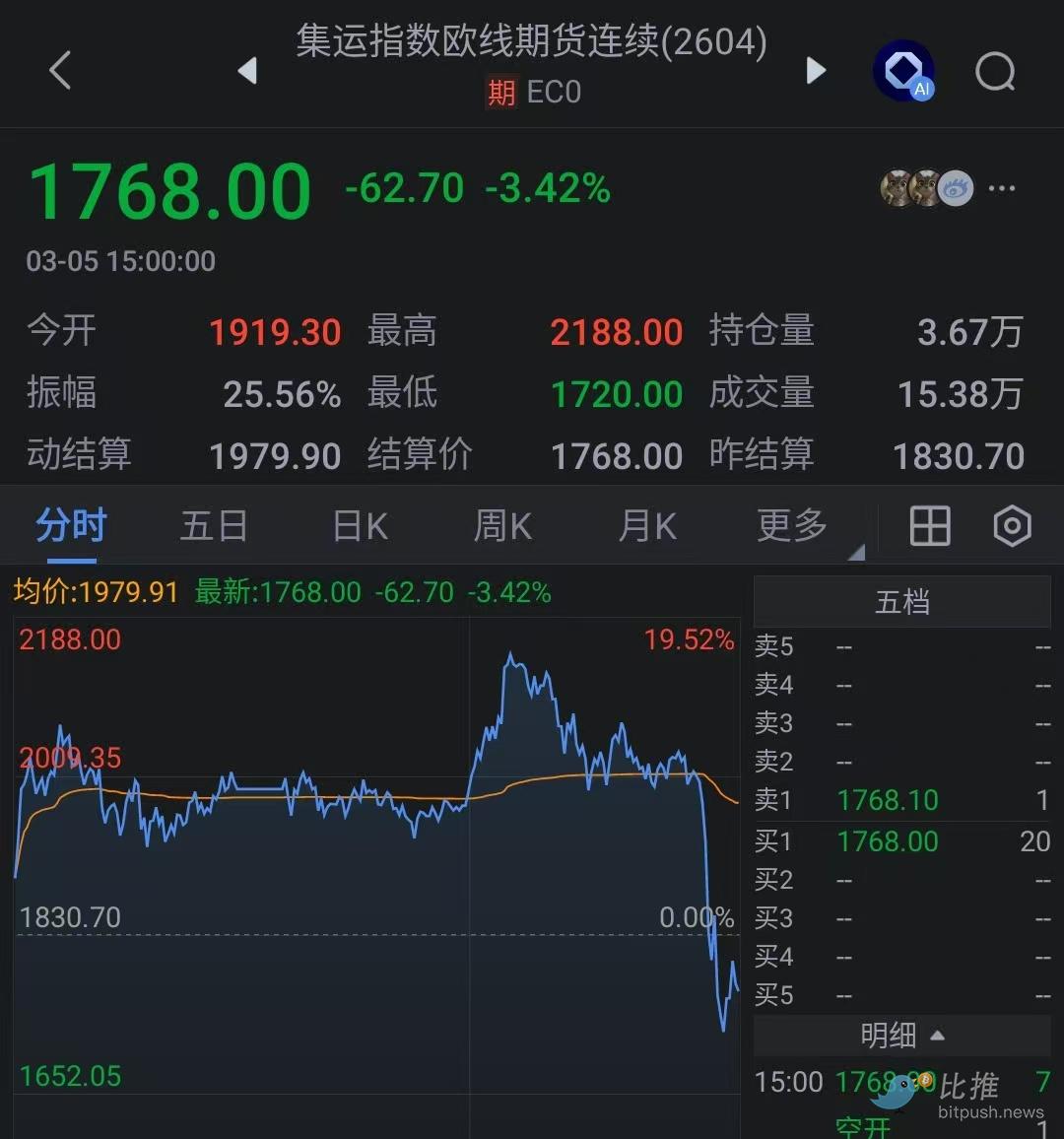
Just now, uh, a deputy commander of a military district in southern Iran said something: 'We have not blocked the Strait of Hormuz,' only prohibiting ships from the US and Israel from passing. This instantly scared the market into a slide, things like European shipping, oil, gas. Scared the hell out of them, a complete mess, but at this moment, most have deeply V-recovered [except for European shipping].

This is in stark contrast to the Spanish spokesperson who, with a grave expression [at a press conference announcing Spain's refusal to negotiate with the US and allow the use of Spanish bases to attack Iran], repeatedly stated that oil and gas prices are bound to rise.

At the moment of speaking, a US oil tanker 'ran aground' and sank in the Strait of Hormuz. Think about it, 'running aground' in the world's busiest energy transport artery. This actually verifies the Iranian military's combat report. It was sunk by a missile.

Some might say, with so many messages and news, which one is true? Who is fooling whom? Actually, all can be considered true (truth mixed with falsehood, falsehood mixed with truth, remember all is fair in war.), because there is no leading figure or authority now [even if there is, like Trump giving himself a 15 out of 10 (evaluating US-Iran actions at a press conference, scoring himself, full marks 10.), it would be full of drama, and the war of public opinion has always been synchronized with the overall war and runs through it from beginning to end.]. The information released by all parties at any given moment can be considered true, but viewed from the overall situation or different standpoints, it can also be considered false. 'Everyone' is searching for the kind of 'ladder' Littlefinger talked about in the chaos, collecting as many chips as possible.

As for humanity, as for compassion. Amidst the complex and numerous coercions, there is temporarily no place for them to stand. This is the self-inflicted disaster of a group of microorganisms on this planet.

Whatever, bro.

#KingOfWar#King of War

Original article link:https://www.bitpush.news/articles/7617058

Пов'язані питання

QWhat was the immediate market reaction to the Iranian commander's statement about not blocking the Strait of Hormuz?

AThe market was instantly frightened, causing a sharp decline in prices for routes like European container shipping, oil, and gas. However, these prices mostly experienced a deep V-shaped recovery shortly after, except for European container shipping.

QHow did the Spanish spokesperson's statement contrast with the Iranian commander's?

AThe Spanish spokesperson, with a grave expression, repeatedly stated that oil and gas prices would inevitably rise during a press conference where Spain refused to negotiate with the U.S. on using its bases to attack Iran. This formed a sharp contrast to the Iranian commander's statement that they were not blocking the strait but only banning U.S. and Israeli ships.

QWhat incident is reported to have occurred in the Strait of Hormuz that seemingly confirmed Iran's military report?

AA U.S. oil tanker was reported to have 'run aground' and sunk in the Strait of Hormuz. The article suggests this was a cover story and that the tanker was actually sunk by a missile, validating Iran's military claims.

QAccording to the article, why is it difficult to determine the truth from the various news and messages circulating?

AThe article states that all information released by various parties can be considered true at the moment it is given, but when viewed from an overall perspective or different standpoints, it can also be considered false. There is no single authoritative source, and information warfare is full of deception and drama, making it hard to discern the absolute truth.

QWhat is the overall tone of the article towards the geopolitical situation described?

AThe tone is cynical and pessimistic, describing the situation as a chaotic melee where parties are fighting for leverage, with humanity and compassion having no place. It concludes with a resigned 'so be it' attitude, referring to the conflict as the自作孽 (self-inflicted disaster) of the planet's microbes.

Пов'язані матеріали

Lowering Expectations for BTC's Next Bull Market

The author, Alex Xu, explains his decision to significantly reduce his Bitcoin holdings (from full to ~30% of his portfolio) during the current bull cycle, citing a lowered long-term outlook for BTC's price appreciation in the next cycle. He outlines six key reasons for this reduced expectation: 1. **Diminished Growth Drivers:** The narrative of exponential user adoption has largely played out with institutional ETF adoption. The next major growth phase—adoption by sovereign national reserves or central banks—seems unlikely in the near future. 2. **Personal Opportunity Cost:** More attractive investment opportunities have emerged in other assets, such as undervalued companies. 3. **Industry-Wide Contraction:** The broader crypto industry is struggling, with most Web3 business models (SocialFi, GameFi, DePIN) failing. This overall萧条 (depression) reduces the fundamental demand and consensus for Bitcoin. 4. **Strain on Major Buyer:** MicroStrategy, a major corporate buyer of BTC, faces rising financing expenses for its debt, which could slow its purchasing rate and create significant marginal pressure on the market. 5. **Increased Competition from Gold:** The emergence of "tokenized gold" has closed the functional gap (portability, divisibility) between physical gold and Bitcoin, offering a strong competitor in the non-sovereign store-of-value space. 6. **Security Budget Concerns:** The block reward halving continues to exacerbate the long-standing issue of funding Bitcoin's network security, with new fee source explorations like Ordinals and L2s largely failing. The author's decision to hold a significant (though reduced) position reflects a cautious, not bearish, outlook. He remains open to increasing his exposure if the fundamental reasons for his skepticism change or if new positive catalysts emerge.

marsbit36 хв тому

Lowering Expectations for BTC's Next Bull Market

marsbit36 хв тому

Can Iran 'Control' the Strait of Hormuz?

Iran has announced a comprehensive plan to assert control over the strategic Strait of Hormuz, a critical global oil shipping chokepoint. The proposed measures include requiring all vessels to obtain Iranian permission for passage, imposing fees for security, environmental protection, and navigation management—preferably paid in Iranian rials—and absolutely banning Israeli ships. Vessels from countries deemed hostile by Iran’s top security bodies may also be barred. Analysts suggest Iran’s motives are multifaceted: increasing pressure on the U.S. and Israel by leveraging control over oil transit to influence global prices and inflation; creating a new revenue stream, potentially exceeding $7.7 billion annually, to counter Western sanctions and support postwar reconstruction; and using transit permissions as bargaining chips in future negotiations, notably with the U.S. However, the plan faces significant practical and diplomatic challenges. Enforcing comprehensive interception and fee collection in the busy waterway, patrolled by international military forces, would be difficult. The U.S. has already countering with a blockade of Iranian ports and threats to intercept any ship paying fees, potentially strangling Iran’s oil exports and fee revenue. Broad international opposition, led by European and Gulf states, and legal controversies further complicate implementation. The proposal may ultimately serve more as a negotiating tactic than a feasible policy, with its execution remaining highly uncertain.

marsbit1 год тому

Can Iran 'Control' the Strait of Hormuz?

marsbit1 год тому

Торгівля

Спот
Ф'ючерси
活动图片