The U.S. Can No Longer Control Latin America, So They Took Maduro

marsbitОпубліковано о 2026-01-05Востаннє оновлено о 2026-01-05

Анотація

US influence over Latin America is waning, as evidenced by the recent US military operation to extract Venezuelan President Maduro. For decades, the US maintained control through three key financial tools: debt, dollarization, and sanctions. In the 1980s, Latin America’s foreign debt reached 50% of GDP, but today it stands at just 20%, partly due to China’s rise as a major lender and trading partner since the 2000s. Countries like Brazil and Argentina used commodity-driven revenue to pay off IMF debts and reduce dependency. Dollarization, once a means of control, has evolved into “de-Americanized dollarization”—people use the dollar for stability but reject US political influence. Meanwhile, extreme sanctions, such as those imposed on Venezuela, backfired. Instead of crushing resistance, they spurred the growth of a parallel financial ecosystem. This new system includes: - Stablecoins like USDT, used for 80% of Venezuela’s oil revenue - Local fintech platforms (e.g., Brazil’s Pix and Nubank) serving millions - Non-dollar trade channels, such as currency swaps with China - A thriving underground economy and crypto markets US policies—like proposed taxes on remittances and Wall Street’s “de-risking”—have unintentionally accelerated this shift. As the US tightens control, dollar usage becomes more decentralized, echoing the historical decline of the British pound. The very tools meant to enforce dominance are now fueling its erosion.

In the 1980s, Latin America's total external debt accounted for nearly 50% of its GDP. This metric was once a scale used by Washington to measure loyalty and control over this backyard.

Today, that number has dropped to 20%.

However, this 22-percentage-point difference does not mean that the people of Latin America are becoming wealthier day by day. To no longer be subject to others' currencies and rules, they are still struggling within the old order and paying a heavy price for it.

This is a contest about "control" versus "loss of control." The United States has attempted to grasp the economic lifeline of this continent through debt, currency, and sanctions. Yet, when this control is pushed to its limit, the system inevitably ignites an endogenous force of resistance.

Three Weapons of U.S. Financial Control Over Latin America

For over half a century, the financial empire of the United States has ruled Latin America primarily with three highly effective weapons.

The first weapon is debt. This is the empire's oldest colonial tool and its most effective instrument of financial governance.

On August 12, 1982, a plea for help from Mexico's Finance Minister was the trigger for the Latin American debt crisis. As Mexico declared its inability to repay $80 billion in external debt, the first domino fell. Brazil, Argentina, and Venezuela subsequently tumbled into the quagmire of default.

Then, a "creditors' alliance" composed of the U.S. Treasury, the Federal Reserve, and the IMF stepped in. The救命钱 they offered was exorbitantly expensive; each aid package came with extremely苛刻的附加条件 attached.

This was the later infamous Washington Consensus, which forced these countries to slash government spending, sell off state-owned assets, and completely open their domestic markets and capital controls.

It was an era when the U.S. could decide a nation's destiny for the next decade with a single check. Debt became a rope tightened around the necks of Latin American countries, with the other end always held by the Americans. Behind every aid package, the price of power was already clearly marked.

The second weapon is dollarization.

When debt control wasn't彻底 enough, a more extreme solution was pushed forward: simply abolish your national currency and directly use the U.S. dollar.

First, the U.S., through prior debt harvesting, induced foreign exchange depletion and hyperinflation in these countries, creating a physiological fear of the local currency among the populace. Then, Washington's think tanks began a large-scale舆论 campaign promoting "monetary stability," packaging the dollar as the only safe haven from turmoil.

And when providing emergency loans, the U.S. would often暗示 or even明示 that only by adopting the dollar could they obtain long-term financial credit endorsement. In 2000, on the brink of social unrest, Ecuador was forced to abandon its currency; shortly after, El Salvador, Panama, and others followed suit.

This is a very霸道 logic: if a country doesn't even have its own currency, its economic sovereignty is essentially in a state of trusteeship. Abandoning the national currency is equivalent to handing over the keys to your house. From then on, your inflation rate, your interest rates, can only be decided by others.

The third weapon is sanctions. This is the final, and most destructive, heavy weapon,专门 used against those who attempt to脱离轨道 and challenge the existing order.

Taking Venezuela as an example, the U.S. has imposed over 900 sanctions against it, involving 209 key individuals,几乎封死了 this country's every生存空间.

Venezuela is actually incredibly rich, literally "rolling in oil." Its oil reserves are as high as 303 billion barrels, even more than Saudi Arabia's. But the problem is, much of this oil is extra-heavy, like asphalt, with extremely high extraction difficulty. It requires external capital, technology, and diluents to turn it into money.

U.S. sanctions精准地切断 these lifelines, leaving Venezuela sitting on the "world's largest oil vault" unable to monetize it. The result is that Venezuela's oil production plummeted from 3 million barrels per day to a low of less than 500,000 barrels within just seven years.

It wasn't until early 2026, when U.S. forces, citing "narcoterrorism" and related criminal charges, conducted a military operation in Venezuela to take away Maduro, and Trump announced that major oil companies would take over and invest tens of billions of dollars to repair infrastructure, that the sanctions blade finally completed its closed loop.

First, use sanctions to completely paralyze a country's liquidity, then, under the banner of "management and repair," enter the ruins with tens of billions of dollars in hand, completing the re-harvesting of the global energy landscape.

Debt, dollarization, and sanctions—these three shackles constituted the U.S.'s half-century-long financial blockade of Latin America. This net was once impermeable, stretching from Mexico City to Buenos Aires.

Three Variables

Now, a series of variables are eroding the foundation of imperial hegemony. The three once-infallible weapons are failing amidst the changing logic of global博弈.

The loosening of the debt shackle began in the first decade of the 21st century. The biggest variable behind it is China.

In 2001, China joined the WTO, initiating a decade-long supercycle for commodities. Latin America, as a major global supplier of raw materials, became the biggest beneficiary of this feast.

Brazil's iron ore, Chile's copper, Argentina's soybeans—all flowed continuously to the East, exchanged for unprecedented foreign exchange accumulation. This accumulation gave Latin American countries breathing room and the底气 to break free from the IMF's束缚.

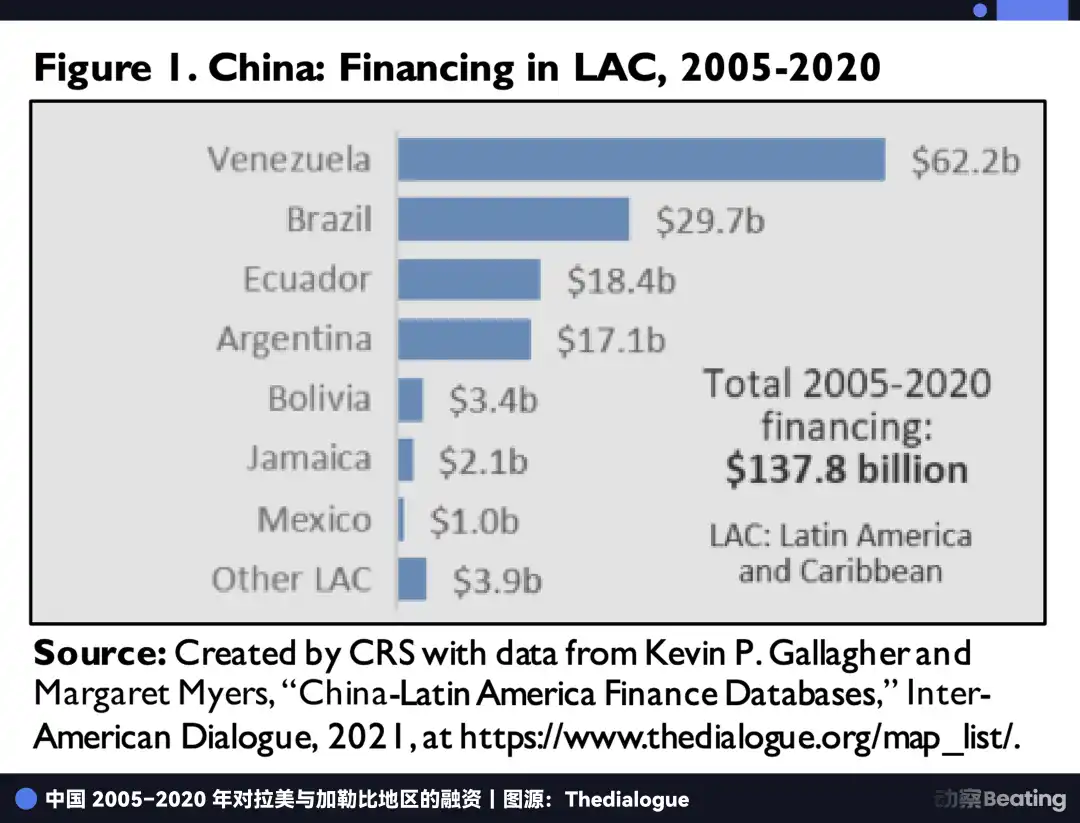
In 2005, Brazil and Argentina successively announced the early repayment of all debts owed to the IMF. From 2005 to 2020, China provided Latin America with over $137 billion in loans without political conditions attached.

Venezuela received $62 billion of this, with other major recipients including Brazil, Ecuador, and Argentina. These "oil-for-loans" agreements helped build much-needed infrastructure and gave these countries more bargaining chips when negotiating with Western creditors.
At the same time, Washington soon discovered it could not control these countries' economic policies through dollarization. The Latin American people hold U.S. dollars en masse to hedge against the collapse of their national currencies, not out of admiration for the "American Dream." In the streets and alleys of Latin America, the dollar is彻底剥离 of its political color, reduced to a purely financial tool—a reliable hard currency that won't turn into worthless paper tomorrow.

This is the so-called "de-Americanized dollarization."

People need the stability of the dollar but reject Washington's rules. The dollar is becoming a global, neutral measure of value, much like gold. It belongs to the world, no longer solely to the U.S. government.

When large volumes of dollar transactions spontaneously operate outside the official monitoring system, Washington finds that while it can still print money, it is increasingly difficult to manipulate the economic lifelines of other countries through monetary leverage.

As both debt and dollarization gradually lost their effectiveness, the U.S. opted for more激进 sanctions.

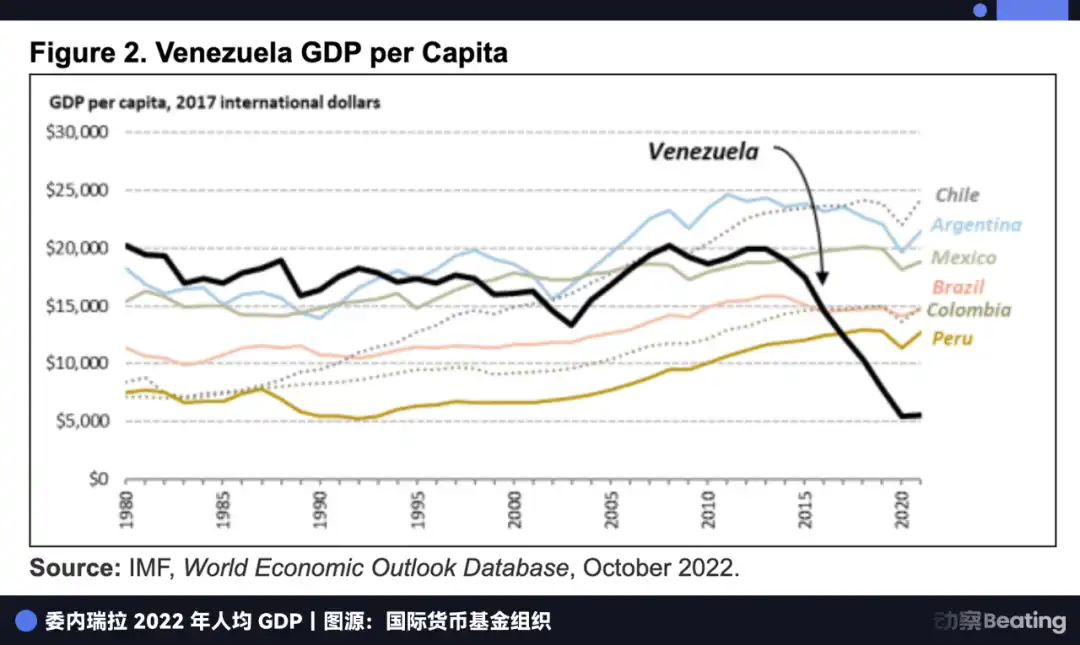
On one hand, internal governance failures and corruption in Venezuela led to the collapse of its economic pillar, with the national currency becoming worthless due to hyperinflation. On the other hand, external sanctions directly caused its GDP to shrink by about 75%. It was precisely this sense of suffocation from internal and external troubles that催生 a parallel financial ecosystem完全独立于 the dollar闭环之外.
Meanwhile, to avoid the risk of sky-high U.S. fines, global major banks initiated a so-called "de-risking" movement,主动切断 business dealings with Latin America. According to a report by the Atlantic Council, over 21 banks in the Caribbean lost correspondent banking relationships, with some countries even losing the ability to handle basic dollar trade and remittances from emigrants.

This defensive financial exclusion did not reinforce the existing hegemony; instead, it pushed more innocent individuals and businesses into the emerging parallel financial ecosystem.

The Parallel Financial Ecosystem Outside the Iron Curtain

In this博弈 over financial sovereignty and survival instinct, Latin America's parallel financial ecosystem is being woven from four forces—stablecoins, local Fintech, non-U.S. trade channels, and the underground economy—into a network不受 Washington's will左右.

In Latin America, stablecoins are no longer just investment or speculation chips.

Taking Venezuela as an example, to evade sanctions, the official government established a shadow financial network. By December 2025, about 80% of this country's oil revenue was collected in the form of the stablecoin USDT.

Furthermore, according to intelligence, through a channel spanning Turkey and the UAE for gold refining and over-the-counter transactions, Venezuela may have secretly amassed Bitcoin reserves worth up to $60 billion, a holding size comparable to MicroStrategy's.

However, this channel bypassing the SWIFT system, crossing Turkey and the UAE for gold and cryptocurrency, while technically evading sanctions, also became a key point of entry for Washington's accusations of involvement in illegal fund flows and support for drug trafficking due to its极高的隐蔽性.

For ordinary Latin Americans, when traditional bank accounts were frozen due to sanctions, they stopped paying attention to the繁冗 and politically charged instructions of the settlement systems, instead directly moving funds across borders via blockchain.

According to Chainalysis data, between 2022 and 2025, cryptocurrency transaction volume in Latin America approached $1.5 trillion. In Brazil, over 90% of transactions were related to stablecoins.
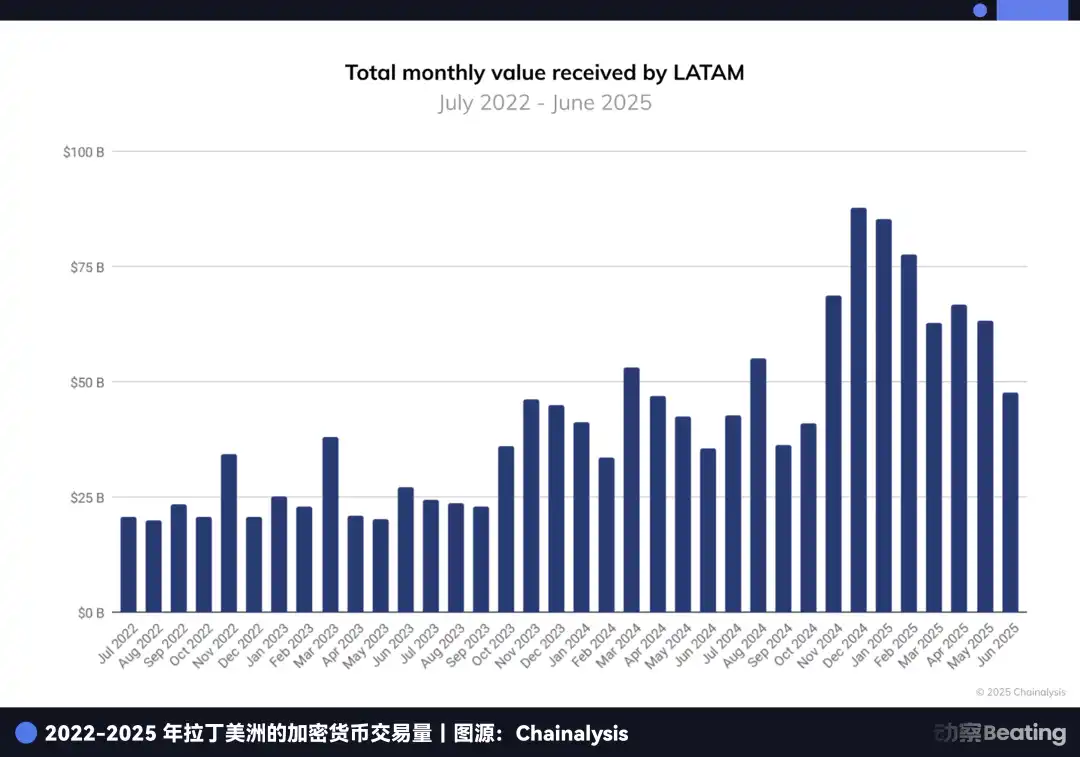
Compared to Manhattan bankers accustomed to俯瞰 from on high, local Fintech companies care more about the soil under their feet and具体的生计. In Brazil, for instance, even though only 60 million people have credit cards, the user base of the central bank-led Pix payment system surged to 170 million.

In 2024, Pix's total transaction volume reached $3.8 trillion, 1.7 times Brazil's GDP. Behind this data lies资金周转效率 pushed to the extreme.

Meanwhile, digital banking giant Nubank grew its user base from 1.3 million to 114 million in just eight years, capturing over 60% of Brazil's adult population, and recorded nearly $2 billion in net profit in 2024.

Payment giant Mercado Pago swept across Latin America with $142 billion in payment volume, while remittance market newcomer Bitso硬生生 tore a 4% share of the U.S.-Mexico remittance market from traditional giants like Western Union.

Additionally, non-dollar channels and the underground economy have converged. The $5 billion currency swap between Argentina and China, and the ongoing推进 of local currency settlement between China and Brazil, are becoming a symmetrical choice against the backdrop of great power博弈. This脱钩 from the top down is granting Latin American trade a form of breathing room independent of the dollar.

On the streets of Argentina, a black market exchange rate known as the "Dólar Blue" has become the全民的经济晴雨表. Its huge gap with the official rate赤裸裸地揭示了 the bankruptcy of official credit and has催生 countless street currency exchange vendors called "arbolitos" (little trees) and "cuevas cripto" (crypto caves)专门 trading USDT.

The穿透力 of stablecoins, the渗透率 of local Fintech, the strategic choices of non-U.S. channels, and the野蛮生长 of the underground economy共同编织 this financial network that摆脱 centralized control.

Who is Handing Over the Knife?

Any species' breakthrough requires not only an internal will to survive but also often a剧烈催化 from the external environment. The driving force behind the rise of Latin America's parallel financial system恰恰 comes from the U.S., which is trying to defend the old order.

A series of operations by Washington not only failed to stifle the sprouts of the new order but instead provided the most ample nourishment for its expansion.

The first push came from politicians'强行征用 of financial channels.

The Trump administration once proposed a 1% tax on remittances sent from the U.S. This might seem like a minor抽成, but against the backdrop of Latin America's annual remittances exceeding $150 billion, it was enough to shake the lifelines of tens of millions of low-income families.

Remember, in traditional financial channels, sending $200 to Latin America would incur fees of $6~8 just from giants like Western Union.

This additional 1% tax became the last straw that broke the camel's back. This tax slip sent an extremely dangerous signal to every laborer: traditional remittance channels are not only expensive but can also become pawns in political games at any time.

Trump might have thought he was building a financial wall, but客观上 he驱赶 tens of millions of users to flee the old system and collectively rush into the embrace of stablecoins and local Fintech. When the cost of survival is pushed to the limit by politics, users will migrate at an unprecedented speed.

The second push stems from a severe撕裂 among Wall Street elites regarding利益分配.

As mentioned earlier, to comply with increasingly strict anti-money laundering regulations, Wall Street giants initiated a "de-risking" movement,主动切断 business ties with "high-risk areas" like Latin America. JPMorgan Chase, as early as 2014, closed tens of thousands of Latin American client accounts citing "excessive risk."

By the end of 2025, JPMorgan Chase, on one hand, froze the bank accounts of two stablecoin companies operating in Venezuela, BlindPay and Kontigo, playing the role of the dollar system's most loyal "gatekeeper." On the other hand, it was疯狂囤积 physical precious metals to hedge against dollar risk.

Public data shows that JPMorgan Chase has become the world's largest holder of physical silver. More intriguingly, JPMorgan moved large amounts of silver from a deliverable state to a non-deliverable state.

This means this silver, while sitting in warehouses, is no longer allowed to be used to fulfill futures contract deliveries. In other words, JPMorgan is taking these "chips" off the gambling table and locking them away in its own rarely seen backyard.

While the dollar hegemony is still effective, these Wall Street elites use the rules to maximize their financial control; but at the same time, they are also preparing for the eventual collapse of this system. JPMorgan is both the number one maintainer of the existing dollar system and its biggest "internal short."

Thus, the more the U.S. tries to tighten the dollar's reins, the more the dollar leaps over the wall in a wild manner, seeking safer pastures. When core players within a system start preparing escape routes for the post-dollar era, this control inevitably moves towards its opposite.

The Curse of Hegemony

This dilemma of "control" versus "loss of control" is not unique to this era. If we look back to the foggy 19th century, in the long river of financial history, we can hear a distant and similar echo—the decline of the British pound.

In that long century, the pound sterling was the undisputed world currency. But when a currency truly belongs to the whole world, it no longer完全 belongs to its home country.

To output pounds to the world, Britain was forced to maintain a chronic trade deficit. This cost directly led to the hollowing out of its manufacturing industry and the慢性衰落 of its national power. In 1931, after experiencing three severe runs on the pound, Britain was forced to abandon the gold standard, and pound hegemony fell from grace.

The British Empire learned a lesson with a century of tuition: the more you try to use currency status to harvest the world, the more you accelerate the透支 of its vitality.

Today, the U.S. dollar is stepping into the same dilemma.

The more Washington tries to use the dollar as a weapon, employing sanctions, taxes, and harsh regulations to encircle and suppress, the more likely the dollar is to加速离家出走. You are明修栈道 (feigning movement in one direction), while the populace is暗渡陈仓 (advancing secretly another way).

Stablecoins, local Fintech, non-U.S. trade channels, the野蛮生长 underground economy... all these various choices are essentially隐秘路径 for the dollar to escape Washington's control.

From the近乎执念囤积 of physical gold by central banks in recent years to the关门落锁 of top financial capital on physical assets, this collective choice is shifting the global financial center of gravity back towards the era of hard assets.

This transformation is not happening amidst the total collapse of the old empire, but is being spontaneously deconstructed by hundreds of millions of tiny individuals and enterprises in the apparent prosperity of the present-day U.S.

The echo of history is already circling over Washington, its sound clearly audible.

Пов'язані питання

QWhat are the three main financial weapons the United States has historically used to exert control over Latin America, according to the article?

AThe three main financial weapons are debt, dollarization, and sanctions.

QHow did China's entry into the WTO in 2001 impact Latin America's ability to manage its debt, as described in the text?

AIt triggered a decade-long supercycle in commodities, making Latin America, as a major supplier of raw materials, a huge beneficiary. This influx of foreign exchange allowed countries like Brazil and Argentina to pay off their IMF debts early and gain leverage in negotiations with Western creditors.

QWhat is the term used in the article to describe the phenomenon where the Latin American populace uses the U.S. dollar for its stability but rejects Washington's political rules?

ADe-Americanized dollarization.

QWhat specific action by the Trump administration in 2026 is cited as the culmination of the U.S. sanctions strategy against Venezuela?

AA military operation to 'take away' (capture) President Maduro on charges related to 'drug terrorism' and criminal indictments, followed by an announcement that major oil companies would take over and invest billions to repair infrastructure.

QThe article draws a historical parallel between the current situation of the U.S. dollar and the decline of a previous global currency. Which currency is it?

AThe British Pound Sterling.

Пов'язані матеріали

Has Hook Summer Really Arrived? sato, Lo0p, FLOOD Ignite the New Narrative of Uniswap v4

"Hook Summer" Arrives? Sato, Lo0p, FLOOD Ignite Uniswap v4 Narrative Amidst a slight market recovery, attention within the Ethereum ecosystem has shifted to Meme coins built on Uniswap v4's Hook protocol. Following ASTEROID, tokens like sato, sat1, Lo0p, and FLOOD have become market focal points, with market caps ranging from millions to tens of millions, bringing concentrated liquidity to a narrative-dry market. Uniswap v4 Hooks are "plugin smart contracts" that allow developers to inject custom logic at key points in a liquidity pool's lifecycle (initialization, adding/removing liquidity, swaps, etc.), making the AMM programmable. Recent representative projects include: * **sato**: Market cap peaked over $38M; uses a v4 curve mechanism for minting/burning, locking ETH as reserve. * **sat1**: Market cap briefly exceeded $10M, positioning as an "optimized sato," but later declined significantly. * **Lo0p**: Market cap neared $6.6M; a "lending AMM protocol" allowing users to borrow ETH against deposited LO0P tokens without immediate selling pressure. * **FLOOD**: Market cap approached $6M; channels trading reserves into Aave v3 to generate yield, which is retained in the pool. The emergence of these Hook-based tokens could drive long-term growth for the Uniswap ecosystem by attracting users and liquidity to v4 pools. Combined with Uniswap's activated fee switch (partially used to burn UNI), the long-term outlook for UNI appears positive. However, short-term UNI price appreciation is not directly guaranteed. Factors include the sustainability and lifecycle of these new tokens, their price volatility, overall market conditions, and regulatory pressures. Currently, Uniswap v4's TVL ($595M) lags behind v3 and v2, indicating Hook adoption still requires time to mature. In summary, the Hook ecosystem serves as "long-term nourishment" for UNI, but acts more as a "catalyst" than a direct "booster" in the short term. Note: These are early-stage experimental tokens and may carry unknown risks.

marsbit4 хв тому

Has Hook Summer Really Arrived? sato, Lo0p, FLOOD Ignite the New Narrative of Uniswap v4

marsbit4 хв тому

Has Hook Summer Truly Arrived? sato, Lo0p, FLOOD Ignite the New Uniswap v4 Narrative

With the broader market showing signs of recovery, a new wave of interest has emerged around Ethereum-based meme coins. Following ASTEROID, tokens like sato, sat1, Lo0p, and FLOOD, built upon the Uniswap v4 Hook protocol, are capturing market attention. Their market capitalizations range from millions to tens of millions of dollars, injecting much-needed focused liquidity into a market lacking narratives. This article explores whether this trend signifies an incoming "Hook Summer" and its potential impact on UNI's price. Hooks are essentially plug-in smart contracts for Uniswap v4 liquidity pools, allowing developers to inject custom logic at key points in a pool's lifecycle (like initialization, adding/removing liquidity, swaps). This transforms the AMM into programmable building blocks. Key highlighted projects include: * **sato**: Peaked over $38M market cap. It utilizes a v4 curve for minting/burning; buying locks ETH as reserve to mint new tokens, while selling redeems ETH from the reserve and burns tokens. * **sat1**: Market cap briefly exceeded $10M, promoted as an "optimized sato," but later declined significantly. * **Lo0p**: Reached nearly $6.6M. It's a lending AMM protocol where buying LO0P tokens locks them as collateral, allowing users to borrow ETH from the pool reserve at 40% LTV, aiming to improve capital efficiency for idle ETH in LPs. * **FLOOD**: Peaked near $6M. Its mechanism directs asset reserves from buys into Aave v3 to generate yield, with fees and interest retained in the pool to potentially influence the token's price long-term. In the long term, the development of the Hook ecosystem can attract users and liquidity to Uniswap v4, benefiting UNI's fundamentals—especially combined with the recent activation of the protocol fee switch, where a portion of fees is used to burn UNI. However, in the short term, these Hook-based tokens are unlikely to directly drive significant UNI price appreciation. Their impact is moderated by factors like token sustainability, price volatility, and broader market and regulatory conditions. Currently, Uniswap v4's TVL ($595M) still trails behind v2 and v3, indicating adoption and growth will take time. The article concludes that while the Hook ecosystem provides long-term "nourishment" for UNI, its short-term role is more of a "catalyst" than a "booster." Readers are cautioned that these are early-stage experimental tokens and may carry unknown risks.

Odaily星球日报16 хв тому

Has Hook Summer Truly Arrived? sato, Lo0p, FLOOD Ignite the New Uniswap v4 Narrative

Odaily星球日报16 хв тому

Interview with Michael Saylor: I Did Say I Would Sell Bitcoin, But Never a Net Sale

Interview with Michael Saylor: I Said We'd Sell Bitcoin, But Never Be a Net Seller In a recent podcast, MicroStrategy Executive Chairman Michael Saylor clarified the company's stance on potentially selling Bitcoin. Following MicroStrategy's earnings call statement about being prepared to sell BTC to fund dividends for its STRC (Strategic) credit product, Saylor emphasized the distinction between selling and being a "net seller." Saylor explained the core business model: MicroStrategy sells credit instruments like STRC and uses the proceeds to buy Bitcoin, which is viewed as "digital capital" expected to appreciate around 30-40% annually. A portion of these capital gains can then be used to pay the dividends on the credit products. He stressed that even if the company sells some Bitcoin for dividends, it simultaneously buys much more with new credit issuance. For example, after raising $3.2 billion from STRC sales in April, the dividend obligation was only $80-90 million, making the company a net buyer. The clarification aims to counter market narratives questioning the value of Bitcoin on MicroStrategy's balance sheet if it were never sold, and to dismiss claims of a "Ponzi scheme." Saylor reiterated his personal philosophy for investors: "Don't be a net seller of bitcoin" and ensure your Bitcoin holdings increase each year. Saylor also discussed Bitcoin's role as the foundation for "digital credit," noting that STRC has become the largest and most liquid preferred stock issue in the U.S., offering high risk-adjusted returns (Sharpe ratio). He highlighted Bitcoin's deep liquidity, stating that even large purchases by MicroStrategy do not move the market significantly, which is driven by macro factors, geopolitical tensions, and capital flows from ETFs and credit products. Finally, Saylor reflected on his early inspiration from sci-fi books, which motivated his path to MIT, and maintained his fundamental thesis on Bitcoin remains unchanged: it is superior digital capital enabling superior digital credit.

链捕手20 хв тому

Interview with Michael Saylor: I Did Say I Would Sell Bitcoin, But Never a Net Sale

链捕手20 хв тому

Beaten SK Hynix Employees in China: Year-end Bonus Less Than 5% of Korean Staff's

"SK Hynix Chinese Staff Hit Hard: Bonuses Less Than 5% of Korean Counterparts" Driven by the AI boom, South Korea's SK Hynix is experiencing record performance, with media reports predicting massive year-end bonuses for its employees, making them highly desirable in the matchmaking market. However, this prosperity starkly contrasts with the situation for the company's Chinese employees. According to reports, SK Hynix operates under a rule allocating 10% of operating profit for employee bonuses. While projections suggest Korean employees could receive bonuses reaching millions of RMB, a Chinese employee with over a decade of technical experience revealed the disparity: "If they get 3 million, Chinese staff get less than 5% of that." After adjustments based on KPI ratings, this employee's highest bonus was slightly over 100,000 RMB. Bonuses are paid annually in Korea but semi-annually in China. During the industry downturn in 2023-2024, Chinese employees received no bonus at all. The gap extends beyond bonuses. Recruitment posts for SK Hynix's Chinese factories (in Wuxi, Dalian, Chongqing) show engineer monthly salaries ranging from 10,000 to 35,000 RMB, with a 13th-month salary promised. Chinese employees also receive standard benefits like annual leave but lack stock incentives, which are reportedly unavailable to them. Furthermore, management positions in China are predominantly held by Korean personnel, though industry observers note a gradual increase in local middle managers over time. SK Hynix has confirmed the 10% bonus rule but cautioned that specific future bonus amounts remain unpredictable. The company forecasts strong demand for HBM and other high-value enterprise products for the next 2-3 years, driven by AI infrastructure investment. This focus on business-to-business markets may continue to constrain supply for consumer products, potentially prolonging price increases for components like memory.

链捕手34 хв тому

Beaten SK Hynix Employees in China: Year-end Bonus Less Than 5% of Korean Staff's

链捕手34 хв тому

Торгівля

Спот
Ф'ючерси

Популярні статті

Що таке $S$

Розуміння SPERO: Комплексний огляд Вступ до SPERO Оскільки ландшафт інновацій продовжує еволюціонувати, виникнення технологій web3 та криптовалютних проектів відіграє ключову роль у формуванні цифрового майбутнього. Один з проектів, який привернув увагу в цій динамічній сфері, — це SPERO, позначений як SPERO,$$s$. Ця стаття має на меті зібрати та представити детальну інформацію про SPERO, щоб допомогти ентузіастам та інвесторам зрозуміти його основи, цілі та інновації в рамках web3 та крипто-сектору. Що таке SPERO,$$s$? SPERO,$$s$ — це унікальний проект у криптопросторі, який прагне використати принципи децентралізації та технології блокчейн для створення екосистеми, що сприяє залученню, корисності та фінансовій інклюзії. Проект розроблений для полегшення взаємодії між користувачами новими способами, надаючи їм інноваційні фінансові рішення та послуги. У своїй основі SPERO,$$s$ прагне надати можливості індивідам, забезпечуючи інструменти та платформи, які покращують користувацький досвід у криптовалютному просторі. Це включає в себе можливість більш гнучких методів транзакцій, сприяння ініціативам, що підтримуються спільнотою, та створення шляхів для фінансових можливостей через децентралізовані додатки (dApps). Основна концепція SPERO,$$s$ обертається навколо інклюзивності, прагнучи зменшити розриви в традиційній фінансовій системі, використовуючи переваги технології блокчейн. Хто є творцем SPERO,$$s$? Особистість творця SPERO,$$s$ залишається дещо невідомою, оскільки є обмежені публічно доступні ресурси, що надають детальну інформацію про його засновників. Ця відсутність прозорості може бути наслідком зобов'язання проекту до децентралізації — етики, яку багато проектів web3 поділяють, ставлячи колективні внески вище за індивідуальне визнання. Зосереджуючи обговорення навколо спільноти та її колективних цілей, SPERO,$$s$ втілює суть наділення без виділення конкретних осіб. Таким чином, розуміння етики та місії SPERO є більш важливим, ніж ідентифікація єдиного творця. Хто є інвесторами SPERO,$$s$? SPERO,$$s$ підтримується різноманітними інвесторами, починаючи від венчурних капіталістів до ангельських інвесторів, які прагнуть сприяти інноваціям у крипто-секторі. Зосередження цих інвесторів зазвичай узгоджується з місією SPERO — пріоритет надається проектам, які обіцяють технологічний прогрес у суспільстві, фінансову інклюзію та децентралізоване управління. Ці інвесторські фонди зазвичай зацікавлені в проектах, які не лише пропонують інноваційні продукти, але й позитивно впливають на спільноту блокчейн та її екосистеми. Підтримка з боку цих інвесторів підкріплює SPERO,$$s$ як значного конкурента в швидко змінюваній сфері крипто-проектів. Як працює SPERO,$$s$? SPERO,$$s$ використовує багатогранну структуру, яка відрізняє його від традиційних криптовалютних проектів. Ось деякі ключові особливості, які підкреслюють його унікальність та інноваційність: Децентралізоване управління: SPERO,$$s$ інтегрує моделі децентралізованого управління, надаючи користувачам можливість активно брати участь у процесах прийняття рішень щодо майбутнього проекту. Цей підхід сприяє відчуттю власності та відповідальності серед членів спільноти. Корисність токена: SPERO,$$s$ використовує свій власний криптовалютний токен, розроблений для виконання різних функцій в екосистемі. Ці токени дозволяють здійснювати транзакції, отримувати винагороди та полегшувати послуги, що пропонуються на платформі, підвищуючи загальну залученість та корисність. Шарова архітектура: Технічна архітектура SPERO,$$s$ підтримує модульність та масштабованість, що дозволяє безперешкодно інтегрувати додаткові функції та додатки в міру розвитку проекту. Ця адаптивність є надзвичайно важливою для збереження актуальності в постійно змінюваному крипто-ландшафті. Залучення спільноти: Проект підкреслює ініціативи, що підтримуються спільнотою, використовуючи механізми, які стимулюють співпрацю та зворотний зв'язок. Підтримуючи сильну спільноту, SPERO,$$s$ може краще задовольняти потреби користувачів та адаптуватися до ринкових тенденцій. Фокус на інклюзію: Пропонуючи низькі комісії за транзакції та зручні інтерфейси, SPERO,$$s$ прагне залучити різноманітну базу користувачів, включаючи осіб, які раніше не брали участі в крипто-просторі. Це зобов'язання до інклюзії узгоджується з його загальною місією наділення через доступність. Хронологія SPERO,$$s$ Розуміння історії проекту надає важливі уявлення про його розвиток та етапи. Нижче наведено пропоновану хронологію, що відображає значні події в еволюції SPERO,$$s$: Етап концептуалізації та ідеації: Початкові ідеї, що стали основою SPERO,$$s$, були сформовані, тісно пов'язані з принципами децентралізації та фокусом на спільноті в індустрії блокчейн. Запуск білого паперу проекту: Після концептуального етапу був випущений комплексний білий папір, що детально описує бачення, цілі та технологічну інфраструктуру SPERO,$$s$, щоб залучити інтерес та зворотний зв'язок від спільноти. Створення спільноти та ранні залучення: Активні зусилля були спрямовані на створення спільноти ранніх прихильників та потенційних інвесторів, що полегшило обговорення цілей проекту та отримання підтримки. Подія генерації токенів: SPERO,$$s$ провів подію генерації токенів (TGE) для розподілу своїх рідних токенів серед ранніх прихильників та встановлення початкової ліквідності в екосистемі. Запуск початкового dApp: Перший децентралізований додаток (dApp), пов'язаний з SPERO,$$s$, став доступним, дозволяючи користувачам взаємодіяти з основними функціями платформи. Постійний розвиток та партнерства: Безперервні оновлення та вдосконалення пропозицій проекту, включаючи стратегічні партнерства з іншими учасниками блокчейн-простору, сформували SPERO,$$s$ у конкурентоспроможного та еволюціонуючого гравця на крипто-ринку. Висновок SPERO,$$s$ є свідченням потенціалу web3 та криптовалют для революціонізації фінансових систем та наділення індивідів. Завдяки зобов'язанню до децентралізованого управління, залучення спільноти та інноваційно спроектованих функцій, він прокладає шлях до більш інклюзивного фінансового ландшафту. Як і з будь-якими інвестиціями в швидко змінюваному крипто-просторі, потенційним інвесторам та користувачам рекомендується ретельно досліджувати та обдумано взаємодіяти з поточними подіями в SPERO,$$s$. Проект демонструє інноваційний дух крипто-індустрії, запрошуючи до подальшого дослідження його численних можливостей. Хоча подорож SPERO,$$s$ ще триває, його основні принципи можуть справді вплинути на майбутнє того, як ми взаємодіємо з технологією, фінансами та один з одним у взаємопов'язаних цифрових екосистемах.

73 переглядів усьогоОпубліковано 2024.12.17Оновлено 2024.12.17

Що таке $S$

Що таке AGENT S

Агент S: Майбутнє автономної взаємодії в Web3 Вступ У постійно змінюваному ландшафті Web3 та криптовалюти інновації постійно переосмислюють, як люди взаємодіють з цифровими платформами. Один з таких новаторських проектів, Агент S, обіцяє революціонізувати взаємодію людини з комп'ютером через свою відкриту агентну структуру. Прокладаючи шлях для автономних взаємодій, Агент S прагне спростити складні завдання, пропонуючи трансформаційні застосування в штучному інтелекті (ШІ). Це детальне дослідження заглиблюється в складності проекту, його унікальні особливості та наслідки для сфери криптовалюти. Що таке Агент S? Агент S є революційною відкритою агентною структурою, спеціально розробленою для вирішення трьох основних викликів в автоматизації комп'ютерних завдань: Набуття специфічних знань у галузі: Структура інтелектуально навчається з різних зовнішніх джерел знань та внутрішнього досвіду. Цей подвійний підхід дозволяє їй створити багатий репозиторій специфічних знань у галузі, покращуючи її продуктивність у виконанні завдань. Планування на довгих горизонтах завдань: Агент S використовує планування з підкріпленням досвіду, стратегічний підхід, який полегшує ефективний розподіл та виконання складних завдань. Ця функція значно підвищує її здатність ефективно та результативно управляти кількома підзавданнями. Обробка динамічних, неоднорідних інтерфейсів: Проект представляє Інтерфейс Агент-Комп'ютер (ACI), інноваційне рішення, яке покращує взаємодію між агентами та користувачами. Використовуючи багатомодальні великі мовні моделі (MLLMs), Агент S може безперешкодно орієнтуватися та маніпулювати різноманітними графічними інтерфейсами користувача. Завдяки цим новаторським функціям Агент S надає надійну структуру, яка вирішує складнощі, пов'язані з автоматизацією людської взаємодії з машинами, прокладаючи шлях для численних застосувань у ШІ та за його межами. Хто є творцем Агент S? Хоча концепція Агент S є фундаментально новаторською, конкретна інформація про його творця залишається невідомою. Творець наразі невідомий, що підкреслює або початкову стадію проекту, або стратегічний вибір зберегти засновників у таємниці. Незважаючи на анонімність, акцент залишається на можливостях та потенціалі структури. Хто є інвесторами Агент S? Оскільки Агент S є відносно новим у криптографічній екосистемі, детальна інформація про його інвесторів та фінансових спонсорів не задокументована. Відсутність публічно доступних відомостей про інвестиційні фонди або організації, що підтримують проект, викликає питання щодо його фінансової структури та дорожньої карти розвитку. Розуміння підтримки є критично важливим для оцінки стійкості проекту та потенційного впливу на ринок. Як працює Агент S? В основі Агент S лежить передова технологія, яка дозволяє йому ефективно функціонувати в різних умовах. Його операційна модель побудована навколо кількох ключових функцій: Взаємодія з комп'ютером, подібна до людської: Структура пропонує розширене планування ШІ, прагнучи зробити взаємодії з комп'ютерами більш інтуїтивними. Імітуючи людську поведінку при виконанні завдань, вона обіцяє підвищити досвід користувачів. Наративна пам'ять: Використовується для використання високорівневого досвіду, Агент S використовує наративну пам'ять для відстеження історій завдань, тим самим покращуючи свої процеси прийняття рішень. Епізодична пам'ять: Ця функція надає користувачам покрокові інструкції, дозволяючи структурі пропонувати контекстуальну підтримку в міру виконання завдань. Підтримка OpenACI: Завдяки можливості працювати локально, Агент S дозволяє користувачам зберігати контроль над своїми взаємодіями та робочими процесами, узгоджуючи з децентралізованою етикою Web3. Легка інтеграція з зовнішніми API: Його універсальність і сумісність з різними платформами ШІ забезпечують те, що Агент S може безперешкодно вписатися в існуючі технологічні екосистеми, роблячи його привабливим вибором для розробників та організацій. Ці функціональні можливості колективно сприяють унікальному положенню Агент S у крипто-просторі, оскільки він автоматизує складні, багатоступеневі завдання з мінімальним втручанням людини. У міру розвитку проекту його потенційні застосування в Web3 можуть переосмислити, як відбуваються цифрові взаємодії. Хронологія Агент S Розробка та етапи Агент S можуть бути узагальнені в хронології, яка підкреслює його значні події: 27 вересня 2024 року: Концепція Агент S була представлена в комплексній науковій статті під назвою “Відкрита агентна структура, яка використовує комп'ютери як людина”, що демонструє основи проекту. 10 жовтня 2024 року: Наукова стаття була опублікована на arXiv, пропонуючи детальне дослідження структури та її оцінки продуктивності на основі бенчмарку OSWorld. 12 жовтня 2024 року: Було випущено відеопрезентацію, що надає візуальне уявлення про можливості та особливості Агент S, ще більше залучаючи потенційних користувачів та інвесторів. Ці маркери в хронології не лише ілюструють прогрес Агент S, але й вказують на його прихильність до прозорості та залучення громади. Ключові моменти про Агент S У міру розвитку структури Агент S кілька ключових характеристик виділяються, підкреслюючи її новаторський характер та потенціал: Інноваційна структура: Розроблена для забезпечення інтуїтивного використання комп'ютерів, подібного до людської взаємодії, Агент S пропонує новий підхід до автоматизації завдань. Автономна взаємодія: Здатність автономно взаємодіяти з комп'ютерами через GUI означає стрибок до більш інтелектуальних та ефективних обчислювальних рішень. Автоматизація складних завдань: Завдяки своїй надійній методології він може автоматизувати складні, багатоступеневі завдання, роблячи процеси швидшими та менш схильними до помилок. Безперервне вдосконалення: Механізми навчання дозволяють Агенту S покращуватися на основі минулого досвіду, постійно підвищуючи свою продуктивність та ефективність. Універсальність: Його адаптивність до різних операційних середовищ, таких як OSWorld та WindowsAgentArena, забезпечує його здатність служити широкому спектру застосувань. Оскільки Агент S займає своє місце в ландшафті Web3 та криптовалюти, його потенціал покращити можливості взаємодії та автоматизувати процеси означає значний прогрес у технологіях ШІ. Завдяки своїй інноваційній структурі Агент S є прикладом майбутнього цифрових взаємодій, обіцяючи більш безперешкодний та ефективний досвід для користувачів у різних галузях. Висновок Агент S представляє собою сміливий крок вперед у поєднанні ШІ та Web3, з можливістю переосмислити, як ми взаємодіємо з технологією. Хоча проект все ще на ранніх стадіях, можливості для його застосування є величезними та переконливими. Завдяки своїй комплексній структурі, що вирішує критичні виклики, Агент S прагне вивести автономні взаємодії на передній план цифрового досвіду. У міру того, як ми заглиблюємося в сфери криптовалюти та децентралізації, проекти, подібні до Агент S, безсумнівно, відіграватимуть ключову роль у формуванні майбутнього технологій та співпраці людини з комп'ютером.

618 переглядів усьогоОпубліковано 2025.01.14Оновлено 2025.01.14

Що таке AGENT S

Як купити S

Ласкаво просимо до HTX.com! Ми зробили покупку Sonic (S) простою та зручною. Дотримуйтесь нашої покрокової інструкції, щоб розпочати свою криптовалютну подорож.Крок 1: Створіть обліковий запис на HTXВикористовуйте свою електронну пошту або номер телефону, щоб зареєструвати обліковий запис на HTX безплатно. Пройдіть безпроблемну реєстрацію й отримайте доступ до всіх функцій.ЗареєструватисьКрок 2: Перейдіть до розділу Купити крипту і виберіть спосіб оплатиКредитна/дебетова картка: використовуйте вашу картку Visa або Mastercard, щоб миттєво купити Sonic (S).Баланс: використовуйте кошти з балансу вашого рахунку HTX для безперешкодної торгівлі.Треті особи: ми додали популярні способи оплати, такі як Google Pay та Apple Pay, щоб підвищити зручність.P2P: Торгуйте безпосередньо з іншими користувачами на HTX.Позабіржова торгівля (OTC): ми пропонуємо індивідуальні послуги та конкурентні обмінні курси для трейдерів.Крок 3: Зберігайте свої Sonic (S)Після придбання Sonic (S) збережіть його у своєму обліковому записі на HTX. Крім того, ви можете відправити його в інше місце за допомогою блокчейн-переказу або використовувати його для торгівлі іншими криптовалютами.Крок 4: Торгівля Sonic (S)Легко торгуйте Sonic (S) на спотовому ринку HTX. Просто увійдіть до свого облікового запису, виберіть торгову пару, укладайте угоди та спостерігайте за ними в режимі реального часу. Ми пропонуємо зручний досвід як для початківців, так і для досвідчених трейдерів.

1.4k переглядів усьогоОпубліковано 2025.01.15Оновлено 2025.03.21

Як купити S

Обговорення

Ласкаво просимо до спільноти HTX. Тут ви можете бути в курсі останніх подій розвитку платформи та отримати доступ до професійної ринкової інформації. Нижче представлені думки користувачів щодо ціни S (S).

活动图片