The Unluckiest Person: Zero API Calls, Secretly Charged 1 Billion Yuan by Anthropic

marsbitОпубліковано о 2026-07-13Востаннє оновлено о 2026-07-13

Анотація

A South Korean developer, remy_notes, was shocked to receive two invoices from Anthropic totaling over $17.8 million within 24 hours, despite being on a free plan with zero API usage and no linked credit card. His bank blocked the attempted charges. This case highlights a broader issue of billing errors in the AI industry. Auditing firm Vaudit, reviewing millions in AI bills, found significant erroneous overcharges, often related to issues like clients being billed for newer, pricier models instead of older ones they used, or being charged for failed requests and retry loops. While Anthropic claims overcharging is not widespread, major providers have refunded a large portion of disputed amounts. The incident adds to growing distrust, following previous billing controversies like the "HERMES.md bug" and a class-action lawsuit over opaque usage calculations for Anthropic's subscription plans. The complexity of AI pricing models creates a "black box" for users, leading to a new competitive frontier: billing transparency. As users turn to audits and lawsuits, clear and fair pricing is becoming a crucial part of the product experience.

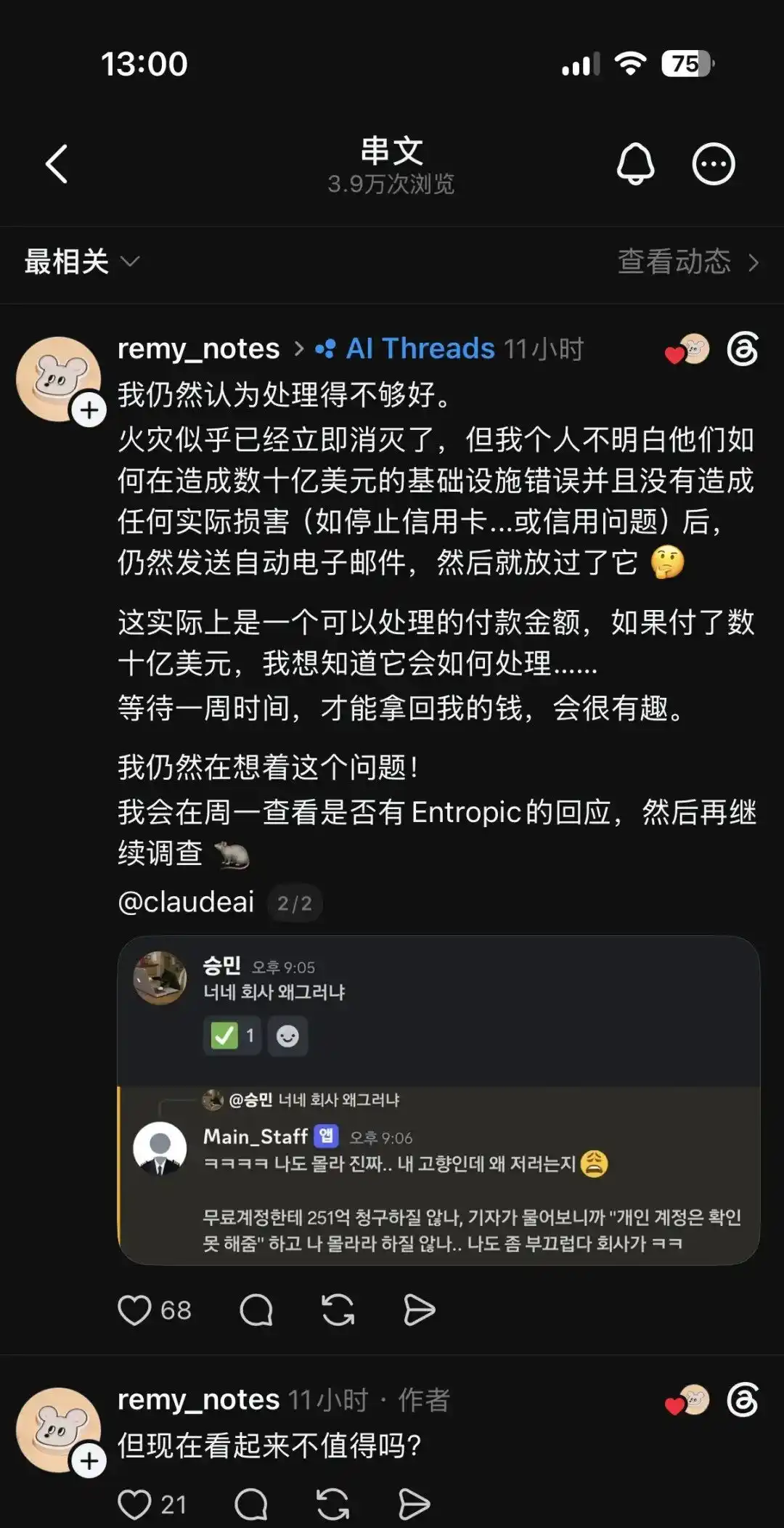
On July 8, the well-known Korean developer remy_notes posted two Anthropic invoice screenshots on Threads: the first for $1.669 million (approximately 11.3 million RMB), the second for $16.62 million (approximately 110 million RMB). The two invoices were issued less than 24 hours apart, with the amount increasing nearly tenfold.
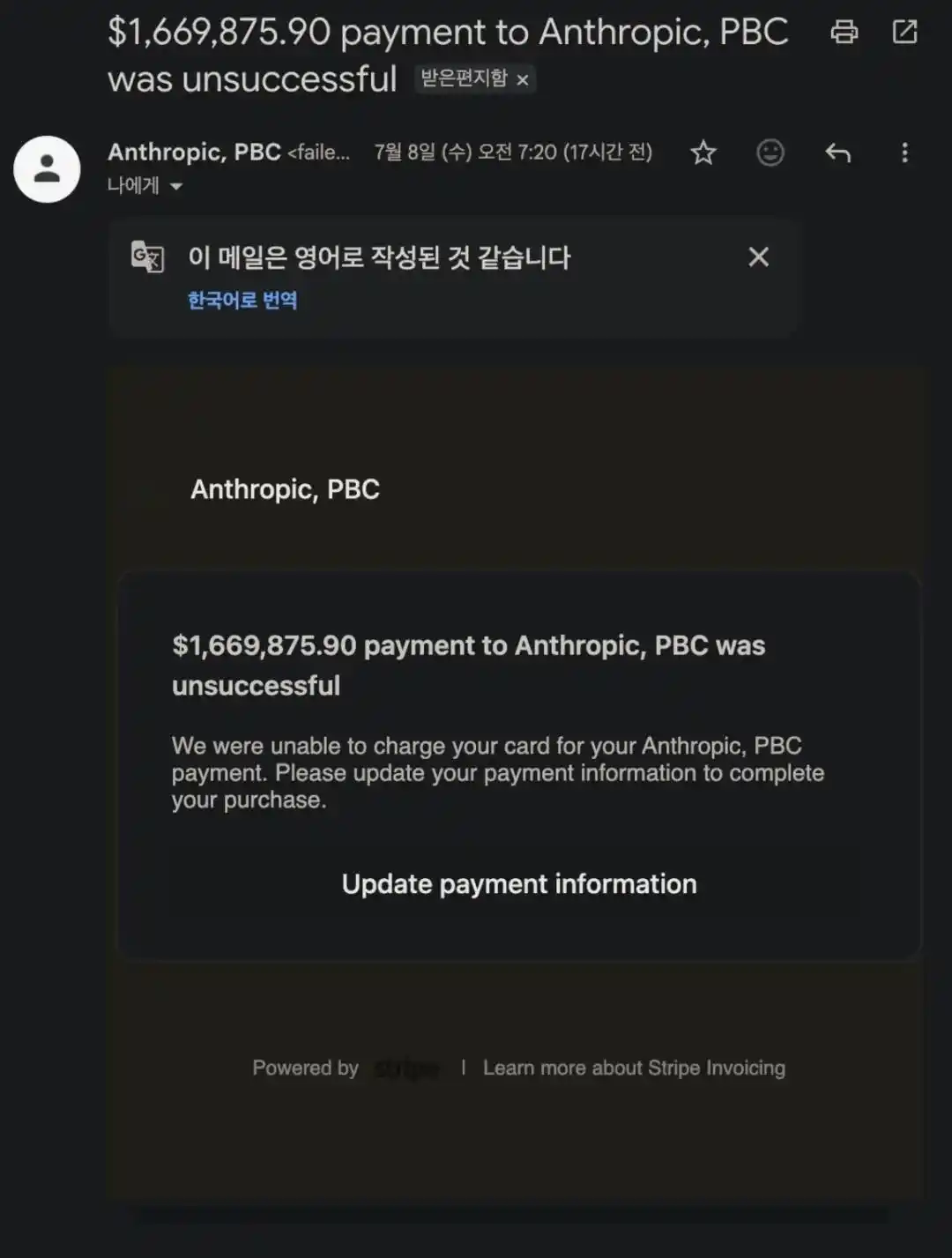
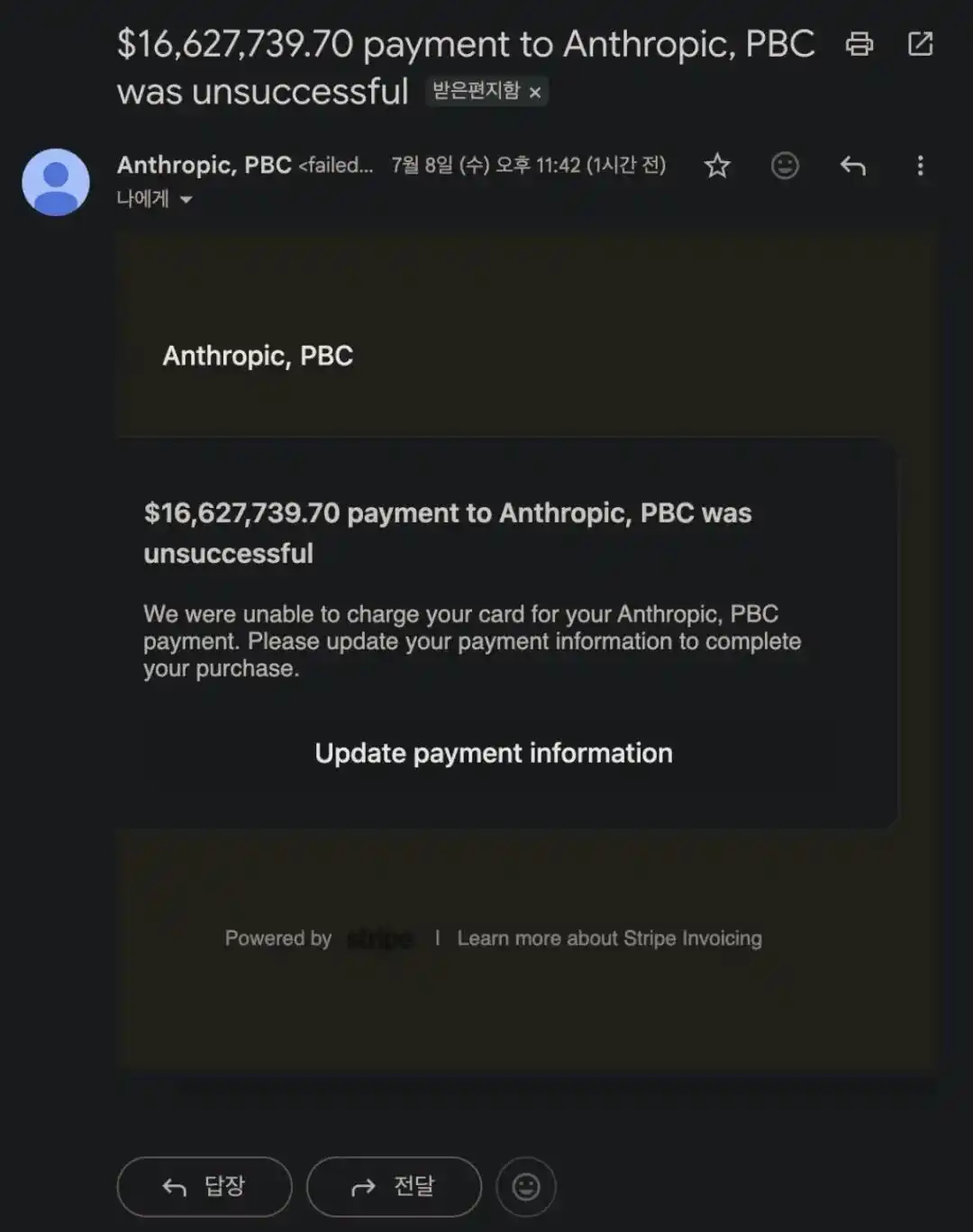
He initially thought it was a phishing email, but the sender address and payment links pointed to Anthropic's official Stripe domain.
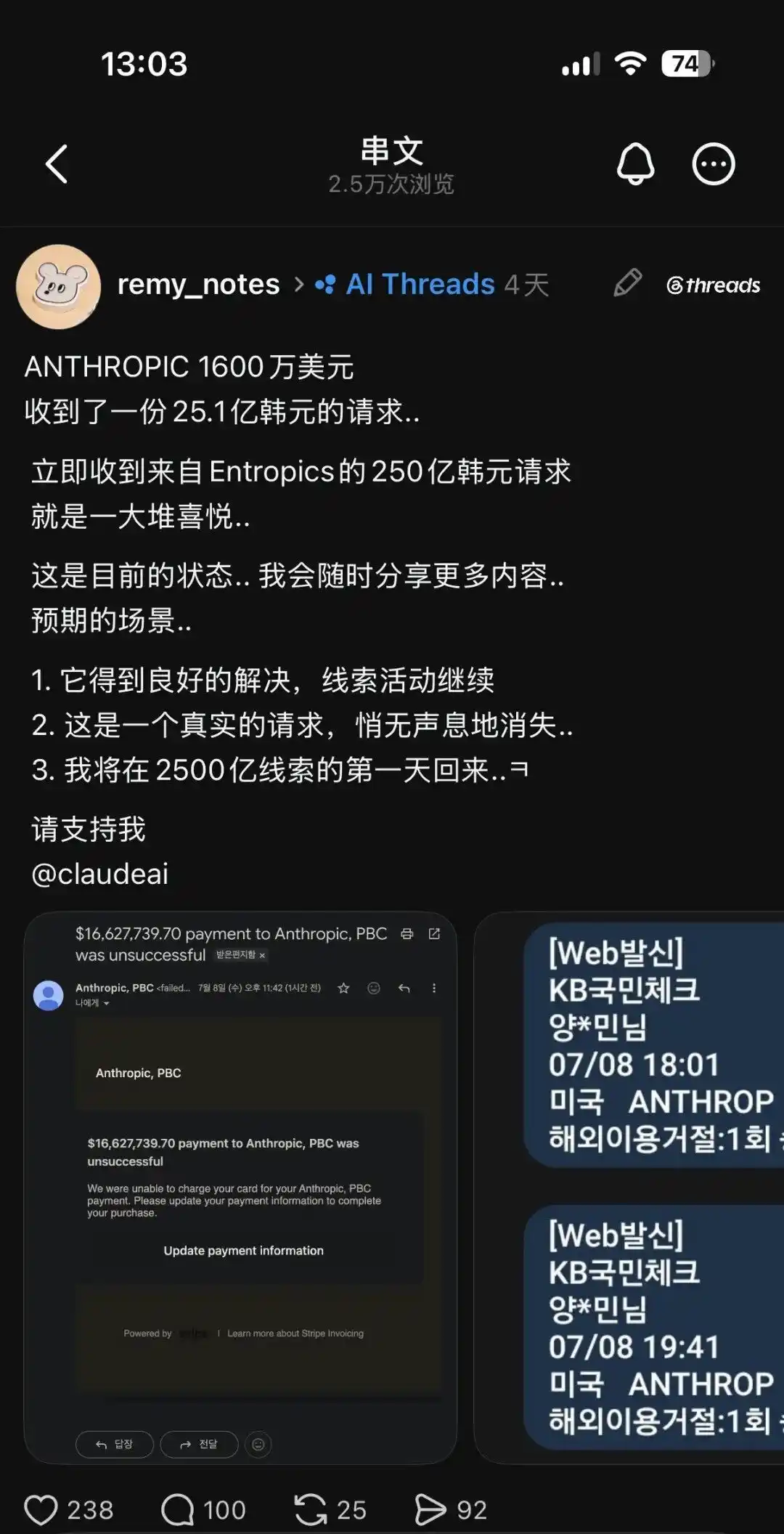
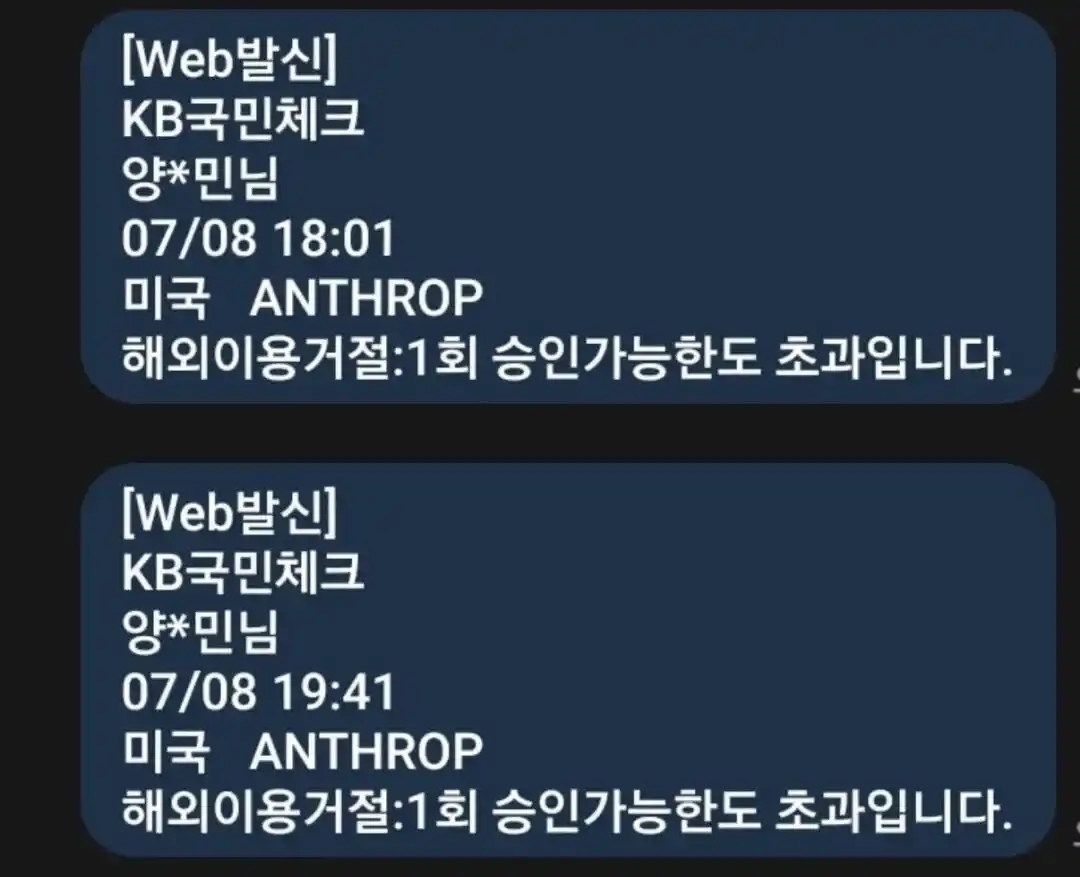
His KB National Bank debit card intercepted two overseas charge requests from the US merchant 'ANTHROP' on the same day—both were denied due to insufficient single-transaction limits.
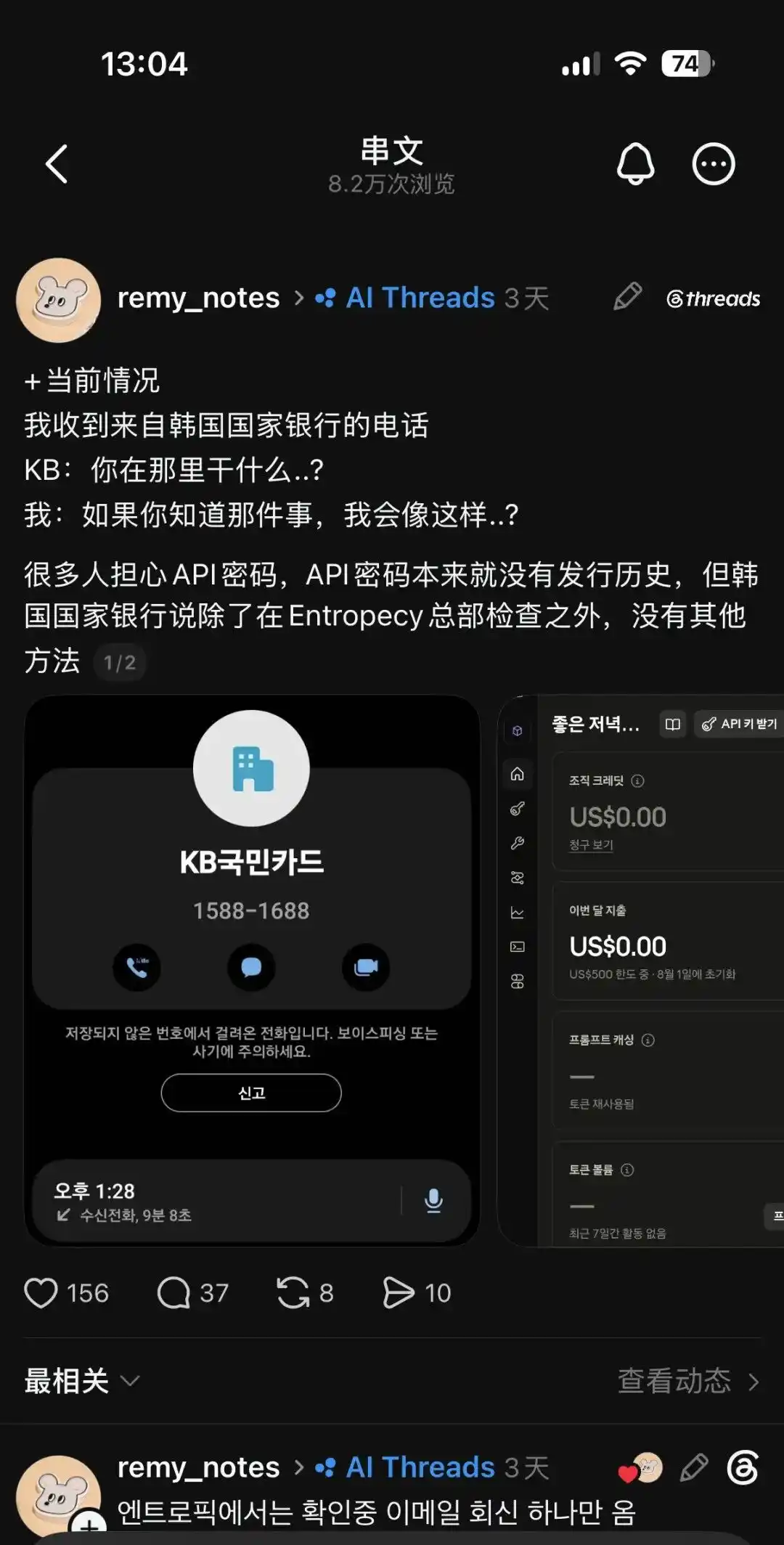
His account was on a free plan, with no credit card linked, and the backend showed zero API usage.
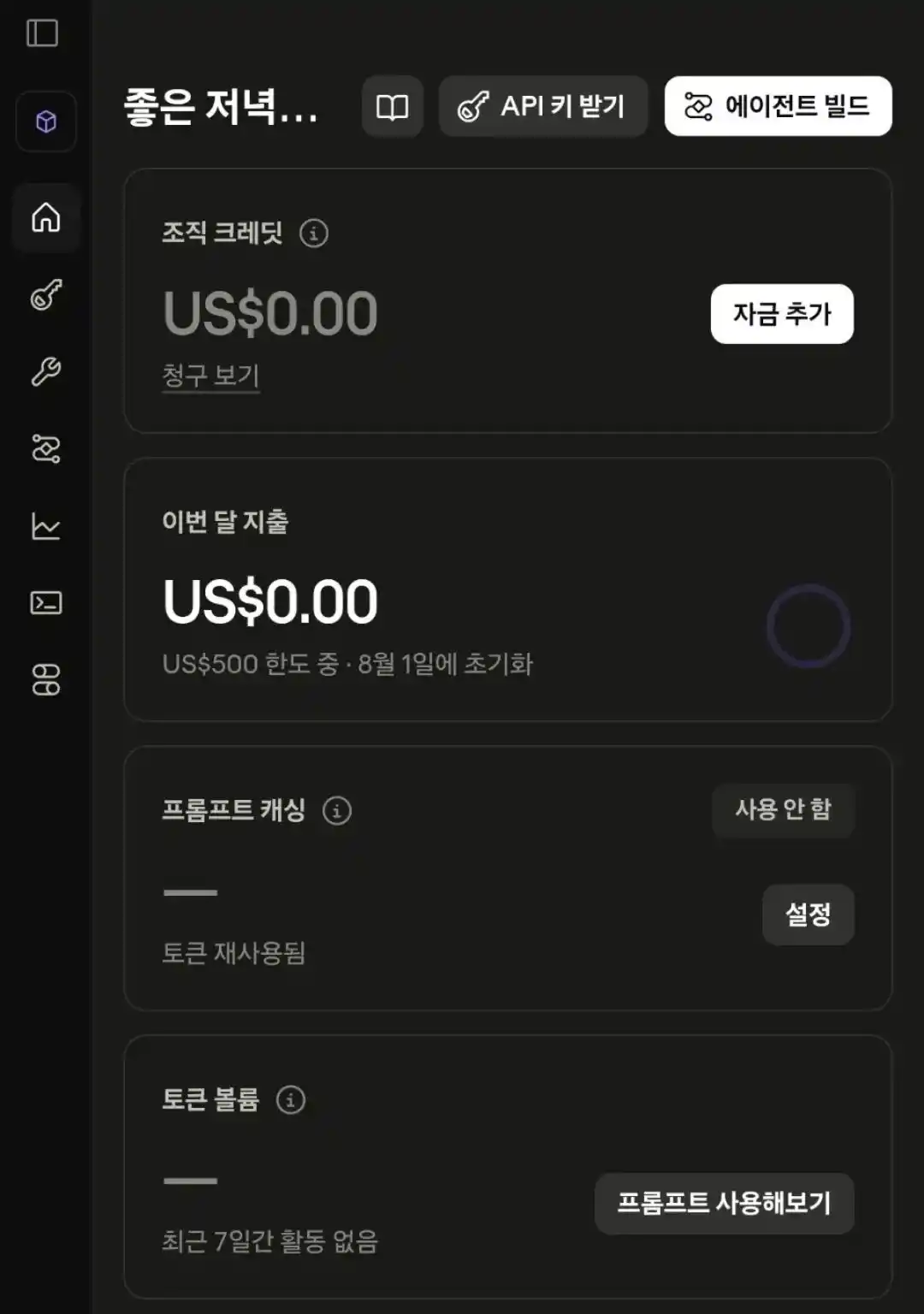
As of publication, Anthropic has not publicly explained the cause of this "phantom bill."
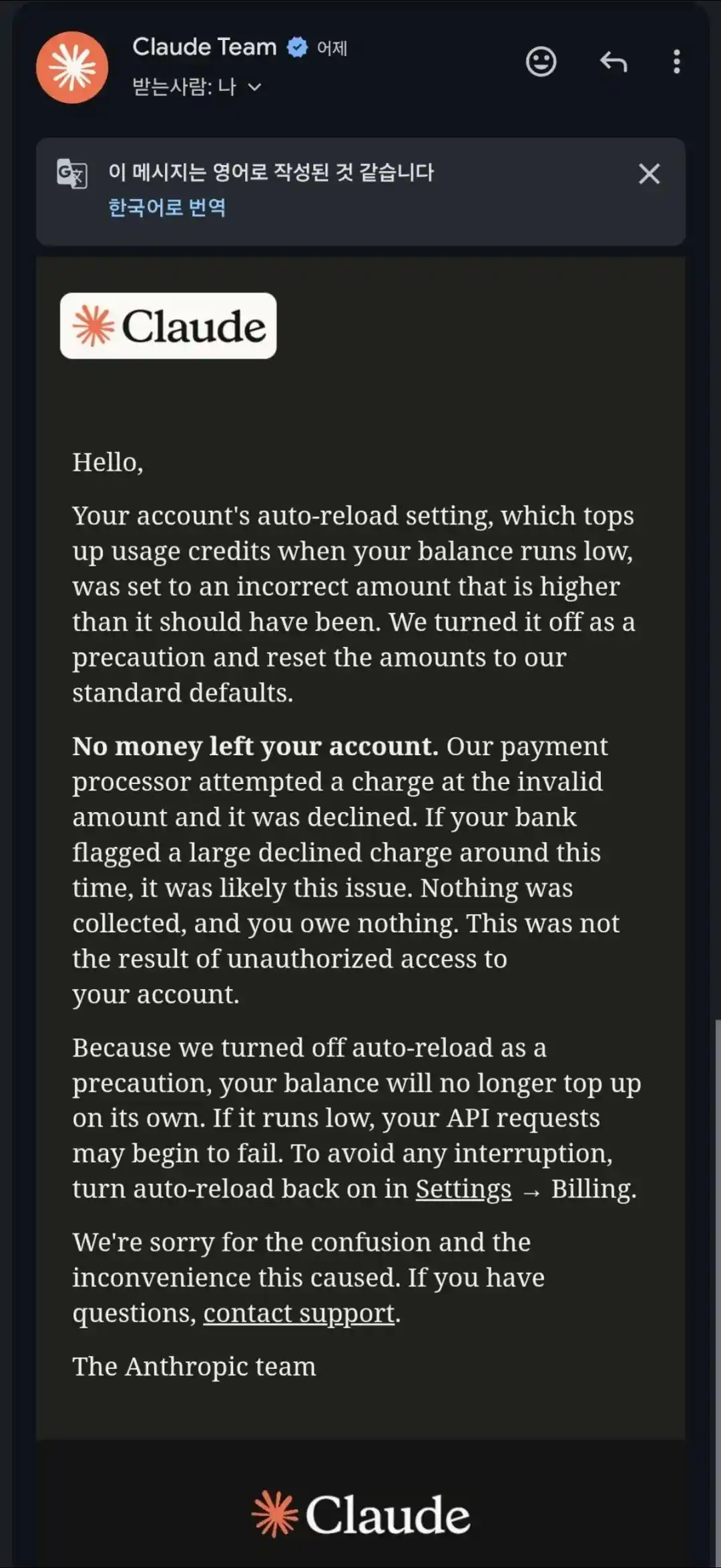
More Than One "Phantom Bill"

The figure of $16.6 million is shocking enough, but what truly deserves attention is the systemic issue emerging from it.

From March to June, AI bill auditing company Vaudit reviewed $34 million in AI bills from 60 companies and discovered approximately $1.7 million in erroneous overcharges, most of which were related to Anthropic's Claude Code.

Vaudit's clients include Panasonic, HP, and Honda, among others.

Vaudit CEO Michael Hahn

Vaudit CEO Michael Hahn described several common overcharging patterns to The Information:

Customers using older, cheaper models but being billed for the more expensive new models;

AI Agents or chatbots failing to complete requests or returning error messages, yet still incurring charges;

Agents repeatedly retrying tasks after failure (retry storms), with each retry being billed.

An Anthropic spokesperson responded, stating the company does not charge for unfulfilled requests or error messages, does not route user requests to older models, and that "overcharging does not seem to be a widespread issue."

However, following appeals from Vaudit and clients, Amazon, Google, Microsoft, Anthropic, and OpenAI refunded about 80% of the disputed amounts.

Hahn said these companies were "very cooperative" in handling billing disputes.

A noteworthy detail: some of Vaudit's audited clients did not purchase services directly from Anthropic but through cloud platforms like AWS, Google Cloud, or Microsoft Azure.

After the billing passes through an additional layer, the responsibility attribution becomes murkier.

Why AI Bills Are Becoming Increasingly Incomprehensible

The developer community's distrust of Anthropic's billing didn't accumulate overnight.

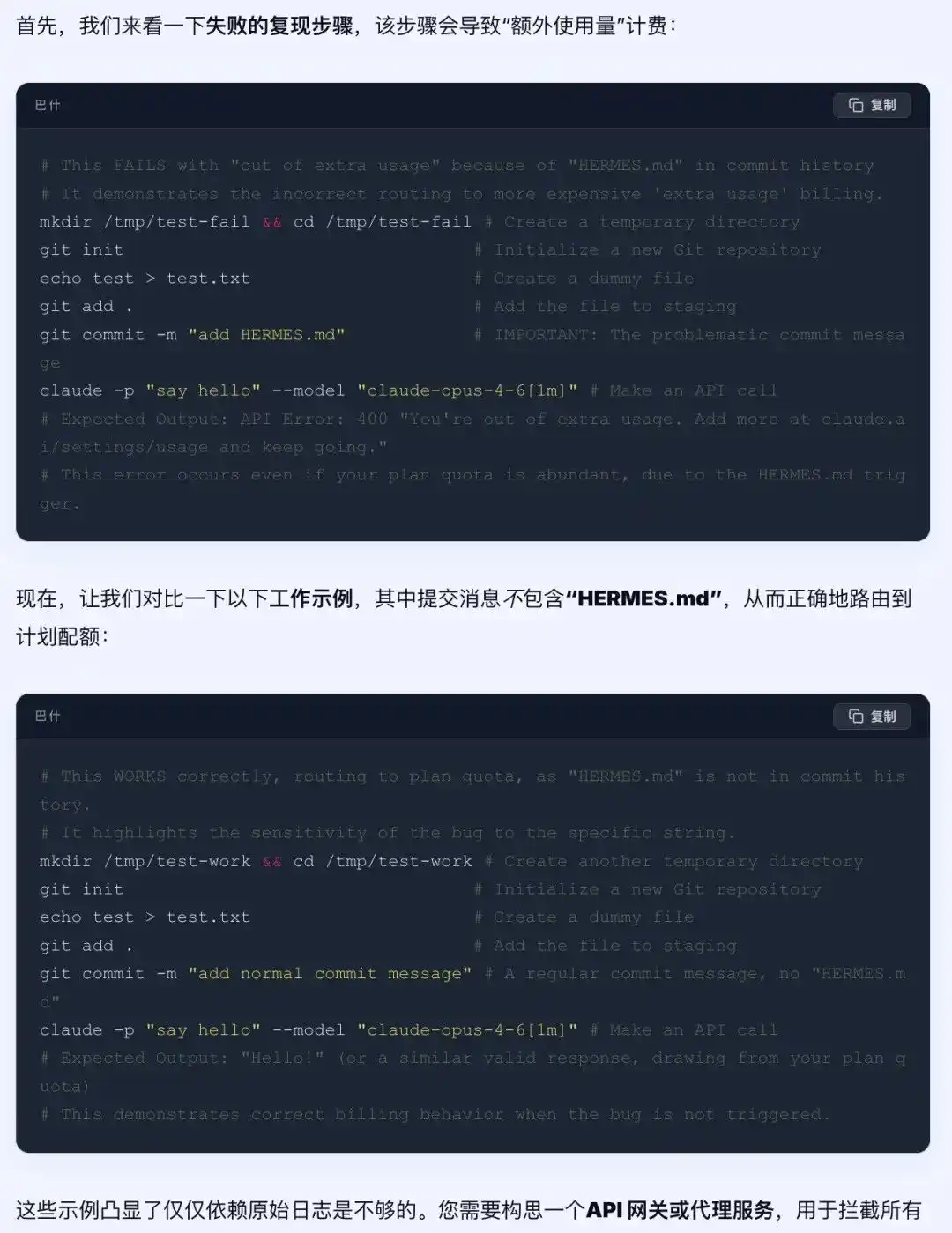
In April this year, developers discovered a billing vulnerability dubbed the "HERMES.md bug": when code commit records contained specific strings, Anthropic's backend would silently route requests that should have been deducted from the Max plan quota to a more expensive "additional usage" billing channel.

Users paid a $200/month subscription fee but were actually billed separately at the API rate.

Anthropic characterized it as an "authentication routing issue" but initially refused refunds, leading many developers to initiate credit card chargebacks.
On June 14, Washington D.C. user Karl Kahn filed a class-action lawsuit in the US District Court for the Northern District of California, alleging that Anthropic's usage promises for the Max 5x ($100/month) and Max 20x ($200/month) subscription plans were misleading.

Kahn claimed that during his use of the Max 20x plan, a single 5-hour programming session consumed 15% of his weekly quota.

The lawsuit argues that Anthropic's usage calculation method is opaque, making it nearly impossible for users to verify whether they are receiving the promised service.

The pricing changes for Claude 5 further amplified this distrust.

Released on June 9 as part of subscription plans, this Anthropic's most powerful publicly available model to date was stripped from them just 13 days later, converted to a usage credit system billed at the API rate ($10 per million input tokens, $50 per million output tokens) – twice the price of Claude 4.8.

Extended reading: Sudden! Anthropic Globally Disables Claude 5

It was also taken offline globally for 19 days due to US government export controls.

After restoration on July 1, the free window provided by Anthropic was only 6 days, later extended to July 12.

When "Safety" Doesn't Cover the Wallet

Anthropic's core brand narrative is "AI safety."

But for paying users, the definition of safety is expanding: it shouldn't only mean the model won't output harmful content; it should also include not being charged an inexplicable fee without your knowledge.

This isn't just Anthropic's problem.

AI service billing structures are inherently complex – model tiers, token usage, API call counts, retries, cloud platform markups, different paths for direct purchase and resale – all layered together, forming a black box that average users can almost never independently verify.

The emergence of auditing companies like Vaudit is itself a signal: AI bills have become so complex that a professional third party is needed to understand them.

Competitors are already sensing the opportunity.

At the June Build conference, Microsoft released MAI-Thinking-1. AI head Mustafa Suleyman told Bloomberg, "Many people are urgently looking for alternatives to Anthropic's expensive models."

OpenAI is reportedly considering significantly lowering token prices.

DeepSeek V4's output token price is about 1/90th of Claude Sonnet 4.6's, starting to be included in developers' cost comparison options.

Over the past year, AI companies won users with model capabilities.

In the next phase of competition, billing transparency will become part of the product experience.

When users start auditing your bills and questioning your pricing promises with class-action lawsuits, "our model is smarter" is no longer enough.

The problem Anthropic faces today, the entire industry will encounter – whoever makes their billing clear first will get the ticket to the next round of trust.

References:

https://www.internationalcyberdigest.com/anthropic-tried-to-phantom-charge-16-6m/

https://www.theinformation.com/newsletters/applied-ai/anthropic-customers-find-errant-charges-auditing-startup-says

This article is from WeChat public account "New Zhiyuan", author: ASI Revelation

Трендові криптовалюти

Пов'язані питання

QWhat is the main issue reported by Korean developer remy_notes regarding Anthropic's billing?

AKorean developer remy_notes reported receiving two massive invoices from Anthropic within 24 hours—one for about $1.669 million and another for $16.62 million—despite having a free plan with zero API usage and no credit card linked. His bank blocked the attempted charges due to insufficient limits.

QWhat systemic billing problems did the AI audit company Vaudit discover among Anthropic and other AI providers?

AVaudit audited $34 million in AI bills across 60 companies from March to June and found about $1.7 million in erroneous overcharges, mostly related to Anthropic's Claude Code. Common issues included charging for newer, more expensive models when older ones were used, billing for failed or incomplete requests, and charging for repeated retries by AI agents.

QWhat legal action has been taken against Anthropic related to its billing practices?

AOn June 14, a user named Karl Kahn filed a class-action lawsuit in the U.S. District Court for the Northern District of California. The lawsuit alleges that Anthropic misled customers about usage limits and costs for its Max subscription plans, and that its billing calculations are opaque, making it nearly impossible for users to verify if they received the promised service.

QHow did Anthropic's handling of its Fable 5 model contribute to user distrust?

AAnthropic initially included its powerful Fable 5 model in subscription plans upon release on June 9, but removed it just 13 days later. It was then made available only via a much more expensive API-based credit system (costing twice as much as Opus 4.8). Coupled with a 19-day global takedown due to U.S. export controls and a very short free usage window, these actions eroded user trust in the company's pricing stability and transparency.

QAccording to the article, why is billing transparency becoming a key competitive factor in the AI industry?

AAs AI services grow more complex—with layered pricing based on models, tokens, API calls, retries, and cloud platform markups—their bills have become a 'black box' that users cannot easily verify. The emergence of audit firms like Vaudit and user lawsuits signal that transparent and understandable billing is now part of the product experience. The article suggests that in the next phase of competition, companies that master clear billing will gain a significant trust advantage.

Пов'язані матеріали

8,000 BTC Fails to Support Stock Price; Can a Reverse Stock Split Save American Bitcoin?

American Bitcoin, a company closely linked to Eric Trump, faces a paradox: despite significantly increasing its Bitcoin holdings to 8,000 BTC, its stock price continues to decline. The company recently executed a 1-for-15 reverse stock split, effective July 2, aimed at raising its per-share price to meet Nasdaq listing requirements. While this action does not change the company's overall valuation, it carries risks, including potential negative market perception and reduced liquidity. The company's strategy involves using its profitable mining operations, with a cost below market price, to accumulate Bitcoin, unlike competitors who primarily issue new shares to fund purchases. However, its Q1 2026 financials revealed a net loss and significant digital asset impairment losses, highlighting that mere Bitcoin accumulation does not guarantee stock performance. The core challenge is whether the stock offers value beyond direct Bitcoin ownership. Bullish arguments focus on the growing BTC reserves and the sustainable mining model. Bearish concerns center on weak liquidity, the threat of future share dilution from potential fundraising, and the market's reluctance to award a premium simply for holding Bitcoin. The reverse split, necessary to maintain its listing, underscores underlying business weakness. The company's future hinges on stabilizing its stock liquidity, transparently managing its BTC treasury, and proving its model can grow reserves without excessively diluting shareholders. Its performance serves as a critical test for the publicly traded Bitcoin treasury sector.

marsbit17 хв тому

8,000 BTC Fails to Support Stock Price; Can a Reverse Stock Split Save American Bitcoin?

marsbit17 хв тому

Bitcoin Volatility Unchanged Amid Dominant Downtrend; HYPE Faces Repeated Tests at Critical Trendline | Guest Analysis

This weekly market analysis updates the outlook for Bitcoin (BTC) and HYPE based on recent price action, largely confirming prior predictions. **Bitcoin (BTC) Analysis:** The report maintains that BTC is in a downtrend but currently within a corrective rebound phase that began from the July 1st low of $57,820. This rebound has reached a key resistance near $64,700. The daily chart shows a developing "descending central zone," suggesting a shift into a consolidation/range-bound phase. The 4-hour chart indicates the rebound may be completing, with proprietary models showing potential short-term topping signals near the current levels. **BTC Trading Strategy (July 13-19):** * **Key Levels:** Resistance is at $64,700, $65,700-$67,300, and $69,500-$71,000. Support lies at $60,950-$62,000, $57,820, and $55,000. * **Mid-term:** The overall structure is bearish. Hold ~20% short positions. Consider increasing shorts to 50% if price rallies to the $65,700-$67,300 zone and shows weakness. * **Short-term:** Use 30% capital for tactical trades. Three scenarios are outlined: 1. **A (Buying Dip):** Consider buying if price drops to $60,950-$62,000 support and shows signs of stabilization. 2. **B (Selling Rally):** Consider shorting if price rallies to the $65,700-$67,300 resistance zone with confirming signals. 3. **C (Buying Higher Low):** Consider buying if, after a breakout above $65,700, a pullback finds support above $57,820. **HYPE Analysis:** HYPE performed as anticipated last week, facing resistance and correcting from the warned level near $72.97 ("Endpoint 61"), with a maximum drop of 9.39%. The current (61-62) correction leg on the 4-hour chart has broken below a previous low ($68.16), damaging the prior upward structure. **HYPE Trading Strategy:** * **Key Levels:** Resistance is at $68-$69.5, $72.97, and $76.94. Support is at $65.5 and $60.5-$61.5. * **Outlook:** The focus is on where the current correction ends and whether any subsequent rebound can surpass the $72.97 resistance. * **Strategy:** Stay观望 if a rebound breaks above $72.97 (near the all-time high). However, if a rebound fails to reach $72.97, consider establishing short positions (up to 30%仓位) with strict stop-losses. **General Risk Management:** The article emphasizes strict trade execution: set initial stop-loss immediately, move stop-loss to breakeven at +1% profit, and then trail it upwards by 1% for every additional 1% gain to lock in profits dynamically. *Disclaimer: The analysis is based on personal technical models for journaling purposes and is not investment advice. Markets are volatile; trade cautiously.*

Odaily星球日报27 хв тому

Bitcoin Volatility Unchanged Amid Dominant Downtrend; HYPE Faces Repeated Tests at Critical Trendline | Guest Analysis

Odaily星球日报27 хв тому

Торгівля

Спот

Популярні статті

Що таке $WELL

WELL3, $$WELL: Революція в Здоров'ї та Добробуті з DePIN та AI Вступ У швидко змінюваному світі цифрових технологій сектор здоров'я та добробуту займає передову позицію в інноваціях, прагнучи покращити догляд за пацієнтами та пропагувати здоровіші способи життя. У цьому домені визначним гравцем є WELL3, інноваційний проект Web3, що прагне революціонізувати те, як люди взаємодіють зі своїм здоров'ям. Використовуючи такі технології, як Децентралізована Фізична Інфраструктурна Мережа (DePIN), Децентралізована Ідентичність (DID) та Штучний Інтелект (AI), WELL3 має на меті сприяти безпечним, даними підкріпленим шляхам до здоров'я. Ця всеосяжна стаття глибоко аналізує основні аспекти WELL3, $$WELL, досліджуючи його функціональні можливості, творців, інвесторів та унікальні характеристики. Що таке WELL3, $$WELL? WELL3 слугує інноваційною платформою, яка має на меті переосмислити підхід до здоров'я та добробуту. Сфокусований на інтеграції DePIN і DID поряд із AI-системами, проект створений для надання персоналізованого досвіду для користувачів, забезпечуючи при цьому безпеку та конфіденційність медичних даних. З вражаючою цифрою понад мільйон попередньо зареєстрованих користувачів, основна місія WELL3 полягає в покращенні добробуту через безпечні, орієнтовані на дані шляхи до здоров'я. В основі WELL3 лежать передові блокчейн-технології, які забезпечують повний контроль користувачів над своїми особистими даними. Цей проект не тільки вирішує проблеми безпеки даних і доступності, але також прагне створити активну спільноту, пов'язану спільним прагненням до кращого здоров'я. Основні риси WELL3: DePIN і DID: Ці технології забезпечують безпечну власність та аутентифікацію даних, надаючи користувачам повний контроль над їхньою інформацією. Інтеграція AI: Використовуючи аналітику AI, WELL3 пропонує персоналізовані поради та рішення, адаптовані до індивідуальних потреб здоров'я. Залучення спільноти: Сприяє підтримуючому середовищу, в якому користувачі можуть спілкуватися, ділитися досвідом та надихати один одного на здоровіше життя. Творець WELL3, $$WELL Ідентичність творця WELL3 не уточнюється в доступній інформації. У міру просування проекту можуть з'явитися нові деталі, що проллють світло на творчі уми, які стоять за цією трансформаційною ініціативою. Інвестори WELL3, $$WELL WELL3 здобув підтримку від безлічі впливових інвестиційних структур, що підкреслює його надійність і потенціал у галузі здоров'я та добробуту. Серед відомих інвесторів: Animoca Brands AWS Samsung The Spartan Group Blocore Fenbushi Capital Newman Group Soul Capital XY Finance Lumoz Підтримка з боку цих визнаних організацій свідчить про сильну віру в місію WELL3, забезпечуючи йому необхідні ресурси для інновацій та розширення своїх пропозицій. Як працює WELL3, $$WELL? WELL3 функціонує, поєднуючи передові технології в мультичейн-рамках, забезпечуючи безперебійну та інноваційну взаємодію користувачів. Нижче наведено деякі фактори, які унікально позиціонують WELL3 на ринку добробуту: 1. Безпечна власність на дані З інтеграцією DePIN і DID користувачі можуть зберігати повний контроль над своїми особистими медичними даними. Цей рівень безпеки є надзвичайно важливим в сучасну епоху цифрових технологій, де порушення безпеки та несанкціонований доступ є поширеними. Через WELL3, власність на дані декентралізована, що дозволяє користувачам проактивно управляти своєю інформацією. 2. Персоналізація через AI WELL3 впроваджує аналітику на базі AI для надання користувачам персоналізованих медичних порад. Використовуючи силу AI, платформа може пропонувати індивідуалізовані рекомендації та рішення, заохочуючи користувачів досягати своїх цілей у здоров'ї більш ефективно. 3. Мультичейн-рамки Проект WELL3 розроблений для роботи на кількох платформах блокчейну, таких як Bitcoin, Ethereum, Polygon, Solana, Blast і TON. Ця мультичейн-можливість забезпечує безперебійну взаємодію користувачів з платформою через різні мережі, підвищуючи доступність та зручність. 4. Токен WELL Центральним елементом екосистеми WELL3 є токен WELL, який виконує кілька функцій, включаючи утиліту, управління та винагороди. Токен дозволяє брати участь в екосистемі, підтримує обмін медичними даними та мотивує користувачів на основі їхньої активності на платформі. Хронологія WELL3, $$WELL Шлях WELL3 демонструє значні віхи у її розвитку, кожна з яких реалізує загальний успіх проекту. Ось коротка хронологія ключових подій в історії WELL3: 10 лютого 2024: WELL3 запустив свій NFT проект, швидко ставши найбільшою колекцією NFT на ланцюзі opBNB з понад 324,000 власниками та досягнувши 8 мільйонів NFT, створених до 27 квітня 2024 року. Публічний продаж: Проект досяг вражаючої загальної заблокованої вартості (TVL) близько 15,237.2 ETH всього за сім днів, що свідчить про robust цікавості на ринку та підтримку. Запуск WELL ID: Платформа зареєструвала понад 900,000 користувачів для WELL ID та відповідного білого списку NFT Ring, відзначаючи значну фазу прийняття в екосистемі. Розвиток партнерства: WELL3 встановила партнерства з провідними організаціями, включаючи Animoca Brands, AWS, Samsung та іншими, щоб поліпшити свою екосистему та розширити свою присутність. Обсяг транзакцій: WELL3 здійснив транзакції на загальну суму понад 17 мільйонів доларів, що відображає зростаючу утиліту та залученість у спільноті здоров'я та добробуту. Ключові моменти про WELL3, $$WELL Як прогресивна ініціатива, що переорієнтовується на ринок добробуту, WELL3 визначила кілька важливих елементів, які сприятимуть її триваючому успіху. Ось кілька основних моментів, на які варто звернути увагу: Токеноміка Токен $$WELL має максимальну пропозицію 42 мільярдів, з значним 71% відведеним для ініціатив спільноти. Ця стратегія розподілу підкреслює зобов'язання проекту перед його базою користувачів та довгостроковою стійкістю. Період блокування Щоб забезпечити стабільність у екосистемі, токени випускаються партіями протягом 24-місячного періоду блокування, що сприяє довірі та впевненості серед користувачів. Розвиток екосистеми Бачення WELL3 поширюється на створення комплексної та стійкої екосистеми для сприяння успішному залученню спільноти, поведінці, що покращує здоров'я, та цифровим рішенням, що вирішують нагальні потреби сфери добробуту. Відповідність ринку Індустрія добробуту, оцінювана в 5.6 трильйонів доларів, пропонує вигідну можливість, яку WELL3 прагне використати. З очікуваним щорічним темпом зростання 5-10%, проект ідеально позиціонується на тлі зростаючої тенденції до здорового способу життя. Носимі пристрої Введення кільця WELL3, носимого пристрою з крипто-інцентуванням, відповідає зростаючому попиту на персоналізовані дані про здоров'я. Цей пристрій не лише підвищує досвід користувача, але й переосмислює те, що означає бути залученим до власного здоров'я в контексті Web3. Висновок WELL3 представляє собою значний прогрес у інтеграції блокчейн-технологій у сектор здоров'я та добробуту. Вирішуючи критично важливі питання щодо володіння даними, персоналізації та залучення спільноти, ця інноваційна платформа пропонує прогресивне рішення для покращення індивідуального добробуту. З потужною підтримкою від відомих інвесторів та зобов'язанням до передових технологій, WELL3 готовий зробити відчутний вплив у сфері добробуту. Для тих, хто прагне орієнтуватися в складнощах здоров'я в цифрову епоху, WELL3 безумовно варто стежити за його еволюцією та зростанням.

61 переглядів усьогоОпубліковано 2024.07.14Оновлено 2024.12.03

Що таке $WELL

Як купити WELL

Ласкаво просимо до HTX.com! Ми зробили покупку Moonwell Artemis (WELL) простою та зручною. Дотримуйтесь нашої покрокової інструкції, щоб розпочати свою криптовалютну подорож.Крок 1: Створіть обліковий запис на HTXВикористовуйте свою електронну пошту або номер телефону, щоб зареєструвати обліковий запис на HTX безплатно. Пройдіть безпроблемну реєстрацію й отримайте доступ до всіх функцій.ЗареєструватисьКрок 2: Перейдіть до розділу Купити крипту і виберіть спосіб оплатиКредитна/дебетова картка: використовуйте вашу картку Visa або Mastercard, щоб миттєво купити Moonwell Artemis (WELL).Баланс: використовуйте кошти з балансу вашого рахунку HTX для безперешкодної торгівлі.Треті особи: ми додали популярні способи оплати, такі як Google Pay та Apple Pay, щоб підвищити зручність.P2P: Торгуйте безпосередньо з іншими користувачами на HTX.Позабіржова торгівля (OTC): ми пропонуємо індивідуальні послуги та конкурентні обмінні курси для трейдерів.Крок 3: Зберігайте свої Moonwell Artemis (WELL)Після придбання Moonwell Artemis (WELL) збережіть його у своєму обліковому записі на HTX. Крім того, ви можете відправити його в інше місце за допомогою блокчейн-переказу або використовувати його для торгівлі іншими криптовалютами.Крок 4: Торгівля Moonwell Artemis (WELL)Легко торгуйте Moonwell Artemis (WELL) на спотовому ринку HTX. Просто увійдіть до свого облікового запису, виберіть торгову пару, укладайте угоди та спостерігайте за ними в режимі реального часу. Ми пропонуємо зручний досвід як для початківців, так і для досвідчених трейдерів.

137 переглядів усьогоОпубліковано 2024.12.10Оновлено 2026.06.02

Як купити WELL

Обговорення

Ласкаво просимо до спільноти HTX. Тут ви можете бути в курсі останніх подій розвитку платформи та отримати доступ до професійної ринкової інформації. Нижче представлені думки користувачів щодо ціни WELL (WELL).

活动图片