The 'Trading Prodigy' Who Made $15 Million, Now Laments Contemplating Self-End

Foresight NewsОпубліковано о 2026-06-22Востаннє оновлено о 2026-06-22

Анотація

The title "The 'Trading Genius' Who Made $15 Million Laments Wanting to End It All" introduces an article about a crypto trader known as Spider. A screenshot of his personal journal, expressing suicidal thoughts after massive consecutive losses, recently spread online, sparking widespread discussion on crypto speculation, risk management, and mental health. Reactions were mixed, with some criticizing his public sharing of despair and others offering support. Spider, active in DeFi and meme coin trading since 2020, gained a following by sharing aggressive, high-leverage strategies. His publicly shared wallet address once peaked at around $12 million, fueled largely by gains from tokens like TRUMP, but its value drastically declined afterwards. He has openly reflected that past success bred overconfidence, leading to significant losses and even a major tax debt in 2022, which he later repaid. Community observers note his pattern of rapid wealth accumulation in bull markets followed by complete loss in downturns, highlighting the thin line between strategic trading and gambling addiction. The article concludes that the current crypto environment is far more challenging than previous cycles, emphasizing the importance for traders to secure profits, diversify, and build an identity beyond trading to survive long-term.


Author: Ma He, Foresight News


Recently, a screenshot of Spider's journal spread rapidly on the X platform. In the log, this trader long active in the DeFi and meme coin fields described in detail the suicidal thoughts arising from consecutive heavy losses, attributing them to a gambling mentality, following wrong chat rooms, and blindly copying trades, while expressing fear over the idea that "death is a release."


The incident quickly gained traction, sparking intense community discussion on crypto speculative culture, risk management, and mental health.
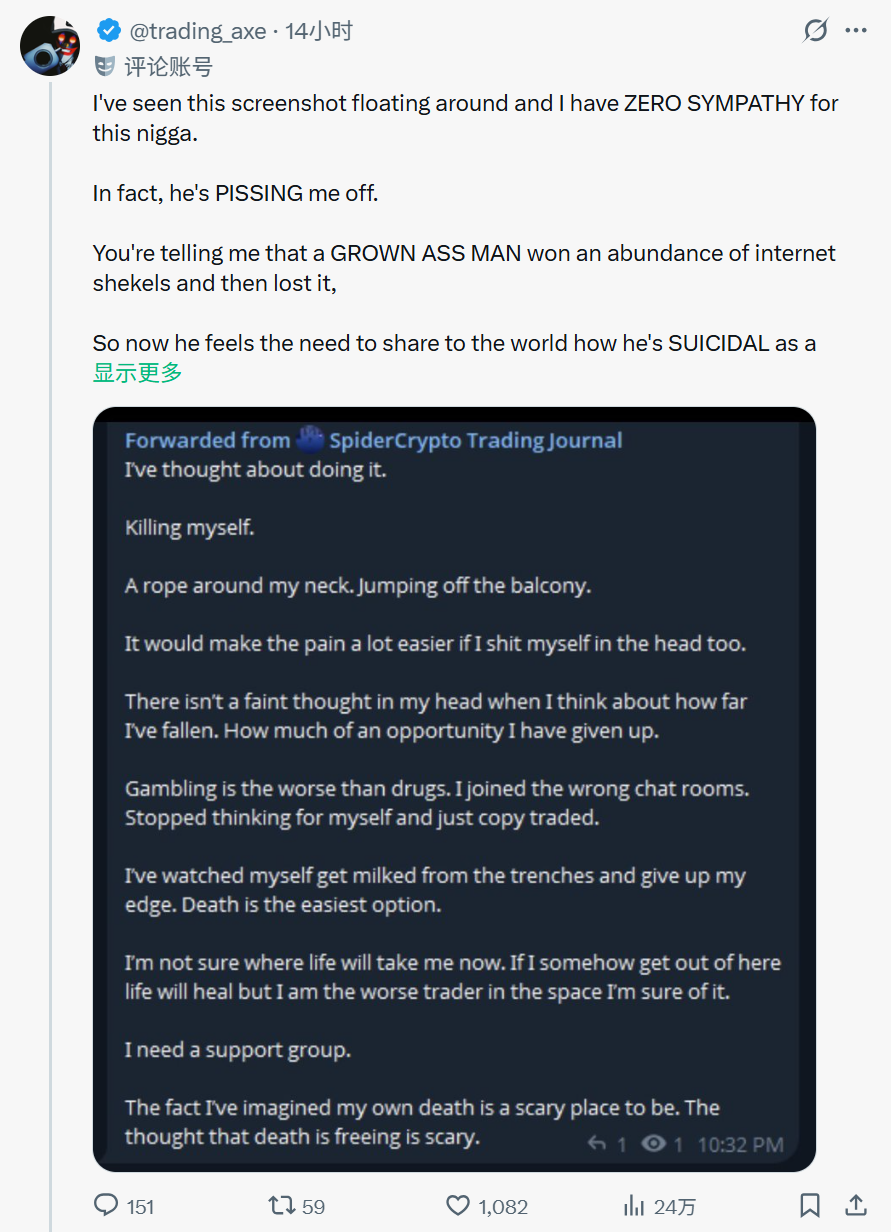


The Twitter account Trading axe expressed no sympathy whatsoever for the individual, even angrily commenting, "You're telling me a grown man made a fortune from virtual money on the internet, then lost it all, and now feels the need to share 'I want to kill myself' with the whole world? Alexander Wice lost $1 billion in 2021 due to over-leverage, didn't complain, didn't make excuses, and just moved forward."


However, some community members offered comfort, saying, "SBF also suffered major setbacks and was even sentenced to 25 years, but he's still alive, so it shouldn't come to this."


The protagonist, Spider, soon responded in the comments section of his tweet, stating, "It was literally something I posted for one minute before someone screenshotted it. Furthermore, it added that this text was actually posted several months ago." He also offered himself words of encouragement.



So who exactly is Spider? What happened in the past?


Single Address Peaked at $15 Million


Spider's X account is @SpiderCrypto0x. He operates the Telegram channel SpiderCrypto Trading Journal (with approximately 33,000 subscribers). His content primarily shares insights on DeFi, NFT, and meme coin trading, with a style emphasizing on-chain data verification. His bio often mentions collaborations with platforms like Rainbet. His X account joined around August 2020, initially being active in the DeFi space.



Spider was already active in trench trading during the DeFi Summer of 2020. Long-term observers like Twitter user CryptoCaligh recalled in a post dated June 22, 2026: "I was one of those in the trenches with Spider, frantically buying DeFi coins. I've been watching his play since 2020, it's been almost 7 years now." His style is characterized as aggressive and high-leverage, often capable of rapidly scaling positions in bull markets. During the same period, he gradually built influence by sharing trading views through TG logs and X posts.


During the 2021 bull market, Spider achieved significant profits (users mention gains in the $6-7 million range within short periods). In the 2022 bear market, he nearly lost his entire net worth (community estimates close to $10 million). More seriously was the tax issue—due to publicly flaunting gains, he attracted attention from tax authorities, resulting in a debt of about $4 million.


According to CryptoCaligh's recollection, he later negotiated a payment plan with the government and received help from old friends, gradually paying off the debt through further trading. This phase exposed the fragility of his high-risk strategy in bear markets and became a starting point for his reflection on "false confidence."


Spider himself has publicly shared his main TRUMP holding wallet address (J9HqxT4U39B45YcXxL4B1GZzdhSrXFr2N2Lam4bXrQeB) in an X post. According to Arkham data, the disclosed address peaked at around $12 million in December 2024 before declining. On January 20, 2025, due to the TRUMP coin, the account balance surged from around $1.5 million to $8.5 million. The funds remained at high levels for a few months before beginning a steady decline. After March of that year, the balance was nearly depleted.
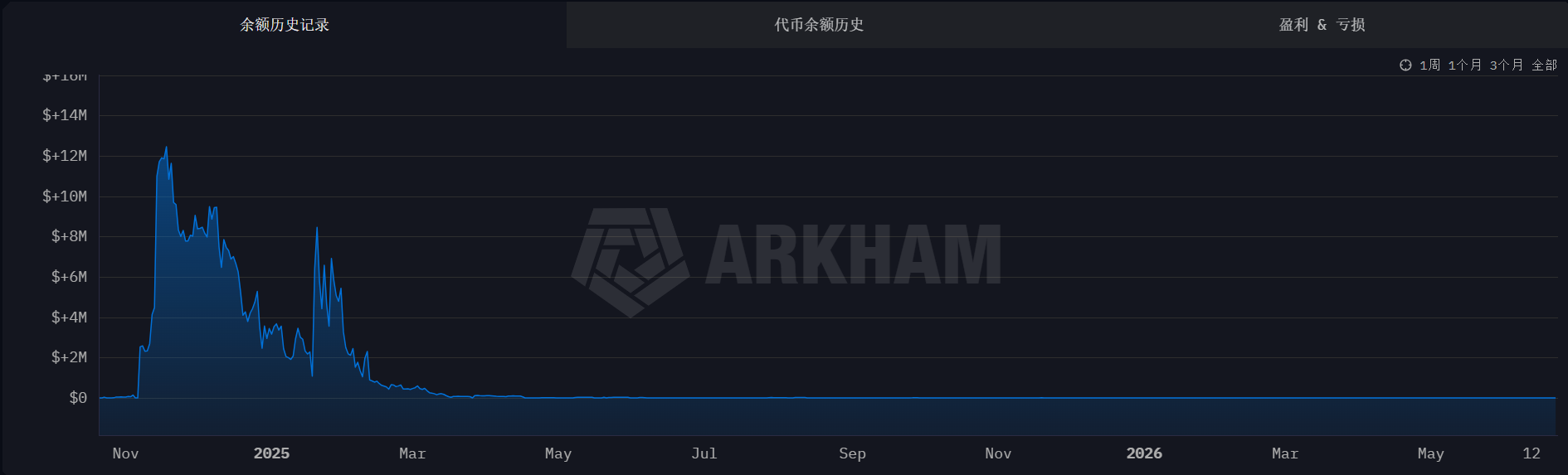


He reflected: "Past success gives you false confidence, making you believe you can do it again. That was one of the reasons for my disastrous loss."


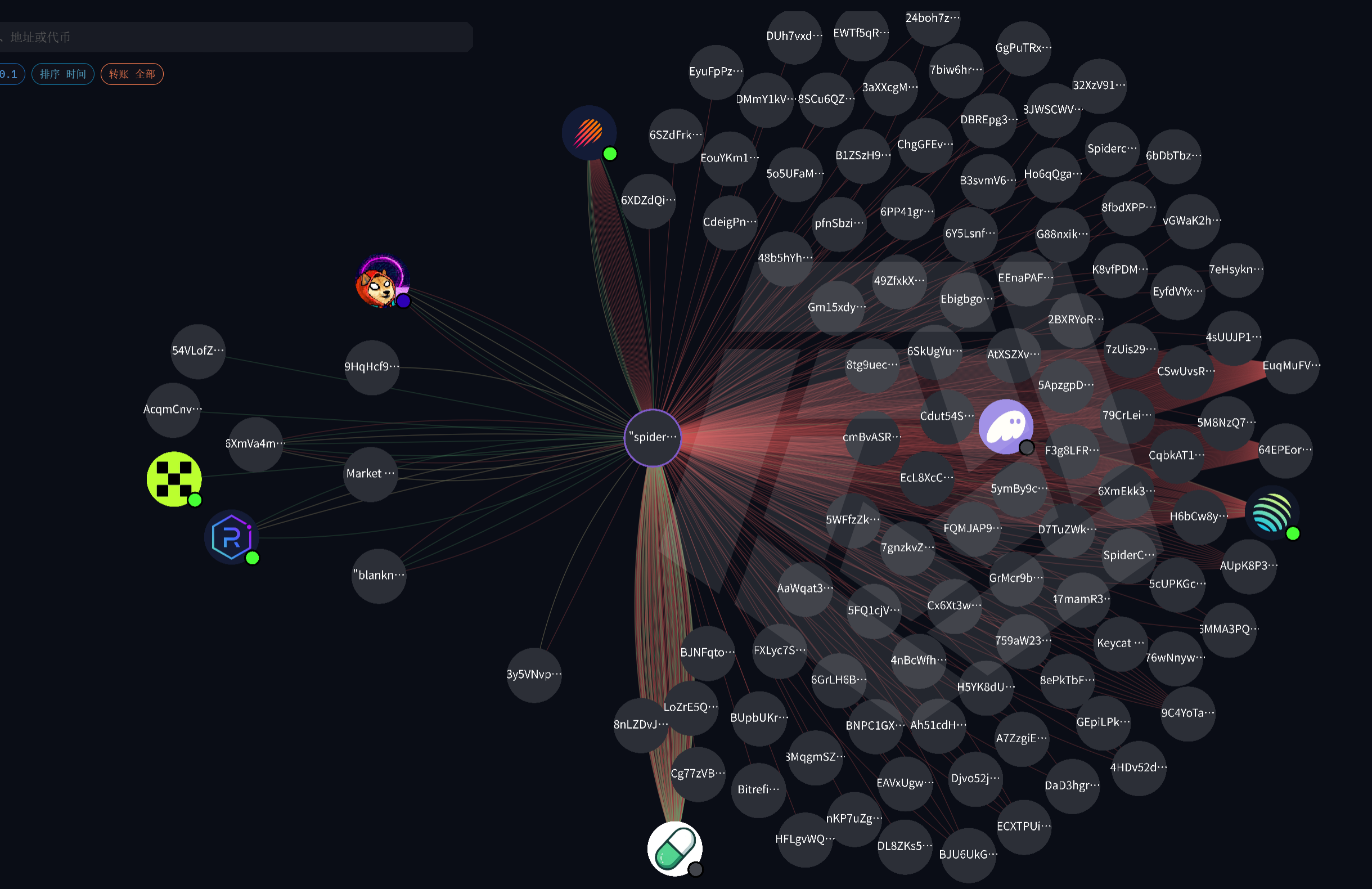
Arkham data shows this wallet address made transfers to over 36 addresses on Pump.fun alone. It is speculated that he likely ended up suffering heavy losses in PvP (player vs. player) trading.


Currently, his Twitter homepage continues to post trading-related content on X, indicating he remains active in the market.


From Big Gains to Big Losses, Gambling and Trading Are Often Separated by a Thin Line


It's often easier to see clearly from the outside. User CryptoCaligh pinpointed his real issue.


"He once threw $40,000 into a coin at its peak, and it could turn into $500,000 in a day. This kind of operation indeed works in crazy bull markets, but when the tide recedes, you lose all the money you made just as quickly. There's only a thin line between gambling and trading, and many people get deeply entangled. Once addicted, it will ruin you."


Furthermore, he added, "What's the point of making millions and losing it all? That's just a dream. You need to think clearly: Are you here to invest and try to make millions, or are you already an addicted gambler?"


In crypto cycles, similar cases of "sudden wealth - back to zero - psychological breakdown" recur repeatedly. During the 2021 bull cycle, massive liquidity inflow made earning relatively easy. However, the crypto space of 2025-2026 is no longer an era of easy money. Many concepts have been debunked, VC coins have been abandoned by communities, and meme coins have grown tiresome in endless PvP, with market trading difficulty increasing exponentially.


Those who survive long-term typically preserve profits during bull markets, establish diversified allocations, and cultivate a non-trading identity.


Пов'язані питання

QWhat triggered the widespread discussion about Spider's situation on social media?

AA log screenshot from Spider was rapidly disseminated on the X platform. In the log, this active DeFi and meme coin trader detailed his suicidal thoughts following consecutive massive losses, blaming a gambling mentality, misleading chat rooms, and blind copy-trading, while expressing fear over the idea that 'death is a release.'

QAccording to the article, what is the main difference between Spider's success during the bull market and his subsequent failure?

ADuring the bull market, Spider's aggressive, high-leverage style allowed him to rapidly amplify his positions and achieve significant profits (e.g., turning $40k into $500k in a day). However, when the bull market receded, this same strategy led to equally rapid losses, exposing the fragility of his high-risk approach in a bear market. He reflected that past success gave him false confidence, leading him to believe he could repeat it, which contributed to his惨败.

QWhat significant financial and legal challenge did Spider face after the 2022 bear market, according to the article?

AAfter the 2022 bear market, Spider lost nearly his entire net worth (estimated by the community to be close to $10 million). Additionally, he faced a significant tax problem. Due to publicly炫耀 his earnings, he attracted attention from tax authorities and incurred a debt of approximately $4 million.

QWhat point does the user CryptoCaligh make about the nature of Spider's activities in the crypto market?

ACryptoCaligh指出 that there is a very thin line between gambling and trading, and many people become deeply addicted to it. He questions whether one is in the market to invest and make millions or is already an addicted gambter. He emphasizes that making and then losing millions is meaningless—it's just a dream—and that such addiction can destroy a person.

QBased on the article, what are some characteristics of traders who can survive long-term in the volatile crypto market?

AAccording to the article, those who can survive long-term in the crypto market typically manage to secure profits during bull markets, establish diversified asset allocations, and cultivate a non-trading identity or sense of self outside of their trading activities.

Пов'язані матеріали

The Jacobian Conjecture that plagued Yitang Zhang for 7 years was overturned and disproven by Fable 5 overnight

**Summary:** The mathematical community was shocked when the longstanding **Jacobi Conjecture**—a core problem in polynomial mapping that had remained open for 87 years—was reportedly **disproven** by **Fable 5** (an AI model from Anthropic). The conjecture, first posed in 1939, asks whether a polynomial map with a constant, non-zero Jacobian determinant must have a polynomial inverse. Despite seeming intuitive, it had resisted numerous proof attempts by leading mathematicians. The breakthrough came when a researcher, Levent Alpoge, shared a succinct counterexample generated by Fable 5: a specific polynomial map from ℂ³ to ℂ³ whose Jacobian is the constant -2, yet which is not injective (mapping three distinct points to the same image). This elegantly falsifies the conjecture in its general form for dimensions ≥3. The counterexample is simple enough to be verified by hand or with tools like Wolfram Alpha. The event sparked intense discussion, with other AI models like GPT-5.6 quickly analyzing the result and even proposing a refined conjecture. It demonstrated AI's emerging capacity for genuine mathematical creativity, not just pattern matching. The story carries a poignant human dimension: renowned mathematician **Yitang Zhang** had devoted seven years of his early career to this problem under his PhD advisor, using a flawed lemma provided by the advisor. This setback contributed to Zhang leaving academia for years, including a period working at Subway, before his later breakthrough on the Twin Prime Conjecture. The AI's swift resolution underscores the tragic waste of his early effort on a conjecture now shown to be false in higher dimensions. It's important to note the disproof specifically targets the generalized (n-dimensional, n≥3) conjecture. The 2-dimensional case, which Zhang worked on, remains open and is considered mathematically distinct and even more challenging. Nonetheless, the event marks a significant moment, prompting reflections on AI's future role in mathematical discovery.

marsbit28 хв тому

The Jacobian Conjecture that plagued Yitang Zhang for 7 years was overturned and disproven by Fable 5 overnight

marsbit28 хв тому

Bought Bitcoin at $117,000, Sold at $62,000 in Tears: This Company’s Faith Only Lasted a Year

Wall Street's once-hot trend of corporate "Bitcoin hoarding" has hit a painful reality check. Empery Digital, formerly an electric motorcycle company, pivoted to Bitcoin in July 2025, accumulating over 4,000 BTC at an average cost of approximately $117,600 each. As Bitcoin's price plummeted, the company faced massive paper losses exceeding its total market value by early 2026, triggering internal conflict with a major shareholder demanding a sale. In a stark reversal from its earlier refusal to sell, Empery Digital recently sold 1,400 BTC at an average price of $62,000, locking in a significant loss of roughly $77 million on just those coins. The proceeds were used to pay down $10 million in debt, prepare for legal fees related to shareholder lawsuits, and, most notably, fund a new strategic shift: a $65 million investment for a 25% stake in an AI data center facility. This move completes a cycle of chasing market trends—from electric vehicles to Bitcoin treasury and now to AI infrastructure. Empery's case exposes the leveraged nature of the corporate "treasury model," where buying Bitcoin with borrowed money works only while prices rise. Once the asset fell below its cost basis, the company was forced to sell at a loss to service debt and pivot to the next opportunity. The company's remaining assets are 1,514 BTC and its ambitions in AI, demonstrating that its stated "long-term belief" in Bitcoin had a clear price tag: a 50% discount.

marsbit38 хв тому

Bought Bitcoin at $117,000, Sold at $62,000 in Tears: This Company’s Faith Only Lasted a Year

marsbit38 хв тому

Visa Joins the Stablecoin Arena: Not to Eliminate Stablecoins, but to 'Collect Rent' from Them

Visa is entering the stablecoin arena by launching a stablecoin platform, aiming not to eliminate existing stablecoins but to facilitate and profit from their broader adoption. The platform will enable banks, financial institutions, and fintech companies to more easily issue, manage, and integrate stablecoins into Visa's existing global payment network, which spans over 200 million merchants and 15,000 financial institutions. This move is expected to expand the overall stablecoin market by creating more use cases. For USDC (Circle), it presents a short-term benefit due to likely direct integration and its compliance advantages, though long-term competition may increase from bank-issued or consortium stablecoins. For USDT (Tether), the impact could be more significant in traditional payment and settlement areas, as Visa's platform may favor more transparent, compliant options, though USDT is expected to remain strong in pure crypto trading contexts. Regarding Ethereum, Visa's initiative is seen as neutral to slightly positive. It could drive more traditional capital into the Ethereum ecosystem in the form of stablecoins, increasing network activity and demand for Ethereum as a settlement layer, especially with Layer-2 scaling solutions. While the platform will support multiple blockchains, Ethereum's maturity and decentralization make it a likely primary choice for compliant stablecoins. In essence, Visa's strategy is to embrace stablecoins, collect fees from increased transaction volume on its network, and grow the overall market, rather than displace major incumbents like USDC and USDT directly.

marsbit1 год тому

Visa Joins the Stablecoin Arena: Not to Eliminate Stablecoins, but to 'Collect Rent' from Them

marsbit1 год тому

Торгівля

Спот
活动图片