The Silver Crisis: When the Paper System Begins to Fail

深潮Опубліковано о 2025-12-13Востаннє оновлено о 2025-12-13

Анотація

Silver Crisis: When the Paper System Begins to Fail In December, silver became the most volatile asset in the precious metals market, surging from $40 to over $64 per ounce—a year-to-date increase of nearly 110%, far outpacing gold. While the rally appears fundamentally justified—driven by Fed rate cut expectations, industrial demand from solar/EV/AI sectors, and declining global inventories—it masks deeper structural risks. Unlike gold, which is backed by central bank purchases, silver lacks institutional support and has minimal official reserves. Its market is shallow, with a daily trading volume of only $5 billion (vs. gold’s $150 billion), dominated by paper derivatives like futures and ETFs. This makes it vulnerable to volatility and manipulation. The real driver of the rally is a futures squeeze. The market has entered a persistent “backwardation” (futures prices exceeding spot prices), indicating either extreme bullishness or deliberate market manipulation. Physical delivery demands have surged, with COMEX and Shanghai exchange inventories dropping sharply. The system—where paper claims vastly exceed physical silver—is under stress. JPMorgan, a historically dominant player in silver markets, controls ~43% of COMEX silver inventory and acts as custodian for major silver ETFs. Its influence over physical supply and delivery eligibility adds to market fragility. The silver crisis reflects a broader shift: investors are losing faith in financialized paper as...

Author: Xiaobing | Deep Tide TechFlow

In December's precious metals market, the protagonist wasn't gold; silver was the most dazzling light.

From $40, it surged to $50, $55, $60, piercing through one historical price point after another at an almost uncontrollable pace, leaving the market little room to breathe.

On December 12th, spot silver once hit a historical high of $64.28 per ounce before sharply reversing and falling. Year-to-date, silver has accumulated a gain of nearly 110%, far exceeding gold's 60% increase.

This appears to be an "extremely rational" rise, which also makes it seem particularly dangerous.

The Crisis Behind the Rise

Why is silver rising?

Because it seems worthy of rising.

From the explanations of mainstream institutions, it all seems rational sense.

The Fed's interest rate cut expectations reignited the precious metals rally; recent weak employment and inflation data led the market to bet on further rate cuts by early 2026. Silver, as a high-beta asset, reacted more violently than gold.

Industrial demand is also adding fuel to the fire. The explosive growth in solar energy, electric vehicles, data centers, and AI infrastructure has fully manifested silver's dual attributes (precious metal + industrial metal).

Persistently declining global inventories are adding insult to injury. Mexican and Peruvian mine production fell short of expectations in Q4, and silver ingot stocks in major exchange warehouses are lower year after year.

......

If one only looks at these reasons, the rise in silver prices is a "consensus," even a belated value re-rating.

But the danger of the story lies in this:

Silver's rise seems rational, but it's not solid.

The reason is simple: Silver is not gold. It lacks the consensus gold has; it is missing "national team" support.

Gold remains robust because central banks worldwide are buying. Over the past three years, global central banks have purchased over 2,300 tons of gold, which sits on national balance sheets as an extension of sovereign credit.

Silver is different. Global central bank gold reserves exceed 36,000 tons, while official silver reserves are almost zero. Without central bank backstop, silver lacks any systemic stabilizer during extreme market volatility, making it a typical "island asset."

The difference in market depth is even more stark. Gold's daily trading volume is about $150 billion; silver's is only $5 billion. If gold is the Pacific Ocean, silver is, at best, Poyang Lake.

It has a small market cap, fewer market makers, insufficient liquidity, and limited physical reserves. Most crucially, the primary form of silver trading is not physical metal but "paper silver"—futures, derivatives, and ETFs dominate the market.

This is a dangerous structure.

Shallow water capsizes easily; large funds entering can churn the entire surface.

And this is precisely what happened this year: A wave of funds suddenly rushed in, rapidly pushing up a market that wasn't deep to begin with, lifting prices off the ground.

Futures Squeeze

What derailed silver prices wasn't the seemingly rational fundamental reasons above; the real price war is in the futures market.

Normally, the spot price of silver should be slightly higher than the futures price. This makes sense—holding physical silver incurs storage and insurance costs, while a futures contract is just paper, naturally cheaper. This price difference is generally called "backwardation" (现货升水).

But starting in the third quarter of this year, this logic reversed.

Futures prices began systematically exceeding spot prices, and the gap kept widening. What does this mean?

Someone is frantically pushing up prices in the futures market. This "contango" (期货升水) phenomenon usually only appears in two situations: either the market is extremely bullish on the future, or someone is forcing a squeeze (逼仓).

Considering that the improvement in silver fundamentals is gradual—solar and new energy demand doesn't exponentially explode in a few months, and mine output doesn't suddenly dry up—the aggressive performance in the futures market更像 the latter: Funds are pushing up futures prices.

A more dangerous signal comes from anomalies in the physical delivery market.

Operational history data from the world's largest precious metals trading market, COMEX (Commodity Exchange Inc.), shows that physical delivery of precious metals futures contracts is less than 2%, with the remaining 98% settled in US dollars cash or through contract rollovers.

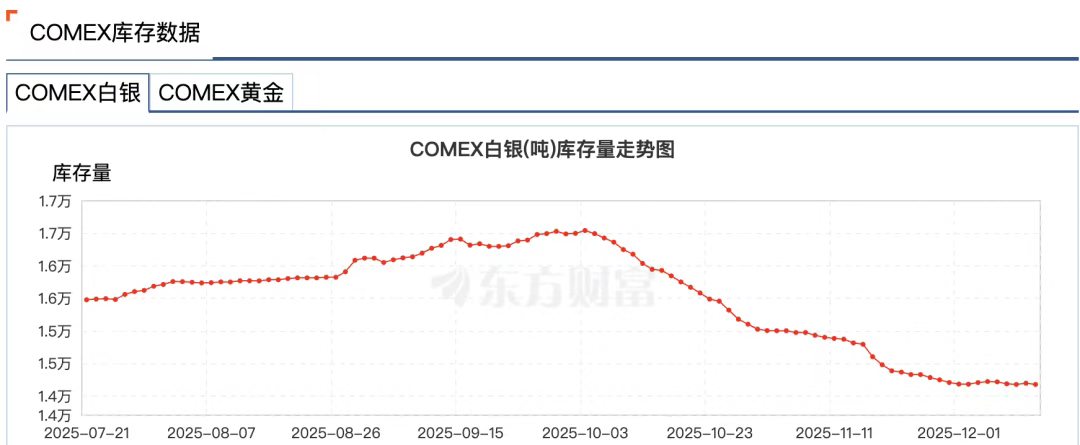
However, over the past few months, physical silver deliveries on COMEX have surged, far exceeding historical averages. More and more investors are losing trust in "paper silver"; they are demanding actual silver bars.
Silver ETFs have seen a similar phenomenon. While large amounts of funds flowed in, some investors began redeeming, demanding physical silver instead of fund shares. This "run-like" redemption is putting pressure on the ETFs' silver bar reserves.

<极狐 style="font-size:16px">This year, runs have occurred in succession in the three major silver markets: New York COMEX, London LBMA, and the Shanghai Metal Exchange.

Wind data shows that in the week of November 24th, silver inventories on the Shanghai Gold Exchange fell by 58.83 tons to 715.875 tons, hitting a new low since July 3, 2016. CME COMEX silver inventories plummeted from 16,500 tons in early October to 14,100 tons, a drop of 14%.

The reason isn't hard to understand: under the US interest rate cut cycle, people are unwilling to settle in dollars. Another hidden worry is that exchanges might not have enough silver available for delivery.

The modern precious metals market is a highly financialized system. Most "silver" is just book entries, with real silver bars being repeatedly pledged, leased, and derived globally. One ounce of physical silver might correspond to a dozen different entitlement certificates simultaneously.

Veteran trader Andy Schectman cited London as an example: LBMA has only 140 million ounces of floating supply, but daily trading volume reaches 600 million ounces. On top of this 140 million ounces, there exist paper claims exceeding 2 billion ounces.

This "fractional reserve system" works well in normal times, but once everyone wants physical metal, the entire system faces a liquidity crisis.

When the shadow of a crisis looms, a strange phenomenon似乎总是出现在金融市场, commonly called "pulling the plug."

On November 28th, CME was down for nearly 11 hours due to "data center cooling issues," a record-long outage, preventing COMEX gold and silver futures from updating normally.

Notably, the outage occurred at a critical moment as silver broke through historical highs. Spot silver breached $56 that day, and silver futures broke through $57.

Market rumors speculated that the outage was to protect commodity market makers exposed to extreme risk and potentially facing large losses.

Later, data center operator CyrusOne stated that this major interruption stemmed from human operational error, further fueling various "conspiracy theories."

In short, this futures squeeze-dominated market注定 results in剧烈 volatility in the silver market. Silver has essentially transformed from a traditional safe-haven asset into a high-risk speculative target.

Who is the Market Maker?

In this squeeze drama, one name cannot be bypassed: JPMorgan Chase.

The reason is simple: it is internationally recognized as the silver market maker.

For at least eight years, from 2008 to 2016, JPMorgan manipulated gold and silver market prices through its traders.

The method was simple and crude: placing large orders to buy or sell silver contracts on the futures market to create false supply and demand impressions, inducing other traders to follow the momentum, and then canceling the orders at the last second, profiting from the price fluctuations.

This practice, known as spoofing,最终 led to JPMorgan receiving a $920 million fine in 2020, once setting a record for a single CFTC fine.

But the real textbook-level market manipulation goes beyond that.

On one hand, JPMorgan depressed silver prices through massive short selling and spoofing in the futures market. On the other hand, it massively acquired physical metal at the low prices it itself created.

Starting around the 2011 silver price high near $50, JPMorgan began hoarding silver in its COMEX warehouses, consistently adding positions while other large institutions reduced theirs, at one point accounting for 50% of total COMEX silver inventory.
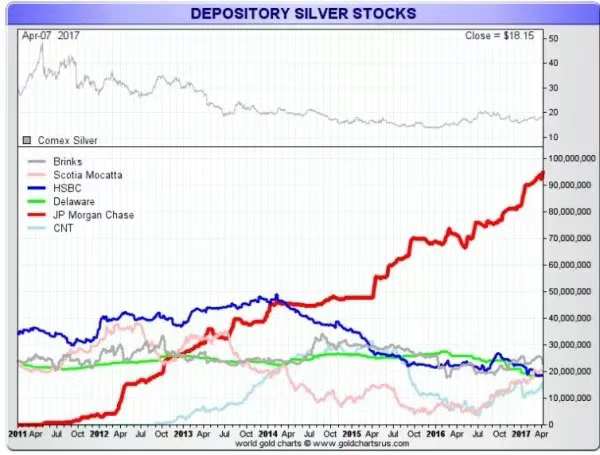
This strategy exploited the structural缺陷 of the silver market: Paper silver prices dictate physical silver prices, and JPMorgan could influence paper prices while being one of the largest physical silver holders.

So what role does JPMorgan play in this round of silver squeeze?

On the surface, JPMorgan seems to have "turned over a new leaf." Following the 2020 settlement, it underwent systematic compliance reforms, including hiring hundreds of new compliance officers.

There is currently no evidence表明 JPMorgan participated in the short squeeze行情. But in the silver market, JPMorgan still holds significant influence.

According to the latest CME data from December 11th, JPMorgan holds approximately 196 million ounces of silver within the COMEX system (proprietary + brokerage), accounting for nearly 43% of the exchange's total inventory.
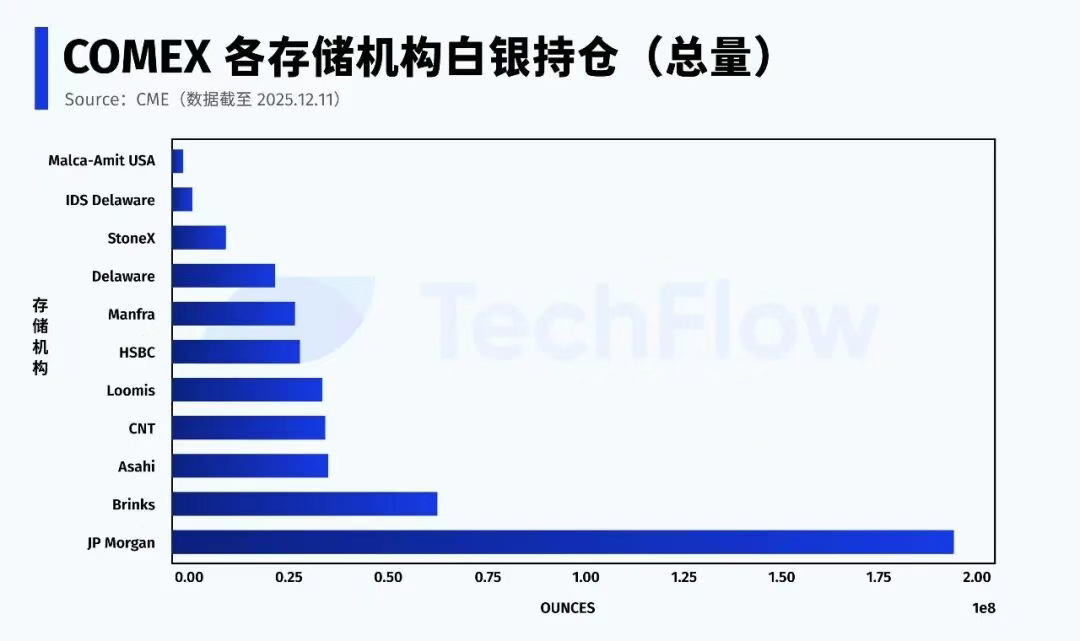
Furthermore, JPMorgan has a special身份: the custodian for the silver ETF (SLV). As of November 2025, it custodies 517 million ounces of silver, worth $32.1 billion.

More crucially, in the Eligible silver category (silver that qualifies for delivery but hasn't been registered as deliverable), JPMorgan controls over half the volume.

In any round of silver squeeze行情, the market truly博弈 over two points: First, who can produce physical silver; Second, whether, and when, this silver is allowed into the delivery pool.

Unlike its past role as a major silver short, JPMorgan now sits at the "silver gate."

Currently, Registered (deliverable) silver accounts for only about 30% of total inventory. When the majority of Eligible silver is highly concentrated in a few institutions, the stability of the silver futures market effectively depends on the behavioral choices of very few key players.

The Paper System Gradually Failing

If one had to describe the current silver market in one sentence, it would be:

The rally continues, but the rules have changed.

The market has undergone an irreversible shift; trust in the silver "paper system" is crumbling.

Silver is not an isolated case; the same change is happening in the gold market.

Gold inventories in New York futures exchanges continue to decline, Registered gold repeatedly touches lows, forcing exchanges to transfer bars from originally non-deliverable "Eligible" gold to complete matches.

Globally, capital is quietly undergoing a migration.

Over the past decade-plus, the direction of mainstream asset allocation was highly financialized—ETFs, derivatives, structured products, leverage tools. Everything could be "securitized."

Now, more and more capital is withdrawing from financial assets,转而 seeking physical assets that don't rely on financial intermediaries or credit背书,典型的 being gold and silver.

Central banks are continuously and massively increasing gold holdings, almost无一例外 opting for physical form. Russia has banned gold exports; even Western countries like Germany and the Netherlands have demanded the repatriation of gold reserves stored overseas.

Liquidity is giving way to certainty.

When gold supply cannot meet the huge physical demand, capital begins to look for substitutes, and silver naturally becomes the first choice.

The essence of this physicalization movement is the re-contesting of monetary pricing power against the backdrop of a weak US dollar and deglobalization.

According to a Bloomberg report in October, global gold is moving from West to East.

Data from US CME and the London Bullion Market Association (LBMA) show that since late April, over 527 tons of gold have flowed out of the vaults of New York and London, the two largest Western markets. Meanwhile, gold imports have increased in major Asian gold-consuming countries like China. China's gold imports in August hit a four-year high.

In response to market changes, in late November 2025, JPMorgan moved its precious metals trading desk from the US to Singapore.

Behind the surge in gold and silver lies the return of the concept of the "gold standard." It might not be realistic short-term, but one thing is certain: Whoever holds more physical metal holds greater pricing power.

When the music stops, only those holding real gold and silver can sit down safely.

Пов'язані питання

QWhat are the main factors driving the recent surge in silver prices according to mainstream analysis?

AAccording to mainstream analysis, the surge in silver prices is driven by the Federal Reserve's interest rate cut expectations, which reignited the precious metals market, as well as strong industrial demand from solar energy, electric vehicles, data centers, and AI infrastructure. Additionally, global inventories have been consistently declining due to lower-than-expected mine output from Mexico and Peru.

QWhy is the structure of the silver market considered dangerous compared to gold?

AThe silver market is considered dangerous because it lacks the 'national team' support that gold has, as central banks hold almost no official silver reserves. It has a much smaller market depth with a daily trading volume of only $5 billion compared to gold's $150 billion. The market is dominated by 'paper silver' products like futures and ETFs, making it highly susceptible to volatility and liquidity crises when large funds enter.

QWhat is a 'short squeeze' in the futures market, and how is it related to the current silver price movement?

AA 'short squeeze' occurs when traders who have bet on falling prices (short sellers) are forced to buy back contracts at higher prices to limit losses, further driving up prices. In the silver market, this is evidenced by the unusual 'futures premium' where futures prices are systematically higher than spot prices, suggesting that funds are aggressively pushing up futures prices rather than the movement being solely based on gradual fundamental improvements.

QWhat role does JPMorgan play in the silver market, and why is it significant?

AJPMorgan is a dominant player in the silver market, holding approximately 43% of COMEX silver inventories and acting as the custodian for the iShares Silver Trust (SLV) ETF, which holds over 517 million ounces of silver. It controls more than half of the 'Eligible' silver (metal that qualifies for delivery but isn't yet registered). This positions JPMorgan as a key 'gatekeeper' that significantly influences the availability of physical silver for delivery, thereby impacting market stability.

QWhat broader trend does the current situation in the silver market represent regarding financial assets?

AThe situation represents a broader trend of a 'physicalization' movement, where trust in the 'paper' financial system (ETFs, derivatives) is eroding. Investors and central banks are increasingly moving away from highly financialized assets and seeking safety in physical assets like gold and silver that do not rely on financial intermediaries or credit backing. This shift is a response to de-globalization and a contest for monetary pricing power in a weaker dollar environment, emphasizing that 'whoever holds more physical metal holds greater pricing power.'

Пов'язані матеріали

Торгівля

Спот
Ф'ючерси

Популярні статті

Що таке $S$

Розуміння SPERO: Комплексний огляд Вступ до SPERO Оскільки ландшафт інновацій продовжує еволюціонувати, виникнення технологій web3 та криптовалютних проектів відіграє ключову роль у формуванні цифрового майбутнього. Один з проектів, який привернув увагу в цій динамічній сфері, — це SPERO, позначений як SPERO,$$s$. Ця стаття має на меті зібрати та представити детальну інформацію про SPERO, щоб допомогти ентузіастам та інвесторам зрозуміти його основи, цілі та інновації в рамках web3 та крипто-сектору. Що таке SPERO,$$s$? SPERO,$$s$ — це унікальний проект у криптопросторі, який прагне використати принципи децентралізації та технології блокчейн для створення екосистеми, що сприяє залученню, корисності та фінансовій інклюзії. Проект розроблений для полегшення взаємодії між користувачами новими способами, надаючи їм інноваційні фінансові рішення та послуги. У своїй основі SPERO,$$s$ прагне надати можливості індивідам, забезпечуючи інструменти та платформи, які покращують користувацький досвід у криптовалютному просторі. Це включає в себе можливість більш гнучких методів транзакцій, сприяння ініціативам, що підтримуються спільнотою, та створення шляхів для фінансових можливостей через децентралізовані додатки (dApps). Основна концепція SPERO,$$s$ обертається навколо інклюзивності, прагнучи зменшити розриви в традиційній фінансовій системі, використовуючи переваги технології блокчейн. Хто є творцем SPERO,$$s$? Особистість творця SPERO,$$s$ залишається дещо невідомою, оскільки є обмежені публічно доступні ресурси, що надають детальну інформацію про його засновників. Ця відсутність прозорості може бути наслідком зобов'язання проекту до децентралізації — етики, яку багато проектів web3 поділяють, ставлячи колективні внески вище за індивідуальне визнання. Зосереджуючи обговорення навколо спільноти та її колективних цілей, SPERO,$$s$ втілює суть наділення без виділення конкретних осіб. Таким чином, розуміння етики та місії SPERO є більш важливим, ніж ідентифікація єдиного творця. Хто є інвесторами SPERO,$$s$? SPERO,$$s$ підтримується різноманітними інвесторами, починаючи від венчурних капіталістів до ангельських інвесторів, які прагнуть сприяти інноваціям у крипто-секторі. Зосередження цих інвесторів зазвичай узгоджується з місією SPERO — пріоритет надається проектам, які обіцяють технологічний прогрес у суспільстві, фінансову інклюзію та децентралізоване управління. Ці інвесторські фонди зазвичай зацікавлені в проектах, які не лише пропонують інноваційні продукти, але й позитивно впливають на спільноту блокчейн та її екосистеми. Підтримка з боку цих інвесторів підкріплює SPERO,$$s$ як значного конкурента в швидко змінюваній сфері крипто-проектів. Як працює SPERO,$$s$? SPERO,$$s$ використовує багатогранну структуру, яка відрізняє його від традиційних криптовалютних проектів. Ось деякі ключові особливості, які підкреслюють його унікальність та інноваційність: Децентралізоване управління: SPERO,$$s$ інтегрує моделі децентралізованого управління, надаючи користувачам можливість активно брати участь у процесах прийняття рішень щодо майбутнього проекту. Цей підхід сприяє відчуттю власності та відповідальності серед членів спільноти. Корисність токена: SPERO,$$s$ використовує свій власний криптовалютний токен, розроблений для виконання різних функцій в екосистемі. Ці токени дозволяють здійснювати транзакції, отримувати винагороди та полегшувати послуги, що пропонуються на платформі, підвищуючи загальну залученість та корисність. Шарова архітектура: Технічна архітектура SPERO,$$s$ підтримує модульність та масштабованість, що дозволяє безперешкодно інтегрувати додаткові функції та додатки в міру розвитку проекту. Ця адаптивність є надзвичайно важливою для збереження актуальності в постійно змінюваному крипто-ландшафті. Залучення спільноти: Проект підкреслює ініціативи, що підтримуються спільнотою, використовуючи механізми, які стимулюють співпрацю та зворотний зв'язок. Підтримуючи сильну спільноту, SPERO,$$s$ може краще задовольняти потреби користувачів та адаптуватися до ринкових тенденцій. Фокус на інклюзію: Пропонуючи низькі комісії за транзакції та зручні інтерфейси, SPERO,$$s$ прагне залучити різноманітну базу користувачів, включаючи осіб, які раніше не брали участі в крипто-просторі. Це зобов'язання до інклюзії узгоджується з його загальною місією наділення через доступність. Хронологія SPERO,$$s$ Розуміння історії проекту надає важливі уявлення про його розвиток та етапи. Нижче наведено пропоновану хронологію, що відображає значні події в еволюції SPERO,$$s$: Етап концептуалізації та ідеації: Початкові ідеї, що стали основою SPERO,$$s$, були сформовані, тісно пов'язані з принципами децентралізації та фокусом на спільноті в індустрії блокчейн. Запуск білого паперу проекту: Після концептуального етапу був випущений комплексний білий папір, що детально описує бачення, цілі та технологічну інфраструктуру SPERO,$$s$, щоб залучити інтерес та зворотний зв'язок від спільноти. Створення спільноти та ранні залучення: Активні зусилля були спрямовані на створення спільноти ранніх прихильників та потенційних інвесторів, що полегшило обговорення цілей проекту та отримання підтримки. Подія генерації токенів: SPERO,$$s$ провів подію генерації токенів (TGE) для розподілу своїх рідних токенів серед ранніх прихильників та встановлення початкової ліквідності в екосистемі. Запуск початкового dApp: Перший децентралізований додаток (dApp), пов'язаний з SPERO,$$s$, став доступним, дозволяючи користувачам взаємодіяти з основними функціями платформи. Постійний розвиток та партнерства: Безперервні оновлення та вдосконалення пропозицій проекту, включаючи стратегічні партнерства з іншими учасниками блокчейн-простору, сформували SPERO,$$s$ у конкурентоспроможного та еволюціонуючого гравця на крипто-ринку. Висновок SPERO,$$s$ є свідченням потенціалу web3 та криптовалют для революціонізації фінансових систем та наділення індивідів. Завдяки зобов'язанню до децентралізованого управління, залучення спільноти та інноваційно спроектованих функцій, він прокладає шлях до більш інклюзивного фінансового ландшафту. Як і з будь-якими інвестиціями в швидко змінюваному крипто-просторі, потенційним інвесторам та користувачам рекомендується ретельно досліджувати та обдумано взаємодіяти з поточними подіями в SPERO,$$s$. Проект демонструє інноваційний дух крипто-індустрії, запрошуючи до подальшого дослідження його численних можливостей. Хоча подорож SPERO,$$s$ ще триває, його основні принципи можуть справді вплинути на майбутнє того, як ми взаємодіємо з технологією, фінансами та один з одним у взаємопов'язаних цифрових екосистемах.

73 переглядів усьогоОпубліковано 2024.12.17Оновлено 2024.12.17

Що таке $S$

Що таке AGENT S

Агент S: Майбутнє автономної взаємодії в Web3 Вступ У постійно змінюваному ландшафті Web3 та криптовалюти інновації постійно переосмислюють, як люди взаємодіють з цифровими платформами. Один з таких новаторських проектів, Агент S, обіцяє революціонізувати взаємодію людини з комп'ютером через свою відкриту агентну структуру. Прокладаючи шлях для автономних взаємодій, Агент S прагне спростити складні завдання, пропонуючи трансформаційні застосування в штучному інтелекті (ШІ). Це детальне дослідження заглиблюється в складності проекту, його унікальні особливості та наслідки для сфери криптовалюти. Що таке Агент S? Агент S є революційною відкритою агентною структурою, спеціально розробленою для вирішення трьох основних викликів в автоматизації комп'ютерних завдань: Набуття специфічних знань у галузі: Структура інтелектуально навчається з різних зовнішніх джерел знань та внутрішнього досвіду. Цей подвійний підхід дозволяє їй створити багатий репозиторій специфічних знань у галузі, покращуючи її продуктивність у виконанні завдань. Планування на довгих горизонтах завдань: Агент S використовує планування з підкріпленням досвіду, стратегічний підхід, який полегшує ефективний розподіл та виконання складних завдань. Ця функція значно підвищує її здатність ефективно та результативно управляти кількома підзавданнями. Обробка динамічних, неоднорідних інтерфейсів: Проект представляє Інтерфейс Агент-Комп'ютер (ACI), інноваційне рішення, яке покращує взаємодію між агентами та користувачами. Використовуючи багатомодальні великі мовні моделі (MLLMs), Агент S може безперешкодно орієнтуватися та маніпулювати різноманітними графічними інтерфейсами користувача. Завдяки цим новаторським функціям Агент S надає надійну структуру, яка вирішує складнощі, пов'язані з автоматизацією людської взаємодії з машинами, прокладаючи шлях для численних застосувань у ШІ та за його межами. Хто є творцем Агент S? Хоча концепція Агент S є фундаментально новаторською, конкретна інформація про його творця залишається невідомою. Творець наразі невідомий, що підкреслює або початкову стадію проекту, або стратегічний вибір зберегти засновників у таємниці. Незважаючи на анонімність, акцент залишається на можливостях та потенціалі структури. Хто є інвесторами Агент S? Оскільки Агент S є відносно новим у криптографічній екосистемі, детальна інформація про його інвесторів та фінансових спонсорів не задокументована. Відсутність публічно доступних відомостей про інвестиційні фонди або організації, що підтримують проект, викликає питання щодо його фінансової структури та дорожньої карти розвитку. Розуміння підтримки є критично важливим для оцінки стійкості проекту та потенційного впливу на ринок. Як працює Агент S? В основі Агент S лежить передова технологія, яка дозволяє йому ефективно функціонувати в різних умовах. Його операційна модель побудована навколо кількох ключових функцій: Взаємодія з комп'ютером, подібна до людської: Структура пропонує розширене планування ШІ, прагнучи зробити взаємодії з комп'ютерами більш інтуїтивними. Імітуючи людську поведінку при виконанні завдань, вона обіцяє підвищити досвід користувачів. Наративна пам'ять: Використовується для використання високорівневого досвіду, Агент S використовує наративну пам'ять для відстеження історій завдань, тим самим покращуючи свої процеси прийняття рішень. Епізодична пам'ять: Ця функція надає користувачам покрокові інструкції, дозволяючи структурі пропонувати контекстуальну підтримку в міру виконання завдань. Підтримка OpenACI: Завдяки можливості працювати локально, Агент S дозволяє користувачам зберігати контроль над своїми взаємодіями та робочими процесами, узгоджуючи з децентралізованою етикою Web3. Легка інтеграція з зовнішніми API: Його універсальність і сумісність з різними платформами ШІ забезпечують те, що Агент S може безперешкодно вписатися в існуючі технологічні екосистеми, роблячи його привабливим вибором для розробників та організацій. Ці функціональні можливості колективно сприяють унікальному положенню Агент S у крипто-просторі, оскільки він автоматизує складні, багатоступеневі завдання з мінімальним втручанням людини. У міру розвитку проекту його потенційні застосування в Web3 можуть переосмислити, як відбуваються цифрові взаємодії. Хронологія Агент S Розробка та етапи Агент S можуть бути узагальнені в хронології, яка підкреслює його значні події: 27 вересня 2024 року: Концепція Агент S була представлена в комплексній науковій статті під назвою “Відкрита агентна структура, яка використовує комп'ютери як людина”, що демонструє основи проекту. 10 жовтня 2024 року: Наукова стаття була опублікована на arXiv, пропонуючи детальне дослідження структури та її оцінки продуктивності на основі бенчмарку OSWorld. 12 жовтня 2024 року: Було випущено відеопрезентацію, що надає візуальне уявлення про можливості та особливості Агент S, ще більше залучаючи потенційних користувачів та інвесторів. Ці маркери в хронології не лише ілюструють прогрес Агент S, але й вказують на його прихильність до прозорості та залучення громади. Ключові моменти про Агент S У міру розвитку структури Агент S кілька ключових характеристик виділяються, підкреслюючи її новаторський характер та потенціал: Інноваційна структура: Розроблена для забезпечення інтуїтивного використання комп'ютерів, подібного до людської взаємодії, Агент S пропонує новий підхід до автоматизації завдань. Автономна взаємодія: Здатність автономно взаємодіяти з комп'ютерами через GUI означає стрибок до більш інтелектуальних та ефективних обчислювальних рішень. Автоматизація складних завдань: Завдяки своїй надійній методології він може автоматизувати складні, багатоступеневі завдання, роблячи процеси швидшими та менш схильними до помилок. Безперервне вдосконалення: Механізми навчання дозволяють Агенту S покращуватися на основі минулого досвіду, постійно підвищуючи свою продуктивність та ефективність. Універсальність: Його адаптивність до різних операційних середовищ, таких як OSWorld та WindowsAgentArena, забезпечує його здатність служити широкому спектру застосувань. Оскільки Агент S займає своє місце в ландшафті Web3 та криптовалюти, його потенціал покращити можливості взаємодії та автоматизувати процеси означає значний прогрес у технологіях ШІ. Завдяки своїй інноваційній структурі Агент S є прикладом майбутнього цифрових взаємодій, обіцяючи більш безперешкодний та ефективний досвід для користувачів у різних галузях. Висновок Агент S представляє собою сміливий крок вперед у поєднанні ШІ та Web3, з можливістю переосмислити, як ми взаємодіємо з технологією. Хоча проект все ще на ранніх стадіях, можливості для його застосування є величезними та переконливими. Завдяки своїй комплексній структурі, що вирішує критичні виклики, Агент S прагне вивести автономні взаємодії на передній план цифрового досвіду. У міру того, як ми заглиблюємося в сфери криптовалюти та децентралізації, проекти, подібні до Агент S, безсумнівно, відіграватимуть ключову роль у формуванні майбутнього технологій та співпраці людини з комп'ютером.

541 переглядів усьогоОпубліковано 2025.01.14Оновлено 2025.01.14

Що таке AGENT S

Як купити S

Ласкаво просимо до HTX.com! Ми зробили покупку Sonic (S) простою та зручною. Дотримуйтесь нашої покрокової інструкції, щоб розпочати свою криптовалютну подорож.Крок 1: Створіть обліковий запис на HTXВикористовуйте свою електронну пошту або номер телефону, щоб зареєструвати обліковий запис на HTX безплатно. Пройдіть безпроблемну реєстрацію й отримайте доступ до всіх функцій.ЗареєструватисьКрок 2: Перейдіть до розділу Купити крипту і виберіть спосіб оплатиКредитна/дебетова картка: використовуйте вашу картку Visa або Mastercard, щоб миттєво купити Sonic (S).Баланс: використовуйте кошти з балансу вашого рахунку HTX для безперешкодної торгівлі.Треті особи: ми додали популярні способи оплати, такі як Google Pay та Apple Pay, щоб підвищити зручність.P2P: Торгуйте безпосередньо з іншими користувачами на HTX.Позабіржова торгівля (OTC): ми пропонуємо індивідуальні послуги та конкурентні обмінні курси для трейдерів.Крок 3: Зберігайте свої Sonic (S)Після придбання Sonic (S) збережіть його у своєму обліковому записі на HTX. Крім того, ви можете відправити його в інше місце за допомогою блокчейн-переказу або використовувати його для торгівлі іншими криптовалютами.Крок 4: Торгівля Sonic (S)Легко торгуйте Sonic (S) на спотовому ринку HTX. Просто увійдіть до свого облікового запису, виберіть торгову пару, укладайте угоди та спостерігайте за ними в режимі реального часу. Ми пропонуємо зручний досвід як для початківців, так і для досвідчених трейдерів.

1.3k переглядів усьогоОпубліковано 2025.01.15Оновлено 2025.03.21

Як купити S

Обговорення

Ласкаво просимо до спільноти HTX. Тут ви можете бути в курсі останніх подій розвитку платформи та отримати доступ до професійної ринкової інформації. Нижче представлені думки користувачів щодо ціни S (S).

活动图片