The Richest Fed Chair in History? Three Challenges Kevin Warsh Is About to Face

marsbitОпубліковано о 2026-04-24Востаннє оновлено о 2026-04-24

Анотація

Kevin Warsh, nominated by Trump as the next Federal Reserve Chair, faces three major challenges as he prepares to take office. With a personal investment portfolio exceeding $130 million, including holdings in crypto protocols and public chains, he is set to become the wealthiest Fed chair in history. Warsh, known for his historically hawkish stance, has recently shifted his position, arguing that AI is a powerful deflationary force that could boost productivity. However, rising CPI and energy prices pose a risk to this outlook. He strongly defended Fed independence, stating that it is eroded not by political pressure but by the institution’s own missteps, such as blurring the lines between monetary and fiscal policy during the 2021-2022 inflation period. Additionally, Warsh advocates for significant balance sheet reduction while potentially cutting rates—a combination that markets find unsettling. He also proposes modernizing inflation measurement with real-time data, including stablecoins and on-chain pricing, to improve policy responsiveness. His confirmation is currently delayed due to a political investigation into current Chair Powell, adding uncertainty to his appointment.

Author: BiBi News

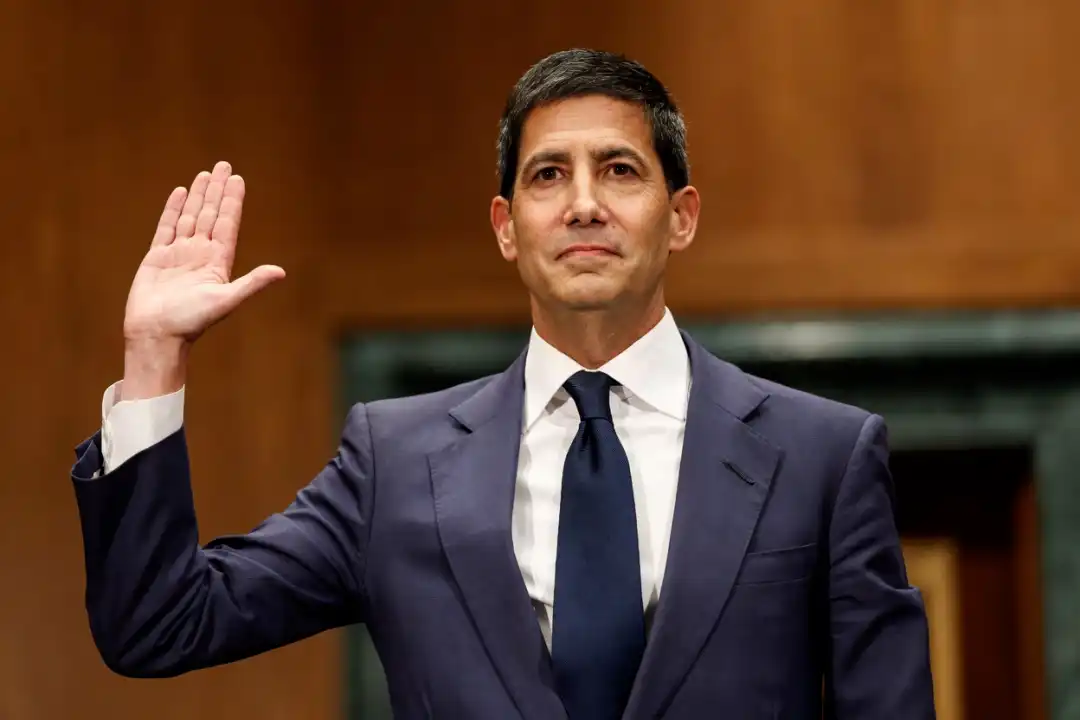
On April 21, 2026, Kevin Warsh's financial disclosure documents were released ahead of the start of his confirmation hearing.

His investment portfolio totals over $130 million. If confirmed, he would be the wealthiest Federal Reserve Chair in history. His current holdings include direct positions in the DeFi lending protocol Compound, derivatives platforms dYdX and Lighter, and the public blockchains Solana, Optimism, Blast, and Zero Gravity.

This marks the first public appearance of the candidate for Fed Chair nominated by Trump, returning to the center of policy after 15 years. Beyond his commitment to divest these holdings, the market is more concerned with how he will lead the Fed through the three major challenges he himself has outlined in his upcoming term.

Can the Premise for Rate Cuts Hold?

From 2006 to 2011, during his five years as a Fed Governor, Warsh was notoriously an inflation-first advocate.

Even at the height of the financial crisis, when unemployment exceeded 10%, he issued 13 public warnings about upside inflation risks during FOMC meetings.

In 2010, he was the most vocal opponent of the second round of quantitative easing (QE2). His resignation from the Fed in 2011 was in opposition to unlimited asset purchases.

But a shift began in May 2025. In a public interview, he stated: "We are at the frontier of AI use cases; everything touched by technology will become cheaper."

By November, in a Wall Street Journal column, he directly defined AI as a significant disinflationary force, capable of boosting productivity and enhancing U.S. competitiveness.

From late 2025 to early 2026, he repeatedly emphasized in various podcasts and interviews that AI is "the most productivity-enhancing wave of our lifetimes," and bluntly stated: if the Fed waits for official data to confirm the productivity gains before acting, it will be "too late."
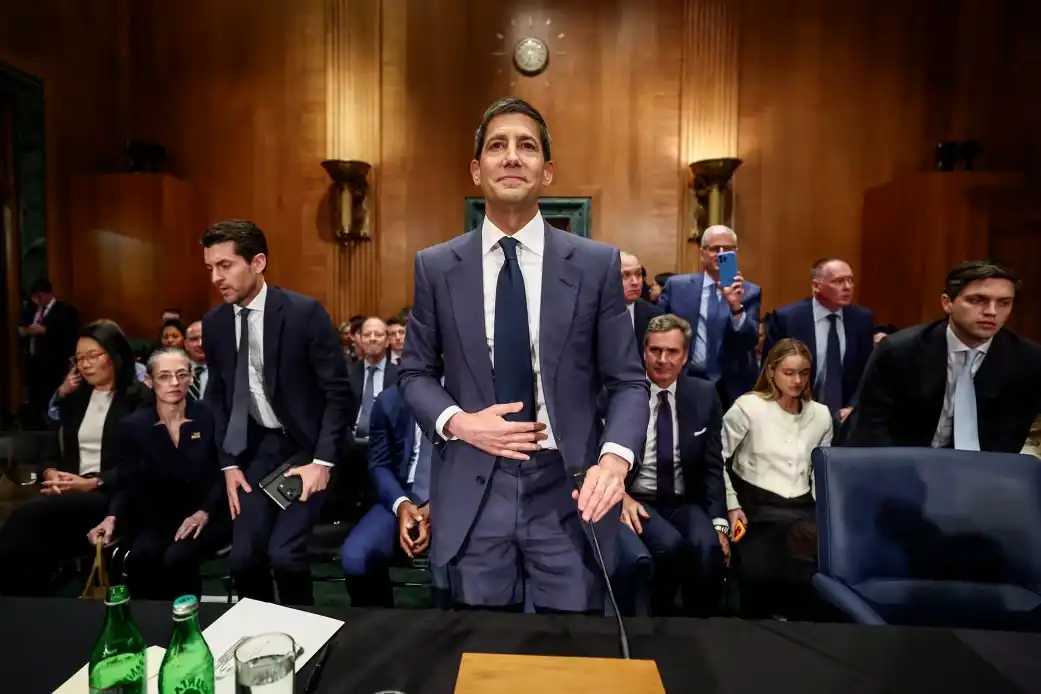
Democratic Senator Elizabeth Warren attacked him during the hearing using the term "flip-flop," suggesting he was迎合 (catering to) Trump.

Warsh countered by citing Alan Greenspan's case from the 1990s: from 1995 to 2000, U.S. nonfarm labor productivity grew at an average annual rate of 2.5%, nearly double the 1.4% of the previous eight years; output per hour in the nonfinancial business sector averaged growth of 3.5%.

At that time, the labor market was extremely tight, with unemployment hitting multi-decade lows, yet core inflation remained stable below 2%, not surging alongside economic growth. Greenspan chose not to tighten policy hastily, ultimately achieving both economic growth and price stability.

Warsh believes he is making the same judgment now—AI is the internet of this cycle.

However, this judgment is facing severe pressure from reality. The March 2026 CPI rose 3.3% year-on-year, higher than February's 2.4%, marking the highest level since May 2024; core CPI rose 2.6% year-on-year. The situation in Iran pushed up energy prices, with gasoline prices rising 18.9% month-on-month and fuel oil rising 44.2%, contributing directly to the largest single-month increase in overall inflation since June 2022.

He acknowledged during the hearing that current inflation data means "there is still work to be done," while refusing to provide any specific rate path or timeline.

The Eroded Independence

At the start of the hearing, Warren used the term "puppet" in her opening statement, citing Trump's social media post from the previous week that "rates will come down once Kevin is in," and repeatedly pressed: Have you promised the President a specific interest rate path? Can you resist pressure from the White House to cut rates if inflation rises again?

Warsh's response was: The President has never asked him to preset, promise, or fix any rate decision in any conversation, and he would not make such promises.

He stated that independence is not an automatic legal firewall but something the Fed earns by adhering to price stability and avoiding overreach. If the Fed persistently makes mistakes and constantly oversteps, the skepticism from the public and politicians is a justified cost; independence is eroded from within, and political pressure is merely an external factor.

The inflation of 2021-2022, in his characterization, was not a simple misjudgment but the result of the Fed using its credibility to endorse fiscal expansion and actively blurring the line between monetary and fiscal policy. This, he said, is the real crisis of independence—not caused by Trump, but by the Fed itself.
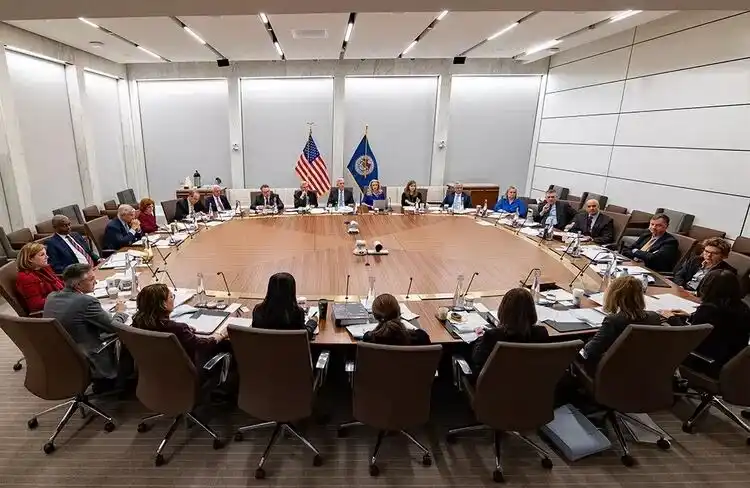
This logic was formed as early as 2010. He gave a speech titled "An Ode to Independence" that year, and it has reappeared in Hoover Institute interviews and Wall Street Journal columns since, centering on the same core judgment: the greatest threat to the Fed comes not from external political pressure, but from its own gradual ceding of institutional space.

The test of independence doesn't only come from Trump himself. Republican Senator Thom Tillis announced during the hearing that he would delay his support for Warsh's confirmation. The reason wasn't questioning Warsh personally, but rather that the Justice Department is currently conducting a criminal investigation into incumbent Chair Powell, nominally related to cost overruns in the Fed headquarters renovation.

Both Powell and a federal judge believe this is political pressure targeting monetary policy. Tillis's stance is that proceeding with confirmation under this shadow means the entire process is politically tainted. This implies Warsh's confirmation timeline is stalled, unrelated to his answers during the hearing.

Can Balance Sheet Reduction and Rate Cuts Be Advanced Simultaneously?

Warsh's views on the balance sheet were formed when he left the Fed in 2011 and have been his most stable position over the past fifteen years.

He used the word "bloated" to describe the Fed's current balance sheet of approximately $6.7 trillion. QE evolved from a temporary emergency measure during the 2008 financial crisis into a semi-permanent tool for the following decade-plus. This evolution brought two structural consequences:

The boundary between monetary and fiscal policy became blurred, with the Fed effectively assuming some fiscal functions; Large-scale asset purchases systematically inflated financial asset prices, benefiting those holding stocks and real estate, while ordinary households did not reap equivalent benefits.

Therefore, this balance sheet must be significantly reduced, while emphasizing that any reduction must be cautious, orderly, and fully communicated to avoid unnecessary market shocks.
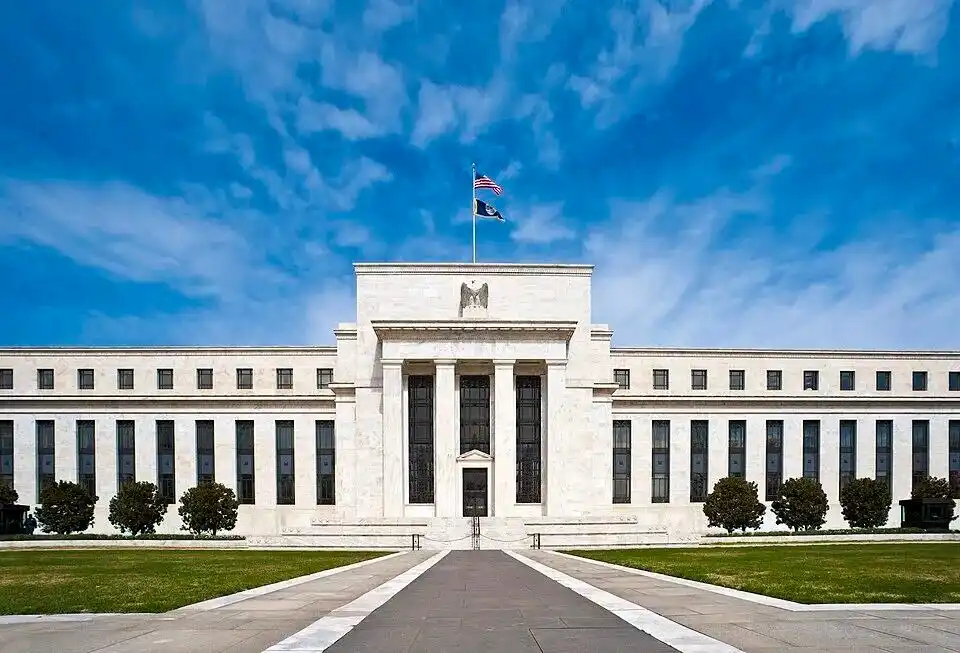
This presents a combination that makes the market uneasy: he might simultaneously advance balance sheet reduction (quantitative tightening, QT) and interest rate cuts, withdrawing liquidity from the balance sheet side while sending easing signals through rates, both acting on market pricing at the same time.

His explanation is that interest rates should once again become the primary tool of monetary policy, while asset purchases return to their temporary crisis-era role—to put the misused tool away and let the right tool function again.

Following the hearing, U.S. Treasury yields rose, with the market pricing in the uncertainty of this mixed message through actual trading.

He also mentioned another specific reform during the hearing: wanting to launch a data project tracking billions of real-time price points to replace parts of the existing CPI statistical framework that rely on lagging sampling.

Reduce the frequency of officials' public forecasts of the rate path, because once a forecast is made, officials often stick to it even after the situation changes to maintain credibility, which is a source of sluggish response. He described his desired state for the FOMC as healthy internal debate, not marching to a pre-scripted, expected conclusion.

He used "regime change" to summarize this direction—a change in the entire policy regime, not just tweaking a couple of parameters.

He also mentioned that stablecoins and on-chain price data could become more real-time supplementary indicators to compensate for defects in the existing statistical framework.

This also reveals his deeper logic regarding crypto: not just an asset class that needs regulation, but also an information infrastructure that can be used to improve the quality of policy judgment. His $130 million holdings might also be understood from this perspective.


Пов'язані питання

QWhat are the three major challenges Kevin Warsh faces as the potential Federal Reserve Chair?

AThe three major challenges are: 1) The premise for interest rate cuts, specifically whether AI-driven productivity gains will materialize to control inflation; 2) The erosion of the Fed's independence from political pressure and past policy mistakes; 3) The possibility of simultaneously implementing balance sheet reduction (quantitative tightening) and interest rate cuts, creating market uncertainty.

QWhy is Kevin Warsh's potential appointment considered a significant shift in his stance on inflation?

AWarsh was previously known as a staunch inflation hawk who opposed quantitative easing during the financial crisis. His recent shift involves championing AI as a major deflationary force that boosts productivity, a view critics see as a reversal to align with political interests.

QHow does Kevin Warsh view the relationship between the Federal Reserve's independence and its policy decisions?

AWarsh believes the Fed's independence is not automatically guaranteed by law but must be earned through sound policy. He argues that the Fed eroded its own independence by blurring the lines between monetary and fiscal policy during the 2021-2022 inflation period, making it vulnerable to external political pressure.

QWhat is the market's concern regarding Warsh's approach to balance sheet reduction and interest rates?

AThe market is concerned that Warsh may simultaneously pursue quantitative tightening (reducing the Fed's balance sheet) and interest rate cuts. This mixed approach could create uncertainty as it pulls liquidity from the market while signaling monetary easing, potentially leading to volatile asset pricing.

QHow does Kevin Warsh propose to modernize the Federal Reserve's data and policy framework?

AWarsh proposes creating a real-time price tracking system to replace parts of the lagging CPI framework, reducing the frequency of official rate path forecasts to avoid rigidity, and incorporating stablecoin and on-chain price data as supplementary indicators for more accurate and timely policy decisions.

Пов'язані матеріали

Cursor, Why Boarded Musk's Starship?

SpaceX announced its acquisition of AI programming startup Cursor's parent company, Anysphere, for $60 billion in an all-stock deal, just days after its record-breaking IPO. The move sent SpaceX's stock soaring, briefly making it the most valuable U.S. company. Cursor, founded in 2022 by MIT graduate Michael Truell and his classmates, is a popular AI coding assistant that allows developers to switch between models from OpenAI, Anthropic, and others. It saw explosive revenue growth, reaching a $4 billion annualized run rate in early 2026. However, its market share was eroded by the launch of competitor Claude Code from its key AI supplier, Anthropic. This dependence prompted Cursor to develop its own AI model, Composer, in early 2026. To scale Composer, Cursor needed immense computing power. In April 2026, it struck a deal with SpaceX, granting the latter an option to acquire it post-IPO. SpaceX exercised this option, offering Cursor access to its Colossus supercomputer, powered by hundreds of thousands of top-tier Nvidia AI chips. For SpaceX, the acquisition is a strategic move to bolster its AI capabilities, particularly for its xAI division, and advance its broader ambition of building orbital, solar-powered data centers. While the deal surprised some employees and investors given Truell's earlier stance on independence, it represents a high-stakes partnership. SpaceX CEO Elon Musk has projected the company could reach $1 trillion in revenue by 2030. For Truell, joining forces with SpaceX is a monumental gamble on an unprecedented scale in the race for AI dominance.

链捕手2 хв тому

Cursor, Why Boarded Musk's Starship?

链捕手2 хв тому

The More It Rises, the More Dangerous? The Systemic Risks Behind SpaceX's Soaring Valuation

Summary: The article raises concerns about the systemic risks posed by SpaceX's skyrocketing valuation, arguing that modern market mechanics, rather than fundamentals, are driving its price discovery. Following SpaceX's market capitalization surpassing $3 trillion in after-hours trading, the author contends that the market is no longer functioning properly. The core issue is not SpaceX's business prospects but the unhealthy market structure surrounding it. With limited float and the imminent launch of options trading, the stage is set for a potential "gamma squeeze"—a feedback loop where market makers hedging call options are forced to buy shares, pushing the price higher and attracting more speculative momentum traders. This mechanism, seen previously with Tesla and meme stocks, can decouple valuation from financial reality. The danger escalates as extreme valuations force passive funds, ETFs, pensions, and major indices to hold the stock. If SpaceX grows large enough—hypothetically reaching $5 or even $10 trillion—its performance would increasingly dictate broader market indices, embedding systemic risk. The author warns that when price appreciation itself becomes the primary bullish thesis, the market transforms from a capital allocation mechanism into a self-reinforcing speculative machine, endangering the retirement savings of ordinary investors tied to passive strategies. The piece questions whether such a system can still perform its fundamental role of price discovery.

marsbit7 хв тому

The More It Rises, the More Dangerous? The Systemic Risks Behind SpaceX's Soaring Valuation

marsbit7 хв тому

How Much of the Subscription Fee You Pay to Claude Can Optical Module Companies Get?

How much of your $20 Claude Pro subscription actually goes to AI model companies like Anthropic? A viral breakdown image highlights the fundamental valuation challenge for AI applications versus traditional SaaS. Unlike SaaS with high software margins, AI subscriptions face variable "inference costs": every user query consumes GPU time, power, and cloud resources. This creates a tension between fixed subscription fees and usage-driven expenses. While the specific dollar splits are illustrative, the core question is whether AI revenue can achieve SaaS-like margins as usage scales. Currently, infrastructure providers (cloud platforms, GPU makers like Nvidia, HBM suppliers, power/data centers) capture more certain revenue from growing AI usage. Their financials reflect pricing power and faster earnings validation. The bullish case hinges on efficiency improvements: model optimization, caching, smaller models, and custom chips could lower per-token costs over time. The key debate is whether cost declines can outpace increases in user workload complexity and volume. Ultimately, for AI companies to command high SaaS-like valuations, they must demonstrate not just user growth but also improving gross margins after accounting for inference costs. Investors will scrutinize not just subscriber numbers, but usage patterns, enterprise pricing tiers, and real efficiency gains.

marsbit17 хв тому

How Much of the Subscription Fee You Pay to Claude Can Optical Module Companies Get?

marsbit17 хв тому

OpenAI's Hyperliquid Pre-IPO Pricing Venture: Why Did It Last Only Half a Year?

The article discusses the rise and fall of Pre-IPO pricing markets on the Hyperliquid blockchain. Trade.xyz, an anonymous team, successfully built the largest pre-market for SpaceX (SPCX) by launching a contract with a clear anchor: the eventual Nasdaq listing price. This provided inherent price stability and validation. In contrast, Ventuals, a team backed by Paradigm, failed despite holding exclusive contracts for highly sought-after companies like OpenAI and Anthropic. Its key mistake was its pricing mechanism. For companies with no near-term IPO date, Ventuals' oracle relied partly on opaque private market transactions and, critically, partly on its own contract's moving average price. This created a self-referential feedback loop where prices were artificially propped up and detached from genuine supply and demand, leading to illiquid markets. Ventuals shut down after nine months, settling positions at final prices of $1,341.80 for OpenAI and $1,618.90 for Anthropic. Ironically, some employees and late-stage investors of these very companies reportedly used these flawed Ventuals prices for valuation reference, highlighting the acute demand for any price signal in illiquid private markets. The article concludes that while demand for pre-IPO trading is real and growing, with players like Coinbase now entering the space, the fundamental challenge remains: without a public listing to provide a definitive price anchor, these markets struggle to establish truly accurate and liquid pricing. The need for a transparent, self-correcting market is the critical lesson from Ventuals' failure.

marsbit33 хв тому

OpenAI's Hyperliquid Pre-IPO Pricing Venture: Why Did It Last Only Half a Year?

marsbit33 хв тому

Торгівля

Спот
Ф'ючерси
活动图片




