‘The question is how, not if’ – Reserve Bank of Australia’s 24/7 trading roadmap

ambcryptoОпубліковано о 2026-03-27Востаннє оновлено о 2026-03-27

Анотація

The Reserve Bank of Australia (RBA) has shifted its focus from questioning "if" to "how" tokenization will be implemented in the financial system. Assistant Governor Brad Jones announced this change, highlighting that tokenization is now considered an inevitable future. The RBA's Project Acacia projects $16.7 billion in annual efficiency gains and supports the coexistence of stablecoins and bank deposits. Currently, the Australian dollar stablecoin market cap is relatively low at $10.5 million, with AUDD dominating at 98.73%. However, new regulations and the push for 24/7 trading are expected to spur growth. Tokenization pilot programs covered assets like government bonds and carbon credits, using both central bank and private tokenized money. The RBA will collaborate with regulatory bodies to support implementation, which could accelerate Australia's digital economy and stablecoin market.

Australia moved closer to tokenization, with the Reserve Bank of Australia (RBA) outlining its next phase.

At the ‘Beyond Tomorrow’ forum on the 25th of March, Assistant Governor Brad Jones said the focus had shifted from “if” to “how” tokenization would be implemented.

He stated,

First, we no longer see the main question as whether tokenisation has a future in Australia’s financial system, but rather, how.

How tokenization will be implemented

Australia appeared positioned to advance tokenization across asset classes, with a focus on enabling 24/7 trading.

On the RBA website, Jones detailed findings from Project Acacia, which projected $16.7 billion in annual efficiency gains.

The central bank noted that stablecoins and bank deposits could coexist within the system.

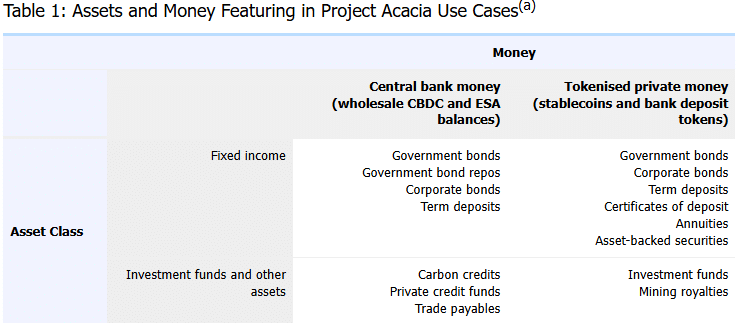
The pilot covered fixed income and investment funds, with transactions flowing through both central bank money and tokenized private money.

These included government bonds, corporate bonds, carbon credits, and private credit funds.

However, the RBA confirmed it would work with the Council of Financial Regulators (CFR) and DFCRC to support implementation.

That coordination could accelerate Australia’s stablecoin market and broader digital economy.
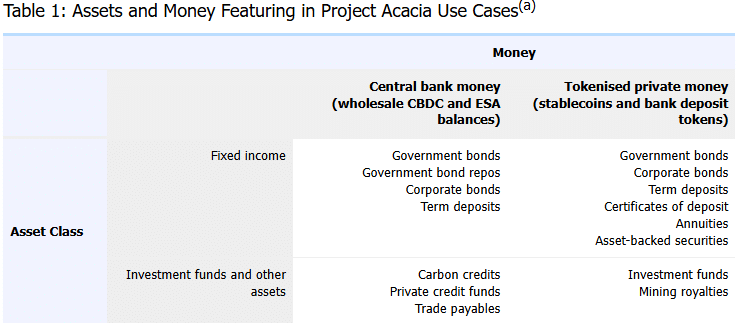
Source: rba.gov.au

Australia dollar [AUD] stablecoins market cap

Speaking of the market cap for Australian dollar stablecoins, it is relatively low, probably due to regulatory hurdles before the RBA move.

As per DeFiLlama, their total market cap was at $10.5 million, a growth of 1.86% this week. In this lot, AUDD led with a dominance of 98.73%, equivalent to $10.35 million.

Others in the list were AUDm and AUDM, accounting for 0.93% and 0.34% of the total cap, respectively. The joint had a cap of about $133K.
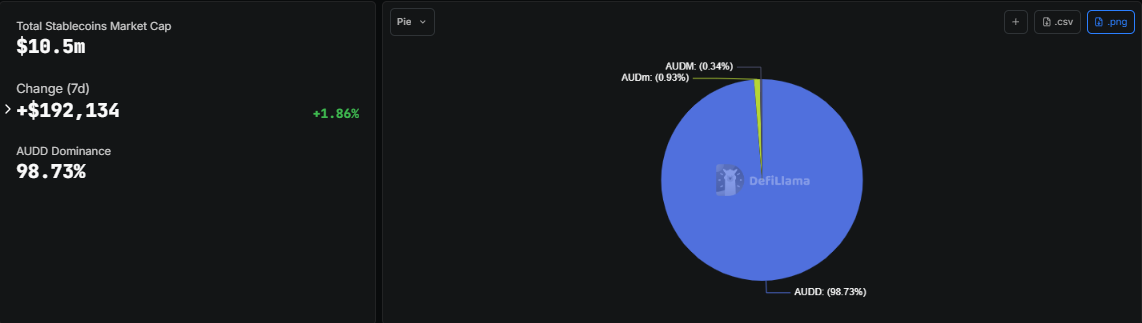
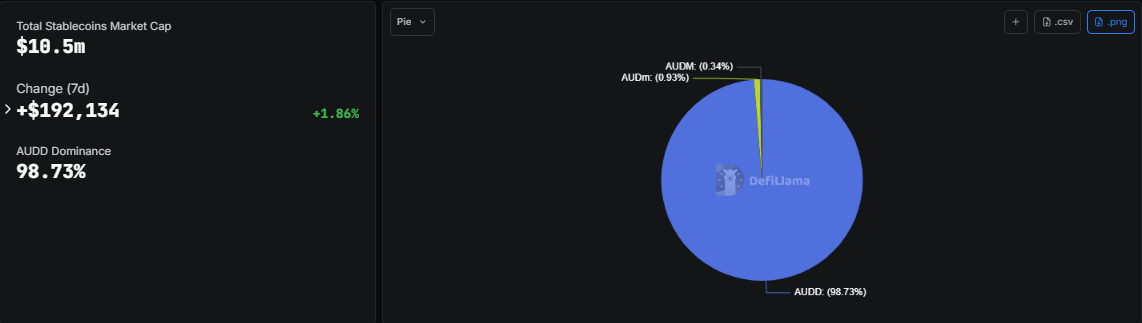
Source: DeFiLlama

Narrowing down the analysis to AUDD, it was spread across five major blockchains.

The largest share of its cap, about 48%, was on Stellar [XLM], equal to $5.2 million, as Ethereum [ETH] came second with 31% of the total.

Base Chain held 19%, which represented $2 million. Meanwhile, less than 1% of its total share was on Solana [SOL] and XRP Ledger.
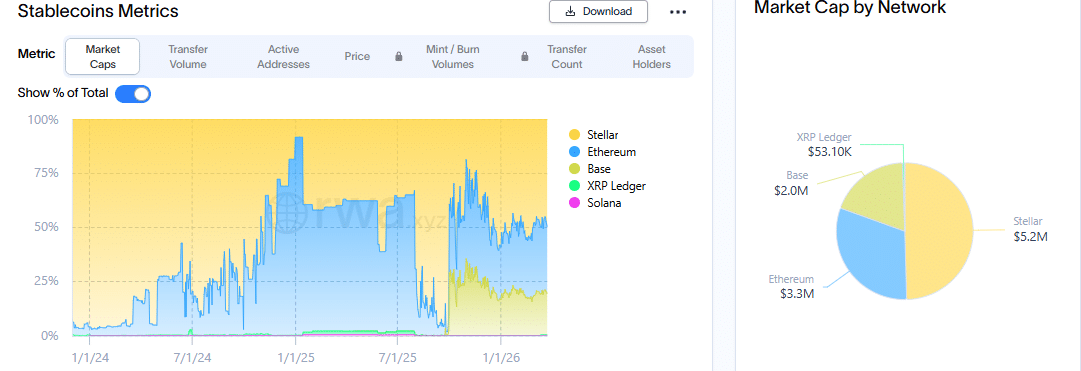
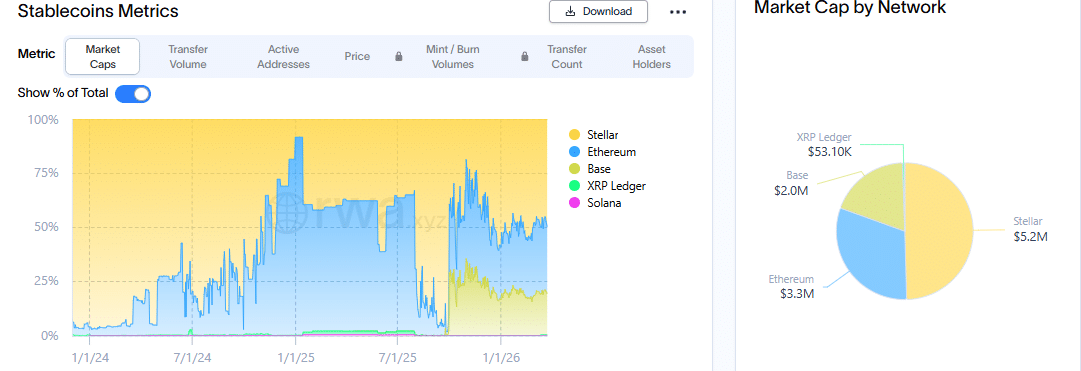
Source: RWA.xyz

The projection from Project Acacia, together with the implementation, was a precedent for the growth of tokenization in the Australian market.

Daily transactions surge

Tokenization was heavily reliant on stablecoins.

For context, daily transactions for USD Coin [USDC] had hit a 52-week high of $39.05 million. This equated to a 359% growth since March 2019.
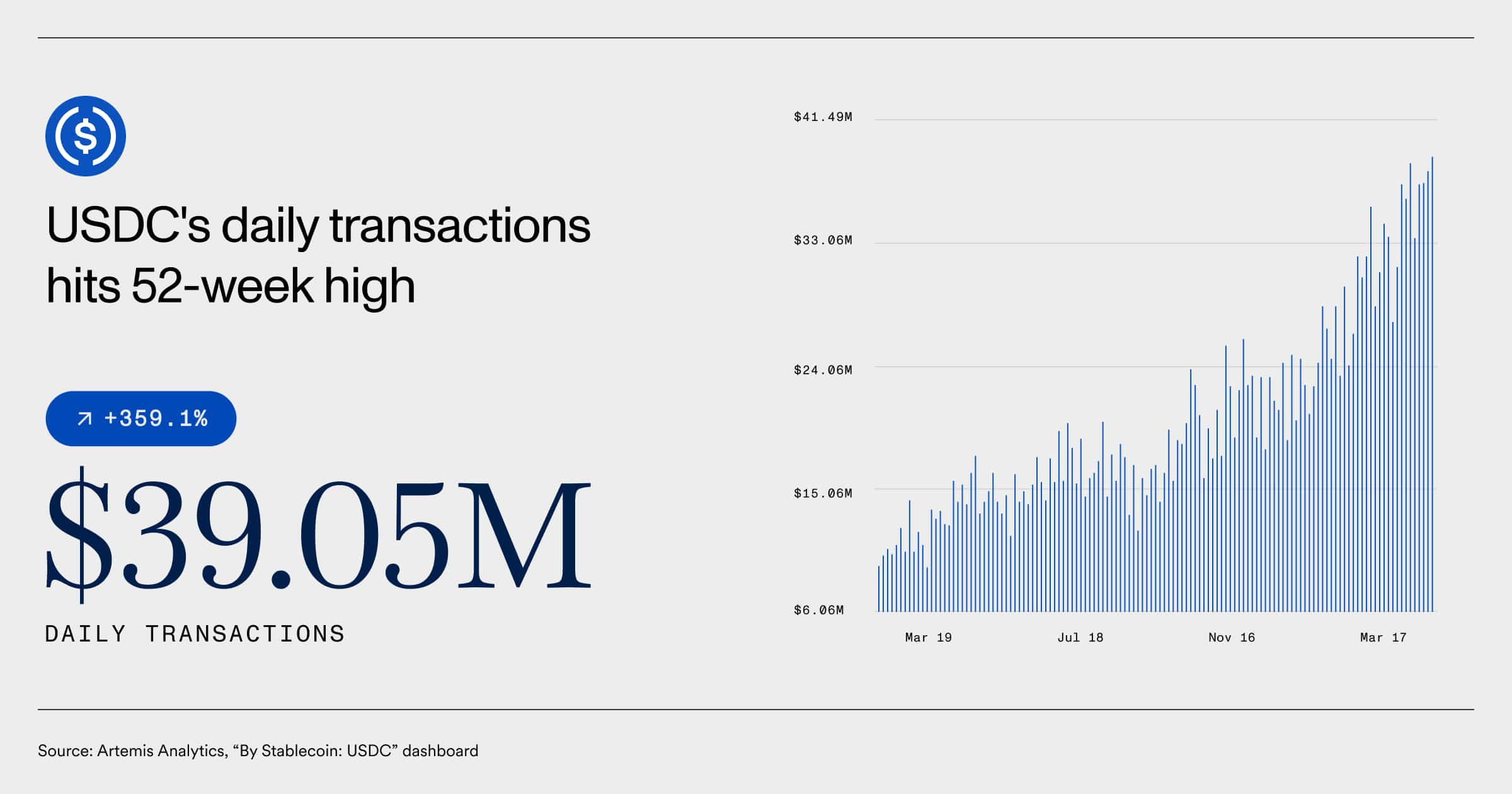
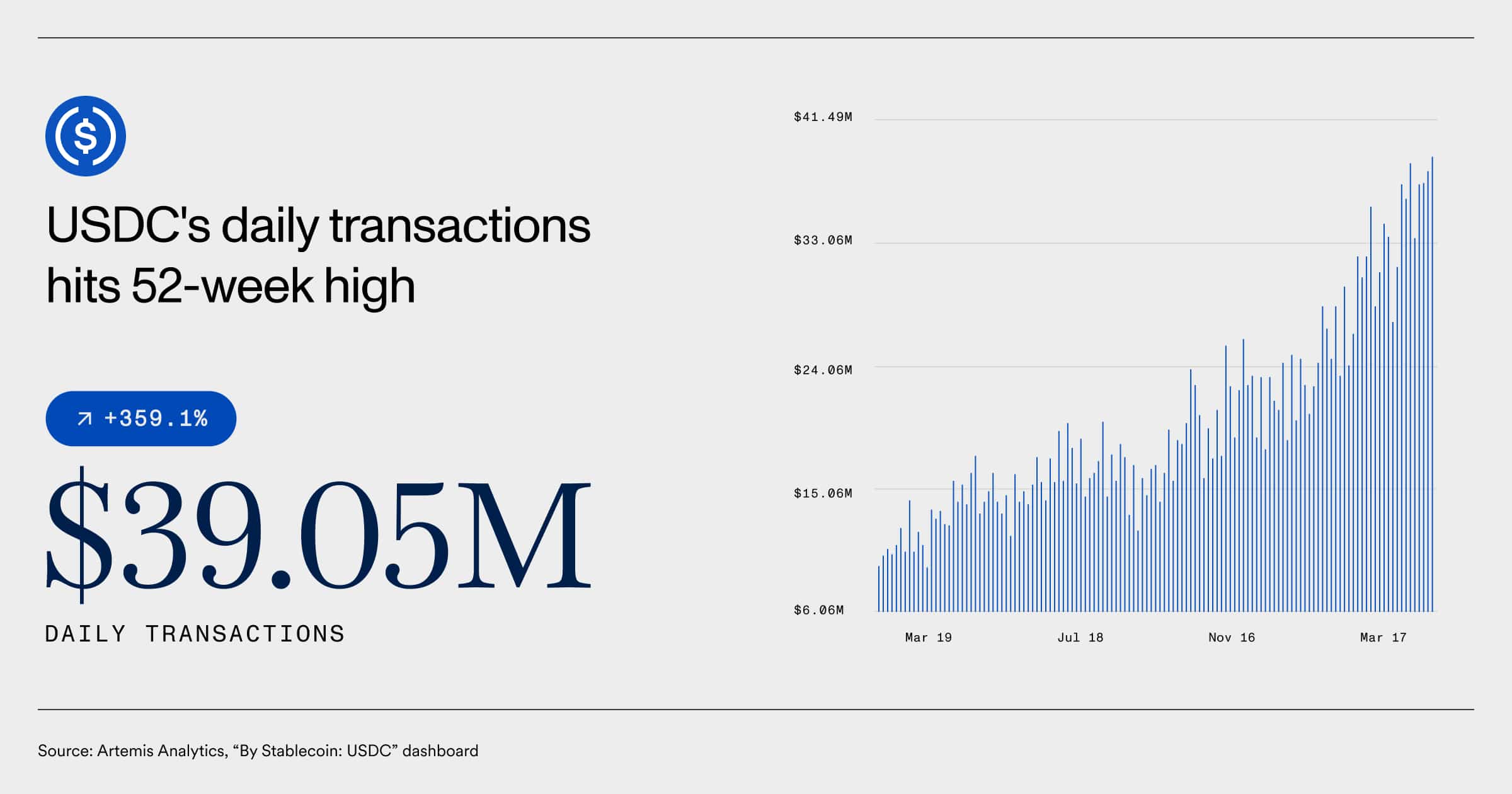
Source: Artemis Analytics

However, the growth of the Australian dollar stablecoin market was nowhere near that of the USD-backed ones. Therefore, tokenization could spur growth in AUD-backed stablecoins and real-world assets (RWAs) in the country.


Final Summary

  • RBA shifts from asking whether tokenization was happening to how to implement it.
  • The market cap of AUD-backed stablecoins has stayed relatively low, but the regulations could shift this trend.


Пов'язані питання

QWhat is the main shift in the Reserve Bank of Australia's (RBA) stance on tokenization, as stated by Assistant Governor Brad Jones?

AThe main shift is that the RBA no longer sees the question as 'if' tokenization has a future in Australia's financial system, but rather 'how' it will be implemented.

QWhat was the name of the RBA project that projected significant annual efficiency gains from tokenization, and what was the projected amount?

AThe project was called Project Acacia, and it projected $16.7 billion in annual efficiency gains.

QWhat is the current total market cap of Australian dollar (AUD) stablecoins, and which stablecoin dominates this market?

AThe total market cap is $10.5 million, and the AUDD stablecoin dominates the market with a 98.73% share, equivalent to $10.35 million.

QWhich two types of assets were used in the RBA's pilot for tokenization, and what two forms of money did the pilot use for transactions?

AThe pilot covered fixed income and investment funds, and transactions flowed through both central bank money and tokenized private money.

QAccording to the article, what could the RBA's coordination with other regulators accelerate the growth of in Australia?

AThis coordination could accelerate the growth of Australia's stablecoin market and its broader digital economy.

Пов'язані матеріали

KOL's Perspective: Why Is SOL Set to Rise from This Point?

**Summary: Why SOL is Positioned for Growth at This Level** The article argues that SOL is poised for an upward move from its current price point, citing several key factors. Primarily, SOL has just broken out of a 4-month consolidation phase. This breakout signals a return of risk appetite to the broader crypto market, as SOL is seen as a key indicator of overall crypto health. The token's ownership has reportedly shifted from short-term traders and tourists to long-term accumulators, leading to low volume. Any meaningful increase in trading activity could thus trigger significant upward momentum. Fundamental strengths include strong institutional adoption, integration with DeFi and RWAs (Real-World Assets), and the potential benefits from the Clarity Act. Despite its high volatility—having dropped 70% from its all-time high but still up 12x from its bear market low—SOL is highlighted as one of the few tokens from the last cycle to reach new highs. It boasts a robust ecosystem of applications, users, and protocols. Future catalysts include the expected influx of AI developers following the Miami Accelerate conference, which focused on AI on Solana. Furthermore, Solana is positioned as the premier chain for memecoin activity, a trend expected to continue and drive network usage and fees. The article concludes that recent price action reflects a healthy transfer to long-term holders, setting the stage for growth.

marsbit17 хв тому

KOL's Perspective: Why Is SOL Set to Rise from This Point?

marsbit17 хв тому

Those Pre-Bitcoin PoW Protocols Have Recently Been Reimplemented

This article details a recent surge in replicating pre-Bitcoin Proof-of-Work (PoW) protocols, specifically focusing on Hal Finney's 2004 RPOW (Reusable Proofs of Work). Within five days in May 2026, multiple independent builders in the Bitcoin/cypherpunk community launched projects inspired by this early electronic cash proposal. The initiative began with Fred Krueger's `rpow2.com`, a centralized but auditable system that replaced RPOW's original IBM 4758 hardware with Ed25519 signatures. Initially a faithful replica, it later adopted Bitcoin-like features (21M supply cap, difficulty adjustment) and a controversial 5.24% founder allocation. This sparked rapid forks, including `rpow4.com` which incorporated full Bitcoin parameters, a prediction market (`rpowmarket.com`), and a DEX (`rpow2swap.com`). Concurrently, Mike In Space created a prototype of Wei Dai's 1998 b-money proposal (`b-money.replit.app`), pushing the historical exploration even further back. The article contrasts these centralized, server-dependent experiments with Bitcoin's core innovation of decentralized, trustless consensus. It also highlights a parallel development: the `HASH` project on Ethereum, which uses smart contract hooks to enable a purely fair-launch, browser-mineable PoW token with 0% allocations to team or VCs. The collective activity is framed as a meme-driven, educational exploration of cypherpunk history rather than a serious financial movement, with all projects heavily disclaiming any investment value.

marsbit22 хв тому

Those Pre-Bitcoin PoW Protocols Have Recently Been Reimplemented

marsbit22 хв тому

South Korean Exchanges 'Battle' Regulators, Challenging the Boundaries of Enforcement and Legislation

South Korea's cryptocurrency industry is engaged in a rare, direct confrontation with regulators. The Financial Intelligence Unit (FIU), the primary anti-money laundering (AML) watchdog, has recently imposed heavy penalties on major exchanges like Upbit and Bithumb for alleged violations involving unregistered overseas VASPs and AML procedures. However, exchanges are now actively challenging these actions in court and through industry associations. In a significant shift, the Seoul Administrative Court ruled in favor of Upbit's operator, Dunamu, overturning part of an FIU-ordered business suspension. The court found the FIU's penalty criteria and justification insufficiently clear. Similarly, the court suspended the enforcement of a six-month business suspension against Bithumb pending a final ruling, citing potential irreversible harm to the exchange. Beyond legal battles, the industry is contesting proposed legislative amendments. The Digital Asset eXchange Alliance (DAXA) strongly opposes a draft rule that would mandate Suspicious Transaction Reports (STRs) for all crypto transfers over 10 million KRW (~$6,800). DAXA argues this "poison pill" clause violates legal principles and would overwhelm the STR system, increasing reports from 63,000 to an estimated 5.45 million annually for major exchanges, thereby crippling effective AML monitoring. This conflict highlights a structural tension in South Korea's crypto governance: comprehensive digital asset laws are still developing, while regulators rely heavily on AML enforcement. The industry's move from passive compliance to active legal and legislative challenges signifies a new phase, pressing for clearer rules and more proportionate enforcement. While short-term disputes may intensify, this clash could ultimately lead to a more mature and sustainable regulatory framework for South Korea's vibrant crypto market.

marsbit1 год тому

South Korean Exchanges 'Battle' Regulators, Challenging the Boundaries of Enforcement and Legislation

marsbit1 год тому

After 50x Storage Surge, Justin Sun Always Looks to the Next Decade

Sun Yuchen, known for his controversial stunts like a $30 million lunch with Warren Buffett (canceled due to a kidney stone) and eating a $6.2 million duct-taped banana, is often overshadowed by a significant fact: his decade-long track record of spotting major investment trends. In 2016, he famously advised young people to invest in Bitcoin, Nvidia, Tesla, and Tencent instead of buying property. A hypothetical $20,000 investment in Nvidia and Tesla from that list would now be worth over 50 million RMB. His latest major call was on November 6, 2025, predicting a "50x storage opportunity" tied to the AI boom, which materialized with Sandisk's stock surging nearly 50-fold by 2026. Looking ahead, Sun now focuses on the next frontier: Physical AI. He identifies four key areas: 1. **Embodied AI/Robotics**: He sees this reaching its "iPhone moment," with companies like UBTech and Galaxy General leading in commercialization. 2. **Drones**: Viewed as the first commercially viable form of Physical AI, revolutionizing sectors from warfare (e.g., AeroVironment's Switchblade) to logistics. 3. **Spatial Computing**: Beyond VR, it's about AI understanding physical space, a foundational technology for robotics and autonomous systems, exemplified by Apple's Vision Pro. 4. **Space Exploration**: After a 2025 suborbital flight with Blue Origin, Sun advocates for space as the ultimate frontier, discussing blockchain's potential role in space asset management and data transactions. His investment philosophy involves betting on entire, inevitable trends rather than single companies. For robotics, he sees Tesla (the body/manufacturer) and Nvidia (the brain/AI platform) as complementary plays. In defense drones, he highlights companies making tanks obsolete (AeroVironment) and those augmenting fighter jets (Kratos). For space, he participated in Blue Origin's flight and anticipates SpaceX's potential IPO to redefine the sector's valuation. Sun Yuchen's vision frames the next two decades not as a revolution in information flow (like the internet), but in the fundamental operation of the physical world through AI-powered robots, autonomous systems, and spatial intelligence, ultimately extending human and AI activity into space. While many still focus on conventional assets, he continues to look toward the next technological horizon.

marsbit2 год тому

After 50x Storage Surge, Justin Sun Always Looks to the Next Decade

marsbit2 год тому

Торгівля

Спот
Ф'ючерси

Популярні статті

Що таке $BANK

Bank AI: Революційний крок у майбутнє банківської справи Вступ В епоху, що характеризується швидкими технологічними змінами, Bank AI знаходиться на перетині штучного інтелекту (ШІ) та банківських послуг. Цей інноваційний проєкт прагне переосмислити фінансовий ландшафт, підвищуючи ефективність роботи, заходи безпеки та досвід клієнтів завдяки потужності ШІ. Розпочинаючи дослідження Bank AI, ми заглибимося в суть проєкту, його операційні динаміки, історичний контекст і значущі етапи. Що таке Bank AI? У своїй основі Bank AI представляє собою трансформаційну ініціативу, спрямовану на інтеграцію штучного інтелекту в різні банківські операції. Цей проєкт використовує можливості ШІ для автоматизації процесів, покращення протоколів управління ризиками та підвищення взаємодії з клієнтами через персоналізовані послуги. Основні цілі Bank AI включають: Автоматизація банківських функцій: Використовуючи технології ШІ, Bank AI прагне автоматизувати рутинні завдання, зменшуючи навантаження на людські ресурси та підвищуючи ефективність. Покращене управління ризиками: Проєкт використовує алгоритми ШІ для прогнозування та виявлення ризиків, тим самим зміцнюючи заходи безпеки проти шахрайства та інших загроз. Персоналізація банківських послуг: Bank AI зосереджується на пропозиції індивідуальних фінансових продуктів і послуг, аналізуючи дані і поведінку клієнтів. Покращення досвіду клієнтів: Впровадження рішень на основі ШІ, таких як чат-боти та віртуальні асистенти, має на меті забезпечити користувачам більш природну взаємодію, революціонізуючи спосіб, яким клієнти спілкуються з банками. З цими цілями Bank AI займає важливу роль в робленні банківської справи більш ефективною, безпечною та орієнтованою на користувача. Хто є творцем Bank AI? Деталі стосовно творця Bank AI залишаються невідомими. Таким чином, жодна конкретна особа або організація не були ідентифіковані в доступній інформації. Анонімність навколо створення проєкту піднімає питання, але це не зменшує його амбітного бачення та цілей. Хто є інвесторами Bank AI? Аналогічно творцеві проєкту, конкретна інформація стосовно інвесторів або організацій, що підтримують Bank AI, не була розкрито. Без цієї інформації важко окреслити фінансову підтримку та інституційну підтримку, які могли б сприяти розвитку проєкту. Тим не менше, важливість наявності міцної інвестиційної бази є вирішальною для забезпечення розвитку в такій інноваційній сфері. Як працює Bank AI? Bank AI функціонує на кількох інноваційних фронтах, фокусуючись на унікальних факторах, які відрізняють його від традиційних банківських структур. Нижче наведено ключові операційні характеристики: Автоматизація: Застосовуючи алгоритми машинного навчання, Bank AI автоматизує різні ручні процеси в банках. Це призводить до зниження операційних витрат і дозволяє працівникам перенаправити свої зусилля на більш стратегічні завдання. Покращене управління ризиками: Інтеграція ШІ в практики управління ризиками забезпечує банки інструментами для точного прогнозування потенційних загроз, таких як шахрайство, забезпечуючи при цьому безпеку інформації і активів клієнтів. Індивідуальні фінансові рекомендації: Завдяки безперервному навчанню з інтерaktionen з клієнтами, системи ШІ розвивають тонке розуміння потреб користувачів, що дозволяє їм пропонувати персоналізовані поради щодо фінансових рішень. Покращені взаємодії з клієнтами: Використовуючи чат-ботів і віртуальних асистентів на базі ШІ, Bank AI дозволяє створити більш залучений досвід для клієнтів, дозволяючи користувачам швидше отримувати відповіді на свої запитання, зменшуючи час очікування та підвищуючи рівень задоволеності. Разом ці операційні характеристики позиціонують Bank AI як піонера в банківському секторі, встановлюючи нові стандарти для надання послуг і операційної досконалості. Хронологія Bank AI Для розуміння траєкторії Bank AI необхідно ознайомитися з його історичним контекстом. Нижче наведено хронологію, що підкреслює важливі етапи та розробки: Ранні 2010-ті: Концептуалізація інтеграції ШІ в банківські послуги почала привертати увагу, коли банківські установи визнали потенційні переваги. 2018: Відбулося помітне збільшення впровадження технологій ШІ, коли банки почали використовувати інструменти ШІ, такі як чат-боти для базового обслуговування клієнтів та системи управління ризиками для покращення безпеки. 2023: Софістикація ШІ продовжувала розвиватися, з введенням генеративного ШІ для більш складних завдань, таких як обробка документів і аналіз інвестицій в реальному часі. Цей рік став важливим стрибком у можливостях, які забезпечує технологія ШІ для банків. 2024-актуальний статус: Станом на цей рік, Bank AI знаходиться на зростаючій траєкторії, з постійними дослідженнями та розробками, які готові подальше покращити можливості в банківських операціях. Продовження дослідження застосувань ШІ натякає на захоплюючі події, які ще попереду. Ключові моменти про Bank AI Інтеграція ШІ в банківську справу: Bank AI зосереджується на прийнятті штучного інтелекту для оптимізації банківських процесів та покращення досвіду користувачів. Автоматизація та фокус на управлінні ризиками: Проєкт сильного підкреслює ці сфери, прагнучи зshift тягар рутинних завдань, водночас підвищуючи безпеку через прогнозну аналітику. Персоналізовані банківські рішення: Завдяки використанню даних клієнтів, Bank AI забезпечує персоналізовані банківські послуги, що відповідають потребам окремих користувачів. Прихильність до розвитку: Bank AI залишається відданим постійним дослідженням і розробкам, що забезпечують його адаптацію та постійну актуальність у міру того, як технології продовжують розвиватися. Висновок Підсумовуючи, Bank AI є важливим кроком вперед у банківській індустрії, використовуючи штучний інтелект для переформатування операційних парадигм, підвищення безпеки та сприяння задоволеності клієнтів. Незважаючи на прогалини в інформації щодо творця та інвесторів, чіткі цілі і функціональні механізми Bank AI забезпечують міцну основу для його подальшої еволюції. Оскільки технологія ШІ продовжує розвиватися та інтегруватися в банківський сектор, Bank AI має всі шанси суттєво вплинути на майбутнє фінансових послуг, покращуючи спосіб, яким ми розуміємо та взаємодіємо з банківською справою.

146 переглядів усьогоОпубліковано 2024.04.06Оновлено 2024.12.03

Що таке $BANK

Як купити BANK

Ласкаво просимо до HTX.com! Ми зробили покупку Lorenzo Protocol (BANK) простою та зручною. Дотримуйтесь нашої покрокової інструкції, щоб розпочати свою криптовалютну подорож.Крок 1: Створіть обліковий запис на HTXВикористовуйте свою електронну пошту або номер телефону, щоб зареєструвати обліковий запис на HTX безплатно. Пройдіть безпроблемну реєстрацію й отримайте доступ до всіх функцій.ЗареєструватисьКрок 2: Перейдіть до розділу Купити крипту і виберіть спосіб оплатиКредитна/дебетова картка: використовуйте вашу картку Visa або Mastercard, щоб миттєво купити Lorenzo Protocol (BANK).Баланс: використовуйте кошти з балансу вашого рахунку HTX для безперешкодної торгівлі.Треті особи: ми додали популярні способи оплати, такі як Google Pay та Apple Pay, щоб підвищити зручність.P2P: Торгуйте безпосередньо з іншими користувачами на HTX.Позабіржова торгівля (OTC): ми пропонуємо індивідуальні послуги та конкурентні обмінні курси для трейдерів.Крок 3: Зберігайте свої Lorenzo Protocol (BANK)Після придбання Lorenzo Protocol (BANK) збережіть його у своєму обліковому записі на HTX. Крім того, ви можете відправити його в інше місце за допомогою блокчейн-переказу або використовувати його для торгівлі іншими криптовалютами.Крок 4: Торгівля Lorenzo Protocol (BANK)Легко торгуйте Lorenzo Protocol (BANK) на спотовому ринку HTX. Просто увійдіть до свого облікового запису, виберіть торгову пару, укладайте угоди та спостерігайте за ними в режимі реального часу. Ми пропонуємо зручний досвід як для початківців, так і для досвідчених трейдерів.

625 переглядів усьогоОпубліковано 2025.05.09Оновлено 2025.05.09

Як купити BANK

Обговорення

Ласкаво просимо до спільноти HTX. Тут ви можете бути в курсі останніх подій розвитку платформи та отримати доступ до професійної ринкової інформації. Нижче представлені думки користувачів щодо ціни BANK (BANK).

活动图片