The Playground of Whales: Why Retail Investors Are Fleeing DeFi

比推Опубліковано о 2026-01-27Востаннє оновлено о 2026-01-27

Анотація

The article "Whales' Playground: Why Retail Investors Are Fleeing DeFi" argues that the era of decentralized finance as a tool for financial democratization has ended. Despite lower transaction costs on Layer 2 solutions and Ethereum mainnet, retail participation is declining due to several key issues: 1. **Low Gas Trap**: Cheap gas fees have turned DeFi into a high-effort, low-reward environment where users perform repetitive tasks for minimal airdrop rewards, resembling "digital labor." 2. **Unpredictable Rules**: Project teams frequently change rules retroactively (e.g., altering token distribution criteria or locking periods), undermining the "Code is Law" principle and leaving users vulnerable to arbitrary decisions. 3. **Lockup Traps**: High APY incentives often require long-term staking (1-4 years), but users risk illiquidity, token devaluation, and exploitation by whales who exit early. 4. **Risk-Reward Mismatch**: Low returns (5-10%) come with high risks: smart contract exploits, phishing, stablecoin depegging, and rug pulls. Retail investors bear disproportionate risk compared to potential gains. The author concludes that DeFi has become a playground for whales and predatory projects, advising retail investors to exit meaningless interactions, avoid lockups, and preserve capital by investing in core assets like Bitcoin instead.

Author: Chen Xiaomeng

Original Title: The Playground of Whales: Why Retail Investors Are Fleeing DeFi


The era of DeFi that once championed financial empowerment has effectively come to an end.

A few years ago, we were complaining that the $50+ gas fees on the Ethereum mainnet were barring retail investors. Now, Layer 2s have become ghost chains, and even the mainnet's gas fees have dropped to almost negligible levels after upgrades.

The barrier is gone. We expected a狂欢 (carnival) for retail, but instead, we got a silent mass exodus.

Why? Because everyone has finally woken up to the reality:

In this market, we worry ourselves sick ("carry the heart of selling white powder"), but only earn the meager profits of "selling flour."

I. The Low Gas Trap: From Noble Chain to Sweatshop
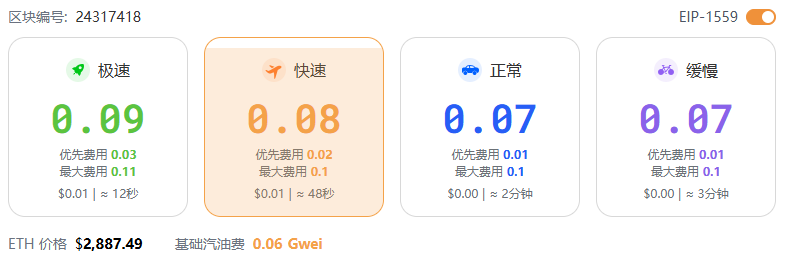
When gas was expensive, it at least filtered out low-quality interactions, forcing you to carefully consider every move. Now that gas is cheap, DeFi has turned into a massive electronic assembly line.

Because interaction costs are low, projects assume you should perform a massive number of interactions. So, for that tiny potential airdrop expectation, retail investors are forced to become proficient on-chain laborers: bridging, swapping, staking, providing LP... mechanically repeating these actions hundreds of times a day.

But this doesn't lead to higher returns. Instead, low gas has become a tool for projects to infinitely inflate their activity metrics.

This is on-chain manual labor.

II. The Capricious Dictator: Code is No Longer Law

"Code is Law" was once DeFi's most captivating narrative. But now, DeFi protocols not only have backdoors in their code, but the project teams' words have also become a sickle that can fall at any moment.

This is the current pain point retail investors hate the most—the uncertainty of the rules.

Project teams have long learned how to be ruthless. They invented undeliverable "points systems," like a carrot dangling in front of a donkey, luring you to constantly invest funds and time. After you've diligently farmed points for half a year, eagerly awaiting the payout, the project suddenly releases an announcement:

  • "For the fairness of the community, we will strictly crack down on Sybil attacks."

  • "Our VE model needs to be modified."

  • "For the development of the community, we have added a 45-day cooldown period."

Yesterday you were their cherished early supporter; today, because your IP address changed slightly, or your funds were withdrawn a day early, you are labeled a Sybil. The right to explain the rules belongs solely to the project team; they change them as they please.

This feeling is like going to work for a boss who promised daily wages. After you finish the job, the boss suddenly says, "For the long-term development of the company, we're withholding your pay. We'll see about paying you next year based on your performance."

In traditional business, this is called fraud. In DeFi, it's called DAO governance.

III. The Lock-up Prisoner: Capital Hunting Under High APY
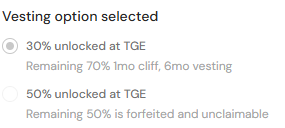
To maintain token prices, current DeFi protocols are obsessed with making users lock up their funds. Various Ve models keep emerging, often requiring periods of one year, two years, or even four years.

Projects lure you with extremely tempting APY. It looks like high returns, but the outcome is already scripted:

  • Liquidity Drain: Your principal is locked up, frozen and immobile.

  • Whale Front-Running: Project teams, early investors, and whales often have special vesting schedules for their tokens, or they can hedge their profits off-chain.

  • Price to Zero: By the time you can unlock, you might find that while you earned a 50% return in token terms, the token price has already dropped by 90%.

The essence of lock-ups is retail investors using their liquidity to provide exit liquidity for the whales. You covet the interest; they have their eyes on your principal.

IV. Extreme Mismatch of Risk and Reward

Let's do a realistic calculation.

Current DeFi protocols, excluding the shady meme coins that could rug pull at any moment, offer stablecoin yields around 5% – 10% for mainstream top protocols. This seems higher than banks, but what are the underlying risks?

  • Smart Contract Vulnerabilities: Hackers could drain the pool at any time.

  • Front-end Hijacking: Phishing sites are everywhere.

  • Depegging Risk: Algorithmic stablecoins or bridged assets can go to zero instantly.

  • Project Rug Pulls: Even projects with billions in TVL can disappear with the funds overnight.

Earning 5% yield while bearing 100% risk of total capital loss. This is the classic case of high risk, low reward. This level of return doesn't even cover the mental anguish you suffer while operating. Comparatively, simply buying and holding Bitcoin, or even using centralized exchange savings products, offers far better value for effort than messing around on-chain.

Conclusion: Refuse to Become On-Chain Fuel

DeFi innovation has stalled, but the methods of extraction have evolved.

At this stage, for most retail investors with less than $100,000 in capital, DeFi has lost its golden attributes. It is no longer a wilderness of opportunity but a playground meticulously designed by whales and unscrupulous project teams.

Every button, every rule, every suggestion to lock up funds here is designed to诱骗 (induce) you to hand over your chips.

So, perhaps the best strategy now is only one: Admit that current DeFi is indeed not working. Stop those meaningless interactions. Stop locking up funds for meager returns. Protect your principal. Convert it into truly valuable core assets, and then watch coldly from the sidelines as the whales battle each other.

Stop being an on-chain laborer. Your time and capital deserve a better destination.


Twitter:https://twitter.com/BitpushNewsCN

Bitpush TG Group:https://t.me/BitPushCommunity

Bitpush TG Channel: https://t.me/bitpush

Original Link:https://www.bitpush.news/articles/7606244

Пов'язані питання

QAccording to the article, why are retail investors leaving DeFi despite lower transaction fees?

ARetail investors are leaving because the low fees have turned DeFi into a high-effort, low-reward environment where they must engage in massive, repetitive interactions for minimal potential airdrop rewards, while project teams and whales benefit disproportionately.

QWhat does the article criticize about the 'Code is Law' principle in current DeFi?

AThe article criticizes that 'Code is Law' is no longer valid because project teams now have backdoors in their code and can arbitrarily change rules (like retroactive Sybil checks or modifying tokenomics), making their announcements the true 'law' and creating extreme uncertainty for users.

QHow do lock-up mechanisms in DeFi protocols disadvantage retail investors, as described in the article?

ALock-up mechanisms trap retail investors' capital for long periods (1-4 years) with high APY promises, but ultimately lead to illiquidity, allow whales to dump their tokens first, and often result in significant token depreciation by the time retail can unlock, effectively making them provide exit liquidity for large players.

QWhat is the risk-reward mismatch the article identifies for users of mainstream DeFi protocols?

AThe mismatch is that users earn only 5-10% yields on stablecoins but are exposed to 100% principal risk from smart contract exploits, front-end hacks, asset de-pegging, or project rug pulls, making the potential returns not worth the high risk and stress compared to simpler alternatives like holding Bitcoin.

QWhat final strategy does the article suggest for retail investors with less than $100,000 in capital?

AThe article suggests they should承认现在的 DeFi 确实不行了 (admit that DeFi, as it is now, is not working), stop meaningless interactions and lock-ups, protect their principal by converting it into core valuable assets (like Bitcoin), and simply observe the 'whales playing in their playground' from the sidelines.

Пов'язані матеріали

After 50x Storage Surge, Justin Sun Always Looks to the Next Decade

Sun Yuchen, known for his controversial stunts like a $30 million lunch with Warren Buffett (canceled due to a kidney stone) and eating a $6.2 million duct-taped banana, is often overshadowed by a significant fact: his decade-long track record of spotting major investment trends. In 2016, he famously advised young people to invest in Bitcoin, Nvidia, Tesla, and Tencent instead of buying property. A hypothetical $20,000 investment in Nvidia and Tesla from that list would now be worth over 50 million RMB. His latest major call was on November 6, 2025, predicting a "50x storage opportunity" tied to the AI boom, which materialized with Sandisk's stock surging nearly 50-fold by 2026. Looking ahead, Sun now focuses on the next frontier: Physical AI. He identifies four key areas: 1. **Embodied AI/Robotics**: He sees this reaching its "iPhone moment," with companies like UBTech and Galaxy General leading in commercialization. 2. **Drones**: Viewed as the first commercially viable form of Physical AI, revolutionizing sectors from warfare (e.g., AeroVironment's Switchblade) to logistics. 3. **Spatial Computing**: Beyond VR, it's about AI understanding physical space, a foundational technology for robotics and autonomous systems, exemplified by Apple's Vision Pro. 4. **Space Exploration**: After a 2025 suborbital flight with Blue Origin, Sun advocates for space as the ultimate frontier, discussing blockchain's potential role in space asset management and data transactions. His investment philosophy involves betting on entire, inevitable trends rather than single companies. For robotics, he sees Tesla (the body/manufacturer) and Nvidia (the brain/AI platform) as complementary plays. In defense drones, he highlights companies making tanks obsolete (AeroVironment) and those augmenting fighter jets (Kratos). For space, he participated in Blue Origin's flight and anticipates SpaceX's potential IPO to redefine the sector's valuation. Sun Yuchen's vision frames the next two decades not as a revolution in information flow (like the internet), but in the fundamental operation of the physical world through AI-powered robots, autonomous systems, and spatial intelligence, ultimately extending human and AI activity into space. While many still focus on conventional assets, he continues to look toward the next technological horizon.

marsbit40 хв тому

After 50x Storage Surge, Justin Sun Always Looks to the Next Decade

marsbit40 хв тому

The Billionaires Behind the Most Expensive Midterm Election in History

"The Most Expensive Midterm Elections and Their Billionaire Backers" This analysis details the unprecedented scale of spending in the 2026 midterm elections, highlighting the key billionaire donors shaping the political landscape. Jeff Yass, founder of Susquehanna International Group, has contributed over $81 million, ranking third among individual donors behind George Soros ($102.6M) and Elon Musk ($84.8M). Yass is a major donor to Trump's MAGA Inc. and supports school choice and various candidates. Overall, federal committees have raised over $4.7 billion this cycle, with political ad spending projected to reach $10.8 billion. Republican-aligned groups are significantly out-raising their Democratic counterparts. "Dark money" from undisclosed sources continues to grow. The core stakes involve control of Congress and policy direction for Trump's final term. Donors are also motivated by specific issues: Sergey Brin and Chris Larsen are funding opposition to a proposed California wealth tax and supporting crypto-friendly policies. Other top donors include OpenAI's Greg Brockman and his wife Anna ($50M total to MAGA Inc. and an AI-focused PAC), Richard Uihlein ($45.3M to conservative causes), venture capitalists Marc Andreessen and Ben Horowitz (each over $44M to crypto/AI PACs and MAGA Inc.), Miriam Adelson ($42.6M to GOP leadership PACs), Paul Singer ($33.9M), and Diane Hendricks ($25.8M to MAGA Inc.). The article notes that the peak fundraising period is still ahead, with major primaries approaching.

marsbit42 хв тому

The Billionaires Behind the Most Expensive Midterm Election in History

marsbit42 хв тому

The Largest IPO in History Is Approaching, Surpassing SpaceX, 28 Years of AI Self-Iteration, Countdown to Intelligence Explosion

"Anthropic Nears Trillion-Dollar IPO, Fueled by Explosive Growth and 2028 'Intelligence Explosion' Warning Anthropic is considering a deal valuing the AI company near $1 trillion, potentially leading to one of the largest IPOs ever and surpassing SpaceX. Its revenue has skyrocketed, with Annual Recurring Revenue (ARR) reaching $45 billion in May 2026—a 500% increase in just five months. This vertical growth curve is attributed to its key products, Claude Code and Cowork, dominating AI coding and enterprise collaboration. Beyond commercial success, co-founder Jack Clark issued a pivotal warning in an interview: there is a greater than 50% chance that by the end of 2028, AI systems will achieve recursive self-improvement—the ability to autonomously build a 'better version' of themselves, initiating an 'intelligence explosion.' This prophecy underpins the company's astronomical valuation, as the market prices in the potential for transformative and disruptive AI. Further signaling its ambition, Anthropic formed a $1.5 billion joint venture with Goldman Sachs and Blackstone, aiming to disrupt traditional consulting firms like McKinsey by deploying Claude AI for complex strategic work. This move tests AI's capacity to replace high-level cognitive labor, a precursor to its predicted autonomous evolution. The narrative presents a dual future: unprecedented economic opportunity alongside significant risks like economic restructuring and security threats. Anthropic's meteoric rise and Clark's 2028 prediction frame the coming years as a countdown to a potential technological singularity."

marsbit54 хв тому

The Largest IPO in History Is Approaching, Surpassing SpaceX, 28 Years of AI Self-Iteration, Countdown to Intelligence Explosion

marsbit54 хв тому

Торгівля

Спот
Ф'ючерси
活动图片





