The 'PayPal Mafia' of the AI Era: From Interns to Billionaires

marsbitОпубліковано о 2026-04-15Востаннє оновлено о 2026-04-15

Анотація

"The article profiles a group of exceptionally talented individuals, many of whom first connected through high school Olympiad competitions and later as interns at quantitative trading firm Hudson River Trading (HRT). This circle, once inspired by the "PayPal Mafia," has now emerged as a powerful force in the AI industry. Key figures include: - **Alexandr Wang**: Founder of Scale AI (acquired by Meta for $14.3B), now leads Meta's AI division and recently launched the Muse Spark model. - **Scott Wu**: CEO of Cognition, creator of the AI software engineer Devin; company valued at $10.2B. - **Johnny Ho**: Co-founder of Perplexity (valued at $20B), with a personal net worth of $2.1B. - **Jesse Zhang**: CEO of Decagon, an AI customer service automation company valued at $4.5B. - **Demi Guo**: Co-founder and CEO of Pika, a generative AI video startup. - **Steven Hao**: CTO of Cognition, with a net worth of $1.3B. The group is characterized by their shared background in elite academic competitions, a deep understanding of engineering efficiency, and a unified vision for an AI-driven future, drawing parallels to the influential "PayPal Mafia" of the previous era."

Author|Azuma(@azuma_eth)
Yesterday, a feature interview with Hyperliquid founder Jeff Yan by "Colossos" magazine went viral across the internet (see "Jeff Yan's 'Hyper Life'").

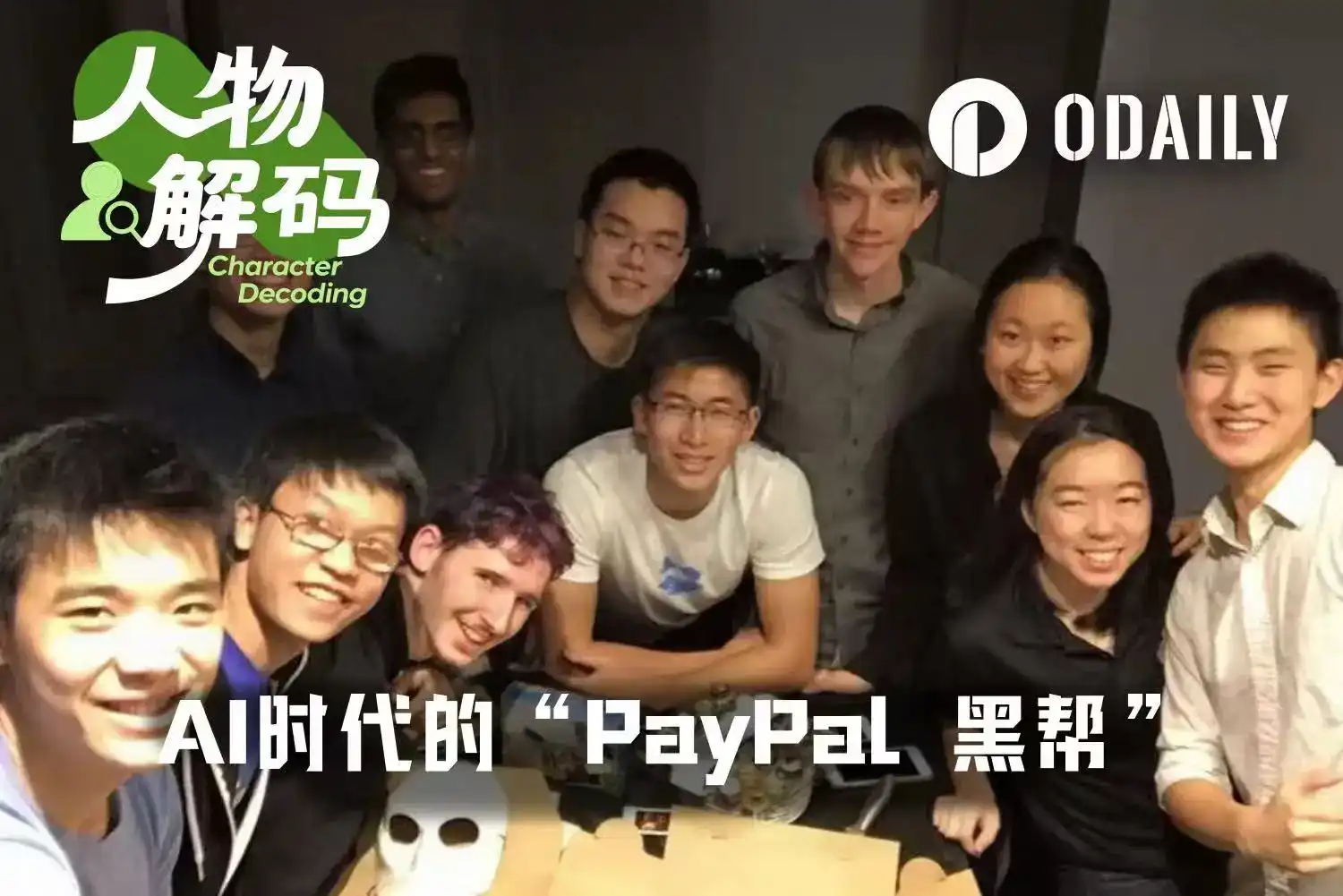
In the interview, Jeff Yan revealed a little-known story — during his junior year at Harvard, he participated in the inaugural internship program of the quantitative trading giant "Hudson River Trading" (HRT). Ten interns were selected that year. Aside from Jeff Yan, who chose the cryptocurrency track, several others from the same intern cohort have now become prominent figures in the AI field, including Meta AI business line head Alexandr Wang, Decagon founder and CEO Jesse Zhang, and Cognition founder and CEO Scott Wu.
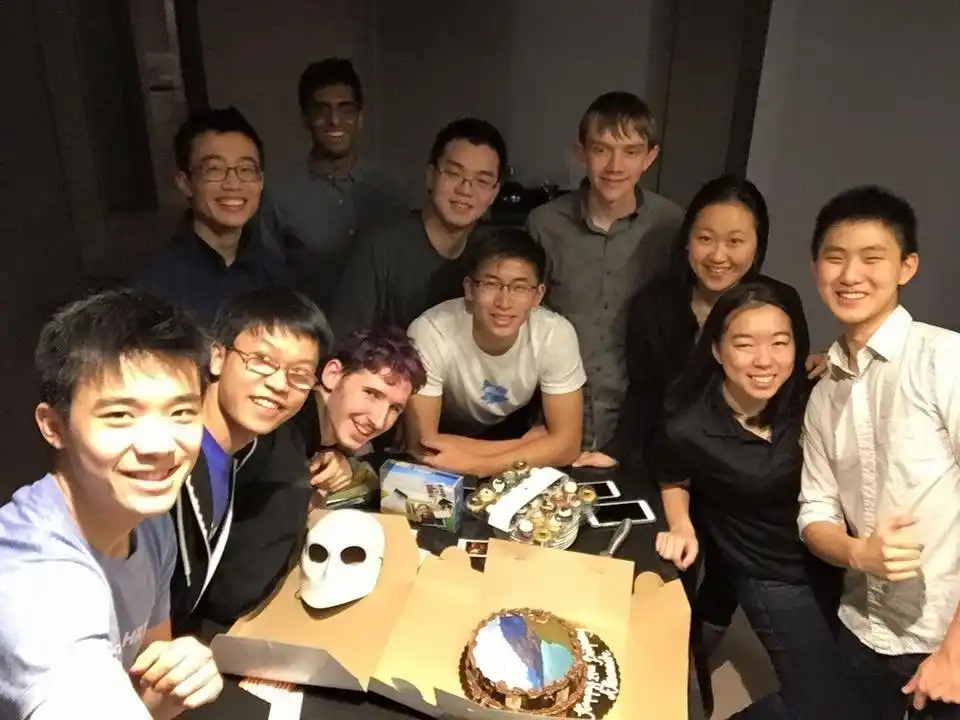
Odaily Note: A group photo of that year's interns shared by Jesse Zhang

According to additional disclosures by Scott Wu himself, the HRT internship program was not the starting point of their friendship. As early as high school, many of them had already met through Olympic competitions (Jeff Yan, Scott Wu, and several others had won gold medals). That small circle included many more notable names, including but not limited to Perplexity co-founder and CSO Johnny Ho, Pika co-founder and CEO Demi Guo, and Steven Hao, Alexandr Wang's former partner in founding Scale AI......

During the formative years of Jeff Yan, Scott Wu, and others, the "PayPal Mafia," represented by Elon Musk and Peter Thiel, was already dominating the business world. People began searching for the next similar special network. Jeff Yan's small circle had also discussed this topic. The 19-year-old Alexandr Wang once said to his friends: "Why can't it be us?"

Ten years later, Alexandr Wang's bold statement seems to be coming true. Leveraging AI, this group of young people from the Hudson River are stirring up the era in their own way.

Alexandr Wang: Zuckerberg's AI Brain

Alexandr Wang is perhaps the most well-known figure in this small circle. Born in 1997 in Los Alamos, New Mexico, Alexandr Wang is the descendant of Chinese immigrants. His parents were physicists at the Los Alamos National Laboratory — where the United States' first atomic bomb was secretly developed during World War II.

Alexandr Wang was passionate about mathematics and programming from a young age. He qualified for the Mathematical Olympiad Program in 2013, the USA Physics Team in 2014, and reached the finals of the USA Computing Olympiad in 2012 and 2013.

In 2015, Alexandr Wang dropped out of the Massachusetts Institute of Technology and founded Scale AI a year later, which annotates data used for training AI in computer vision and audio transcription. Riding the wave of the AI boom, Scale AI's valuation soared, reaching $7.3 billion by 2021. Alexandr Wang, owning 15% of the shares, saw his net worth surpass $1 billion.

In June 2025, Meta, which had clearly fallen behind in the AI race, acquired 49% of Scale AI for $14.3 billion. Zuckerberg's附加条件 was that — the soul of Scale AI, the then 28-year-old Alexandr Wang, must join Meta. Alexandr Wang subsequently joined Meta and began leading Meta's AI development team, the "Meta Superintelligence Labs" (MSL).

On the night of April 8th, Zuckerberg's big gamble paid off. MSL officially released its first self-developed AI model, Muse Spark. Muse Spark is a native multimodal reasoning model supporting tool use, visual chain-of-thought, and multi-Agent orchestration. It is the most powerful model Meta has released to date. During training, MSL observed predictable scaling improvements in the model during pre-training, reinforcement learning, and test-time reasoning phases.

Scott Wu: Olympiad Prodigy, Creator of a $10 Billion AI Unicorn
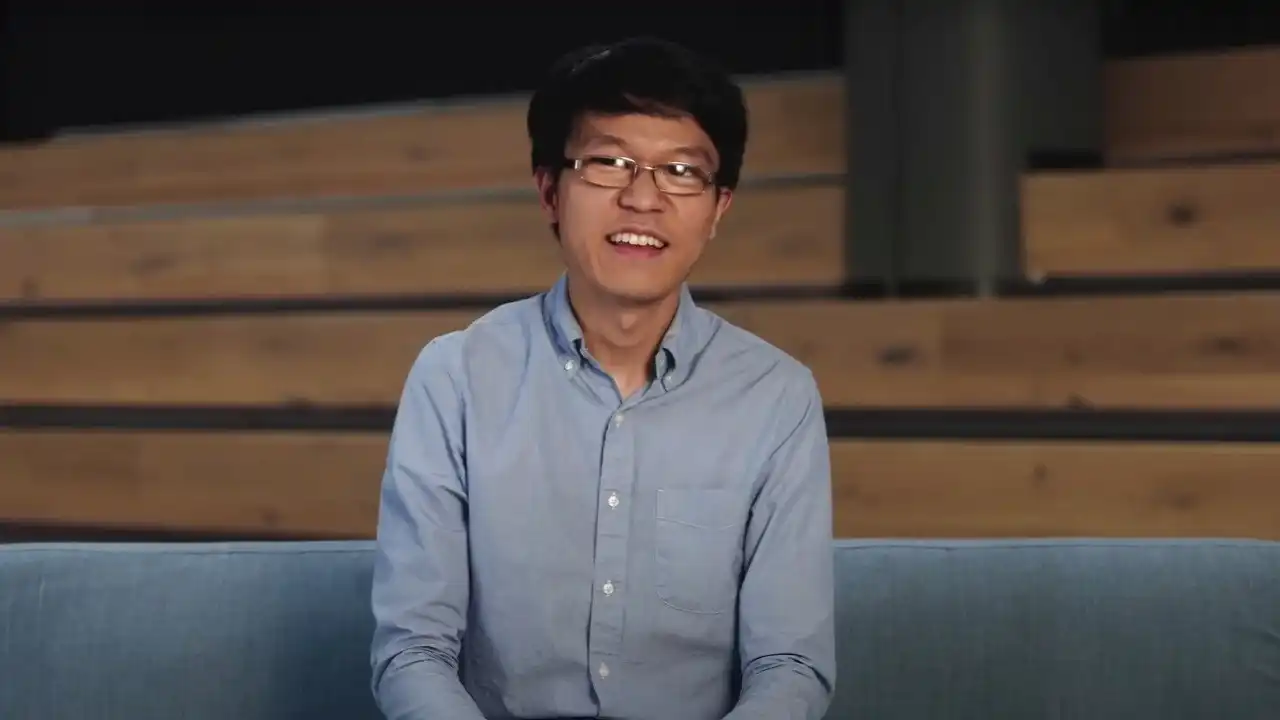
Scott Wu was born in 1997 in Louisiana to a family of Chinese immigrants. Growing up, Scott Wu actively participated in programming and mathematics competitions, winning three gold medals in the International Olympiad in Informatics, including first place in 2014.

After high school, Scott Wu attended Harvard University but dropped out after two years. While an undergraduate at Harvard College, he was a team member in the 2016 International Collegiate Programming Contest (ICPC), where his team won a gold medal and placed third overall.

In 2019, Scott Wu co-founded the social platform Lunchclub as its CTO. In 2023, Scott Wu, along with friends Steven Hao and Walden Yan (both Olympic gold medalists), co-founded Cognition, where he serves as CEO.

In 2024, the Cognition team launched the world's first autonomous AI software engineer, Devin. This product can independently complete code writing, testing, and deployment, and supports the decomposition and collaboration of complex tasks. It significantly outperformed GPT-4 in the SWE-bench benchmark test. In May of the same year, Cognition raised $175 million in a round led by Peter Thiel's Founders Fund, valuing the company at $2 billion post-money. In September 2025, Cognition raised another $400 million, skyrocketing its valuation to $10.2 billion.

By early 2026, Cognition's annualized revenue had reached $400 million.

Johnny Ho: Net Worth $2.1 Billion, Once Considered Acquiring TikTok and Chrome
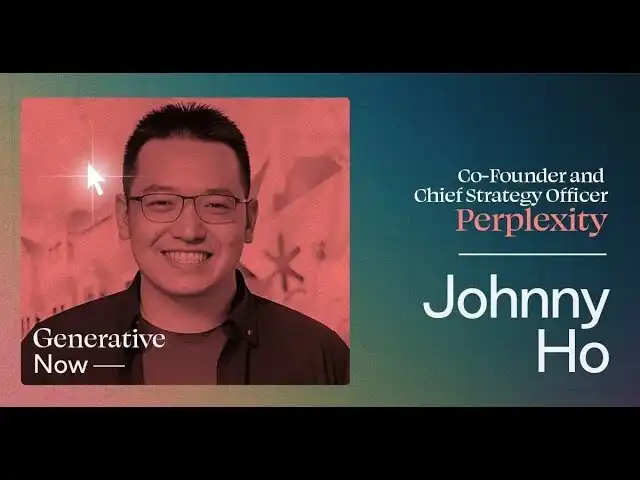
Like Scott Wu, Harvard graduate Johnny Ho won three gold medals in the International Olympiad in Informatics, achieving a perfect score and first place in 2012.

In August 2022, Johnny Ho co-founded Perplexity with Aravind Srinivas, Andy Konwinski, and Denis Yarats. Perplexity is positioned as an AI search engine company, offering a conversational search engine service that displays citation sources for answers and provides related question suggestions.

In 2023, Perplexity's monthly visits reached 10 million; by April 2024, its monthly active users reached approximately 15 million. That same year, Perplexity embarked on a疯狂融资 spree. In its fourth funding round at the end of the year, it raised $5 [Note: Likely a typo, probably meant $500 million or similar, but translating as written], reaching a valuation of $9 billion. In July 2025, Perplexity completed another $100 million in new funding, raising its valuation to $18 billion.

It is worth mentioning that Perplexity has initiated several bold "minnow-swallowing-whale" level acquisition proposals (with VCs willing to provide funds), including an offer to acquire TikTok in early 2025, proposing to merge Perplexity, TikTok's US operations, and new capital partners into a new entity, and in August 2025, proposing to Google to acquire its core product, the Chrome browser, for $34.5 billion.

According to the latest data from Forbes, Perplexity's current valuation has reached $20 billion, and Johnny Ho's personal wealth has reached $2.1 billion.

Jesse Zhang: AI Startup Valued at $4.5 Billion in Three Years
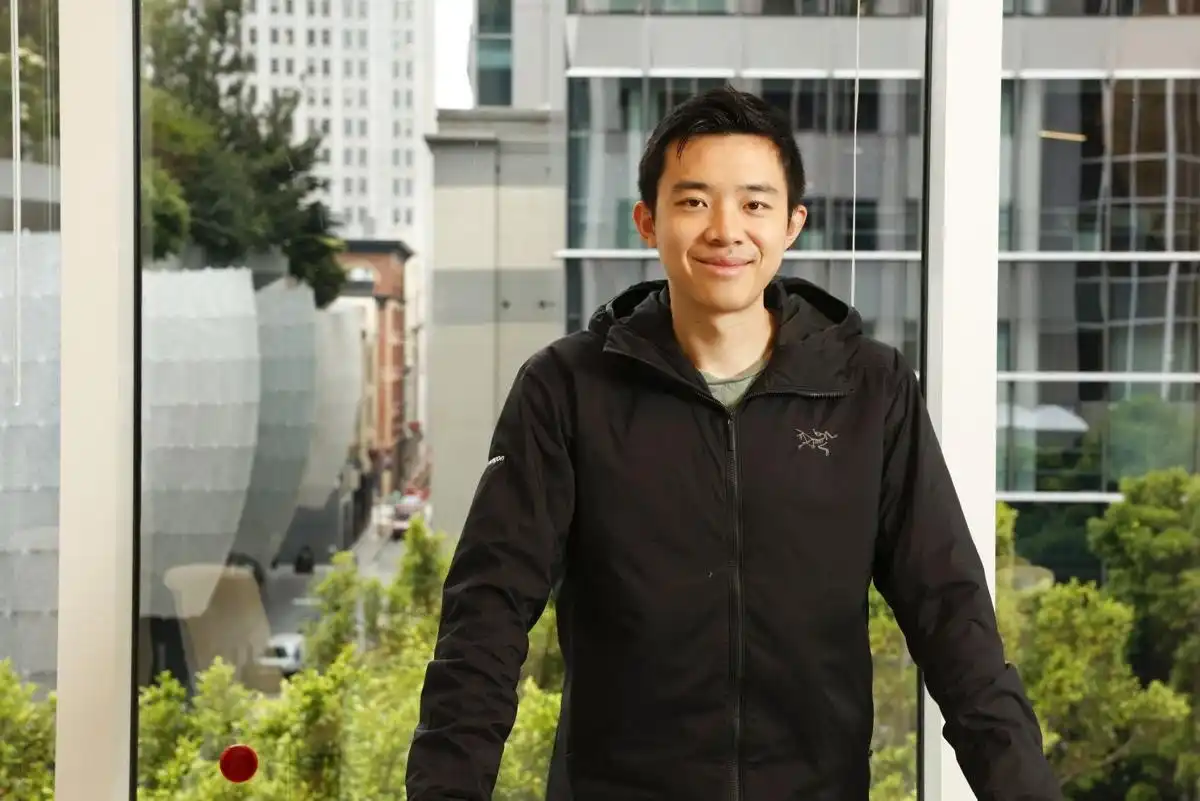
Jesse Zhang was also born in 1997 and grew up in the San Francisco Bay Area. From high school, Jesse Zhang was a typical "competition fanatic" — selected twice for the Mathematical Olympiad Program (MOP), a finalist in the Intel STS, and participated in MIT's RSI research program. After entering Harvard, Jesse Zhang completed the four-year university curriculum in just three years.

In 2018, Jesse Zhang and friends founded Lowkey, a platform for sharing gaming highlights. The project received seed funding from Y Combinator and Series A funding from a16z. In 2021, Lowkey was acquired by Pokémon GO developer Niantic for an undisclosed amount.

In 2023, Jesse Zhang co-founded Decagon with partner Ashwin Sreenivas, focusing on using AI Agents to automate enterprise customer service, solving the problems of high labor costs and low efficiency in call centers.

In June 2024, shortly after its founding, Decagon quickly raised $35 million, including a $5 million seed round led by a16z and a $30 million Series A led by Accel. Four months later, Decagon raised $65 million in a Series B round. In June 2025, a Series C round raised $131 million, pushing the valuation to $1.5 billion. In January 2026, a Series D round raised $250 million, skyrocketing the valuation to $4.5 billion... In tandem with the rising valuation was Decagon's revenue capability. By the end of 2025, the company's disclosed annual revenue had exceeded $30 million.

Demi Guo: Hangzhou '95er, Pioneer in AI Video Generation

Demi Guo was born in 1999 in Hangzhou, China, and moved to Silicon Valley, USA with her family during childhood.

Demi Guo won a silver medal at the 2015 International Olympiad in Informatics. She graduated from Harvard University with a bachelor's degree in mathematics and a master's degree in computer science, then dropped out of a PhD program at Stanford University to focus on entrepreneurship in generative AI video content creation.

In April 2023, Demi Guo co-founded Pika with Chenlin Meng, with Demi Guo serving as CEO. Pika focuses on the development of video generation AI technology. Its core products include the Pika 1.0 and Pika 2.0 models, which support 3D animation, anime, cartoon, and cinematic style generation, offering features like video extension, canvas expansion, and element replacement.

Regarding funding, Pika had already completed a $20 million seed round before its launch. It then completed a $35 million Series A round in November 2023, led by Lightspeed Venture Partners. In June 2024, Pika completed an $80 million Series B round at a valuation of $470 million, led by Spark Capital, with participation from Greycroft, Lightspeed Venture Partners, and actor Jared Leto, among others.

Steven Hao: AI Tech Guru with a Net Worth Over $1 Billion

Steven Hao, a graduate of MIT's mathematics department, also won a gold medal in the International Olympiad in Informatics (IOI). He was a partner of Alexandr Wang at Scale AI and has now joined Scott Wu's Cognition as CTO. Both companies have been详细介绍 in the previous sections, so they won't be elaborated on here.

According to Forbes data, the 30-year-old Steven Hao's personal wealth is estimated to have reached $1.3 billion.

Epilogue: We Might Be Witnessing a New Legend

I thought about giving this small circle a new name similar to the "PayPal Mafia," like calling them the "Hudson River Mafia," or the broader "Olympiad Mafia"... Although the era, background, and story trajectory are completely different, they seem to share the same core spirit as the previous generation's "PayPal Mafia" — behind the camaraderie of high-stakes competitions, what truly connects them is a shared pursuit of intellectual density, engineering efficiency, and system re-architecting capabilities, along with a profound judgment of where the future begins.

The new generation of entrepreneurs has stepped onto the stage. Before them lies the question, far more difficult than any Olympiad problem: "How will AI reshape the world?" This is their battlefield and their stage.


Пов'язані питання

QWho are the key members of the AI-era group compared to the 'PayPal Mafia', and what are their notable achievements?

AThe key members include Jeff Yan (founder of Hyperliquid), Alexandr Wang (head of Meta's AI division, founder of Scale AI), Scott Wu (CEO of Cognition, creator of Devin), Johnny Ho (co-founder of Perplexity), Jesse Zhang (CEO of Decagon), Demi Guo (CEO of Pika), and Steven Hao (CTO of Cognition). Their achievements include building billion-dollar AI companies, leading major AI innovations, and driving advancements in areas like AI search, autonomous coding, video generation, and customer service automation.

QWhat was the origin of the connection between these AI entrepreneurs?

ATheir connection began during high school through international Olympiad competitions (e.g., mathematics, informatics) where many won gold medals. Later, they reinforced their ties as interns in Hudson River Trading (HRT)'s first internship program during their college years at Harvard and MIT.

QHow did Alexandr Wang become involved with Meta, and what role does he play there?

AMeta acquired 49% of Scale AI for $14.3 billion in 2025, with the condition that Alexandr Wang join Meta. He now leads Meta's AI development team, the Meta Superintelligence Labs (MSL), which released the powerful multimodal AI model Muse Spark in April 2026.

QWhat is Cognition known for, and what milestones has it achieved under Scott Wu's leadership?

ACognition, co-founded by Scott Wu, is known for creating Devin, the first autonomous AI software engineer. The company reached a $10.2 billion valuation by September 2025, with annualized revenue of $400 million by early 2026, following funding rounds led by investors like Peter Thiel's Founders Fund.

QWhat bold acquisition proposals did Perplexity, co-founded by Johnny Ho, attempt?

APerplexity proposed acquiring TikTok's U.S. operations in early 2025, aiming to merge it with Perplexity and new capital partners. In August 2025, it also offered to buy Google's Chrome browser for $34.5 billion, though neither deal was completed. The company's valuation grew to $20 billion by 2026.

Пов'язані матеріали

The Essence of AI Layoffs: Why More AI Adoption Leads to More Corporate Anxiety?

The author, awaiting potential inclusion on an 8000-person layoff list, analyzes the true nature of recent "AI-driven" layoffs. They argue that while AI use, particularly tools like Claude for code generation, has skyrocketed and boosted developer output (e.g., 2-5x more code commits), this has not translated into proportional business growth or revenue. The core issue is a misalignment between increased "Input" (code) and tangible "Outcomes" (user value, revenue). AI acts as a costly B2B SaaS, inflating operational expenses without guaranteed returns. Two key problems emerge: 1) The friction that once filtered out bad ideas is gone, as AI allows cheap pursuit of even weak concepts. 2) Organizational "alignment tax"—the difficulty of coordinating across teams—becomes crippling when development velocity outpaces consensus-building. Thus, layoffs serve two immediate purposes: 1) To offset ballooning AI costs (Token consumption) and maintain cash flow, as rising input costs without outcome growth destroys unit economics. 2) To reduce organizational bloat and alignment friction by simply removing teams, thereby speeding up execution in the short term. Therefore, these layoffs are fundamentally caused by AI, even if AI doesn't directly replace roles. They represent a painful correction until companies learn to convert AI-driven productivity into real business outcomes and streamline organizational coordination to match the new pace of work. The cycle will continue until this learning curve is mastered.

marsbit39 хв тому

The Essence of AI Layoffs: Why More AI Adoption Leads to More Corporate Anxiety?

marsbit39 хв тому

Can the Solana Foundation and Google's Collaboration on Pay.sh Bridge the Payment Link Between Web2 and Web3 in the Agent Economy?

Solana Foundation, in collaboration with Google Cloud, has launched Pay.sh, a payment gateway designed to bridge the gap between AI agents and enterprise-grade service infrastructure. The initiative aims to solve a key bottleneck in the "agent economy": existing payment systems are ill-suited for autonomous AI agents. Traditional methods like credit cards require human verification, while newer on-chain protocols like x402 and MPP create a separate, Web3-native system that raises barriers for service providers. Pay.sh functions as a universal payment layer. It allows users to fund a Solana wallet via credit card or stablecoin, which then acts as an identity and payment proxy for AI agents. When an agent needs to access a paid API service (e.g., Google Cloud, Alibaba Cloud), Pay.sh handles the transaction seamlessly. It leverages the HTTP 402 status code ("Payment Required") to initiate payments, intelligently choosing between one-time transfers (x402-style) or session-based authorizations (MPC-style) based on the service's billing model. This spares agents from manual account registration and API key management. A key feature for service providers is low integration effort. They can adopt Pay.sh by providing a declarative configuration file, enabling features like tiered pricing, free tiers, and automatic revenue splitting to multiple addresses (e.g., for royalties, cloud costs). Providers can also list their APIs in a central Pay Skill Registry for agent discovery. The collaboration with Google Cloud provides crucial infrastructure for API proxying, traffic routing, and compliance logging, aiming to keep agent activities within regulated boundaries. By connecting Web2 services with Web3 payment rails, Pay.sh positions the Solana wallet as a foundational identity and payment tool for AI agents, potentially driving more transaction volume to the Solana ecosystem. However, the report notes challenges. The service registry currently lacks robust vetting, risking exposure to unauthorized or malicious third-party APIs. Pay.sh also inherits security and compatibility risks from its underlying payment protocols (x402, MPC). Furthermore, adoption may be hindered by varying regional data privacy and payment compliance regulations among API providers. Despite these hurdles, Pay.sh represents a significant step towards integrating Web2 and Web3 for autonomous agent commerce.

marsbit46 хв тому

Can the Solana Foundation and Google's Collaboration on Pay.sh Bridge the Payment Link Between Web2 and Web3 in the Agent Economy?

marsbit46 хв тому

Bitcoin's Bull-Bear Cycle Indicator Turns Positive for the First Time in 7 Months: End of Bear Market or False Breakout?

Bitcoin's "Bull-Bear Market Cycle Indicator" from CryptoQuant has turned positive for the first time since October 2025. This gauge, based on the P&L Index relative to its 365-day moving average, suggests a potential shift from a bear market phase. Concurrently, the Bull Score Index rose to a neutral reading of 50 in late April. The indicator's move into positive territory follows a roughly 35% price rebound from a low near $60,000 in February to above $81,000. The recovery over approximately three months was faster than the 12-month period observed during the 2022 bear market. However, analysts caution against premature optimism, citing a historical precedent from March 2022. Back then, the Bull Score Index briefly hit 50, but it proved to be a false signal as Bitcoin's price subsequently plunged further. Structural differences exist in the current cycle, including consistent inflows into spot Bitcoin ETFs and an increase in large holder addresses. Yet, some models, referencing the four-year halving cycle, suggest a potential deeper bottom near $50,000 might still be possible around late 2026. In summary, while on-chain data shows marked improvement and the worst panic may be over, market participants remain cautious. A convincing trend reversal confirmation likely requires Bitcoin to sustainably break above key resistance, such as the 200-day moving average near $82,000.

marsbit53 хв тому

Bitcoin's Bull-Bear Cycle Indicator Turns Positive for the First Time in 7 Months: End of Bear Market or False Breakout?

marsbit53 хв тому

How to Automate Any Workflow with Claude Skills (Complete Tutorial)

This is a comprehensive guide to mastering Claude Skills, a feature for creating permanent, reusable instruction sets that automate specific workflows. Unlike simple saved prompts, Skills function like trained employees, delivering consistent, high-quality outputs by defining the entire task process, standards, error handling, and output format. The guide is structured in four phases: **Phase 1: Installation (5 minutes).** Skills are folders containing a `SKILL.md` file. The user is instructed to find a relevant Skill online, install it, test it on a real task, and compare its performance to one-off prompts. **Phase 2: Building Your First Custom Skill.** Start by rigorously defining the Skill's purpose, trigger phrases, and providing a concrete example of perfect output. The `SKILL.md` file has two parts: a YAML frontmatter with a specific name/description/triggers, and a detailed, step-by-step workflow written in natural language with examples and quality standards. **Phase 3: Testing & Optimization for Production.** Test the Skill in three scenarios: 1) a standard, common task; 2) edge cases with missing or conflicting data; and 3) a pressure test with maximum complexity. Any failure indicates a needed instruction. Implement a weekly optimization cycle to continuously refine the Skill based on real usage. **Phase 4: Building a Complete Skill Library.** The goal is to create a team of Skills for all repetitive tasks. Examples are given for industries like real estate, marketing, finance, consulting, and e-commerce. The user should list their tasks, prioritize them, and build one new Skill per week, maintaining a master document to track their library. The conclusion emphasizes the compounding time savings: ten Skills saving 30 minutes each per week reclaims over 260 hours (6.5 work weeks) per year, fundamentally transforming one's work system.

marsbit1 год тому

How to Automate Any Workflow with Claude Skills (Complete Tutorial)

marsbit1 год тому

Торгівля

Спот
Ф'ючерси

Популярні статті

Як купити ERA

Ласкаво просимо до HTX.com! Ми зробили покупку Caldera (ERA) простою та зручною. Дотримуйтесь нашої покрокової інструкції, щоб розпочати свою криптовалютну подорож.Крок 1: Створіть обліковий запис на HTXВикористовуйте свою електронну пошту або номер телефону, щоб зареєструвати обліковий запис на HTX безплатно. Пройдіть безпроблемну реєстрацію й отримайте доступ до всіх функцій.ЗареєструватисьКрок 2: Перейдіть до розділу Купити крипту і виберіть спосіб оплатиКредитна/дебетова картка: використовуйте вашу картку Visa або Mastercard, щоб миттєво купити Caldera (ERA).Баланс: використовуйте кошти з балансу вашого рахунку HTX для безперешкодної торгівлі.Треті особи: ми додали популярні способи оплати, такі як Google Pay та Apple Pay, щоб підвищити зручність.P2P: Торгуйте безпосередньо з іншими користувачами на HTX.Позабіржова торгівля (OTC): ми пропонуємо індивідуальні послуги та конкурентні обмінні курси для трейдерів.Крок 3: Зберігайте свої Caldera (ERA)Після придбання Caldera (ERA) збережіть його у своєму обліковому записі на HTX. Крім того, ви можете відправити його в інше місце за допомогою блокчейн-переказу або використовувати його для торгівлі іншими криптовалютами.Крок 4: Торгівля Caldera (ERA)Легко торгуйте Caldera (ERA) на спотовому ринку HTX. Просто увійдіть до свого облікового запису, виберіть торгову пару, укладайте угоди та спостерігайте за ними в режимі реального часу. Ми пропонуємо зручний досвід як для початківців, так і для досвідчених трейдерів.

435 переглядів усьогоОпубліковано 2025.07.17Оновлено 2025.07.17

Як купити ERA

Обговорення

Ласкаво просимо до спільноти HTX. Тут ви можете бути в курсі останніх подій розвитку платформи та отримати доступ до професійної ринкової інформації. Нижче представлені думки користувачів щодо ціни ERA (ERA).

活动图片












