The Launch of the First Batch of Prediction Market ETFs is Temporarily Halted, Wall Street is Eyeing This Business

marsbitОпубліковано о 2026-05-18Востаннє оновлено о 2026-05-18

Анотація

The launch of the first prediction market ETFs in the U.S. has been delayed after the SEC initiated further review, postponing their planned early May debut. The regulatory body is seeking more details from issuers like Roundhill Investments, Bitwise, and GraniteShares on product mechanics, risk disclosure, and how these funds track binary event contracts—such as political election outcomes or economic indicators—rather than traditional assets. Analysts view this not as a rejection but as a cautious, precedent-setting review, given the novel nature of these ETFs that allow investors to trade on the probability of real-world events. While the delay slows immediate rollout, it is seen as a step toward establishing clearer rules, and Wall Street's broader interest in monetizing "tradable future events" suggests this product category is likely to evolve, whether through direct event-based ETFs or investments in related platforms and infrastructure.

Author | Asher(@Asher_0210)
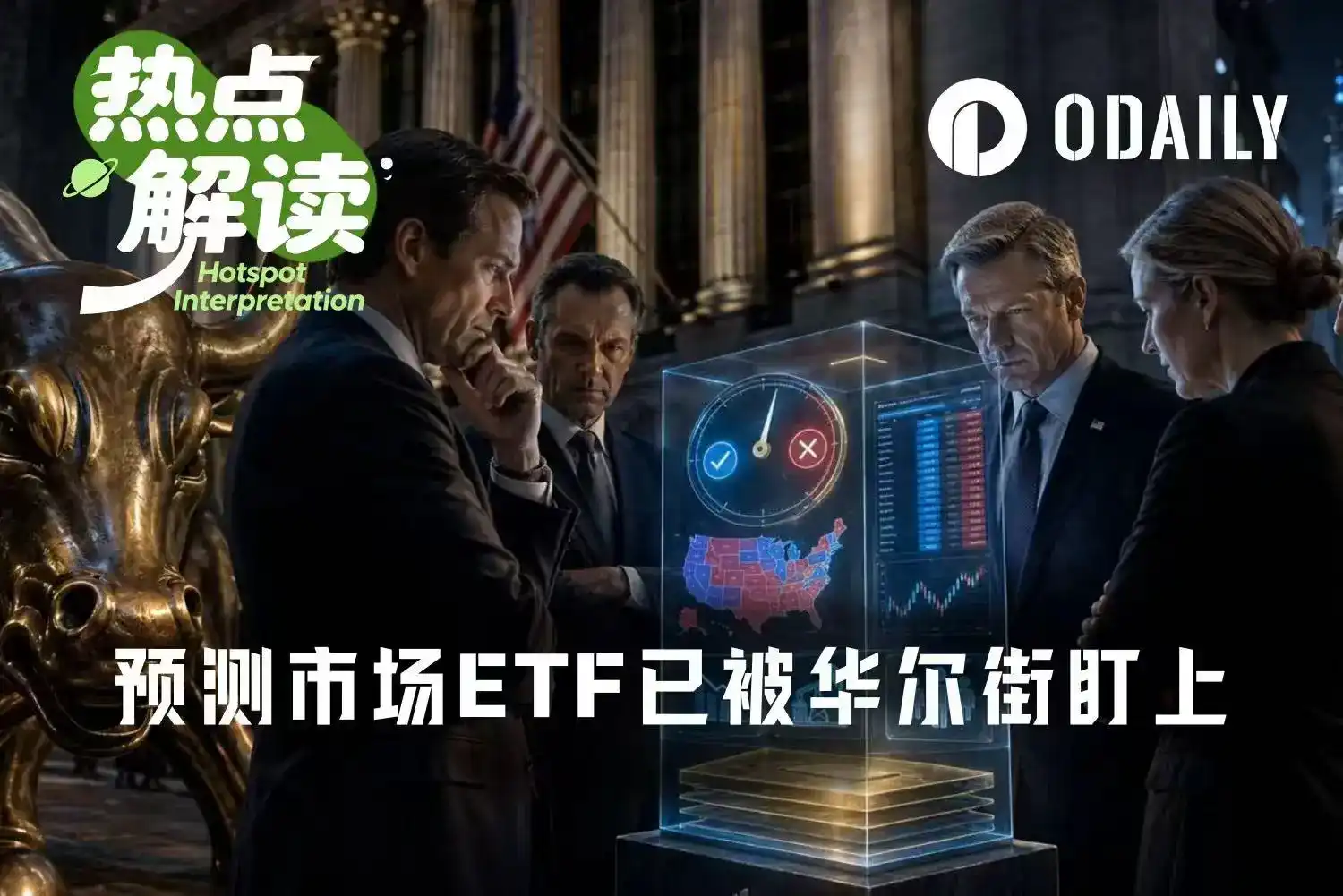
The first batch of prediction market ETFs did not launch in the U.S. market as originally planned.

Earlier this month, due to intervention by the U.S. SEC for further review, the first batch of ETF products related to prediction markets failed to become effective as scheduled, and their listing was forced to be postponed. The SEC required the issuers to supplement details regarding the product mechanism and disclosures, particularly explaining how such products track event contracts, handle settlement risks, and communicate potential extreme losses to ordinary investors.

On the Verge of Effectiveness, the U.S. SEC Hits the Pause Button

Prediction market ETFs are not a new product that suddenly emerged this month. In February of this year, Roundhill Investments was the first to submit relevant filings, followed by Bitwise Asset Management and GraniteShares. The approaches of several issuers were similar, all involving packaging real-world event outcomes into ETF products, allowing investors to trade event probabilities through traditional securities accounts.

The first batch of products initially focused on U.S. political events, including the victory of the Democratic or Republican party in the 2028 presidential election, and the control of the Senate or House in the 2026 midterm elections. Subsequently, the application scope further expanded to event-driven targets such as economic recessions, tech industry layoffs, and commodity prices, with the number of pending products exceeding 20.

According to relevant rules, such ETFs typically become effective automatically 75 days after submission, unless the SEC intervenes for further review. Precisely because multiple issuers had submitted filings as early as February, early May became a critical timeframe for the first batch of prediction market ETFs. Roundhill had previously submitted updated filings, planning for its six prediction market ETFs centered on U.S. presidential and congressional elections to become effective on May 5. The market originally expected Roundhill to potentially be the first issuer to launch prediction market ETFs, with similar products from Bitwise and GraniteShares possibly following.

However, in the end, due to the U.S. SEC's intervention for further review, the first batch of products did not see an automatic effectiveness.

Delay "Not a Fatal Issue," but Entering a More Detailed Review Stage

From the current actions of the U.S. SEC, it appears more like the prediction market ETFs were asked to provide supplementary explanations rather than being outright rejected.

If regulators believed such products fundamentally should not exist, the market might have seen clearer signals of rejection. But the SEC's current actions seem more like requiring issuers to clarify several issues, including how the products obtain exposure to event contracts, how the underlying prices are formed, how event outcomes are settled, what magnitude of losses investors might bear, and whether the disclosure documents are sufficiently straightforward.

Bloomberg ETF analyst Eric Balchunas posted on platform X, stating that the SEC's decision to further review prediction market ETFs currently seems more like the regulatory agency wanting to conduct additional verification of the disclosure documents. Given the pioneering significance of such products, once approved, they would set an important regulatory precedent for prediction market ETFs, so it's understandable that the SEC is taking more time for review.

The reason for the SEC's caution is that prediction market ETFs and traditional ETFs are not the same type of product. Ordinary sector ETFs buy a basket of stocks, thematic ETFs buy into a specific industry narrative, and Bitcoin ETFs track the price of an asset. But prediction market ETFs are not buying an asset; they are buying whether a specific event will occur or not. Whether the Democrats win the 2028 presidential election, whether the Republicans control the Senate, whether the U.S. enters an economic recession, whether the tech industry experiences large-scale layoffs—these are not traditional assets, but real-world events.

The peculiarity of prediction market ETFs lies in the fact that they look like ETFs, but their underlying structure is closer to binary event contracts. Ordinary investors seeing them in their brokerage accounts might mistake them for ordinary thematic funds, but they are not trading a basket of stocks or asset prices; rather, they are trading whether a specific event ultimately occurs or not. If the judgment is wrong, the loss could be very direct, even approaching zero. The SEC's request for supplementary disclosures is perhaps to confirm whether issuers can clearly explain this structure and its risks.

The Launch Window Remains Open, But Rules Are Key

Although the launch of prediction market ETFs has been delayed, the market currently tends to interpret this postponement as supplementary review rather than a regulatory shift towards rejection. Nate Geraci, President of The ETF Store, offered a relatively optimistic assessment. He mentioned that U.S. SEC Commissioner Hester Peirce recently stated in a speech that regulators are trying to strike a balance between regulation and innovation. Nate Geraci believes this statement might be related to prediction market ETFs and suggested such products could be launched soon.

Currently, institutions might need to focus on whether the SEC characterizes this delay as a disclosure issue or a product attribute issue. However, regardless of which review path the SEC ultimately leans towards, the prediction market ETF category is unlikely to vanish due to a single delay.

If the issue remains at the disclosure level, the first batch of products might just be launched a bit later; if regulators continue to question the product attributes, the pace will slow down, but it will also push the industry to form clearer rules. For issuers, as disclosure standards, settlement requirements, and boundaries for investor protection gradually become clear, subsequent products might actually be easier to replicate.

More importantly, institutions have already begun designing products at different levels around prediction markets. Directly tracking event outcomes like elections, recessions, and layoffs is one approach; investing in prediction market platforms, trading infrastructure, market makers, and data service providers is another. Even if the review cycle for event-outcome ETFs lengthens, prediction markets, as a financial theme, have already been incorporated into the product libraries of ETF issuers. In other words, Wall Street is not just waiting for a few election ETFs to be approved; it is placing early bets on the new business that "future events can also be traded."


Пов'язані матеріали

Xiaohongshu's Second Great Voyage, This Time Sailing Towards AI

Xiaohongshu's Second Voyage: Navigating Towards AI Since ChatGPT's emergence, Xiaohongshu's founder Mao Wenchao has been acutely aware of AI's potential threat, recognizing that the life advice people seek from chatbots overlaps directly with his platform's core business. Founded in 2013 as a PDF shopping guide for Chinese tourists, Xiaohongshu evolved into a massive community where millions share authentic, personal experiences—from product reviews to travel tips. This vast repository of "I've tried this" human judgment became its most valuable asset. However, the rise of AI, which delivers instant answers, challenges the very need for users to sift through numerous personal notes. Fearing its treasure trove of lived experience could become mere training data for others, Xiaohongshu is proactively adapting. In 2026, it established a dedicated AI division (Dots), launched RED Skill to turn user experiences into usable AI tools, and acquired the AI search product "Diandian." Its investments now extend to AI firms like MiniMax and hardware startups, moving upstream to address needs before they even become search queries. The platform's commercialization strategy is also evolving. With a newly acquired payment license and tools like the AIPS model to track consumer decision journeys, Xiaohongshu aims to seamlessly integrate recommendations with transactions, embedding commerce within AI-generated answers. Yet, a critical tension remains. While building smarter machines to organize and leverage its human experiences, Xiaohongshu must prevent AI from drowning out the authentic, flawed, and trustworthy "I've tried this" voices that built its community. Its core challenge is to harness AI's power without letting the map—the machine's perfect, synthesized answer—replace the territory of genuine human experience. This balance between technological advancement and preserving human trust defines its current journey and its future.

marsbit22 хв тому

Xiaohongshu's Second Great Voyage, This Time Sailing Towards AI

marsbit22 хв тому

SharpLink CEO: How to Understand Ethereum Developers Just Exceeded 1 Million?

SharpLink CEO reflects on the milestone of Ethereum surpassing 1 million historical developers, emphasizing that this figure represents the largest pool of technical talent ever assembled around an open, permissionless blockchain network. While approximately 232,000 developers remain active, the key question for the crypto industry is not which chain is fastest, but where the best builders choose to build long-term. Ethereum's advantage lies in a decade-long accumulation of infrastructure, standards, tools, liquidity, and a cohesive culture, making it the default operating system for programmable finance. This developer base is tackling complex challenges: the Glamsterdam upgrade aims to enhance scalability while preserving core principles; synchronous composability seeks to unify Rollup ecosystems; and significant efforts are underway for post-quantum security. Ethereum's deeper network effects stem from composability and shared standards (like the EVM and Solidity), creating a flywheel of more developers, tools, and liquidity. Three reinforcing strengths cement Ethereum's lead: credible neutrality (secured by ~900k validators), a modular architecture with interconnected Rollups, and a culture that attracts top researchers. The ecosystem is consolidating as the trusted coordination layer for internet-native finance, favored by large institutions valuing security and liquidity. The future of Ethereum is being built by this global community of founders and architects.

链捕手37 хв тому

SharpLink CEO: How to Understand Ethereum Developers Just Exceeded 1 Million?

链捕手37 хв тому

A Clod of Chinese Soil Chokes Two Japanese Giants

"Chinese Soil Chokes Japanese Giants" The production of a key electronic specialty gas, tungsten hexafluoride (WF6), vital for manufacturing AI chips, was halted by two leading Japanese producers—Kanto Denka and Central Glass. Their shutdown was not due to a technological failure but a sudden, critical shortage of a raw material they had long taken for granted: ultra-high-purity (6N-grade) tungsten powder, which is almost entirely sourced from China. Following a quiet Chinese export announcement in January 2026, tungsten powder shipments to Japan dropped to zero for months. Despite frantic efforts, Japanese companies found no viable alternative; imported powder was three times more expensive and lacked the required purity. Their existing stockpiles were exhausted by mid-2026. WF6 is essential for depositing tungsten into the microscopic contact holes of High Bandwidth Memory (HBM) chips, which are crucial for advanced processors like those from Nvidia. While Japanese firms had mastered producing ultra-pure WF6 gas, their entire supply chain relied on China's 6N tungsten powder—a dependency now revealed as a fatal vulnerability. China's dominance in this "soil" results from decades of painstaking R&D by companies like Xiamen Tungsten and China Tungsten & Hightech. They overcame immense technical hurdles, such as separating chemically similar molybdenum from tungsten, to achieve mass production of the world's purest tungsten powder. With their primary suppliers gone, Kanto Denka and Central Glass announced a permanent halt to WF6 production starting July 1, 2026. This immediately created a supply crisis for major semiconductor manufacturers like Samsung and SK Hynix, forcing them to urgently seek and certify new Chinese suppliers for WF6 itself. The reversal marks a dramatic shift: China has moved from exporting low-value raw materials to controlling the high-purity foundation of a critical global tech supply chain, upending a long-established industrial hierarchy.

marsbit1 год тому

A Clod of Chinese Soil Chokes Two Japanese Giants

marsbit1 год тому

Торгівля

Спот
Ф'ючерси
活动图片