The Game of Giants, The Table for Newcomers: The 7 Hidden Cards of the Prediction Market in 2026

比推Опубліковано о 2026-02-12Востаннє оновлено о 2026-02-12

Анотація

By 2026, new players are expected to enter the prediction market space, competing with established platforms by leveraging seven key differentiators: product quality, market selection, capital efficiency, oracle reliability, liquidity provision, regulatory compliance, and strategic focus (vertical vs. horizontal integration). While leading platforms currently hold advantages in liquidity and regulation, they often suffer from technical debt and inflexibility. New entrants can differentiate through superior user experience, API stability, exclusive markets, yield-generating collateral, innovative oracle systems, and tailored regulatory approaches. Strategies may include embedding with major platforms like Robinhood, offering specialized markets, or building vertically integrated products. The competition mirrors earlier battles in NFTs and perpetual exchanges, where differentiation drove rapid market capture.

Author: Jake Nyquist, Founder of Hook Protocol

Compiled by: Blockchain Knight

Original Title: The Battle of Prediction Markets in 2026: 7 Differentiation Strategies for New Players to Break Through


By 2026, major institutions are launching new prediction markets.

From the competitive battles of NFTs and perpetual contract exchanges over the past five years, we have learned that differentiated products can quickly capture market share.

While existing leading platforms enjoy liquidity and regulatory advantages, they are burdened with heavy technical debt, making it difficult to respond flexibly to new players' challenges.

So how should newcomers compete? In my view, the differentiation in prediction markets revolves around seven key dimensions:

1. Product Quality

Founding teams can differentiate in areas such as front-end user experience, API stability, development documentation, market structure, and fee mechanisms.

Currently, many established platforms have obvious shortcomings: unreasonable tick sizes, opaque fee rules, slow and unstable APIs, and limited order types.

High-quality product experience, especially services for API-based programmatic traders, is itself a lasting core advantage, allowing them to hold their ground even against competitors with stronger channel capabilities.

2. Asset Categories and Market Selection

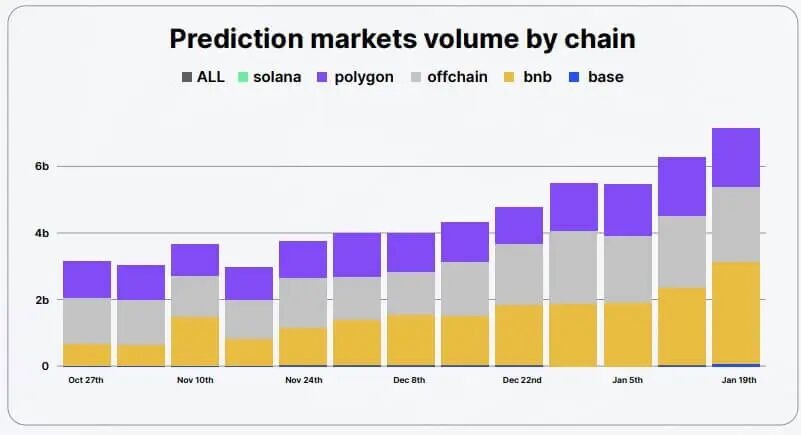
Currently, the trading volume in prediction markets is mainly concentrated in sports betting and crypto-native markets.
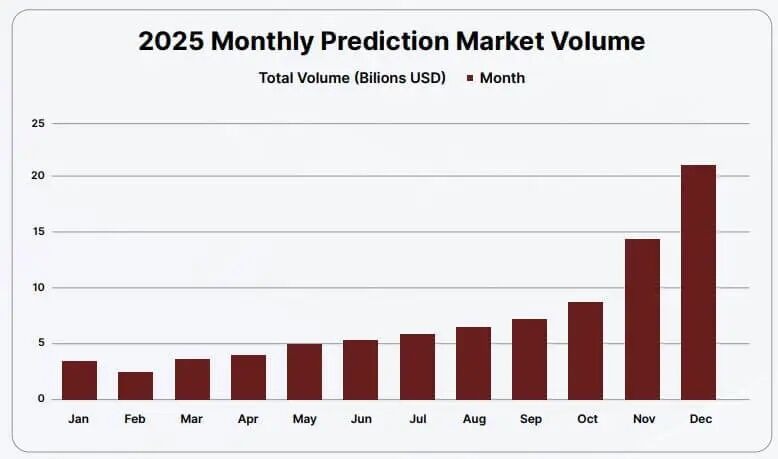
New exchanges can list exclusive markets that other platforms cannot offer. This advantage is further amplified when combined with a vertical strategy (point 7).

3. Capital Efficiency

Capital efficiency determines the effectiveness of traders' collateral usage. Currently, there are two core levers:

First, interest-bearing collateral: Instead of letting idle funds earn only treasury yields, offer higher returns, similar to Lighter supporting LP deposits as collateral or HyENA's USDC-margined perpetual contract model.

Second, margin mechanisms. Due to gap risk, the market generally underestimates the value of leverage in prediction markets, but platforms can offer limited leverage for continuous markets or implement portfolio margin for hedged positions.

Exchanges can also subsidize lending pools or act as market-making counterparties to internalize gap risk, rather than having them distributed among users.

4. Oracles and Market Settlement

Oracle reliability remains a systemic weakness in the industry. Settlement delays and incorrect results significantly amplify trading risks.

Beyond improving stability, platforms can implement innovative oracle mechanisms: human-machine hybrid systems, zero-knowledge proof-based solutions, AI-driven oracles like those from Context, etc., unlocking new markets that traditional oracles cannot support.

5. Liquidity Provision

Exchange survival depends on liquidity. Viable paths include: paying to onboard professional market makers, incentivizing ordinary users to provide liquidity with tokens, or adopting Hyperliquid's HLP aggregated liquidity model.
Some platforms can also completely internalize liquidity, emulating FTX's model of relying on Alameda as an internal trading team.

6. Regulatory Compliance

Kalshi, with its US regulatory license, has achieved embedded distribution through Robinhood and Coinbase, capturing retail traffic that Polymarket cannot reach.

There are still numerous jurisdictions and regulatory frameworks available for deployment. Compliant prediction markets can unlock similar channels, such as adapting to US state-level gambling regulations.

7. Vertical Strategy vs. Horizontal Strategy

Horizontal Strategy: Similar to Hyperliquid in the perpetual contracts space, focusing on building top-tier underlying trading infrastructure, inviting third parties to build front-ends and vertical scenarios, and encouraging ecosystem builders to add markets and develop revenue-generating front-ends (e.g., Phantom) through proposals.

Vertical Strategy: Exemplified by Lighter, controlling the front-end themselves, launching mobile apps, and creating a full-process user experience, focusing on integrated experience and direct user connection.

Polymarket's resistance to deep embedded partnerships versus Kalshi's open attitude is a clear reflection of the trade-offs between these two strategies.


Twitter:https://twitter.com/BitpushNewsCN

Bitpush TG Discussion Group:https://t.me/BitPushCommunity

Bitpush TG Subscription: https://t.me/bitpush

Original link:https://www.bitpush.news/articles/7611385

Пов'язані питання

QWhat are the seven key dimensions for differentiation in the prediction market competition according to the article?

AThe seven key dimensions are: 1. Product Quality, 2. Asset Categories and Market Selection, 3. Capital Efficiency, 4. Oracles and Market Settlement, 5. Liquidity Provision, 6. Regulatory Compliance, and 7. Vertical Strategy vs. Horizontal Strategy.

QHow can new prediction market exchanges gain an advantage in 'Asset Categories and Market Selection'?

ANew exchanges can list exclusive markets that other platforms cannot offer, and this advantage can be amplified when combined with a vertical domain strategy.

QWhat are the two main approaches to improving capital efficiency in prediction markets mentioned in the article?

AThe two main approaches are: 1. Interest-bearing collateral, which allows idle funds to earn higher yields, and 2. Margin mechanisms, such as offering limited leverage for continuous markets or portfolio margin for hedging positions.

QWhat role do oracles play in prediction markets, and what innovative solutions are suggested?

AOracles are crucial for reliable market settlement, and their failure can significantly increase trading risk. The article suggests innovative mechanisms like human-machine hybrid systems, zero-knowledge proof-based solutions, and AI-driven oracles to support new types of markets.

QWhat is the difference between a vertical strategy and a horizontal strategy in the context of prediction market platforms?

AA horizontal strategy focuses on building top-tier underlying trading infrastructure and allowing third parties to develop front-ends and vertical scenarios. A vertical strategy involves controlling the entire user experience, including the front-end and mobile applications, to provide an integrated experience directly to users.

Пов'язані матеріали

The AI Agent Era Accelerates Its Arrival: Questflow Defines a New Paradigm of Financial Intelligence with On-Chain AI Brokerage

The AI Agent era is accelerating, with the CB Insights AI 100 list highlighting global investment confidence. The focus has shifted from whether AI works to its speed of deployment and ability to manage complex workflows, with autonomous AI Agents driving this transformation. At the forefront is Questflow, a Singapore-based startup redefining financial intelligence through its on-chain AI brokerage. Unlike tools that merely provide data dashboards, Questflow deploys AI Agents that proactively scan markets, form judgments, and execute trades via a conversational interface—operating 24/7 without requiring manual confirmation for each decision. This embodies the new AI paradigm of agents capable of executing multi-step workflows autonomously. Questflow's mission is to democratize institutional-grade trading intelligence. Historically reserved for the ultra-wealthy, this capability is now accessible starting from just $1 through Questflow's "AI Clone + Copy Trade" model. The platform charges only a 1% execution fee, aligning its incentives directly with users and eliminating traditional management or performance fees. The timing is opportune, aligning with key trends identified by CB Insights: the scalable deployment of AI Agents, accelerated AI adoption in financial services, and the maturation of on-chain infrastructure. With robust liquidity on platforms like Hyperliquid and Polymarket, alongside advancements in AI reasoning and non-custodial wallet security, Questflow is positioned to merge the roles of broker, fund, and exchange into a single, accessible platform for millions.

链捕手1 год тому

The AI Agent Era Accelerates Its Arrival: Questflow Defines a New Paradigm of Financial Intelligence with On-Chain AI Brokerage

链捕手1 год тому

Why Pricing Social Interactions is Doomed to Fail?

Titled "Why Putting a Price on Social Interaction Is Doomed to Fail," this article critiques attempts to monetize social networks directly through SocialFi models, arguing their inevitable failure stems from a fundamental misunderstanding of media dynamics. Using Marshall McLuhan's theory of "hot" and "cold" media, the author posits that social networks are inherently "cold" media. Their value isn't contained in individual posts but is co-created through user participation, interpretation, and fragmented, ongoing interaction (e.g., replies, shares). This ambiguity and need for user involvement are core to their function. The article asserts that SocialFi projects like Friend.tech failed because introducing real-time, tradable financial pricing (a definitive "hot" signal) into this "cold" environment doesn't add a layer—it replaces the medium's essence. The unambiguous price signal overshadows and nullifies the nuanced, participatory social signal. Users become traders, not participants, and when speculative profits vanish, the underlying social ecosystem—never genuinely cultivated—collapses entirely. This principle extends beyond crypto. The author argues platforms like Twitter have gradually "heated up" through metrics (likes, retweets counts, algorithmically defined value), shifting users from participants to performers and eroding organic engagement. The solution isn't to abandon capital but to manage its entry point. Successful models like Substack, Patreon, or Bandcamp allow capital to "condense" at specific, isolated nodes (e.g., subscriptions, one-time payments) without permeating and "heating" every social interaction. They preserve the core "cold," participatory medium while enabling monetization at designated boundaries. The NFT boom and bust serves as a stark parallel: the ancient "cold" medium of collecting (valued for story, community, gradual accumulation) was rapidly destroyed by platforms that introduced real-time floor prices, rarity scores, and trading dashboards, transforming collectors into speculators and vaporizing cultural value when prices fell. The core lesson: "Liquidity equals heat." Injecting high liquidity and definitive pricing into a "cold" participatory medium doesn't optimize it; it fundamentally alters and destroys its value-creating mechanism. The future lies not in pricing every social gesture but in finding precise, non-invasive points for capital to condense without overheating the entire ecosystem.

marsbit1 год тому

Why Pricing Social Interactions is Doomed to Fail?

marsbit1 год тому

Торгівля

Спот
Ф'ючерси
活动图片