The First Step to Becoming an On-Chain Bank: Polymarket Launches Native Stablecoin

Odaily星球日报Опубліковано о 2026-04-07Востаннє оновлено о 2026-04-07

Анотація

Polymarket, a leading prediction market platform, has announced a major upgrade involving the launch of its own native stablecoin, Polymarket USD (pegged 1:1 to USDC), replacing USDC.e as the platform's collateral. While the transition is designed to be seamless for most users, this move represents a strategic shift beyond a simple technical update. The introduction of Polymarket USD allows the platform to consolidate user funds within its own ecosystem, effectively creating a captive pool of capital. This transforms Polymarket from a pure transaction facilitator into an entity that holds and controls significant reserves. With over $400 million in open interest, these dormant funds present a major new revenue opportunity. By investing the underlying USDC reserves into instruments like U.S. Treasuries, Polymarket could generate tens of millions annually in risk-free yield, drastically expanding its business model beyond transaction fees. This evolution signifies Polymarket's ambition to become a chain-based bank, leveraging its position as a major distribution channel for stablecoins to capture more value from the financial infrastructure it operates on, fundamentally altering its identity from a prediction market to a financial orchestrator.

Original | Odaily Planet Daily (@OdailyChina)

Author | Golem (@web3_golem)
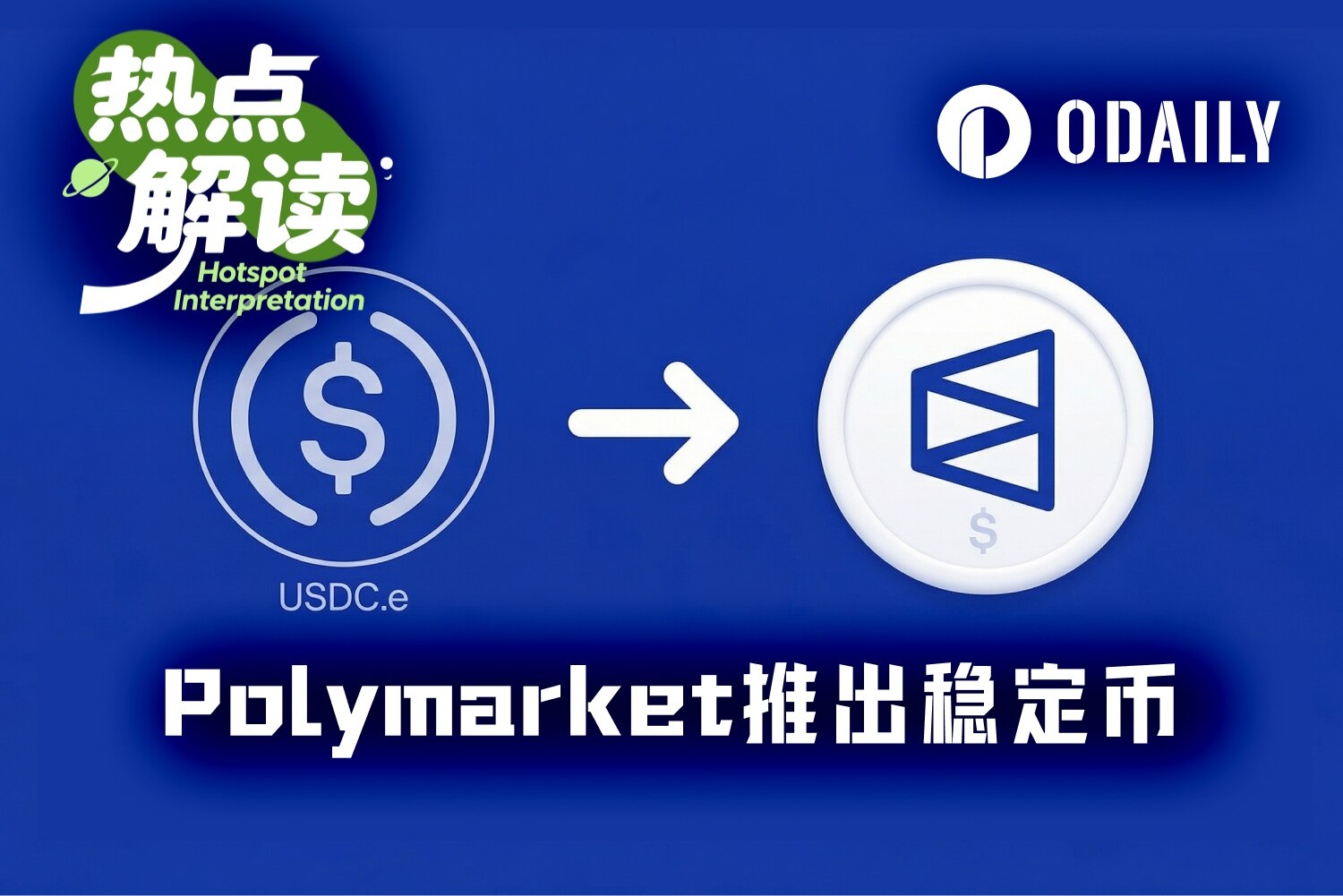
On April 6, Polymarket announced a major upgrade to the platform in the next 2 to 3 weeks, including upgrading both CTF and CLOB to V2, and replacing the platform collateral from USDC.e to the native stablecoin Polymarket USD.

According to the official introduction, Polymarket USD is 1:1 backed by USDC. For most users, the transition from USDC.e to Polymarket USD is seamless, with the frontend handling it automatically—users only need to confirm once. For advanced users and API-only traders, the transition process might be a bit more complex but still not difficult; they need to wrap their USDC or USDC.e into Polymarket USD through the wrap() function of the collateral access contract.

On the surface, Polymarket is merely changing the trading collateral in the backend. As the platform grows, continuing to use USDC.e is indeed a potential issue. Back in February, Circle and Polymarket had already announced plans to migrate bridged USDC.e to native USDC, and this is just a normal progression of that cooperation.

However, Polymarket did not choose to directly introduce native USDC to replace USDC.e; instead, it added an extra layer, aiming to pool USDC within its own treasury. The name of this layer is Polymarket USD. Therefore, the emergence of Polymarket USD is definitely a "One more thing" (Odaily Note: "One more thing" is a classic tradition of Apple keynotes, now symbolizing a company's finale move or industry-disrupting actions).

Polymarket Gains the Right to Mint Currency

The first layer of significance is that Polymarket can pool user funds.

Previously, money deposited by users into Polymarket would become USDC.e. You can think of it as Polymarket being a huge trading venue—it only handles matching, pricing, and清算; the money flows through it, but the money itself does not belong to its system. Polymarket is not a treasury.

But that's about to change. When USDC.e is replaced with Polymarket USD, Polymarket can reach out to that money which was originally just "passing through." As Polymarket officially stated, the daily user experience is unaffected, but the actual on-chain settlement path behind the scenes has been altered. This transformation is no less significant than an exchange transitioning from relying on third-party清算机构 to building its own清算 center.

Polymarket USD is 1:1 backed by USDC, meaning that for every Polymarket USD in the market, there will be a corresponding USDC in Polymarket treasury. Currently, every Yes/No share pair on Polymarket is backed by USDC.e. When players place bets or settle, USDC.e also moves on-chain. But after switching to Polymarket USD, although it will also move on-chain with user operations, the USDC in Polymarket treasury won't experience any movement because of it. Therefore, as long as users don't come to redeem, this money is essentially属于 Polymarket.

Polymarket has gone from being a use case for a stablecoin to反过来掌握ing the on-chain minting right. Polymarket USD diverts user assets from the "open sea" to Polymarket's "internal lake." Once funds begin to pool, Polymarket is no longer just a prediction trading platform, and its business model doesn't have to rely solely on trading fees, because it can start playing the oldest "money makes money" game in finance.

Increasing Polymarket's Revenue Channels

The second layer of significance is the expansion of Polymarket's business.

The current business model of prediction markets is simple: charging transaction fees. After Polymarket adjusted its fee mechanism on March 30 (Odaily Note: Expanding the taker fee scope to include Finance, Politics, Economics, Culture, Weather, and other market categories, in addition to the original Crypto and Sports categories), its daily fee revenue has surpassed $1 million.
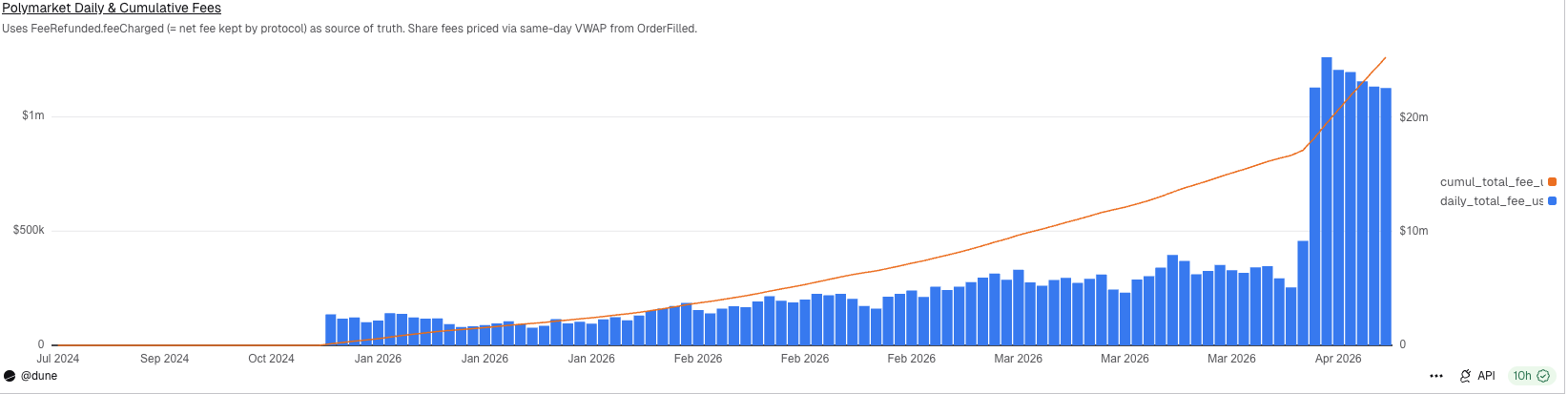
Polymarket's Daily Fee Revenue

Although impressive, it's not enough to satisfy Polymarket's ambitions. Prediction markets, while currently the most sought-after sector, have a business model with a relatively low ceiling, a single moat (regulatory approval), and not exceptionally high user stickiness. In the current landscape where everyone is doing prediction markets, how can Polymarket ensure it won't be surpassed by competitors in the future?

The answer it gives is: I don't just match trades; I can also put players' money to work.

From a business essence perspective, the most attractive aspect of stablecoins over the years has never been fast payments and transfers, but the low-profile yet highly profitable money-printing machine behind them—reserve asset yield. In 2025, the vast majority of Circle's revenue still came from reserve income. Polymarket understood this model, so it launched Polymarket USD.

According to Dune data, the value of open interest on the Polymarket platform has exceeded $400 million. If all this money is converted into Polymarket USD, Polymarket只需要把底层抵押的 USDC 都存进 Circle 的机构账户或者放到美债协议里,按 4%-5% 的无风险利率算,每年坐着不动就能收几千万美金的“利息税”。

Defillama founder 0xngmi even directly stated that Polymarket user wallets hold approximately $1.25 billion. If they keep this interest income, at current rates, they would earn an additional $54 million annually. Polymarket could even participate in DeFi yield farming with higher APYs, turning the idle funds on the prediction platform into active leverage, and then returning the maturity proceeds to users, effectively hedging for them.
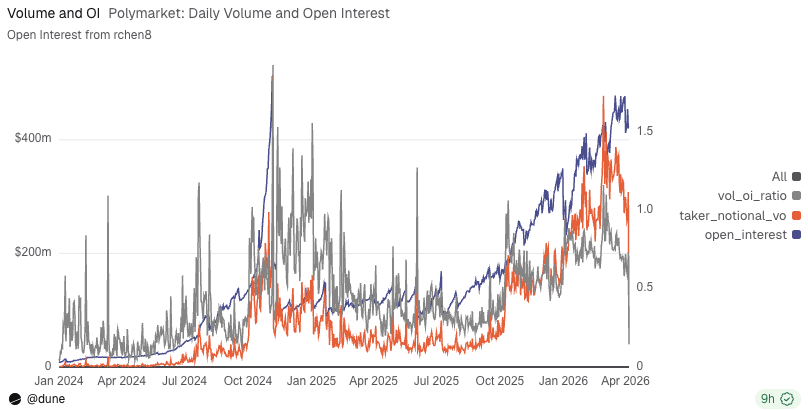
Polymarket's Daily OI and Trading Volume Curve

Prediction markets naturally have two characteristics: first, fund滞留, and second, high-frequency reallocation driven by events. Users' money doesn't truly enter and exit instantly like in a casino; it's either already in a position or sitting in an account waiting for the next event, the next odds change. This type of money is most suitable for financial reprocessing, and for users, there's also a beautiful excuse: improving capital efficiency.

Of course, Polymarket hasn't publicly stated yet that it will definitely engage in yield extraction or on-chain wealth management after launching the stablecoin. But this path is almost a natural next step. As long as the scale of Polymarket USD grows larger in the future, it naturally gains the space to do yield management, collateral expansion, and financial combinations within the platform.

Some time ago, the 《CLARITY Act》 faced resistance for potentially prohibiting crypto companies from offering interest on stablecoins to users. If the outcome of the dispute remains a prohibition, all the above演绎 of Polymarket USD's potential will come to naught. However, on April 6, according to US media reports, the core disagreement between the US crypto industry and banks over the stablecoin yield mechanism may be接近解决. Although details have not been disclosed, the overall expectation is optimistic, and the 《CLARITY Act》 may enter the deliberation stage in committee in late April.

So, don't think Polymarket is far from this.

Polymarket Gains USDC Distribution Rights

The launch of the stablecoin by Polymarket has a third layer of significance: gaining USDC distribution rights.

From today's perspective, Polymarket is still a major distribution scenario within the USDC ecosystem. Circle provides native USDC, Polymarket distributes USDC, and both sides are harmonious. Polymarket is currently experiencing strong growth. Undoubtedly, the USDC reserves pooled within its platform will become larger in the future, potentially even becoming a distribution channel as important as Coinbase. When that time truly comes, the relationship between Polymarket and Circle might also sour.

A reality in the stablecoin world is that distribution rights are as important as issuance rights, which is why Coinbase can take away over half of Circle's reserve income. Therefore, in the future, when Polymarket becomes an important distributor of USDC, it will also inevitably grow bargaining power and will be entitled to take a large share of the reserve收益.甚至, when Polymarket USD is mature enough, it can explore multi-collateral backed stablecoins, not just putting all its eggs in the USDC basket.

This is also why I believe Polymarket USD is not an ordinary upgrade for Polymarket, but an identity update. Polymarket will evolve from a "platform collecting fees围绕事件波动" to one that also兼具 "platform organizing and清算围绕美元".

The former is casino logic, while the latter is bank logic.

Polymarket's moat has thus gained another layer. It still maintains the beautiful narrative of information as a market and pricing facts early. But in terms of its business model, it is quietly moving itself towards a more important position—no longer satisfied with being surface-level market traffic, no longer satisfied with仅仅靠赔率吸引用户, and no longer satisfied with continuing to leave the fattest part of the industry chain (asset reserve收益) to others.


Пов'язані питання

QWhat is the primary significance of Polymarket launching its native stablecoin, Polymarket USD?

AThe primary significance is that Polymarket can now pool user funds, moving from being a mere transaction platform to controlling the minting power of its own stablecoin. This allows it to retain USDC reserves in its own treasury, enabling potential revenue from reserve assets and expanding its business model beyond just transaction fees.

QHow does the transition from USDC.e to Polymarket USD affect the average user on the platform?

AFor the average user, the transition is seamless and handled automatically on the frontend with a single confirmation click. The change is largely imperceptible in their user experience, as the platform manages the conversion process behind the scenes.

QWhat new revenue stream does Polymarket potentially gain by introducing its own stablecoin?

APolymarket gains the potential to earn significant revenue from the interest on the USDC reserves backing Polymarket USD. With over $400 million in open interest, it could generate millions annually from low-risk yields like U.S. Treasury bonds or DeFi protocols, diversifying beyond transaction fees.

QWhy is the move to Polymarket USD compared to a shift from a 'gambling logic' to a 'banking logic'?

AThe shift is made because Polymarket is evolving from merely collecting fees on event-based transactions (gambling logic) to managing and清算 user assets, controlling stablecoin issuance, and earning from reserve yields—functions akin to a bank's role in financial systems (banking logic).

QWhat regulatory consideration could impact Polymarket's ability to generate yield from its stablecoin reserves?

AThe CLARITY Act in the U.S., which may prohibit crypto firms from providing interest on stablecoins, could hinder this revenue stream. However, recent reports suggest potential resolutions are being discussed, with the act expected to enter committee review soon, indicating cautious regulatory progress.

Пов'язані матеріали

Торгівля

Спот
Ф'ючерси

Популярні статті

Що таке $BANK

Bank AI: Революційний крок у майбутнє банківської справи Вступ В епоху, що характеризується швидкими технологічними змінами, Bank AI знаходиться на перетині штучного інтелекту (ШІ) та банківських послуг. Цей інноваційний проєкт прагне переосмислити фінансовий ландшафт, підвищуючи ефективність роботи, заходи безпеки та досвід клієнтів завдяки потужності ШІ. Розпочинаючи дослідження Bank AI, ми заглибимося в суть проєкту, його операційні динаміки, історичний контекст і значущі етапи. Що таке Bank AI? У своїй основі Bank AI представляє собою трансформаційну ініціативу, спрямовану на інтеграцію штучного інтелекту в різні банківські операції. Цей проєкт використовує можливості ШІ для автоматизації процесів, покращення протоколів управління ризиками та підвищення взаємодії з клієнтами через персоналізовані послуги. Основні цілі Bank AI включають: Автоматизація банківських функцій: Використовуючи технології ШІ, Bank AI прагне автоматизувати рутинні завдання, зменшуючи навантаження на людські ресурси та підвищуючи ефективність. Покращене управління ризиками: Проєкт використовує алгоритми ШІ для прогнозування та виявлення ризиків, тим самим зміцнюючи заходи безпеки проти шахрайства та інших загроз. Персоналізація банківських послуг: Bank AI зосереджується на пропозиції індивідуальних фінансових продуктів і послуг, аналізуючи дані і поведінку клієнтів. Покращення досвіду клієнтів: Впровадження рішень на основі ШІ, таких як чат-боти та віртуальні асистенти, має на меті забезпечити користувачам більш природну взаємодію, революціонізуючи спосіб, яким клієнти спілкуються з банками. З цими цілями Bank AI займає важливу роль в робленні банківської справи більш ефективною, безпечною та орієнтованою на користувача. Хто є творцем Bank AI? Деталі стосовно творця Bank AI залишаються невідомими. Таким чином, жодна конкретна особа або організація не були ідентифіковані в доступній інформації. Анонімність навколо створення проєкту піднімає питання, але це не зменшує його амбітного бачення та цілей. Хто є інвесторами Bank AI? Аналогічно творцеві проєкту, конкретна інформація стосовно інвесторів або організацій, що підтримують Bank AI, не була розкрито. Без цієї інформації важко окреслити фінансову підтримку та інституційну підтримку, які могли б сприяти розвитку проєкту. Тим не менше, важливість наявності міцної інвестиційної бази є вирішальною для забезпечення розвитку в такій інноваційній сфері. Як працює Bank AI? Bank AI функціонує на кількох інноваційних фронтах, фокусуючись на унікальних факторах, які відрізняють його від традиційних банківських структур. Нижче наведено ключові операційні характеристики: Автоматизація: Застосовуючи алгоритми машинного навчання, Bank AI автоматизує різні ручні процеси в банках. Це призводить до зниження операційних витрат і дозволяє працівникам перенаправити свої зусилля на більш стратегічні завдання. Покращене управління ризиками: Інтеграція ШІ в практики управління ризиками забезпечує банки інструментами для точного прогнозування потенційних загроз, таких як шахрайство, забезпечуючи при цьому безпеку інформації і активів клієнтів. Індивідуальні фінансові рекомендації: Завдяки безперервному навчанню з інтерaktionen з клієнтами, системи ШІ розвивають тонке розуміння потреб користувачів, що дозволяє їм пропонувати персоналізовані поради щодо фінансових рішень. Покращені взаємодії з клієнтами: Використовуючи чат-ботів і віртуальних асистентів на базі ШІ, Bank AI дозволяє створити більш залучений досвід для клієнтів, дозволяючи користувачам швидше отримувати відповіді на свої запитання, зменшуючи час очікування та підвищуючи рівень задоволеності. Разом ці операційні характеристики позиціонують Bank AI як піонера в банківському секторі, встановлюючи нові стандарти для надання послуг і операційної досконалості. Хронологія Bank AI Для розуміння траєкторії Bank AI необхідно ознайомитися з його історичним контекстом. Нижче наведено хронологію, що підкреслює важливі етапи та розробки: Ранні 2010-ті: Концептуалізація інтеграції ШІ в банківські послуги почала привертати увагу, коли банківські установи визнали потенційні переваги. 2018: Відбулося помітне збільшення впровадження технологій ШІ, коли банки почали використовувати інструменти ШІ, такі як чат-боти для базового обслуговування клієнтів та системи управління ризиками для покращення безпеки. 2023: Софістикація ШІ продовжувала розвиватися, з введенням генеративного ШІ для більш складних завдань, таких як обробка документів і аналіз інвестицій в реальному часі. Цей рік став важливим стрибком у можливостях, які забезпечує технологія ШІ для банків. 2024-актуальний статус: Станом на цей рік, Bank AI знаходиться на зростаючій траєкторії, з постійними дослідженнями та розробками, які готові подальше покращити можливості в банківських операціях. Продовження дослідження застосувань ШІ натякає на захоплюючі події, які ще попереду. Ключові моменти про Bank AI Інтеграція ШІ в банківську справу: Bank AI зосереджується на прийнятті штучного інтелекту для оптимізації банківських процесів та покращення досвіду користувачів. Автоматизація та фокус на управлінні ризиками: Проєкт сильного підкреслює ці сфери, прагнучи зshift тягар рутинних завдань, водночас підвищуючи безпеку через прогнозну аналітику. Персоналізовані банківські рішення: Завдяки використанню даних клієнтів, Bank AI забезпечує персоналізовані банківські послуги, що відповідають потребам окремих користувачів. Прихильність до розвитку: Bank AI залишається відданим постійним дослідженням і розробкам, що забезпечують його адаптацію та постійну актуальність у міру того, як технології продовжують розвиватися. Висновок Підсумовуючи, Bank AI є важливим кроком вперед у банківській індустрії, використовуючи штучний інтелект для переформатування операційних парадигм, підвищення безпеки та сприяння задоволеності клієнтів. Незважаючи на прогалини в інформації щодо творця та інвесторів, чіткі цілі і функціональні механізми Bank AI забезпечують міцну основу для його подальшої еволюції. Оскільки технологія ШІ продовжує розвиватися та інтегруватися в банківський сектор, Bank AI має всі шанси суттєво вплинути на майбутнє фінансових послуг, покращуючи спосіб, яким ми розуміємо та взаємодіємо з банківською справою.

146 переглядів усьогоОпубліковано 2024.04.06Оновлено 2024.12.03

Що таке $BANK

Як купити BANK

Ласкаво просимо до HTX.com! Ми зробили покупку Lorenzo Protocol (BANK) простою та зручною. Дотримуйтесь нашої покрокової інструкції, щоб розпочати свою криптовалютну подорож.Крок 1: Створіть обліковий запис на HTXВикористовуйте свою електронну пошту або номер телефону, щоб зареєструвати обліковий запис на HTX безплатно. Пройдіть безпроблемну реєстрацію й отримайте доступ до всіх функцій.ЗареєструватисьКрок 2: Перейдіть до розділу Купити крипту і виберіть спосіб оплатиКредитна/дебетова картка: використовуйте вашу картку Visa або Mastercard, щоб миттєво купити Lorenzo Protocol (BANK).Баланс: використовуйте кошти з балансу вашого рахунку HTX для безперешкодної торгівлі.Треті особи: ми додали популярні способи оплати, такі як Google Pay та Apple Pay, щоб підвищити зручність.P2P: Торгуйте безпосередньо з іншими користувачами на HTX.Позабіржова торгівля (OTC): ми пропонуємо індивідуальні послуги та конкурентні обмінні курси для трейдерів.Крок 3: Зберігайте свої Lorenzo Protocol (BANK)Після придбання Lorenzo Protocol (BANK) збережіть його у своєму обліковому записі на HTX. Крім того, ви можете відправити його в інше місце за допомогою блокчейн-переказу або використовувати його для торгівлі іншими криптовалютами.Крок 4: Торгівля Lorenzo Protocol (BANK)Легко торгуйте Lorenzo Protocol (BANK) на спотовому ринку HTX. Просто увійдіть до свого облікового запису, виберіть торгову пару, укладайте угоди та спостерігайте за ними в режимі реального часу. Ми пропонуємо зручний досвід як для початківців, так і для досвідчених трейдерів.

614 переглядів усьогоОпубліковано 2025.05.09Оновлено 2025.05.09

Як купити BANK

Обговорення

Ласкаво просимо до спільноти HTX. Тут ви можете бути в курсі останніх подій розвитку платформи та отримати доступ до професійної ринкової інформації. Нижче представлені думки користувачів щодо ціни BANK (BANK).

活动图片