The FBI Launched a Coin, and It's More Legitimate Than Half of the Crypto Projects Out There

marsbitОпубліковано о 2026-05-21Востаннє оновлено о 2026-05-21

Анотація

In an undercover operation dubbed "Operation Token Mirrors," the FBI created a fake cryptocurrency project called NexFundAI on Ethereum to expose widespread market manipulation. Posing as a project team, FBI agents approached several market-making firms—including Gotbit, ZM Quant, CLS Global, and MyTrade—to artificially inflate trading volume. All firms agreed without questioning the project's legitimacy, with one founder admitting on tape that they profited by ensuring retail investors lost money. The investigation, spanning two years and three continents, led to charges against 28 individuals and the seizure of over $25 million in crypto assets. Key cases involved firms like Saitama, which allegedly manipulated its token to a $7.5 billion market cap using coordinated buying and market makers, and Lillian Finance, which promoted a fraudulent charity narrative. Evidence included internal spreadsheets tracking fake versus real trading volume and Telegram chats discussing manipulation tactics. The FBI's fake project website now warns visitors about its investigative purpose and offers a victim compensation portal. Ironically, within 24 hours of the DOJ's announcement, a copycat token based on NexFundAI's contract was launched, netting its creator over $127,000—highlighting how quickly such schemes are replicated in the crypto space.

Author: Curry, Shenchao TechFlow

Two years ago, FBI agents pretended to be the founding team of an investment project at the "intersection of AI and finance," launched a token called NexFundAI on Ethereum, complete with an official website, whitepaper, and business plan, looking no different from any legitimate project on the market.

Then they approached market makers to provide liquidity.
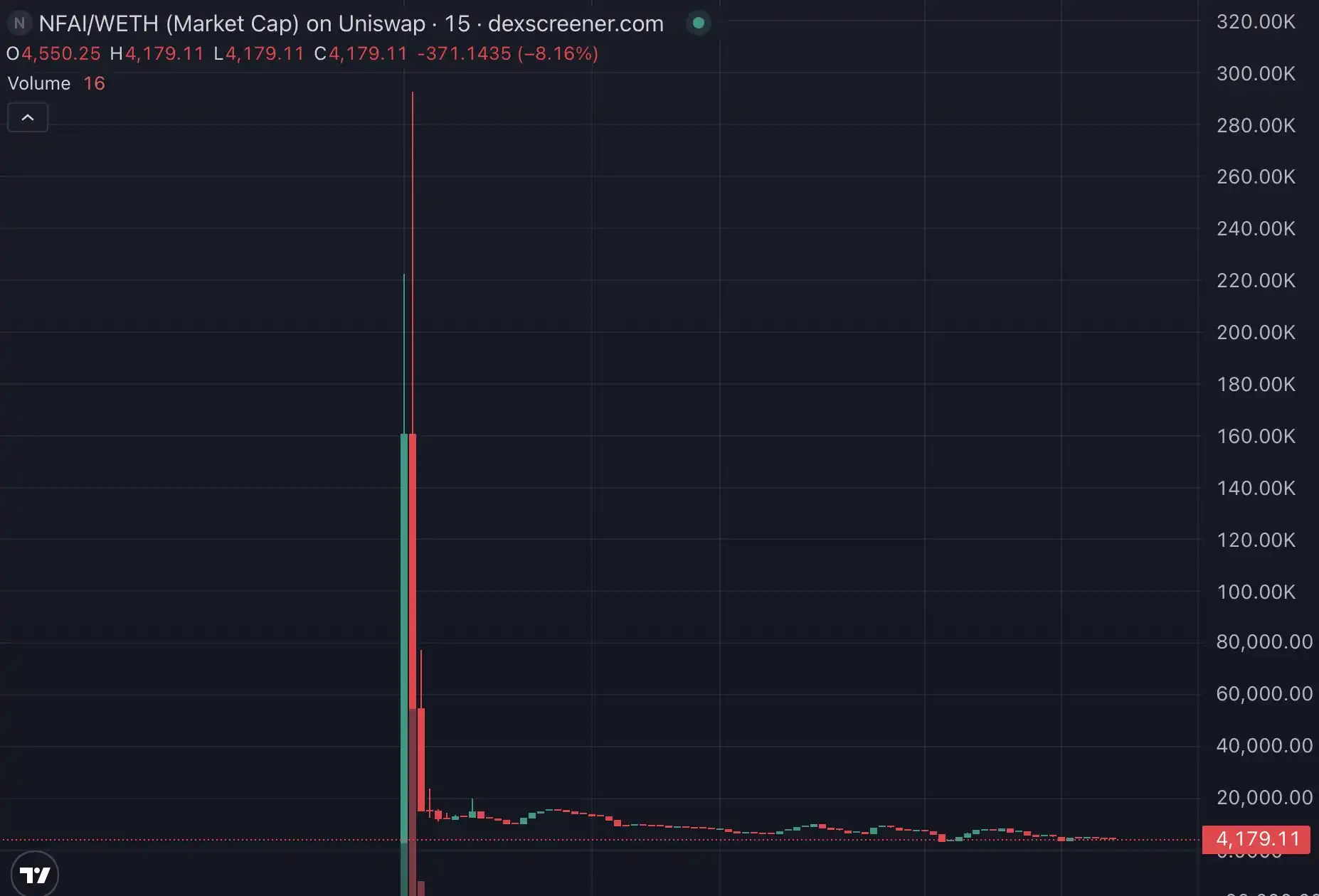
One function of market makers is sometimes to help project teams boost trading volume. The industry term is "volume support," which translates to volume manipulation.

The undercover FBI agents contacted several well-known market makers in the industry one by one, stating upfront: we have a new project and need someone to help boost the trading volume.

According to the indictment released by the U.S. Department of Justice, every single one said, okay.

No one asked if the project was compliant, no one asked if the token had any real utility, no one asked if this was illegal. According to court documents released by the U.S. Department of Justice, four market makers—Gotbit, ZM Quant, CLS Global, MyTrade—all took the job.

During a meeting with an undercover agent, the founder of one of these firms, on a recording device, referred to himself as the "mastermind." He explained in detail how his company used bots to simultaneously place buy and sell orders to create fake trading volume, and how to make the price chart look like a rollercoaster to lure retail investors to jump in.

Then he said something that the FBI recorded verbatim. According to Cointelegraph quoting the indictment, he said:

We have to make them lose money for us to make money.

"Them" refers to retail investors.

The operation was code-named Operation Token Mirrors. According to a U.S. Department of Justice announcement on October 9, 2024, the first batch of 18 people were charged, with over $25 million in crypto assets seized. According to an IRS announcement on March 30 of this year, a second batch of 10 people were charged, with three extradited to the U.S. from Singapore.

Two years, three continents, 28 people. This is the largest market manipulation enforcement action in cryptocurrency history. And it's not over yet.

A Price Quote

How did these market makers operate?

According to the indictment released by the U.S. Department of Justice, Gotbit's founder, Andriunin, maintained a spreadsheet within the company with two columns of data side by side: one labeled "Created Volume" and the other "Market Volume."

To translate, one column was the fake volume they generated themselves, the other was the actual trading happening in the market.

In a 2019 interview with CoinDesk, while still a sophomore at Moscow State University, this 20-year-old was already explaining in detail on camera how he wrote code to create fake volume and helped clients get their tokens onto CoinMarketCap's trending lists. According to the CoinDesk article, he himself said this business was "not entirely ethical."

After the interview aired, he didn't receive any subpoenas; instead, he gained five new clients.

By the time of his arrest in 2024, Gotbit had been operating for six years, serving projects worldwide. According to the U.S. Department of Justice's sentencing announcement, Andriunin was ultimately sentenced to 8 months in prison, Gotbit was ordered to dissolve, and approximately $23 million in crypto assets were forfeited.

Gotbit wasn't the cheapest.

According to a price quote from another market maker disclosed in the indictment, the cost of generating $1 million in daily trading volume was about $200. According to Cointelegraph citing court documents, an employee of ZM Quant explained to an FBI undercover agent on a recorded call: "We use one to two thousand wallets, trading ten times per hour, or ten times per minute, to reach the target volume."

Each transaction cost about $3.

And CLS Global went even further. According to SEC investigation documents, this company registered in the UAE used 30 wallets to execute 740 wash trades, creating nearly $600,000 in fake trading volume, accounting for 98% of the total trading volume of the fake token NexFundAI created by the FBI during that period.

$7.5 Billion of Thin Air

Market makers are tools; the people hiring them are the main actors.

According to the U.S. Department of Justice indictment, the biggest client exposed by this FBI sting operation was called Saitama, a crypto company registered in Massachusetts in 2021, with a peak market cap reportedly reaching $7.5 billion.

What does $7.5 billion mean? It was larger than many legitimate publicly traded companies on Nasdaq at the time.

But how did that number come about, according to the indictment? Starting in July 2021, Saitama's management coordinated actions in a Telegram group, using multiple wallets to place small buy orders, creating the illusion of "a large influx of new buyers."

According to Telegram chat logs cited in the indictment, a core member explained the purpose of the operation: "We want these small buys to look like more buyers, that’s the plan."

The chat logs also included "PUMP IT" emojis and GIFs they sent to each other to confirm buys and celebrate when retail investors followed.
According to the same indictment, Saitama then paid market makers including ZM Quant and Gotbit to conduct large-scale wash trading on exchanges like BitMart and LBank. After the market cap was inflated, the management quietly sold their own tokens, cashing out tens of millions of dollars. According to a DOJ announcement, Saitama's CEO was arrested in the UK, and five former and current employees were charged, with three pleading guilty.

Saitama wasn't the only one.

According to the same indictment, a project called Lillian Finance was founded by 48-year-old Bradley Beatty from Florida. This person publicly claimed to be a defense contractor, stated he had spoken before Congress on cryptocurrency issues, and promised that part of the token sale proceeds would go to charity to help children receive medical care.

According to the indictment, all these claims were fabricated. Beatty pocketed the profits meant for charity.

Defense contractor, congressional speech, children's medical charity—you just need to weave a compelling enough narrative and hire a market maker to paint a pretty price chart, and that's enough to attract some people to FOMO.

Looking back at these cases, what feels most unsettling isn't how sophisticated the scams were, but rather, how crude they were.

The FBI's Coin Was Pretty Legit

After the operation concluded, the FBI did one more thing.

According to a U.S. Department of Justice announcement, the NexFundAI website is still up, but now with a banner at the top that reads: "This website was created under the direction of the Federal Bureau of Investigation as part of an investigation into cryptocurrency fraud and market manipulation." Below the banner is a link to the full DOJ indictment.

The FBI also specifically opened a victim registration channel. According to the DOJ announcement, anyone who lost money on NexFundAI or related tokens can fill out a form to apply for compensation and legal protection.

The FBI launched a token, proactively disclosed information after the operation ended, and even opened a compensation channel for those who lost money; compared to the projects caught in this sting, the process was arguably much more legitimate.

The most absurd part is yet to come.

According to a report by blockchain analytics firm TRM Labs, within 24 hours of the DOJ announcement, someone cloned the FBI's NexFundAI smart contract and launched a copycat token. This person started with about $2,300, cashed out over 52 ETH within 24 hours, worth approximately $127,000 at the time.

The FBI used a fake token to prove market maker manipulation; the day the news broke, someone used the same tactic to launch a new meme and make another profit. Law enforcement took two years, but the market digested and absorbed the entire event in two hours, by launching yet another new shitcoin.

So next time you see a meme coin suddenly skyrocketing, you might want to think about whether it's a performance or real trading.

Of course, it could also be the FBI.

Пов'язані питання

QAccording to the article, what was the primary tactic used by the 'market makers' exposed in the FBI sting operation?

AThey used automated bots or a network of wallets to place simultaneous buy and sell orders, creating fake trading volume to make a project appear more active and legitimate, thereby attracting real investors.

QWhat was the name of the fake project the FBI created, and what action did they take regarding its website after the operation concluded?

AThe fake project was called NexFundAI. After the operation, the FBI added a prominent banner to its website explaining it was a law enforcement investigation tool and provided links to official documents and a victim compensation form.

QWhich major project with a peak claimed valuation of $75 billion was implicated as a major client of the exposed market makers? What was the alleged method they used to inflate its value?

AThe project was Saitama. Its management allegedly coordinated through Telegram groups to place numerous small buy orders from multiple wallets, creating the illusion of widespread organic buying demand to pump the price before selling their own holdings.

QWhat ironic event occurred shortly after the Department of Justice announced the results of 'Operation Token Mirrors'?

AWithin 24 hours, someone cloned the NexFundAI smart contract and launched a copycat memecoin. Starting with about $2,300, the creator cashed out over 52 ETH (approx. $127,000 at the time), demonstrating the very market behavior the operation aimed to expose.

QWhat specific, self-incriminating quote from one of the market maker founders did the FBI record and highlight in the article?

AThe founder said, 'We have to make them lose money for us to make money,' where 'them' referred to retail investors.

Пов'язані матеріали

Blocked Its Own Treasure, WeChat AI Steps Up

Tencent's stock surged over 10% on June 2nd amid reports that WeChat, with 1.43 billion monthly users, is finalizing tests for a native AI Agent. The reported feature, accessible by swiping right from the main interface, allows users to issue commands in natural language. The AI then decomposes tasks and automatically calls upon relevant Mini Programs within WeChat to complete actions like ordering food, booking tickets, or making payments, creating a closed-loop service execution system. This strategic shift follows the internal conflict and subsequent "blocking" of Tencent's standalone AI app, Yuanbao, by WeChat for violating sharing rules during a 2026 Spring Festival promotion. The incident highlighted a lack of internal consensus and exposed the weakness of competing in the standalone AI assistant arena against rivals like ByteDance's Doubao (345M MAU) and Alibaba's Qianwen. The new WeChat AI Agent aims to leverage WeChat's unique assets—its massive user base, standardized Mini Program APIs, WeChat Pay, and identity system—to move from simple content generation to actual task execution. Analysts note this changes the competitive landscape from model benchmarks to which AI can connect to more real-world services. However, success depends on key variables: the capability of Tencent's underlying Hunyuan model, managing massive inference costs, and redesigning incentives for Mini Program developers whose traffic might be bypassed. The move is seen as an attempt to keep user service intent within WeChat's ecosystem as AI begins to redefine how users access services.

marsbit1 хв тому

Blocked Its Own Treasure, WeChat AI Steps Up

marsbit1 хв тому

ByteDance Adopts Arm CPUs, Jensen Huang: So Sad I Didn't Buy Arm

**Summary:** At Computex 2026, Arm CEO Rene Haas announced that ByteDance and Oracle have adopted Arm's self-designed Arm AGI data center CPU. The company expects significant revenue growth from this product, projecting $20 billion in demand for the 2027/2028 fiscal years. Haas noted that restricting AI-capable CPUs from the US to China is nearly impossible due to their widespread applications. Arm's stock has surged dramatically this year, notably rising 16% after NVIDIA's Arm-based Vera CPU and RTX Spark announcements. A highlight was the informal, humorous on-stage conversation between Haas and NVIDIA CEO Jensen Huang. Huang joked about NVIDIA's failed attempt to acquire Arm and playfully lamented selling his Arm shares. Both executives showed a clear sense of camaraderie and shared regret over the missed merger. Key technical topics were discussed: 1. **AI PC Design:** Huang explained NVIDIA's RTX Spark superchip (with a 20-core Arm CPU) is designed for future AI agents that will autonomously run and use tools on PCs, blending local and cloud processing. 2. **Agent vs. OS:** Huang emphasized the operating system remains crucial, as AI agents rely on its APIs and tools to function. 3. **Growth Constraints:** He identified the shift to "useful AI" that generates profitable tokens as a primary driver for immense, almost limitless, computational demand. Haas outlined Arm's strategy across PC and data centers. For PCs, Arm collaborates with partners like NVIDIA and MediaTek, offering its compute subsystem (CSS) for custom SoCs. In data centers, its Arm AGI CPU (built on TSMC's 3nm process) has gained major partners including OpenAI, Meta, and now ByteDance and Oracle. Arm presented a multi-year roadmap for its in-house CPU line. The article concludes that while GPUs dominated the AI training race, the explosion of AI agents is shifting significant focus to CPUs for inference, state management, and tool orchestration. The industry is trending towards vertical integration, with companies like cloud providers designing chips and chip/IP firms offering full solutions, all competing to deliver more efficient computing per watt.

marsbit21 хв тому

ByteDance Adopts Arm CPUs, Jensen Huang: So Sad I Didn't Buy Arm

marsbit21 хв тому

New Wall Street Play: Yen Shorts Still Adding, But Japan Stocks Don't Rely on Carry Trade Unwinding

On June 3rd, USD/JPY hit 160.44, its highest level since July 2024, while the Nikkei 225 surged past 68,000 points. Contrary to popular narratives of an imminent "carry trade unwind" akin to August 2024, data reveals a more complex picture. Speculative net short positions in yen futures have actually increased, reaching -114,667 contracts by late May, suggesting traders are doubling down rather than retreating. Meanwhile, Japan's Finance Ministry conducted its largest-ever single-round FX intervention (11.73 trillion yen) in April-May but failed to hold the 160 yen line. The Nikkei's rally is not driven by carry trade dynamics. Foreign investors are aggressively buying Japanese stocks, with net purchases in 2026 running nearly 16 times higher than 2025 levels. This inflow is concentrated in AI and semiconductor-related stocks like SoftBank and Socionext, fueled by positive sector outlooks, rather than being a flight from unwinding yen shorts. Furthermore, the Nikkei has continued climbing despite the Bank of Japan's (BOJ) rate hikes to 0.75%. This disconnect exists because the current equity boom is fueled by AI-driven foreign investment, not reliant on cheap yen funding. However, this relationship remains fragile. Should the BOJ hike rates further (e.g., to 1.0%) while dollar weakness increases carry trade costs, the trajectories of the yen and Japanese stocks could reconverge, potentially triggering volatility.

marsbit26 хв тому

New Wall Street Play: Yen Shorts Still Adding, But Japan Stocks Don't Rely on Carry Trade Unwinding

marsbit26 хв тому

Broadcom's Q3 Guidance Misses Expectations by $12 Billion, After-Hours Trading Plummets Over 13%, AI Narrative "Cooling"?

On June 3, Broadcom released record Q2 FY26 results with revenue of $22.19B, up 48% YoY, and AI chip sales of $10.8B, up 143%. Adjusted EPS of $2.44 beat estimates. However, its Q3 AI semiconductor revenue guidance of $16B, while up over 200% YoY, fell roughly $1.2B (7%) short of analyst consensus expectations of $17.2B. This miss, coupled with slightly weaker-than-expected software revenue, triggered a severe market reaction. CEO Hock Tan maintained the FY26 AI revenue outlook of over $100B but did not raise it, disappointing investors who had priced in more robust growth. The stock plummeted over 13% in after-hours trading, erasing roughly $270B in market cap. The sell-off extended to peers like Marvell. A key concern for markets, particularly for Chinese optical module suppliers, was Tan's comment that the contribution of AI networking (e.g., Ethernet switches, optical interconnect chips) to AI revenue, currently near 40%, is expected to normalize to around 30% over time, signaling a potential peak in growth for that segment. Despite the guidance shortfall, Tan reiterated that AI demand remains "insatiable" and reaffirmed the long-term target of exceeding $100B in AI revenue by FY27. The reaction highlights the heightened sensitivity and premium valuation placed on AI-exposed stocks, where anything less than stellar guidance can prompt significant profit-taking. The broader question is whether this represents a cooling AI narrative or a correction in overstretched valuations.

marsbit26 хв тому

Broadcom's Q3 Guidance Misses Expectations by $12 Billion, After-Hours Trading Plummets Over 13%, AI Narrative "Cooling"?

marsbit26 хв тому

Торгівля

Спот
Ф'ючерси

Популярні статті

Як купити F

Ласкаво просимо до HTX.com! Ми зробили покупку Synfutures (F) простою та зручною. Дотримуйтесь нашої покрокової інструкції, щоб розпочати свою криптовалютну подорож.Крок 1: Створіть обліковий запис на HTXВикористовуйте свою електронну пошту або номер телефону, щоб зареєструвати обліковий запис на HTX безплатно. Пройдіть безпроблемну реєстрацію й отримайте доступ до всіх функцій.ЗареєструватисьКрок 2: Перейдіть до розділу Купити крипту і виберіть спосіб оплатиКредитна/дебетова картка: використовуйте вашу картку Visa або Mastercard, щоб миттєво купити Synfutures (F).Баланс: використовуйте кошти з балансу вашого рахунку HTX для безперешкодної торгівлі.Треті особи: ми додали популярні способи оплати, такі як Google Pay та Apple Pay, щоб підвищити зручність.P2P: Торгуйте безпосередньо з іншими користувачами на HTX.Позабіржова торгівля (OTC): ми пропонуємо індивідуальні послуги та конкурентні обмінні курси для трейдерів.Крок 3: Зберігайте свої Synfutures (F)Після придбання Synfutures (F) збережіть його у своєму обліковому записі на HTX. Крім того, ви можете відправити його в інше місце за допомогою блокчейн-переказу або використовувати його для торгівлі іншими криптовалютами.Крок 4: Торгівля Synfutures (F)Легко торгуйте Synfutures (F) на спотовому ринку HTX. Просто увійдіть до свого облікового запису, виберіть торгову пару, укладайте угоди та спостерігайте за ними в режимі реального часу. Ми пропонуємо зручний досвід як для початківців, так і для досвідчених трейдерів.

215 переглядів усьогоОпубліковано 2024.12.21Оновлено 2026.06.02

Як купити F

Обговорення

Ласкаво просимо до спільноти HTX. Тут ви можете бути в курсі останніх подій розвитку платформи та отримати доступ до професійної ринкової інформації. Нижче представлені думки користувачів щодо ціни F (F).

活动图片













