The Fall of the $70 Million Myth: How NFTs Went from Auction House to Walmart Shelves

比推Опубліковано о 2026-01-06Востаннє оновлено о 2026-01-06

Анотація

The NFT market has experienced a dramatic decline from its peak, marked by the cancellation of NFT Paris 2025 and a significant drop in market value. Total NFT supply surged by 35% in 2025, while sales fell 37% to $5.63 billion, and the market capitalization plummeted 86% from its 2022 high. Average sale prices dropped to $96, down 75% from the bull market. Even blue-chip NFTs like CryptoPunks and Bored Ape Yacht Club saw floor prices fall by 78% and 83%, respectively. Major platforms like OpenSea are pivoting away from pure NFT trading, with some shutting down entirely. Amid the downturn, Pudgy Penguins emerged as a success story by leveraging its IP for physical consumer products, generating an estimated $50 million annually through retail partnerships with Walmart and others. Its brand-focused strategy, including high-profile advertising, boosted secondary market activity. Meanwhile, NFTs are finding utility in real-world applications, such as tokenized physical assets (e.g., Courtyard’s Pokémon cards) and functional use cases like FIFA’s anti-scalping tickets for the 2026 World Cup. The speculative frenzy around NFTs as standalone financial assets has ended, but the technology persists as a practical tool for verification, ownership, and integration into broader ecosystems—signaling a shift from hype to utility.

Author: Sanqing, Foresight News

Original Title: From the $70 Million Myth to $9 Dolls, Are NFTs Really "Dead"?


On January 5, the NFT Paris developer conference, originally scheduled for February, was suddenly canceled. The banks of the Seine, once alive with all-night parties, are now left with only a cold official tweet: "The market crash has hit us hard. Even with aggressive cost-cutting measures, we are still unable to sustain it."

Five years ago, digital artist Beeple's work "Everydays: The First 5000 Days" sold for a staggering $69.3 million at Christie's auction house. This was followed by CryptoPunks fetching tens of millions and countless digital collectibles backed by mainstream institutions—it was the golden age of NFTs.

From a record-breaking auction sale to a forced industry conference cancellation, NFTs have completed a full cycle from frenzy to reckoning in just five years.
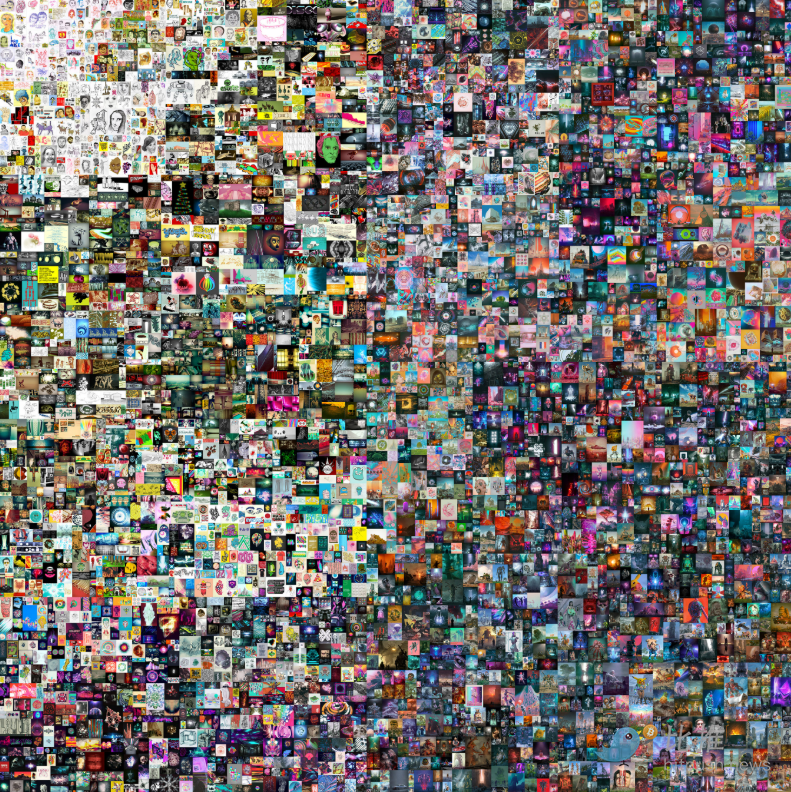
Image – Everydays: The First 5000 Days NFT

Imbalance in NFT Market Supply and Demand

Supply Explosion. According to CryptoSlam data, the supply in 2025 increased by 35% compared to 1 billion in 2024. Over the past four years, the total number of NFTs has skyrocketed from 38 million to 1.34 billion, a growth of approximately 3,400%.

Sales Shrinkage. According to CryptoSlam data, the total NFT sales in 2025 were approximately $5.63 billion, a 37% decrease from $8.9 billion in 2024. According to CoinGecko data, the total NFT market capitalization fell from a peak of about $17 billion in April 2022 to about $2.4 billion by the end of 2025, a drop of about 86%. In 2025 alone, the total NFT market capitalization shrank from about $9.2 billion in January to its year-end size, a staggering 68% drop for the year.

Liquidity Dilution. As the barrier to minting lowered, the market entered a "high-frequency, low-price" mode. According to CryptoSlam data, the average transaction price has fallen from $124 in 2024 to $96 by the end of 2025. Compared to the average transaction price of over $400 during the peak of the 2021-2022 bubble, it has lost three-quarters of its value.
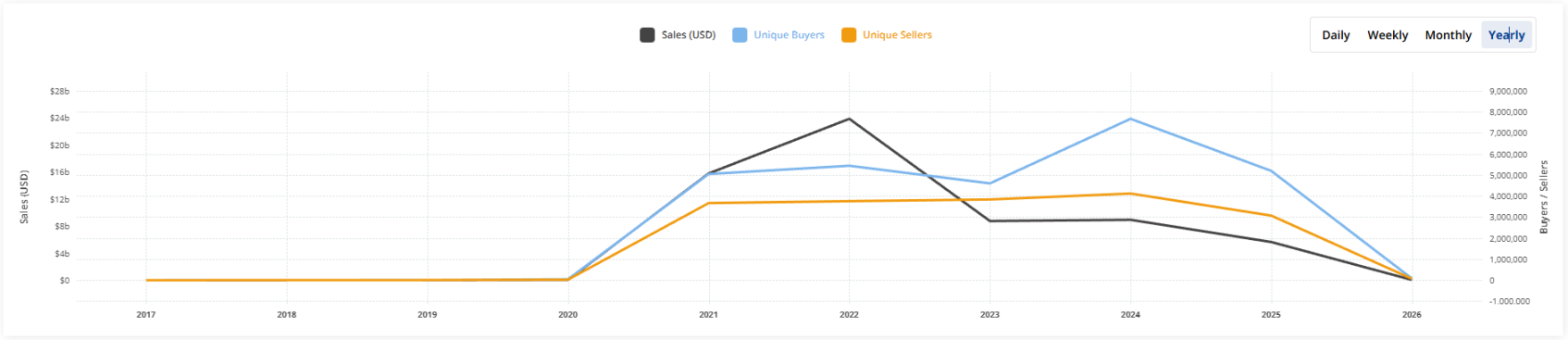
Image Source: CryptoSlam

Even former top-tier NFT projects and blue-chip NFTs couldn't escape the downturn. Taking CryptoPunks as an example, the floor price has fallen to about 30 ETH, down 78% from its peak of 125 ETH in 2021; Bored Ape Yacht Club (BAYC) fell 83% from about 30 ETH to about 5 ETH; Azuki dropped 93% from about 12 ETH to 0.8 ETH.

Collective "Flight" and Evolution of Platforms

The moves of industry leaders signal the end of this cycle.

OpenSea, once the undisputed leader in the NFT marketplace, saw its platform revenue drop from $50-120 million per month during the NFT golden age to less than one million.

Consequently, OpenSea announced a pivot, transforming from a pure "NFT marketplace" to a universal on-chain trading center for "Trade Everything," encompassing physical collectibles and digital assets like tokens, and confirmed it will issue a token.

Blur, which debuted at its peak, has seen its TVL continuously hit new lows, and its token price is down 99% from its high.

Then there's Magic Eden, which rose to prominence on the Solana chain. After a year of operation, it issued a token. Affected by the NFT market sentiment and the realization of airdrop expectations, platform trading volume began to shrink, and its token price also fell over 98% from its high.

Even projects that couldn't keep up with the changing times, like the older NFT marketplace X2Y2, have been eliminated, ceasing operations entirely, with the team shifting to the AI field.

From "Token" to "Brand"

Amid the widespread gloom, Pudgy Penguins has successfully bucked the trend, becoming an outlier in the industry. Its success does not rely on complex innovations in token technology or short-term speculative hype, but rather on transforming digital IP into physical consumer goods, gradually building a sustainable brand ecosystem that bridges Web3 and traditional retail.

Through the dual revenue model implemented by CEO Luca Netz, Pudgy Penguins deeply integrates IP licensing with physical goods. Its physical toys are now available in over 10,000 retail channels globally, including Walmart, Target, and Walgreens. According to an AInvest report, this transformation has brought the project approximately $50 million in annual revenue, effectively offsetting the impact of the overall crypto market contraction.
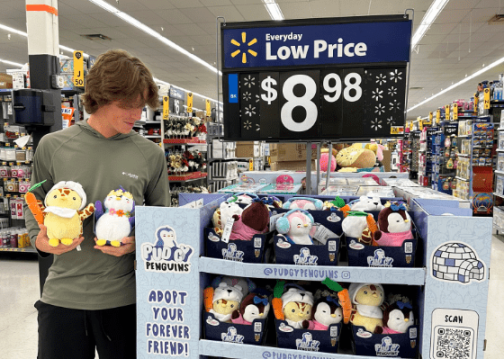
Image – Pudgy Penguins toy shelf in a US Walmart

During the 2025 Christmas season, Pudgy Penguins spent approximately $500,000 to project a giant animation on the Las Vegas landmark Sphere.
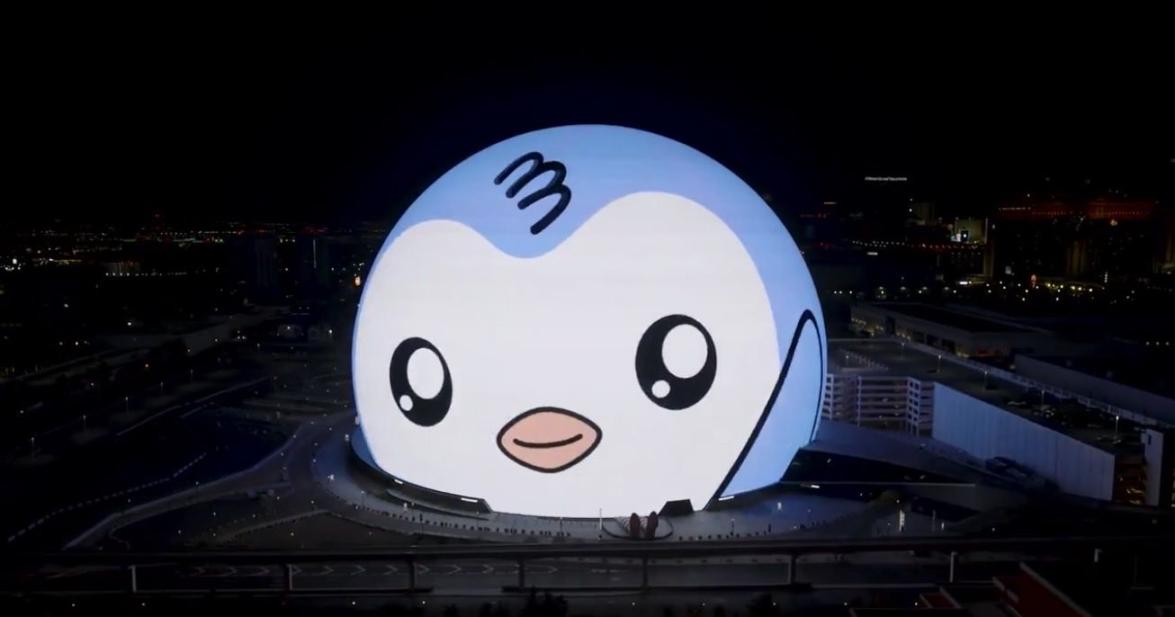
Image – Pudgy Penguins形象 on the Sphere

This advertisement, seen by millions of tourists, avoided crypto jargon and the term NFT, presenting only a family-friendly IP image. This brand exposure, in turn, stimulated liquidity in the secondary market. Over the past 14 days, the floor price of this NFT has risen 25%, and trading volume has increased by about 33%.

This shift from speculation to cultural operation seems to be becoming a consensus among industry survivors. Last May, Yuga Labs, the publisher of Bored Ape Yacht Club (BAYC), transferred the IP rights of the top NFT project CryptoPunks to the non-profit Infinite Node Foundation, aiming to strip it of its speculative, price-volatile nature and seek longer-term artistic preservation and cultural operation.

Physical Backing and Functional Return

Beyond IP branding, NFTs are becoming the underlying tool for connecting real-world assets (RWA).

Physical Card Trading. The platform Courtyard.io is changing the game. They deposit real Pokémon cards into certified vaults and tokenize them as NFTs. In the 30 days leading up to the end of 2025, the platform processed over 230,000 transactions, generating approximately $12.7 million in sales, demonstrating strong market appetite for this type of highly liquid, physically-backed asset.

Functional Tickets. FIFA (Fédération Internationale de Football Association) has also joined this trend, introducing "Priority Purchase Right" NFTs for ticket sales for the 2026 World Cup. These NFTs are not for speculation but serve as a verification tool to prevent scalper premiums and price gouging in the secondary market.

What Died in NFTs, and What Remains

NFTs are not "completely dead," but they have indeed died once.

What died is the fantasy of viewing NFTs as a financial asset that could be endlessly minted and traded based solely on narrative, detached from real-world value. In the face of infinite supply and limited demand, this path was destined to be unsustainable.

What remains is NFT's role as a "credential layer." It is no longer expected to create value alone but is embedded within IP brands, physical assets, and functional scenarios,承担ing the basic functions of rights confirmation, transfer, participation, and verification.

From Pudgy Penguins' toy shelves, to the on-chain flow of physical cards, to the anti-scalping mechanisms for World Cup tickets, NFTs are stepping down from the speculative stage and returning to the toolbox.

For the NFT speculative market, this is undoubtedly a winter. But for NFTs themselves, this is more like a rebirth after disenchantment.


Twitter:https://twitter.com/BitpushNewsCN

Bitpush TG Discussion Group:https://t.me/BitPushCommunity

Bitpush TG Subscription: https://t.me/bitpush

Original link:https://www.bitpush.news/articles/7600451

Пов'язані питання

QWhat was the peak auction price of Beeple's NFT 'Everydays: The First 5000 Days' and what does its current market state symbolize?

ABeeple's NFT 'Everydays: The First 5000 Days' was sold for $69.3 million at Christie's auction house. The current state of the NFT market, including the cancellation of events like NFT Paris, symbolizes the complete cycle from狂热 (frenzy) to清算 (liquidation) over a five-year period.

QAccording to data from CryptoSlam, how did the supply and sales volume of NFTs change in 2025 compared to previous years?

AIn 2025, the supply of NFTs increased by 35% compared to 2024's 1 billion, while the total sales volume dropped by 37% from $8.9 billion to approximately $5.63 billion. The total market capitalization also fell by about 86% from its peak in April 2022.

QHow did major NFT platforms like OpenSea and Blur perform in the declining market, and what changes did they make?

AOpenSea's monthly revenue dropped from $50-120 million during the NFT golden age to less than $1 million, leading it to转型 (transform) into a general on-chain trading center for all types of assets. Blur's TVL hit new lows, and its token price fell by 99% from its peak.

QWhat strategy did Pudgy Penguins use to achieve success despite the overall market downturn?

APudgy Penguins succeeded by transforming its digital IP into physical consumer goods, adopting a dual revenue model that combines IP licensing with physical products. Its toys are now sold in over 10,000 retail stores globally, generating an estimated $50 million in annual revenue.

QWhat new practical applications for NFT technology are emerging, as mentioned in the article?

ANew practical applications include platforms like Courtyard.io, which tokenizes physical assets like Pokémon cards as NFTs for high-liquidity trading, and FIFA's use of NFTs as 'priority purchase right' tickets for the 2026 World Cup to prevent scalping and price fraud in the secondary market.

Пов'язані матеріали

South Korean Exchanges 'Battle' Regulators, Challenging the Boundaries of Enforcement and Legislation

South Korea's cryptocurrency industry is engaged in a rare, direct confrontation with regulators. The Financial Intelligence Unit (FIU), the primary anti-money laundering (AML) watchdog, has recently imposed heavy penalties on major exchanges like Upbit and Bithumb for alleged violations involving unregistered overseas VASPs and AML procedures. However, exchanges are now actively challenging these actions in court and through industry associations. In a significant shift, the Seoul Administrative Court ruled in favor of Upbit's operator, Dunamu, overturning part of an FIU-ordered business suspension. The court found the FIU's penalty criteria and justification insufficiently clear. Similarly, the court suspended the enforcement of a six-month business suspension against Bithumb pending a final ruling, citing potential irreversible harm to the exchange. Beyond legal battles, the industry is contesting proposed legislative amendments. The Digital Asset eXchange Alliance (DAXA) strongly opposes a draft rule that would mandate Suspicious Transaction Reports (STRs) for all crypto transfers over 10 million KRW (~$6,800). DAXA argues this "poison pill" clause violates legal principles and would overwhelm the STR system, increasing reports from 63,000 to an estimated 5.45 million annually for major exchanges, thereby crippling effective AML monitoring. This conflict highlights a structural tension in South Korea's crypto governance: comprehensive digital asset laws are still developing, while regulators rely heavily on AML enforcement. The industry's move from passive compliance to active legal and legislative challenges signifies a new phase, pressing for clearer rules and more proportionate enforcement. While short-term disputes may intensify, this clash could ultimately lead to a more mature and sustainable regulatory framework for South Korea's vibrant crypto market.

marsbit14 хв тому

South Korean Exchanges 'Battle' Regulators, Challenging the Boundaries of Enforcement and Legislation

marsbit14 хв тому

After 50x Storage Surge, Justin Sun Always Looks to the Next Decade

Sun Yuchen, known for his controversial stunts like a $30 million lunch with Warren Buffett (canceled due to a kidney stone) and eating a $6.2 million duct-taped banana, is often overshadowed by a significant fact: his decade-long track record of spotting major investment trends. In 2016, he famously advised young people to invest in Bitcoin, Nvidia, Tesla, and Tencent instead of buying property. A hypothetical $20,000 investment in Nvidia and Tesla from that list would now be worth over 50 million RMB. His latest major call was on November 6, 2025, predicting a "50x storage opportunity" tied to the AI boom, which materialized with Sandisk's stock surging nearly 50-fold by 2026. Looking ahead, Sun now focuses on the next frontier: Physical AI. He identifies four key areas: 1. **Embodied AI/Robotics**: He sees this reaching its "iPhone moment," with companies like UBTech and Galaxy General leading in commercialization. 2. **Drones**: Viewed as the first commercially viable form of Physical AI, revolutionizing sectors from warfare (e.g., AeroVironment's Switchblade) to logistics. 3. **Spatial Computing**: Beyond VR, it's about AI understanding physical space, a foundational technology for robotics and autonomous systems, exemplified by Apple's Vision Pro. 4. **Space Exploration**: After a 2025 suborbital flight with Blue Origin, Sun advocates for space as the ultimate frontier, discussing blockchain's potential role in space asset management and data transactions. His investment philosophy involves betting on entire, inevitable trends rather than single companies. For robotics, he sees Tesla (the body/manufacturer) and Nvidia (the brain/AI platform) as complementary plays. In defense drones, he highlights companies making tanks obsolete (AeroVironment) and those augmenting fighter jets (Kratos). For space, he participated in Blue Origin's flight and anticipates SpaceX's potential IPO to redefine the sector's valuation. Sun Yuchen's vision frames the next two decades not as a revolution in information flow (like the internet), but in the fundamental operation of the physical world through AI-powered robots, autonomous systems, and spatial intelligence, ultimately extending human and AI activity into space. While many still focus on conventional assets, he continues to look toward the next technological horizon.

marsbit1 год тому

After 50x Storage Surge, Justin Sun Always Looks to the Next Decade

marsbit1 год тому

The Billionaires Behind the Most Expensive Midterm Election in History

"The Most Expensive Midterm Elections and Their Billionaire Backers" This analysis details the unprecedented scale of spending in the 2026 midterm elections, highlighting the key billionaire donors shaping the political landscape. Jeff Yass, founder of Susquehanna International Group, has contributed over $81 million, ranking third among individual donors behind George Soros ($102.6M) and Elon Musk ($84.8M). Yass is a major donor to Trump's MAGA Inc. and supports school choice and various candidates. Overall, federal committees have raised over $4.7 billion this cycle, with political ad spending projected to reach $10.8 billion. Republican-aligned groups are significantly out-raising their Democratic counterparts. "Dark money" from undisclosed sources continues to grow. The core stakes involve control of Congress and policy direction for Trump's final term. Donors are also motivated by specific issues: Sergey Brin and Chris Larsen are funding opposition to a proposed California wealth tax and supporting crypto-friendly policies. Other top donors include OpenAI's Greg Brockman and his wife Anna ($50M total to MAGA Inc. and an AI-focused PAC), Richard Uihlein ($45.3M to conservative causes), venture capitalists Marc Andreessen and Ben Horowitz (each over $44M to crypto/AI PACs and MAGA Inc.), Miriam Adelson ($42.6M to GOP leadership PACs), Paul Singer ($33.9M), and Diane Hendricks ($25.8M to MAGA Inc.). The article notes that the peak fundraising period is still ahead, with major primaries approaching.

marsbit1 год тому

The Billionaires Behind the Most Expensive Midterm Election in History

marsbit1 год тому

The Largest IPO in History Is Approaching, Surpassing SpaceX, 28 Years of AI Self-Iteration, Countdown to Intelligence Explosion

"Anthropic Nears Trillion-Dollar IPO, Fueled by Explosive Growth and 2028 'Intelligence Explosion' Warning Anthropic is considering a deal valuing the AI company near $1 trillion, potentially leading to one of the largest IPOs ever and surpassing SpaceX. Its revenue has skyrocketed, with Annual Recurring Revenue (ARR) reaching $45 billion in May 2026—a 500% increase in just five months. This vertical growth curve is attributed to its key products, Claude Code and Cowork, dominating AI coding and enterprise collaboration. Beyond commercial success, co-founder Jack Clark issued a pivotal warning in an interview: there is a greater than 50% chance that by the end of 2028, AI systems will achieve recursive self-improvement—the ability to autonomously build a 'better version' of themselves, initiating an 'intelligence explosion.' This prophecy underpins the company's astronomical valuation, as the market prices in the potential for transformative and disruptive AI. Further signaling its ambition, Anthropic formed a $1.5 billion joint venture with Goldman Sachs and Blackstone, aiming to disrupt traditional consulting firms like McKinsey by deploying Claude AI for complex strategic work. This move tests AI's capacity to replace high-level cognitive labor, a precursor to its predicted autonomous evolution. The narrative presents a dual future: unprecedented economic opportunity alongside significant risks like economic restructuring and security threats. Anthropic's meteoric rise and Clark's 2028 prediction frame the coming years as a countdown to a potential technological singularity."

marsbit1 год тому

The Largest IPO in History Is Approaching, Surpassing SpaceX, 28 Years of AI Self-Iteration, Countdown to Intelligence Explosion

marsbit1 год тому

Торгівля

Спот
Ф'ючерси

Популярні статті

Як купити HOUSE

Ласкаво просимо до HTX.com! Ми зробили покупку Housecoin (HOUSE) простою та зручною. Дотримуйтесь нашої покрокової інструкції, щоб розпочати свою криптовалютну подорож.Крок 1: Створіть обліковий запис на HTXВикористовуйте свою електронну пошту або номер телефону, щоб зареєструвати обліковий запис на HTX безплатно. Пройдіть безпроблемну реєстрацію й отримайте доступ до всіх функцій.ЗареєструватисьКрок 2: Перейдіть до розділу Купити крипту і виберіть спосіб оплатиКредитна/дебетова картка: використовуйте вашу картку Visa або Mastercard, щоб миттєво купити Housecoin (HOUSE).Баланс: використовуйте кошти з балансу вашого рахунку HTX для безперешкодної торгівлі.Треті особи: ми додали популярні способи оплати, такі як Google Pay та Apple Pay, щоб підвищити зручність.P2P: Торгуйте безпосередньо з іншими користувачами на HTX.Позабіржова торгівля (OTC): ми пропонуємо індивідуальні послуги та конкурентні обмінні курси для трейдерів.Крок 3: Зберігайте свої Housecoin (HOUSE)Після придбання Housecoin (HOUSE) збережіть його у своєму обліковому записі на HTX. Крім того, ви можете відправити його в інше місце за допомогою блокчейн-переказу або використовувати його для торгівлі іншими криптовалютами.Крок 4: Торгівля Housecoin (HOUSE)Легко торгуйте Housecoin (HOUSE) на спотовому ринку HTX. Просто увійдіть до свого облікового запису, виберіть торгову пару, укладайте угоди та спостерігайте за ними в режимі реального часу. Ми пропонуємо зручний досвід як для початківців, так і для досвідчених трейдерів.

340 переглядів усьогоОпубліковано 2025.04.27Оновлено 2025.04.27

Як купити HOUSE

Обговорення

Ласкаво просимо до спільноти HTX. Тут ви можете бути в курсі останніх подій розвитку платформи та отримати доступ до професійної ринкової інформації. Нижче представлені думки користувачів щодо ціни HOUSE (HOUSE).

活动图片













