The Economy Enters a New Cycle: How Should Ordinary People Prepare?

marsbitОпубліковано о 2026-03-26Востаннє оновлено о 2026-03-26

Анотація

"Economy Enters a New Cycle: How Should Ordinary People Prepare? Amidst accelerating AI, geopolitical conflicts, and a high-interest-rate cycle, the global economy faces a potential systemic crisis. This article outlines key risks: rising sovereign debt (e.S. debt exceeds $39 trillion), energy price shocks acting as a 'hidden tax', and AI-driven deflationary pressures that could trigger defaults in a highly leveraged system. Early warning signs include plummeting consumer confidence, abnormal bond markets, and rising personal financial stress. The guide for individuals focuses on building anti-fragility: 1. **Financial Defense**: Build a 3-6 month emergency fund, eliminate high-interest debt, and avoid variable-rate loans. 2. **Career Protection**: Upskill with AI-relevant abilities, start a side hustle, and avoid impulsive job changes. 3. **Investment Strategy**: Ignore short-term noise; long-term investing in diversified assets (e.g., S&P 500) remains key. Consider opportunistic buys during panic sell-offs. 4. **Personal Preparation**: Invest in health, optimize taxes, and develop layered skills—from income-generating abilities (coding, sales) to macroeconomic literacy. Ultimately, resilience comes from proactive action, not prediction. The gap between success and failure lies in execution, not awareness."

Editor's Note: Against the backdrop of accelerating AI, geopolitical conflicts, and a high-interest-rate cycle, the market discussion is shifting from 'How long can growth last?' to a more fundamental question: What happens when a debt-based system encounters a deflationary technological shock?

This article, starting from a series of current macroeconomic signals—such as rising sovereign debt pressure, energy price fluctuations, declining consumer confidence, and changes in employment structure—outlines a more tense picture: on one hand, AI brings unprecedented productivity gains; on the other, this 'efficiency dividend' may translate into demand contraction and default risks within a highly leveraged system, even amplifying systemic fragility. Meanwhile, the evolutionary paths of numerous historical asset bubbles also provide a reference point for the current狂热 in AI valuations.

Within this framework, the article brings the perspective back to the individual: when structural uncertainty becomes the norm, how should individuals build 'anti-cyclical capabilities' in terms of finance, career, and cognition. From cash flow defense and skill stacking to long-term asset allocation, the core is not about predicting inflection points, but about enhancing survival and choice-making abilities in an uncertain environment.

The following is the original text:

We are step by step moving towards a full-blown financial crisis. It will either make you or break you.

And this depends on two things: Do you choose to ignore it, or prepare in advance?

First, I must clarify a few points:

1. I am not a pessimist. But some of the content I will mention next might make it seem like I'm bearish. However, that's just reality itself; I am actually looking at all this with a relatively optimistic attitude.

2. Am I an expert? Of course not. But I will put my own money where my mouth is—both in market decisions and life choices.
I am also aware that, in the short term, the market might see a relief rally, or even rise (someone might quote this to mock me). But what I'm talking about is not this week's market movement, but a longer-term trend. Because I do spend time doing in-depth research, trying to understand what is happening. And right now, a lot is happening, and it's not just the war in Iran.

But we can start with this:

Oil, Energy, and That 'Invisible Tax'

War in the Middle East, destruction of critical infrastructure, threats of further destruction, escalation while pretending to 'de-escalate', plus the Strait issue—these factors will obviously push oil prices higher. And higher energy costs are essentially an 'invisible tax' that ultimately transmits through the entire supply chain, causing a comprehensive rise in the cost of living for ordinary people.

What happens next? Interest rates rise, people's financial pressure keeps getting squeezed, more and more people can't afford their mortgages, fail affordability assessments for refinancing, and are forced onto variable rates. And this rate could be double what they were paying during the low-rate era (e.g., a 1% fixed rate locked in last December).

Yes, the situation is not optimistic at all. In such an environment, consumer spending will be significantly compressed, even gradually 'suffocated'.
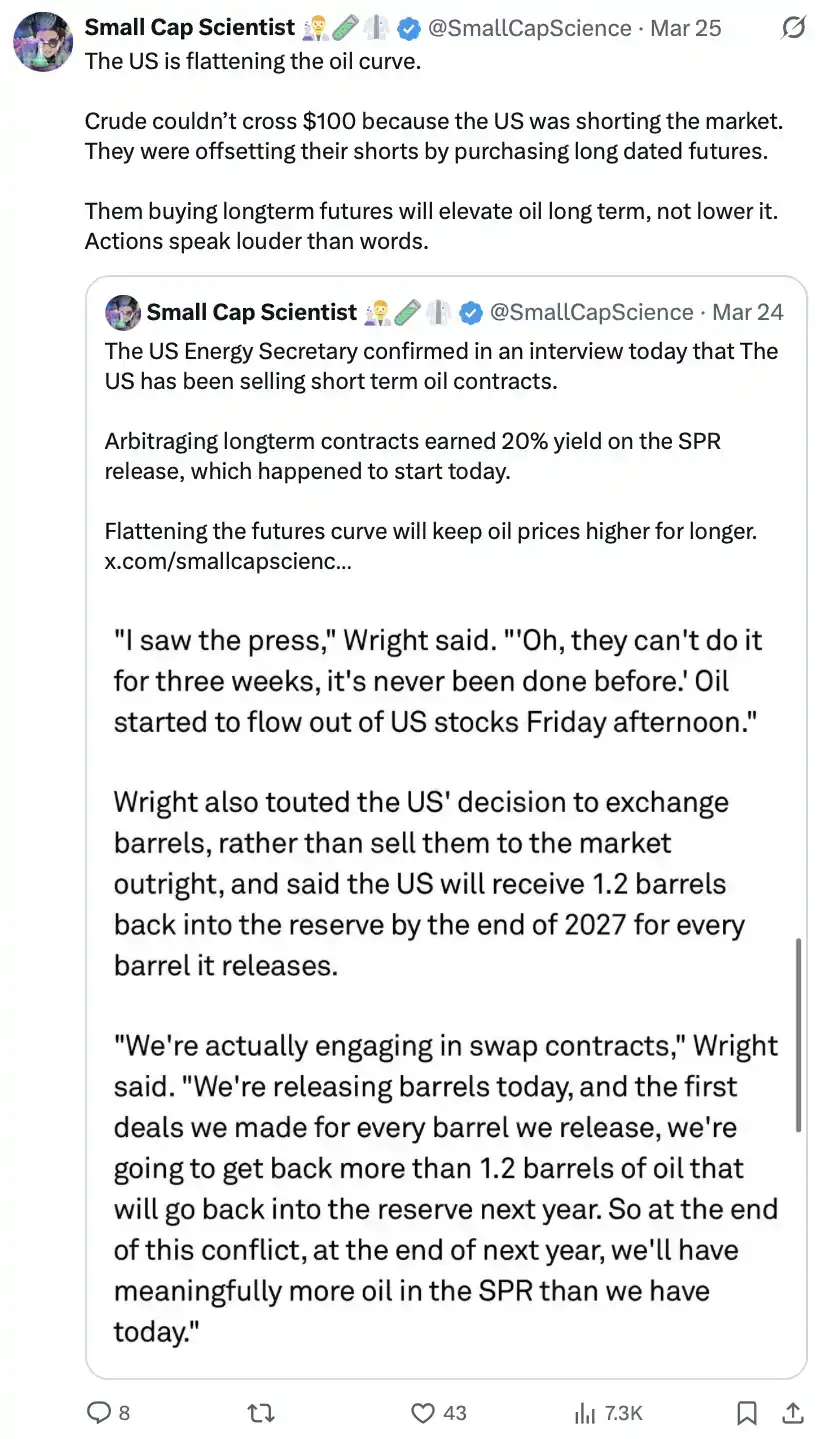
Oh, and right now, the US is trying its best to suppress this matter......
Sovereign Debt Death Spiral

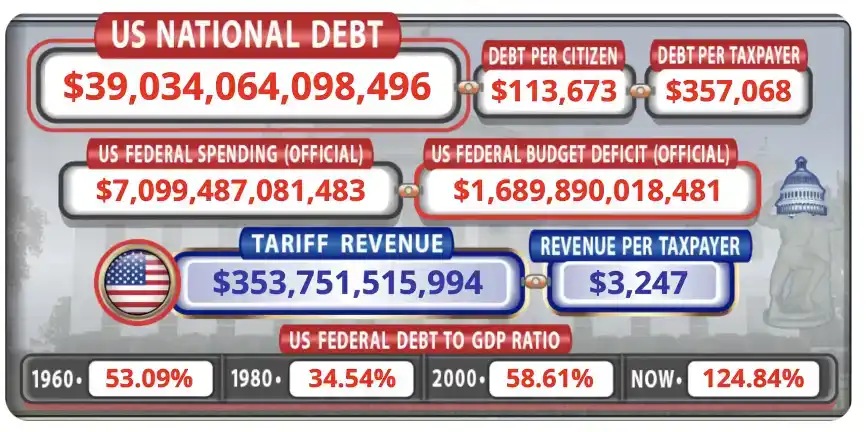
US national debt has just surpassed $39 trillion. That number alone is alarming enough.

At the same time, the government's annual revenue is only about $5.4 trillion, but spending is close to $7 trillion. About 120% of fiscal revenue is consumed by benefits for the baby boomer generation, interest on historical debt, and defense spending.

You can see these data in real-time on @USDebtClock_org.
It will only get worse from here. If the government cuts spending, GDP contracts, which ironically makes the 'deficit as a percentage of GDP' worse—a trap with no clean way out.

So, what have governments historically done when debt becomes mathematically impossible to repay? Either 'print money' (create currency out of thin air) or distract with war, sometimes both simultaneously.

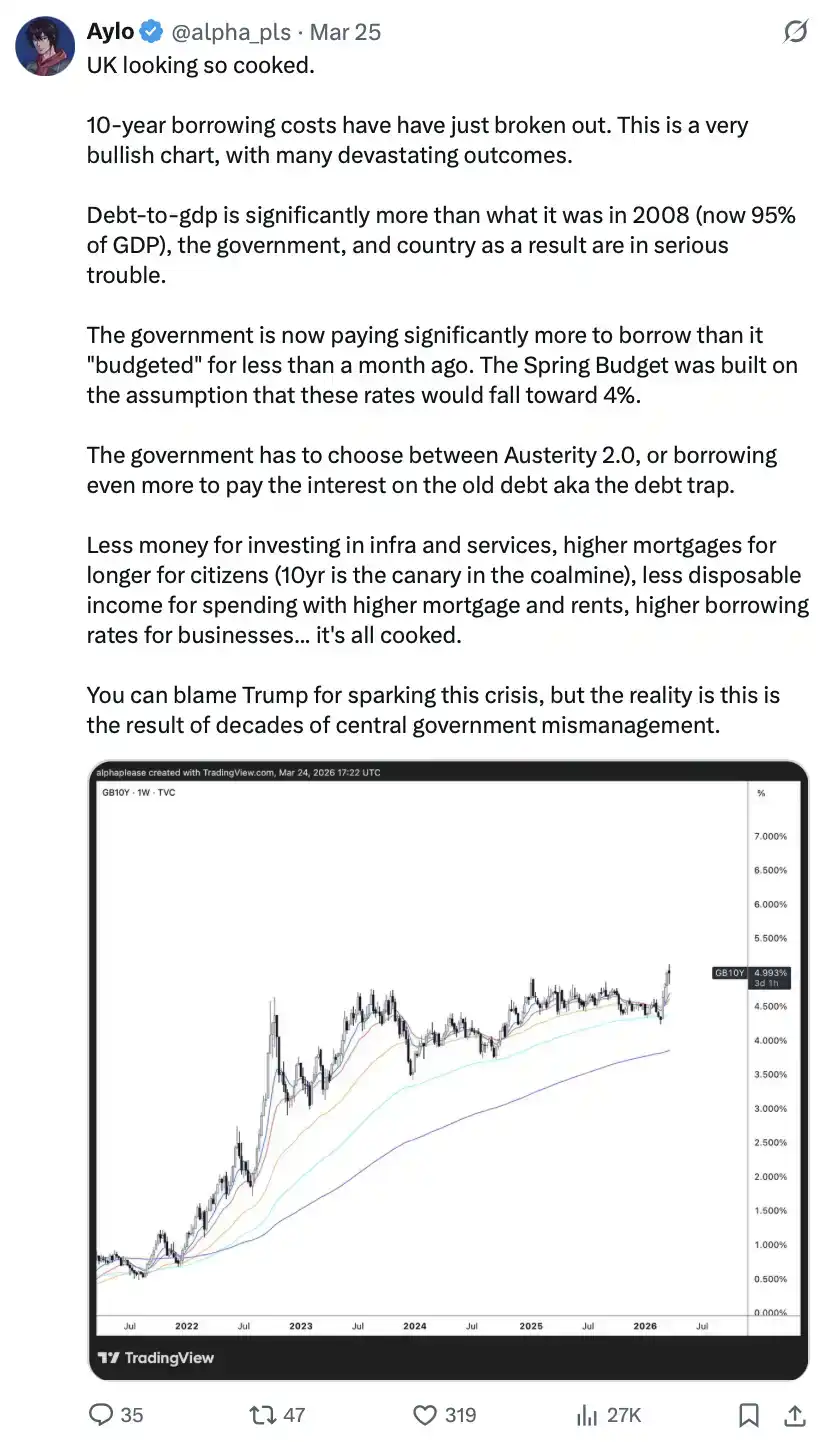
Across the Atlantic, your old friend the UK has already begun to fall into a 'vicious cycle': public sector wage increases exceeding inflation, forcing the government to raise taxes; higher taxes suppress economic growth; a weak economy then requires more 'money printing'. Rinse and repeat. Meanwhile, UK 30-year government bond yields have risen to their highest level since 2008, with the bond market effectively questioning the UK government's creditworthiness.

Looking globally, the narrowing yield spread between US 10-year Treasuries and Japanese Government Bonds (JGBs), coupled with a weakening Yen, is a textbook early warning signal of a 'sovereign debt death spiral'.

AI Deflation / Bubble Threat

AI represents the fastest technological leap in human history, with massive productivity gains on the horizon. That sounds great until you realize the problem.

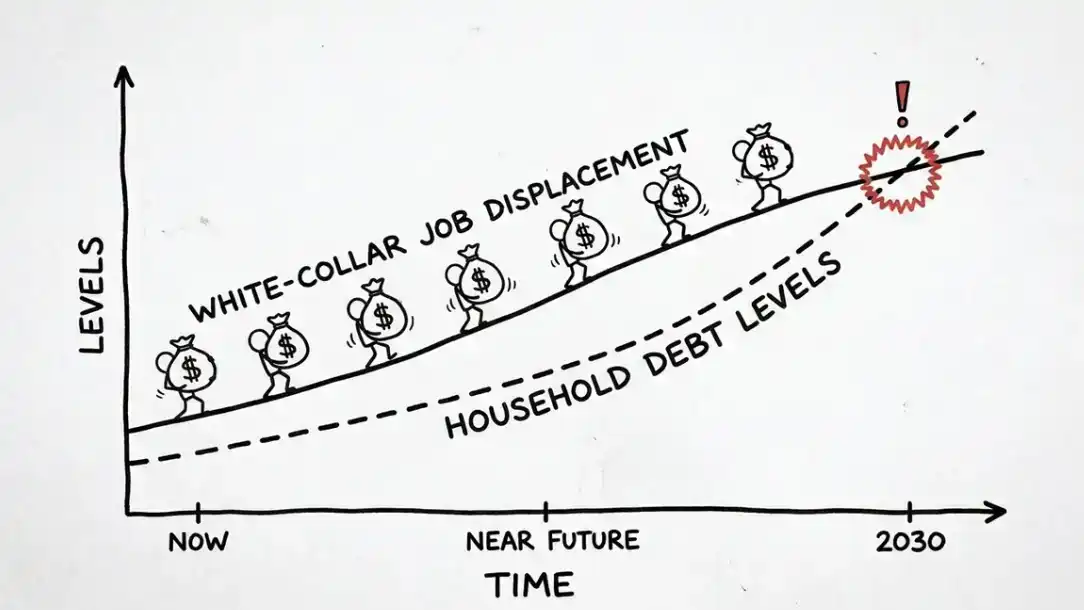
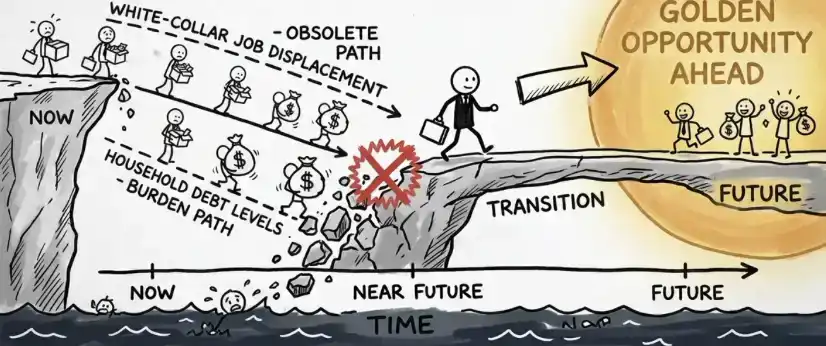
We are in a debt-based economic system. In a highly leveraged economy, large-scale 'deflationary productivity gains' don't bring prosperity; they can blow up the entire system. The white-collar crowd is普遍 burdened with mortgages, car loans, and non-dischargeable student debt. AI doesn't need to replace all jobs to trigger a crisis; even a small percentage of job losses can set off a chain reaction, eventually evolving into systemic defaults at the banking level.

Read that sentence once more. 'What if AI itself is a bubble?' The other side of the problem is: AI could also be a bubble, and bubbles never pop gently.

History has shown similar paths:

1929: People borrowed to the limit to buy stocks and durable goods, banks lent out almost every penny; when the music stopped, there was no buffer.

2000: If a company's name had '.com', investors threw billions at it—no revenue, no plan, no problem, until the funding dried up.

2008: Banks gave mortgages to the unemployed, rating agencies slapped 'AAA' on these toxic assets like handing out gold stars in elementary school, ultimately wiping out 20 million jobs globally.

And today? Some analysts look at the valuations of AI companies and are starting to feel the same unease. The entire system essentially runs on a credit bubble.

Austrian school economists have warned about this for decades: either proactively pop the bubble (at the cost of a severe recession) or see the currency itself destroyed (leading to hyperinflation).

You only get to choose between the two.
Early Warning Signals

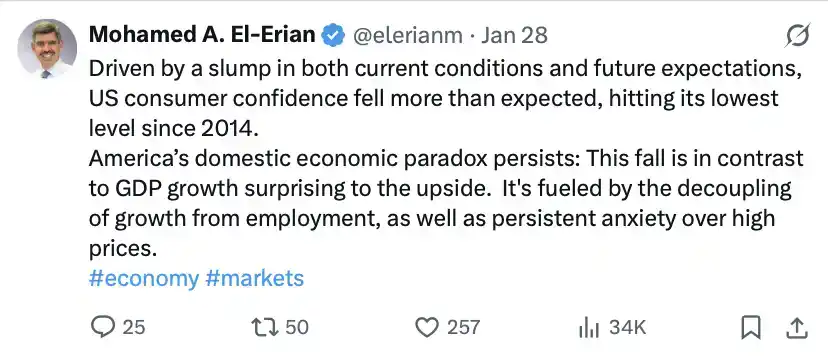
These are not predictions, but signals happening right now: Consumer confidence has plummeted to historical lows; the engine of consumption is stalling.

Anomalies in the government bond market, which look more like signs of 'capital flight' seen in emerging markets.

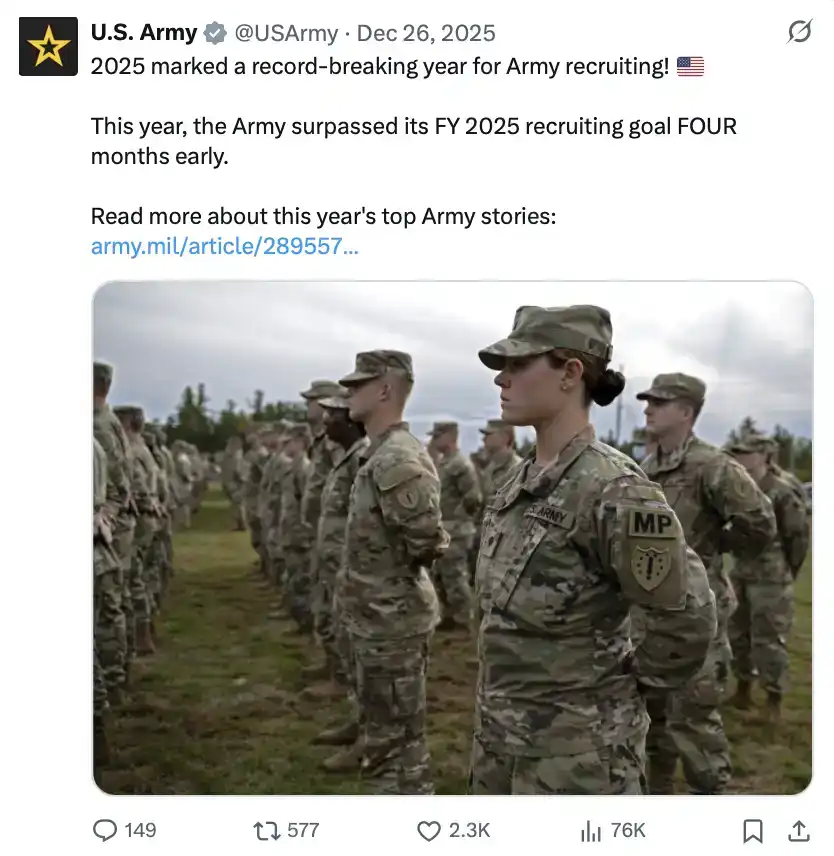
'Survival signals' in daily life are also becoming more obvious: People are using Klarna to buy fast food and daily necessities in installments; military recruitment is surging; graduate school enrollment is大幅上升 (translation: can't find a job).

Pressure is also showing at the corporate level: Tech companies are using overseas labor, or directly using AI, to replace domestic employees.

Don't believe it?

Alright, enough evidence. So what should we do? Sit there and complain about fate, sighing? Of course not.

What we need to do is first recognize its existence, then prepare for it, and thus survive.

How to Respond (Action Guide)

The following can be treated as an actionable checklist.

We must face it with a 'glass half full' mentality. Act with a pragmatic, can-do attitude, while also believing things will eventually get better. This is not the end of the world. Precisely because we know this, we can dare to take risks when it's time.
Immediate Financial Defense

Build an emergency fund that can cover 3 to 6 months of 'minimum living expenses'. Apart from minimum debt repayments, this takes priority over everything else. If you have no savings now, immediately save your first $1000.

This is not optional. Do not borrow money for consumption. If a large necessary expense is unavoidable, try to lock in a fixed rate now. In a downturn, variable rates will drag you down.

Pay off credit card debt as soon as possible. During an economic downturn, variable rates usually rise. Repay aggressively; if necessary, call the bank to negotiate a lower rate—asking costs nothing, and data shows about 70% of people succeed. Or, consider transferring to a 0% APR balance transfer card, but be sure to calculate if you can pay it off before the rate resets.

Do not co-sign for anyone. Nearly 40% of co-signers end up paying the borrower's debt. If you want to help someone, give them money directly or provide a private loan. In any case, protect your own credit score. These sound basic, but are crucial.

Career & Income Protection

Hate your boss? Understandable. But without a backup plan, in an environment where hiring opportunities are at a low and jobs are being replaced, quitting impulsively just because you're 'annoyed with the boss'—good luck.

Continuously upskill, especially learning to leverage AI. Of course, other directions work too. YouTube, Udemy, Khan Academy, coding bootcamps—mostly free or very low cost. Learn to code, learn SEO, stack skills that make you harder to replace, or enable you to start a side hustle.

Start a side hustle. Freelancing, online services, handmade products—all work. On average, a side hustle can bring in about $500 per month, and this money builds a safety net for you while you sleep.

Investment & Wealth Strategy

Ignore media-induced panic. Economists predict a recession almost every year, and 'doomscrolling' will only make you make emotional decisions that destroy your portfolio.

In the long run, the S&P 500 index goes up—after all, it represents the top 500 companies in the US. If you are prepared, this stage can be a good time to add risk assets. I will do this, while also allocating to Bitcoin as much as possible at the right time, and DCAing (Dollar-Cost Averaging) and building a position in batches before that.

The market always recovers eventually. If you miss the best 10 days of market performance, you miss most of the gains. So, when the market is already down 25%–35% (taking the S&P as an example), and people are telling you it will get worse, that might反而 be the time you should take risks.

Trust the power of time. A Schroders study covering 148 years of data shows: Investing for 1 month, the probability of loss is about 40%; for 1 year, it drops to 30%; for 20 years, it's almost zero.

Think in the long term. Maybe you don't have to wait 20 years, but at least think in terms of one cycle. Or, you can be a 'cockroach'.

Do you know who this is?

Today, 'being a cockroach' probably means: Cash + Commodities + Stocks, balanced allocation.

Such a portfolio can allow your assets to compound steadily through different cycles. However, this is more suitable for people with larger capital; it may not make you rich quickly, but it can keep you stable.

If you have cash on hand, I would personally still consider making some allocations further out on the risk curve, like adding to Bitcoin when it's down around 70%. Of course, this is just my view, not advice.

Remember: When everyone is panic selling, those willing to take on risk have the opportunity to gain huge wealth returns.

Next is an often overlooked but very important investment direction—

Personal Preparation

1) Invest in Your Health
Make yourself 'harder to knock down'. Start investing time and effort now to improve your physical condition, striving to reach the best fitness level of your life.
An illness, a surgery, or being unable to work for a short time can directly destroy your finances. Therefore, this is the investment with the highest return' you can make.

2) Asset & Tax Planning
Do tax planning, maximize the use of tax-free accounts and pension allowances. Complete estate and inheritance arrangements before the tax year ends, especially if policies might change (e.g., abolishing the 7-year rule or introducing capital gains tax on inheritance). Seek professional help if necessary.

3) Invest in Your Cognition & Knowledge
Don't be ridiculed for paying attention to things 'outside your field'. Maybe the algorithm won't reward you immediately, but those who remain genuinely curious and keep learning will eventually benefit. Keep outputting, keep learning; your abilities and influence will accumulate slowly, and the algorithm will 'see you' sooner or later.

The 2008 financial crisis destroyed millions of jobs, but it also gave rise to a whole generation of developers, digital marketers, and internet entrepreneurs. They learned skills at low cost during the trough and achieved wealth leaps in the subsequent bull market.

So, where should you invest your time?

First Layer: Skills that Directly Generate Income
Copywriting, sales, programming, SEO. These skills can be monetized immediately, whether through freelancing or creating value within a company. A copywriter who understands conversion can make money in any environment; a developer who can deliver products is someone a company dares not lose.

Second Layer: Skills that Protect and Amplify Income
Financial literacy, tax planning, negotiation skills, basic legal knowledge. Many people hand over money to advisors for things they could learn themselves in a weekend, and this 'cost of ignorance' compounds over time.

Third Layer: Abilities to Build Long-Term Advantage
Macro analysis, understanding technological cycles, identifying capital flows early. These abilities allow you to see trends before the masses react.

But in the end, the most important thing is to invest time in things you are truly interested in and willing to深耕 long-term. Everything you do is not just for yourself, but for your family—to give them less uncertainty and more peace of mind in the future.

It is precisely for this reason that we choose to prepare in advance. We are not children, nor are we blindly optimistic. We are清醒, rational, and still believe things will get better.

This article was written with great gusto. Whatever happens next in the world, we are prepared to face it.

P.S. This information is not scarce; it's just selectively ignored by most people. What truly creates the gap is never 'whether you know', but 'whether you act'.


Трендові криптовалюти

Пов'язані питання

QWhat are the key macroeconomic signals indicating a potential financial crisis as discussed in the article?

AThe key signals include rising sovereign debt pressures (e.g., U.S. debt exceeding $39 trillion with unsustainable deficits), energy price shocks acting as an 'invisible tax' on consumers, declining consumer confidence, structural employment shifts due to AI displacement, and warning signs in bond markets (e.g., rising U.K. gilt yields and narrowing U.S.-Japan yield spreads).

QHow does the article suggest individuals build immediate defensive financial resilience?

AIt recommends building an emergency fund covering 3-6 months of essential expenses, prioritizing paying off high-interest debt (especially credit cards), avoiding new debt for consumption, locking fixed rates for necessary large expenses, and never co-signing loans for others to protect creditworthiness.

QWhat is the 'AI deflation/bubble threat' described in the article, and why is it risky for a debt-based economy?

AThe 'AI deflation threat' refers to massive productivity gains from AI that could cause deflationary pressures. In a high-leverage economy, this may trigger systemic defaults as reduced consumer demand (from job displacement) collides with existing debt burdens (mortgages, student loans), potentially destabilizing the banking system. Simultaneously, AI valuations may form a speculative bubble akin to historical asset bubbles.

QWhat investment strategy does the article propose for long-term wealth preservation and growth during uncertainty?

AIt advocates ignoring short-term panic, maintaining long-term equity exposure (e.g., S&P 500 index), dollar-cost averaging into risk assets like Bitcoin during downturns, and adopting a diversified 'cockroach' portfolio (cash, commodities, stocks) for stability. Emphasis is placed on time in the market rather than timing the market, supported by historical data showing reduced loss probabilities over longer horizons.

QBeyond finances, what personal preparedness steps does the article recommend to enhance 'anti-fragility'?

AIt stresses investing in health to avoid medical financial shocks, optimizing taxes and estate planning, and continuously upgrading skills across three layers: income-generating skills (e.g., coding, SEO), income-protection skills (e.g., financial literacy, negotiation), and long-term advantage skills (e.g., macro analysis). This builds resilience and enables capitalizing on future opportunities, as seen post-2008 crisis.

Пов'язані матеріали

Two Legends Lost in Three Days: Is Google's AI Talent Dam Cracking?

In three days, Google lost two AI legends. On June 18, Noam Shazeer, co-author of the seminal "Attention is All You Need" paper and Gemini co-lead, left for OpenAI. Just 48 hours later, John Jumper, 2024 Nobel laureate and AlphaFold lead, departed DeepMind for Anthropic. This follows Andrej Karpathy joining Anthropic in May. These moves highlight a structural trend: top AI talent is concentrating at mission-driven, pre-IPO firms like OpenAI and Anthropic, while Google becomes a primary source. The exodus stems from a core mission mismatch. Google's ad-centric model often subordinates AI research to product and revenue goals, creating friction for pioneers like Shazeer, who returned in 2024 only to leave again. In contrast, OpenAI and Anthropic offer singular focus on pushing AI boundaries, whether towards AGI or safety-aligned models, which deeply appeals to top researchers like Jumper. Financial incentives amplify the pull. With both OpenAI and Anthropic nearing IPO, employees stand to gain immensely from equity, an upside Google's mature stock cannot match. Furthermore, the 2023 merger of Google Brain and DeepMind, intended to consolidate strength, has instead created cultural tension and slowed the path from research to product, as evidenced by Gemini's pace. This talent redistribution is reshaping the AI landscape. While Google retains vast data and compute resources, its true crisis is the quiet, continuous loss of the people who define the field's future. The real moat in AI is not infrastructure, but the concentration of brilliant minds—a battle Google is currently losing.

marsbit36 хв тому

Two Legends Lost in Three Days: Is Google's AI Talent Dam Cracking?

marsbit36 хв тому

Behind the AI Report Card, Lies a Chinese 'Exam Setter'

Beyond the familiar performance charts like MMLU-Pro and MMMU, which major AI models strive to ace, stands a key "examiner": Chinese-Canadian researcher Wenhu Chen. An assistant professor at the University of Waterloo and founder of TIGERLab, Chen addresses the crucial need for more rigorous AI evaluation. As models like GPT-4 began scoring near-perfect results on older benchmarks like MMLU, it became difficult to distinguish their true capabilities. In response, Chen introduced MMLU-Pro in 2024, featuring harder, more reasoning-focused questions with more answer choices, successfully reintroducing meaningful performance gaps. His work extends to multi-modal evaluation with MMMU and its enhanced version, MMMU-Pro. These benchmarks test a model's ability to understand and reason with complex information from images, charts, and text across diverse academic subjects, exposing the significant challenges even top models face in genuine comprehension. Chen's background in complex QA, table reasoning, and his experience at Google DeepMind on projects like Gemini inform his approach. He understands that effective benchmarks must anticipate how models might "cheat" by memorizing data or avoiding visual analysis. His lab also actively researches video understanding and generation models (e.g., UniVideo, Vamba), ensuring his evaluation work is grounded in practical model-building challenges. Now at Meta's Super Intelligence Lab, Chen continues his focus on multi-modal data and evaluation, representing the deep yet often unseen contributions of Chinese talent in shaping the fundamental tools of the AI industry.

marsbit47 хв тому

Behind the AI Report Card, Lies a Chinese 'Exam Setter'

marsbit47 хв тому

Alliance Co-founder's Letter to Entrepreneurs: Written at the Moment Cursor Sold for $600 Billion

Alliance Co-founder's Letter to Entrepreneurs: On Cursor's $60 Billion Sale Many aspiring founders see massive exits like Cursor's $60B sale and wonder why they can't achieve the same, often concluding opportunities are exhausted. But great companies aren't built in obvious, crowded spaces. Cursor, like Stripe, Figma, and Shopify before it, started with a non-consensus belief about the future. Before ChatGPT, they believed AI would transform knowledge work. They focused on a genuinely exciting domain, became their own customer, and obsessed over power users. Their journey involved years of "glass-chewing" effort before the market was ready. The pattern is consistent: identify a long-term technological shift, find a missed entry point, and execute for years before the trend becomes obvious. First-generation products (PayPal, Adobe, Amazon) prove a market exists. Second-generation winners (Stripe, Figma, Shopify) rebuild that market around new insights, technology, or changing customer behaviors. Founders must identify their phase in the cycle. Early entrants like Coinbase or Cursor focus on making new technology usable for power users. Later entrants find the "yin" to the established "yang"—the blind spots incumbents miss as they grow distant from individual users. The key is deep market immersion. Use every product in your space. Talk to users. Build an audience. Stop looking for ideas and start *seeing* them everywhere. Then, choose one. The idea must offer a 10x improvement or solve a "hair-on-fire" pain point—something severe enough that users are already crafting workarounds. When building, avoid feature bloat. Ask: why would someone switch? Great startups rarely force new behaviors; they improve familiar workflows with drastically lower friction (e.g., Cursor forked VS Code instead of creating a new editor). Distribution is the underestimated moat. Before product-market fit, achieve distribution-market fit. How do customers discover new tools? Founders like those at Airbnb, Stripe, and Cursor did unscalable, manual work to recruit early users. The final, unteachable ingredient is resilience. Cursor built for years pre-market, faced rejection, and persisted. So did Airbnb, Nvidia, and Rain (which launched post-FTX collapse). The lesson isn't that these founders were smarter, but that they stayed in the game long enough for their insights to compound. Framework: Spot technological cycles. Cultivate unique insight. Obsess over your market. Talk to customers. Find a hair-on-fire problem. Build the simplest wedge. Win your distribution channel. Above all, don't quit when it gets hard. Most people won't do these things consistently. The few who do build the next generation of great companies. Go build.

marsbit51 хв тому

Alliance Co-founder's Letter to Entrepreneurs: Written at the Moment Cursor Sold for $600 Billion

marsbit51 хв тому

Weekly Editor's Picks (0613-0619)

Weekly Editor's Picks (0613-0619): Market Insights & Analysis This weekly digest curates in-depth analysis often lost in the information flow, focusing on key insights across macro trends, investment, and technology. **Macro & Geopolitics:** With the Strait of Hormuz reopening and military conflict shifting to negotiation, markets are pivoting from "war shock" to "supply restoration." Trades include shorting crude risk premiums, longing airlines/tourism, Asian energy importers, and bond duration, while shorting inflation expectations. LNG, fertilizer, and chemical chains are also being repriced. **Investment & VC:** Ray Dalio advises against betting on concentrated AI giants dominating indices, advocating for diversified portfolios of high-quality, low-correlation assets instead. Analysis covers the 4-year crypto cycle, predicting the core surviving product by 2029 will be asset trading markets. Current BTC metrics suggest a potential bottoming zone, presenting a patient accumulation window. SpaceX's high-profile IPO at a $2.1T valuation faces scrutiny over fundamentals, with key watchpoints being its likely inclusion in the Nasdaq index and Q2 earnings. Concerns are raised about potential "gamma squeeze" and systemic risks if its narrative-driven valuation gets amplified by passive index funds. Robinhood (HOOD) is noted for breaking its high correlation with crypto, bolstered by its stock trading and new underwriting business. **Web3 & AI:** A warning highlights ~$1.8T in off-balance-sheet AI infrastructure commitments (purchase commitments, leases) as a potential systemic risk if AI monetization lags. AI models are being used for World Cup predictions, adding a new layer for betting markets. A cost breakdown of a $20 AI subscription reveals the supply chain from model companies to cloud, GPUs, and power. **Prediction Markets:** The emergence of prediction market "concept stocks" is noted, with Robinhood developing its own platform, Rothera, signaling a shift from market competition to a "channel war" for user access. **CeFi & DeFi:** The SpaceX IPO tested perpetual contract mechanisms for pre-IPO assets, highlighting challenges in handling corporate actions like stock splits on-chain. The de-pegging of STRC (Strategy's preferred share) to ~$89 reflects market concerns over MicroStrategy's capital structure and BTC-backed leverage model. BlackRock's covered-call Bitcoin ETF (BITA) offers yield but caps upside, appealing to yield-seeking institutions. **Ethereum:** An opinion piece argues Ethereum's core strength is its vast developer community and composability, solidifying its role as the default operating system for the financial internet. **Weekly Hot Topics:** Include the US-Iran deal reopening the Strait of Hormuz, Fed's hawkish hold, Anthropic restricting model access, SpaceX acquiring Cursor, and a humorous stock surge for "Liuliumei" due to its "LLM" ticker.

marsbit56 хв тому

Weekly Editor's Picks (0613-0619)

marsbit56 хв тому

Alliance's Co-Founder's Letter to Entrepreneurs: Written on the Occasion of Cursor's $60 Billion Sale

In this letter to entrepreneurs, Alliance reflects on the success of Cursor's $60 billion sale to Elon Musk, using it as a case study to counter the misconception that opportunities in crowded fields like AI or crypto are exhausted. The piece argues that great companies like Cursor, Stripe, Figma, and Shopify are not built by geniuses with perfect ideas, but by founders who start with a non-consensus belief about the future and build for years before that future becomes obvious to everyone. They identify long-term shifts, find overlooked entry points, and execute relentlessly. The framework for success involves: 1. **Identifying your place in the technology cycle**: Early-stage opportunities focus on making new tech usable for power users (e.g., Coinbase, Cursor). Later-stage opportunities involve finding the "yin" to an existing "yang"—the blind spots of first-generation players (e.g., Stripe vs. PayPal, Figma vs. Adobe). 2. **Cultivating unique insights**: Immerse yourself deeply in the market. Use every product, talk to users, and build an audience. Insights will emerge naturally from deep engagement. 3. **Finding a "hair-on-fire" problem**: Look for a 10x improvement or a severe, urgent pain point. The strongest signal is people already building clumsy workarounds. 4. **Building a focused MVP**: Don't just add features because you can. Ask why users would abandon their current tool for yours. The best startups rarely force new behaviors; they improve familiar workflows with drastically lower friction. 5. **Winning a distribution channel**: Distribution is often the moat. Before product-market fit, achieve channel-market fit. Find where your customers are and build an engine to reach them, even through unscalable, manual efforts initially. 6. **Persistence**: The final, unteachable ingredient is resilience. Success stories like Cursor, Airbnb, and Nvidia involved years of grinding, rejection, and perseverance when the path forward seemed unclear. The conclusion is that there is no secret. Most people fail to consistently execute these steps over the long term. The few who do build the companies that define the next era. The world is yours to create.

链捕手1 год тому

Alliance's Co-Founder's Letter to Entrepreneurs: Written on the Occasion of Cursor's $60 Billion Sale

链捕手1 год тому

Торгівля

Спот
Ф'ючерси

Популярні статті

Як купити PEOPLE

Ласкаво просимо до HTX.com! Ми зробили покупку ConstitutionDAO (PEOPLE) простою та зручною. Дотримуйтесь нашої покрокової інструкції, щоб розпочати свою криптовалютну подорож.Крок 1: Створіть обліковий запис на HTXВикористовуйте свою електронну пошту або номер телефону, щоб зареєструвати обліковий запис на HTX безплатно. Пройдіть безпроблемну реєстрацію й отримайте доступ до всіх функцій.ЗареєструватисьКрок 2: Перейдіть до розділу Купити крипту і виберіть спосіб оплатиКредитна/дебетова картка: використовуйте вашу картку Visa або Mastercard, щоб миттєво купити ConstitutionDAO (PEOPLE).Баланс: використовуйте кошти з балансу вашого рахунку HTX для безперешкодної торгівлі.Треті особи: ми додали популярні способи оплати, такі як Google Pay та Apple Pay, щоб підвищити зручність.P2P: Торгуйте безпосередньо з іншими користувачами на HTX.Позабіржова торгівля (OTC): ми пропонуємо індивідуальні послуги та конкурентні обмінні курси для трейдерів.Крок 3: Зберігайте свої ConstitutionDAO (PEOPLE)Після придбання ConstitutionDAO (PEOPLE) збережіть його у своєму обліковому записі на HTX. Крім того, ви можете відправити його в інше місце за допомогою блокчейн-переказу або використовувати його для торгівлі іншими криптовалютами.Крок 4: Торгівля ConstitutionDAO (PEOPLE)Легко торгуйте ConstitutionDAO (PEOPLE) на спотовому ринку HTX. Просто увійдіть до свого облікового запису, виберіть торгову пару, укладайте угоди та спостерігайте за ними в режимі реального часу. Ми пропонуємо зручний досвід як для початківців, так і для досвідчених трейдерів.

490 переглядів усьогоОпубліковано 2024.12.12Оновлено 2026.06.02

Як купити PEOPLE

Обговорення

Ласкаво просимо до спільноти HTX. Тут ви можете бути в курсі останніх подій розвитку платформи та отримати доступ до професійної ринкової інформації. Нижче представлені думки користувачів щодо ціни PEOPLE (PEOPLE).

活动图片