The Domestic Answer to Space Computing Power: Photonics Are More Efficient, Musk and Huang's Approaches Are Too Roundabout

marsbitОпубліковано о 2026-06-28Востаннє оновлено о 2026-06-28

Анотація

The Space Computing Race: A Photonic Advantage The competition for space-based computing has intensified, with figures like Elon Musk and NVIDIA's Jensen Huang highlighting its potential. Musk predicts solar-powered AI satellites could offer the most cost-effective computing by 2032. However, space presents extreme challenges for traditional electronic chips: radiation from cosmic particles can cause errors, the vacuum environment hinders heat dissipation, and limited solar power constrains energy-hungry systems. Photonic computing, using light instead of electrons, offers a promising solution. Its core advantages for space are threefold: 1) **Radiation Resistance**: Photons are charge-neutral, making them inherently immune to particle interference. 2) **Low Heat Generation**: Light propagation in waveguides generates minimal heat, bypassing critical thermal management issues. 3) **Low Power Consumption**: Photonic chips have near-zero static power draw, aligning perfectly with the energy constraints of satellites. Furthermore, for a given payload weight and volume, photonic systems can potentially deliver higher total compute density. Since they require less bulky cooling and power infrastructure, more space can be allocated to the compute units themselves. While photonic computing holds great promise, current industry approaches face hurdles like the memory-compute bottleneck (separate storage and processing) and challenges in large-scale integration. Engineering for sp...

The race for space computing power has turned into a real arms race.

Musk estimates that by 2032, solar-powered space AI satellites will become the world's most cost-effective computing power solution.

NVIDIA CEO Jensen Huang's statement in March this year, in a way, defined the nature of this race — intelligence must exist wherever data is generated.

After these two giants made their moves, the battlefield of space computing power has been pushed to an unprecedented height, but the engineering challenges facing space computing are still far more brutal than those on the ground.

Without air convection, chips can't dissipate heat; the universe contains high-energy particles that can cause chip errors at any time......
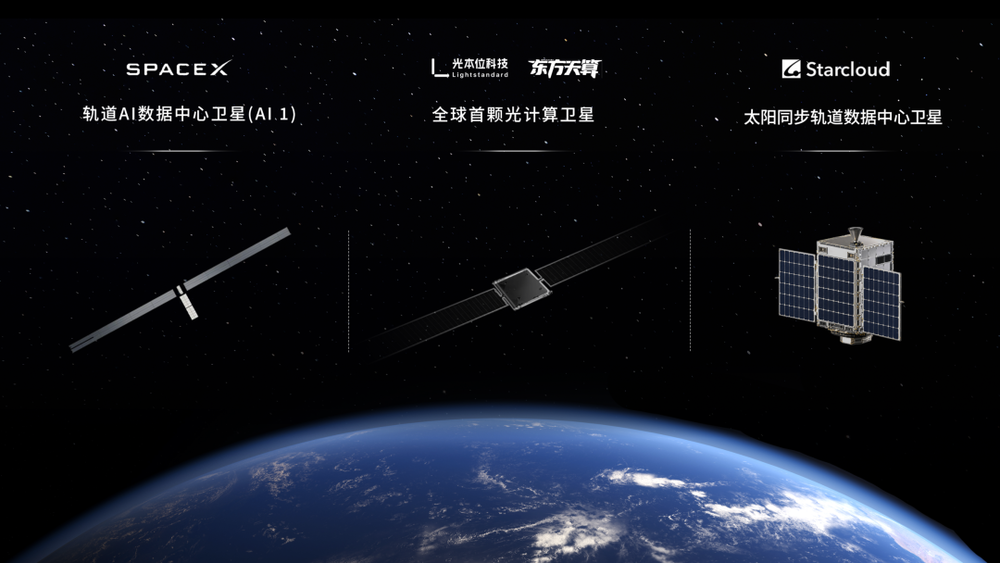
△Domestic and Foreign Computing Satellites (AI-assisted generation)

On the other side, Musk has also been revealed to have new developments — his company SpaceX is considering acquiring the optical module company Mesh.

The main business of Mesh, which caught Musk's eye, is the mass production of optical transceivers to improve the communication efficiency of AI data centers, thereby enhancing quality and efficiency.

Why Optical Computing is Naturally Suited for Space

In the space computing power race, chips face much harsher challenges than on the ground. Computing payloads must overcome three hurdles — radiation, heat dissipation, and power consumption.

Traditional electronic chips rely on charge storage and silicon-based transistors to operate, while space is filled with a large number of cosmic high-energy particles.

Once high-energy particles strike a chip, they can cause single-event upsets, single-event latch-ups, and other effects, leading to calculation errors or even device failure.

Optical computing chips fundamentally bypass this hurdle.

Optical computing uses photons as carriers for computational information. Photons themselves carry no charge, making them inherently immune to direct interference from high-energy particle impacts and eliminating the need for special radiation shielding designs.

Heat dissipation is the second hurdle, and arguably the trickiest one.

When traditional electronic chips operate, electron transport through wires and transistor switching inevitably generate heat. AI tasks place immense demands on data movement and computation, keeping the power consumption and heat generation of electronic chips high.

Space is a vacuum environment with no air convection, leaving only heat conduction and thermal radiation as heat dissipation pathways.

These stringent thermal constraints can easily lead to traditional chips throttling performance or even failing.

Optical computing chips operate in a fundamentally different way. Light propagates through waveguides to perform calculations, a process that generates almost no heat.

The third hurdle is power consumption.

Satellites in orbit rely heavily on solar panels for power. During orbital shadow periods, they depend solely on onboard batteries, making energy supply extremely limited.

The greater the energy consumption of high-performance computing chips, the larger the required solar panel area, which in turn increases satellite weight, volume, and launch costs.

The static power consumption of optical computing chips theoretically approaches zero, making them a natural fit for the stringent energy constraints of satellites, thus bypassing half of this hurdle.

The three characteristics of optical computing — radiation resistance, low heat generation, and low power consumption — are "killer features" in the space environment that help space computing directly leap over the technological obstacles of its initial stages.

After crossing these three hurdles, optical computing possesses another system-level advantage in space scenarios that is difficult for electronic computing to match —

Under the same payload weight, optical computing can deliver a higher total computing power.

The core constraint of moving ground-based data centers into space is the weight and volume of the payload.

The entire architecture of traditional servers is designed for terrestrial forms. Sending computing power into space — computing chips, storage, CPUs, along with the supporting cooling systems, radiation shielding layers... each component occupies precious payload space, leaving little room for actual computation.

NVIDIA's proposed solution is to integrate the CPU and GPU, achieving relatively impressive computing power within an extremely small size and weight. The Space-1 Vera Rubin module is a continuation of this approach.

But optical computing can go even further.

Because optical computing chips inherently generate low heat and consume little power, the required supporting cooling structures and power systems can be made lighter and smaller. Within a payload of equal weight, optical computing can accommodate more computing power.

Therefore, under the same energy supply and thermal conditions, optical computing achieves a higher total computing power than electronic computing.
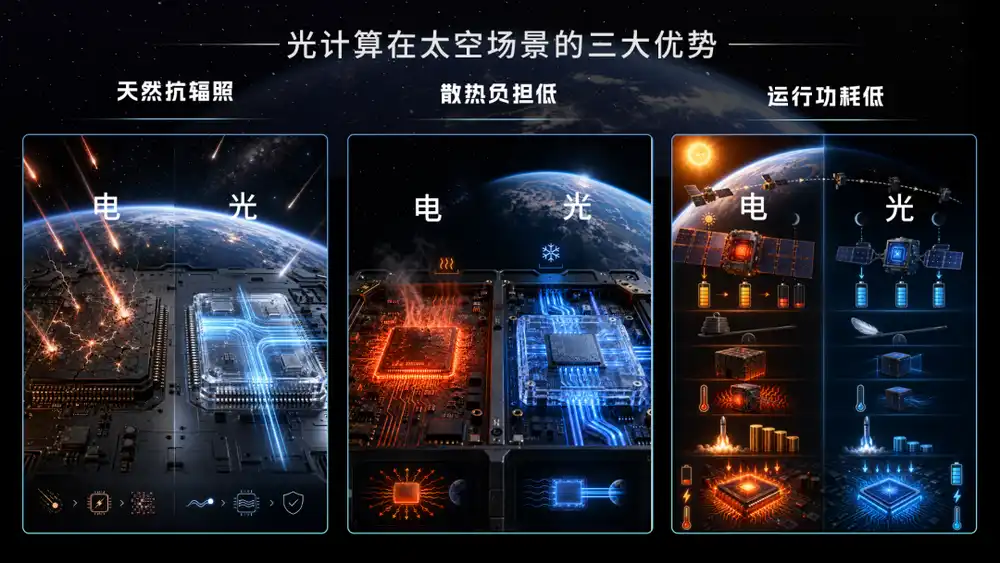
△Three Major Advantages of Optical Computing in Space Scenarios (AI-assisted generation)

According to Pu Huanan, Deputy Dean of the Photonics-Centric Science and Technology Research Institute, there is profound intrinsic motivation behind this advantage.

The performance progress of electronic computing chips has long relied on process node scaling — integrating more transistors in the same area to increase computational density through finer interconnects.

However, this path has a physical limit. When the gate spacing of transistors shrinks to a certain extent, the quantum tunneling effect inevitably emerges.

Electrons can tunnel through theoretically insurmountable potential barriers, causing leakage current and computational errors. This is an inherent physical ceiling that electronic computing cannot bypass.

Optical computing follows a completely different path.

The fabrication of optical computing chips does not rely on the advanced process system dominated by extreme ultraviolet (EUV) lithography machines. Existing 45nm and above, even sub-micron, processes can meet the fabrication needs of optical computing chips.

The improvement of optical computing power relies on scaling up the optical computing architecture and fully utilizing the multiple multiplexing dimensions inherent to photons themselves, such as wavelength, polarization, and optical modes.

On this path, the heat generation and power consumption of optical computing remain stable, costs can be effectively controlled, and the ceiling for computing power is far from being reached.

Photonics Breakthrough: From Ground to On-Orbit Inference

Photons are the core carriers of optical computing.

The fundamental idea of optical computing is to use photons instead of electrons to perform the most crucial part of AI inference computation — the vast number of matrix operations.

The advantage of optical computing chips is that a single light propagation can simultaneously complete a large batch of such multiplication operations, extremely fast, and generating almost no heat.

However, looking across the industry, most optical computing solutions still have a gap compared to electronic computing in terms of being truly scalable, general-purpose, and stably deployable.

Two of the most prominent issues are:

  • First, the separation of memory and computing persists. During AI inference, model parameters frequently need to be moved from external memory to the computing unit, making memory bandwidth the bottleneck of the entire system;

  • Second, challenges in scaling and integration. Limited by the physical constraints of silicon photonics platforms regarding chip size, warpage, and interconnect density, traditional optical computing solutions face difficulties in scaling computing power.

These two thresholds mean optical computing still has some distance to go to match the mature and comprehensive computing ecosystem of electronic chips.
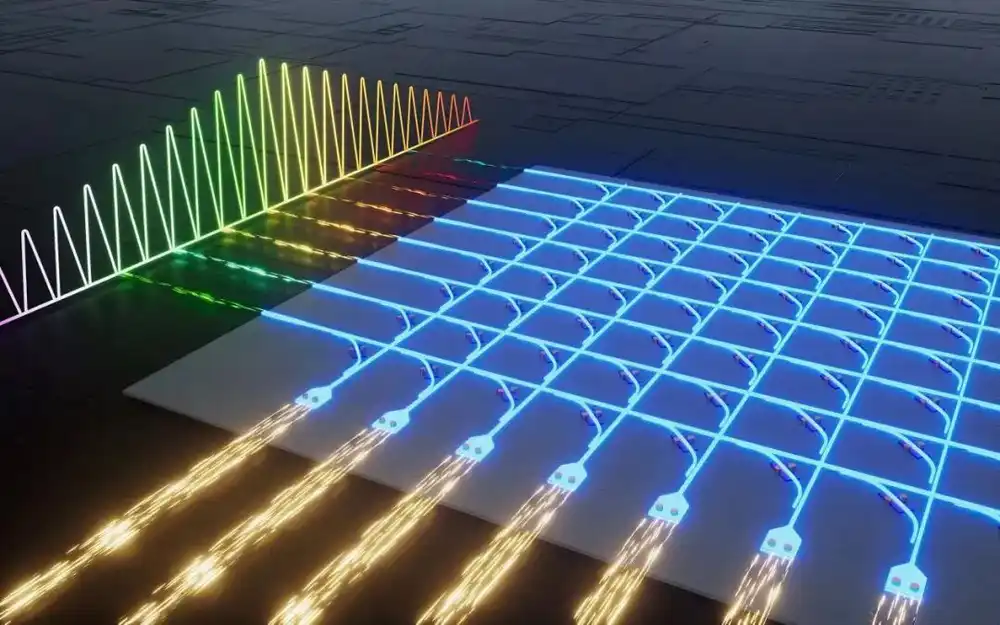
△Photonics-Centric Technology's Photonic In-Memory Computing Architecture
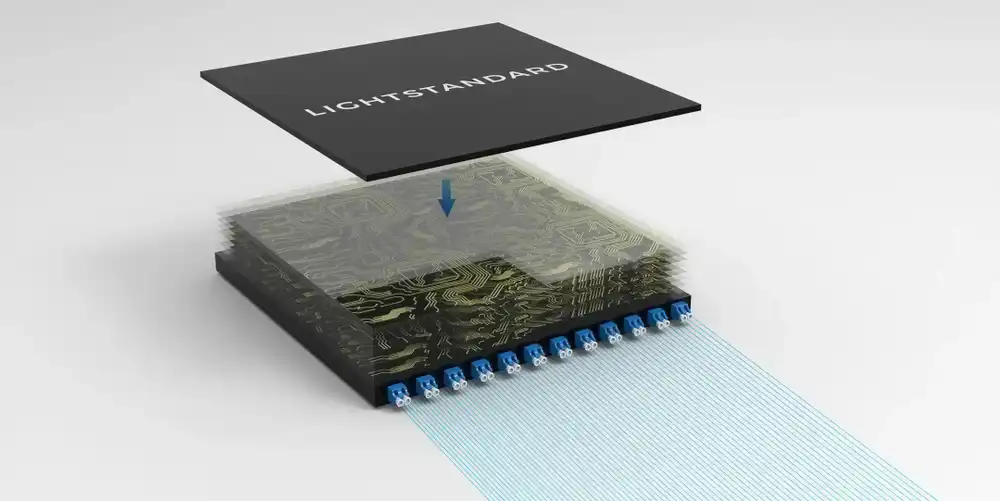
△Photonics-Centric Technology's Multi-Layer Packaged Glass-Based Optical Computing System

But from the ground to space, Pu Huanan believes that "optical computing needs to cross another hurdle of engineering."

The vibration during the rocket launch phase is extremely intense. Compared to pure electronic chips, optical structures introduce more packaging components, posing an additional test for the structural stability of chips under high-intensity vibration.

Once in orbit, the optical computing system needs to undergo system-level validation for power, thermal control, and communication in the real space environment.

Optical Computing & Optical Interconnects: The Next Trump Card for Space Computing Power

This path is similar in logic to NVIDIA's evolution from a single GPU to cluster-level solutions, but the underlying technological routes are fundamentally different.

Looking at the entire space-based computing industry, current development is still in an extremely early stage, with a considerable distance to go before large-scale commercial deployment.

Technology validation, system integration, and scale deployment — each link still has numerous engineering challenges to overcome.

Limited power resources on satellite platforms, iteration cycles for space chips, and low-cost large-scale orbit insertion are all thresholds that must be crossed for space-based computing to move from experimentation to commercialization.

Only when the comprehensive cost of space-based computing is lower than ground-based computing, or when space-based scenarios can provide high-value services irreplaceable by ground-based ones, will there be a real driving force for widespread commercialization.

The race for space computing power has just begun. The technological path chosen for computing chips and systems will determine the capability ceiling of future computing constellations.

As electronic computing gradually hits its ceiling facing process limits, optical computing and optical interconnects might be the crucial card in this race to bypass physical constraints and carve out a differentiated path.

This article is from WeChat Official Account: Quantum Bit , Author: Following Frontier Technology, Original Title: "The Domestic Answer to Space Computing Power: Photonics Are More Efficient! Musk and Huang's Approaches Are Too Roundabout"


Трендові криптовалюти

Пов'язані питання

QWhat are the three key engineering challenges for computing chips in space, and why is optical computing naturally suited to overcome them?

AThe three key challenges are radiation, heat dissipation, and power consumption. Optical computing overcomes them because photons are charge-neutral (making them immune to radiation effects), generate minimal heat during calculation, and have near-zero static power consumption, aligning perfectly with the limited power and harsh thermal environment of space.

QAccording to the article, what is the core limitation for moving ground-based data centers to space, and how do optical computing chips offer a weight/volume advantage over electronic chips?

AThe core limitation is the weight and volume of the payload. Optical computing chips offer an advantage because their low heat generation and power consumption allow for smaller, lighter cooling and energy supply systems. Therefore, within the same payload weight, more optical computing units can be installed, delivering higher total computational power.

QWhat are the two main obstacles that most optical computing solutions currently face in becoming widely deployable, as mentioned in the article?

AThe two main obstacles are: 1) The separation of storage and computation, where the frequent transfer of model parameters from external memory creates a bandwidth bottleneck. 2) Difficulties in large-scale integration due to physical constraints of silicon photonic platforms, such as chip size and interconnection density.

QWhat fundamental physical limit does electronic chip performance eventually face, and how does the path for improving optical computing performance differ?

AElectronic chip performance faces the quantum tunneling effect, where electrons can leak through barriers as transistor gates shrink to atomic scales, causing errors. Optical computing, in contrast, doesn't rely on advanced nanometer-scale processes. Its performance improvement comes from scaling the optical computing architecture and utilizing multiple properties of photons (like wavelength, polarization) for parallel processing, with a much higher theoretical ceiling.

QWhy does the article suggest that Elon Musk's reported interest in acquiring optical module company Mesh is relevant to the space computing race?

AMesh specializes in mass-producing optical transceivers to improve communication efficiency within AI data centers. This move by Musk's SpaceX suggests a strategic focus on optimizing data transfer, which is a critical component for high-performance computing clusters in space. It highlights the importance of both optical computation and optical communication ("light compute, light interconnect") for future space-based compute constellations.

Пов'язані матеріали

Margin Exhausted, "Brother Huang Li Cheng" Begins Selling Monkeys at a Loss

Taiwanese crypto whale "Machi Big Brother" Jeffrey Huang has been forced to sell his prized Bored Ape Yacht Club (BAYC) NFTs at significant losses to cover mounting losses from a highly leveraged ETH long position on Hyperliquid. Over the past month, Huang sold 34 BAYC NFTs for 326 ETH (approx. $514,000), realizing a loss of 399 ETH (approx. $631,000). The proceeds were transferred to Hyperliquid to replenish margin for his perpetual contract trades. One ape, BAYC #6057, bought for 76.84 ETH four years ago, was sold for just 7.65 ETH, a 90% loss in ETH terms. Huang began his high-leverage (25-40x) ETH long strategy in September 2025 when ETH was around $4,700. While his account once showed over $45 million in unrealized profit, the subsequent crash of ETH to the $1,600 range erased all gains. As of June 26, his cumulative losses on Hyperliquid reached $33.85 million, with over 335 liquidations earning him the community nickname "King of Liquidations." With conventional funds depleted, Huang's once-valuable NFT collection, which at its peak included around 200 BAYCs and was worth tens of millions, has become a lifeline. His remaining ~150 BAYCs, valued at roughly $1.6 million at current floor prices, provide only limited runway for his persistent high-stakes trading. Huang rose to prominence in crypto as a key figure in popularizing BAYC NFTs in Asia during the 2021 bull market. His pivot to perpetual contracts has now led to a cycle where his iconic "monkeys" are being sold to fund a failing trading strategy.

Foresight News36 хв тому

Margin Exhausted, "Brother Huang Li Cheng" Begins Selling Monkeys at a Loss

Foresight News36 хв тому

Quantum Computing Approaches "Q-Day": How Encryption Policy, Investment Logic, and Risk Management Are Reshaping the Landscape

Quantum Computing Nears 'Q-Day': Shaping Encryption Policy, Investment Logic, and Risk Management Quantum technology is increasingly intersecting with cryptocurrency policy and cybersecurity discussions as the potential 'Q-Day'—when quantum computers could break current encryption—approaches. While summer brings fast-paced crypto market dynamics, new U.S. legislation, and AI debates, the emerging dimension is how quantum advancements will reshape the digital asset landscape. The next phase of crypto investment is being shaped by two converging forces: clearer regulatory frameworks and cryptographic evolution driven by quantum computing. Investors stand to benefit from reduced uncertainty, but must also recognize that quantum readiness is becoming a core risk factor. Public blockchains rely on cryptography for security, and sufficiently advanced quantum machines could undermine these foundations. This does not mean imminent network collapse, but investors can no longer dismiss the timeline as irrelevant. Key questions now include whether projects have identified their cryptographic dependencies, formulated migration plans to post-quantum cryptography, and established governance for upgrades. For policymakers, the link is clear. Effective crypto policy must look beyond token classification and disclosure to address the underlying infrastructure. As stablecoins, tokenized assets, and blockchain payments integrate deeper into finance, cryptographic resilience becomes a systemic issue. Failure to prepare could lead to investor losses, operational failures, and legal disputes. Policy should encourage risk disclosure, require major intermediaries to maintain upgrade and response plans, and foster coordination across the ecosystem—rather than impose a single technical fix. The sustainability of cryptocurrencies will increasingly depend on their security infrastructure's ability to adapt to these accelerating technological pressures.

Foresight News1 год тому

Quantum Computing Approaches "Q-Day": How Encryption Policy, Investment Logic, and Risk Management Are Reshaping the Landscape

Foresight News1 год тому

Bitcoin's Five-Wave Adjustment Nears End, Opportunities Emerge in HYPE Support Zone | Invited Analysis

**Bitcoin's Five-Wave Adjustment Nears End, HYPE Support Zone Presents Opportunity | Guest Analysis** This week, Bitcoin (BTC) is in the final stage of a five-wave corrective structure. The formation of 'Endpoint 44' is key: a level above $58,110 suggests a high probability of a technical rebound, leading likely to wide-range consolidation. A break below $58,110 without bullish divergence warrants caution for further downside. Mid-term bearish positions are maintained at 20%, with 30% of capital reserved for short-term scalping opportunities based on predefined support/resistance levels and three scenario-based plans (A/B/C). Simultaneously, HYPE has entered the 55-56 segment of its own five-wave correction from its $76.94 high. If 'Endpoint 56' forms above the prior low (Endpoint 54), creating a double-bottom pattern, a rebound is significantly likely. A light long position (under 30% allocation) can be considered upon stabilization in the support zone. Last week's BTC short-term strategy, guided by proprietary quantitative models, successfully executed two short trades (1x leverage), yielding a total return of approximately 6.21%. The market move validated the prior weekly forecast of a retest towards the $59,100 support. **Core Trading Views Summary:** * **BTC:** Focus on the formation of 'Endpoint 44'. A scenario above $58,110 allows for tentative longs. Key resistances: $60,900-$62,300, ~$65,500, $67,300-$69,500. Key supports: ~$58,100, ~$55,000. * **HYPE:** Monitor the final position of 'Endpoint 56'. Key resistances: ~$65.5, ~$71.5. Key supports: ~$58.5, $52-$54 zone. Strategy favors buying on dips upon stabilization in support areas with confirmed model signals, with strict position control. **Risk Disclaimer:** Financial markets are volatile. All analysis, models, and strategies herein are based on personal technical analysis for journaling purposes only, not investment advice. Trade at your own risk.

Odaily星球日报1 год тому

Bitcoin's Five-Wave Adjustment Nears End, Opportunities Emerge in HYPE Support Zone | Invited Analysis

Odaily星球日报1 год тому

Торгівля

Спот

Популярні статті

Що таке $S$

Розуміння SPERO: Комплексний огляд Вступ до SPERO Оскільки ландшафт інновацій продовжує еволюціонувати, виникнення технологій web3 та криптовалютних проектів відіграє ключову роль у формуванні цифрового майбутнього. Один з проектів, який привернув увагу в цій динамічній сфері, — це SPERO, позначений як SPERO,$$s$. Ця стаття має на меті зібрати та представити детальну інформацію про SPERO, щоб допомогти ентузіастам та інвесторам зрозуміти його основи, цілі та інновації в рамках web3 та крипто-сектору. Що таке SPERO,$$s$? SPERO,$$s$ — це унікальний проект у криптопросторі, який прагне використати принципи децентралізації та технології блокчейн для створення екосистеми, що сприяє залученню, корисності та фінансовій інклюзії. Проект розроблений для полегшення взаємодії між користувачами новими способами, надаючи їм інноваційні фінансові рішення та послуги. У своїй основі SPERO,$$s$ прагне надати можливості індивідам, забезпечуючи інструменти та платформи, які покращують користувацький досвід у криптовалютному просторі. Це включає в себе можливість більш гнучких методів транзакцій, сприяння ініціативам, що підтримуються спільнотою, та створення шляхів для фінансових можливостей через децентралізовані додатки (dApps). Основна концепція SPERO,$$s$ обертається навколо інклюзивності, прагнучи зменшити розриви в традиційній фінансовій системі, використовуючи переваги технології блокчейн. Хто є творцем SPERO,$$s$? Особистість творця SPERO,$$s$ залишається дещо невідомою, оскільки є обмежені публічно доступні ресурси, що надають детальну інформацію про його засновників. Ця відсутність прозорості може бути наслідком зобов'язання проекту до децентралізації — етики, яку багато проектів web3 поділяють, ставлячи колективні внески вище за індивідуальне визнання. Зосереджуючи обговорення навколо спільноти та її колективних цілей, SPERO,$$s$ втілює суть наділення без виділення конкретних осіб. Таким чином, розуміння етики та місії SPERO є більш важливим, ніж ідентифікація єдиного творця. Хто є інвесторами SPERO,$$s$? SPERO,$$s$ підтримується різноманітними інвесторами, починаючи від венчурних капіталістів до ангельських інвесторів, які прагнуть сприяти інноваціям у крипто-секторі. Зосередження цих інвесторів зазвичай узгоджується з місією SPERO — пріоритет надається проектам, які обіцяють технологічний прогрес у суспільстві, фінансову інклюзію та децентралізоване управління. Ці інвесторські фонди зазвичай зацікавлені в проектах, які не лише пропонують інноваційні продукти, але й позитивно впливають на спільноту блокчейн та її екосистеми. Підтримка з боку цих інвесторів підкріплює SPERO,$$s$ як значного конкурента в швидко змінюваній сфері крипто-проектів. Як працює SPERO,$$s$? SPERO,$$s$ використовує багатогранну структуру, яка відрізняє його від традиційних криптовалютних проектів. Ось деякі ключові особливості, які підкреслюють його унікальність та інноваційність: Децентралізоване управління: SPERO,$$s$ інтегрує моделі децентралізованого управління, надаючи користувачам можливість активно брати участь у процесах прийняття рішень щодо майбутнього проекту. Цей підхід сприяє відчуттю власності та відповідальності серед членів спільноти. Корисність токена: SPERO,$$s$ використовує свій власний криптовалютний токен, розроблений для виконання різних функцій в екосистемі. Ці токени дозволяють здійснювати транзакції, отримувати винагороди та полегшувати послуги, що пропонуються на платформі, підвищуючи загальну залученість та корисність. Шарова архітектура: Технічна архітектура SPERO,$$s$ підтримує модульність та масштабованість, що дозволяє безперешкодно інтегрувати додаткові функції та додатки в міру розвитку проекту. Ця адаптивність є надзвичайно важливою для збереження актуальності в постійно змінюваному крипто-ландшафті. Залучення спільноти: Проект підкреслює ініціативи, що підтримуються спільнотою, використовуючи механізми, які стимулюють співпрацю та зворотний зв'язок. Підтримуючи сильну спільноту, SPERO,$$s$ може краще задовольняти потреби користувачів та адаптуватися до ринкових тенденцій. Фокус на інклюзію: Пропонуючи низькі комісії за транзакції та зручні інтерфейси, SPERO,$$s$ прагне залучити різноманітну базу користувачів, включаючи осіб, які раніше не брали участі в крипто-просторі. Це зобов'язання до інклюзії узгоджується з його загальною місією наділення через доступність. Хронологія SPERO,$$s$ Розуміння історії проекту надає важливі уявлення про його розвиток та етапи. Нижче наведено пропоновану хронологію, що відображає значні події в еволюції SPERO,$$s$: Етап концептуалізації та ідеації: Початкові ідеї, що стали основою SPERO,$$s$, були сформовані, тісно пов'язані з принципами децентралізації та фокусом на спільноті в індустрії блокчейн. Запуск білого паперу проекту: Після концептуального етапу був випущений комплексний білий папір, що детально описує бачення, цілі та технологічну інфраструктуру SPERO,$$s$, щоб залучити інтерес та зворотний зв'язок від спільноти. Створення спільноти та ранні залучення: Активні зусилля були спрямовані на створення спільноти ранніх прихильників та потенційних інвесторів, що полегшило обговорення цілей проекту та отримання підтримки. Подія генерації токенів: SPERO,$$s$ провів подію генерації токенів (TGE) для розподілу своїх рідних токенів серед ранніх прихильників та встановлення початкової ліквідності в екосистемі. Запуск початкового dApp: Перший децентралізований додаток (dApp), пов'язаний з SPERO,$$s$, став доступним, дозволяючи користувачам взаємодіяти з основними функціями платформи. Постійний розвиток та партнерства: Безперервні оновлення та вдосконалення пропозицій проекту, включаючи стратегічні партнерства з іншими учасниками блокчейн-простору, сформували SPERO,$$s$ у конкурентоспроможного та еволюціонуючого гравця на крипто-ринку. Висновок SPERO,$$s$ є свідченням потенціалу web3 та криптовалют для революціонізації фінансових систем та наділення індивідів. Завдяки зобов'язанню до децентралізованого управління, залучення спільноти та інноваційно спроектованих функцій, він прокладає шлях до більш інклюзивного фінансового ландшафту. Як і з будь-якими інвестиціями в швидко змінюваному крипто-просторі, потенційним інвесторам та користувачам рекомендується ретельно досліджувати та обдумано взаємодіяти з поточними подіями в SPERO,$$s$. Проект демонструє інноваційний дух крипто-індустрії, запрошуючи до подальшого дослідження його численних можливостей. Хоча подорож SPERO,$$s$ ще триває, його основні принципи можуть справді вплинути на майбутнє того, як ми взаємодіємо з технологією, фінансами та один з одним у взаємопов'язаних цифрових екосистемах.

110 переглядів усьогоОпубліковано 2024.12.17Оновлено 2024.12.17

Що таке $S$

Що таке AGENT S

Агент S: Майбутнє автономної взаємодії в Web3 Вступ У постійно змінюваному ландшафті Web3 та криптовалюти інновації постійно переосмислюють, як люди взаємодіють з цифровими платформами. Один з таких новаторських проектів, Агент S, обіцяє революціонізувати взаємодію людини з комп'ютером через свою відкриту агентну структуру. Прокладаючи шлях для автономних взаємодій, Агент S прагне спростити складні завдання, пропонуючи трансформаційні застосування в штучному інтелекті (ШІ). Це детальне дослідження заглиблюється в складності проекту, його унікальні особливості та наслідки для сфери криптовалюти. Що таке Агент S? Агент S є революційною відкритою агентною структурою, спеціально розробленою для вирішення трьох основних викликів в автоматизації комп'ютерних завдань: Набуття специфічних знань у галузі: Структура інтелектуально навчається з різних зовнішніх джерел знань та внутрішнього досвіду. Цей подвійний підхід дозволяє їй створити багатий репозиторій специфічних знань у галузі, покращуючи її продуктивність у виконанні завдань. Планування на довгих горизонтах завдань: Агент S використовує планування з підкріпленням досвіду, стратегічний підхід, який полегшує ефективний розподіл та виконання складних завдань. Ця функція значно підвищує її здатність ефективно та результативно управляти кількома підзавданнями. Обробка динамічних, неоднорідних інтерфейсів: Проект представляє Інтерфейс Агент-Комп'ютер (ACI), інноваційне рішення, яке покращує взаємодію між агентами та користувачами. Використовуючи багатомодальні великі мовні моделі (MLLMs), Агент S може безперешкодно орієнтуватися та маніпулювати різноманітними графічними інтерфейсами користувача. Завдяки цим новаторським функціям Агент S надає надійну структуру, яка вирішує складнощі, пов'язані з автоматизацією людської взаємодії з машинами, прокладаючи шлях для численних застосувань у ШІ та за його межами. Хто є творцем Агент S? Хоча концепція Агент S є фундаментально новаторською, конкретна інформація про його творця залишається невідомою. Творець наразі невідомий, що підкреслює або початкову стадію проекту, або стратегічний вибір зберегти засновників у таємниці. Незважаючи на анонімність, акцент залишається на можливостях та потенціалі структури. Хто є інвесторами Агент S? Оскільки Агент S є відносно новим у криптографічній екосистемі, детальна інформація про його інвесторів та фінансових спонсорів не задокументована. Відсутність публічно доступних відомостей про інвестиційні фонди або організації, що підтримують проект, викликає питання щодо його фінансової структури та дорожньої карти розвитку. Розуміння підтримки є критично важливим для оцінки стійкості проекту та потенційного впливу на ринок. Як працює Агент S? В основі Агент S лежить передова технологія, яка дозволяє йому ефективно функціонувати в різних умовах. Його операційна модель побудована навколо кількох ключових функцій: Взаємодія з комп'ютером, подібна до людської: Структура пропонує розширене планування ШІ, прагнучи зробити взаємодії з комп'ютерами більш інтуїтивними. Імітуючи людську поведінку при виконанні завдань, вона обіцяє підвищити досвід користувачів. Наративна пам'ять: Використовується для використання високорівневого досвіду, Агент S використовує наративну пам'ять для відстеження історій завдань, тим самим покращуючи свої процеси прийняття рішень. Епізодична пам'ять: Ця функція надає користувачам покрокові інструкції, дозволяючи структурі пропонувати контекстуальну підтримку в міру виконання завдань. Підтримка OpenACI: Завдяки можливості працювати локально, Агент S дозволяє користувачам зберігати контроль над своїми взаємодіями та робочими процесами, узгоджуючи з децентралізованою етикою Web3. Легка інтеграція з зовнішніми API: Його універсальність і сумісність з різними платформами ШІ забезпечують те, що Агент S може безперешкодно вписатися в існуючі технологічні екосистеми, роблячи його привабливим вибором для розробників та організацій. Ці функціональні можливості колективно сприяють унікальному положенню Агент S у крипто-просторі, оскільки він автоматизує складні, багатоступеневі завдання з мінімальним втручанням людини. У міру розвитку проекту його потенційні застосування в Web3 можуть переосмислити, як відбуваються цифрові взаємодії. Хронологія Агент S Розробка та етапи Агент S можуть бути узагальнені в хронології, яка підкреслює його значні події: 27 вересня 2024 року: Концепція Агент S була представлена в комплексній науковій статті під назвою “Відкрита агентна структура, яка використовує комп'ютери як людина”, що демонструє основи проекту. 10 жовтня 2024 року: Наукова стаття була опублікована на arXiv, пропонуючи детальне дослідження структури та її оцінки продуктивності на основі бенчмарку OSWorld. 12 жовтня 2024 року: Було випущено відеопрезентацію, що надає візуальне уявлення про можливості та особливості Агент S, ще більше залучаючи потенційних користувачів та інвесторів. Ці маркери в хронології не лише ілюструють прогрес Агент S, але й вказують на його прихильність до прозорості та залучення громади. Ключові моменти про Агент S У міру розвитку структури Агент S кілька ключових характеристик виділяються, підкреслюючи її новаторський характер та потенціал: Інноваційна структура: Розроблена для забезпечення інтуїтивного використання комп'ютерів, подібного до людської взаємодії, Агент S пропонує новий підхід до автоматизації завдань. Автономна взаємодія: Здатність автономно взаємодіяти з комп'ютерами через GUI означає стрибок до більш інтелектуальних та ефективних обчислювальних рішень. Автоматизація складних завдань: Завдяки своїй надійній методології він може автоматизувати складні, багатоступеневі завдання, роблячи процеси швидшими та менш схильними до помилок. Безперервне вдосконалення: Механізми навчання дозволяють Агенту S покращуватися на основі минулого досвіду, постійно підвищуючи свою продуктивність та ефективність. Універсальність: Його адаптивність до різних операційних середовищ, таких як OSWorld та WindowsAgentArena, забезпечує його здатність служити широкому спектру застосувань. Оскільки Агент S займає своє місце в ландшафті Web3 та криптовалюти, його потенціал покращити можливості взаємодії та автоматизувати процеси означає значний прогрес у технологіях ШІ. Завдяки своїй інноваційній структурі Агент S є прикладом майбутнього цифрових взаємодій, обіцяючи більш безперешкодний та ефективний досвід для користувачів у різних галузях. Висновок Агент S представляє собою сміливий крок вперед у поєднанні ШІ та Web3, з можливістю переосмислити, як ми взаємодіємо з технологією. Хоча проект все ще на ранніх стадіях, можливості для його застосування є величезними та переконливими. Завдяки своїй комплексній структурі, що вирішує критичні виклики, Агент S прагне вивести автономні взаємодії на передній план цифрового досвіду. У міру того, як ми заглиблюємося в сфери криптовалюти та децентралізації, проекти, подібні до Агент S, безсумнівно, відіграватимуть ключову роль у формуванні майбутнього технологій та співпраці людини з комп'ютером.

739 переглядів усьогоОпубліковано 2025.01.14Оновлено 2025.01.14

Що таке AGENT S

Як купити S

Ласкаво просимо до HTX.com! Ми зробили покупку Sonic (S) простою та зручною. Дотримуйтесь нашої покрокової інструкції, щоб розпочати свою криптовалютну подорож.Крок 1: Створіть обліковий запис на HTXВикористовуйте свою електронну пошту або номер телефону, щоб зареєструвати обліковий запис на HTX безплатно. Пройдіть безпроблемну реєстрацію й отримайте доступ до всіх функцій.ЗареєструватисьКрок 2: Перейдіть до розділу Купити крипту і виберіть спосіб оплатиКредитна/дебетова картка: використовуйте вашу картку Visa або Mastercard, щоб миттєво купити Sonic (S).Баланс: використовуйте кошти з балансу вашого рахунку HTX для безперешкодної торгівлі.Треті особи: ми додали популярні способи оплати, такі як Google Pay та Apple Pay, щоб підвищити зручність.P2P: Торгуйте безпосередньо з іншими користувачами на HTX.Позабіржова торгівля (OTC): ми пропонуємо індивідуальні послуги та конкурентні обмінні курси для трейдерів.Крок 3: Зберігайте свої Sonic (S)Після придбання Sonic (S) збережіть його у своєму обліковому записі на HTX. Крім того, ви можете відправити його в інше місце за допомогою блокчейн-переказу або використовувати його для торгівлі іншими криптовалютами.Крок 4: Торгівля Sonic (S)Легко торгуйте Sonic (S) на спотовому ринку HTX. Просто увійдіть до свого облікового запису, виберіть торгову пару, укладайте угоди та спостерігайте за ними в режимі реального часу. Ми пропонуємо зручний досвід як для початківців, так і для досвідчених трейдерів.

1.6k переглядів усьогоОпубліковано 2025.01.15Оновлено 2026.06.02

Як купити S

Обговорення

Ласкаво просимо до спільноти HTX. Тут ви можете бути в курсі останніх подій розвитку платформи та отримати доступ до професійної ринкової інформації. Нижче представлені думки користувачів щодо ціни S (S).

活动图片