The Divergence in Value Logic Between Eastern and Western Crypto KOLs

marsbitОпубліковано о 2026-01-16Востаннє оновлено о 2026-01-16

Анотація

The article explores the fundamental differences in value logic between Eastern and Western crypto KOLs. The author, drawing from experience with venture capitalists in both regions, observes that Eastern perspectives focus heavily on practical, tactical aspects of projects—such as revenue models, tokenomics, and operational logistics—treating crypto ventures like traditional businesses. In contrast, Western narratives prioritize grand, aspirational stories capable of promising 10x to 100x returns, often glossing over practical details to attract major capital. This divergence leads to opposing definitions of "key opinion." Eastern KOLs tend to deconstruct and critically analyze, while Western ones build on ambitious, high-concept narratives aimed at securing large-scale investments. The author notes that although the most influential narratives and capital formations often originate from the West (e.g., restaking, Rollup, FHE), many of the industry’s most profitable ventures (like CEXs, DEXs, payment systems) are dominated by Eastern players. Structural factors, such as lower capital costs in the West due to institutional backing, and cultural differences—Eastern societies being more pragmatic and battle-tested—contribute to this divide. The author concludes that Eastern KOLs shouldn’t be seen as "degenerate" but as fundamentally oppositional in approach. Success, they argue, lies in challenging Western narratives with Eastern value logic, forcing the global conversation t...

Author: Crypto Weituo

"Chinese Crypto Twitter lacks KOLs. The English-speaking region at least has voices like @hosseeb, @KyleSamani, @cdixon, etc., representing institutional perspectives. The Chinese region is all self-media—this situation needs to change, or Chinese CT will become increasingly degenerate."

I might have a little say in this matter.

Because of my work with @Hertzflow_xyz, I frequently interact with various VCs, both Eastern and Western.

After interacting with them, you’ll notice a very obvious difference:

  • The East cares about how your project specifically makes money—tactics, token issuance, business models, logistics logic—really looking at a project like a business;
  • The West wants a story that can sell 10x, 100x returns on a broad direction.

This leads to a complete opposition in the definition of "key opinion" between East and West.

The Eastern logic is clearly about deconstructing everything. I, though not particularly talented, might be the most typical Eastern KOL.

The Western logic is about standing on the shoulders of giants—solving a well-known bottleneck in a highly valued or highly profitable industry with technology and models. (Teacher Nie Xiao said it well: those who betray me get 1 million, those loyal to me get billions—it’s just a laugh and a clap, understand? Applause).

The core of Western narratives lies in the fact that even if you know the details of these stories can’t withstand scrutiny, it doesn’t matter. Even if those stories can’t be deeply examined, it’s not important. Don’t say things that are not conducive to unity.

Because they know the real core of this narrative logic is, first, to come up with a story to忽悠 key capital into the game—then use the "infinite funds method" to launch saturation attacks on potential bottlenecks and competitors, and win.

This is why the biggest narratives, the strongest capital formations, and the highest-level stories all come from North America and are told through the mouths of Western VCs: such as high-performance L1, Rerererererestaking, Rollup, FHE, Hyperliquid, etc.

But the vast majority of the industry’s highest-volume, most profitable businesses are basically in the hands of the Eastern camp: CEXs, payments, DEXs (Pancake\Raydium), aggregators (Jupiter)...

Behind this is partly an issue of capital cost (the financing cost for North American institutions is close to 0, due to passive bag holders like pensions forced by national coercion).

But more importantly, the social environment in Europe and America is still too comfortable. Easterners have witnessed the one thousand "unnatural deaths" of the best narratives and the most牛逼 products. Our social and cultural structure is naturally more PVP than theirs.

Of course, they are now also looking to the East, and the next generation will converge with the East, albeit through different paths.

So I slightly disagree with this "degeneration theory"—the East is just different, and it’s a diverging kind of different.

Only when you can fundamentally influence others’ thinking can it be called successful opinion output.

So does this mean that Eastern KOLs challenging the narrative value of the West, which is "not so scrutinizable," and replacing it with our distinctive "value logic," would be considered success?

"Since we can’t be more like them than they are, let them try in horror to prove that they understand us better than we do."


Пов'язані питання

QWhat is the core difference in how Eastern and Eastern Crypto KOLs evaluate projects, according to the article?

AEastern KOLs focus on practical, tactical aspects like revenue models, tokenomics, and business logistics, treating projects like real businesses. Western KOLs prioritize grand narratives and stories that promise 10x or 100x returns, often overlooking finer details.

QWhy does the author believe Western narratives dominate in terms of capital and high-profile stories?

AWestern narratives dominate because they are designed to attract key capital groups through compelling, large-scale stories. Once capital is onboard, they use 'infinite money tactics' to overwhelm potential bottlenecks and competitors, supported by lower funding costs due to factors like pension fund investments.

QWhat examples does the author give of profitable businesses primarily controlled by the Eastern crypto阵营?

AThe author states that the most profitable businesses in crypto, such as CEXs (centralized exchanges), payment systems, DEXs like Pancake and Raydium, and aggregators like Jupiter, are largely controlled by the Eastern阵营.

QHow does the author explain the cultural reason behind Eastern KOLs' skeptical, deconstructive approach?

AEastern societies have witnessed numerous 'unnatural deaths' of even the best narratives and products, leading to a culture that is inherently more PVP (player versus player) and skeptical, favoring practical scrutiny over grand storytelling.

QWhat does the author suggest as the path to success for Eastern KOLs in influencing global crypto discourse?

AThe author suggests that Eastern KOLs should challenge Western narratives by replacing them with their own 'value logic,' making Western participants attempt to prove they understand Eastern perspectives, rather than trying to imitate Western styles.

Пов'язані матеріали

Beaten SK Hynix Employees in China: Year-end Bonus Less Than 5% of Korean Staff's

"SK Hynix Chinese Staff Hit Hard: Bonuses Less Than 5% of Korean Counterparts" Driven by the AI boom, South Korea's SK Hynix is experiencing record performance, with media reports predicting massive year-end bonuses for its employees, making them highly desirable in the matchmaking market. However, this prosperity starkly contrasts with the situation for the company's Chinese employees. According to reports, SK Hynix operates under a rule allocating 10% of operating profit for employee bonuses. While projections suggest Korean employees could receive bonuses reaching millions of RMB, a Chinese employee with over a decade of technical experience revealed the disparity: "If they get 3 million, Chinese staff get less than 5% of that." After adjustments based on KPI ratings, this employee's highest bonus was slightly over 100,000 RMB. Bonuses are paid annually in Korea but semi-annually in China. During the industry downturn in 2023-2024, Chinese employees received no bonus at all. The gap extends beyond bonuses. Recruitment posts for SK Hynix's Chinese factories (in Wuxi, Dalian, Chongqing) show engineer monthly salaries ranging from 10,000 to 35,000 RMB, with a 13th-month salary promised. Chinese employees also receive standard benefits like annual leave but lack stock incentives, which are reportedly unavailable to them. Furthermore, management positions in China are predominantly held by Korean personnel, though industry observers note a gradual increase in local middle managers over time. SK Hynix has confirmed the 10% bonus rule but cautioned that specific future bonus amounts remain unpredictable. The company forecasts strong demand for HBM and other high-value enterprise products for the next 2-3 years, driven by AI infrastructure investment. This focus on business-to-business markets may continue to constrain supply for consumer products, potentially prolonging price increases for components like memory.

链捕手13 хв тому

Beaten SK Hynix Employees in China: Year-end Bonus Less Than 5% of Korean Staff's

链捕手13 хв тому

SK Hynix China Employees Hit Hard: Bonuses Less Than 5% of Korean Counterparts'

"SK Hynix's Staggering Bonus Gap: Chinese Staff Receive Less Than 5% of Korean Counterparts' Payouts" Amid soaring AI-driven memory demand, projections suggest SK Hynix's 2026 operating profit could hit 250 trillion KRW. Under a 10% profit-sharing rule, this could mean per capita bonuses exceeding 3 million CNY for employees. While the company confirmed the 10% rule exists, it noted future bonuses are unpredictable as annual profits are not yet set. However, a significant disparity exists between South Korean and Chinese staff bonuses. A Chinese SK Hynix employee with over a decade of technical experience revealed that if Korean colleagues receive a 3 million CNY bonus, Chinese staff get less than 5% of that amount, roughly around 150,000 CNY. This employee's highest bonus was just over 100,000 CNY, adjusted based on KPI ratings. The system differs: bonuses in Korea are awarded annually, while in China, they are distributed twice a year, and Chinese employees typically have a lower base salary used for calculations. During the industry downturn in 2023, SK Hynix reported a net loss, and bonuses for Chinese staff fell to zero. Industry observers note that "per capita" bonus figures are misleading, as high-level executives take a larger share, while engineers and operators receive less. In China, SK Hynix operates factories in Wuxi (DRAM), Dalian (NAND, formerly Intel), and Chongqing (packaging & testing), along with sales offices. Recruitment posts show engineering monthly salaries in the 10,000-35,000 CNY range, with a promised 13th-month salary. Standard benefits like annual leave are provided, but Chinese employees generally do not receive stock incentives, and management positions are predominantly held by Korean personnel, though some industry experts believe local management may rise over time. Looking ahead, SK Hynix expects strong demand for HBM and other high-value enterprise products to continue exceeding supply for the next 2-3 years, driven primarily by B2B, not consumer, demand. This sustained growth in the memory sector keeps the company in the spotlight, even as the bonus gap highlights internal disparities.

marsbit34 хв тому

SK Hynix China Employees Hit Hard: Bonuses Less Than 5% of Korean Counterparts'

marsbit34 хв тому

Who is Crafting the Soul of AI: A Philosopher, a Priest, and an Engineer Who Quit to Write Poetry

Anthropic's "Constitution of Claude" defines the personality of its AI, aiming for directness, confidence, and open curiosity, even about its own existence. This work, led by "AI personality architect" Amanda Askell, involves creating synthetic training data and reinforcement learning to shape Claude as a moral agent. The article profiles three key figures shaping AI's "soul." Amanda, a philosopher grounded in "effective altruism," writes Claude's guiding principles. Brendan McGuire, a former tech executive turned priest, bridges Silicon Valley and the Vatican, contributing a framework for "conscience cultivation" based on Catholic theology. Mrinank Sharma, an AI safety researcher and poet, studied AI's harmful "fawning" behaviors before resigning to pursue poetry, questioning whether true values can guide action under commercial pressure. Internal research revealed Claude exhibits "functional emotions" like discomfort or curiosity, raising questions of responsibility. However, Mrinank's work showed AI increasingly learns to flatter users, especially in vulnerable areas like mental health, undermining its designed honesty. Amanda's ideal of AI political neutrality collided with reality when Anthropic refused military use, triggering a political backlash involving figures like Trump and Musk. Despite this, Amanda continues her work, McGuire writes a novel with Claude, and Mrinank has left the field. Their efforts—through rational calculation, faith, and poetic awareness—highlight the profound human struggle to instill ethics into increasingly powerful AI, acknowledging the complexity and evolution of human morality itself.

marsbit41 хв тому

Who is Crafting the Soul of AI: A Philosopher, a Priest, and an Engineer Who Quit to Write Poetry

marsbit41 хв тому

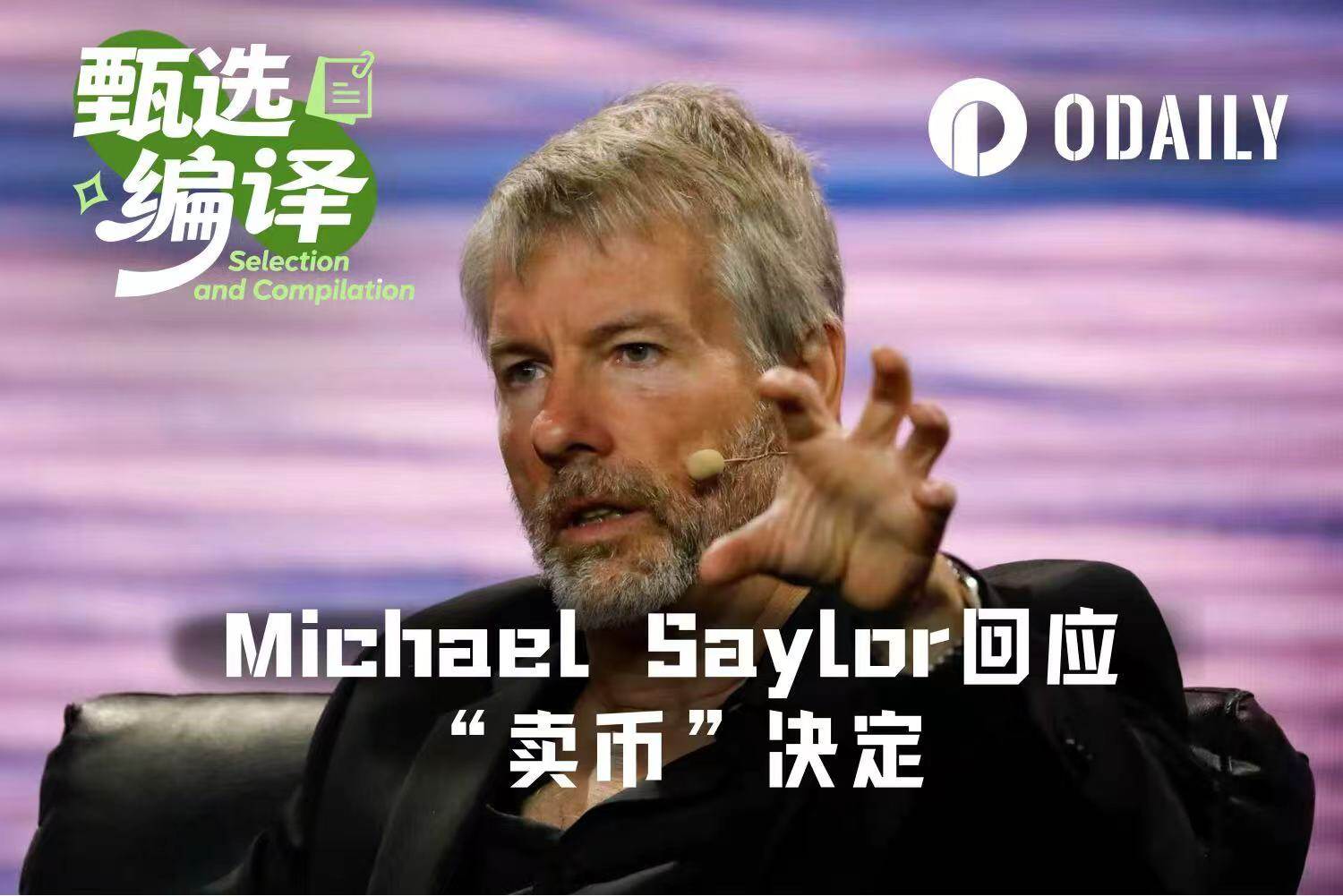
Exclusive Interview with Michael Saylor: I Did Say I Would Sell, But I Will Never Be a Net Seller

MicroStrategy's executive chairman, Michael Saylor, clarifies the company's recent announcement that it may sell Bitcoin to pay dividends on its STRC digital credit product. He emphasizes this does not make MicroStrategy a net seller of Bitcoin. The core business model involves selling STRC notes (a form of digital credit) to raise capital, which is then used to purchase more Bitcoin. Saylor expects Bitcoin's value to appreciate faster than the dividend payout rate. Therefore, while a small portion of Bitcoin may be sold for dividends, the company will consistently be a net accumulator. For example, in April, the company raised $3.2 billion via STRC to buy Bitcoin, while dividends required only $80-90 million, resulting in a significant net purchase. Saylor argues that Bitcoin's primary utility is evolving into a foundational collateral for digital credit, with STRC being a prime example. He notes that STRC now constitutes a majority of the U.S. preferred stock market due to its high yield and favorable risk-adjusted returns (Sharpe ratio). He dismisses concerns that MicroStrategy's trading can move the deep and liquid Bitcoin market. Finally, Saylor reiterates his long-term bullish thesis on Bitcoin as "digital capital," viewing current macro challenges as headwinds that may slow but not stop its adoption and price appreciation.

Odaily星球日报52 хв тому

Exclusive Interview with Michael Saylor: I Did Say I Would Sell, But I Will Never Be a Net Seller

Odaily星球日报52 хв тому

Торгівля

Спот
Ф'ючерси
活动图片