The Catfish Effect? Stablecoins Are Truly the Enemy of Bank Deposits

marsbitОпубліковано о 2025-12-19Востаннє оновлено о 2025-12-19

Анотація

The article challenges the prevailing narrative that stablecoins pose an existential threat to the traditional banking system by causing massive deposit outflows. Instead, it argues that stablecoins act as a competitive catalyst, forcing banks to improve efficiency and offer higher deposit rates, rather than replacing them. Key points include: - Research indicates no significant correlation between stablecoin growth and bank deposit outflows, highlighting the "sticky" nature of deposits due to the convenience of bundled banking services (e.g., mortgages, payroll). - Stablecoins introduce competition, compelling banks to enhance operational efficiency and customer benefits, ultimately expanding financial intermediation and consumer welfare. - Regulatory frameworks like the GENIUS法案 (likely referring to U.S. stablecoin legislation) mitigate risks by mandating full reserves (cash, short-term Treasuries) and enforceable redemption rights, addressing concerns about run and liquidity risks. - Stablecoins offer efficiency gains through atomic settlements, enabling instant, cross-border transactions without intermediary delays, which could modernize outdated financial infrastructure. - The U.S. is urged to lead in stablecoin innovation to preserve the dollar’s global dominance, transforming stablecoins from offshore novelties into transparent, regulated components of domestic financial systems. The conclusion emphasizes that banks should view stablecoins as an opportunity to evolve...

Editor's Note: Whether stablecoins will impact the banking system was one of the most critical debates in recent years. However, as data, research, and regulatory frameworks gradually become clearer, the answer is becoming more measured: stablecoins have not triggered large-scale deposit outflows. Instead, constrained by the reality of 'deposit stickiness,' they have become a competitive force that compels banks to raise interest rates and improve efficiency.

This article reexamines stablecoins from the perspective of banks. They may not be a threat but rather a catalyst forcing the financial system to renew itself.

Below is the original text:

Back in 2019, when we announced the launch of Libra, the global financial system's reaction was, without exaggeration, quite intense. The fear, akin to an existential crisis, was this: once stablecoins become instantly accessible to billions of people, would the banks' control over deposits and payment systems be completely broken? If you could hold a 'digital dollar' in your phone that can be transferred instantly, why would you keep your money in a checking account that offers zero interest, charges numerous fees, and is essentially 'shut down' on weekends?

At the time, this was a perfectly reasonable question. For years, the mainstream narrative has held that stablecoins are 'stealing the banks' business.' People worried that an imminent 'deposit flight' was on the horizon.

Once consumers realized they could directly hold a form of digital cash backed by treasury-grade assets, the very foundation providing low-cost funding for the U.S. banking system would quickly crumble.

However, a rigorous research paper recently published by Professor Will Cong of Cornell University suggests the industry may have panicked too soon. By examining real evidence rather than emotional judgments, Cong presents a counterintuitive conclusion: when properly regulated, stablecoins are not disruptors draining bank deposits but rather a complement to the traditional banking system.

The Theory of 'Sticky Deposits'

The traditional banking model is essentially a bet built on 'friction.'

Because the checking account is the only truly interoperable hub for funds, any transfer of value between external services must almost always pass through the bank. The entire system is designed on the logic that as long as you don't use a checking account, operations become more cumbersome—the bank controls the only bridge connecting the isolated 'islands' of your financial life.

Consumers are willing to accept this 'toll' not because checking accounts are superior but because of the power of the 'bundling effect.' You keep money in a checking account not because it's the best place for funds but because it's a central node: mortgages, credit cards, direct salary deposits all interface and operate in synergy here.

If the assertion that 'banks are dying' were true, we should have already seen a massive flow of bank deposits into stablecoins. But reality is different. As Cong points out, despite the explosive growth in the market value of stablecoins, 'existing empirical research has found little evidence of a clear correlation between the emergence of stablecoins and the outflow of bank deposits.' The friction mechanism remains effective. So far, the popularity of stablecoins has not caused substantial outflows from traditional bank deposits.

It turns out that the warnings about 'mass deposit flight' were more panic-driven rhetoric from vested interests, overlooking the most basic economic 'laws of physics' in the real world. The stickiness of deposits is an incredibly powerful force. For most users, the convenience value of the 'bundle of services' is too high—too high to make them transfer their life savings to a digital wallet just for a few extra basis points of return.

Competition is a Feature, Not a System Flaw

But real change is happening here. Stablecoins may not 'kill banks,' but they will almost certainly make banks uncomfortable and force them to become better. The Cornell study notes that the mere existence of stablecoins itself acts as a disciplinary constraint, compelling banks to no longer rely solely on user inertia but to start offering higher deposit interest rates and more efficient, sophisticated operational systems.

When banks truly face a credible alternative, the cost of sticking to the old ways rises rapidly. They can no longer take it for granted that your funds are 'locked in' but are forced to attract deposits with more competitive pricing.

Under this framework, stablecoins do not 'shrink the pie' but instead promote 'more credit issuance and broader financial intermediation, ultimately enhancing consumer welfare.' As Professor Cong states: 'Stablecoins are not meant to replace traditional intermediaries but can serve as a complementary tool to expand the boundaries of what banks are already good at.'

It turns out that the 'threat of exit' itself is a powerful motivator for incumbent institutions to improve their services.

Regulatory 'Unlocking'

Of course, regulators have good reason to worry about so-called 'run risk'—the possibility that if market confidence wavers, the reserve assets backing stablecoins could be forced into a fire sale, triggering a systemic crisis.

But as the paper points out, this is not some unprecedented new risk but a standard form of risk long present in financial intermediation, highly similar in nature to the risks faced by other financial institutions. We already have a mature set of frameworks for dealing with liquidity management and operational risk. The real challenge is not 'inventing new physical laws' but correctly applying existing financial engineering to a new technological form.

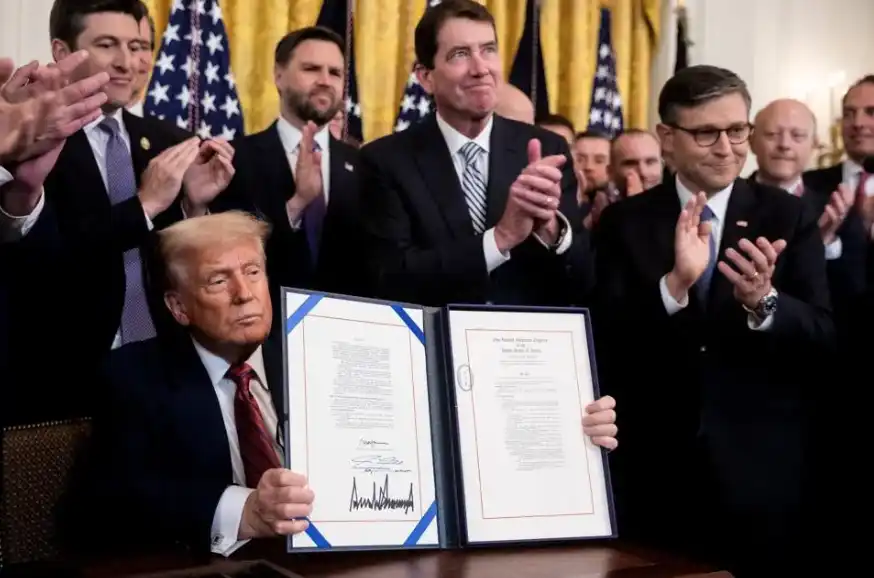
This is where the 'GENIUS Act' plays a key role. By explicitly requiring that stablecoins must be fully reserved with cash, short-term U.S. Treasuries, or insured deposits, the act mandates security at the institutional level. As the paper states, these regulatory guardrails 'appear sufficient to cover the core vulnerabilities identified in academic research, including run risk and liquidity risk.'

The legislation sets minimum statutory standards for the industry—full reserve backing and legally enforceable redemption rights—but leaves the specific operational details to banking regulators for implementation. Next, the Federal Reserve and the Office of the Comptroller of the Currency (OCC) will be responsible for translating these principles into enforceable regulatory rules, ensuring stablecoin issuers adequately account for operational risks, the possibility of custody failures, and the unique complexities involved in large-scale reserve management and integration with blockchain systems.
The Efficiency Dividend

Once we move beyond the defensive mindset of 'deposit diversion,' the real upside becomes apparent: the 'underlying plumbing' of the financial system itself has reached a point where it must be rebuilt.

The true value of tokenization is not just 24/7 availability but 'atomic settlement'—the instant transfer of cross-border value without counterparty risk, a problem the current financial system has long failed to solve.

The current cross-border payment system is costly and slow, with funds often needing to pass through multiple intermediaries for days before final settlement. Stablecoins compress this process into a single on-chain, final, and irreversible transaction.

This has profound implications for global cash management: funds are no longer trapped 'in transit' for days but can be transferred across borders instantly, releasing liquidity currently tied up long-term by the correspondent banking system. In domestic markets, the same efficiency gains promise lower-cost, faster merchant payments. For the banking industry, this is a rare opportunity to update the traditional clearing infrastructure that has long been barely held together with tape and COBOL.

Upgrading the Dollar

Ultimately, the U.S. faces a binary choice: either lead the development of this technology or watch the future of finance take shape in offshore jurisdictions. The U.S. dollar remains the world's most popular financial product, but the 'rails' it runs on are clearly aging.

The 'GENIUS Act' provides a truly competitive institutional framework. It 'domesticates' this field: by bringing stablecoins within the regulatory perimeter, the U.S. transforms what was an不安 factor in the shadow banking system into a transparent, robust 'global dollar upgrade plan,' shaping an offshore novelty into a core component of domestic financial infrastructure.

Banks should stop obsessing over competition itself and start thinking about how to turn this technology to their advantage. Just as the music industry was forced to move from the CD era to the streaming era—initially resistant but ultimately discovering a gold mine—banks are resisting a transformation that will eventually save them. When they realize they can charge for 'speed' rather than profiting from 'delay,' they will truly learn to embrace this change.

Трендові криптовалюти

Пов'язані питання

QWhat is the main argument of the article regarding stablecoins and bank deposits?

AThe article argues that stablecoins are not a threat that causes large-scale outflows of bank deposits. Instead, they act as a competitive force that compels banks to improve deposit interest rates and operational efficiency, complementing rather than replacing the traditional banking system.

QAccording to the article, what is the 'sticky deposits' theory and how does it relate to stablecoins?

AThe 'sticky deposits' theory suggests that consumer deposits are highly 'sticky' due to the convenience and bundled services (like mortgages, credit cards, and direct deposits) offered by traditional banks. This inertia prevents mass migration to stablecoins, as the value of integrated banking outweighs minor interest rate benefits from alternative digital assets.

QHow does the article describe the role of the GENIUS Act in regulating stablecoins?

AThe GENIUS Act establishes a regulatory framework requiring stablecoins to be fully backed by reserves such as cash, short-term U.S. Treasuries, or insured deposits. It sets minimum safety standards, mandates enforceable redemption rights, and delegates implementation to banking regulators like the Federal Reserve and OCC to address operational and liquidity risks.

QWhat efficiency benefits do stablecoins bring to the financial system, as highlighted in the article?

AStablecoins enable atomic settlement, allowing instant, cross-border value transfer without counterparty risk. This reduces the high costs and delays in traditional payment systems, frees up liquidity trapped in intermediary processes, and offers lower-cost, faster payment options for merchants and global fund management.

QWhy does the article suggest that banks should view stablecoins as an opportunity rather than a threat?

AThe article suggests that stablecoins force banks to innovate and improve their services, such as offering higher deposit rates and modernizing outdated infrastructure. By embracing this technology, banks can transition from profiting from delays to charging for speed, ultimately enhancing their competitiveness and operational efficiency.

Пов'язані матеріали

From Gold to Bitcoin: Fixed Supply + Institutional Frenzy, Might It Repeat the 'Explosive' Price Trend?

"From Gold to Bitcoin: Fixed Supply and Institutional Frenzy May Lead to 'Explosive' Price Rally Analysts suggest Bitcoin's price action could mirror gold's over the past two decades, following the launch of spot Bitcoin ETFs. Gold ETFs, introduced in 2004, drove gold's price surge to a current market cap near $28 trillion. Both gold and Bitcoin are non-yielding stores of value, with prices driven purely by investor sentiment rather than cash flows or credit. Gold ETFs experienced dramatic cycles: explosive growth, painful drawdowns, and slow recoveries, with each cycle reaching higher peaks. Bitcoin ETFs, approved in early 2024, saw rapid institutional adoption but are now facing similar volatility. Recent warnings highlight the risk of significant ETF outflows disrupting the current rebound. BlackRock's IBIT, a leading Bitcoin ETF, has sold nearly 100,000 BTC to meet redemptions while still holding over 733,000. The core parallel is fixed supply: when demand surges, prices explode, but demand is often volatile and wave-like, not steady. Institutional interest, through ETFs and corporate adoption, remains a key support pillar, helping to cushion sell-offs. If Bitcoin captures even a fraction of gold's role as a store of value, its upside potential is immense, though the path will be marked by high volatility. For investors, focusing on long-term trends and managing risk is crucial as this 'price explosion' narrative unfolds."

Foresight News7 хв тому

From Gold to Bitcoin: Fixed Supply + Institutional Frenzy, Might It Repeat the 'Explosive' Price Trend?

Foresight News7 хв тому

Why Is AI Agent Shopping Hard to Popularize?

The article argues that the popular narrative of "AI agent shopping" – equipping AI with a wallet to autonomously handle purchases – is fundamentally flawed and oversimplifies the complexity of shopping. It deconstructs shopping into two core actions: **information retrieval** (standardized, easily automated) and **value judgment** (deeply subjective and human-centric). The narrative mistakenly assumes AI can fully handle both. Value judgment itself has two layers: **evaluation** (assessing options against criteria) and **demand definition** (setting the criteria, weights, and values). The latter is inherently human and dynamic, as preferences are not fixed but constructed during the decision-making process ("constructive preferences"). The real dividing line for automation is not product standardization, but whether the **act of choosing** itself holds experiential value. For mundane purchases (e.g., printer paper), full AI delegation works. For experiential goods (e.g., wine, furniture), the joy of selection is core to consumption, so AI should act as an assistant that narrows options, leaving the final choice to humans. The "AI wallet" concept confuses three separate elements: decision-making, execution, and fund custody. Current payment industry solutions (e.g., from Stripe, Mastercard, Google, Visa) show that limited, scoped payment authorization tokens are sufficient for most consumer scenarios, not full fund custody. The true use case for autonomous AI wallets is in **B2B procurement** and **machine-to-machine (M2M) settlements** for standardized, high-frequency, low-value transactions. The real bottlenecks for AI shopping are not payment technology, but **1) the lack of trusted data sources** (e.g., fake reviews, counterfeit goods) and **2) the impossibility of automating human demand definition**. The conclusion is that the focus should be on safely automating the assessment and filtering process while reserving for humans the rights to define their criteria and enjoy the final act of choice. For experiential goods, the platform's competitive advantage shifts to providing a superior selection experience.

Foresight News1 год тому

Why Is AI Agent Shopping Hard to Popularize?

Foresight News1 год тому

After Nine Months of Shorting, a Full Turn to Long: Renowned Trader Opens Bitcoin Positions Around 64K, Crypto Market Long-Short Divergence Intensifies

After nine months of being short, prominent crypto trader Doctor Profit has closed all his bearish positions and started buying Bitcoin near $64,000, signaling a complete bullish reversal. He argues that structural market changes—such as impending U.S. regulation (CLARITY Act) and institutional adoption via securities tokenization—are rewriting the traditional four-year cycle script, potentially bringing the market bottom forward from the widely expected September/October timeframe. This view finds some technical support from on-chain analyst gumsays, who notes a bullish divergence on Bitcoin's weekly chart has persisted for 147 days, nearing the 161-day duration seen before the 2022 cycle low. However, cycle researcher Jake Pahor presents a counter-argument based on historical data. Analyzing patterns since 2014, he identifies three common features of past bear market bottoms: a ~12-month duration from peak to trough, a sustained period of extreme fear (with a proprietary risk score below 20), and the price falling below Bitcoin's realized price (~$53,000 currently). The current cycle, only nine months from its October 2025 peak, meets none of these conditions. The debate highlights a market torn between "front-running" a potential early bottom driven by new fundamentals and waiting for confirmation through traditional on-chain and sentiment metrics. While Doctor Profit opts for aggressive buying, Pahor maintains a disciplined, tiered accumulation strategy, continuing weekly buys at current risk levels but reserving larger orders for if more extreme fear emerges.

marsbit1 год тому

After Nine Months of Shorting, a Full Turn to Long: Renowned Trader Opens Bitcoin Positions Around 64K, Crypto Market Long-Short Divergence Intensifies

marsbit1 год тому

Senior Trader's Confession: How to Trade Market's False Expectations?

Veteran trader's case study: trading the market's "wrong expectations". This trade centered on a textbook "expectation error" after a weak CPI report. While the market initially priced in broad monetary easing (sending Nasdaq to 30,060), the crucial 30-year real yield hit a 20-year high. This signaled a fractured transmission mechanism: short-term rates eased, but long-term funding costs (vital for tech valuations) refused to fall. The trader executed five short positions on the Nasdaq (NQ) as it fell from 30,060 to 28,768. The core methodology: don't just trade the data, but analyze the market's implied causal chain and identify where it breaks. In this case, the chain was: Weak CPI → Policy Easing → Lower Long-Term Funding Costs → NQ Valuation Expansion. The break occurred between policy easing and long-term rates. The "veto variable" – long-term real yields – refused to confirm the bullish narrative. Trades were structured around "fast variables" (price) temporarily repairing while "slow variables" (funding conditions) remained broken. The article outlines a repeatable framework: 1) Map the market's implied causal chain. 2) Identify the veto variable. 3) Observe if it rejects the narrative. 4) Enter when price still follows the old script. 5) Choose the cleanest asset expression (e.g., short NQ, not broad S&P). 6) Define both invalidation and fulfillment exit conditions. The key insight: Alpha often comes not from an information edge, but from a "reaction function edge" – recognizing when the market is applying an outdated causal logic to new data. The critical question: What causal chain is the market's first reaction relying on, and is that chain still valid today?

marsbit1 год тому

Senior Trader's Confession: How to Trade Market's False Expectations?

marsbit1 год тому

Торгівля

Спот

Популярні статті

Що таке $BANK

Bank AI: Революційний крок у майбутнє банківської справи Вступ В епоху, що характеризується швидкими технологічними змінами, Bank AI знаходиться на перетині штучного інтелекту (ШІ) та банківських послуг. Цей інноваційний проєкт прагне переосмислити фінансовий ландшафт, підвищуючи ефективність роботи, заходи безпеки та досвід клієнтів завдяки потужності ШІ. Розпочинаючи дослідження Bank AI, ми заглибимося в суть проєкту, його операційні динаміки, історичний контекст і значущі етапи. Що таке Bank AI? У своїй основі Bank AI представляє собою трансформаційну ініціативу, спрямовану на інтеграцію штучного інтелекту в різні банківські операції. Цей проєкт використовує можливості ШІ для автоматизації процесів, покращення протоколів управління ризиками та підвищення взаємодії з клієнтами через персоналізовані послуги. Основні цілі Bank AI включають: Автоматизація банківських функцій: Використовуючи технології ШІ, Bank AI прагне автоматизувати рутинні завдання, зменшуючи навантаження на людські ресурси та підвищуючи ефективність. Покращене управління ризиками: Проєкт використовує алгоритми ШІ для прогнозування та виявлення ризиків, тим самим зміцнюючи заходи безпеки проти шахрайства та інших загроз. Персоналізація банківських послуг: Bank AI зосереджується на пропозиції індивідуальних фінансових продуктів і послуг, аналізуючи дані і поведінку клієнтів. Покращення досвіду клієнтів: Впровадження рішень на основі ШІ, таких як чат-боти та віртуальні асистенти, має на меті забезпечити користувачам більш природну взаємодію, революціонізуючи спосіб, яким клієнти спілкуються з банками. З цими цілями Bank AI займає важливу роль в робленні банківської справи більш ефективною, безпечною та орієнтованою на користувача. Хто є творцем Bank AI? Деталі стосовно творця Bank AI залишаються невідомими. Таким чином, жодна конкретна особа або організація не були ідентифіковані в доступній інформації. Анонімність навколо створення проєкту піднімає питання, але це не зменшує його амбітного бачення та цілей. Хто є інвесторами Bank AI? Аналогічно творцеві проєкту, конкретна інформація стосовно інвесторів або організацій, що підтримують Bank AI, не була розкрито. Без цієї інформації важко окреслити фінансову підтримку та інституційну підтримку, які могли б сприяти розвитку проєкту. Тим не менше, важливість наявності міцної інвестиційної бази є вирішальною для забезпечення розвитку в такій інноваційній сфері. Як працює Bank AI? Bank AI функціонує на кількох інноваційних фронтах, фокусуючись на унікальних факторах, які відрізняють його від традиційних банківських структур. Нижче наведено ключові операційні характеристики: Автоматизація: Застосовуючи алгоритми машинного навчання, Bank AI автоматизує різні ручні процеси в банках. Це призводить до зниження операційних витрат і дозволяє працівникам перенаправити свої зусилля на більш стратегічні завдання. Покращене управління ризиками: Інтеграція ШІ в практики управління ризиками забезпечує банки інструментами для точного прогнозування потенційних загроз, таких як шахрайство, забезпечуючи при цьому безпеку інформації і активів клієнтів. Індивідуальні фінансові рекомендації: Завдяки безперервному навчанню з інтерaktionen з клієнтами, системи ШІ розвивають тонке розуміння потреб користувачів, що дозволяє їм пропонувати персоналізовані поради щодо фінансових рішень. Покращені взаємодії з клієнтами: Використовуючи чат-ботів і віртуальних асистентів на базі ШІ, Bank AI дозволяє створити більш залучений досвід для клієнтів, дозволяючи користувачам швидше отримувати відповіді на свої запитання, зменшуючи час очікування та підвищуючи рівень задоволеності. Разом ці операційні характеристики позиціонують Bank AI як піонера в банківському секторі, встановлюючи нові стандарти для надання послуг і операційної досконалості. Хронологія Bank AI Для розуміння траєкторії Bank AI необхідно ознайомитися з його історичним контекстом. Нижче наведено хронологію, що підкреслює важливі етапи та розробки: Ранні 2010-ті: Концептуалізація інтеграції ШІ в банківські послуги почала привертати увагу, коли банківські установи визнали потенційні переваги. 2018: Відбулося помітне збільшення впровадження технологій ШІ, коли банки почали використовувати інструменти ШІ, такі як чат-боти для базового обслуговування клієнтів та системи управління ризиками для покращення безпеки. 2023: Софістикація ШІ продовжувала розвиватися, з введенням генеративного ШІ для більш складних завдань, таких як обробка документів і аналіз інвестицій в реальному часі. Цей рік став важливим стрибком у можливостях, які забезпечує технологія ШІ для банків. 2024-актуальний статус: Станом на цей рік, Bank AI знаходиться на зростаючій траєкторії, з постійними дослідженнями та розробками, які готові подальше покращити можливості в банківських операціях. Продовження дослідження застосувань ШІ натякає на захоплюючі події, які ще попереду. Ключові моменти про Bank AI Інтеграція ШІ в банківську справу: Bank AI зосереджується на прийнятті штучного інтелекту для оптимізації банківських процесів та покращення досвіду користувачів. Автоматизація та фокус на управлінні ризиками: Проєкт сильного підкреслює ці сфери, прагнучи зshift тягар рутинних завдань, водночас підвищуючи безпеку через прогнозну аналітику. Персоналізовані банківські рішення: Завдяки використанню даних клієнтів, Bank AI забезпечує персоналізовані банківські послуги, що відповідають потребам окремих користувачів. Прихильність до розвитку: Bank AI залишається відданим постійним дослідженням і розробкам, що забезпечують його адаптацію та постійну актуальність у міру того, як технології продовжують розвиватися. Висновок Підсумовуючи, Bank AI є важливим кроком вперед у банківській індустрії, використовуючи штучний інтелект для переформатування операційних парадигм, підвищення безпеки та сприяння задоволеності клієнтів. Незважаючи на прогалини в інформації щодо творця та інвесторів, чіткі цілі і функціональні механізми Bank AI забезпечують міцну основу для його подальшої еволюції. Оскільки технологія ШІ продовжує розвиватися та інтегруватися в банківський сектор, Bank AI має всі шанси суттєво вплинути на майбутнє фінансових послуг, покращуючи спосіб, яким ми розуміємо та взаємодіємо з банківською справою.

171 переглядів усьогоОпубліковано 2024.04.06Оновлено 2024.12.03

Що таке $BANK

Як купити BANK

Ласкаво просимо до HTX.com! Ми зробили покупку Lorenzo Protocol (BANK) простою та зручною. Дотримуйтесь нашої покрокової інструкції, щоб розпочати свою криптовалютну подорож.Крок 1: Створіть обліковий запис на HTXВикористовуйте свою електронну пошту або номер телефону, щоб зареєструвати обліковий запис на HTX безплатно. Пройдіть безпроблемну реєстрацію й отримайте доступ до всіх функцій.ЗареєструватисьКрок 2: Перейдіть до розділу Купити крипту і виберіть спосіб оплатиКредитна/дебетова картка: використовуйте вашу картку Visa або Mastercard, щоб миттєво купити Lorenzo Protocol (BANK).Баланс: використовуйте кошти з балансу вашого рахунку HTX для безперешкодної торгівлі.Треті особи: ми додали популярні способи оплати, такі як Google Pay та Apple Pay, щоб підвищити зручність.P2P: Торгуйте безпосередньо з іншими користувачами на HTX.Позабіржова торгівля (OTC): ми пропонуємо індивідуальні послуги та конкурентні обмінні курси для трейдерів.Крок 3: Зберігайте свої Lorenzo Protocol (BANK)Після придбання Lorenzo Protocol (BANK) збережіть його у своєму обліковому записі на HTX. Крім того, ви можете відправити його в інше місце за допомогою блокчейн-переказу або використовувати його для торгівлі іншими криптовалютами.Крок 4: Торгівля Lorenzo Protocol (BANK)Легко торгуйте Lorenzo Protocol (BANK) на спотовому ринку HTX. Просто увійдіть до свого облікового запису, виберіть торгову пару, укладайте угоди та спостерігайте за ними в режимі реального часу. Ми пропонуємо зручний досвід як для початківців, так і для досвідчених трейдерів.

734 переглядів усьогоОпубліковано 2025.05.09Оновлено 2026.06.02

Як купити BANK

Обговорення

Ласкаво просимо до спільноти HTX. Тут ви можете бути в курсі останніх подій розвитку платформи та отримати доступ до професійної ринкової інформації. Нижче представлені думки користувачів щодо ціни BANK (BANK).

活动图片