Author | Zhang Peng
【Editor's Note】On June 12 local time, the highly anticipated and largest IPO in human commercial history—Elon Musk's SpaceX—finally successfully landed on Nasdaq. After incorporating businesses like X, xAI, and Starlink, SpaceX not only raised $75 billion but also saw its stock price soar at the opening, pushing the company's market value to $2 trillion at one point.
The market value of SpaceX, like Musk's rockets, experienced dramatic ups and downs, ultimately reaching the sky.
From founding SpaceX in 2002 to 2024, 24 years have passed. Musk and his space dream have been questioned both in the past and present, but this company, like its founder, has continuously moved forward towards the goal of a "multi-planetary species" amidst skepticism.
The following article was written six years ago by Zhang Peng, founder and president of GeekPark, when the Falcon 9 rocket successfully sent two astronauts in the Dragon spacecraft into its designated orbit. It analyzes the lesser-known aspects of the success of the "Iron Man of Silicon Valley" and SpaceX from the perspective of a tech media outlet and in the first person.
In our latest podcast episode, GeekPark founder Zhang Peng further recounts anecdotes from his 2014 conversation with Musk during the latter's first visit to China, discussing commercial spaceflight. Space computing investor Zhai Guanglong deeply analyzes the impact and opportunities that space computing brings to the entire tech industry. Feel free to scan the code to listen.
At 3:22 a.m. Beijing time on May 31, under the online gaze of global netizens, SpaceX's Falcon 9 launch vehicle, standing on the launchpad for several days, finally lived up to expectations and successfully lifted off, carrying two astronauts into the designated orbit in the Dragon spacecraft.
This is the first commercial manned spacecraft in human history, unveiling the prelude to human commercial spaceflight. For Elon Musk, his seemingly incredibly audacious plan to colonize Mars has taken another solid step forward.
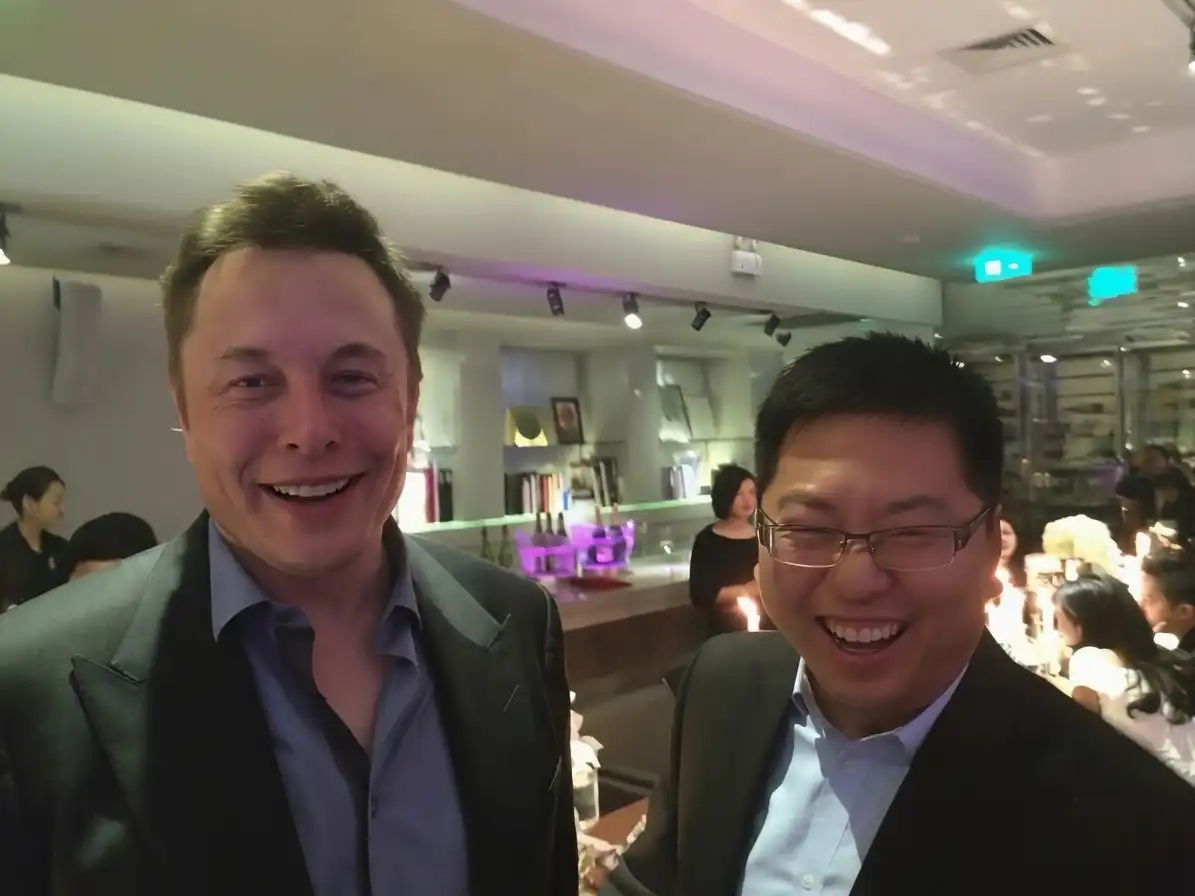
Over the past six years, I have been fortunate to have some exchanges with Musk. In 2014, I invited him to make his first public appearance in China at a GeekPark conference. In 2015, I led a group of Chinese entrepreneurs to visit him in Silicon Valley (Zhang Yiming was among them). In 2016, he invited me to his press conference in Beijing, where I was fortunate to be called upon to ask a question.
I am a hardcore space enthusiast myself. I remember in 2017, I specifically filmed a congratulatory video from thousands of GeekPark fans at the GeekPark Innovation Conference and sent it to him as congratulations on SpaceX's breakthrough progress.
Although the interactions were not extensive, they gave me a chance to understand more comprehensively the mind of this "Iron Man" and his different way of thinking. What I am sharing today are the notes I took after an in-depth exchange with Elon Musk six years ago when he attended the GeekPark conference.
After reading this article, you might better understand the kind of person Musk is. When everyone is amazed by the greatness of SpaceX, you'll find that all of Musk's uniqueness was already traceable six years ago.
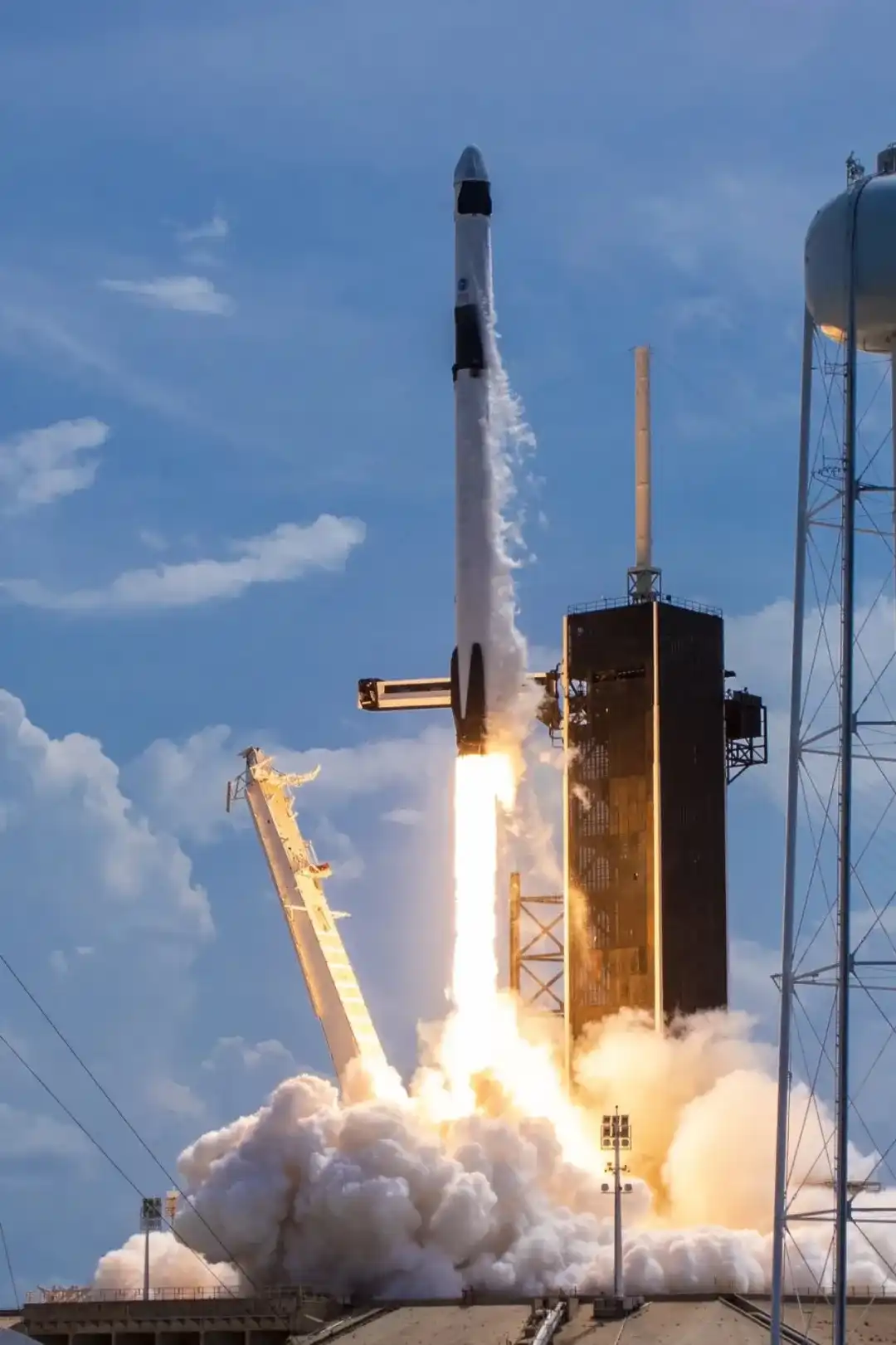
SpaceX Falcon 9 Launch Vehicle Launch
"It's 500 light-years!" When Elon Musk and I almost simultaneously uttered this sentence, we instantly amused each other. I don't know what he was thinking, but for me, it was because I realized that probably very few people in the entire room truly cared about this number.
This figure of 500 light-years refers to the most Earth-like exoplanet discovered recently by the Kepler space telescope—"Kepler-186f." At that moment during the dinner, Zhang Yaqin was sitting next to me discussing with Elon Musk when humans might land on Mars and mentioned, "NASA said they recently found an Earth twin about 600 light-years away." Elon Musk reacted faster than I did, almost instinctively correcting, "Well, it's 500 light-years."
This news released by NASA was still very fresh, but Elon Musk had already stored it as a piece of "common knowledge" in his mind. This moment was also one of the brightest flashes in his eyes on his first day of public appearance in China.
This hottest figure in tech innovation arrived in Beijing by private jet in the morning, went straight to the Tesla Beijing office, participated in GeekPark's "Singularity Conference," endured a difficult two-and-a-half-hour interview for the CCTV Dialogue program at the venue, attended business exchanges until 6:30 PM, and finally came to GeekPark's welcome dinner. When I saw him, he was still energetic, making one admire the dual CEO of two of the world's coolest companies, Tesla and SpaceX, for his truly exceptional energy.
However, Elon Musk is not a person who enjoys socializing or excels at creating momentum like a businessman. As he said himself, he is more like a "somewhat crazy engineer." Don't expect him to please and cater to people like those business elites who are familiar with public sentiment and full of linguistic talent. When questions bore him or are too nonsensical to answer, he becomes a person with no verbal highlights, even appearing to "close off" instantly in the interaction. But if you engage him with the right questions, you can see the excitement in his eyes and even his body language.
However, Musk is well aware that he sometimes needs to repeat the same words to different people, and he will indeed "stoop down" to accommodate the perspectives and expectations of various groups. So if you meet him for the first time, even if you ask questions for which answers can easily be found via a search engine or that he has stated many times, he will patiently repeat them.
This is not because he is inherently kind or cares about saving face, nor is it about compromising for commercial interests. It stems from an extremely strong self-awareness—he believes most people have not yet seen the right direction and need guidance, so he doesn't mind giving pointers to those "lost."
Of course, if you remain stubbornly ignorant or lost, he won't hesitate to give you an embarrassing cold shoulder, or even simply turn around and leave.
The following exchanges occurred during warm-up communication, waiting backstage, leaving the venue at the GeekPark Singularity Conference, as well as private conversations while I sat next to him during the dinner, and my translation of questions from other guests. Since most of the time I was seizing opportunities between gaps, the questions were not very coherent or systematic, and my recollection might contain inaccuracies. However, I believe you can still glimpse the thoughts deep in the heart of this legendary geek.
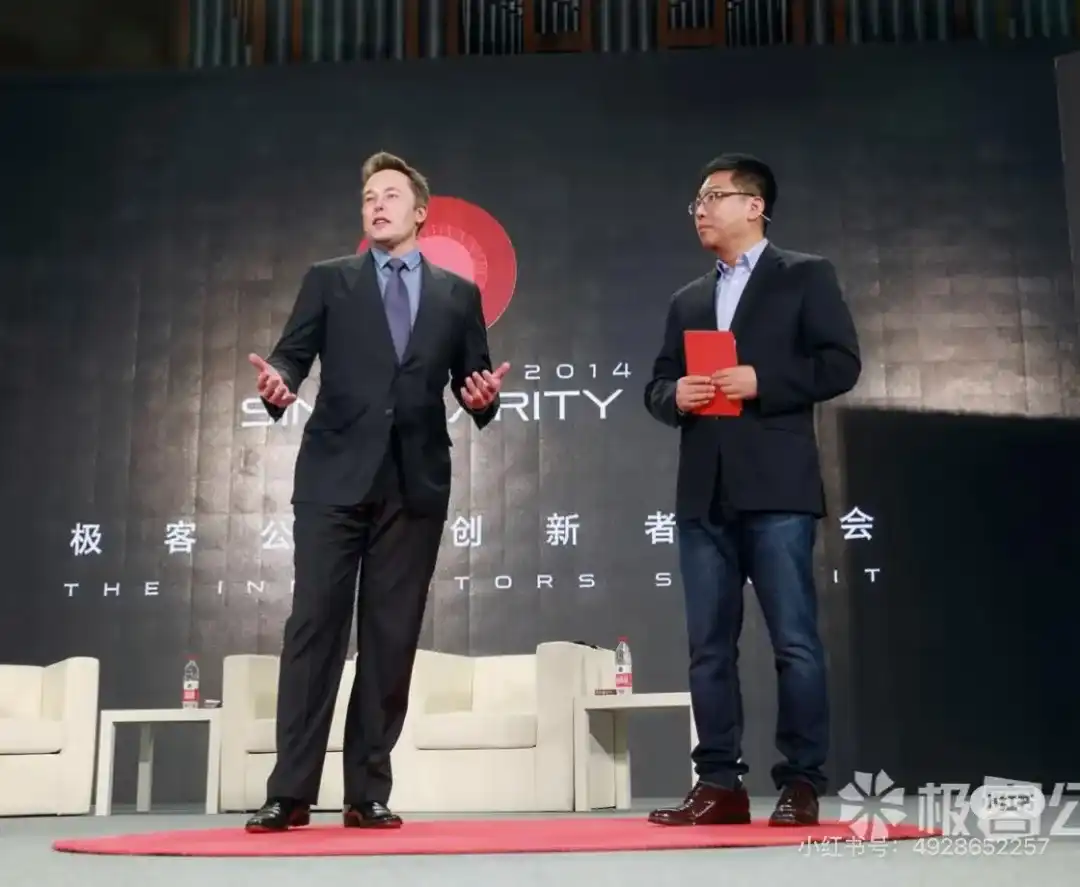
My exchange with Elon Musk at the 2014 GeekPark Singularity Conference
Zhang Peng: Why did you persist with Tesla even when you yourself said it might likely fail?
Elon Musk: I think someone always has to push for a new framework of thinking to approach problems. I once hoped and believed that new trends in electric vehicles could emerge from within the traditional automotive industry, but I found they couldn't actually do it. So I believed I needed Tesla to create a new framework to show the industry there are different methods. Its success is my fortune, but what I truly hope to achieve is a change in the industry. Now, we are actually licensing our technology to other automotive companies. I don't feel I need to replace them; I just hope they take the right path.
Zhang Peng: Why do you insist on building solar supercharging stations?
Elon Musk: Cost is the most important factor, but especially in markets like China, reducing energy consumption from converting coal to electricity is also significant. However, he mentioned a recent joke circulating in California that he thinks is cool—if there's an apocalypse like in the movies, you could still drive a Tesla because gasoline would run out without extraction, but solar-powered Superchargers could last a long time (though he was joking, I truly feel this logic fits his style better).
Zhang Peng: You didn't seem to mention today that the biggest advantage of the Tesla Model S over traditional cars is actually its ability to upgrade remotely via the system, making it increasingly better to use. This is a feature we really like!
Elon Musk: I don't like mentioning details because I believe Tesla's cars are a systemic innovation, not about selling based on any single point. But you can indeed upgrade and update your car over the air anytime via wireless network, making it a more usable and personalized mode of transportation. I believe that all the details related to driving and control we've seen or will see can be optimized and resolved faster with such a mechanism.
Zhang Peng: But with this "cloud + device" architecture of your cars, have you ever worried about future cloud security issues?
Elon Musk: What you mentioned is only theoretically possible, but so far, no one has succeeded; not a single example exists. Moreover, we have long taken precautions and conducted many tests without finding any potential vulnerabilities in this regard. In fact, I don't understand why you think someone would do this.
(Musk is about to get annoyed... From my understanding, Elon has a similar attitude towards battery safety and other issues—using a low-probability event that *could* happen to hinder progress in the big direction is something he would consider malicious nitpicking and utterly unconstructive. This has always been his style. His aggressive approach to Tesla's Autopilot has been debated in the automotive circle. Even before this successful launch, the Dragon spacecraft's initial recovery design aimed to use the Falcon 9's rocket-controlled method, but NASA strongly disagreed, deeming it too risky. Musk eventually compromised, returning to the ocean splashdown recovery method, though I wonder if he truly agreed internally).
Zhang Peng: Why do you choose to be the CEO of two companies?
Elon Musk: I actually don't want to be the CEO of either. What I truly aspire to be is an engineer who can design and realize products according to his own ideas. In fact, I tried twice to find CEOs to run the companies, but I found it didn't work. I realized that without my personal involvement, many things would go very wrong. But obviously, if you want to do something only you truly believe in, it's hard to find strangers to help you achieve it.
Zhang Peng: Why are you so obsessed with doing high-risk things like SpaceX?
Elon Musk: I loved reading science fiction as a kid. I've always felt that exploring space is an extremely interesting and meaningful endeavor. I'm not doing rockets because I personally want to go to space; that would be easy for me (so confident!). But I think if ordinary people cannot go into space, humanity will remain forever locked on Earth, unable to explore the universe or truly become a multi-planetary civilization. We must believe this is the right direction because if we can't achieve this, human civilization is fragile.
We must drastically reduce the cost of entering space. The real path to cost reduction is not waiting for sci-fi technologies to drop from the sky; we need to reduce costs through reusability on already mature rocket technology. I believe this cost reduction should be at least a factor of 100. Don't you think this is a worthwhile thing to do?
Zhang Peng: You developed SpaceX to propel humanity into the cosmos, and you founded Tesla hoping everyone would use electric vehicles, not to dominate an industry. But both endeavors faced potential failure, risking all your wealth. Many people probably can't understand your thinking.
Elon Musk: That's why I said these things are hard for others to do for me; I have to do them myself. I've said I might not necessarily succeed, but someone must step up and start acting on some things.
Zhang Peng: Have you ever thought about going into politics? If you became president, wouldn't you be better able to advance your ideals like environmental protection and space exploration?
Elon Musk: I haven't thought about that, and I don't think I would do it. What I can advance is using products and technology to push in a good direction, not entering politics and trying to transform the world into my vision through decrees. For example, with Tesla's car, I hope users choose it not only because choosing an electric vehicle is a responsible act for the future world but also because it's genuinely a good product itself. That's why you'd choose it. I don't think being president would solve this problem; I'm more suited as an engineer and designer.
Zhang Peng: You actually convinced NASA and the US government to allow you to get into the rocket business. How did you do that?
Elon Musk: I earned their trust step by step. The initial research I funded myself was on things they weren't doing. Then, seeing that you've spent so much money, been so serious and committed, and achieved results, they'll give you a chance for further attempts. I think it's a normal process. Persuading others isn't mainly about lobbying; you need to truly believe in it and reach a tipping point where people can see hope.
Zhang Peng: Regarding reducing launch costs, why couldn't NASA with all its experts and resources do it, while your SpaceX did?
Elon Musk: Well, I think the real reason NASA couldn't do it is precisely because they have too many resources.
Zhang Peng: What do you think about those companies recently offering suborbital tourist flights?
Elon Musk: Pfft! (This is purely sound effect. The actual scene was him shrugging, shaking his head, and then refusing to answer this question. So the only appropriate Chinese description I can think of is this word. At that moment, he clearly had zero interest in goals addressing recreational needs, as they don't serve his grand objective of making humanity a multi-planetary civilization.)
【Afterword】
After reading the article, let's explore the significance of SpaceX's successful manned spacecraft launch.
In my view, this is not just a simple commercial rocket launch; it signifies that commercial spaceflight has matured to the point of achieving "crown jewel" level missions like manned flights.
If we say human space age began in the 1950s, its start was driven and fueled by competition between governments. After the US won the moon race, scientific space missions maintained steady output, but still in the form of government projects. Even today, landing on the moon remains humanity's highest space achievement.
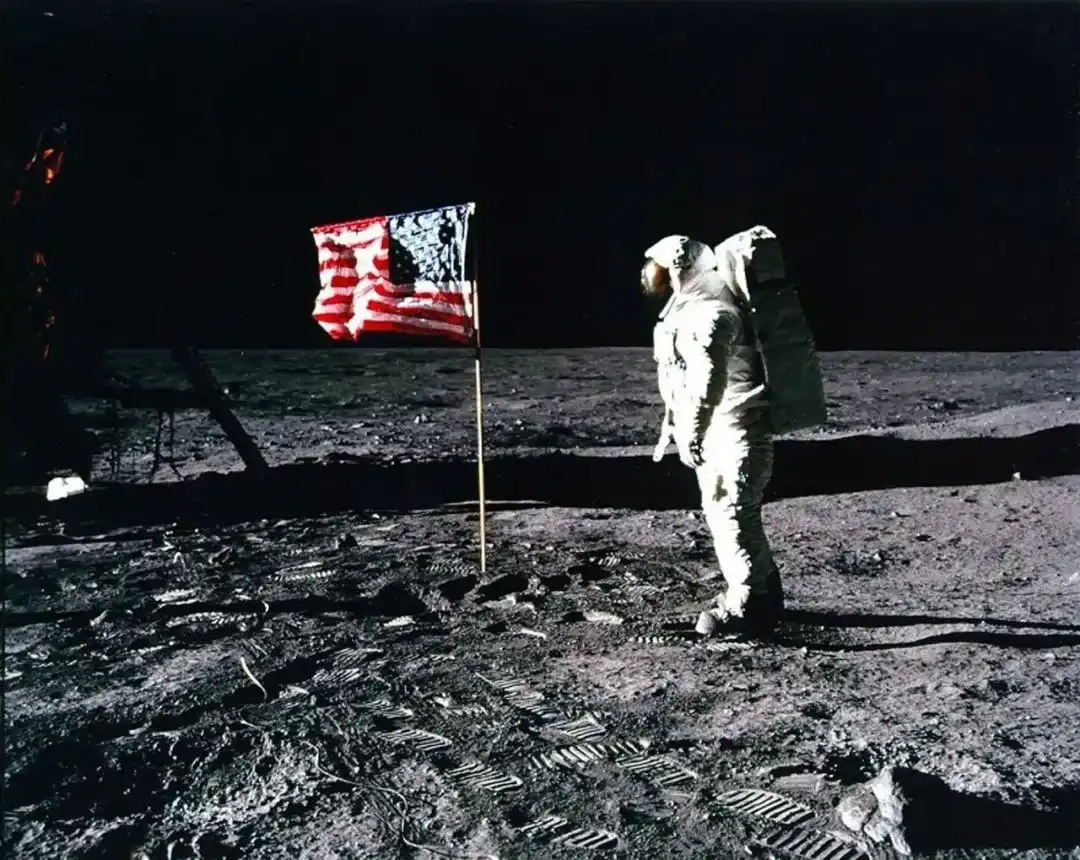
Apollo 11 astronaut Buzz Aldrin stands next to the American flag on the lunar surface, the first human moon landing mission.
The significance of commercial spaceflight lies in making space exploration no longer just a government-funded project, but an "industry" that can introduce more intelligence and capital and create a positive value cycle. This story has played out repeatedly in aviation, telecommunications, and computing.
Only then can we escape the paradox Musk mentioned earlier—"they can't progress precisely because they have too many resources." Because commerce inherently pursues efficiency and progress, which must rely on innovation, standardization, and scale.
Commercial spaceflight will truly open the space age for all humanity, even the starting point of a new chapter in humanity's journey from being able to touch space to truly willing to become a multi-planetary civilization. Commerce is the key "hormone" behind the scenes, even more powerful than "curiosity," that will ultimately support humanity's great leap forward.
Six years ago, I asked Musk if I would see affordable space travel for ordinary people in my lifetime. He replied very confidently, "We definitely will."
But it will undoubtedly be a difficult process. Just before this successful launch, SpaceX's Starship rocket, in its early research phase, exploded during a test. This rocket aims to transport 100 people to space at once. If the successful Falcon 9 and Dragon combo is a "space shuttle," then Musk clearly already has plans for the real "ferry."
He hopes that by 2050, when he's 80, humanity can have a million people living on Mars. This idea that sounds crazy to others today is something he clearly has a clear roadmap and timetable for.
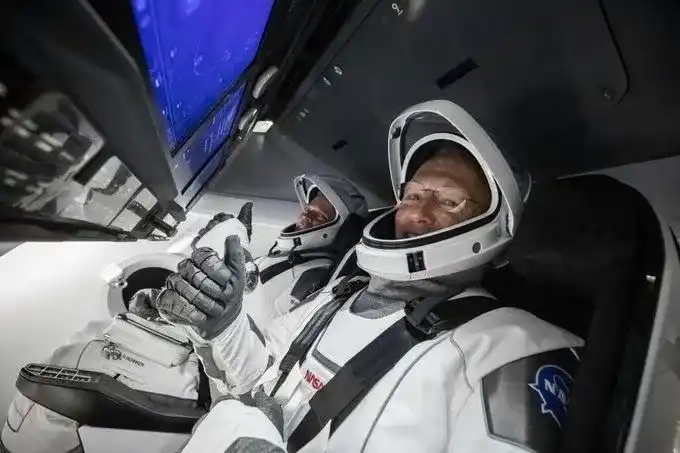
The two astronauts assigned to this mission, Doug Hurley and Bob Behnken, prepare before launch.
I believe Musk won't be the only key figure in humanity's opening of the "true space age." He is a "windbreaker" rider, charging at the front against the greatest resistance, but motivating more people to improve the race's overall performance.
It's foreseeable that more capital and intelligent individuals will join this industry, and China's new generation of space professionals will also have the opportunity to become a force driving human progress.
I hope the dream many people have—"to go to space once in this lifetime"—can arrive sooner because of the commercial spaceflight industry.
Good luck, Musk!
Good luck to all space professionals!
And good luck to human civilization!