Tether Freezes $182 Million in One Day: Is USDT Still a Neutral Currency?

marsbitОпубліковано о 2026-01-14Востаннє оновлено о 2026-01-14

Анотація

Tether, the issuer of USDT, froze approximately $182 million worth of USDT in a single day across five wallets on the Tron blockchain, marking one of its largest single-day enforcement actions. The frozen funds are widely suspected to belong to the Venezuelan government, potentially representing oil revenue, and the action is believed to have been conducted in coordination with U.S. authorities. This event has raised significant concerns about USDT’s role as a neutral financial tool, particularly in developing and sanctioned regions like Venezuela, where the stablecoin has become deeply embedded in the economy. Reports indicate that up to 80% of Venezuela’s oil revenue may be received in cryptocurrencies like USDT, creating a direct channel between its oil trade and the crypto economy. However, this incident demonstrates that Tether is willing to comply with law enforcement, even at the risk of undermining its reputation as a censorship-resistant alternative to traditional finance. The situation has drawn comparisons to the Euroclear moment, where frozen Russian assets sparked concerns about the safety of foreign-held euro-denominated assets. Similarly, Tether’s actions may lead international users to reconsider the perceived neutrality and safety of stablecoins. While Tether has maintained its peg so far, sustained outflows or loss of trust could pose existential risks to its offshore business model. The event underscores Tether’s growing role in global finance—and its vul...

Editor's Note: Tether's freezing of approximately $182 million USDT on the Tron chain has been regarded by some analysts as its "Euroclear moment"—that is, when a financial infrastructure originally seen as a neutral channel begins cooperating with law enforcement to freeze assets, it ceases to be just a stablecoin and becomes part of the boundaries of power.

This article delves into the controversy surrounding funds related to Venezuela, discussing how this event may impact USDT's narrative as a "dollar alternative" in the Global South and sanctioned regions, while redefining the perception of risks associated with stablecoins.

Below is the original text:
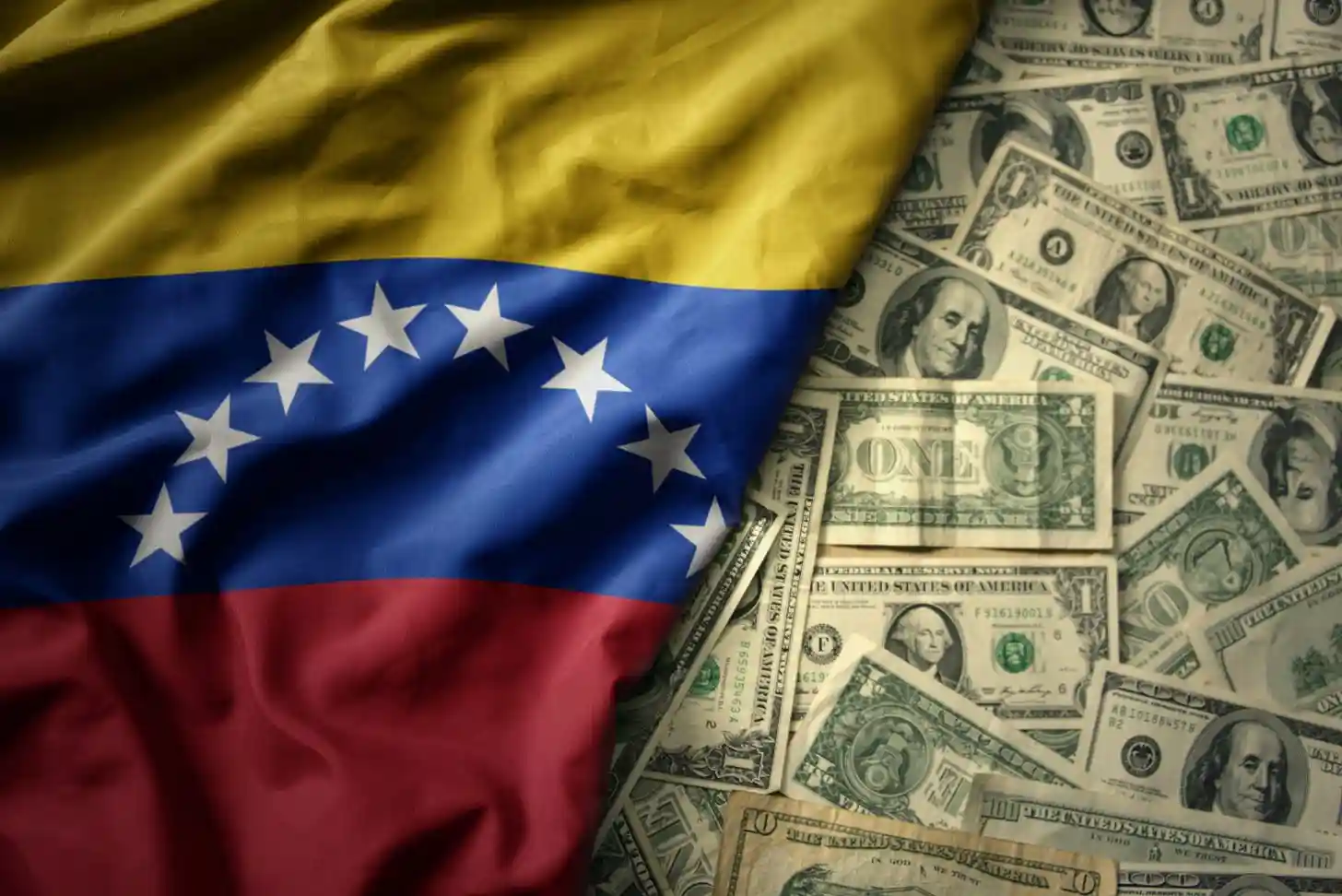
The biggest news this week was Tether's freezing of about $182 million USDT across five wallet addresses on the Tron chain in a single day, marking one of its largest single-day actions to date.

There is speculation that these assets may belong to the Venezuelan government, and Tether—long seen as a "safe haven for illicit fund flows"—is now seizing (or freezing) sovereign assets at the behest of the U.S. government.

What we can confirm so far is that this operation was indeed carried out under compliance and law enforcement procedures. Although officials have not confirmed that these addresses hold "Venezuelan oil revenues," analysts and on-chain observers widely interpret the situation as such.

Online discussions also suggest that some of the frozen funds may overlap with wallet addresses used for Venezuela-related activities. Given the country's heavy reliance on USDT, such speculation is not unfounded.

According to The Wall Street Journal, Venezuela's oil trade is deeply intertwined with Tether stablecoins. The report cited a podcast by Venezuelan economist Asdrúbal Oliveros, who mentioned that stablecoins have established a "direct channel" between Venezuela's economy and the crypto world, primarily driven by the oil industry.

In the podcast, Oliveros pointed out that nearly 80% of the country's oil revenues are being received in the form of cryptocurrencies or stablecoins. He added that this large-scale inflow of digital assets has made USDT a recurring keyword in Venezuela's commercial exchanges and corporate operations.

However, Oliveros also emphasized that the government faces difficulties converting these crypto assets into liquidity usable in the real economy, as the process requires a series of compliance reviews. This has left substantial funds "locked" on-chain. As a result, Venezuela's oil revenues are not flowing back into the domestic economy, impacting the official exchange rate and causing it to soar.

Oliveros further suggested that the Venezuelan government has not been professional in managing its cryptocurrency and stablecoin wealth. He mentioned that due to overreliance on individual wallets and a lack of internal compliance processes or regular reconciliation mechanisms, some wallets' seed phrases/private keys may have been mishandled or even lost amid managerial chaos.

An Existential Question?

If the frozen funds are indeed confirmed to belong to Venezuela, the pressing question for everyone is: How will this impact Tether's reputation as an "alternative monetary system" in developing countries, especially in regions with financial instability or under international sanctions?

On Tuesday, at the launch of Bytetree's new Bitcoin + gold combined exposure ETN product, BOLD, on the London Stock Exchange, prominent figures in London's crypto and gold investment circles speculated that this event could deliver a strong blow to stablecoins, with repercussions extending even further.

Bitcoin investor, advocate, and comedian Dominic Frisby (also a vocal supporter of digital privacy) told The Peg that he was not surprised this event would—much like the discussions around the "formal seizure of Russian assets held by Euroclear"—make international sovereign investors uneasy about euro/dollar-denominated assets, potentially triggering panic among crypto capital.

Although Tether is often portrayed as "lacking regulation, high-risk, and non-compliant," over the past year, the stablecoin giant has not concealed its increasingly close cooperation with global law enforcement agencies, even as it maintains its base in the relatively regulation-light, crypto-friendly El Salvador.

Tether CEO Paolo Ardoino told The Peg in October that Tether is the only stablecoin and crypto company that regularly collaborates with the U.S. Department of Justice (DoJ) and has also integrated the FBI and the U.S. Secret Service into its cooperation framework.

"We froze Garantex's (a Russian exchange) assets with them," he said, confirming the action while also noting that Tether is expanding its presence in commodity-related supply chain financial markets.

According to The Wall Street Journal, blockchain monitoring company TRM Labs has a partnership with Tether to help track illegal activities involving USDT on the Tron chain. TRM Labs' global policy head Ari Redbord told the media that the role of stablecoins in Venezuelan society is complex: "They (stablecoins) can be a lifeline for civilians, but they can also become tools for evasion under sanctions pressure."

This statement underscores a core reality: USDT, as a financial lifeline, is deeply embedded in Venezuela's economy, helping ordinary people combat hyperinflation. At the same time, its technology can be exploited by bad actors to move funds, raising concerns about sanctions compliance.

However, Tether has now demonstrated that when addresses are flagged for sanctions or illegal associations, it is willing to freeze USDT on networks like TRON. In other words, even if stablecoins serve as critical financial infrastructure locally, they are not exempt from human enforcement.

More importantly, this action comes after a recent policy "slam on the brakes" in Brussels (EU): After years of posturing, planning, and legal preparations, the EU ultimately hesitated at the final step of "explicitly seizing frozen Russian assets," fearing it would weaken the appeal of euro-denominated assets to international investors.

Thus, the signal to markets and nations may be that storing funds in stablecoins like Tether might be riskier than holding official assets.

Whether this reality will pose an "existential threat" to Tether's offshore business model in the coming weeks or months remains to be seen. But within crypto circles, a strong view is spreading: international investors may never look at stablecoins the same way again.

At the very least, this incident shows that the influence of the so-called "Donroe Doctrine" is no longer confined to geopolitics and national gamesmanship but is entering the core of global financial markets. And from any perspective, Tether is at the very center of this sphere of influence.

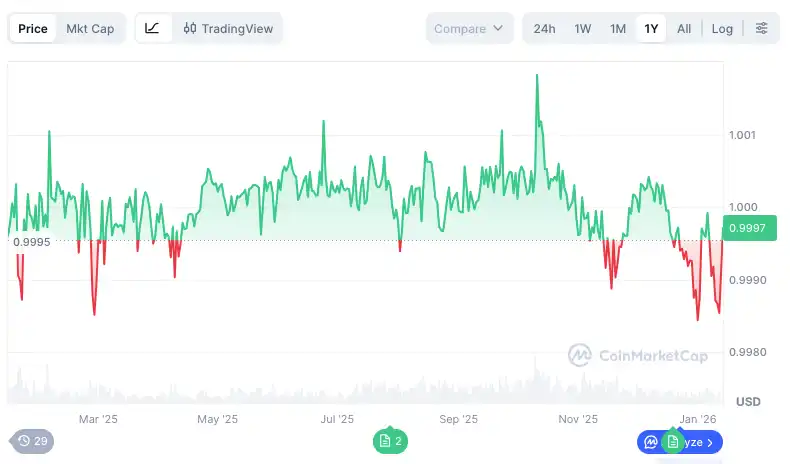
So far, aside from minor fluctuations over the past month, Tether's peg has remained stable. The real pressure signal would be a significant slowdown in inflows—or, more dangerously, a shift from net inflows to net outflows.

Tether's next reserve attestation is expected to be released in late January or early February.
Трендові криптовалюти

Пов'язані питання

QWhat was the significance of Tether freezing $182 million USDT on the Tron network, and why is it being compared to the 'Euroclear moment'?

ATether's freezing of $182 million USDT is significant because it represents one of its largest single-day actions and is seen by analysts as its 'Euroclear moment.' This term refers to a financial infrastructure, originally perceived as a neutral channel, beginning to cooperate with law enforcement to freeze assets. This action shifts Tether's role from merely a stablecoin to becoming part of the power boundary, impacting its narrative as a neutral monetary tool.

QHow is USDT deeply embedded in Venezuela's economy, particularly in the oil trade?

AUSDT is deeply embedded in Venezuela's economy, with nearly 80% of the country's oil revenues being received in cryptocurrencies or stablecoins. This digital asset inflow has made USDT a key term in commercial exchanges and business operations. However, converting these crypto assets into usable liquidity for the real economy requires compliance reviews, often leaving funds locked on-chain and not reintegrated into the domestic economy, affecting official exchange rates.

QWhat are the potential risks to Tether's reputation as an 'alternative monetary system' in developing countries following this freezing event?

AThe freezing event poses a potential risk to Tether's reputation as an 'alternative monetary system' in developing countries, especially those with financial instability or under international sanctions. If the frozen funds are confirmed to belong to Venezuela, it could undermine trust in USDT as a reliable financial lifeline, as it demonstrates that stablecoins are not exempt from human enforcement actions and may be subject to geopolitical pressures.

QHow does Tether's cooperation with global law enforcement agencies, such as the DOJ and FBI, influence its operational dynamics?

ATether's cooperation with global law enforcement agencies, including the DOJ and FBI, shows its commitment to compliance and tracking illegal activities. For instance, Tether has worked with these agencies to freeze assets linked to entities like Garantex, a Russian exchange. This collaboration enhances its legitimacy but also highlights that USDT transactions are monitorable and actionable, affecting its perception as a decentralized or neutral asset.

QWhat broader implications does this event have for the stability and future of stablecoins like USDT in the global financial system?

AThis event has broader implications for stablecoins like USDT, suggesting that they may carry higher risks than official assets due to their susceptibility to enforcement actions. It could lead to reduced inflows or even net outflows, challenging Tether's offshore business model. The situation indicates that geopolitical doctrines, such as the 'Donroe Doctrine,' are influencing global financial markets, with Tether at the center, potentially altering how international investors view stablecoins.

Пов'язані матеріали

In Conversation with Ray Dalio: We Are Currently in an AI Bubble, with 1% of My Portfolio in Bitcoin

Ray Dalio, founder of Bridgewater Associates, warns in an interview that the current AI boom shows classic bubble characteristics, which could lead to significant economic downturns as seen in past cycles like 1929 or 2000. He explains that speculative enthusiasm, fueled by debt and overvaluation, often precedes a crash when rising rates or taxation force asset sales, causing widespread losses and recession. Dalio also outlines his "Big Cycle" theory, describing an approximate 80-year pattern where widening wealth gaps, massive government deficits, and shifting geopolitical power (like China's rise) create internal conflict and global instability. He emphasizes that we are in a late-cycle, transitional phase where traditional powers like the US and UK face decline. For personal wealth protection, Dalio advises diversification beyond cash into assets like stocks, bonds, real estate, and particularly gold, which he prefers over Bitcoin. While he holds about 1% of his portfolio in Bitcoin as a non-printable hard asset, he views gold as more secure from technological or governmental threats. Regarding AI's impact, Dalio believes it will disproportionately benefit capital owners, worsening inequality by replacing both physical and cognitive labor. He suggests that human intuition and emotional intelligence, combined with AI, will be key for future workers. On taxation, Dalio argues that wealth taxes are impractical and risk triggering asset sell-offs, reducing productive investment. He points to the UK as a cautionary example of debt, low productivity, and political strife. Geopolitically, Dalio foresees a more regionalized world, with the US showing weakness in prolonged conflicts like with Iran, akin to past imperial declines. The ideal outcome, he suggests, is coexisting powerful blocs (e.g., Americas, China-Asia Pacific) without major war.

marsbit37 хв тому

In Conversation with Ray Dalio: We Are Currently in an AI Bubble, with 1% of My Portfolio in Bitcoin

marsbit37 хв тому

Daily 7.2 Trillion KRW: Foreign Capital's Record Net Buying on Friday! Wall Street Says Headwinds for Korean Stock Fund Flows Have Subsided

South Korean stock market sees a dramatic shift in fund flows. On July 31, foreign investors made a record net purchase of approximately KRW 7.2 trillion in KOSPI stocks, marking a fundamental reversal from the persistent large-scale net outflows seen in previous months. This contributed to a significant narrowing of foreign net selling in July to KRW 9.8 trillion, down sharply from KRW 48.4 trillion in June and KRW 44.5 trillion in May. Simultaneously, domestic institutional pressure eased. South Korean pension funds and asset managers turned to a net buying position in July, purchasing KRW 1.0 trillion worth of KOSPI shares, contrasting with net sales in May and June. Market volatility is expected to be dampened by new financial regulations. Effective July 31, the Financial Services Commission tightened access for retail investors to single-stock leveraged ETFs by raising the minimum cash deposit requirement. Trading volumes for these products subsequently dropped to about 50% of their monthly average. Citigroup Research maintains its year-end KOSPI target of 10,000 points. The firm cites several supportive factors: the substantial easing of headwinds from capital outflows, a robust fundamental outlook for the semiconductor sector, historically low market valuations, strong economic fundamentals, and the potential for policy support from financial authorities if needed.

marsbit37 хв тому

Daily 7.2 Trillion KRW: Foreign Capital's Record Net Buying on Friday! Wall Street Says Headwinds for Korean Stock Fund Flows Have Subsided

marsbit37 хв тому

Thanks to Dice Rolls, Bitcoin Keys Are Stored Offline, But Not Everyone Will Do It

The article discusses using dice rolls to generate secure Bitcoin wallet seeds, providing entropy independent of potentially flawed hardware random number generators. It explains that each fair dice roll offers about 2.585 bits of entropy, with around 50 rolls needed for a standard 12-word seed phrase and 99+ recommended for higher security. This method gained attention after a vulnerability was revealed in some Coldcard hardware wallets, where a faulty firmware RNG (dating back to 2021) compromised generated keys. The analysis notes that while a dice-generated main seed was safe from this specific flaw, other Coldcard functions (like creating paper wallets, backup keys, or passwords) could still be vulnerable if they used the defective RNG. The piece argues that while dice-based entropy is technically robust, the manual process is error-prone, tedious, and unrealistic for most new users, who might make mistakes in recording or inputting rolls. It concludes that while manual entropy generation should remain an option for advanced users, the long-term goal is to develop reliable, user-friendly hardware and software that securely generates randomness without requiring specialized knowledge. Coldcard users are advised to check their firmware version and replace any secondary secrets (like paper wallet keys) created with vulnerable devices, while also considering multi-signature setups with devices from different manufacturers for added security.

cryptonews.ru5 год тому

Thanks to Dice Rolls, Bitcoin Keys Are Stored Offline, But Not Everyone Will Do It

cryptonews.ru5 год тому

Торгівля

Спот

Популярні статті

Як купити ONE

Ласкаво просимо до HTX.com! Ми зробили покупку Harmony (ONE) простою та зручною. Дотримуйтесь нашої покрокової інструкції, щоб розпочати свою криптовалютну подорож.Крок 1: Створіть обліковий запис на HTXВикористовуйте свою електронну пошту або номер телефону, щоб зареєструвати обліковий запис на HTX безплатно. Пройдіть безпроблемну реєстрацію й отримайте доступ до всіх функцій.ЗареєструватисьКрок 2: Перейдіть до розділу Купити крипту і виберіть спосіб оплатиКредитна/дебетова картка: використовуйте вашу картку Visa або Mastercard, щоб миттєво купити Harmony (ONE).Баланс: використовуйте кошти з балансу вашого рахунку HTX для безперешкодної торгівлі.Треті особи: ми додали популярні способи оплати, такі як Google Pay та Apple Pay, щоб підвищити зручність.P2P: Торгуйте безпосередньо з іншими користувачами на HTX.Позабіржова торгівля (OTC): ми пропонуємо індивідуальні послуги та конкурентні обмінні курси для трейдерів.Крок 3: Зберігайте свої Harmony (ONE)Після придбання Harmony (ONE) збережіть його у своєму обліковому записі на HTX. Крім того, ви можете відправити його в інше місце за допомогою блокчейн-переказу або використовувати його для торгівлі іншими криптовалютами.Крок 4: Торгівля Harmony (ONE)Легко торгуйте Harmony (ONE) на спотовому ринку HTX. Просто увійдіть до свого облікового запису, виберіть торгову пару, укладайте угоди та спостерігайте за ними в режимі реального часу. Ми пропонуємо зручний досвід як для початківців, так і для досвідчених трейдерів.

479 переглядів усьогоОпубліковано 2024.12.12Оновлено 2026.06.02

Як купити ONE

Обговорення

Ласкаво просимо до спільноти HTX. Тут ви можете бути в курсі останніх подій розвитку платформи та отримати доступ до професійної ринкової інформації. Нижче представлені думки користувачів щодо ціни ONE (ONE).

活动图片













