Terraform’s $40B Collapse Back in Spotlight as Jane Street Faces Insider Trading Lawsuit

bitcoinistОпубліковано о 2026-02-24Востаннє оновлено о 2026-02-24

Анотація

Terraform Labs' $40 billion collapse is back in the spotlight as Jane Street faces an insider trading lawsuit. The complaint, filed by Terraform's bankruptcy administrator, alleges the trading giant used confidential information to avoid losses and hasten the ecosystem's downfall in May 2022. It claims Jane Street obtained non-public details through a former Terraform intern and executed trades minutes after Terraform secretly removed 150 million UST from a liquidity pool, before the information was public. Jane Street denies the allegations, blaming Terraform's management for the collapse. The case could set a precedent for oversight of institutional trading and information asymmetry in crypto markets.

Nearly four years after one of crypto’s most destructive failures erased tens of billions of dollars in value, the collapse of Terraform Labs has returned to the courtroom.

A new lawsuit filed in a U.S. federal court accuses trading giant Jane Street of insider trading tied to the 2022 downfall of the Terra ecosystem, a case that could reshape how institutional trading activity in digital asset markets is scrutinized.

The complaint was filed by the court-appointed administrator overseeing Terraform Labs’ bankruptcy, alleging the firm used confidential information to trade ahead of key market events, avoid losses, and hasten the collapse of its algorithmic stablecoin system.
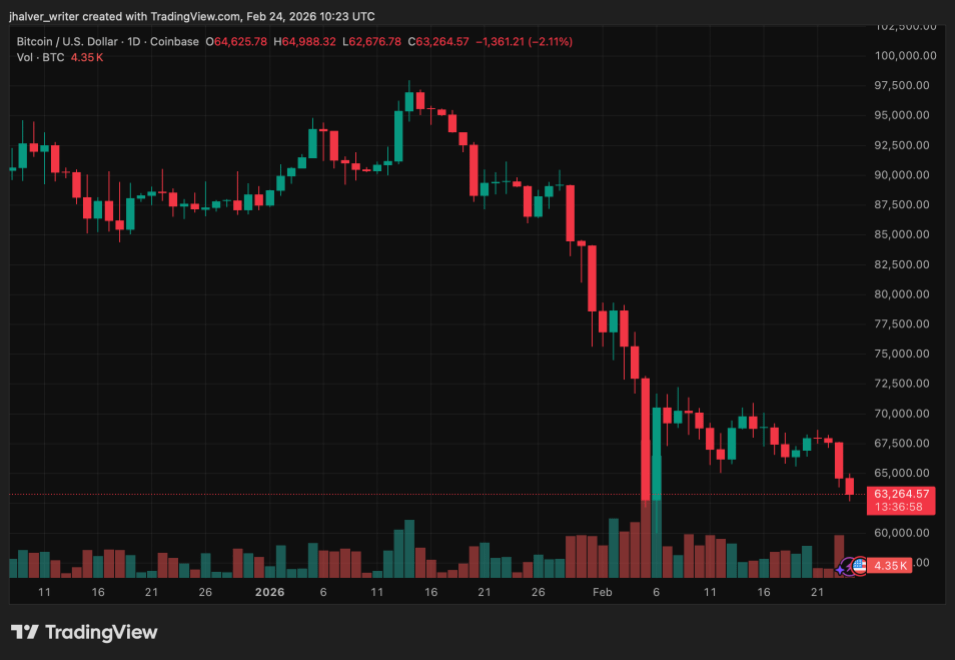
BTC's price trends to the downside on the daily chart. Source: BTCUSD on Tradingview 

Allegations of Insider Trading During Terra’s Final Days

According to the lawsuit, Jane Street obtained material non-public information through contacts within Terraform. The filing claims that a former Terraform intern working at the trading firm helped establish private communication channels that allegedly became a source of sensitive operational details.

Central to the case is a series of transactions on May 7, 2022, days before TerraUSD lost its dollar peg. Terraform quietly removed 150 million TerraUSD from Curve’s 3pool liquidity pool, a move that had not yet been disclosed publicly. Less than ten minutes later, a wallet linked to Jane Street allegedly withdrew 85 million TerraUSD from the same pool.

The administrator argues that this timing allowed the firm to unwind large exposures and position trades before panic spread across the market. The lawsuit claims these actions intensified liquidity stress and contributed to the rapid loss of confidence that followed.

Jane Street has strongly denied the accusations, describing the lawsuit as baseless and arguing that Terraform’s own management, not outside traders, was responsible for investor losses.

Revisiting the $40 Billion Crypto Meltdown

Terraform’s collapse remains one of the defining crises in cryptocurrency history. When TerraUSD lost its peg in May 2022, its sister token Luna entered a death spiral that wiped out roughly $40 billion in market value within days.

The fallout triggered widespread liquidations and contributed to broader industry instability, later exposing weaknesses across several crypto firms.

Terraform filed for bankruptcy in 2024, while Kwon later pleaded guilty to criminal charges and received a prison sentence. The current lawsuit follows earlier legal action against another trading firm, signaling an ongoing effort to recover funds for creditors.

Broader Implications for Crypto Market Oversight

The case spotlights growing concerns about information asymmetry in markets often promoted as decentralized. Regulators have increasingly focused on trading practices, market manipulation, and the role of large liquidity providers in digital assets.

If the allegations are proven, the lawsuit could set an important precedent for how proprietary trading firms interact with crypto projects and handle non-public information. Even if unsuccessful, the legal battle reopens unresolved questions about accountability during major crypto failures.

Cover image from ChatGPT, BTCUSD on Tradingview

Пов'язані питання

QWhat is the new lawsuit against Jane Street about, and how is it connected to the Terraform Labs collapse?

AThe lawsuit accuses Jane Street of insider trading tied to the 2022 collapse of the Terra ecosystem. It alleges the firm used confidential, non-public information obtained through contacts within Terraform Labs to trade ahead of key market events, avoid losses, and hasten the downfall of its algorithmic stablecoin system.

QWhat specific event on May 7, 2022, is central to the insider trading allegations against Jane Street?

AThe lawsuit centers on Terraform Labs quietly removing 150 million TerraUSD from Curve’s 3pool liquidity pool, a move not yet public. Less than ten minutes later, a wallet linked to Jane Street allegedly withdrew 85 million TerraUSD from the same pool, allowing the firm to unwind exposures before panic spread.

QHow did Jane Street respond to the allegations in the lawsuit?

AJane Street has strongly denied the accusations, describing the lawsuit as baseless. The firm argues that Terraform’s own management, not outside traders, was responsible for the investor losses.

QWhat were the broader consequences of the Terraform Labs collapse in May 2022?

AThe collapse erased roughly $40 billion in market value within days as TerraUSD lost its peg and its sister token Luna entered a death spiral. The fallout triggered widespread liquidations, contributed to broader industry instability, and exposed weaknesses in several crypto firms.

QWhat potential broader implications for the crypto market does this lawsuit highlight?

AThe case spotlights concerns about information asymmetry in decentralized markets. It could set a precedent for how proprietary trading firms interact with crypto projects and handle non-public information, raising questions about accountability and market oversight during major crypto failures.

Пов'язані матеріали

Arthur Hayes Analysis: AI Bubble Nears Burst, Crypto Market Faces Short-Term Pressure

Arthur Hayes argues that the current AI market is a bubble poised to burst, which will exert downward pressure on the crypto market in the near term. The core trigger is rising oil prices due to the US-Iran conflict and a blockade of the Strait of Hormuz. Higher energy costs directly increase the operational expenses of AI data centers, squeezing profit margins for companies like Google, Anthropic, and OpenAI. Hayes predicts that persistent inflation from high oil prices will force Trump, in a bid to win the November election, to turn public sentiment against the AI industry. He may propose regulations and taxes on data centers and AI companies to appeal to voters concerned about costs and job displacement. Such political rhetoric could shatter market confidence. Furthermore, the market is unlikely to healthily absorb the massive concurrent IPOs of SpaceX, Anthropic, and OpenAI, which together seek valuations in the trillions. The combination of soaring energy costs, overwhelming equity supply, and negative political pressure will puncture the AI bubble. Hayes notes that nearly all new USD liquidity since 2022 has flowed into AI, leaving crypto like Bitcoin behind. When the AI bubble bursts, liquidity will contract sharply, pulling down all risk assets, including cryptocurrencies. In response, Hayes's fund, Maelstrom, has sold all AI-related stocks and non-core cryptocurrencies. It maintains core positions in Bitcoin and Ethereum while increasing exposure to energy sector equities, betting on rising oil and gas prices. He expects Bitcoin to bottom after the AI-led market decline, before rallying again with future monetary easing.

Foresight News3 хв тому

Arthur Hayes Analysis: AI Bubble Nears Burst, Crypto Market Faces Short-Term Pressure

Foresight News3 хв тому

To C, To B, and the Next Big Thing Called To A

After To C and To B, the Next Wave is To A: Serving AI Agents In a recent quarterly earnings call, Meituan's Wang Xing introduced a new concept: To A (To Agent), signifying that future business services will increasingly target AI Agents as primary clients, not just consumers or merchants. This shift implies that internet giants must now consider how to make their services more appealing for AI Agents to recommend, fundamentally altering traditional distribution logic. This "To A era" is prompting an unusual trend of alliances among major tech companies. Unlike previous competitive battles, firms like Meituan, Tencent, JD.com, Huawei, OPPO, and OpenAI are rapidly forming partnerships. The reason is strategic: as AI Agents become the primary user interface, handling tasks from a single command (e.g., "Book a Japanese restaurant for tomorrow"), the risk for platforms is being bypassed entirely. Companies are positioning themselves within this new value chain. Three primary strategies are emerging: 1. **Super-Entry Points + Service Providers:** Platforms like Tencent's Yuanbao, WeChat, and ChatGPT aim to be the first-stop Agent, integrating various services (food delivery, shopping, travel) from partners like Meituan and JD.com. 2. **Apps as Callable Services:** Companies like Meituan, JD.com, and Uber are ensuring their core services remain accessible and callable by external Agents, shifting from front-end apps to back-end capabilities. 3. **System-Level Agent Entry Points:** Smartphone makers (Huawei, Honor, OPPO) are leveraging their OS-level AI assistants to control the initial user command, redistributing it to relevant service apps. While alliances offer mutual benefit—entry points gain service capabilities, and service providers gain traffic—inherent conflicts of interest exist. A dominant Agent platform could eventually attempt to connect directly with suppliers (restaurants, hotels), bypassing current aggregators like Meituan or Ctrip. Other unresolved challenges include the potential for Agent recommendations to become a new form of paid ranking and unclear accountability for faulty recommendations. The current rush to form alliances is a defensive move by service providers to secure their position before the landscape solidifies. In this To A-driven restructuring, the greatest risk is not losing the race but failing to hear the starting gun.

marsbit12 хв тому

To C, To B, and the Next Big Thing Called To A

marsbit12 хв тому

The More Lifelike the Robot, the More Terrifying? Unveiling the 'Uncanny Valley Effect' in the Era of Humanoid Robots

As humanoid robots become increasingly lifelike, they confront a significant psychological barrier known as the "Uncanny Valley Effect," a concept proposed by Japanese roboticist Masahiro Mori in 1970. This phenomenon describes a dip in human comfort and acceptance when robots appear almost, but not perfectly, human. Minor imperfections in facial expressions, eye movements, or skin texture trigger a subconscious sense of unease, as the brain detects something trying, yet failing, to mimic a person. Examples range from the controversial human-like robot Sophia to animated characters in films like *The Polar Express*. The effect poses a key design challenge for robotics companies. Some, like Boston Dynamics, avoid it entirely by creating highly capable but visibly mechanical robots. Others, like Hanson Robotics, push for greater human likeness despite the risk. For consumer robots, especially in homes, most manufacturers opt for stylized or clearly mechanical designs to ensure broader acceptance. While the Uncanny Valley remains a powerful force, its impact may diminish over time through technological advancements that achieve near-perfect realism or through generational familiarity as people grow accustomed to interacting with humanoid machines. Ultimately, navigating this psychological frontier requires as much understanding of human perception as of robotics technology itself.

marsbit13 хв тому

The More Lifelike the Robot, the More Terrifying? Unveiling the 'Uncanny Valley Effect' in the Era of Humanoid Robots

marsbit13 хв тому

Торгівля

Спот
Ф'ючерси

Популярні статті

Як купити ONE

Ласкаво просимо до HTX.com! Ми зробили покупку Harmony (ONE) простою та зручною. Дотримуйтесь нашої покрокової інструкції, щоб розпочати свою криптовалютну подорож.Крок 1: Створіть обліковий запис на HTXВикористовуйте свою електронну пошту або номер телефону, щоб зареєструвати обліковий запис на HTX безплатно. Пройдіть безпроблемну реєстрацію й отримайте доступ до всіх функцій.ЗареєструватисьКрок 2: Перейдіть до розділу Купити крипту і виберіть спосіб оплатиКредитна/дебетова картка: використовуйте вашу картку Visa або Mastercard, щоб миттєво купити Harmony (ONE).Баланс: використовуйте кошти з балансу вашого рахунку HTX для безперешкодної торгівлі.Треті особи: ми додали популярні способи оплати, такі як Google Pay та Apple Pay, щоб підвищити зручність.P2P: Торгуйте безпосередньо з іншими користувачами на HTX.Позабіржова торгівля (OTC): ми пропонуємо індивідуальні послуги та конкурентні обмінні курси для трейдерів.Крок 3: Зберігайте свої Harmony (ONE)Після придбання Harmony (ONE) збережіть його у своєму обліковому записі на HTX. Крім того, ви можете відправити його в інше місце за допомогою блокчейн-переказу або використовувати його для торгівлі іншими криптовалютами.Крок 4: Торгівля Harmony (ONE)Легко торгуйте Harmony (ONE) на спотовому ринку HTX. Просто увійдіть до свого облікового запису, виберіть торгову пару, укладайте угоди та спостерігайте за ними в режимі реального часу. Ми пропонуємо зручний досвід як для початківців, так і для досвідчених трейдерів.

350 переглядів усьогоОпубліковано 2024.12.12Оновлено 2026.06.02

Як купити ONE

Обговорення

Ласкаво просимо до спільноти HTX. Тут ви можете бути в курсі останніх подій розвитку платформи та отримати доступ до професійної ринкової інформації. Нижче представлені думки користувачів щодо ціни ONE (ONE).

活动图片