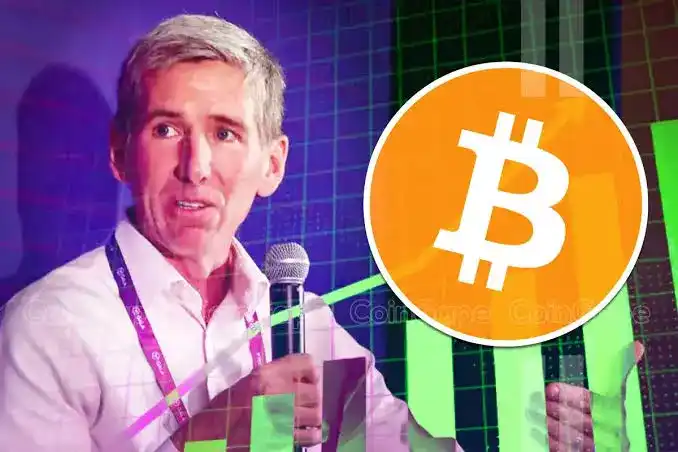
Terraform co-founder sentenced to 15 years in prison after guilty plea

cointelegraphОпубліковано о 2025-12-11Востаннє оновлено о 2025-12-11

Анотація

Terraform Labs co-founder Do Kwon has been sentenced to 15 years in prison by a U.S. court after pleading guilty to wire fraud and conspiracy. The collapse of Terraform in 2022 wiped out an estimated $40 billion from the crypto market. Judge Paul Engelmayer called the fraud "unusually serious," stating that Kwon "publicly lied to the market" for years. Kwon expressed remorse and requested to serve his sentence in South Korea, where he may face additional charges and up to 40 more years in prison. Approximately 16,500 victims were affected, with several testifying about severe financial losses during the sentencing. Kwon is the latest high-profile crypto executive to be convicted, following cases like FTX's Sam Bankman-Fried and Celsius' Alex Mashinsky.

Do Kwon, the co-founder of Terraform Labs, has been sentenced to 15 years in prison after pleading guilty to wire fraud and conspiracy to defraud.

In a Thursday hearing in the US District Court for the Southern District of New York, Judge Paul Engelmayer ordered that Kwon serve 15 years in prison for his role in the collapse of Terraform, which wiped out about $40 billion from the crypto market in 2022.

Prior to making his decision on sentencing, Engelmayer heard from some of Terraform’s victims and questioned what kind of justice Kwon might face in his native South Korea, where authorities are also building a case against him.

“I would like everyone to know that I have spent all my time thinking what I could have done, and what I can do,” said Kwon prior to his sentencing, according to Inner City Press. “It’s been four years since the crash, three years since I’ve seen my family. I’d like to [do] my penance in my home country.”

Engelmayer reportedly said the 12-year recommendation US prosecutors had requested the court impose on Kwon was “unreasonable,” while the five years requested by the co-founder’s lawyers “would be so implausible it would require appellate reversal.”

“To the next Do Kwon, if you commit fraud, you will lose your liberty for a long time as you will here,” said Engelmayer, according to Inner City Press. “You have been bitten by the crypto bug, and I don’t think that’s changed. You must be incapacitated. If not for your guilty plea, my sentence would have been higher.”

The judge added, addressing Kwon:

“Your fraud was unusually serious. For four years you publicly lied to the market [...] The investors were taking a risk, caveat emptor. But they were not taking the risk of being a fraud victim... What makes what you did so despicable is that you traded on trust.”

Kwon could be extradited to South Korea after serving seven and a half years, where he may complete the second half of his US sentence. He could face up to an additional 40 years in prison in his native country.

Several victims have their say during the sentencing hearing

Prosecutors said at the sentencing hearing that there were about 16,500 victims from the collapse of Terraform, according to claims in the company’s ongoing bankruptcy case. Six of them were allowed to address the court via phone before Engelmayer’s decision, describing their financial losses due to Terra.

“I sold my apartment in Moscow to invest with Do Kwon,” said Tatiana Dontsova, one of the victims, according to Inner City Press. “I moved to Tbilisi. $81,000 turned into $13 in the palm of my hand. Kwon came up with Luna 2, calling it LUNC. He is not showing any responsibility for those who invested. I am now officially homeless.”

Related: US judge asks for clarification on Do Kwon’s foreign charges

Kwon, alleged to have had a role in the 2022 collapse of the Terra ecosystem, was handed over to US authorities in December 2024 after his extradition from Montenegro. His legal team delayed proceedings for months by presenting various challenges in the Montenegrin courts.

With Kwon expected to be in prison for years, the Terraform co-founder became the latest former high-profile cryptocurrency executive to enter a plea deal or be found guilty in US courts.

Former FTX CEO Sam Bankman-Fried is serving a 25-year sentence, former Binance CEO Changpeng Zhao served four months — though was later pardoned by US President Donald Trump — and former Celsius CEO Alex Mashinsky was sentenced to 12 years.

Magazine: When privacy and AML laws conflict: Crypto projects’ impossible choice

Пов'язані питання

QWhat was Do Kwon sentenced for and what was the length of his prison term?

ADo Kwon was sentenced to 15 years in prison after pleading guilty to wire fraud and conspiracy to defraud.

QWhich US court district handled the sentencing of Do Kwon and who was the presiding judge?

AThe sentencing was handled by the US District Court for the Southern District of New York, with Judge Paul Engelmayer presiding.

QWhat did Judge Engelmayer say about the sentencing recommendations from the prosecution and defense?

AJudge Engelmayer said the prosecution's recommended 12-year sentence was 'unreasonable' and the defense's requested 5-year sentence was 'so implausible it would require appellate reversal.'

QWhat potential additional legal consequences does Do Kwon face after serving his US sentence?

AAfter serving seven and a half years in the US, Kwon could be extradited to South Korea where he may complete the second half of his US sentence and face up to an additional 40 years in prison.

QHow did one victim, Tatiana Dontsova, describe the impact of the Terraform collapse on her life?

ATatiana Dontsova stated she sold her apartment in Moscow to invest with Do Kwon, saw her $81,000 investment turn into $13, and is now officially homeless.

Пов'язані матеріали

Collateral Dollars: How Does a 'Second-Layer Dollar' Above Stablecoins Form?

Collateral Dollars: How Does a "Second Layer of Dollars" Form on Top of Stablecoins? Most assume stablecoins replicate Eurodollar functions, expanding the offshore dollar system. However, stablecoins primarily replace specific functions like operational dollar balances for settlement. They do not inherently create new dollar credit; they substitute existing claims. The key question is: what happens when financial intermediaries use stablecoins as collateral to create a new layer of dollar-denominated claims? This "collateral dollar" channel operates through secured lending, not direct money creation. A money-like event only occurs when a liability issued against the controlled stablecoin is funded, rolled over, or accepted at near-par value by another balance sheet. The discount (haircut) prices the gap between "effective control over the token" and "reliable convertibility to bank dollars." Elasticity stems not from the stablecoin itself but from the liability issued against it and the willingness of third-party balance sheets to treat that liability as a near-par asset. Compared to the traditional Eurodollar system—where elasticity originates from bank deposit creation—the stablecoin collateral chain is structurally different. Eurodollar deposits are credit-expansive from inception. Stablecoins are initially substitutive; elasticity emerges later if an intermediary's liability against them gains monetary acceptance. Stablecoins disrupt specific tiers of the offshore dollar system, mainly replacing operational settlement balances. They do not replace the need for full dollar balance-sheet capacity (credit lines, hedging, maturity transformation). For systemic impact, the second-layer liability must pass three tests: transferability, funding capacity, and monetary acceptance (being fundable or held at par by others). Pressure transmission also differs. In the Eurodollar system, stress moves up a hierarchy of claims. In a stablecoin collateral chain, the second-layer liability can lose its money-like status well before the underlying stablecoin faces a run, often triggered by haircut increases and margin calls that create a dynamic spiral of falling token prices and rising discounts. In conclusion, the "collateral dollar" is not the stablecoin itself. It is the second-layer liability issued against a controlled token balance that is willing to be funded and maintained at near-par value. Its existence depends on that liability surviving the leap from "token liquidity" to "bank dollar liquidity."

marsbit7 хв тому

Collateral Dollars: How Does a 'Second-Layer Dollar' Above Stablecoins Form?

marsbit7 хв тому

Collateral Dollars: How the 'Second-Layer Dollar' Above Stablecoins Takes Shape?

"Collateralized Dollars: How a 'Second Layer of Dollars' Forms on Top of Stablecoins" Most assume stablecoins replicate Eurodollars and expand the offshore dollar system, but this is not accurate. Stablecoins primarily replace certain functions within the existing system, especially operational dollar balances for daily settlement. The critical question is what happens when financial intermediaries create a new layer of dollar claims *on top of* stablecoins. This article explains how this new collateralized funding channel works. Stablecoins introduce tokenized private dollar claims. Even if issuers and reserves are within the US legal perimeter, their circulation and use as collateral can become economically "offshore." Enforceable control over collateral opens a secured credit channel but does not itself create a monetary claim. A true monetary event occurs only when another balance sheet funds, rolls over, or accepts a liability issued against the controlled token at near-par value. The discount prices the gap between "effective control over the token" and "reliable convertibility into bank dollars." Elasticity comes from the balance sheet issuing the liability against the token and from third-party willingness to treat that liability as a near-par asset. Collateralized Dollars are not the stablecoins themselves; they are the second-layer liability that another balance sheet is willing to issue, fund, and maintain at near-par against a controlled token balance. The Eurodollar system is a hierarchy of claims, with elasticity originating in expandable bank liabilities. In contrast, the stablecoin collateral chain starts with a tokenized asset. It gains systemic significance only when an intermediary's liability against that token is treated as money-like by other balance sheets. Key determining factors include: who has effective control, the legal/operational path to bank dollars, and whether the resulting claim can still be financed near-par under stress. Pressure in this new channel manifests differently. The upper-layer (intermediary) claim fails first, losing its money-like status, potentially while the underlying stablecoin remains solvent. Increased haircuts and forced sales can create a destructive feedback loop, widening the very gap the discount measures. In conclusion, the Eurodollar analogy has limits. Reserve quality supports the underlying token's solvency, but the leverage, credit, and liabilities built atop it face a separate test. Collateral eligibility is not monetary acceptance. Only when a claim built on stablecoins survives the leap from "token liquidity" to "bank dollar liquidity" do Collateralized Dollars truly exist.

链捕手13 хв тому

Collateral Dollars: How the 'Second-Layer Dollar' Above Stablecoins Takes Shape?

链捕手13 хв тому

Don't Be Misled by the $1.25 Billion Cap: MicroStrategy's Three-Pronged Bitcoin Sale Pools Hide Massive Selling Pressure

Don't Be Misled by the $1.25B Cap: Strategy's Three-Tier Bitcoin Sales Plan Hides Massive Potential Selling Pressure Strategy recently sold 3,588 BTC (~$216M) to fund a dividend and replenish its dollar reserve, while claiming its $1.25B "reserve build" capacity remains fully available. This highlights a key nuance: the widely cited $1.25B limit applies only to sales for "Building" the reserve. Strategy's broader capital framework, however, allows Bitcoin sales for three primary purposes, each with different scales: 1. **Building the Reserve:** Selling BTC to raise up to $1.25B for the reserve. 2. **Covering Priority Share Expenses:** Selling BTC to pay dividends/interest or to replenish the reserve after such payments are made from it (no specified limit). 3. **Share Repurchase Funding:** Selling BTC to fund up to $1B each in convertible note and common stock repurchases (totaling $2B potential). Combined, just the capped "Build" and "Repurchase" channels could facilitate over $3B in Bitcoin sales, excluding the uncapped "Cover Expenses" channel. The accounting distinction between "Building" (adding cash before a payout) and "Replenishing" (adding cash after a payout) is operationally blurry but allows sales like the recent $216M transaction without touching the $1.25B "Build" quota. This gives Strategy significant flexibility. The move signifies a strategic shift: Strategy is transforming from a simple Bitcoin accumulator into an active capital manager, akin to a hedge fund. Bitcoin is now a financial lever to balance pressures between common stock, convertible notes, dollar reserves, and Bitcoin holdings. This creates inherent tensions—actions benefiting one part of the capital structure may harm another. Investors must understand that the potential Bitcoin sales are far greater than the surface-level $1.25B figure. Strategy has become a complex financial entity where every term in its disclosures matters. Betting on it now is a wager on its active capital management skill to navigate these internal contradictions without a systemic failure.

Foresight News20 хв тому

Don't Be Misled by the $1.25 Billion Cap: MicroStrategy's Three-Pronged Bitcoin Sale Pools Hide Massive Selling Pressure

Foresight News20 хв тому

When the Largest BTC Buyer Becomes a Seller, Who's Buying After MicroStrategy Sells 3,588 Bitcoin?

MicroStrategy, once the largest corporate buyer of Bitcoin, sold 3,588 BTC for approximately $216 million to fund its preferred stock dividends, marking a significant shift from buyer to seller. This move occurred after its market-to-NAV premium vanished, breaking its "print stock to buy Bitcoin" financial model. A roundtable discussion featuring Austin Campbell, Ram Ahluwalia, and Chris Perkins analyzed the implications. They noted that MicroStrategy's dominance has become a narrative bottleneck for the broader crypto market, with some speculating that Bitcoin's price might only surge significantly after the company's influence wanes. The conversation expanded to examine the capital structure conflict between traditional equity and crypto tokens, arguing that most current tokens will fail as they don't fit neatly into existing debt/equity frameworks. A "stablecoin war" was identified as a major trend, with entities like Tether, Robinhood, and the OUSD alliance competing. Tether's decision to abandon the European MiCA market highlights strategic divergences. The panelists argued that bank-issued stablecoins could revolutionize global finance by allowing US banks to capture net interest margins from international transactions, potentially making JPMorgan the first trillion-dollar bank. They concluded that while capital is currently being siphoned by AI/semiconductors, markets will eventually refocus on fundamentals and cash flow, which could benefit cryptocurrencies with real utility.

marsbit27 хв тому

When the Largest BTC Buyer Becomes a Seller, Who's Buying After MicroStrategy Sells 3,588 Bitcoin?

marsbit27 хв тому

Bitcoin’s path to $80K may hinge on THIS hidden trend

Bitcoin's potential path toward $80,000 is influenced by conflicting market signals. Data shows the Coinbase Bitcoin Premium Index has recorded its longest-ever streak of consecutive negative premiums, indicating muted institutional demand or net selling from U.S. institutions. While such a trend often signals short-term weakness, it doesn't necessarily forecast a long-term bear market. Additionally, a bearish crossover occurred in Bitcoin's Net Unrealized Profit/Loss (NUPL), with its short-term average falling below the longer-term average, suggesting declining investor profitability and waning market momentum. Historically, major bear market bottoms saw the 100-day NUPL drop below zero, but this cycle it remains positive, implying either an unprecedented bottom or a further decline is needed. Currently trading around $63,148, Bitcoin has seen weekly gains but remains below its May peak. Technical indicators present a mixed picture: the MACD shows bullish momentum, while the RSI signals bearish pressure. A positive development is the return of inflows to Bitcoin ETFs after eight weeks of outflows. Analysts hold divergent views; some highlight a key liquidity zone between $48,000-$50,000 where a market bottom could form, while others maintain a more optimistic long-term outlook. Ultimately, while some bullish signs exist, a strong push from institutional investors appears crucial for Bitcoin to challenge the $80,000 level.

ambcrypto1 год тому

Bitcoin’s path to $80K may hinge on THIS hidden trend

ambcrypto1 год тому

Торгівля

Спот
活动图片