Teen Accused Of $13M Crypto Scam That Funded Miami Luxury

bitcoinistОпубліковано о 2026-06-12Востаннє оновлено о 2026-06-12

Анотація

A Canadian teenager, Trenton Richard David Johnston, is accused of running a cryptocurrency fraud scheme from the Miami area, allegedly causing over $13 million in losses. The 19-year-old and unnamed co-conspirators are charged with posing as support representatives from a major search engine and crypto companies to gain access to victims' digital accounts and crypto wallets. He was indicted on charges of conspiracy to commit wire fraud and money laundering. Prosecutors allege that Johnston, along with co-defendant Brandon Michael Tardibone, laundered more than $1 million of the illicit funds to finance luxury vehicles, high-end jewelry, and an extravagant nightlife. Tardibone is additionally charged with harboring Johnston, who had overstayed his visa. Both defendants face up to 20 years in prison if convicted. The case is being prosecuted by the U.S. Attorney's Office for the Southern District of Florida.

A Canadian teenager accused of running a multimillion-dollar crypto fraud operation from the Miami area has become the latest young defendant tied to a high-value social-engineering theft case in the US Prosecutors say the scheme caused more than $13 million in losses and helped finance luxury vehicles, jewelry and nightlife spending.

The case centers on Trenton Richard David Johnston, a Canadian national who was 19 when federal prosecutors in the Southern District of Florida announced the indictment on May 11. According to the US Attorney’s Office, Johnston had overstayed his visa and remained in the US unlawfully while allegedly operating a fraud scheme that targeted victims’ digital accounts and crypto wallets.

Federal prosecutors said Johnston and unnamed co-conspirators posed as support representatives from a major search engine and crypto-related companies. The alleged objective was familiar but effective: convince victims that their accounts were at risk or already compromised, obtain access to the accounts, and move the assets before the victims could respond.

The DOJ framed the core allegation bluntly, saying Johnston and others “allegedly impersonated support representatives from a popular search engine and cryptocurrency-related companies.” The agency also cautioned: “An indictment/complaint is merely an allegation. All defendants are presumed innocent until proven guilty beyond a reasonable doubt in a court of law.”

Johnston was charged with conspiracy to commit wire fraud and conspiracy to commit money laundering. A later docket entry listed a plea agreement as to Johnston filed on June 9, indicating the case has already moved beyond the initial indictment stage for at least one defendant.

Crypto Scam: Luxury Spending Becomes Part Of The Case

The alleged theft was not described as a simple wallet-drain operation. Prosecutors also accused Johnston and Brandon Michael Tardibone, 28, of Miami, of laundering proceeds through financial transactions designed to conceal the nature and source of the funds.

According to the DOJ, Johnston and Tardibone allegedly used more than $1 million in illicit proceeds to lease luxury vehicles, buy high-end jewelry and finance what prosecutors called an “extravagant nightlife and entertainment lifestyle.” That spending trail is central to the government’s theory: the alleged crypto theft did not just move across wallets, but into visible luxury assets and services.

Tardibone was separately accused of knowingly harboring Johnston while Johnston was unlawfully present in the US Prosecutors said Tardibone provided lodging at a luxury Miami-area residence in an effort to help Johnston evade immigration authorities. He was charged with conspiracy to commit money laundering and harboring an alien in the United States.

The case is being investigated by HSI Miami, with assistance from the Federal Deposit Insurance Corporation Office of Inspector General, IRS Criminal Investigation, US Customs and Border Protection, and the Golden Beach Police Department. Assistant US Attorneys Jackson K. Dering V and Robert F. Moore are prosecuting the matter.

If convicted on the original charges, Johnston faced up to 20 years in prison on the wire fraud conspiracy and money laundering conspiracy counts. Tardibone also faces up to 20 years on the money laundering conspiracy charge and up to 10 years on the harboring charge.

At press time, the total crypto market cap stood at $2.14 trillion.
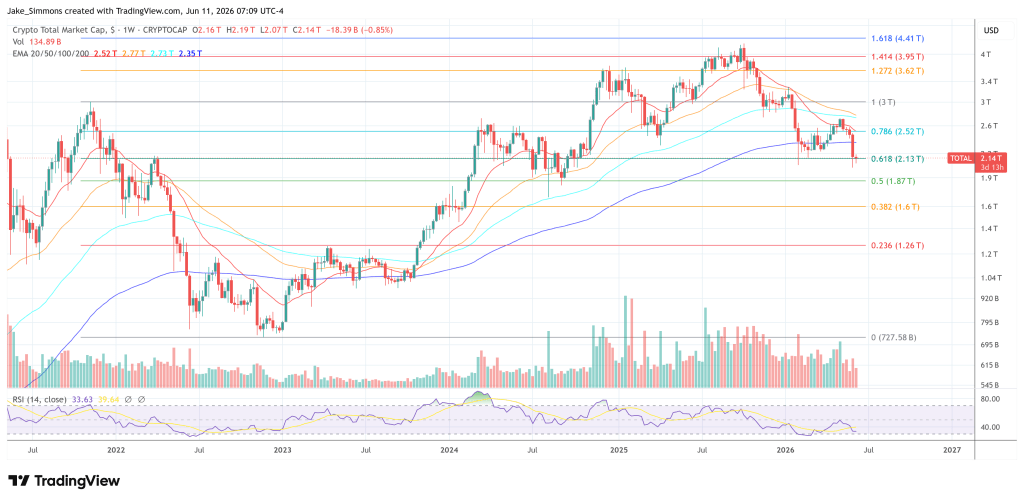
Total crypto market cap must stay above the 0.618 Fib, 1-month chart | Source: TOTAL on TradingView.com

Пов'язані питання

QWhat is the core allegation against Trenton Richard David Johnston according to the US Department of Justice?

AAccording to the DOJ, Johnston and others allegedly impersonated support representatives from a popular search engine and cryptocurrency-related companies to convince victims their accounts were compromised, gain access, and steal assets.

QHow did the defendants allegedly use the proceeds from the crypto scam?

AThey allegedly used over $1 million in illicit proceeds to lease luxury vehicles, buy high-end jewelry, and finance an extravagant nightlife and entertainment lifestyle.

QWhat charges was Brandon Michael Tardibone facing in connection to this case?

ABrandon Michael Tardibone was charged with conspiracy to commit money laundering and harboring an alien (Johnston) in the United States.

QWhat was the status of Johnston's legal case as indicated by a docket entry mentioned in the article?

AA docket entry listed a plea agreement for Johnston filed on June 9, indicating the case had moved beyond the initial indictment stage for at least one defendant.

QWhat agencies were involved in investigating this crypto fraud case?

AThe case was investigated by HSI Miami, with assistance from the Federal Deposit Insurance Corporation Office of Inspector General, IRS Criminal Investigation, U.S. Customs and Border Protection, and the Golden Beach Police Department.

Пов'язані матеріали

Bitcoin Withdrawals Continue: 8 Years of Storage in a Coldcard Cold Wallet Ended in Zero

Coldcard Hardware Wallet Hacked: Losses Mount Due to Vulnerable Seed Generation A critical vulnerability in Coldcard hardware wallets has led to a continued wave of fund thefts. According to Galaxy Research, the total stolen has reached 1,367.05 BTC (approx. $88.6 million) from 4,585 addresses, a significant increase from the initial 594.5 BTC reported on July 30, 2026. Most of the stolen funds remain on the attackers' addresses. The issue is not with the current firmware, which Coinkite has updated, but with seed phrases generated on vulnerable devices between March 2021 and the release of fixed firmware versions. Due to a programmer error, devices switched from using a hardware random number generator to the software-based Yasmarang generator, which was initialized with publicly accessible data like the chip's serial number. This made the seed phrases predictable through offline brute-force attacks, meaning wallets remain at risk until funds are moved to a new wallet generated with the patched firmware. Affected devices include Mk2/Mk3 with firmware 4.0.1–4.1.9 (and up to 5.0.3), Mk4/Mk5 up to version 5.6.0, and Q models up to 1.5.0Q. The only exceptions are seeds created with a high-entropy method like at least 50 independent dice rolls or a strong unique BIP-39 passphrase. All other owners must generate a new seed on the fixed firmware and transfer their assets. A case highlighting the human impact involves a 39-year-old long-term investor who lost 2 BTC (approx. $130,000) in minutes. He had accumulated the Bitcoin over eight years through physical labor, viewing it as a financial lifeline and a retirement plan in a country suffering from hyperinflation. His story underscores that even conservative "buy and hold in cold storage" strategies can be compromised by such underlying technical flaws. From a technical perspective, this incident echoes historical failures where weak random number generators undermined cryptographic security, challenging the assumption that offline storage is automatically foolproof.

cryptonews.ru2 год тому

Bitcoin Withdrawals Continue: 8 Years of Storage in a Coldcard Cold Wallet Ended in Zero

cryptonews.ru2 год тому

Торгівля

Спот
活动图片





