Taiwan To Introduce Strict Crypto Penalties To Crackdown On Unlicensed And Fraudulent Activity

bitcoinistОпубліковано о 2026-04-04Востаннє оновлено о 2026-04-04

Анотація

Taiwan's Executive Yuan has approved a draft of the Virtual Asset Service Act (VASA), introducing strict regulations and severe consequences for unlicensed or fraudulent crypto activities. The legislation imposes prison sentences of up to 10 years and fines as high as $6.25 million for offenses like market manipulation. Unlicensed stablecoin issuance could result in 7-year prison terms and fines up to $3.13 million. The new rules also prohibit stablecoin issuers from paying interest to holders and require robust internal controls. The regulatory framework, developed by the Financial Supervisory Commission, includes a phased implementation approach and aims to enhance transaction security while supporting financial innovation.

Taiwanese authorities have approved a new draft of their crucial crypto legislation, introducing severe penalties for unlicensed or fraudulent activities related to stablecoins and other digital assets.

Taiwan Approves $6M Fines To Combat Crypto Fraud

On Friday, local news outlets reported that the Executive Yuan passed the draft of the Virtual Asset Service Act (VASA) on April 2, marking a major step to regulate crypto assets in Taiwan.

The VASA, introduced by the Financial Supervisory Commission (FSC) last year, supports the efforts by Taiwanese authorities to establish a comprehensive crypto framework for Virtual Asset Service Providers (VASPs) and stablecoin issuers.

In 2024, the FSC overhauled its Anti-Money Laundering (AML) framework to include crypto businesses, adding stricter AML guidelines for VASPs and requiring all digital asset firms to complete the AML registration by September 2025.

Premier Cho Jung-tai explained that the new framework, which will be implemented in four gradual phases, includes industry self-regulation and an AML compliance registration system. The measures aim to enhance the security of virtual asset transactions, pilot custody services, and support the growth of domestic financial innovation, he added.

According to the reports, the draft requires VASPs to operate exclusively in this field and meet specific standards for their company name, organizational structure, and capital. Financial institutions can also operate VASP services in addition to their other businesses, if approved.

In addition, special regulations would be customized to suit the nature of each service provider. For instance, trading platforms would be required to establish clear guidelines for listing and delisting virtual assets.

The draft also includes heavy penalties for unlicensed and fraudulent activities, with offences involving crypto falsification, concealment, or price manipulation risking 3-10 years in prison and fines of up to NTD 200 million, worth $6.25 million.

Meanwhile, firms that issue stablecoins without a license could face up to seven years in prison and fines of up to NTD 100 million, or about $3.13 million, according to the draft.

New Stablecoin Regulations To Prohibit Interest Payments

Officials outlined the main differences between the recently passed VASA draft and the FSC’s original text regarding stablecoin guidelines, which include issuance and redemption regulations, restrictions on interest or returns, and internal control and cybersecurity management.

Under the new draft, the issuance and redemption of stablecoins must be conducted at face value, and issuers may not refuse redemption requests from holders. Issuers are also prohibited from paying interest or returns to holders on the stablecoins they issue, aligning with international trends.

Lastly, issuers must establish and maintain robust internal control and audit systems, along with information security management mechanisms, to ensure the proper issuance and redemption of stablecoins.

FSC Deputy Chairman Chen Yen-liang asserted that stablecoin issuance is not currently limited to banks, but noted that the financial institutions are “generally better positioned to meet the relevant requirements” due to their capital strength and risk management capabilities.

For other operators, different capital thresholds and operating guarantee requirements would be set based on the nature of their business, with further details to be announced after the legislation officially passes.

In December, FSC Chairman Peng Jin-long revealed that the island’s first regulated stablecoin could debut this year. As reported by Bitcoinist, stablecoin-centered regulations would be developed within six months after the VASA’s approval, setting the launch of locally issued tokens pegged to the NTD or the USD to the second half of 2026.

Deputy Chairman Chen added that the regulator would adopt a “gradual opening” model, and relevant regulations would be developed by authorities alongside the Central Bank.
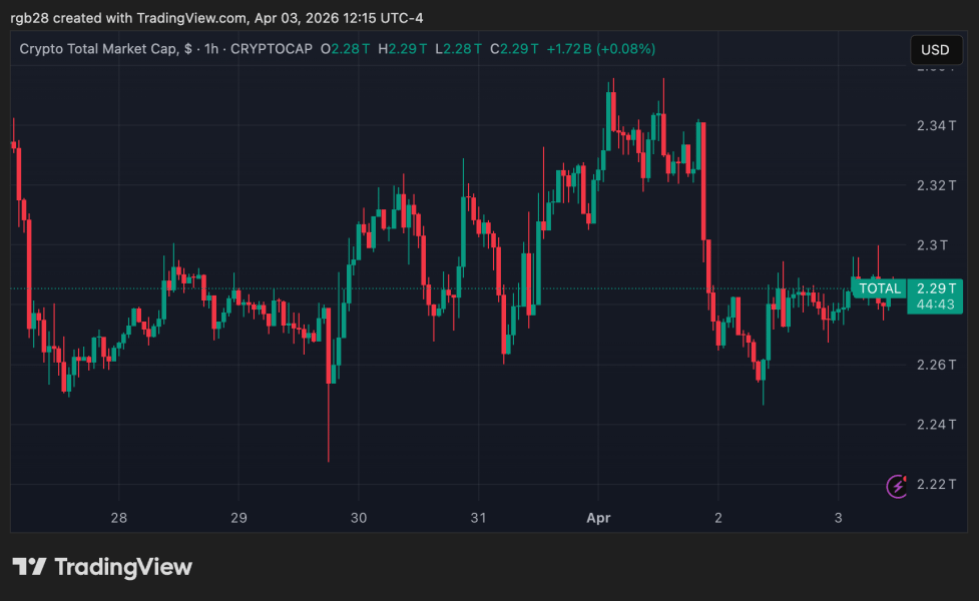
The total crypto market capitalization is at $2.29 trillion on the one-week chart. Source: TOTAL on TradingView


Пов'язані питання

QWhat is the name of the new crypto legislation draft approved by Taiwanese authorities and what is its main purpose?

AThe new crypto legislation draft is called the Virtual Asset Service Act (VASA). Its main purpose is to regulate crypto assets by introducing severe penalties for unlicensed or fraudulent activities related to stablecoins and other digital assets, and to establish a comprehensive framework for Virtual Asset Service Providers (VASPs) and stablecoin issuers.

QWhat are the potential penalties for offences involving crypto falsification, concealment, or price manipulation under the new draft?

AOffences involving crypto falsification, concealment, or price manipulation risk 3-10 years in prison and fines of up to NTD 200 million, which is worth approximately $6.25 million.

QWhat specific restrictions does the new draft place on stablecoin issuers regarding interest payments and redemptions?

AThe new draft prohibits stablecoin issuers from paying interest or returns to holders on the stablecoins they issue. It also requires that the issuance and redemption of stablecoins must be conducted at face value, and issuers may not refuse redemption requests from holders.

QBy what date are all digital asset firms required to complete their Anti-Money Laundering (AML) registration in Taiwan?

AAll digital asset firms are required to complete their Anti-Money Laundering (AML) registration by September 2025.

QAccording to the FSC Deputy Chairman, why are financial institutions better positioned to meet the requirements for stablecoin issuance?

AFSC Deputy Chairman Chen Yen-liang stated that financial institutions are 'generally better positioned to meet the relevant requirements' due to their capital strength and risk management capabilities.

Пов'язані матеріали

Will the Next Crypto Bull Run Start with On-Chain Trading of SpaceX?

This article presents a scenario-based forecast for the crypto industry from 2026 to 2029, arguing that the next major cycle will be driven not by technological narratives but by legal access to real-world assets. The author predicts that by mid-2026, pre-IPO perpetual contracts for top private companies like SpaceX, OpenAI, and Anthropic on platforms like Hyperliquid will become the primary gateway for accessing quality assets, as most crypto-native tokens fail to capture real value. The much-hyped AI x Crypto intersection largely fails except for prediction markets, which thrive on betting on AI model supremacy. By 2027, public blockchain foundations are forced to choose between catering to retail speculation or building compliant infrastructure for institutions, with many opting for the latter. Growth in stablecoins and tokenized private credit/equity hits a "triple ceiling" due to regulatory and political uncertainty rather than market demand. The pivotal shift is forecast for 2028. A major liquidation event in pre-IPO perpetuals exposes the structural flaw of synthetic markets lacking a real underlying asset anchor. In response, regulatory changes finally allow the public solicitation of private securities resales to verified accredited investors. This creates a legitimate secondary market for real company equity, which then becomes the core asset class of the new bull market, relegating synthetic perps to a niche role. By 2029, the industry becomes "boring" but foundational. Tokens without claims on real cash flows or assets cease trading. Stablecoin growth is steady but politically capped. Crypto infrastructure fades from view as it gets absorbed into traditional finance backends. The article's central thesis is that the key bottleneck for crypto's next phase is legal and regulatory channels for real asset ownership, not technology.

marsbit22 хв тому

Will the Next Crypto Bull Run Start with On-Chain Trading of SpaceX?

marsbit22 хв тому

The Value Distribution of Stablecoins

**Summary: The Value Distribution of Stablecoins** The article argues that stablecoins are evolving from mere trading tools into broader channels for dollar access. It divides the stablecoin ecosystem into four layers to analyze how value is distributed: 1. **Issuance Layer:** Mints stablecoins, holds reserve assets, and captures the spread between reserve yield and user costs (e.g., Tether, Circle). This layer currently earns the largest profit margin. 2. **Infrastructure Layer:** Connects stablecoins to the traditional financial system, handling fiat on/off-ramps, banking integration, compliance (KYC/AML), and asset management (e.g., Bridge, BVNK). This is the "unglamorous" but critical work, building the essential bridges between crypto and real-world finance. 3. **Acquiring/Distribution Layer:** Integrates stablecoins into merchant systems, manages payment flows, and provides enterprise financial software (e.g., Stripe, Coinbase). They act as the access point for businesses. 4. **Application Layer:** The end-users and businesses that ultimately use stablecoins for payments, settlements, or as a store of value. They benefit from convenience but have little pricing power. The core thesis is that while the issuance layer currently dominates profits, the often-overlooked **infrastructure layer holds significant long-term potential**. The real challenge and barrier to mass adoption is not the on-chain transfer of stablecoins (which is simple), but the complex "last mile" integration into existing business workflows, banking systems, and regulatory frameworks across different countries. Companies in this layer are currently in a "land grab" phase, investing heavily to build networks, secure bank partnerships, and establish compliance pathways. While their position is currently pressured by the profitable issuers above and distribution platforms below, the article suggests that if stablecoins become a default financial rail for businesses, the infrastructure providers who have done the hard work of integration will ultimately gain strong pricing power and become entrenched, essential players.

marsbit7 год тому

The Value Distribution of Stablecoins

marsbit7 год тому

The Value Distribution of Stablecoins

The Value Distribution of Stablecoins The article argues that stablecoins are evolving from a mere trading tool into a broad "dollar channel." It analyzes the industry's value chain through four layers: 1. **Issuance Layer (e.g., Tether, Circle):** The top layer that mints stablecoins, holds reserve assets, and captures the thickest interest rate spread. 2. **Infrastructure Layer (e.g., Bridge, BVNK):** Connects stablecoins to the traditional financial system, handling critical but complex "dirty work" like fiat on/off-ramps, banking integration, compliance (KYC/AML), and cross-border settlement. 3. **Acquiring/Distribution Layer (e.g., Stripe, Coinbase):** Embeds stablecoins into merchant systems, manages payment flows, and integrates with enterprise software. 4. **Application Layer:** End-users and businesses that ultimately use stablecoins for payments, settlement, or storing value. The author posits that while the issuance layer currently captures the most profit, the most overlooked and potentially critical layer is infrastructure. The core challenge for stablecoin adoption isn't the on-chain transfer (which is simple), but bridging the gap between blockchain and the real-world financial system. This involves solving practical problems for businesses: fiat conversion, reconciliation, tax handling, and user onboarding. Infrastructure companies are currently in a difficult "land-grab" phase—building networks, securing banking relationships, and achieving compliance country-by-country. They face pressure from both the profitable issuance layer above and distribution platforms below. However, the author suggests this layer is building a crucial moat. Once stablecoins become a default business rail, the infrastructure players who have done the hard work of integration may gain significant, durable value and pricing power.

链捕手7 год тому

The Value Distribution of Stablecoins

链捕手7 год тому

Торгівля

Спот
Ф'ючерси
活动图片




