# Пов'язані статті щодо Value

Центр новин HTX надає останні статті та поглиблений аналіз на тему "Value", що охоплює ринкові тренди, оновлення проєктів, технологічні розробки та регуляторну політику в криптоіндустрії.


Stop Saying ‘We Need Privacy’

Title: Stop Saying ‘We Need Privacy’ The article argues that "privacy" is not a single concept but rather five distinct problems in the context of blockchain and cryptocurrency. When people demand privacy, they are often referring to one of the following: 1. **Intent Privacy:** Hiding transaction details from observers before execution to prevent front-running by MEV bots. Solutions include private transaction delivery (e.g., Flashbots Protect) and encrypted mempools (e.g., Shutter Network). 2. **Value Privacy:** Concealing the amounts transferred. This is achieved through shielded systems (e.g., Zcash, Penumbra) that use cryptographic proofs to verify transactions without revealing values. Privacy can still be compromised by user behavior patterns. 3. **Graph Privacy:** Protecting the relationships and patterns of who transacts with whom. Techniques include pooled unlinkability (e.g., Tornado Cash mixers) and stealth addresses (e.g., ERC-5564) to break direct on-chain links between transactions. 4. **State Privacy:** Keeping DeFi positions, balances, and liquidation thresholds hidden. This requires storing state as private records and using zero-knowledge proofs (ZK-proofs) to validate state changes without revealing underlying data (e.g., Aztec). Composability and edge interactions remain challenges. 5. **Execution Privacy:** Hiding the computation logic itself, crucial for strategies like auctions or liquidations. Methods include using Trusted Execution Environments (TEEs) (e.g., Secret Network) or ZK-proofs for private execution. The article concludes that privacy often fails at the edges, such as at the RPC (Remote Procedure Call) layer, where providers can collect IP addresses and wallet information. The key is to ask which surface is being protected and where information might leak when users interact with the real world, rather than seeking a single winning privacy model.

比推02/13 00:39

Stop Saying ‘We Need Privacy’

比推02/13 00:39

Four Pillars Reshaping the Crypto Future: Survival Rules in the Post-Speculation Era

The article "Four Pillars Reshaping Crypto's Future: Survival Rules in the Post-Speculation Era" argues that the current market shift towards value is not a bearish end but a necessary transition towards next-generation financial infrastructure. It identifies four key trends: 1. **Blockchain-Native Finance**: Moving beyond Real-World Assets (RWA) as mere tools, blockchain is重构ing credit efficiency through trustless systems, reducing costs and friction. 2. **Token Value Reset**: Tokens are shifting from speculative, narrative-driven assets to ones requiring real revenue, cash flow, and sustainable value capture. 3. **Privacy as Core Infrastructure**: Privacy is evolving from a niche feature to a essential requirement for institutional adoption and on-chain finance, enabling confidential transactions and becoming a key competitive moat. 4. **AI and Blockchain Integration**: The fusion is maturing beyond superficial concepts; AI acts as a smart layer for protocols (e.g., dynamic DeFi risk management), while blockchain provides a trustless economic base for AI agent interactions and machine-native finance. The conclusion emphasizes that 2026 marks a pivot towards practicality—where real-world utility, profitability, and regulatory clarity define success, ending the era of pure speculation. The industry is transitioning from a "gold rush" to sustainable "city building."

marsbit01/27 08:37

Four Pillars Reshaping the Crypto Future: Survival Rules in the Post-Speculation Era

marsbit01/27 08:37

X Content Order Reshuffle: Three New Rules Redefining Value Stratification

X platform has initiated a major restructuring of its content ecosystem, introducing three core changes to redefine value distribution and content hierarchy. First, a dedicated "Meme" category has been introduced, separating entertainment-focused content from informational assets. This reflects a broader content stratification strategy. Second, the platform has overhauled its creator monetization model. Product lead Nikita Bier confirmed that creator revenue is now solely based on views from the home timeline, excluding replies from earnings calculations. This move effectively devalues low-effort, high-frequency interactions (a practice known as "zuilou" or engagement farming), as the platform now views excessive interactions as inefficient and self-limiting for account reach. Third, X is advancing its "Smart Cashtags" feature, currently in testing and expected to launch next month. This tool allows users to tag tokens or smart contracts in posts, enabling others to view real-time prices and related discussions. It signals X's intent to build infrastructure for "content x finance," structuring asset-related narratives and market sentiment into consumable nodes, with data sourced from both centralized exchanges and on-chain APIs. Concurrently, X has open-sourced its recommendation algorithm, which relies on a Transformer architecture. While making the system more transparent, exposure is now increasingly determined by two key metrics: content "understandability" (clear structure, easy classification) and "consumability" (quick absorption by users), rather than pure engagement volume. In conclusion, these shifts collectively represent a recalibration of content value on X. The platform is moving away from incentivizing mere activity and towards promoting structured, high-quality, and easily distributable information, fundamentally reshaping its content ecosystem and creator economy.

Odaily星球日报01/23 09:59

X Content Order Reshuffle: Three New Rules Redefining Value Stratification

Odaily星球日报01/23 09:59

Why Do Memes Only Cut You? An Article That Explains Their True Growth Mechanism

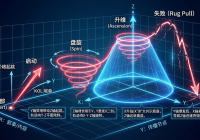
The article "Why Do Meme Coins Only 'Cut' You? Clarifying Their True Growth Mechanism" offers a fresh, analytical perspective on meme coin dynamics, framing their growth not as irrational speculation but as a mathematically explainable phenomenon. The core argument is that a meme coin’s market capitalization isn't just driven by price increases (Z-axis), but is fundamentally supported and "propped up" by two underlying factors: narrative density (X-axis) and the network of传播 nodes (Y-axis). Together, these form the base radius of a "Wealth Cone." A meme with only height (price) but no base (narrative and community) is like a thin needle—easily toppled. A strong, expanding base is necessary to support sustainable, exponential growth. The proposed XYZ three-dimensional growth spiral model explains the interaction: * **X-axis (Narrative Density):** The meme's core idea, cultural resonance, originality, and the richness of community-created content. * **Y-axis (Propagation Network):** The transmission pipelines, from major influencers (e.g., Elon Musk) to KOLs and finally to retail investors. * **Z-axis (Capital Flow):** The monetization of attention, measured by market cap, trading volume, and crucially, liquidity depth. The lifecycle of a successful meme is a reflexive, spiral ascent through stages: **Ignition** (a Y-axis spike from a KOL callout lifts the Z-axis), **Spin** (price growth attracts more discussion, enriching the narrative), and **Ascension** (an expanded narrative base allows for a new, higher level of market cap). Failed memes (rug pulls) occur when a price pump (Z) isn't supported by narrative development (X), causing a collapse. The article concludes that understanding this geometric interplay of narrative, community, and capital is key to evaluating meme coins.

比推01/21 07:39

Why Do Memes Only Cut You? An Article That Explains Their True Growth Mechanism

比推01/21 07:39

活动图片