# Пов'язані статті щодо Startups

Центр новин HTX надає останні статті та поглиблений аналіз на тему "Startups", що охоплює ринкові тренди, оновлення проєктів, технологічні розробки та регуляторну політику в криптоіндустрії.

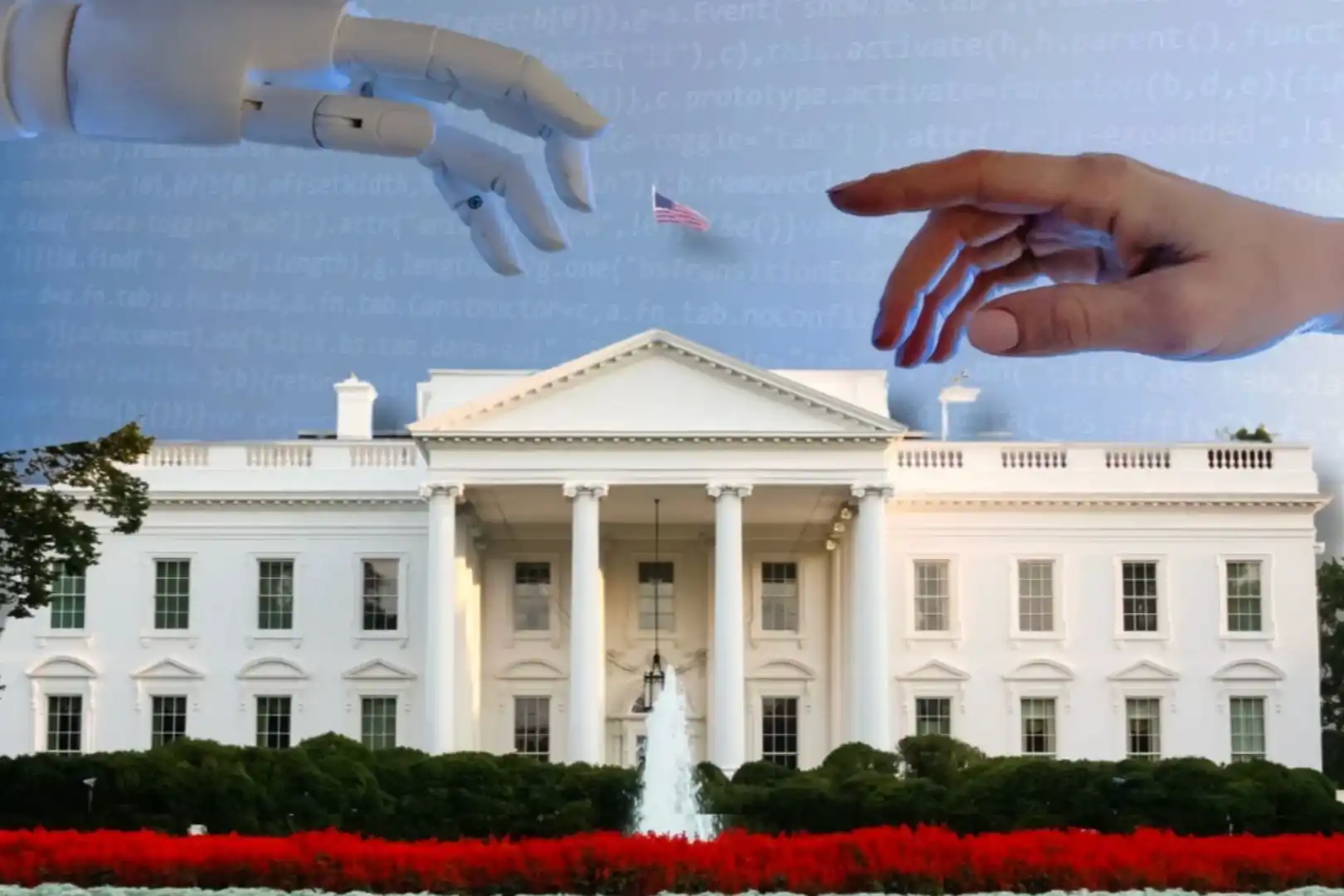
New U.S. AI Policy: Ending the Era of '50 Laboratories,' Washington Opens a New Wide Door

The U.S. is shifting from a fragmented, state-by-state regulatory approach for AI to a unified federal framework, echoing the historical centralization seen with the Interstate Commerce Act of 1887. While this move promises to reduce compliance burdens and enhance competitiveness against global rivals like China, it fundamentally represents a consolidation of regulatory power in Washington. The new policy aims to establish federal preemption over state laws, creating a single set of rules to streamline innovation and maintain U.S. leadership in AI’s scale-driven economy. However, this centralization also risks increased federal control over time, potentially limiting flexibility and introducing future regulatory uncertainties. The framework addresses key areas like child protection, energy costs, intellectual property, and free speech but relies on existing laws and courts rather than a new dedicated agency. Compared to the EU’s safety-first and China’s state-led models, the U.S. prioritizes market scale and innovation speed. For startups, compliance may simplify in the short term, but long-term risks include political volatility and unresolved legal gray areas, particularly around data usage and intellectual property. Ultimately, the era of state-level "laboratories" is ending, replaced by a more efficient but centrally controlled federal "factory."

marsbit03/30 05:55

New U.S. AI Policy: Ending the Era of '50 Laboratories,' Washington Opens a New Wide Door

marsbit03/30 05:55

Dialogue with a16z Co-founder Marc Andreessen: Founders Are Better Off Without Introspection, Human Panic Always Accompanies New Things

Source: David Senra, Organized by Felix, PANews In a nearly two-hour podcast, a16z co-founder Marc Andreessen shared his personal habits, entrepreneurial philosophy, and management methods. Andreessen, who co-created the first widely used graphical web browser Mosaic and co-founded Netscape, discussed his belief that founders should avoid introspection. He argues that dwelling on the past hinders progress, and the best entrepreneurs are driven by impact, not happiness. Andreessen and Ben Horowitz founded a16z in 2009 with the core belief that startups and founders are the central engine of world progress. They champion the "founder-led" model over "managerialism," asserting that it's easier to teach a founder management skills than to teach a manager how to innovate. He cites Mark Zuckerberg and Elon Musk as prime examples. The conversation also covered historical patterns of "moral panic" surrounding new technologies, drawing parallels from bicycles to rock music. Andreessen detailed his unique management observations of Elon Musk, describing a hands-on, technically-deep approach where Musk personally identifies and solves production bottlenecks weekly, creating a culture of intense execution and innovation at companies like SpaceX and Tesla. Andreessen's worldview centers on technology as a powerful balancing force, and a16z's mission remains being the ideal partner for founders who want to change the world.

marsbit03/16 13:06

Dialogue with a16z Co-founder Marc Andreessen: Founders Are Better Off Without Introspection, Human Panic Always Accompanies New Things

marsbit03/16 13:06

a16z: After AI Grants Humans Superpowers, Where Do We Go From Here?

A new paper titled "The Minimal Economics of AGI" explores the economic implications of AI automation, particularly as AI agents evolve from tools into collaborative partners capable of long-horizon tasks. The authors, Christian Catalini and Eddy Lazzarin, argue that the core economic divide will be between automation (tasks that can be measured and automated) and verification (tasks requiring human oversight, judgment, and contextual understanding). Key themes include: - The "coder’s curse": top experts training AI systems may inadvertently automate their own roles over time. - Three future human roles: directors (setting intent), verifiers (domain experts ensuring quality), and meaning-makers (creating cultural and social value). - Cryptocurrency and blockchain are positioned as critical for identity, provenance, and trust in a world flooded with AI-generated content. - Two potential economic outcomes: a "hollow economy" with systemic risk from under-verification, or an "augmented economy" where AI amplifies human potential and reduces costs for education, healthcare, and innovation. - The importance of small, agile teams leveraging AI for outsized impact, with crypto infrastructure enabling coordination at scale. The authors emphasize that AI acts as a force multiplier, granting individuals "superpowers," and urge a focus on verification, adaptability, and ambitious experimentation.

marsbit03/09 11:31
a16z: After AI Grants Humans Superpowers, Where Do We Go From Here?

marsbit03/09 11:31

活动图片