# Пов'язані статті щодо Scaling

Центр новин HTX надає останні статті та поглиблений аналіз на тему "Scaling", що охоплює ринкові тренди, оновлення проєктів, технологічні розробки та регуляторну політику в криптоіндустрії.
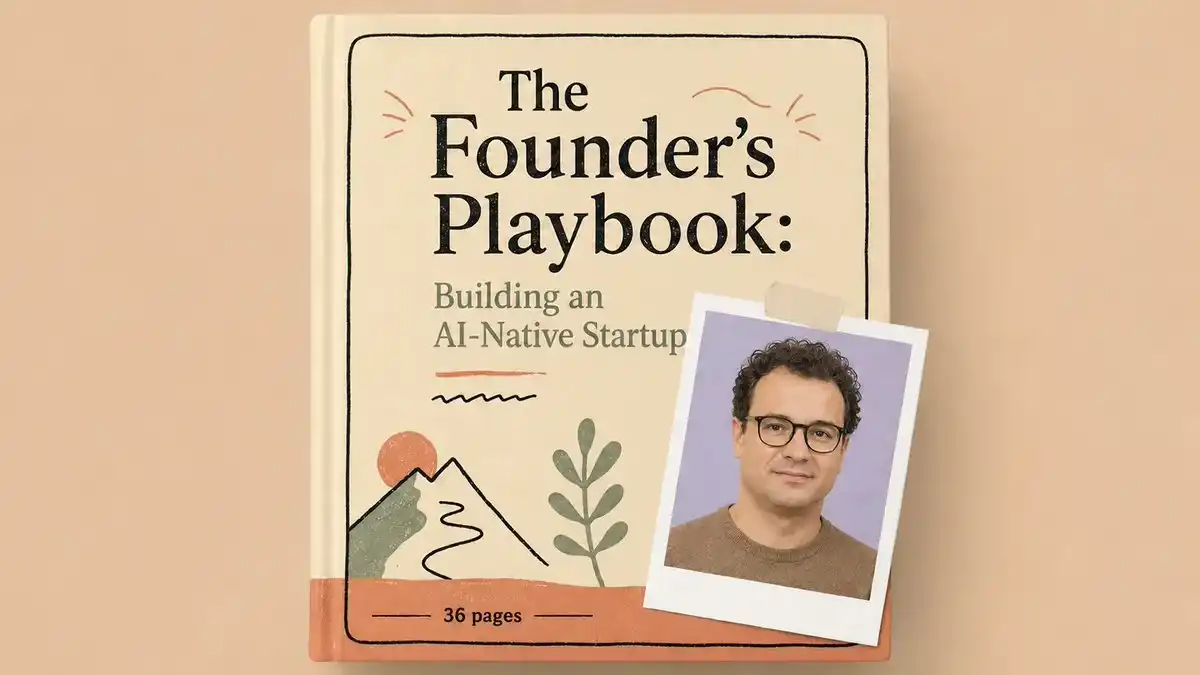
Anthropic Major Release: "The Founder's Playbook" - All 4 Stages of Entrepreneurship, Completely Reimagined with AI

**Anthropic Releases "The Founder's Playbook," Reimagining the Four Stages of Startups with AI** The logic of entrepreneurship is being fundamentally reshaped by AI. Anthropic's new handbook, "The Founder's Playbook: Building an AI-Native Startup," defines the AI-native startup as a new species: not a traditional company with AI tools, but a venture driven by AI from day one. The founder's role is transforming from a hands-on builder to a conductor or architect, orchestrating AI agents for execution while focusing on high-level judgment and strategy. Anthropic outlines a product matrix of Claude tools for different tasks: Claude Chat for interactive research, Claude Code for generating production-ready code, and Claude Cowork for automating knowledge-intensive workflows. The handbook structures the startup lifecycle into four stages, detailing core goals, pitfalls, and AI applications for each: 1. **Idea Stage**: Focuses on validating a real problem. The core challenge is avoiding confirmation bias. AI practices include using Claude as a "structured devil's advocate" to challenge assumptions and for automated market/competitor research. 2. **MVP Stage**: Aims to gather early signals of Product-Market Fit (PMF). Key risks are technical debt and scope creep due to rapid AI-assisted development. Recommended AI uses include maintaining project memory documents (e.g., CLAUDE.md), using Claude Code for structured coding, and automating user feedback analysis. 3. **Launch Stage**: Centers on establishing scalable growth, operations, and compliance. Challenges include accelerating technical debt and founders becoming bottlenecks. AI should be used to build an "operating system" for launch—automating routine tasks (scheduling, reporting, content) and code audits—freeing founders for critical decisions. 4. **Scale Stage**: Focuses on achieving sustainable business operations. The main challenge is delegating operational control. AI should be leveraged for differentiated marketing, operational optimization, and building competitive moats through data network effects. The handbook concludes that in the AI era, "Can we build it?" is no longer the primary constraint. The advantage shifts back to foundational strengths: **insight, judgment, and a deep understanding of a specific problem and audience.**

marsbit1 год тому

Anthropic Major Release: "The Founder's Playbook" - All 4 Stages of Entrepreneurship, Completely Reimagined with AI

marsbit1 год тому

Dialogue with Figure Robotics Founder: Behind the $39 Billion Valuation Lies Ambition to Mass-Produce Millions of Units

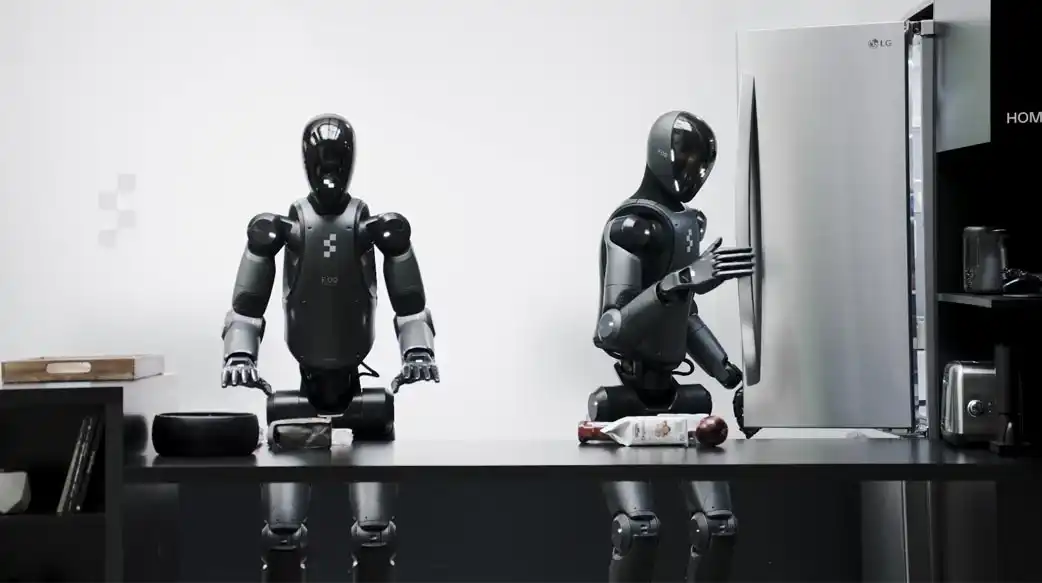
Title: Figure's Founder on the $39B Valuation and the Ambition to Mass Produce a Million Humanoid Robots In a Sourcery podcast interview, Figure founder and CEO Brett Adcock discusses the rapid rise of his humanoid robotics company. With a valuation that surged 15x in 18 months to $39 billion, Figure aims to create general-purpose humanoid robots for work in factories and homes. Adcock states that the company's primary goal is to make robots that perform real, paid work autonomously. He shares Figure's aggressive scaling plan: producing thousands of robots this year, with an ultimate ambition to reach one million units annually. Adcock explains Figure's vertically integrated strategy, designing its own motors, sensors, and joints to control its supply chain and destiny. He details the challenges, including achieving long-term, reliable, end-to-end autonomous operation—a feat no one has yet accomplished. The biggest risk is executing this complex vision at scale, but Adcock believes the potential market is enormous, representing a significant portion of global GDP. The interview also covers his departure from OpenAI, citing that Figure's internal AI team eventually surpassed OpenAI's capabilities for robotics applications. Adcock concludes by highlighting his focus for the year: large-scale commercial deployment of robots and advancing toward a "general robot" capable of any human task, potentially seeing the first signs of AGI (Artificial General Intelligence) in the physical world at Figure.

marsbit05/18 10:26

Dialogue with Figure Robotics Founder: Behind the $39 Billion Valuation Lies Ambition to Mass-Produce Millions of Units

marsbit05/18 10:26

From Gas Limit to Keyed Nonces: How to Understand the Next Stage of Ethereum's Scalability?

From Gas Limits to Keyed Nonces: Understanding the Next Phase of Ethereum Scalability This article explores how recent Ethereum developments focus on moving complexity away from end-users, wallets, and DApps to the protocol layer. It discusses the consensus around significantly increasing the Gas Limit to 200 million, a change aimed at reducing fees and improving network capacity. However, it emphasizes that this increase is part of a holistic approach that includes mechanisms like enshrined Proposer-Builder Separation (ePBS) and Block-Level Access Lists to manage state growth and maintain node decentralization. The piece also delves into Keyed Nonces (EIP-8250), a proposed upgrade to Ethereum's transaction ordering. It explains how moving from a single, linear nonce queue per account to multiple independent nonce domains ("channels") can enable parallel transaction streams for different use cases. This is particularly crucial for privacy protocols and smart wallets, reducing transaction conflicts and unlocking new design possibilities. Ultimately, the article argues that these technical upgrades—alongside native account abstraction and cross-L2 interoperability—are converging towards a singular goal: enhancing the overall user experience. This means making on-chain interactions smoother, safer, and more cohesive, with wallets serving as the critical interface translating complex protocol improvements into intuitive user actions.

marsbit05/14 13:43

From Gas Limit to Keyed Nonces: How to Understand the Next Stage of Ethereum's Scalability?

marsbit05/14 13:43

Why Does the Term 'Year of AI Computing Power Realization' Have Pitfalls? —Understanding the Four Hurdles from Policy Signals to Actual Orders in One Article

This article critiques the phrase "The First Year of AI Computing Power Cashing In," arguing it oversimplifies a complex, multi-stage process. It proposes a "Four Gates" framework to assess the true commercialization of domestic AI computing power (like Huawei's Ascend chips): 1. **Policy Procurement:** Widely open in 2026. Significant government funding and large bulk orders from tech giants like Alibaba and Tencent exist. However, purchasing hardware is not the same as deploying it for real use. 2. **Real Deployment:** A crack has opened. The key evidence is DeepSeek V4, a top-tier AI model fully migrating from NVIDIA's CUDA to domestic computing platforms. This proves the capability for real, high-level tasks, but widespread adoption beyond leading tech firms is still nascent. 3. **Mature Software Ecosystem:** A narrow crack has opened. While frameworks like Huawei's CANN are progressing, they lag far behind NVIDIA's vast, established CUDA ecosystem in terms of supported models and developer ease-of-use. Building this middle-to-downstream developer environment is estimated to need 1-2 more years. 4. **Scalable Replication:** Essentially closed. This final gate, where thousands of mid-sized enterprises across various industries can easily adopt the technology without major migration costs, is not expected before 2027-2028. The core risk is conflating these stages. While 2026 marks a real turning point in policy-driven procurement and proving technical viability (Gates 1 & 2), the phrase "cashing in" is premature for the full industry. True, large-scale value realization depends on the later, slower-to-open gates of software maturity and scalable replication to the broader market. DeepSeek V4's shift is identified as the most critical 2026 signal, changing the narrative from "can it work?" to "when will supply meet demand?"

marsbit05/08 11:34

Why Does the Term 'Year of AI Computing Power Realization' Have Pitfalls? —Understanding the Four Hurdles from Policy Signals to Actual Orders in One Article

marsbit05/08 11:34

a16z: AI's 'Amnesia', Can Continuous Learning Cure It?

The article "a16z: AI's 'Amnesia' – Can Continual Learning Cure It?" explores the limitations of current large language models (LLMs), which, like the protagonist in the film *Memento*, are trapped in a perpetual present—unable to form new memories after training. While methods like in-context learning (ICL), retrieval-augmented generation (RAG), and external scaffolding (e.g., chat history, prompts) provide temporary solutions, they fail to enable true internalization of new knowledge. The authors argue that compression—the core of learning during training—is halted at deployment, preventing models from generalizing, discovering novel solutions (e.g., mathematical proofs), or handling adversarial scenarios. The piece introduces *continual learning* as a critical research direction to address this, categorizing approaches into three paths: 1. **Context**: Scaling external memory via longer context windows, multi-agent systems, and smarter retrieval. 2. **Modules**: Using pluggable adapters or external memory layers for specialization without full retraining. 3. **Weights**: Enabling parameter updates through sparse training, test-time training, meta-learning, distillation, and reinforcement learning from feedback. Challenges include catastrophic forgetting, safety risks, and auditability, but overcoming these could unlock models that learn iteratively from experience. The conclusion emphasizes that while context-based methods are effective, true breakthroughs require models to compress new information into weights post-deployment, moving from mere retrieval to genuine learning.

marsbit04/25 04:23

a16z: AI's 'Amnesia', Can Continuous Learning Cure It?

marsbit04/25 04:23

Vitalik's Full Speech at the 2026 Hong Kong Web3 Carnival

In his keynote speech at the 2026 Hong Kong Web3 Carnival, Ethereum co-founder Vitalik Buterin outlined the platform’s vision as a "world computer" and detailed its technical roadmap for the next five years. Buterin emphasized Ethereum’s two core functions: serving as a public bulletin board where applications can publish verifiable data, and enabling shared computational objects like tokens, NFTs, and DAOs. He stressed the importance of Ethereum lies in its ability to provide self-sovereignty, verifiability, and permissionless participation without relying on trusted third parties. He discussed the evolution of Layer 2 solutions, arguing that meaningful L2s should complement Ethereum by integrating necessary off-chain components—such as oracles or privacy protocols—rather than simply scaling through centralization. Key short-term goals include scaling data availability and computational capacity through initiatives like increasing the gas limit and deploying zkEVM for more complex, verifiable computations. Buterin also highlighted ongoing efforts to improve quantum resistance, privacy, and efficiency through proposals like EIP-8141 for account abstraction and quantum-safe signatures. Long-term, Ethereum aims to maximize security and decentralization through formal verification, AI-assisted proof generation, and a hybrid consensus model combining Bitcoin’s longest-chain rule with BFT-style finality. The goal is a robust, easily verifiable platform that supports a wide range of applications—from finance and identity to decentralized social networks—while ensuring long-term resilience and trustlessness.

marsbit04/20 05:40

Vitalik's Full Speech at the 2026 Hong Kong Web3 Carnival

marsbit04/20 05:40

Tsinghua's Prediction 2 Years Ago Is Becoming Global Consensus: Meta and Two Other Major AI Institutions Have Reached the Same Conclusion

Summary: In a remarkable validation of Chinese AI research, Meta and METR have independently reached conclusions that align perfectly with the "Density Law" proposed by a Tsinghua University and FaceWall Intelligent team two years ago. Published in Nature Machine Intelligence in late 2025, the law states that the computational power required to achieve a specific level of AI performance halves every 3.5 months. This convergence was starkly evident in April 2026. METR reported that AI capabilities are doubling every 88.6 days, while Meta's new model, Muse Spark, demonstrated it could match the performance of a model from the previous year using less than one-tenth of the training compute. When plotted, the growth curves from all three sources—using different metrics (parameters, compute, task length)—show an almost identical exponential slope. The findings have profound implications: AI inference costs are collapsing faster than anticipated, powerful edge-computing AI is becoming rapidly feasible, and the industry's strategy of simply scaling model size is becoming economically inefficient. The Chinese team, which has been building its "MiniCPM" model series based on this law since 2024, is seen as having a significant two-year lead in practical engineering experience, marking a rare instance where Chinese researchers pioneered a fundamental predictive trend in AI.

marsbit04/13 12:14

Tsinghua's Prediction 2 Years Ago Is Becoming Global Consensus: Meta and Two Other Major AI Institutions Have Reached the Same Conclusion

marsbit04/13 12:14

活动图片