# Пов'язані статті щодо Computing

Центр новин HTX надає останні статті та поглиблений аналіз на тему "Computing", що охоплює ринкові тренди, оновлення проєктів, технологічні розробки та регуляторну політику в криптоіндустрії.


From 5 Cents per kWh Chinese Electricity to $45 API Export Packages: Token is Becoming the New Currency Unit

The article explores the concept of "Token出海" (Token Outbound), arguing that tokens are evolving from a technical term into a new monetary unit in the machine-driven economy. It begins by drawing a parallel between historical control over information flow (like transatlantic cables) and today's control over AI API calls and value transfer. Tokens now serve a dual role: as a unit of computation in AI and a means of payment in crypto. A key driver is the rise of AI Agents, like OpenClaw, which shift tokens from being a simple "conversation cost" to a "production fuel" for executing complex tasks. This massive consumption creates a competitive advantage for Chinese AI models, which are often priced lower. The article posits that this isn't just about cheap models, but about China leveraging its vast domestic electricity and computing power to export value globally via token-denominated AI services. The convergence of AI and crypto is facilitated by protocols like x402, which enables machines to natively pay for API calls, and ERC-8183, which allows them to enter into complex escrow-based contracts. This creates a machine-native economic layer where tokens act as the fundamental unit of permission, settlement, and value measurement. The conclusion is that while traditional fiat won't disappear, tokens are becoming the foundational monetary unit for the new agentic economy. The future "power to mint currency" may belong to those who can most efficiently compress real-world resources (like electricity and compute) into tradable tokenized services.

Odaily星球日报13 хв тому

From 5 Cents per kWh Chinese Electricity to $45 API Export Packages: Token is Becoming the New Currency Unit

Odaily星球日报13 хв тому

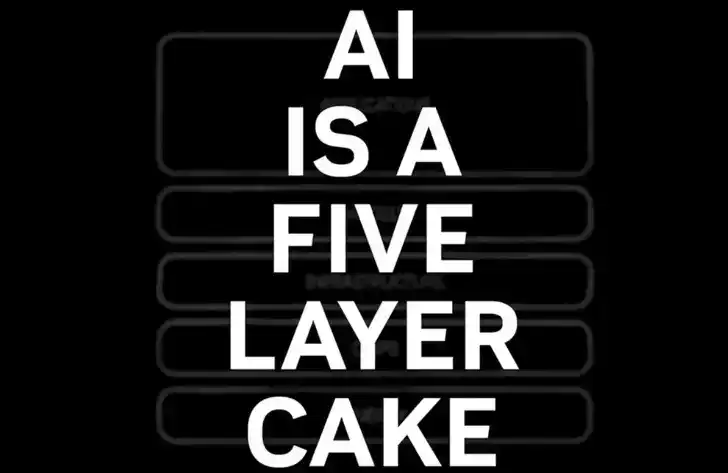
NVIDIA's Jensen Huang Latest Article: The 'Five-Layer Cake' of AI

NVIDIA's Jensen Huang articulates AI not merely as a software application but as a fundamental infrastructure, comparable to electricity or the internet, in a layered "five-layer cake" structure. This stack begins with **Energy** as the foundational constraint, powering real-time intelligence generation. Above it, **Chips** convert energy into computational power efficiently. The **Infrastructure** layer comprises data centers and systems that function as "AI factories." **Models** form the next layer, processing diverse data types like language, biology, and physics. At the top, **Applications**—such as drug discovery, autonomous vehicles, and robotics—create economic value. Huang emphasizes that AI is an industrial-scale transformation, driving massive global infrastructure expansion requiring trillions in investment and a skilled workforce—from electricians to network technicians—beyond just computer scientists. He notes that AI has recently crossed a threshold: models are now reliable enough for widespread use, reducing hallucinations and improving reasoning, which accelerates real-world applications. Open-source models, like DeepSeek-R1, further propel growth across the entire stack. This infrastructure revolution will reshape energy consumption, manufacturing, labor, and economic growth. Every company and country will participate, though the field remains early-stage, with vast opportunities and responsibilities ahead.

marsbit2 дні тому 14:18

NVIDIA's Jensen Huang Latest Article: The 'Five-Layer Cake' of AI

marsbit2 дні тому 14:18

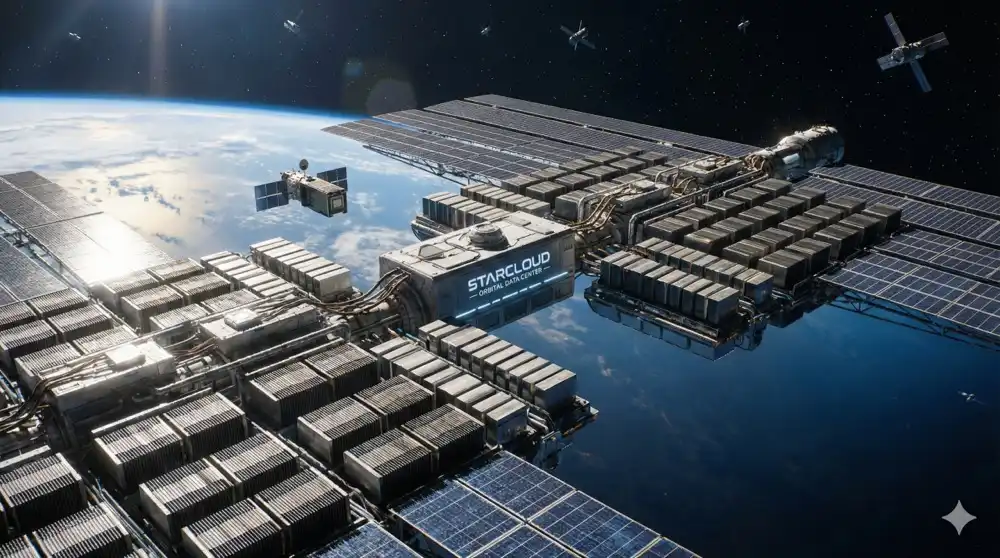
After Sending NVIDIA AI Servers into Space, This Space Startup Now Sets Its Sights on Bitcoin Mining

A space computing startup, Starcloud, is expanding its ambitions after successfully sending NVIDIA AI servers into orbit. The company now plans to launch Bitcoin mining operations into space, aiming to leverage the advantages of the extraterrestrial environment. CEO Philip Johnston revealed that Starcloud intends to deploy Bitcoin ASIC hardware on its Starcloud-2 satellite, scheduled for launch in 2026. If successful, it would mark the first-ever Bitcoin mining operation in space. The company believes space offers significant benefits, including near-limitless solar energy, reduced cooling costs due to extreme environmental conditions, and freedom from terrestrial energy constraints and regulatory pressures. However, the economic viability remains uncertain due to high launch costs, hardware durability challenges in high-radiation environments, and rapidly evolving mining technology. While the initiative may currently hold more symbolic than practical value, it reflects a growing trend of extending blockchain and computing infrastructure beyond Earth. Starcloud, backed by investors like a16z and Sequoia, has already made strides by training an AI model in orbit using an NVIDIA H100 GPU. The company, along with others like Google and SpaceX, is part of a broader movement to develop space-based data centers, signaling that the next frontier for AI and computing may indeed be in orbit.

marsbit2 дні тому 05:33

After Sending NVIDIA AI Servers into Space, This Space Startup Now Sets Its Sights on Bitcoin Mining

marsbit2 дні тому 05:33

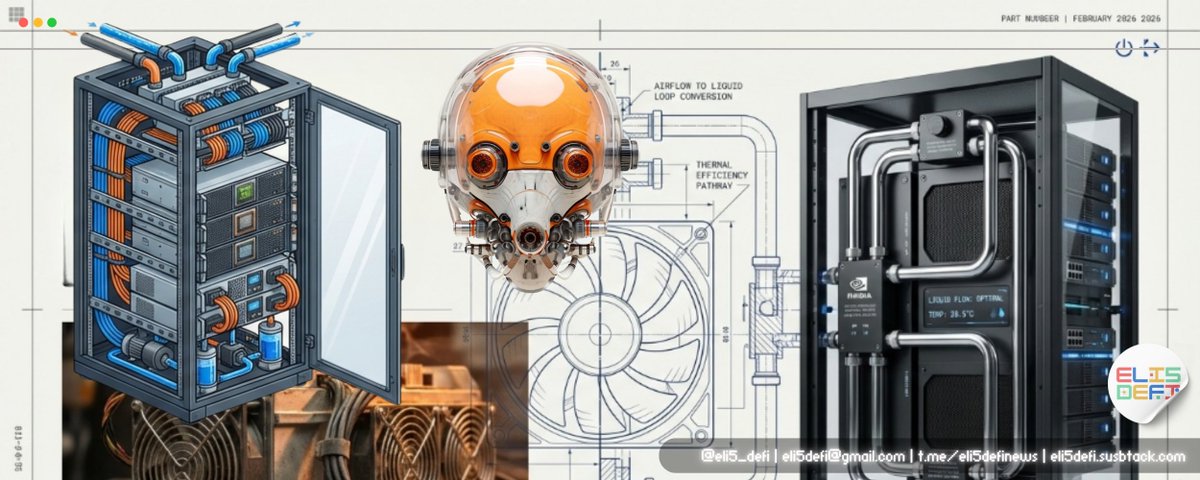
The Escalation of the Computing Power War: When 'Crypto Mines' Become 'AI Factories', A New Arena for Energy Arbitrage

The computing landscape has dramatically shifted by early 2026, with Bitcoin mining operations transforming into essential "AI factories." This transition is driven by a global scarcity of power, not just chips, turning pre-existing energized land into a monopolistic infrastructure asset. Former miners, now infrastructure capitalists, leverage their secured power and land—a critical advantage given the 5–7 year wait for new substations. Building AI-ready facilities has become capital-intensive, costing $8–11 million per megawatt, creating a clear divide between scaled leaders like Iris Energy (2910 MW portfolio) and execution-focused firms like TeraWulf and Hut 8, which have secured multi-billion dollar contracts. A key shift is the "hyperscale guarantor" model, where tech giants like Google and Microsoft provide credit backing, transforming risky miner leases into investment-grade contracts. This enables favorable debt financing at ~7.125% interest from major banks. Technologically, high-density liquid cooling is mandatory for platforms like NVIDIA’s Blackwell, which consumes 120 kW per rack. Innovations like Shanghai’s submerged data centers (PUE 1.15) use seawater cooling, reducing power use by 40–60%. The Blackwell supply backlog acts as a moat, locking out late entrants. Companies like CoreWeave, with early chip orders, dominate. The industry has matured into an energy-transition play, treating computation—whether Bitcoin or AI—as an interchangeable output of power assets. The era of pure mining is ending. The new high-stakes game is energy arbitrage, where AI factories become permanent, grid-shaping load-bearing institutions.

marsbit03/04 10:21

The Escalation of the Computing Power War: When 'Crypto Mines' Become 'AI Factories', A New Arena for Energy Arbitrage

marsbit03/04 10:21

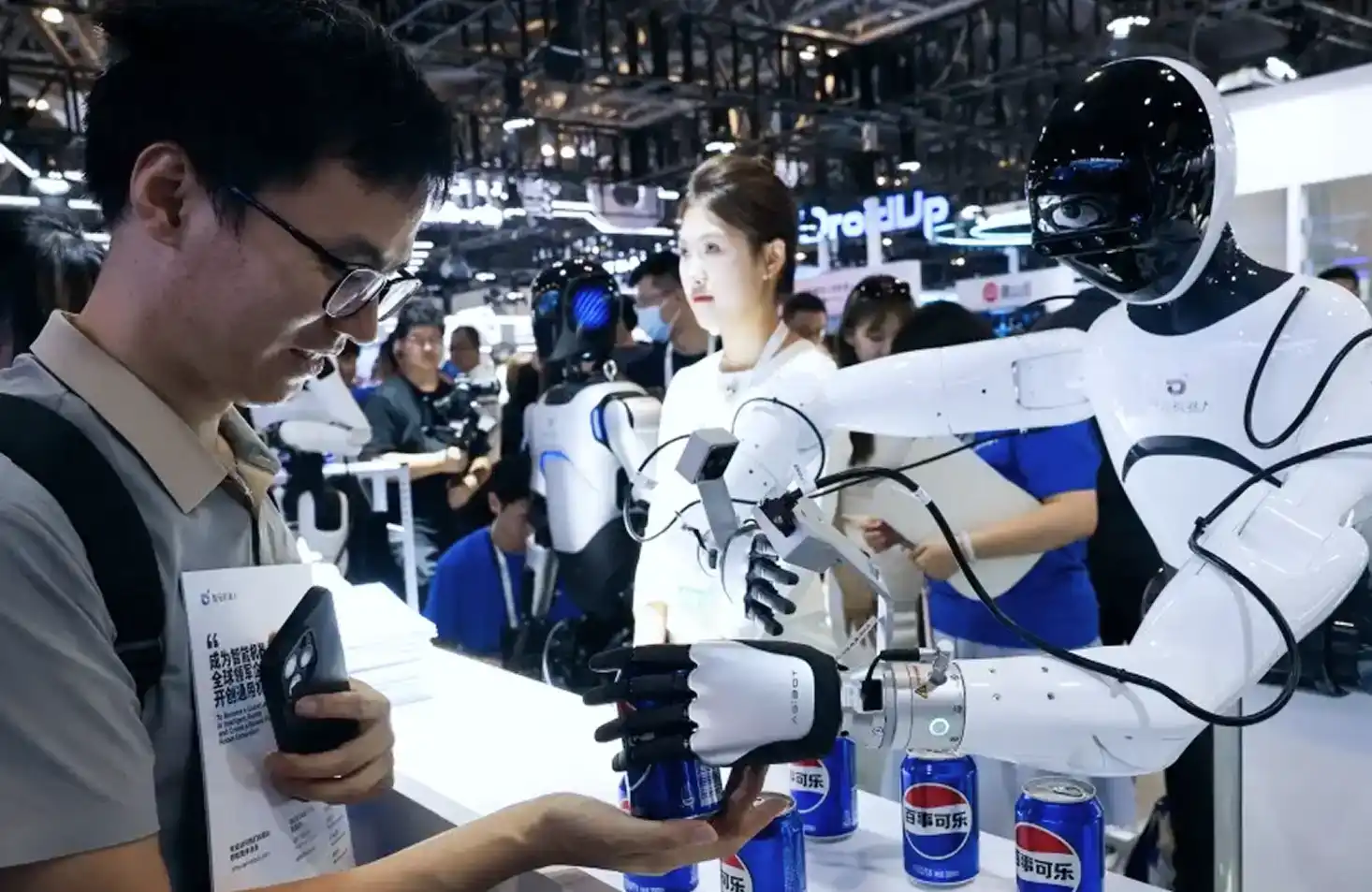
China's AI Computing Counterattack

Eight years after the ZTE crisis, China's AI industry is fighting back against U.S. chip restrictions. In 2018, ZTE nearly collapsed under U.S. sanctions but survived with heavy fines and oversight. Today, Chinese AI firms like DeepSeek are pivoting away from NVIDIA by developing domestic alternatives and optimizing algorithms to reduce reliance on foreign technology. DeepSeek’s V4 model will use entirely domestic chips, signaling a strategic shift toward computational independence. The real challenge isn’t just hardware—it’s NVIDIA’s CUDA ecosystem, which dominates global AI development with over 4.5 million developers. U.S. export controls have tightened since 2022, banning high-end chips like the A100, H100, and their downgraded versions. In response, Chinese companies are adopting technical workarounds like Mixture-of-Experts models, which activate only parts of the network during inference, slashing costs. DeepSeek’s API is up to 75x cheaper than competitors, driving rapid global adoption. By early 2026, Chinese models accounted for nearly 60% of API calls on OpenRouter. Domestic chips, such as Huawei’s Ascend series, are now capable of full-scale training, not just inference. Production lines in cities like Xinghua manufacture servers with homegrown processors, supporting major AI training projects. Meanwhile, the U.S. faces an electricity shortage as data centers consume growing power, while China benefits from greater energy capacity and lower costs. Chinese AI is also going global via “Token exports,” with services reaching users in India, Indonesia, and beyond. The situation echoes Japan’s semiconductor decline in the 1980s, but China is building an independent ecosystem rather than relying on global supply chains. Domestic chip firms report surging revenues but ongoing losses—reflecting the high cost of achieving true technological independence. The battle is difficult, but progress is underway.

marsbit03/04 05:09

China's AI Computing Counterattack

marsbit03/04 05:09

Who Controls Computing Power, Implicitly Controls the Future of AI: Anastasia, Co-founder of Gonka Protocol

Who Controls Compute, Controls AI's Future: Gonka Protocol Co-Founder Anastasia The centralization of compute power, not just AI models, is the critical power node in AI's future, argues Anastasia Matveeva, co-founder of Gonka Protocol. While public debate focuses on models, true power lies in the underlying infrastructure—access to GPUs, power, and data center capacity. This centralization creates structural barriers to innovation, enforces a rent-extraction model, and introduces systemic fragility. Gonka is a permissionless global network designed to decentralize AI compute. It enables anyone to contribute or access GPU resources via a programmatic, open API. Key to its efficiency is an architecture that minimizes overhead, ensuring most compute is used for actual AI workloads (primarily inference) rather than network maintenance. Rewards and governance are tied to verified compute contribution, not capital stake. The protocol addresses scalability and accessibility by allowing participants of all sizes to join without permission, with influence proportional to their compute power. It supports the emerging AI agent economy with transparent, dynamic pricing and reliable, verifiable computation. While currently not optimized for strict data sovereignty, its decentralized design avoids data accumulation, and its governance allows for future evolution to meet regulatory demands. The urgency for such decentralized solutions is high to prevent a calcified AI future dominated by a few infrastructure gatekeepers.

marsbit03/03 07:58

Who Controls Computing Power, Implicitly Controls the Future of AI: Anastasia, Co-founder of Gonka Protocol

marsbit03/03 07:58

OpenAI Is Turning AI into a Nuclear Arms Race That Ordinary People Can't Afford

In a record-breaking funding round, OpenAI has secured $110 billion, raising its post-money valuation to $840 billion. This investment, led by Amazon, NVIDIA, and SoftBank, marks the largest-ever private tech funding and signals a new phase in the global AI race—one defined by extreme capital concentration and geopolitical significance. The scale of funding dwarfs the GDP of many mid-sized nations and equals nearly half of NVIDIA’s annual revenue. It also accounts for more than half of all AI startup funding in 2025, accelerating an industry-wide arms race in compute, talent, and model development. This capital influx, however, risks widening the gap between giants and smaller players, potentially stifling innovation and increasing market consolidation. Strategic investors are not merely providing capital: Amazon’s $50 billion commitment includes an eight-year, $100 billion cloud expansion deal. SoftBank’s $30 billion staged investment serves as both a hedge and a bridge for future sovereign wealth entrants. NVIDIA’s $30 billion replaces an earlier partnership promise and effectively locks up its advanced GPU supply, creating a closed loop that sidelines competitors. Despite ChatGPT reaching 900 million weekly active users and 50 million paid subscribers, OpenAI’s burn rate remains high. It spent $0.62 for every dollar earned in 2025, with cumulative cash burn projected to hit $1150 billion by 2029. At the same time, its market share is eroding amid rising competition from Google’s Gemini and Musk’s Grok. Facing mounting financial pressure, OpenAI is eyeing a potential IPO in Q4 2026. The offering could mark either the peak of the AI investment bubble or the beginning of the AGI era—but for now, the world watches as OpenAI races against capital, competition, and time.

marsbit02/28 11:46

OpenAI Is Turning AI into a Nuclear Arms Race That Ordinary People Can't Afford

marsbit02/28 11:46

活动图片