Sui publishes post-mortem after mainnet stall halted transactions for six hours

ambcryptoОпубліковано о 2026-01-16Востаннє оновлено о 2026-01-16

Анотація

Sui Foundation published a post-mortem detailing a six-hour mainnet stall on January 15, caused by an edge-case bug in consensus commit logic. This led to validators processing conflicting transactions differently under specific garbage-collection conditions, resulting in divergent checkpoint digests. The network automatically halted to prevent inconsistent state finalization, prioritizing safety over availability. No forks, rollbacks, or fund losses occurred, and read operations remained functional. Sui is implementing improvements for faster recovery and enhanced testing to prevent similar issues, confirming the safety mechanisms worked as intended.

Sui Foundation has published a detailed post-mortem explaining the cause of the mainnet stall that disrupted transaction processing on 15 January. It confirmed that the network halted as a safety measure to prevent inconsistent state finalization.

According to the Foundation, the disruption lasted for approximately six hours. An internal divergence in validator consensus processing caused it.

During the incident, validators were unable to certify new checkpoints, leading to transaction submissions timing out while the network prioritized safety.

Sui consensus divergence triggered safety halt

The Foundation said the incident stemmed from an edge-case bug in the consensus commit logic that affected how conflicting transactions were handled under certain garbage-collection conditions.

As a result, different validators derived different consensus outputs and attempted to execute incompatible candidate checkpoints.

When validators detected that more than one-third of stake was signing a different checkpoint digest, checkpoint certification became impossible. Validators then halted progress to avoid finalizing an inconsistent state.

“This is the intended failure mode for this class of issue,” the Foundation said, noting that the network is designed to stop safely rather than risk forks or irreversible inconsistencies.

No forks, rollbacks, or fund losses

Sui stressed that the stall was not caused by network congestion, transaction volume, or external threats. Throughout the incident:

  • No certified state forks occurred
  • No certified transactions were rolled back
  • User funds were never at risk
  • Network safety and consistency guarantees were preserved

While transaction execution halted during the incident window, read operations continued to serve the last certified state. This ensured data consistency for users and applications.

Improvements planned after incident

The Sui Foundation said it is implementing several changes to reduce recovery time in the event of similar issues in the future.

Planned improvements include faster detection of checkpoint inconsistencies and more automated operator tooling to clean up divergent internal state. Also, expanded consensus-specific testing to reproduce and validate fixes before deployment.

The Foundation added that while the interruption was disruptive, it confirmed that Sui’s safety-focused architecture behaved as designed.


Final Thoughts

  • Sui’s explanation confirms the mainnet stall was the result of a consensus edge case, with safety mechanisms halting the network to avoid inconsistent finalized state.
  • While disruptive, the incident highlights the trade-off between availability and safety as high-throughput networks push performance limits.

Пов'язані питання

QWhat was the primary cause of the mainnet stall on the Sui network on January 15th?

AThe stall was caused by an edge-case bug in the consensus commit logic that affected how conflicting transactions were handled under certain garbage-collection conditions, leading to an internal divergence in validator consensus processing.

QHow long did the network disruption last, and what was the core function that was halted?

AThe disruption lasted for approximately six hours, during which validators were unable to certify new checkpoints, halting transaction processing.

QAccording to the post-mortem, what key negative outcomes were avoided during the incident?

ANo certified state forks occurred, no certified transactions were rolled back, user funds were never at risk, and the network's safety and consistency guarantees were preserved.

QWhat safety mechanism was triggered that caused the network to halt progress?

AWhen validators detected that more than one-third of the stake was signing a different checkpoint digest, checkpoint certification became impossible, and they halted progress to avoid finalizing an inconsistent state.

QWhat improvements is the Sui Foundation implementing to prevent similar issues in the future?

APlanned improvements include faster detection of checkpoint inconsistencies, more automated operator tooling to clean up divergent internal state, and expanded consensus-specific testing to reproduce and validate fixes before deployment.

Пов'язані матеріали

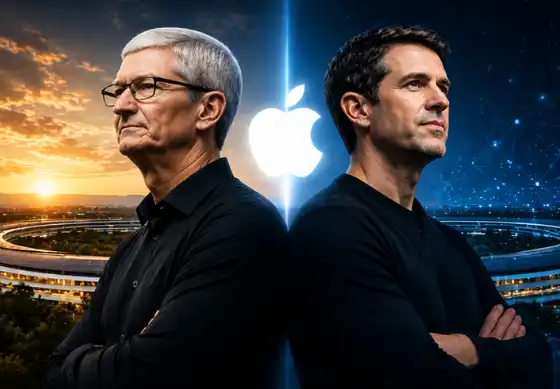
Cook's Curtain Call and Ternus Takes the Helm: The Disruption and Reboot of Apple's 4 Trillion Dollar Empire

Tim Cook has officially announced he will step down as CEO of Apple in September, transitioning to executive chairman after a 15-year tenure during which he grew the company’s market value from around $350 billion to nearly $4 trillion. He will be succeeded by John Ternus, a 50-year-old hardware engineering veteran who has been groomed for the role through increasing public visibility and internal responsibility. Ternus’s appointment signals a strategic shift toward hardware and engineering leadership, with Johny Srouji—head of Apple Silicon—taking on an expanded role as Chief Hardware Officer. This consolidation aims to strengthen Apple’s core technological capabilities. However, Cook’s departure highlights a significant unresolved issue: Apple’s delayed and fragmented approach to artificial intelligence. Despite early efforts, such as hiring John Giannandrea from Google in 2018, Apple’s AI initiatives—particularly around Siri—have struggled with internal restructuring and reliance on external partnerships, including with Google. The transition comes at a critical moment as Apple faces paradigm shifts with the rise of artificial general intelligence (ASI). The company’s closed ecosystem of hardware, software, and services—once a major advantage—now presents challenges in adapting to an AI-centric world where intelligence may matter more than the device itself. Ternus must quickly articulate a clear AI strategy, possibly starting at WWDC, to reassure markets and redefine Apple’s role in a new technological era. His task is not only to maintain Apple’s operational excellence but also to reinvigorate its capacity to innovate and lead in the age of AI.

marsbit1 год тому

Cook's Curtain Call and Ternus Takes the Helm: The Disruption and Reboot of Apple's 4 Trillion Dollar Empire

marsbit1 год тому

Торгівля

Спот
Ф'ючерси

Популярні статті

Як купити SUI

Ласкаво просимо до HTX.com! Ми зробили покупку SUI Network (SUI) простою та зручною. Дотримуйтесь нашої покрокової інструкції, щоб розпочати свою криптовалютну подорож.Крок 1: Створіть обліковий запис на HTXВикористовуйте свою електронну пошту або номер телефону, щоб зареєструвати обліковий запис на HTX безплатно. Пройдіть безпроблемну реєстрацію й отримайте доступ до всіх функцій.ЗареєструватисьКрок 2: Перейдіть до розділу Купити крипту і виберіть спосіб оплатиКредитна/дебетова картка: використовуйте вашу картку Visa або Mastercard, щоб миттєво купити SUI Network (SUI).Баланс: використовуйте кошти з балансу вашого рахунку HTX для безперешкодної торгівлі.Треті особи: ми додали популярні способи оплати, такі як Google Pay та Apple Pay, щоб підвищити зручність.P2P: Торгуйте безпосередньо з іншими користувачами на HTX.Позабіржова торгівля (OTC): ми пропонуємо індивідуальні послуги та конкурентні обмінні курси для трейдерів.Крок 3: Зберігайте свої SUI Network (SUI)Після придбання SUI Network (SUI) збережіть його у своєму обліковому записі на HTX. Крім того, ви можете відправити його в інше місце за допомогою блокчейн-переказу або використовувати його для торгівлі іншими криптовалютами.Крок 4: Торгівля SUI Network (SUI)Легко торгуйте SUI Network (SUI) на спотовому ринку HTX. Просто увійдіть до свого облікового запису, виберіть торгову пару, укладайте угоди та спостерігайте за ними в режимі реального часу. Ми пропонуємо зручний досвід як для початківців, так і для досвідчених трейдерів.

428 переглядів усьогоОпубліковано 2024.12.12Оновлено 2025.03.21

Як купити SUI

Обговорення

Ласкаво просимо до спільноти HTX. Тут ви можете бути в курсі останніх подій розвитку платформи та отримати доступ до професійної ринкової інформації. Нижче представлені думки користувачів щодо ціни SUI (SUI).

活动图片