SUBBD Token’s Massive Projected Impact on the Content Creation Market in 2026

bitcoinistОпубліковано о 2026-02-10Востаннє оновлено о 2026-02-10

Анотація

The SUBBD Token ($SUBBD) is projected to significantly impact the $191 billion content creation market by 2026 by addressing inefficiencies in the current creator economy. It aims to replace high-fee centralized platforms with a decentralized, AI-integrated Web3 alternative. The platform consolidates tools like AI Personal Assistants, Voice Cloning, and automated interactions into a single interface, solving tool fragmentation issues. It enables multiple monetization methods, including PPV, NFT sales, and AI-exclusive content, while allowing community-led governance through token-based voting. The presale has raised $1.47 million, with tokens priced at $0.057495. A fixed 20% APY staking reward in the first year incentivizes long-term holding and reduces sell pressure. By combining AI-driven automation with decentralized infrastructure, SUBBD Token positions itself as a comprehensive ecosystem for creators seeking sovereignty and reduced operational overhead.

Trusted Editorial content, reviewed by leading industry experts and seasoned editors. Ad Disclosure

Quick Facts:

  • ➡️ SUBBD Token targets the inefficiencies of the $191B creator economy, aiming to replace high-fee legacy platforms with a decentralized, AI-integrated alternative by 2026.
  • ➡️ The project consolidates essential tools, such as AI Personal Assistants, Voice Cloning, and automated interactions, into a single Web3 interface, solving the problem of tool fragmentation.
  • ➡️ With $1.47M raised and a current price of $0.057495, the project demonstrates significant early interest and financial backing.
  • ➡️ A fixed 20% APY staking reward for the first year creates a robust mechanism for reducing sell pressure while rewarding long-term ecosystem participants.

The digital economy is heading toward a singular, undeniable friction point: the unsustainable rent-seeking of centralized platforms.

As analysts forecast the state of the industry three years out, the consensus surrounding SUBBD Token’s massive projected impact on the content creation market in 2026 is rooted in a fundamental shift from aggregation to autonomy.

Right now, the creator economy is valued at roughly $191B, yet the infrastructure supporting it remains archaic, characterized by opaque algorithms and fee structures that strip creators of up to 70% of their earnings.

This structural inefficiency creates a vacuum for decentralized alternatives. In 2026, market intelligence suggests that Artificial Intelligence won’t merely be a tool for content generation but the primary interface for monetization and community management.

The divergence is clear. On one side, legacy platforms are increasing take rates to satisfy shareholders; on the other, Web3 protocols are using Generative AI to automate workflows and slash overhead.

This collision of AI ubiquity and decentralized finance (DeFi) sets the stage for specialized utility tokens to capture significant market share. Investors and creators aren’t looking for simple payment rails anymore; they want comprehensive ecosystems that solve the ‘fragmentation headache’ of managing subscriptions, AI tools, and payouts across disparate apps.

It’s within this high-stakes environment that SUBBD Token ($SUBBD) has emerged, positioning itself not just as a currency, but as the operational backbone for the next generation of digital interaction.

Read more about $SUBBD here.

Disrupting The $191B Economy Through AI-Driven Autonomy

The projected impact of SUBBD Token ($SUBBD) hinges on its ability to dismantle the current fee logic of the $85 billion content creation industry. Standard platforms operate as walled gardens. SUBBD flips the script, introducing a model where value accrues directly to the user through Ethereum-based EVM-compatible smart contracts.

This isn’t just about lower transaction costs; it’s about using proprietary AI to remove the administrative burden that currently stifles creator growth.

The platform’s technical architecture integrates an AI Personal Assistant and advanced Voice Cloning technology directly into the user experience. For a creator, this means the ability to deploy AI-driven influencers or automate fan interactions without relying on third-party software that demands additional subscriptions.
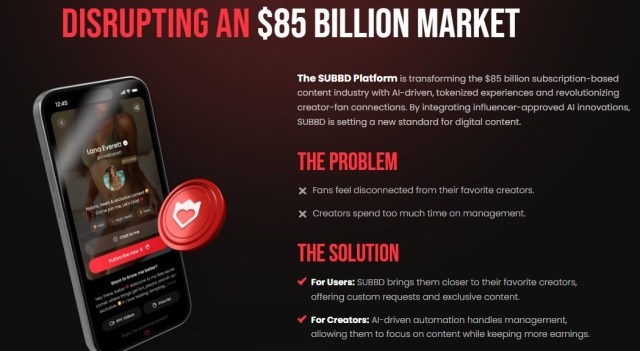
By consolidating these tools, chatbots, object recognition, and content generation, into a single Web3 environment, SUBBD addresses the fragmentation plaguing the sector.

Plus, the introduction of token-gated access fundamentally changes the relationship between creator and consumer. Instead of arbitrary bans or demonetization based on shifting corporate policies, governance is handled through token-based voting. This ensures that the community dictates feature rollouts and content themes.

The data points to a clear trend: creators are migrating toward platforms that offer sovereignty. SUBBD’s provision of multiple monetization routes, including PPV, NFT sales, and AI-exclusive content, suggests a strategic alignment with where the market is heading in 2026.

Explore the SUBBD Token presale here.

Presale Momentum And The Case For 20% APY Staking Rewards

While the technological utility provides the long-term thesis, the immediate market reaction is visible in the project’s capital accumulation.

According to official data, the SUBBD Token presale has already raised $1.47M, a figure that indicates strong early conviction from retail and sophisticated investors alike. With tokens currently priced at $0.057495, the market is pricing in the potential for this asset to bridge the gap between speculative crypto assets and tangible software-as-a-service (SaaS) utility.
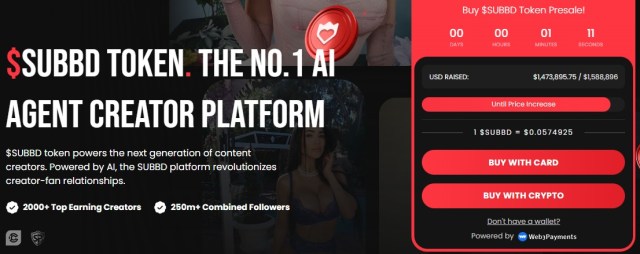
The tokenomics structure (often a weak point in new projects) looks designed to mitigate the volatility typically associated with early-stage utility tokens.

The protocol offers a fixed 20% APY for staking during the first year. This mechanism serves a dual purpose: it incentivizes long-term holding to reduce circulating supply pressure and aligns user interests with platform growth.

Beyond simple yield, staking unlocks specific platform benefits, such as XP multipliers and access to exclusive ‘HoneyHive’ content and behind-the-scenes drops.

For investors analyzing the 2026 horizon, the critical metric is user retention. The integration of financial incentives (staking) with product utility (AI tools) creates a ‘sticky’ ecosystem.

Unlike meme coins driven by ephemeral hype, SUBBD Token is leveraging its capital raise to build an infrastructure capable of handling high-throughput interactions between fans and AI-augmented creators. As the presale continues, the focus remains on how effectively this capital gets deployed to capture market share from legacy giants before the 2026 maturation point.

Buy $SUBBD here.

This article is for informational purposes only and does not constitute financial advice. Cryptocurrency investments, including presales and staking, carry inherent risks due to market volatility. Always conduct your own due diligence before participating in any token sale.

Editorial Process for bitcoinist is centered on delivering thoroughly researched, accurate, and unbiased content. We uphold strict sourcing standards, and each page undergoes diligent review by our team of top technology experts and seasoned editors. This process ensures the integrity, relevance, and value of our content for our readers.

patrubogdan

Follow

Full Profile

Related Posts

Government Shutdown Fears Trigger 2% Crypto Dip, But Bitcoin Hyper Remains Unshaken

Dogecoin Tries to Hold $0.09370 – Is 2026 the Doge Year or Will $MAXI Take Over?

US Debt Spiral Eyes $39T: Why Bitcoin Hyper ($HYPER) Is The Hedge to Watch

Crypto Exchange Backpack Targets Token Launch Soon, as BMIC Fires Up Quantum Defense

Ethereum Foundation Backs SEAL Initiative as LiquidChain L3 Protocol Gains Traction

Vitalik Buterin Outlines Ethereum’s AI Future, While SUBBD Token Targets the Creator Economy

Пов'язані питання

QWhat is the core problem SUBBD Token aims to solve in the $191B creator economy?

ASUBDD Token aims to solve the structural inefficiencies and high fees of centralized platforms, which can strip creators of up to 70% of their earnings, by providing a decentralized, AI-integrated alternative.

QWhat key AI technologies are integrated into the SUBBD platform to help creators?

AThe platform integrates an AI Personal Assistant, advanced Voice Cloning technology, chatbots, object recognition, and content generation tools into a single Web3 interface.

QHow much capital has the SUBBD Token presale raised and what is the current token price?

AThe SUBBD Token presale has raised $1.47 million, with tokens currently priced at $0.057495.

QWhat is the purpose of the fixed 20% APY staking reward in the SUBBD ecosystem?

AThe fixed 20% APY staking reward for the first year serves a dual purpose: it incentivizes long-term holding to reduce sell pressure and aligns user interests with platform growth by rewarding ecosystem participants.

QHow does SUBBD's token-gated access change the creator-consumer relationship?

AToken-gated access shifts governance to the community through token-based voting, preventing arbitrary bans or demonetization from centralized corporate policies and allowing the community to dictate feature rollouts and content themes.

Пов'язані матеріали

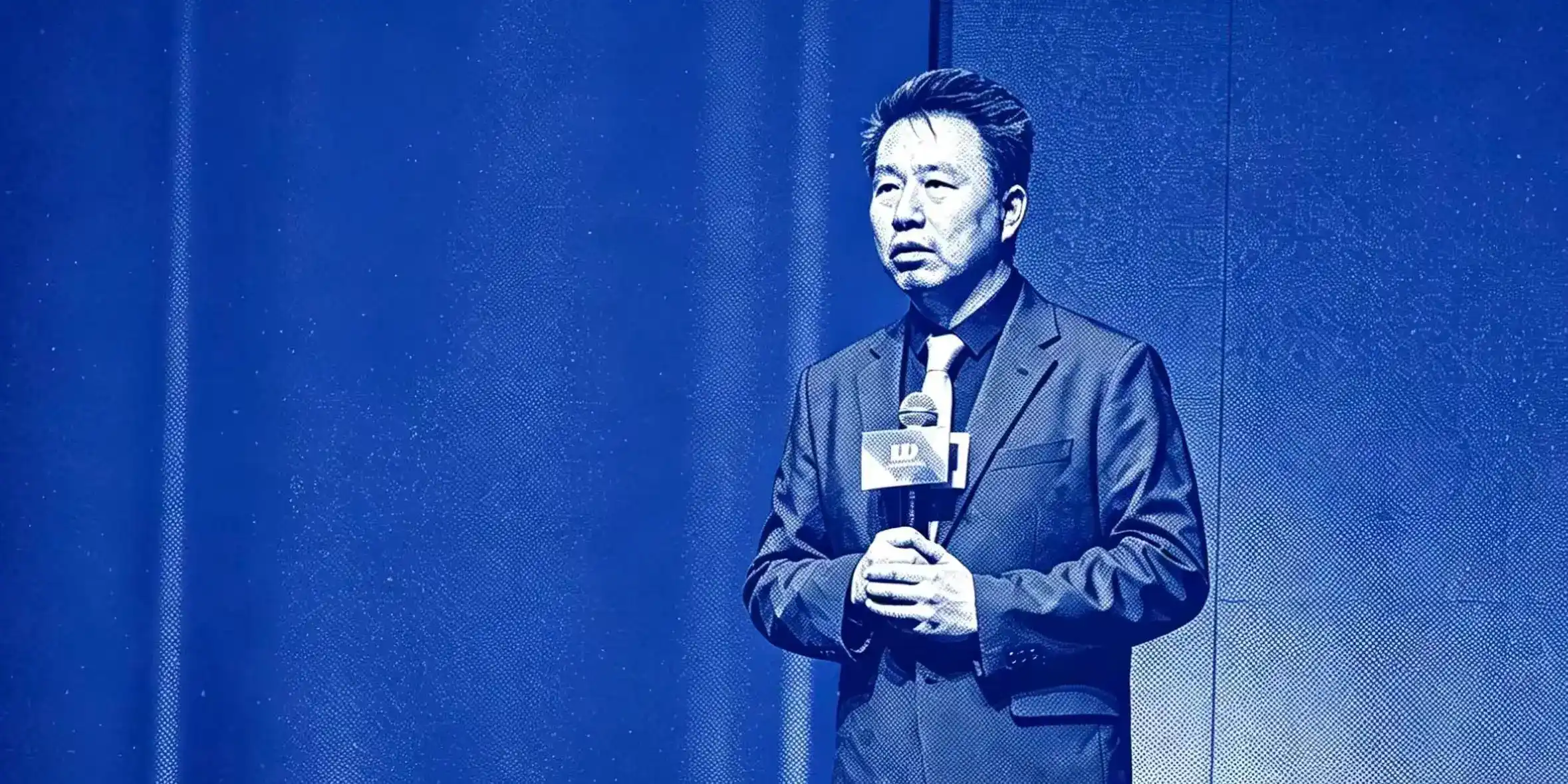
Fu Peng's First Public Speech in 2026: What Exactly Are Crypto Assets? Why Did I Join the Crypto Asset Industry?

Fu Peng, a renowned macroeconomist and now Chief Economist at New火 Group, delivered his first public speech of 2026 at the Hong Kong Web3 Festival. He explained his perspective on crypto assets and why he joined the industry, framing it within the context of macroeconomic trends and financial evolution. Fu emphasized that crypto assets are transitioning from an early, belief-driven phase to a mature, institutionally integrated asset class. He drew parallels to the 1970s-80s, when technological advances (like computing) revolutionized traditional finance, leading to the rise of FICC (Fixed Income, Currencies, and Commodities). Similarly, current advancements in AI, data, and blockchain are reshaping finance, with crypto assets becoming part of a new "FICC + C" (C for Crypto) framework. He noted that institutional capital, including traditional hedge funds, avoided early crypto due to its speculative nature but are now engaging as regulatory clarity emerges (e.g., stablecoin laws, CFTC classifying crypto as a commodity). Fu predicted that 2025-2026 marks a turning point where crypto becomes a standardized, financially viable asset for diversified portfolios, akin to commodities or derivatives in traditional finance. Fu defined Bitcoin not as "digital gold" in a simplistic sense but as a value-preserving, financially tradable asset. He highlighted that crypto's future lies in regulated, institutional adoption, moving away from retail-dominated trading. His entry into crypto signals this maturation, where traditional finance integrates crypto into mainstream asset management.

marsbit1 год тому

Fu Peng's First Public Speech in 2026: What Exactly Are Crypto Assets? Why Did I Join the Crypto Asset Industry?

marsbit1 год тому

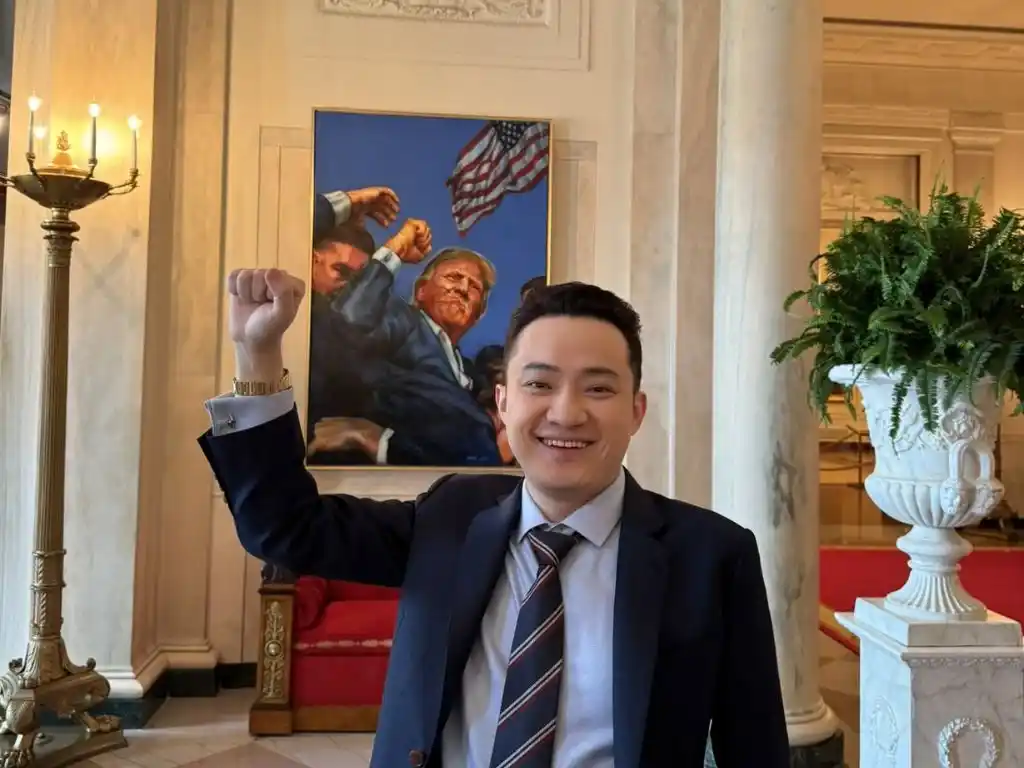
Justin Sun Sues Trump Family: What $75 Million Bought Was Only a Blacklist

Justin Sun, founder of Tron, has filed a lawsuit in federal court against World Liberty Financial (WLF), alleging he was made the "primary target of a fraudulent scheme" after investing $75 million. Sun claims the investment secured him an advisor title and WLFI tokens, which were later frozen by WLF, causing "hundreds of millions in losses." The dispute began in late 2024 when Sun's investment helped revive WLF's struggling token sale, which ultimately raised $550 million. Shortly after, the SEC dropped its lawsuit against Sun following Donald Trump's inauguration. However, relations soured when Sun refused WLF's demands for additional funding. In August 2025, WLF added a "blacklist" function to its smart contract, allowing it to unilaterally freeze tokens. Sun's holdings, worth approximately $107 million, were frozen, and he was threatened with token destruction. The lawsuit highlights WLF's structure, which directs 75% of token sale profits to the Trump family, who had earned $1 billion by December 2025. WLF's CEO is Zach Witkoff, son of U.S. Middle East envoy Steve Witkoff. The project faces scrutiny for opaque operations, including a controversial loan arrangement on the Dolomite platform, co-founded by a WLF advisor. Despite Sun's history with the SEC, the case underscores centralization risks within DeFi, as WLF controls governance and holds powers to freeze assets arbitrarily. Sun's tokens remain frozen as legal proceedings begin.

marsbit1 год тому

Justin Sun Sues Trump Family: What $75 Million Bought Was Only a Blacklist

marsbit1 год тому

$500 to Buy OpenAI Stock: Silicon Valley's Most Respectable Liquidity Invitation

Silicon Valley's largest venture capital platform, AngelList, has launched a new fund called USVC, allowing U.S. retail investors to buy into high-profile AI companies like OpenAI, Anthropic, and xAI with a minimum investment of $500—no accredited investor status required. Promoted by AngelList co-founder Naval Ravikant, the fund is framed as an opportunity for ordinary people to access high-growth private tech investments traditionally reserved for VCs. However, critics argue it functions more like an exit vehicle for early insiders. USVC acquires shares not through primary rounds but largely via secondary transactions—purchasing stakes from early investors, VC funds, and employees looking to cash out at peak valuations. With companies like xAI heavily weighted in the portfolio, the fund effectively channels retail money into providing liquidity for insiders who entered at much lower valuations. The fund’s structure raises concerns: shares are illiquid, with no secondary market, and buybacks are limited and discretionary. The actual annual fee reaches 3.61%, far above the advertised 1% management fee. This model parallels the "low float, high fully diluted valuation" strategy seen in crypto, where early investors profit by selling to latecomers at inflated prices. The timing—alongside similar moves by platforms like Robinhood—suggests that Silicon Valley’s sudden interest in retail inclusion may be less about democratizing access and more about securing exits for insiders.

marsbit1 год тому

$500 to Buy OpenAI Stock: Silicon Valley's Most Respectable Liquidity Invitation

marsbit1 год тому

Торгівля

Спот
Ф'ючерси
活动图片