Stack Overflow Is Dying, New Questions Are Fewer Than During the Beta Period

marsbitОпубліковано о 2026-08-17Востаннє оновлено о 2026-08-17

Анотація

The article discusses the decline of Stack Overflow, the prominent programming Q&A community, noting that new question submissions in July 2026 dropped to just 1,304—far below its peak of 207,000 in March 2014. Official data reveals a steady decline in activity since 2014, exacerbated by the rise of AI coding assistants like ChatGPT, which offer instant, private solutions and reduce the need for public forum posts. While a restrictive community culture that often penalized new users contributed to the downturn, the widespread adoption of AI tools has dramatically accelerated the platform's stagnation. Similar declines are observed in other knowledge-based platforms like Chegg, Fiverr, and Wikipedia, where AI-generated content is displacing human-generated queries and contributions. Research indicates that not only are fewer users asking questions, but high-reputation experts are also leaving the platform at increasing rates—a phenomenon termed "signal compression," where the value of demonstrated expertise diminishes when AI can produce superficially competent answers. This threatens the formation of future human expertise. Although AI models have been trained extensively on Stack Overflow's open corpus, the reduction in new, timely public Q&A content may limit the knowledge available for future AI training. Some suggest that trustworthy human-curated knowledge layers, blogs, and niche communities may regain importance as sources of reliable, attributed information. The sh...

Stack Overflow, hailed as the "programmer's bible," a professional community that has amassed over 24 million questions and the largest programming Q&A corpus on the internet, is dying.
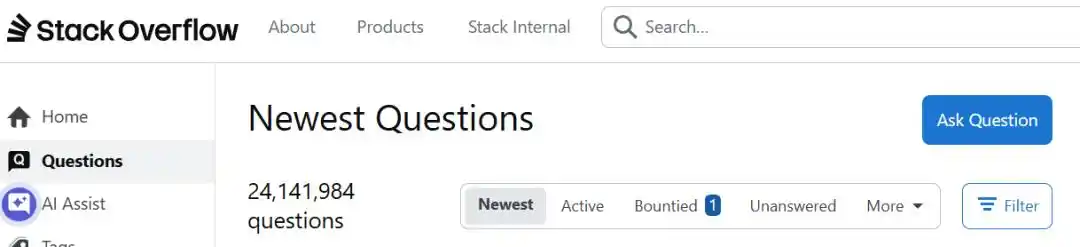
In July 2026, programmers worldwide asked a total of 1304 questions on Stack Overflow.

In March 2014, that number was 207,000.

The other day, developer Daniel Lockyer posted a line chart containing this data on X, lamenting "the end of an era."
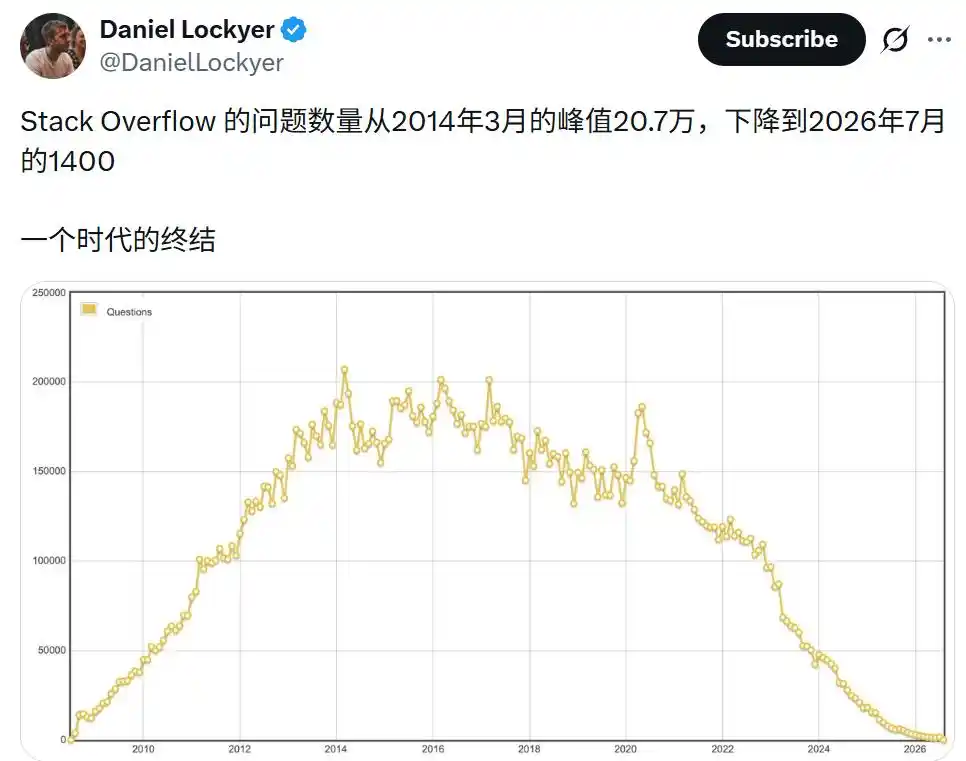
The data is genuine, sourced from Stack Overflow's official public SQL query interface, the Stack Exchange Data Explorer.

The next day, independent developer Pieter Levels (levelsio) reposted this chart, linking it to another topic: if no one asks questions on Stack Overflow anymore, and Reddit is overrun by promotion bots, how much real human-written content remains on the internet? With no new content, what will the next generation of models train on?
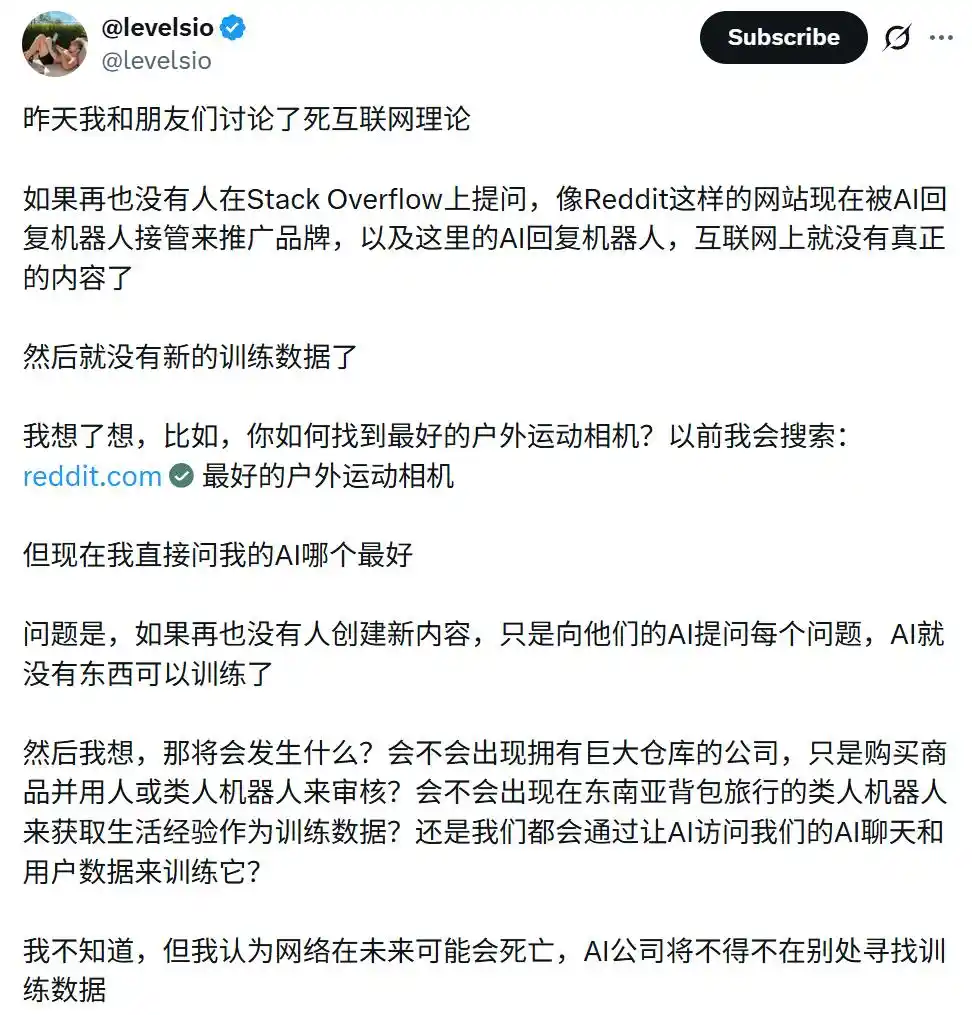
These two tweets sparked widespread discussion. Netizens' attitudes varied greatly, ranging from lamentation and excitement to sorrow... and more.

The Rise and Fall of Stack Overflow

Looking closely at the monthly question volume curve for Stack Overflow above, we can clearly divide it into three segments.

The first segment is growth. In July 2008 during the private beta, there were only 4 questions; 3744 in August; and after the public beta on September 15, it jumped to 14,024 that month. By January 2010, it was already 44,923 per month. The annual question count surpassed one million in 2011 and two million in 2013. This is a textbook hockey stick phenomenon.

The second segment is the plateau. The single-month peak stalled at 207,000 in March 2014, followed by 201,000 in March 2017 and March 2016. The three highest months spread over four years indicate a plateau, not a sharp spike. The annual total remained stable above two million between 2013 and 2017, peaking at 2.18 million in 2016. It began to loosen afterward but didn't collapse: 1.88 million in 2018, 1.75 million in 2019, rebounding to 1.85 million in 2020, with April 2020 alone seeing 180,000 questions.

The third segment is the decline phase. 1.34 million for the whole year in 2022, 790,000 in 2023, 400,000 in 2024, and 110,000 in 2025. The entire 2025 question volume is less than 53% of the single month of March 2014.

Looking more granularly, the compression is even more dramatic. 17,935 in December 2024, 3,312 in December 2025 (an 81.5% year-on-year drop), 2,910 in January 2026, 1,903 in March, 1,229 in May, and 1,072 in June. Excluding the private beta launch month of July 2008 with its 4 questions, June's 1,072 is the lowest full month in the site's entire history. July 2026 saw a slight rebound but remained low at only 1,304 questions.
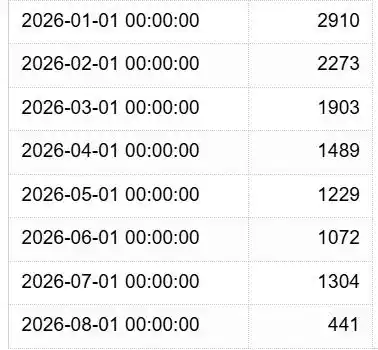
The first seven months of 2026 total about 12,000 questions. Based on the daily question rate of 2016, this is roughly the amount from about two days that year.

Stack Overflow's Decline Is Not Entirely Due to AI

From the graph, Stack Overflow's decline actually started eight years earlier than ChatGPT.

The inflection point appeared in 2014 when Stack Overflow began systematically improving moderation efficiency, more actively closing duplicate questions and queries that "did not meet standards." The site's intention was to preserve the signal-to-noise ratio, at the cost of blocking new users. A 2022 study showed that in a sample of 968 new user posts, 49% encountered at least one of: closure, no replies, or unexplained downvotes.
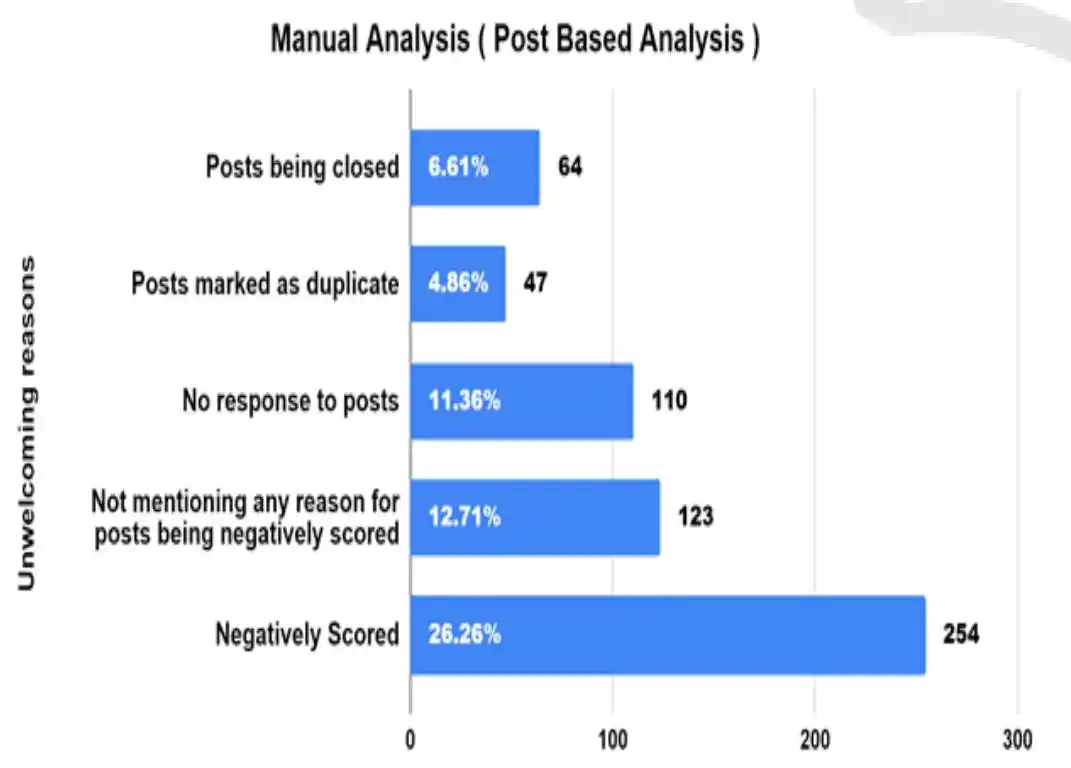
https://www.scitepress.org/PublishedPapers/2022/110811/110811.pdf

This culture has been criticized for a decade. Devclass, reporting on the January data wave, quoted a developer's reaction, roughly stating that AI indeed accelerated the decline, but the root lies in the community long punishing those trying to participate, and people finally have a tool that doesn't say "your question is stupid."

Below Daniel Lockyer's tweet, we can also see many similar criticisms:

The problem is that a hostile culture alone isn't enough to drive annual question volume down to the tens of thousands. Before 2022, that number consistently stayed above 1.3 million. The real cliff is the result of two things combined: ChatGPT reduced the marginal cost of asking to zero, and then AI assistants in IDEs made the act of asking disappear altogether.

Developers no longer need to leave the editor, don't need to formulate the problem into a minimal reproducible example a stranger can understand, and don't need to wait hours.

Stack Overflow's value was once built on "turning one person's problem into everyone's asset." AI assistants do precisely the opposite: they turn public questions back into private conversations.

The site hasn't been idle. In October 2023, it laid off 28% (following 58 layoffs in May), launched OverflowAI, pivoted to data licensing for companies like OpenAI, and erected anti-scraping walls to force platforms back to the negotiating table.
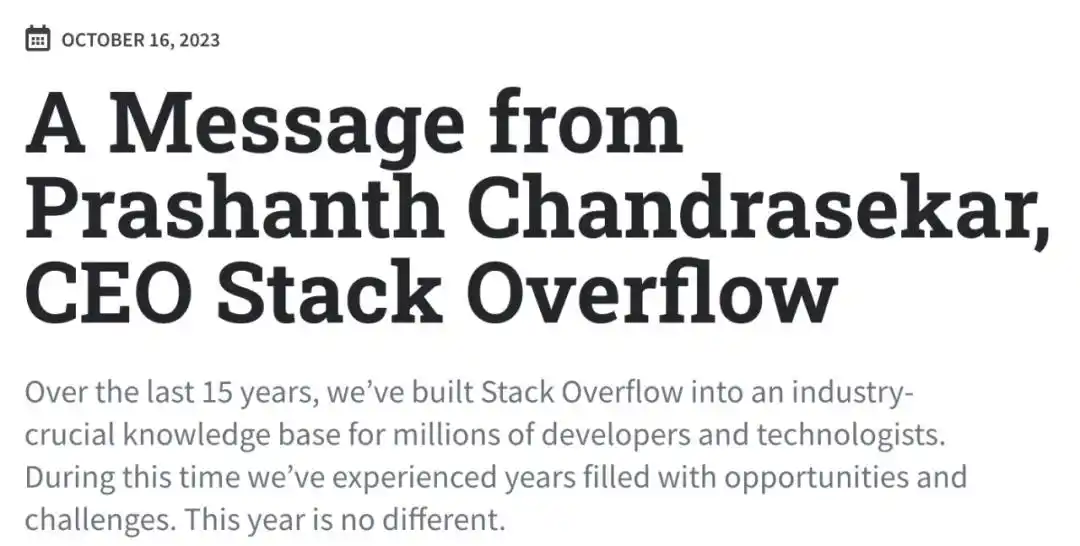
https://stackoverflow.blog/2023/10/16/stack-overflow-company-announcement-october-2023/

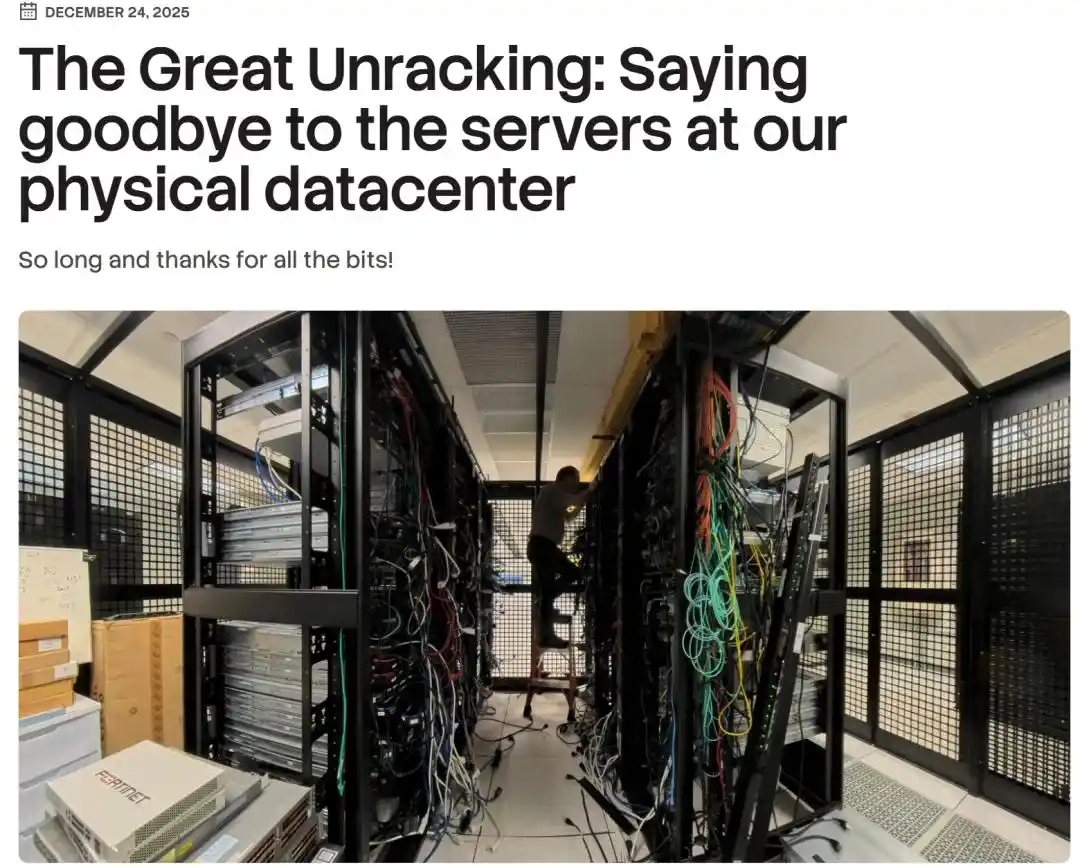
In 2025, it fully migrated to the cloud, decommissioning all ~50 servers from the New Jersey data center (its NYC location was actually NJ), retired the Colorado disaster recovery site in June, and ended the year with the blog post "The Great Unracking," giving this sixteen-year physical infrastructure history a subtitle: "So long, and thanks for all the bits."
In February 2026, the site underwent a redesign and got a new logo. CEO Prashanth Chandrasekar, in place since 2019, remains, and the company is still owned by Prosus. The $1.8 billion acquisition in June 2021 was completed exactly eighteen months before the steepest decline began.

Not Just Stack Overflow

Stack Overflow looks particularly conspicuous because it clearly publishes question statistics. But in reality, similar curves are appearing in many places with different slopes.

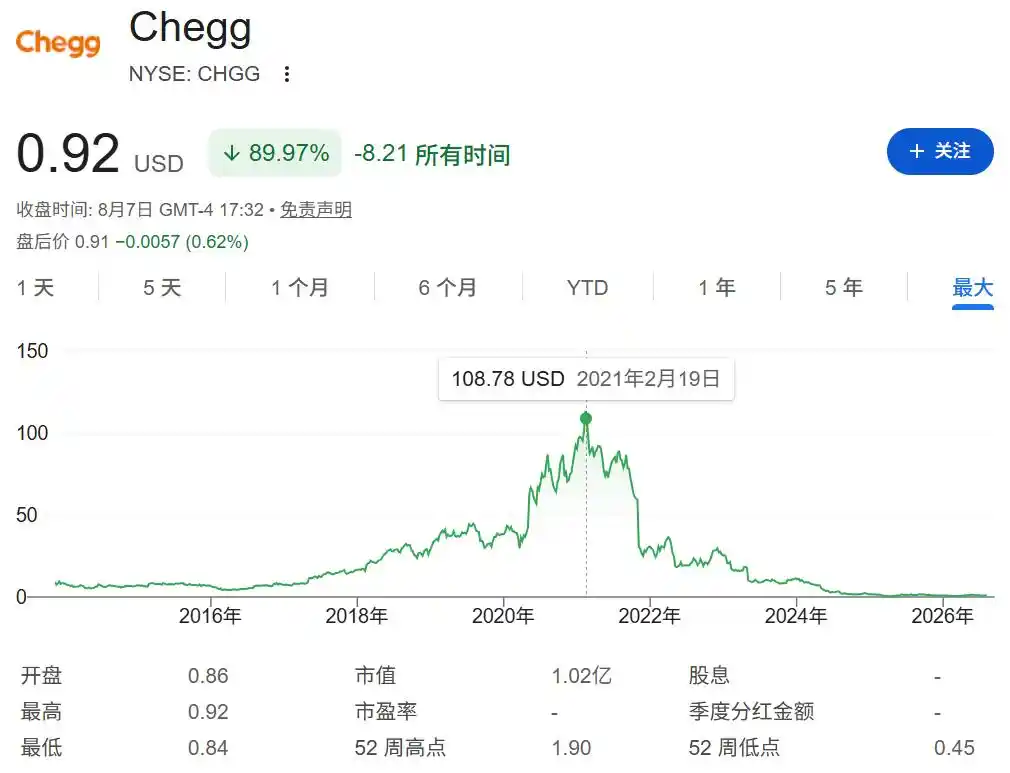
Chegg is widely acknowledged as the fastest to die. This online education company, which started with textbook rentals in 2005 and went public in 2013, relied on the same model: turning homework answers into searchable stock assets, using search engines for traffic, and charging a monthly fee.

After ChatGPT launched, students had no reason to pay anymore. Needham's research showed that in November 2024, 62% of students planned to use ChatGPT, up from 43% in spring 2023; Chegg dropped from 38% to 30% over the same period.

In 2023, it attempted a self-rescue, creating CheggMate using GPT-4 plus its over 100 million academic data points, trying to prove a specialized AI was worth paying for, but students didn't buy it.

In May 2025, it laid off 248 employees (22%) and closed US and Canada offices; in October, it laid off another 388 (45% of remaining staff). By late April 2026, its stock hovered around $1.07, with a market cap of about $125 million in May, roughly 99% evaporated from its peak. From peak to near zero, about 39 months.
Freelance platforms are the second sample, and they show clear stratification. Fiverr's Q2 2026 earnings released on July 29: revenue of $97.8 million, down 10% year-over-year; marketplace revenue from matching transactions fell 15.5% to $63.1 million. The real eye-catcher is buyer count: 2.7 million annual active buyers as of June 30, down 21.9% from 3.4 million a year earlier. But average spend per buyer rose 15.6% to $368 over the same period, take rate increased from 27.6% to 28.0%, and the number of clients completing projects over $1000 grew 13% year-over-year. Management gave the most straightforward annotation on the earnings call: on a TTM basis, the writing and translation categories saw the largest declines, over 24%. Full-year guidance was lowered to $356-$372 million, down 14% to 17% year-over-year, and they stated this transformation might take at least six quarters to show results.

The same logic repeats on Upwork and Freelancer.com.

Upwork's active client count at the end of 2025 was about 785,000, down from about 832,000 in 2024—a drop of about 47,000, its largest contraction since going public.

Freelancer's parent company's FY25 group GMV was 881.5 million AUD, down 7.1% year-over-year.

The raison d'être of these platforms was to commoditize human skills to lower costs; now there's a technology that further commoditizes "output." Research from Manav Raj et al. at the Wharton School of the University of Pennsylvania in 2024 already quantified this displacement: measurable substitution occurred in freelance demand for writing, translation, and basic coding after ChatGPT.

Wikipedia's situation is subtler because it's losing readers, not contributors. In May 2025, the Wikimedia Foundation updated its bot identification system, reclassifying a batch of human-impersonating crawlers, and discovered real human traffic had fallen by about 8% year-over-year.

Senior Director of Product Marshall Miller indicated: fewer visits mean fewer volunteers growing into editors and fewer individual donors. Wikipedia's contributions were already extremely concentrated: research shows 77% of articles were written by 1% of editors. The Foundation's 2026–2027 fiscal year annual plan draft states the judgment: this is not temporary, it's a structural shift.

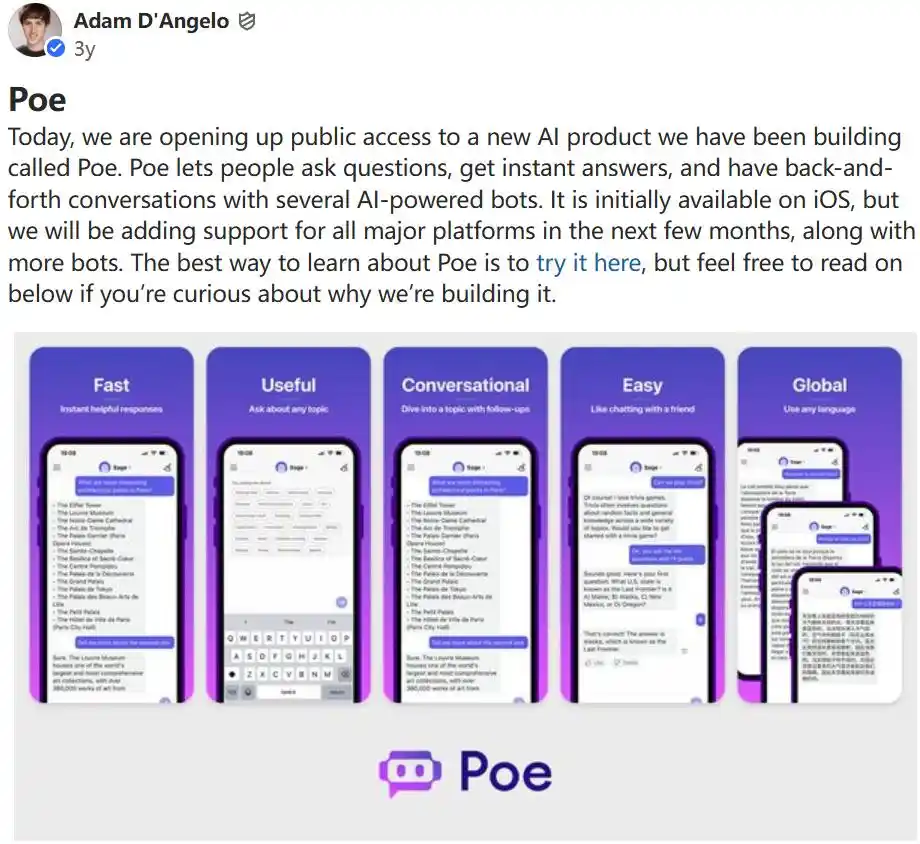
Quora took another path: instead of guarding Q&A, build an AI gateway itself. It poured resources into Poe, securing $75 million in funding from a16z in January 2024 to expand this multi-model aggregation platform. A Q&A community ultimately bet its future on something that replaces Q&A...
One step further out is the entire informational content business. A randomized controlled experiment covering 1065 desktop Chrome users found that when AI Overviews appear, off-site organic clicks drop 39.8%, zero-click searches rise 34.5%, and users show no measurable improvement in experience ratings. Ahrefs' February 2026 research calculated a click-through rate drop of up to 58% for top-ranking pages. Consequences have already manifested in layoffs and site closures: Bauer Media Group announced in April 2026 the closure of its German digital subsidiary, cutting 160 positions; the 21-year-old public reference site Overfishing.org shut down.

To summarize the pattern: the faster the collapse, the more the category is one where "machine-generated answers are functionally equivalent to the original." Reference materials, technical documentation, definitional content, how-to tutorials—all are in this set. Conversely, work requiring long-term relationships, context, and accountability shows little change. Fiverr's earnings also illustrate this: low-value transactions are disappearing, while complex projects over $1000 are growing.

More Troublesome: Experts Are Retreating

If users were merely asking questions elsewhere, the story would be simpler. But Kenny Ching from the University of Auckland Business School, in a working paper released in July 2026, pointed out a more problematic mechanism.

He tracked the behavior of 24,304 contributors on Stack Overflow over 17 months, finding that since 2022, the departure rate of high-reputation users began accelerating, gradually catching up with the faster-departing low-reputation users. In other words, it's not just question-askers leaving, but also answerers, and the more people who spent years accumulating expertise and earning recognition in the community, the more resolutely they are leaving.
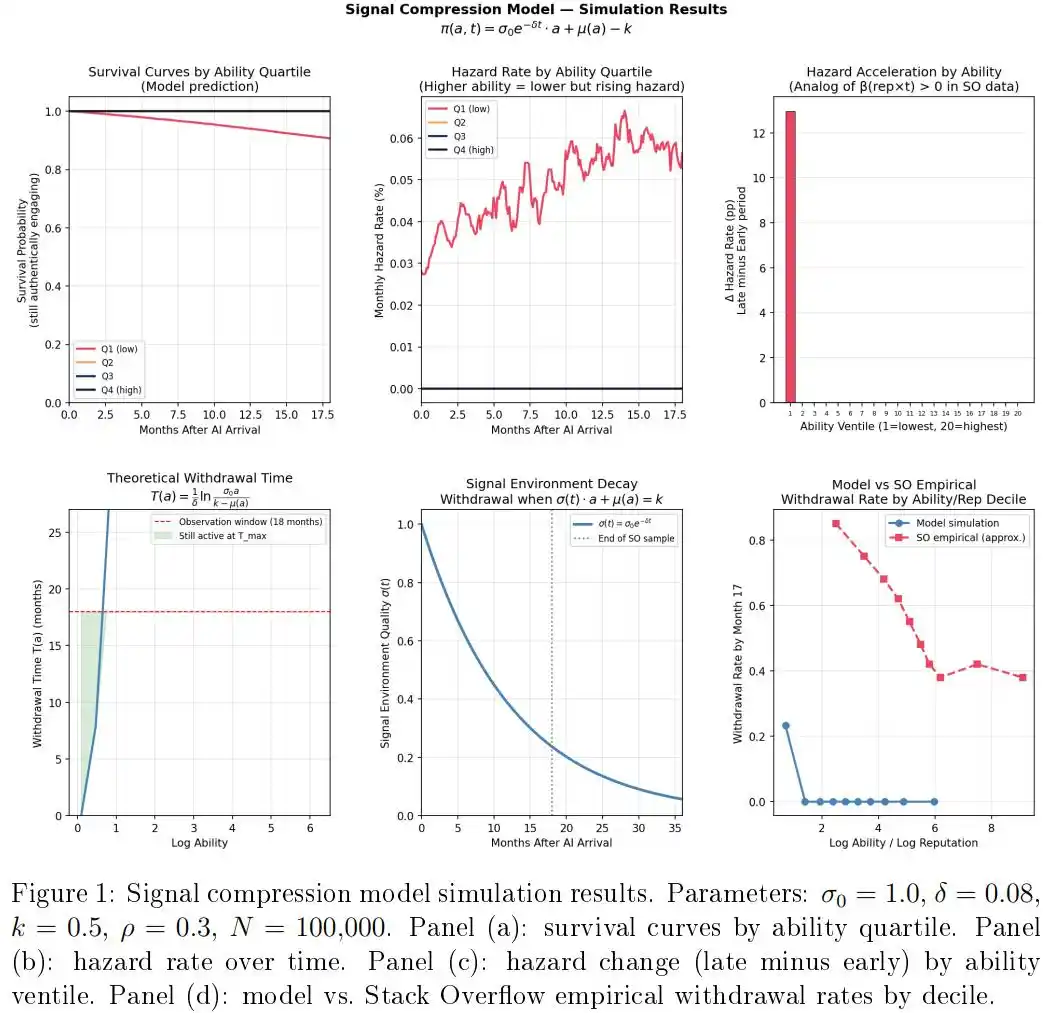
Ching named this mechanism "signal compression." His explanation: these people are leaving because the expertise they painstakingly earned is no longer distinguishable from a chatbot's answer.

When everyone can use AI to produce something that looks decent, the act of putting in genuine effort ceases to be a recognizable signal. In an interview, he extended this logic beyond platforms: the same thing is happening in classrooms, companies, and scientific communities. The long-term risk is that "by destroying the incentive to demonstrate genuine effort, AI may cut off the formation of future human expertise."

This aligns with Stack Overflow's own survey data. The 2025 survey covering about 49,000 developers from 177 countries showed 84% of respondents using or planning to use AI tools (76% in 2024), but only 29% trusted the accuracy of AI output, 46% explicitly distrusted it, and only 3% "highly trusted" it—2.6% among senior developers.
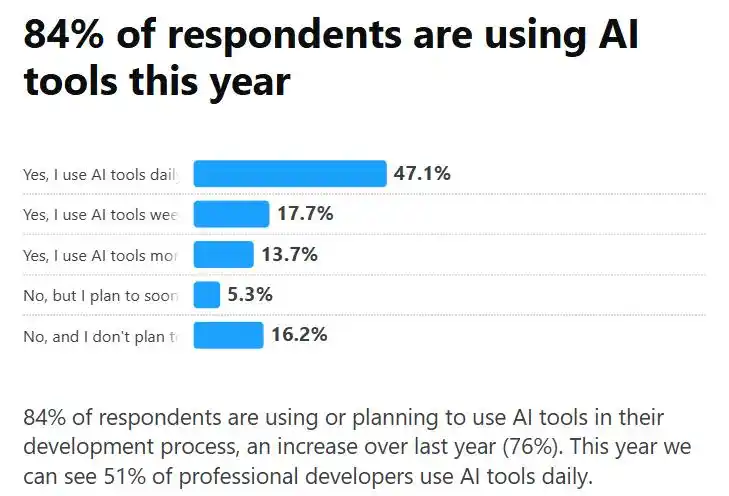
https://survey.stackoverflow.co/2025

The biggest complaint wasn't that AI can't code, but that its output is "almost right, but not quite," with 66% troubled by this and 45% saying they spend significant time debugging AI code. And when they don't trust an AI answer, 75.3% said they would ask a person.
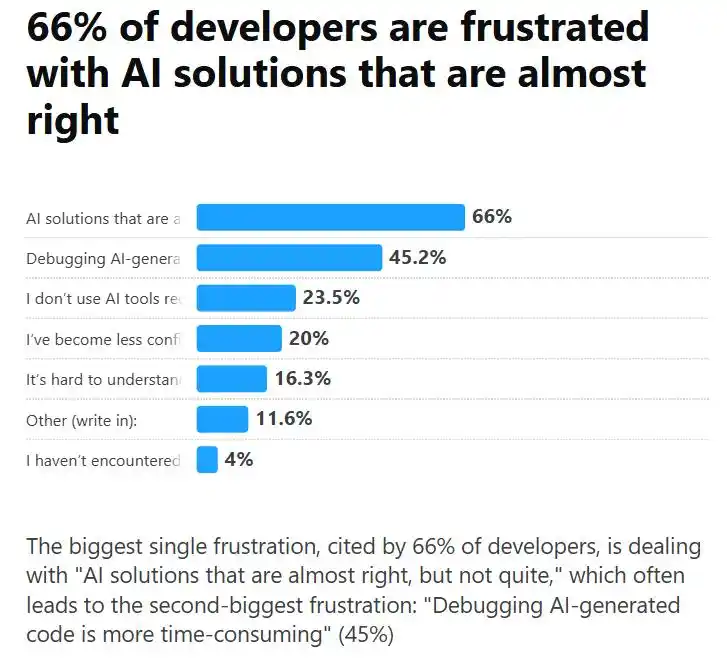
The problem is, that person is leaving.

Conclusion

Now let's synthesize a few things.

Stack Overflow's stock corpus is openly licensed under CC BY-SA, making it one of the most thoroughly scraped technical corpora. The models that ingested it are now the reason for the halt in new contributions.

Stock corpus has timestamps. Answers about jQuery, Python 2, and Angular.js on Stack Overflow will gradually become outdated. Knowledge about new frameworks, breaking changes in new versions, compilation errors of a library used by only three thousand people under a specific CUDA version... This type of knowledge was previously written on a public webpage by the first person to step on the landmine. Now it happens in a private conversation between someone and a model, disappearing after resolution.

The site's answer is the "trusted human intelligence layer." Chandrasekar repeatedly uses this term: AI has risks of misleading, may lack complexity and relevance, so a path relying on curated knowledge bases and responsible data use is critical. This is logically sound, but it requires people willing to continuously supply that layer; but Ching's data says those people are diminishing.

There's also a reverse possibility. Models may not need forum-style Q&A to learn new knowledge: they can learn from code repositories, official documentation, interaction logs with users.

Google opened a documentation API in 2026 covering about 40 million documents with 24-hour re-indexing, clearly meant for machines to read. Framework maintainers are also catching up: Next.js documentation features "Common Errors" sections, written almost like Stack Overflow answers; the Svelte team simply trained its own chatbot based on docs and source code. The site of knowledge production might just be migrating, not disappearing.

But there's an unanswered difference between these two prospects. Forum-style Q&A has a byproduct: it's public, searchable by third parties, and doesn't belong to any single company. Documentation is written by maintainers, interaction logs belong to model vendors. When a programmer's first reaction to a problem shifts from "search if someone asked" to "ask the AI," what's lost isn't just a website's traffic, but a public record anyone can consult and correct.

In the discussion under Lockyer's tweet, developer Mayberry offered a less pessimistic prediction: blogs, niche communities, and personal accounts might regain importance because "people with reputations and sites with reputations for original content will become valuable again."

This article is from WeChat public account "Almost Human" (ID: almosthuman2014), author: Panda


Трендові криптовалюти

Пов'язані питання

QAccording to the article, what is the key data point highlighting Stack Overflow's decline in user activity?

AIn July 2026, users posted only 1,304 new questions on Stack Overflow, which is lower than the number of questions posted during its private beta month in July 2008 (except for the very first month with 4 questions). This is a drastic drop from a peak of 207,000 monthly questions in March 2014.

QWhat are the two main phases of decline discussed, and what primary factor is blamed for the earlier phase starting around 2014?

AThe article discusses two phases of decline. The first phase, beginning around 2014, is primarily attributed to Stack Overflow's increasingly strict moderation culture and policies that aggressively closed 'duplicate' or 'low-quality' questions, which created a hostile environment for new users and stifled participation.

QWhat is the 'signal compression' effect described in the article, and why is it problematic?

A'Signal compression' refers to the phenomenon where the effort and expertise of high-reputation contributors on platforms like Stack Overflow become indistinguishable from AI-generated answers. This devalues their hard-earned professional standing, removing the incentive to contribute and leading experts to leave the platform, which risks cutting off the formation of future human expertise.

QBesides Stack Overflow, what other types of online platforms or businesses does the article mention as being significantly impacted by generative AI?

AThe article mentions several other impacted platforms: educational Q&A services like Chegg, freelance marketplaces for writing/translation/coding (e.g., Fiverr, Upwork), Wikipedia (seeing a decline in human readers), Q&A sites like Quora, and general informational websites/SEO-based content businesses.

QWhat potential future for knowledge sharing does the article suggest, as an alternative to centralized Q&A platforms like Stack Overflow?

AThe article suggests knowledge production might migrate to other venues. This includes official documentation enhanced with troubleshooting guides (like Next.js), framework-specific AI chatbots (like Svelte's), and a potential resurgence of blogs, niche communities, and personal accounts, where reputation and original content from trusted individuals become valuable again.

Пов'язані матеріали

Novig Sues Wisconsin as Sports Prediction Market Dispute Heats Up

Novig, a sports event prediction market operator, has filed a lawsuit against Wisconsin's attorney general. The legal dispute centers on whether prediction markets fall under federal derivatives regulations or state gambling laws. The lawsuit, filed in a U.S. district court, seeks a declaratory judgment after Novig began offering event contracts to Wisconsin residents. This case is part of a broader conflict. In April, Wisconsin sued other prediction market platforms like Kalshi and Polymarket, alleging their sports-related contracts violate state gambling laws. Novig argues its contracts are "swaps" regulated exclusively by the federal Commodity Futures Trading Commission (CFTC), under the Commodity Exchange Act. Wisconsin contends they are sports betting. Federal courts have issued conflicting rulings on similar cases, creating legal uncertainty. The outcome is significant as prediction markets are a fast-growing sector, with trading volume reaching $9.5 billion on a single day in August. These markets are also increasingly intertwined with cryptocurrency infrastructure. Simultaneously, Novig is pursuing a nationwide legal strategy, having filed similar lawsuits in four other states. The company also recently secured a marketing partnership with the New York Mets, marking the first such deal with an MLB team. The Wisconsin case's resolution will influence whether prediction markets can operate as national financial products or remain constrained by individual state laws.

cryptonews.ru3 хв тому

Novig Sues Wisconsin as Sports Prediction Market Dispute Heats Up

cryptonews.ru3 хв тому

Держатели XRP могут торговать опционами на платформе Derive, используя FXRP в качестве залога

XRP holders can now trade options on the Derive platform using FXRP as collateral, as announced by Flare on August 12. This integration allows users to open positions from self-custody wallets while the underlying XRP backing the FXRP remains on the XRP Ledger. According to DeFi analyst Will Procheska, this provides XRP's dedicated holder base with a permissionless options market for generating yield or hedging. Derive's platform combines protocol-level settlements with an order book managed by Derive Trading Co., enabling users to retain asset control while professional market-makers provide liquidity. XRP options on Derive are cash-settled in USDC, so profits or obligations adjust the trader's USDC balance without transferring XRP or FXRP. The platform's portfolio margin system assesses overall account risk but may still trigger liquidations if margin levels fall below requirements. The launch expands Flare's XRPFi ecosystem. FXRP, introduced via the FAssets system in September 2025, creates an on-chain representation of XRP for use in smart contracts. It has since been integrated into spot trading and, more recently, permissionless lending markets on Morpho. This addition of options on Derive offers XRP holders hedging and premium-earning capabilities comparable to other major assets. While regulated XRP options debuted on CME Group in October 2025, Derive provides a decentralized alternative with USDC settlement and direct wallet access. The platform also supports perpetual futures, offering further trading strategies. Flare and Derive are exploring automated "strategy vaults" to simplify yield-generating options approaches for users.

cryptonews.ru4 хв тому

Держатели XRP могут торговать опционами на платформе Derive, используя FXRP в качестве залога

cryptonews.ru4 хв тому

Торгівля

Спот

Популярні статті

Що таке $S$

Розуміння SPERO: Комплексний огляд Вступ до SPERO Оскільки ландшафт інновацій продовжує еволюціонувати, виникнення технологій web3 та криптовалютних проектів відіграє ключову роль у формуванні цифрового майбутнього. Один з проектів, який привернув увагу в цій динамічній сфері, — це SPERO, позначений як SPERO,$$s$. Ця стаття має на меті зібрати та представити детальну інформацію про SPERO, щоб допомогти ентузіастам та інвесторам зрозуміти його основи, цілі та інновації в рамках web3 та крипто-сектору. Що таке SPERO,$$s$? SPERO,$$s$ — це унікальний проект у криптопросторі, який прагне використати принципи децентралізації та технології блокчейн для створення екосистеми, що сприяє залученню, корисності та фінансовій інклюзії. Проект розроблений для полегшення взаємодії між користувачами новими способами, надаючи їм інноваційні фінансові рішення та послуги. У своїй основі SPERO,$$s$ прагне надати можливості індивідам, забезпечуючи інструменти та платформи, які покращують користувацький досвід у криптовалютному просторі. Це включає в себе можливість більш гнучких методів транзакцій, сприяння ініціативам, що підтримуються спільнотою, та створення шляхів для фінансових можливостей через децентралізовані додатки (dApps). Основна концепція SPERO,$$s$ обертається навколо інклюзивності, прагнучи зменшити розриви в традиційній фінансовій системі, використовуючи переваги технології блокчейн. Хто є творцем SPERO,$$s$? Особистість творця SPERO,$$s$ залишається дещо невідомою, оскільки є обмежені публічно доступні ресурси, що надають детальну інформацію про його засновників. Ця відсутність прозорості може бути наслідком зобов'язання проекту до децентралізації — етики, яку багато проектів web3 поділяють, ставлячи колективні внески вище за індивідуальне визнання. Зосереджуючи обговорення навколо спільноти та її колективних цілей, SPERO,$$s$ втілює суть наділення без виділення конкретних осіб. Таким чином, розуміння етики та місії SPERO є більш важливим, ніж ідентифікація єдиного творця. Хто є інвесторами SPERO,$$s$? SPERO,$$s$ підтримується різноманітними інвесторами, починаючи від венчурних капіталістів до ангельських інвесторів, які прагнуть сприяти інноваціям у крипто-секторі. Зосередження цих інвесторів зазвичай узгоджується з місією SPERO — пріоритет надається проектам, які обіцяють технологічний прогрес у суспільстві, фінансову інклюзію та децентралізоване управління. Ці інвесторські фонди зазвичай зацікавлені в проектах, які не лише пропонують інноваційні продукти, але й позитивно впливають на спільноту блокчейн та її екосистеми. Підтримка з боку цих інвесторів підкріплює SPERO,$$s$ як значного конкурента в швидко змінюваній сфері крипто-проектів. Як працює SPERO,$$s$? SPERO,$$s$ використовує багатогранну структуру, яка відрізняє його від традиційних криптовалютних проектів. Ось деякі ключові особливості, які підкреслюють його унікальність та інноваційність: Децентралізоване управління: SPERO,$$s$ інтегрує моделі децентралізованого управління, надаючи користувачам можливість активно брати участь у процесах прийняття рішень щодо майбутнього проекту. Цей підхід сприяє відчуттю власності та відповідальності серед членів спільноти. Корисність токена: SPERO,$$s$ використовує свій власний криптовалютний токен, розроблений для виконання різних функцій в екосистемі. Ці токени дозволяють здійснювати транзакції, отримувати винагороди та полегшувати послуги, що пропонуються на платформі, підвищуючи загальну залученість та корисність. Шарова архітектура: Технічна архітектура SPERO,$$s$ підтримує модульність та масштабованість, що дозволяє безперешкодно інтегрувати додаткові функції та додатки в міру розвитку проекту. Ця адаптивність є надзвичайно важливою для збереження актуальності в постійно змінюваному крипто-ландшафті. Залучення спільноти: Проект підкреслює ініціативи, що підтримуються спільнотою, використовуючи механізми, які стимулюють співпрацю та зворотний зв'язок. Підтримуючи сильну спільноту, SPERO,$$s$ може краще задовольняти потреби користувачів та адаптуватися до ринкових тенденцій. Фокус на інклюзію: Пропонуючи низькі комісії за транзакції та зручні інтерфейси, SPERO,$$s$ прагне залучити різноманітну базу користувачів, включаючи осіб, які раніше не брали участі в крипто-просторі. Це зобов'язання до інклюзії узгоджується з його загальною місією наділення через доступність. Хронологія SPERO,$$s$ Розуміння історії проекту надає важливі уявлення про його розвиток та етапи. Нижче наведено пропоновану хронологію, що відображає значні події в еволюції SPERO,$$s$: Етап концептуалізації та ідеації: Початкові ідеї, що стали основою SPERO,$$s$, були сформовані, тісно пов'язані з принципами децентралізації та фокусом на спільноті в індустрії блокчейн. Запуск білого паперу проекту: Після концептуального етапу був випущений комплексний білий папір, що детально описує бачення, цілі та технологічну інфраструктуру SPERO,$$s$, щоб залучити інтерес та зворотний зв'язок від спільноти. Створення спільноти та ранні залучення: Активні зусилля були спрямовані на створення спільноти ранніх прихильників та потенційних інвесторів, що полегшило обговорення цілей проекту та отримання підтримки. Подія генерації токенів: SPERO,$$s$ провів подію генерації токенів (TGE) для розподілу своїх рідних токенів серед ранніх прихильників та встановлення початкової ліквідності в екосистемі. Запуск початкового dApp: Перший децентралізований додаток (dApp), пов'язаний з SPERO,$$s$, став доступним, дозволяючи користувачам взаємодіяти з основними функціями платформи. Постійний розвиток та партнерства: Безперервні оновлення та вдосконалення пропозицій проекту, включаючи стратегічні партнерства з іншими учасниками блокчейн-простору, сформували SPERO,$$s$ у конкурентоспроможного та еволюціонуючого гравця на крипто-ринку. Висновок SPERO,$$s$ є свідченням потенціалу web3 та криптовалют для революціонізації фінансових систем та наділення індивідів. Завдяки зобов'язанню до децентралізованого управління, залучення спільноти та інноваційно спроектованих функцій, він прокладає шлях до більш інклюзивного фінансового ландшафту. Як і з будь-якими інвестиціями в швидко змінюваному крипто-просторі, потенційним інвесторам та користувачам рекомендується ретельно досліджувати та обдумано взаємодіяти з поточними подіями в SPERO,$$s$. Проект демонструє інноваційний дух крипто-індустрії, запрошуючи до подальшого дослідження його численних можливостей. Хоча подорож SPERO,$$s$ ще триває, його основні принципи можуть справді вплинути на майбутнє того, як ми взаємодіємо з технологією, фінансами та один з одним у взаємопов'язаних цифрових екосистемах.

353 переглядів усьогоОпубліковано 2024.12.17Оновлено 2024.12.17

Що таке $S$

Що таке AGENT S

Агент S: Майбутнє автономної взаємодії в Web3 Вступ У постійно змінюваному ландшафті Web3 та криптовалюти інновації постійно переосмислюють, як люди взаємодіють з цифровими платформами. Один з таких новаторських проектів, Агент S, обіцяє революціонізувати взаємодію людини з комп'ютером через свою відкриту агентну структуру. Прокладаючи шлях для автономних взаємодій, Агент S прагне спростити складні завдання, пропонуючи трансформаційні застосування в штучному інтелекті (ШІ). Це детальне дослідження заглиблюється в складності проекту, його унікальні особливості та наслідки для сфери криптовалюти. Що таке Агент S? Агент S є революційною відкритою агентною структурою, спеціально розробленою для вирішення трьох основних викликів в автоматизації комп'ютерних завдань: Набуття специфічних знань у галузі: Структура інтелектуально навчається з різних зовнішніх джерел знань та внутрішнього досвіду. Цей подвійний підхід дозволяє їй створити багатий репозиторій специфічних знань у галузі, покращуючи її продуктивність у виконанні завдань. Планування на довгих горизонтах завдань: Агент S використовує планування з підкріпленням досвіду, стратегічний підхід, який полегшує ефективний розподіл та виконання складних завдань. Ця функція значно підвищує її здатність ефективно та результативно управляти кількома підзавданнями. Обробка динамічних, неоднорідних інтерфейсів: Проект представляє Інтерфейс Агент-Комп'ютер (ACI), інноваційне рішення, яке покращує взаємодію між агентами та користувачами. Використовуючи багатомодальні великі мовні моделі (MLLMs), Агент S може безперешкодно орієнтуватися та маніпулювати різноманітними графічними інтерфейсами користувача. Завдяки цим новаторським функціям Агент S надає надійну структуру, яка вирішує складнощі, пов'язані з автоматизацією людської взаємодії з машинами, прокладаючи шлях для численних застосувань у ШІ та за його межами. Хто є творцем Агент S? Хоча концепція Агент S є фундаментально новаторською, конкретна інформація про його творця залишається невідомою. Творець наразі невідомий, що підкреслює або початкову стадію проекту, або стратегічний вибір зберегти засновників у таємниці. Незважаючи на анонімність, акцент залишається на можливостях та потенціалі структури. Хто є інвесторами Агент S? Оскільки Агент S є відносно новим у криптографічній екосистемі, детальна інформація про його інвесторів та фінансових спонсорів не задокументована. Відсутність публічно доступних відомостей про інвестиційні фонди або організації, що підтримують проект, викликає питання щодо його фінансової структури та дорожньої карти розвитку. Розуміння підтримки є критично важливим для оцінки стійкості проекту та потенційного впливу на ринок. Як працює Агент S? В основі Агент S лежить передова технологія, яка дозволяє йому ефективно функціонувати в різних умовах. Його операційна модель побудована навколо кількох ключових функцій: Взаємодія з комп'ютером, подібна до людської: Структура пропонує розширене планування ШІ, прагнучи зробити взаємодії з комп'ютерами більш інтуїтивними. Імітуючи людську поведінку при виконанні завдань, вона обіцяє підвищити досвід користувачів. Наративна пам'ять: Використовується для використання високорівневого досвіду, Агент S використовує наративну пам'ять для відстеження історій завдань, тим самим покращуючи свої процеси прийняття рішень. Епізодична пам'ять: Ця функція надає користувачам покрокові інструкції, дозволяючи структурі пропонувати контекстуальну підтримку в міру виконання завдань. Підтримка OpenACI: Завдяки можливості працювати локально, Агент S дозволяє користувачам зберігати контроль над своїми взаємодіями та робочими процесами, узгоджуючи з децентралізованою етикою Web3. Легка інтеграція з зовнішніми API: Його універсальність і сумісність з різними платформами ШІ забезпечують те, що Агент S може безперешкодно вписатися в існуючі технологічні екосистеми, роблячи його привабливим вибором для розробників та організацій. Ці функціональні можливості колективно сприяють унікальному положенню Агент S у крипто-просторі, оскільки він автоматизує складні, багатоступеневі завдання з мінімальним втручанням людини. У міру розвитку проекту його потенційні застосування в Web3 можуть переосмислити, як відбуваються цифрові взаємодії. Хронологія Агент S Розробка та етапи Агент S можуть бути узагальнені в хронології, яка підкреслює його значні події: 27 вересня 2024 року: Концепція Агент S була представлена в комплексній науковій статті під назвою “Відкрита агентна структура, яка використовує комп'ютери як людина”, що демонструє основи проекту. 10 жовтня 2024 року: Наукова стаття була опублікована на arXiv, пропонуючи детальне дослідження структури та її оцінки продуктивності на основі бенчмарку OSWorld. 12 жовтня 2024 року: Було випущено відеопрезентацію, що надає візуальне уявлення про можливості та особливості Агент S, ще більше залучаючи потенційних користувачів та інвесторів. Ці маркери в хронології не лише ілюструють прогрес Агент S, але й вказують на його прихильність до прозорості та залучення громади. Ключові моменти про Агент S У міру розвитку структури Агент S кілька ключових характеристик виділяються, підкреслюючи її новаторський характер та потенціал: Інноваційна структура: Розроблена для забезпечення інтуїтивного використання комп'ютерів, подібного до людської взаємодії, Агент S пропонує новий підхід до автоматизації завдань. Автономна взаємодія: Здатність автономно взаємодіяти з комп'ютерами через GUI означає стрибок до більш інтелектуальних та ефективних обчислювальних рішень. Автоматизація складних завдань: Завдяки своїй надійній методології він може автоматизувати складні, багатоступеневі завдання, роблячи процеси швидшими та менш схильними до помилок. Безперервне вдосконалення: Механізми навчання дозволяють Агенту S покращуватися на основі минулого досвіду, постійно підвищуючи свою продуктивність та ефективність. Універсальність: Його адаптивність до різних операційних середовищ, таких як OSWorld та WindowsAgentArena, забезпечує його здатність служити широкому спектру застосувань. Оскільки Агент S займає своє місце в ландшафті Web3 та криптовалюти, його потенціал покращити можливості взаємодії та автоматизувати процеси означає значний прогрес у технологіях ШІ. Завдяки своїй інноваційній структурі Агент S є прикладом майбутнього цифрових взаємодій, обіцяючи більш безперешкодний та ефективний досвід для користувачів у різних галузях. Висновок Агент S представляє собою сміливий крок вперед у поєднанні ШІ та Web3, з можливістю переосмислити, як ми взаємодіємо з технологією. Хоча проект все ще на ранніх стадіях, можливості для його застосування є величезними та переконливими. Завдяки своїй комплексній структурі, що вирішує критичні виклики, Агент S прагне вивести автономні взаємодії на передній план цифрового досвіду. У міру того, як ми заглиблюємося в сфери криптовалюти та децентралізації, проекти, подібні до Агент S, безсумнівно, відіграватимуть ключову роль у формуванні майбутнього технологій та співпраці людини з комп'ютером.

969 переглядів усьогоОпубліковано 2025.01.14Оновлено 2025.01.14

Що таке AGENT S

Як купити S

Ласкаво просимо до HTX.com! Ми зробили покупку Sonic (S) простою та зручною. Дотримуйтесь нашої покрокової інструкції, щоб розпочати свою криптовалютну подорож.Крок 1: Створіть обліковий запис на HTXВикористовуйте свою електронну пошту або номер телефону, щоб зареєструвати обліковий запис на HTX безплатно. Пройдіть безпроблемну реєстрацію й отримайте доступ до всіх функцій.ЗареєструватисьКрок 2: Перейдіть до розділу Купити крипту і виберіть спосіб оплатиКредитна/дебетова картка: використовуйте вашу картку Visa або Mastercard, щоб миттєво купити Sonic (S).Баланс: використовуйте кошти з балансу вашого рахунку HTX для безперешкодної торгівлі.Треті особи: ми додали популярні способи оплати, такі як Google Pay та Apple Pay, щоб підвищити зручність.P2P: Торгуйте безпосередньо з іншими користувачами на HTX.Позабіржова торгівля (OTC): ми пропонуємо індивідуальні послуги та конкурентні обмінні курси для трейдерів.Крок 3: Зберігайте свої Sonic (S)Після придбання Sonic (S) збережіть його у своєму обліковому записі на HTX. Крім того, ви можете відправити його в інше місце за допомогою блокчейн-переказу або використовувати його для торгівлі іншими криптовалютами.Крок 4: Торгівля Sonic (S)Легко торгуйте Sonic (S) на спотовому ринку HTX. Просто увійдіть до свого облікового запису, виберіть торгову пару, укладайте угоди та спостерігайте за ними в режимі реального часу. Ми пропонуємо зручний досвід як для початківців, так і для досвідчених трейдерів.

2.1k переглядів усьогоОпубліковано 2025.01.15Оновлено 2026.06.02

Як купити S

Обговорення

Ласкаво просимо до спільноти HTX. Тут ви можете бути в курсі останніх подій розвитку платформи та отримати доступ до професійної ринкової інформації. Нижче представлені думки користувачів щодо ціни S (S).

活动图片