Stablecoins May Become the 'Scapegoat' for Many Countries? Bitwise Releases Top 10 Crypto Predictions for 2026

比推Опубліковано о 2025-12-16Востаннє оновлено о 2025-12-16

Анотація

Bitwise's "10 Crypto Predictions for 2026" presents a bullish outlook for the cryptocurrency market, driven by institutional adoption and regulatory progress. Key forecasts include Bitcoin breaking its four-year cycle to reach new all-time highs, with volatility potentially falling below that of Nvidia. ETFs are expected to absorb over 100% of new Bitcoin, Ethereum, and Solana supply, fueling price gains. Crypto stocks are predicted to outperform tech stocks, while Polymarket’s open interest will hit record highs. Stablecoins, likely to exceed $500 billion in market cap, may be blamed for currency instability in emerging markets. On-chain vaults (ETF 2.0) could double in assets. If the CLARITY Act passes, Ethereum and Solana may surge to new peaks. Half of Ivy League endowments are expected to invest in crypto, and over 100 crypto-related ETFs could launch in the U.S. A bonus prediction suggests Bitcoin’s correlation with stocks will decline.

Source: Bitwise

Original Title: "The Year Ahead: 10 Crypto Predictions for 2026"

Authors: Matt Hougan, Ryan Rasmussen

Compiled and Edited by: BitpushNews


Important Note: As with all predictions, the following are not guarantees but our best judgments based on available information. The future is complex and uncertain, and whether outcomes will unfold as described depends on many intricate factors. This content does not constitute any investment advice.

Table of Contents

Predictions

  1. Bitcoin will break the "four-year cycle" and hit a new all-time high

  2. Bitcoin's volatility will be lower than Nvidia's

  3. As institutional demand accelerates, ETFs will buy more than 100% of the new supply of Bitcoin, Ethereum, and Solana

  4. Crypto-related stocks will outperform tech stocks

  5. Polymarket's open interest will hit a new all-time high, surpassing the 2024 U.S. election period

  6. Stablecoins will be blamed as the "culprit" behind currency instability in an emerging market

  7. Assets under management in on-chain Vaults ("ETF 2.0") will double

  8. If the CLARITY Act passes, Ethereum and Solana will hit new all-time highs

  9. Half of Ivy League endowment funds will invest in crypto assets

  10. The U.S. will launch over 100 crypto-related ETFs

Bonus Prediction: Bitcoin's correlation with the stock market will decline

Introduction

2025 was a memorable year for the crypto industry—with both highs and lows.

On the positive side:
Bitcoin, Ethereum, Solana, and XRP all hit new all-time highs (reaching $126,080, $4,946, $293, and $3.65, respectively), driven by sustained institutional demand and a series of positive regulatory developments.
Stablecoins and asset tokenization became "household" concepts. Major financial institutions like Morgan Stanley and Merrill Lynch officially opened crypto ETF investment channels to clients. Several crypto companies with multi-billion dollar valuations successfully IPOed, including Circle, Figure, and Gemini.

On the negative side:
Major cryptocurrencies, including the four mentioned above, experienced significant pullbacks from their highs and remained down year-to-date at the time of writing. Some mid- and small-cap altcoins fell by more than 50%.
The price decline was compounded by multiple negative factors:

  • Market concerns about the "correction year" in Bitcoin's "four-year cycle"

  • Long-term holders began selling

  • Discussions about quantum computing risks heated up

  • Broader macroeconomic uncertainty

These factors significantly dampened market sentiment.

However, we believe the bulls will prevail in 2026.
From institutional adoption to regulatory progress, the current positive trends are strong and far-reaching and are not likely to be suppressed for long.

Against this backdrop, we present the following Top 10 Crypto Predictions for 2026.

Prediction 1

Bitcoin will break the four-year cycle and hit a new all-time high

Historically, Bitcoin has tended to follow a "four-year cycle":
Three consecutive years of gains, followed by one year of significant correction. By this logic, 2026 should be a "correction year."

But we disagree with this assessment.
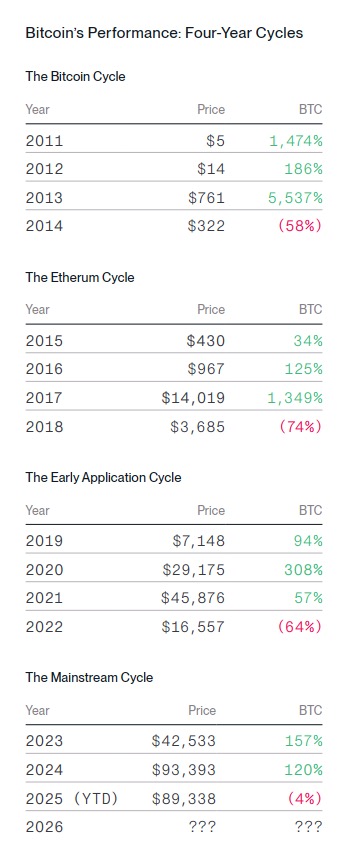
We believe the key factors that drove the four-year cycle in the past are significantly weakening:

  • Halving Effect: The marginal impact of each Bitcoin halving is smaller than the previous one

  • Interest Rate Cycle: Sharp interest rate hikes in 2018 and 2022 put downward pressure on prices; we expect rates to fall in 2026

  • Systemic Blow-ups: Following the record liquidation event in October 2025, overall market leverage has decreased, and improved regulation has reduced the risk of major blow-ups

More importantly, since the approval of spot Bitcoin ETFs in 2024, a significant amount of institutional capital has begun entering the crypto market, and this trend will accelerate further in 2026.
Platforms like Morgan Stanley, Wells Fargo, and Merrill Lynch are beginning formal allocations to crypto assets; meanwhile, the "pro-crypto" regulatory environment formed after the 2024 election will encourage deeper adoption of crypto assets by Wall Street and fintech companies.

We expect the combination of these factors to push Bitcoin to new all-time highs and relegate the "four-year cycle" to history.

Prediction 2

Bitcoin's volatility will be lower than Nvidia's

For a long time, people have said: "I would never invest in something as volatile as Bitcoin."

Is Bitcoin volatile? Certainly.
But is it more volatile than other assets widely accepted by investors? Not in recent years.
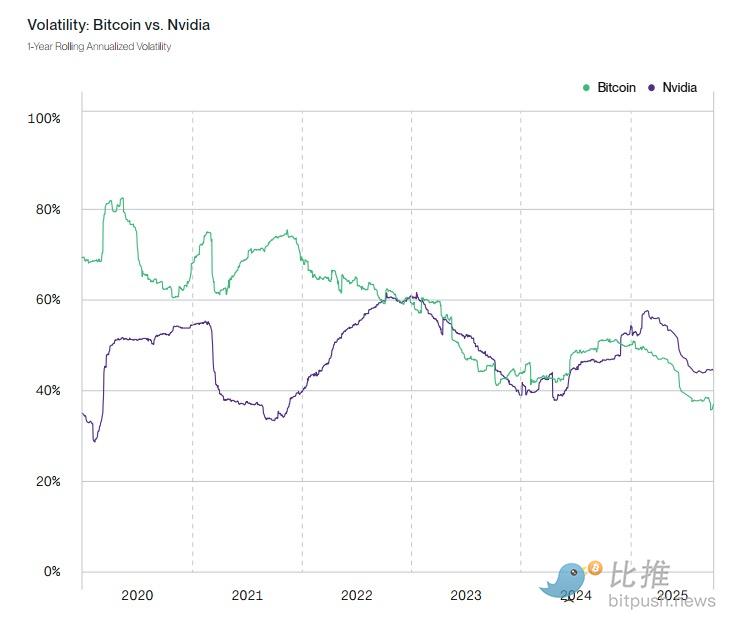
Throughout 2025, Bitcoin's volatility was even lower than that of one of the market's hottest stocks—Nvidia. Extending the timeline, you'll find that Bitcoin's volatility has actually been consistently decreasing over the past decade. This shift reflects a reduction in the fundamental risk of Bitcoin as an investment and is also thanks to traditional investment vehicles like ETFs, which have diversified its investor base.

We believe this trend will continue in 2026.

Prediction 3

ETFs will buy more than 100% of the new supply of Bitcoin, Ethereum, and Solana

Crypto asset prices are determined by supply and demand.
One of our core reasons for being long-term bullish on the crypto market is: Institutional demand will continue to outpace new supply for many years to come.

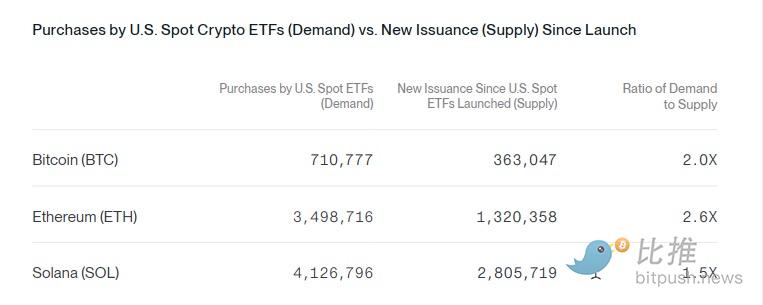
Since crypto ETFs launched in 2024, this view has been validated:

  • Bitcoin ETFs bought a total of 710,777 BTC

  • During the same period, the Bitcoin network only produced 363,047 new BTC

  • The price of Bitcoin rose 94% during the same period

Looking ahead to 2026, we estimate the new supply will be approximately:

  • 166,000 BTC (approx. $15.3 billion)

  • 960,000 ETH (approx. $3.0 billion)

  • 23 million SOL (approx. $3.2 billion)

We believe ETF buying for these assets will exceed their new supply, especially after institutions like Morgan Stanley and Merrill approve spot ETFs.

This does not guarantee price increases, but it lays a solid foundation for price performance in 2026.
Prediction 4

Crypto-related stocks will outperform tech stocks

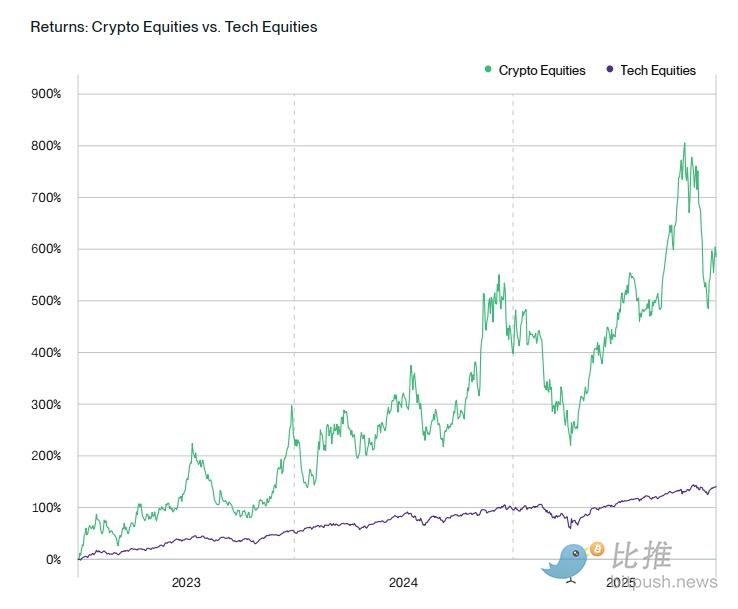
Over the past three years, tech stock investors have achieved returns of about 140%.
But crypto-related stocks have performed even more remarkably.

The Bitwise Crypto Innovators 30 Index (covering crypto infrastructure and service companies) rose 585% over the same period.

An improved regulatory environment makes it easier for compliant crypto companies to innovate:
Coinbase has relaunched ICOs, Circle has launched its own Layer 1 blockchain, and more new products, revenue streams, and M&A activities are unfolding.

We expect the performance of crypto-related stocks in 2026 to turn heads on Wall Street.
Prediction 5

Polymarket's open interest will hit a new all-time high

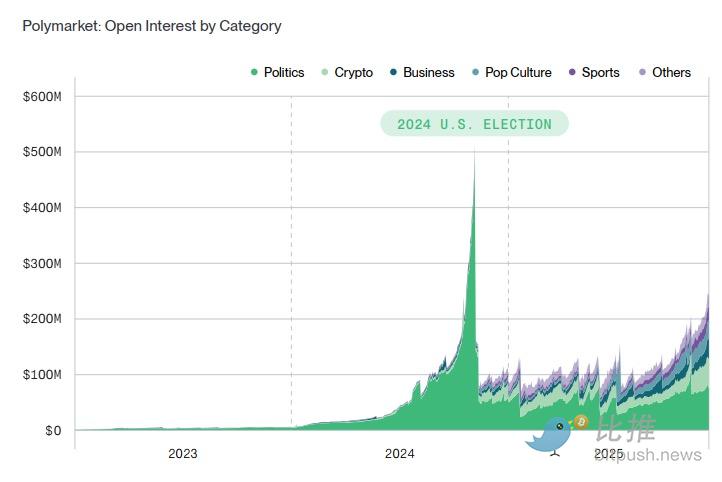
Polymarket reached $500 million in open interest during the 2024 U.S. election period before falling back to around $100 million.

We believe this record will be easily broken in 2026, due to:

  1. U.S. Market Opening: Starting in 2026, U.S. users will be able to participate directly

  2. Institutional Backing: ICE (parent company of the NYSE) invested $2 billion in Polymarket

  3. Market Expansion: Rapid growth in sports, culture, crypto, and economic markets

Prediction 6

Stablecoins will be blamed as the "culprit" destabilizing emerging market currencies

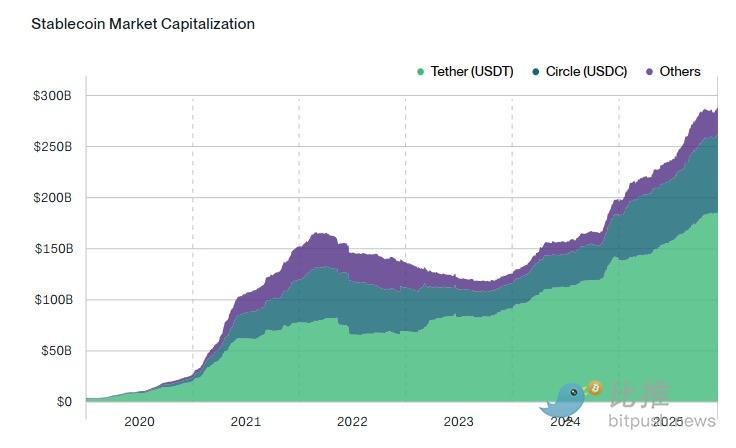
The stablecoin market is expanding.

The market capitalization of tokenized versions of the U.S. dollar (and other currencies), represented by USDT and USDC, reached $205 billion at the beginning of this year. Today, this market is close to $300 billion and is expected to exceed $500 billion by the end of 2026. In other words, its size has grown to a point that cannot be ignored.

This is undoubtedly positive: stablecoins offer a more efficient, low-cost, and fast way to move money. Who wouldn't love such innovation?—But for central banks in countries facing high inflation, the issue is not so simple.

Multiple studies show that stablecoin adoption is concentrated in emerging markets, with usage rates significantly higher in regions with the highest inflation. The reason is that stablecoins allow people in high-inflation areas to easily store value in relatively stable dollar tokens rather than in continuously depreciating local currencies. For example, in Venezuela, its fiat currency, the bolivar, depreciated about 80% against the U.S. dollar in 2025.

For the average saver, switching to stablecoins is a rational choice, but for central banks, it means capital flight and a loss of control. The Bank for International Settlements (BIS), composed of central banks, warned its members earlier this year: "Widespread use of stablecoins could harm the monetary sovereignty of relevant jurisdictions."

As cryptocurrency goes mainstream, we expect one or two countries to publicly blame their currency problems on stablecoins. Of course, this blame is misplaced—if the local monetary system were sound, people wouldn't need to turn to stablecoins in the first place. But that won't stop these countries from sounding the alarm.
Prediction 7

Assets under management in on-chain Vaults (ETF 2.0) will double

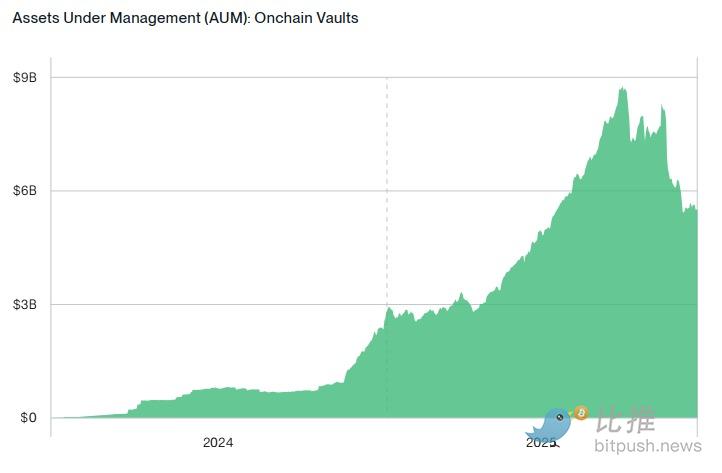
On-chain Vaults are similar to on-chain investment funds.
Their size grew from less than $100 million in 2024 to $2.3 billion, reaching $8.8 billion at one point in 2025.

Although the volatility in October 2025 caused some strategies to fail, we believe this is just a necessary stage of industry maturation.

In 2026, high-quality asset managers will enter the market, driving rapid growth in the size of on-chain Vaults.
Prediction 8

If the CLARITY Act passes, Ethereum and Solana will hit new all-time highs

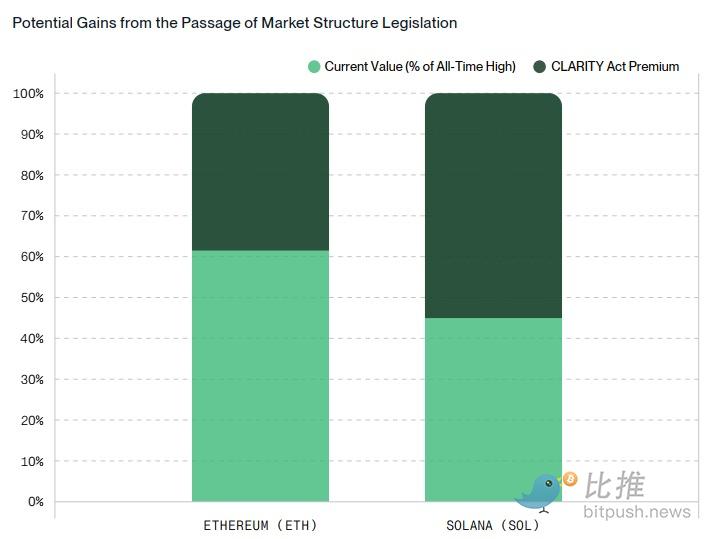
We are strongly bullish on Ethereum and Solana. This is primarily because we believe stablecoins and asset tokenization are two major long-term trends, and Ethereum and Solana are likely to be the biggest beneficiaries of this growth.

But the short-term growth of stablecoins and tokenization largely depends on the continued progress of U.S. regulation. The passage of the GENIUS Act, centered on stablecoins, in 2025 was a major breakthrough. The next key is whether Congress can pass "market structure" legislation like the CLARITY Act.

Market structure legislation would clarify the regulatory framework for cryptocurrency in the U.S., including whether the Securities and Exchange Commission (SEC) or the Commodity Futures Trading Commission (CFTC) takes the lead. Without clear legal definitions, the current pro-crypto stance of U.S. regulators could change with new elections.

The prospects for market structure legislation in 2026 remain unclear. If the CLARITY Act passes, we expect it to trigger a crypto bull market—in crypto parlance—with momentum that will be "mind-blowing." Ethereum and Solana would be the two main beneficiaries, with prices likely breaking previous all-time highs. If the bill fails to pass, it means everything will have to start over from scratch.
Prediction 9

Half of Ivy League endowment funds will invest in crypto assets

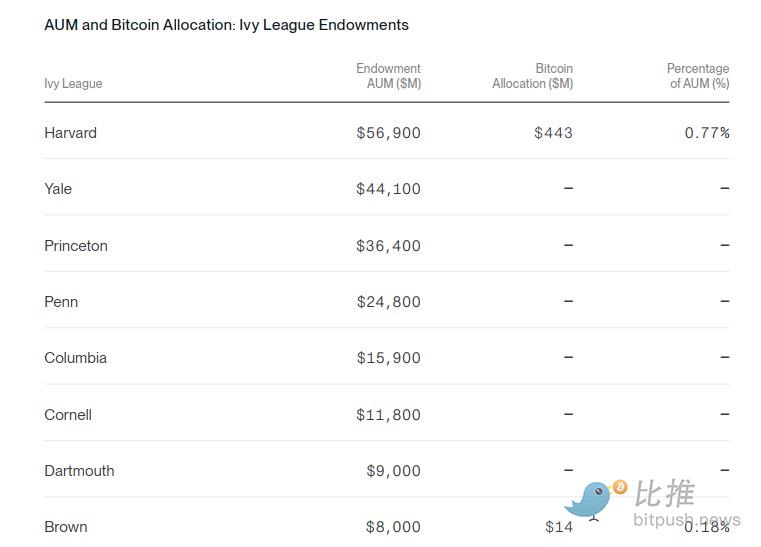
Earlier this year, Brown University became the first Ivy League endowment fund to allocate to Bitcoin, initially purchasing about $5 million worth of Bitcoin ETF. We expect more Ivy League schools to join this trend in 2026.

This move is important for two reasons:

First, the direct impact: Endowment funds control real capital—statistics show assets under management reach $871 billion. If they follow Harvard University's example and allocate about 1% of assets to Bitcoin, their market influence will be significant.

Second, the deeper signaling effect: Endowment funds—especially those of the Ivy League—are often bellwethers of investment trends. For example, Yale University's allocation to hedge funds in the early 2000s is considered a key factor driving the industry's explosive growth over the past 20 years. If Harvard and other Ivy League schools' Bitcoin investments succeed, it could attract a large number of pension funds, insurance funds, and other institutional investors to follow suit.

In short, the market mentality might be: "If Harvard is allocating to it, maybe we should consider it too."
Prediction 10

The U.S. will launch over 100 crypto-related ETFs

The U.S. Securities and Exchange Commission (SEC) maintained a long-standing rejection stance on cryptocurrency ETFs for over a decade until a court ruling prompted a policy shift—in January 2024, Bitcoin ETFs were finally approved; six months later, Ethereum ETFs followed. Now, the floodgates are open.

In October 2025, the SEC issued a universal listing standard, allowing issuers to launch cryptocurrency ETFs based on unified rules. Immediately, Solana ETFs quickly listed (even including staking features) and attracted over $600 million within months. XRP and Dogecoin-related products followed closely. By the time this article is published, more products are expected to enter the market.

Looking ahead to 2026, we predict that clear regulatory pathways and strong market demand for crypto ETFs will jointly drive an "ETF feast." More than 100 crypto-related ETFs are expected to be launched, covering various types such as spot crypto ETFs, crypto staking-enhanced ETFs, crypto equity ETFs, and crypto index ETFs.

We also make an additional prediction: Bitwise is expected to launch the ETF with the highest annual net inflows in 2026.

Bonus Prediction

Bitcoin's correlation with the stock market will decline

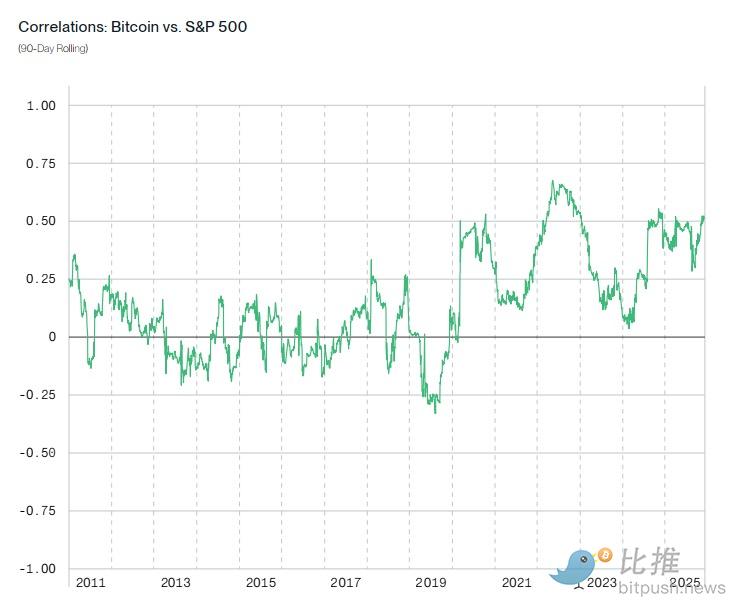
Data shows that the 90-day rolling correlation between Bitcoin and the S&P 500 rarely exceeds 0.5.
We expect that in 2026, driven by regulatory progress and institutional adoption, Bitcoin will be more driven by its own logic.
Risks and Important Disclosures

This article is for informational and educational purposes only and does not constitute investment advice.
Crypto assets are highly volatile, and investors may suffer significant losses.
Past performance is not indicative of future results.


Twitter:https://twitter.com/BitpushNewsCN

Bitpush TG Discussion:https://t.me/BitPushCommunity

Bitpush TG Subscription: https://t.me/bitpush

Original link:https://www.bitpush.news/articles/7596198

Пов'язані питання

QWhat is the core argument made by Bitwise regarding Bitcoin's 'four-year cycle' in 2026?

ABitwise argues that the 'four-year cycle' will be broken in 2026. They believe the key drivers of the cycle, such as the diminishing impact of halvings, a different interest rate environment, and reduced systemic risk, are weakening. Furthermore, accelerating institutional demand from ETFs and a pro-crypto regulatory environment will push Bitcoin to new all-time highs, making the cycle a historical concept.

QAccording to the predictions, why will stablecoins be blamed for currency instability in an emerging market?

AStablecoins will be blamed because their rapid growth (projected to surpass $500 billion) provides citizens in high-inflation countries with an easy way to store value in dollar-pegged tokens instead of their local, depreciating currency. This capital flight undermines the control and monetary sovereignty of central banks, who are likely to publicly scapegoat stablecoins for their own currency problems, as warned by the Bank for International Settlements (BIS).

QWhich prediction suggests that institutional demand for crypto will outpace the new issuance of major assets?

APrediction 3 states that ETFs will buy more than 100% of the new supply of Bitcoin, Ethereum, and Solana. This is based on the trend since 2024 where Bitcoin ETFs bought significantly more BTC than was mined, and this institutional demand is expected to accelerate further in 2026 through platforms like Morgan Stanley and Merrill Lynch.

QWhat specific legislative act does Bitwise identify as a potential major catalyst for Ethereum and Solana to reach new all-time highs?

ABitwise identifies the passage of the 'CLARITY Act' as a potential major catalyst. This market structure legislation would provide clear regulatory frameworks for cryptocurrencies in the U.S., reducing uncertainty. If passed, it is expected to trigger a significant bull run, benefiting Ethereum and Solana as primary beneficiaries of the stablecoin and tokenization trends.

QWhat does the 'bonus prediction' say about the relationship between Bitcoin and the stock market?

AThe bonus prediction states that Bitcoin's correlation with the stock market (specifically the S&P 500) will decline. Bitwise expects that in 2026, driven by its own catalysts like regulatory progress and institutional adoption, Bitcoin's price action will be more driven by its own internal dynamics rather than following the broader equity markets.

Пов'язані матеріали

South Korean Exchanges 'Battle' Regulators, Challenging the Boundaries of Enforcement and Legislation

South Korea's cryptocurrency industry is engaged in a rare, direct confrontation with regulators. The Financial Intelligence Unit (FIU), the primary anti-money laundering (AML) watchdog, has recently imposed heavy penalties on major exchanges like Upbit and Bithumb for alleged violations involving unregistered overseas VASPs and AML procedures. However, exchanges are now actively challenging these actions in court and through industry associations. In a significant shift, the Seoul Administrative Court ruled in favor of Upbit's operator, Dunamu, overturning part of an FIU-ordered business suspension. The court found the FIU's penalty criteria and justification insufficiently clear. Similarly, the court suspended the enforcement of a six-month business suspension against Bithumb pending a final ruling, citing potential irreversible harm to the exchange. Beyond legal battles, the industry is contesting proposed legislative amendments. The Digital Asset eXchange Alliance (DAXA) strongly opposes a draft rule that would mandate Suspicious Transaction Reports (STRs) for all crypto transfers over 10 million KRW (~$6,800). DAXA argues this "poison pill" clause violates legal principles and would overwhelm the STR system, increasing reports from 63,000 to an estimated 5.45 million annually for major exchanges, thereby crippling effective AML monitoring. This conflict highlights a structural tension in South Korea's crypto governance: comprehensive digital asset laws are still developing, while regulators rely heavily on AML enforcement. The industry's move from passive compliance to active legal and legislative challenges signifies a new phase, pressing for clearer rules and more proportionate enforcement. While short-term disputes may intensify, this clash could ultimately lead to a more mature and sustainable regulatory framework for South Korea's vibrant crypto market.

marsbit38 хв тому

South Korean Exchanges 'Battle' Regulators, Challenging the Boundaries of Enforcement and Legislation

marsbit38 хв тому

After 50x Storage Surge, Justin Sun Always Looks to the Next Decade

Sun Yuchen, known for his controversial stunts like a $30 million lunch with Warren Buffett (canceled due to a kidney stone) and eating a $6.2 million duct-taped banana, is often overshadowed by a significant fact: his decade-long track record of spotting major investment trends. In 2016, he famously advised young people to invest in Bitcoin, Nvidia, Tesla, and Tencent instead of buying property. A hypothetical $20,000 investment in Nvidia and Tesla from that list would now be worth over 50 million RMB. His latest major call was on November 6, 2025, predicting a "50x storage opportunity" tied to the AI boom, which materialized with Sandisk's stock surging nearly 50-fold by 2026. Looking ahead, Sun now focuses on the next frontier: Physical AI. He identifies four key areas: 1. **Embodied AI/Robotics**: He sees this reaching its "iPhone moment," with companies like UBTech and Galaxy General leading in commercialization. 2. **Drones**: Viewed as the first commercially viable form of Physical AI, revolutionizing sectors from warfare (e.g., AeroVironment's Switchblade) to logistics. 3. **Spatial Computing**: Beyond VR, it's about AI understanding physical space, a foundational technology for robotics and autonomous systems, exemplified by Apple's Vision Pro. 4. **Space Exploration**: After a 2025 suborbital flight with Blue Origin, Sun advocates for space as the ultimate frontier, discussing blockchain's potential role in space asset management and data transactions. His investment philosophy involves betting on entire, inevitable trends rather than single companies. For robotics, he sees Tesla (the body/manufacturer) and Nvidia (the brain/AI platform) as complementary plays. In defense drones, he highlights companies making tanks obsolete (AeroVironment) and those augmenting fighter jets (Kratos). For space, he participated in Blue Origin's flight and anticipates SpaceX's potential IPO to redefine the sector's valuation. Sun Yuchen's vision frames the next two decades not as a revolution in information flow (like the internet), but in the fundamental operation of the physical world through AI-powered robots, autonomous systems, and spatial intelligence, ultimately extending human and AI activity into space. While many still focus on conventional assets, he continues to look toward the next technological horizon.

marsbit1 год тому

After 50x Storage Surge, Justin Sun Always Looks to the Next Decade

marsbit1 год тому

The Billionaires Behind the Most Expensive Midterm Election in History

"The Most Expensive Midterm Elections and Their Billionaire Backers" This analysis details the unprecedented scale of spending in the 2026 midterm elections, highlighting the key billionaire donors shaping the political landscape. Jeff Yass, founder of Susquehanna International Group, has contributed over $81 million, ranking third among individual donors behind George Soros ($102.6M) and Elon Musk ($84.8M). Yass is a major donor to Trump's MAGA Inc. and supports school choice and various candidates. Overall, federal committees have raised over $4.7 billion this cycle, with political ad spending projected to reach $10.8 billion. Republican-aligned groups are significantly out-raising their Democratic counterparts. "Dark money" from undisclosed sources continues to grow. The core stakes involve control of Congress and policy direction for Trump's final term. Donors are also motivated by specific issues: Sergey Brin and Chris Larsen are funding opposition to a proposed California wealth tax and supporting crypto-friendly policies. Other top donors include OpenAI's Greg Brockman and his wife Anna ($50M total to MAGA Inc. and an AI-focused PAC), Richard Uihlein ($45.3M to conservative causes), venture capitalists Marc Andreessen and Ben Horowitz (each over $44M to crypto/AI PACs and MAGA Inc.), Miriam Adelson ($42.6M to GOP leadership PACs), Paul Singer ($33.9M), and Diane Hendricks ($25.8M to MAGA Inc.). The article notes that the peak fundraising period is still ahead, with major primaries approaching.

marsbit1 год тому

The Billionaires Behind the Most Expensive Midterm Election in History

marsbit1 год тому

The Largest IPO in History Is Approaching, Surpassing SpaceX, 28 Years of AI Self-Iteration, Countdown to Intelligence Explosion

"Anthropic Nears Trillion-Dollar IPO, Fueled by Explosive Growth and 2028 'Intelligence Explosion' Warning Anthropic is considering a deal valuing the AI company near $1 trillion, potentially leading to one of the largest IPOs ever and surpassing SpaceX. Its revenue has skyrocketed, with Annual Recurring Revenue (ARR) reaching $45 billion in May 2026—a 500% increase in just five months. This vertical growth curve is attributed to its key products, Claude Code and Cowork, dominating AI coding and enterprise collaboration. Beyond commercial success, co-founder Jack Clark issued a pivotal warning in an interview: there is a greater than 50% chance that by the end of 2028, AI systems will achieve recursive self-improvement—the ability to autonomously build a 'better version' of themselves, initiating an 'intelligence explosion.' This prophecy underpins the company's astronomical valuation, as the market prices in the potential for transformative and disruptive AI. Further signaling its ambition, Anthropic formed a $1.5 billion joint venture with Goldman Sachs and Blackstone, aiming to disrupt traditional consulting firms like McKinsey by deploying Claude AI for complex strategic work. This move tests AI's capacity to replace high-level cognitive labor, a precursor to its predicted autonomous evolution. The narrative presents a dual future: unprecedented economic opportunity alongside significant risks like economic restructuring and security threats. Anthropic's meteoric rise and Clark's 2028 prediction frame the coming years as a countdown to a potential technological singularity."

marsbit1 год тому

The Largest IPO in History Is Approaching, Surpassing SpaceX, 28 Years of AI Self-Iteration, Countdown to Intelligence Explosion

marsbit1 год тому

Торгівля

Спот
Ф'ючерси

Популярні статті

Як купити MAY

Ласкаво просимо до HTX.com! Ми зробили покупку Mayflower (MAY) простою та зручною. Дотримуйтесь нашої покрокової інструкції, щоб розпочати свою криптовалютну подорож.Крок 1: Створіть обліковий запис на HTXВикористовуйте свою електронну пошту або номер телефону, щоб зареєструвати обліковий запис на HTX безплатно. Пройдіть безпроблемну реєстрацію й отримайте доступ до всіх функцій.ЗареєструватисьКрок 2: Перейдіть до розділу Купити крипту і виберіть спосіб оплатиКредитна/дебетова картка: використовуйте вашу картку Visa або Mastercard, щоб миттєво купити Mayflower (MAY).Баланс: використовуйте кошти з балансу вашого рахунку HTX для безперешкодної торгівлі.Треті особи: ми додали популярні способи оплати, такі як Google Pay та Apple Pay, щоб підвищити зручність.P2P: Торгуйте безпосередньо з іншими користувачами на HTX.Позабіржова торгівля (OTC): ми пропонуємо індивідуальні послуги та конкурентні обмінні курси для трейдерів.Крок 3: Зберігайте свої Mayflower (MAY)Після придбання Mayflower (MAY) збережіть його у своєму обліковому записі на HTX. Крім того, ви можете відправити його в інше місце за допомогою блокчейн-переказу або використовувати його для торгівлі іншими криптовалютами.Крок 4: Торгівля Mayflower (MAY)Легко торгуйте Mayflower (MAY) на спотовому ринку HTX. Просто увійдіть до свого облікового запису, виберіть торгову пару, укладайте угоди та спостерігайте за ними в режимі реального часу. Ми пропонуємо зручний досвід як для початківців, так і для досвідчених трейдерів.

131 переглядів усьогоОпубліковано 2025.07.01Оновлено 2025.07.01

Як купити MAY

Обговорення

Ласкаво просимо до спільноти HTX. Тут ви можете бути в курсі останніх подій розвитку платформи та отримати доступ до професійної ринкової інформації. Нижче представлені думки користувачів щодо ціни MAY (MAY).

活动图片













