Stable tests $0.025 support – Can it reach $0.039 next?

ambcryptoОпубліковано о 2026-03-25Востаннє оновлено о 2026-03-25

Анотація

Stable token gained 10% in 24 hours, testing a key support level at $0.025. While trading above the 20-day EMA suggests short-term bullish momentum, it remains below the 50-day EMA, indicating resistance. A break above the 50-day EMA could confirm a trend continuation toward the next target of $0.039. Momentum indicators like the Stochastic RSI show a potential reversal from oversold conditions. Funding rates suggest undervaluation, leaving room for upside. On-chain data shows a steady increase in holders to 6.2k and a flattening circulating supply, supporting long-term stability. The key level to watch remains $0.025 for sustained bullish momentum.

Momentum returned to the market over the last 24 hours, with Stable among the notable movers.

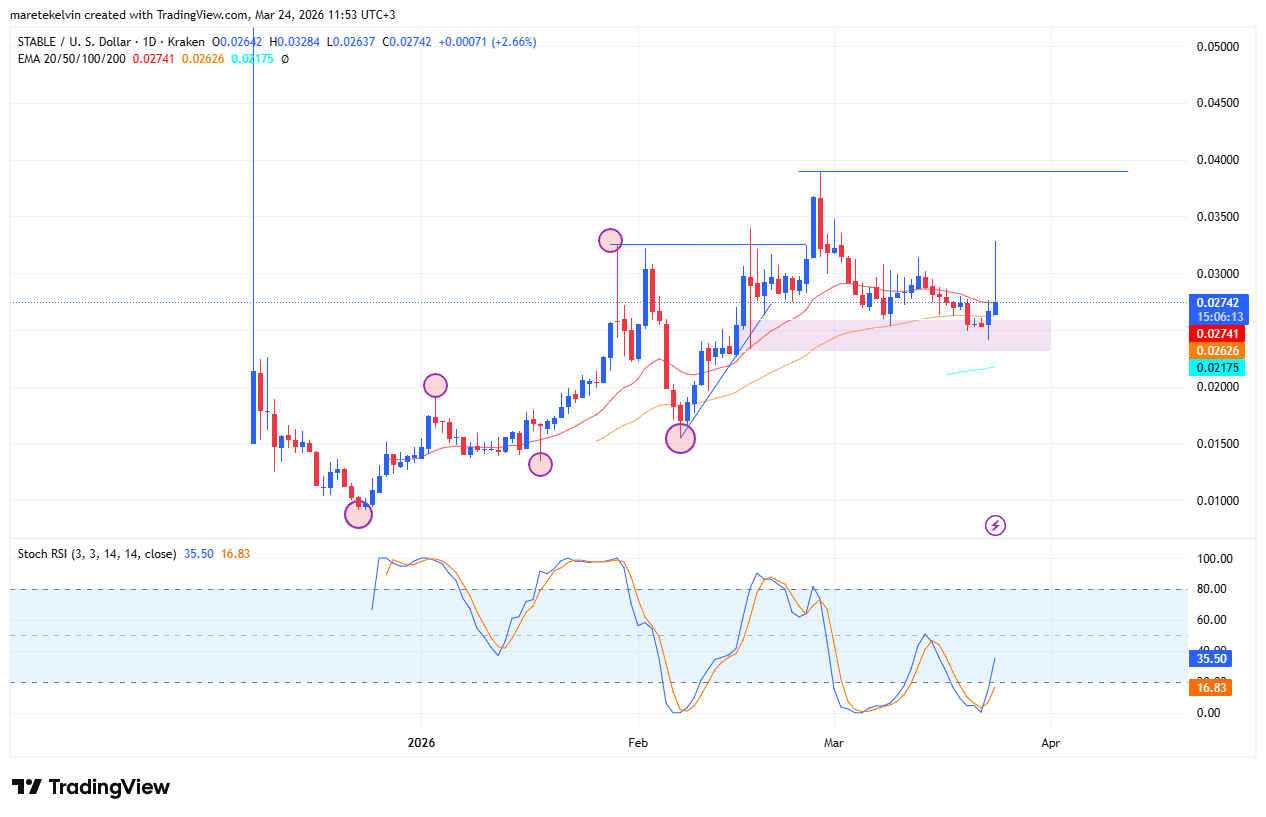
The token recorded a 10% daily gain. At press time, it tested a key demand zone near $0.025. That level stood as a key decision point for traders and investors.

The daily chart reflected a tug-of-war between buyers and sellers.

Stable traded above the 20-day EMA, indicating short-term bullish strength. However, it remained below the 50-day EMA.

This positioning suggested overhead resistance was still capped upside.

A sustained move above the 50-day EMA could confirm trend continuation. Even so, failure to break higher may extend consolidation.
Source: TradingView

Momentum hints at a reversal

Momentum indicators began shifting.

The Stochastic RSI bounced from the oversold region, signaling a possible reversal. That move aligned with the price reacting at the demand zone.

In fact, the broader structure shifted three weeks ago.

Since then, the price has formed a more constructive base, with bulls gaining control. Such setups often preceded momentum expansion.

Funding Rates suggests undervaluation

Derivatives data added weight to the bullish case.

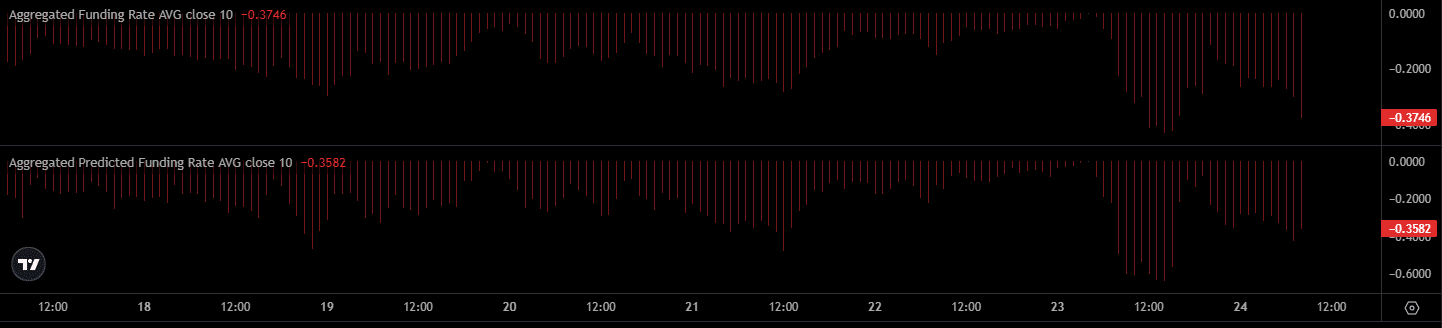
Stable Funding Rates remained below expected levels, suggesting undervaluation relative to positioning.

When Funding Rates lag rising prices, sentiment typically remained cautious. That gap often left room for further upside if confidence improved.
Source: Coinalyze

On-chain data remains steady.

The number of Stable token holders has been gradually increasing over time. This trend highlights consistent accumulation.

From past observations, rising holder count often reflected a growing network confidence. The surge also supports long-term price stability as more investors are playing the long game.

The holder’s behaviour goes hand in hand with the stale supply. Stable circulating supply has also flattened, presenting a net demand surge given the recent holders surge.

At press time, the networks had 6.2k holders and the circulating supply amounted to 21.1 billion.
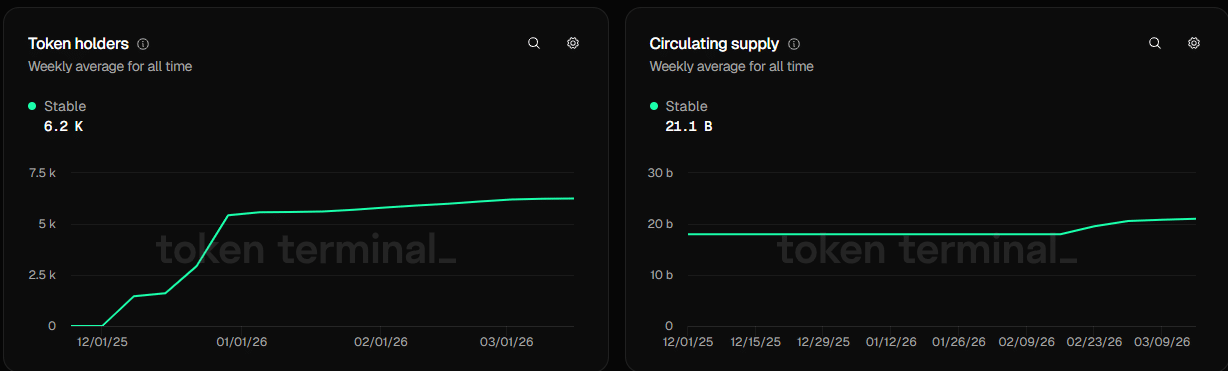
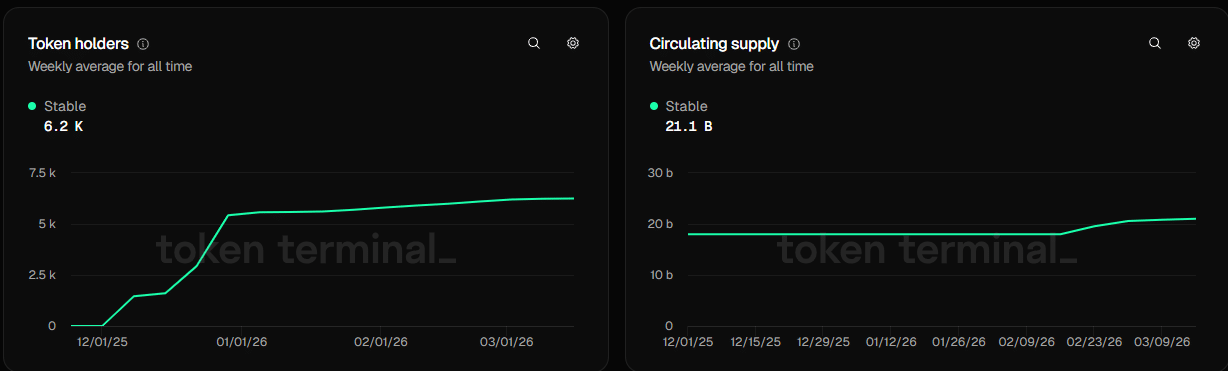
Source: Token Terminal

$0.039 emerges as the next key target

Attention now shifted to the next resistance.

If momentum held, the next key level stood near $0.039, marking a liquidity zone.

A break above this level could signal further upside. However, failure to hold gains may delay the move and extend consolidation.

As it stood, $0.025 remained the key support to watch.


Final Summary

  • Stable gained 10% and tested a key demand zone near $0.025. Price held above the 20-day EMA but faced resistance below the 50-day EMA.
  • Holder count rose to 6.2k while supply flattened, signaling steady accumulation.

Пов'язані питання

QWhat is the current key support level for Stable token mentioned in the article?

AThe current key support level for Stable token is $0.025.

QWhat does the Stochastic RSI bouncing from the oversold region signal for the Stable token?

AIt signals a possible price reversal.

QWhat does the article suggest about Stable's Funding Rates and its implication?

AThe Funding Rates remained below expected levels, suggesting the token is undervalued and may have room for further upside if confidence improves.

QWhat on-chain metric is provided as evidence of growing network confidence and long-term stability?

AThe gradual increase in the number of token holders, which reached 6.2k, along with a flattening circulating supply.

QWhat is the next key resistance target for Stable token if the current momentum holds?

AThe next key resistance target is $0.039.

Пов'язані матеріали

In Jinjiang, Fujian, a Storage Super Unicorn Lies Quiet

In Fujian's Jinjiang, a city known for sportswear, lies a quiet semiconductor giant: Fujian Jinhua Integrated Circuit Co. (JHICC). Once a promising domestic DRAM manufacturer alongside Yangtze Memory and ChangXin Memory Technologies (CXMT), its journey was derailed in 2018 when the U.S. placed it on an Entity List and filed criminal charges for alleged trade secret theft. This halted production for years. A turning point came in February 2024 when a U.S. federal court found JHICC not guilty. However, it had lost crucial time. While CXMT soared to become a top-valued A-share company in 2024, JHICC, with an estimated valuation of 80 billion RMB, was just restarting. Its current output is primarily customized DDR4 chips, not the advanced DDR5/HBM demanded for AI, but it still benefits from the broader memory chip upcycle. JHICC's story is tied to Chen Zhengkun, a veteran engineer who left Micron to lead the venture. Founded in 2016 with state-backed funding, JHICC partnered with Taiwan's UMC to develop DRAM technology. Rapid progress was cut short by the U.S. actions, which Micron initiated, partly due to its heavy reliance on the Chinese market. Post-sanctions, Chen's team worked to rebuild the production line with reduced reliance on U.S. technology. According to its records, JHICC achieved small-scale production and revenue growth under immense pressure. It now focuses on the stable "niche" DRAM market (e.g., TVs, routers) with a monthly capacity of ~40,000 wafers, aiming for 60,000 by 2026. It holds over 1,000 patents but remains on the Entity List. For Jinjiang, investing in JHICC was a bold industrial leap. The local government provided unwavering financial and logistical support during the crisis, helping the company survive. JHICC has become the anchor for a growing local semiconductor cluster. Though its scale lags behind domestic peers, JHICC's persistence symbolizes a hard-won foothold in a global market long dominated by Samsung, SK Hynix, and Micron. Having missed one boom, it seeks a place in the new AI-driven memory supercycle.

marsbit1 год тому

In Jinjiang, Fujian, a Storage Super Unicorn Lies Quiet

marsbit1 год тому

Торгівля

Спот
活动图片





